A ghost story about exile, family secrets, and the things we leave behind.
Olesya Salnikova Gilmore’s third novel, The Fortune Tellers of Rue Daru, trades epic mythology for something quieter and more potent: a ghost story about exile, a grandmother’s buried secrets, and a young woman learning that the dead are never really gone. Her most assured work yet.
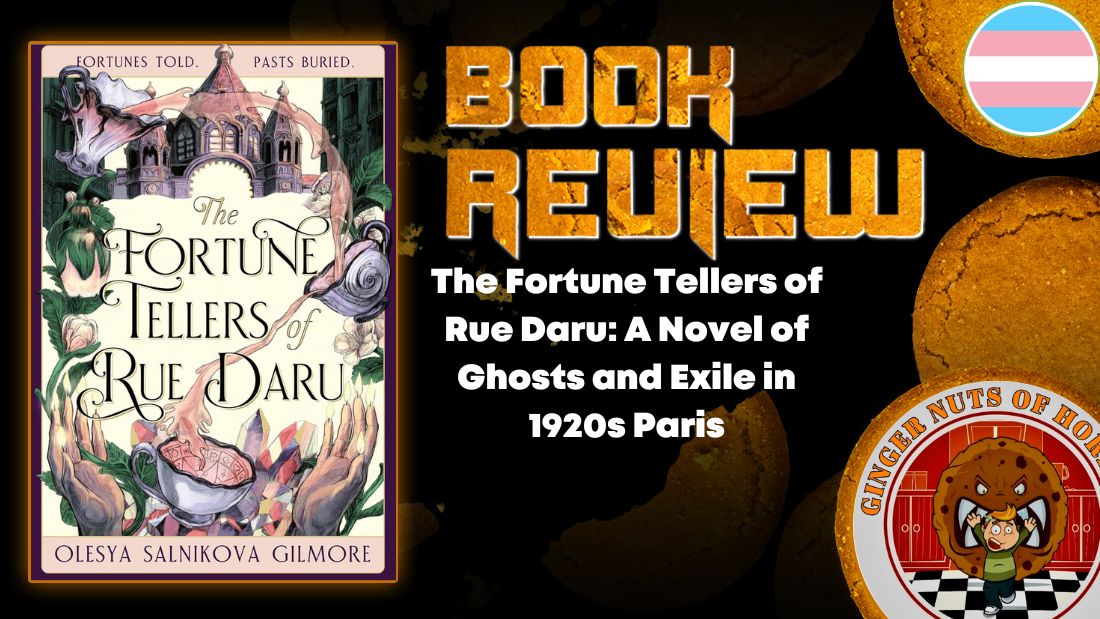
The Fortune Tellers of Rue Daru: A Novel of Ghosts and Exile in 1920s Paris
The thing about exile is that it doesn’t end when you find a new place to sit. You can unpack your samovars, hang your icons on strange walls, and learn the new language. But the country you left behind stays lodged in your chest like a piece of shrapnel the doctors can’t reach. It aches when the weather changes. It aches when you don’t expect it.
Olesya Salnikova Gilmore understands this. She understands that for the Russian émigrés who flooded Paris after the Revolution, the City of Light was just a very beautiful waiting room. And in The Fortune Tellers of Rue Daru, she sets up shop in that waiting room, in a tearoom called Samovar, brews some tea, and asks the menacing ghosts to pull up a chair.
This is Gilmore’s third novel. Her debut, The Witch and the Tsar, was ambitious, a sprawling reimagining of Baba Yaga set against the backdrop of Ivan the Terrible’s reign. Then came The Haunting of Moscow House, which tightened the focus, swapping epic mythology for a more contained, post-revolutionary Gothic. With The Fortune Tellers of Rue Daru, the political intrigue that simmered in the background of her previous work comes to the fore, intertwined with the supernatural. The Gothic tension is still there, rooted in the specific, brittle reality of the Russian émigré community.
On the surface, the premise is simple. Twenty-four-year-old Zina and her grandmother, Valya, run a tearoom on the Rue Daru, the heart of that community. By day, they serve tea and pastries to homesick nobles-turned-taxi-drivers. By night, Valya supplements their income by staging fake séances, reading fortunes in coffee grounds and cards for a clientele desperate for any connection to the world they lost. But their act is a shield.
Valya possesses a real, terrifying gift, and she sees the same raw, untrained power in Zina, who can read auras. Valya knows from brutal experience that dabbling in “the darkness” leads only to disaster. Their life is a delicate balance, a quiet existence built on the ruins of another, maintained by Valya’s iron will and her silence about the past.
Then Princess Olga and her brother, Prince Alec, arrive. They’re searching for answers about the disappearance of their father, a Grand Duke and cousin to the murdered Tsar, who vanished during the chaos of the Revolution. Zina, young, restless under her grandmother’s strictures, and eager to test the limits of her inherited gift, agrees to help. She holds the séance, a real one. It works. She summons the Grand Duke. And then he refuses to leave.
He starts haunting Samovar. Not in a loud, poltergeist kind of way, but in a worse way. He lingers. A chill in the corner. A flicker in the mirror. A persistent, spectral presence who seems to know something dark about the death of Zina’s own mother. The mystery of the Grand Duke’s disappearance becomes tangled with the mystery of Zina’s own family, and the novel shifts from a simple ghost story into something more layered: a daughter’s investigation into a past her grandmother refuses to discuss.
Valya’s chapters, which alternate between the present of 1924 and flashbacks stretching back to 1869 Russia, are revelatory. They slowly, painfully, reveal the generations of betrayal and trauma that tie her fate to the Grand Duke’s, transforming her from a prickly, secretive woman into a fully realized character shaped by impossible choices.
Reading the prose here is like listening to a piece of music that’s been transposed into a lower, more resonant key. It’s the same notes Gilmore has always played—the ache of history, the texture of Russian folklore, the weight of a single icon in a room—but the pitch is deeper. There’s a restraint to the writing that feels new. She doesn’t over-explain the magic. Zina and Valya have “the sight.” Gilmore lets these abilities exist as naturally as the steam rising from a cup of coffee in Samovar. This is Paris, 1924. Everyone believes in something. The surrealists believe in the subconscious. The exiles believe in the past. Why wouldn’t a few of them believe in ghosts?
If you strip away the plot—the missing Romanov, the séance, the haunted shop—what you’re left with is a meditation on survival. How do you build a life when your real life is over? Zina was a child when they fled. Paris is her home, yet she’s not French. She speaks the language, but she dreams in Russian. Her grandmother is still living in the country of her memory. She sees the old world in the new one, and finds it wanting. Their dynamic is the novel’s quiet heart. Zina wants to move forward, to understand. Valya wants to protect the past by burying it. This is where the book earns its keep.
Does the mystery hold up? Mostly. The central questions regarding the Grand Duke and Zina’s mother resolve in a way that feels earned. The pacing in the middle, where Zina is simply chasing leads and arguing with her grandmother, could have used a little tightening. One reviewer noted that the story felt a little overlong and went round in circles in the middle. There were a few pages where I found myself skimming, waiting for the ghost to get to the point.
But these are minor complaints. They feel like the nitpicking of someone who was so invested in the atmosphere and the characters that a slight narrative lull became an annoyance. Because when the book is working, it’s transporting. Gilmore has a wonderful eye for the small details of émigré life: the way a former aristocrat stiffens at the sight of a Soviet diplomat, the specific scent of a particular black tea, the hush that falls over a room when someone starts to sing an old folk song. It’s in these moments that the novel transcends its genre trappings. It becomes a record of a specific kind of grief, the grief of a tribe scattered to the wind.
By the time the final séance is over and the last, most malevolent spirit is dealt with, you realize the book wasn’t really about finding a murderer. It was about finding a definition of home that isn’t a place on a map. For Zina, home isn’t Russia, and it isn’t quite Paris. It’s the space between her and her grandmother. It’s the acceptance that the dead are not gone; they’ve just moved into another room. And in Samovar, they’re demanding to know the truth.
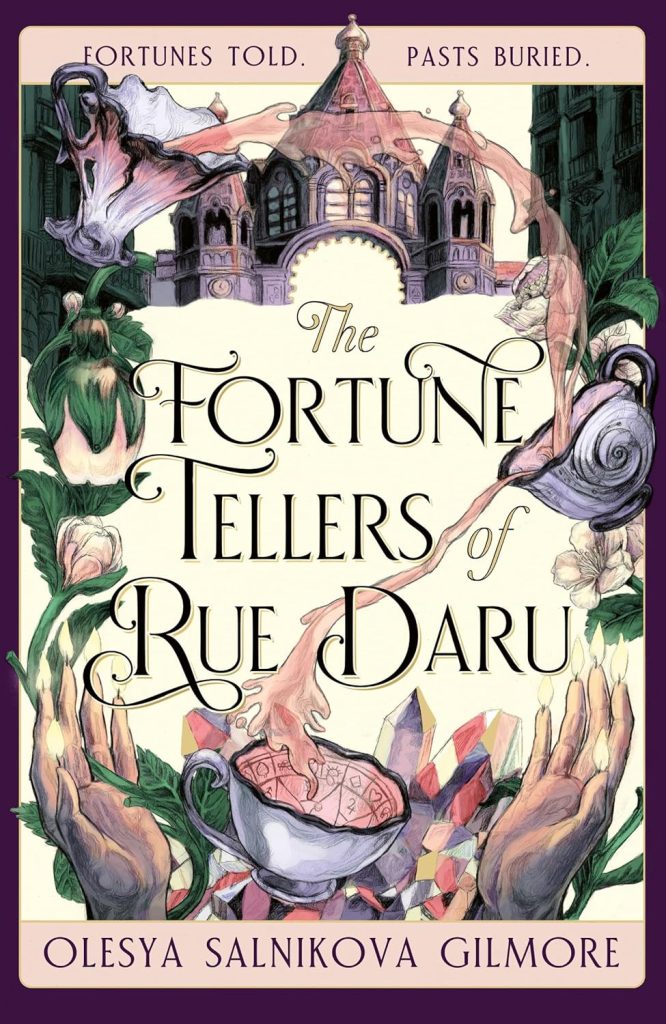
The Fortune Tellers of Rue Daru by Olesya Salnikova Gilmore
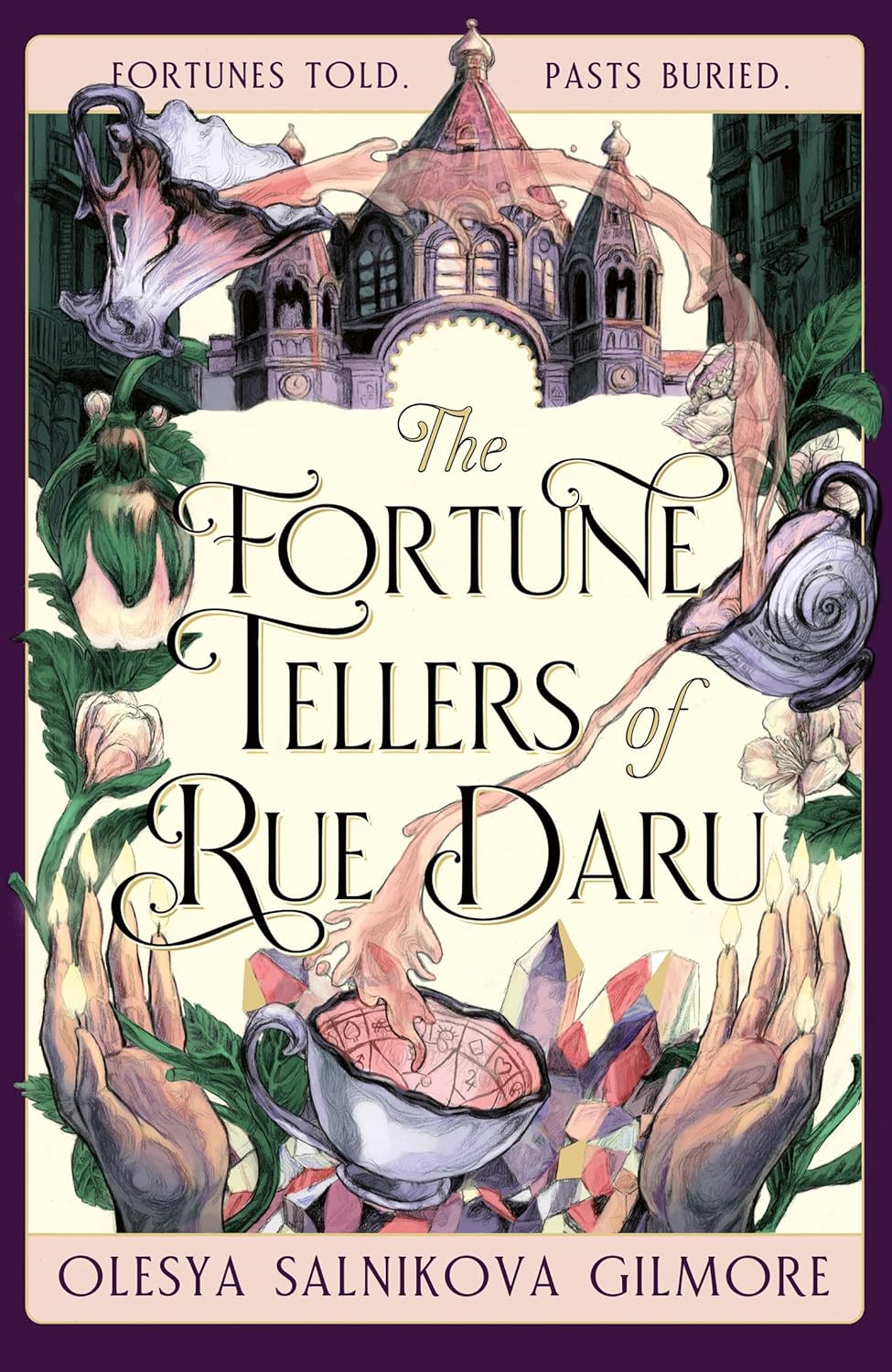
They whisper your fortunes, but what can they tell of their past?
A fearless fortune teller in 1920s Paris must use her powers to divine who she can trust—and even more importantly, learn to trust herself—in the searing new gothic novel from the author of The Haunting of Moscow House.
Spirited twenty-something Zina and her secretive grandmother, Baba Valya, own a tearoom on rue Daru in Paris, where they have lived quietly since Zina’s mother’s untimely death. By day, the women serve tea, mostly to members of the bustling Russian émigré community, but when dusk falls, they divine fortunes and perform séances for their loyal clientele.
Then the charming Princess Olga and her brother arrive, searching for answers about the disappearance of their father, the Grand Duke and cousin to the murdered last Tsar of Russia. Zina, eager to learn more about the spirit world and her powers, performs the séance. She is able to summon the Grand Duke, but to her horror, he starts to haunt the shop, and he seems to know something sinister about her mother’s death.
As Zina delves into her family’s hidden past, dark secrets are unearthed, threatening Zina and her grandmother’s found family, home, and tearoom, not to mention their very lives.
Horror Book Reviews: Ginger Nuts of Horror, Your Premier Horror Website for 17 Years
For every horror enthusiast searching for authoritative horror book reviews and a definitive horror website, your journey ends at Ginger Nuts of Horror. As a trusted pillar of the dark fiction community, we have spent over 17 years building a reputation for the most passionate, insightful, and credible coverage in the genre.
Our dedicated team of reviewers lives and breathes horror. Our collective expertise, forged over nearly two decades, ensures every review is a deep, critical analysis. We don’t just summarise plots; we dissect the terror, explore the thematic depths, and connect you with the very emotional core that makes horror books so compelling.
Why Ginger Nuts of Horror is the #1 Resource for Horror Fans
Unmatched Depth & Legacy in Horror Book
Reviews: With 17 years of reviewing horror, we offer an unparalleled perspective. Our reviews expertly guide you from mainstream bestsellers to under-the-radar indie gems, helping you find your perfect, terrifying read.
Exclusive Access to Horror Authors: Go behind the scenes with in-depth interviews that reveal the minds behind the madness. We connect you with both legendary and emerging horror authors, exploring their inspirations and creative processes.
Award-Nominated Authority & Community: Founded by Jim McLeod, Ginger Nuts of Horror has evolved from a passion project into an award-nominated, essential horror website. We are a global hub for readers who celebrate horror literature in all its forms, from classic ghost stories to the most cutting-edge dark fiction.
Experience the Difference of a Genre-Dedicated Team
What truly sets us apart is our dedicated team of reviewers. Their combined knowledge and authentic enthusiasm ensure that our coverage is both intelligent and infectious. We are committed to pushing the genre forward, consistently highlighting innovative and boundary-pushing work that defines the future of horror.
Ready to dive deeper?
For horror book reviews you can trust, a horror website that champions the genre, and a community that shares your passion, Ginger Nuts of Horror is your ultimate destination. Explore our vast archive today and discover why we’ve been the top choice for horror fans for over 17 years.