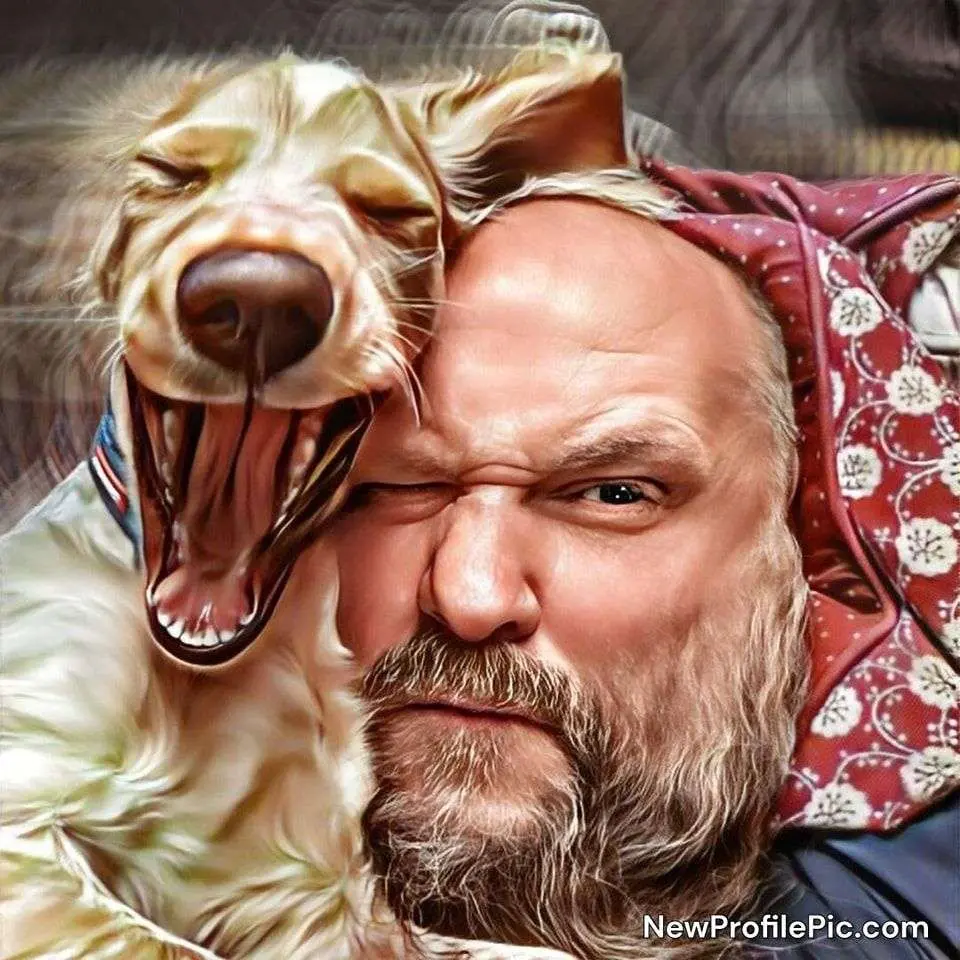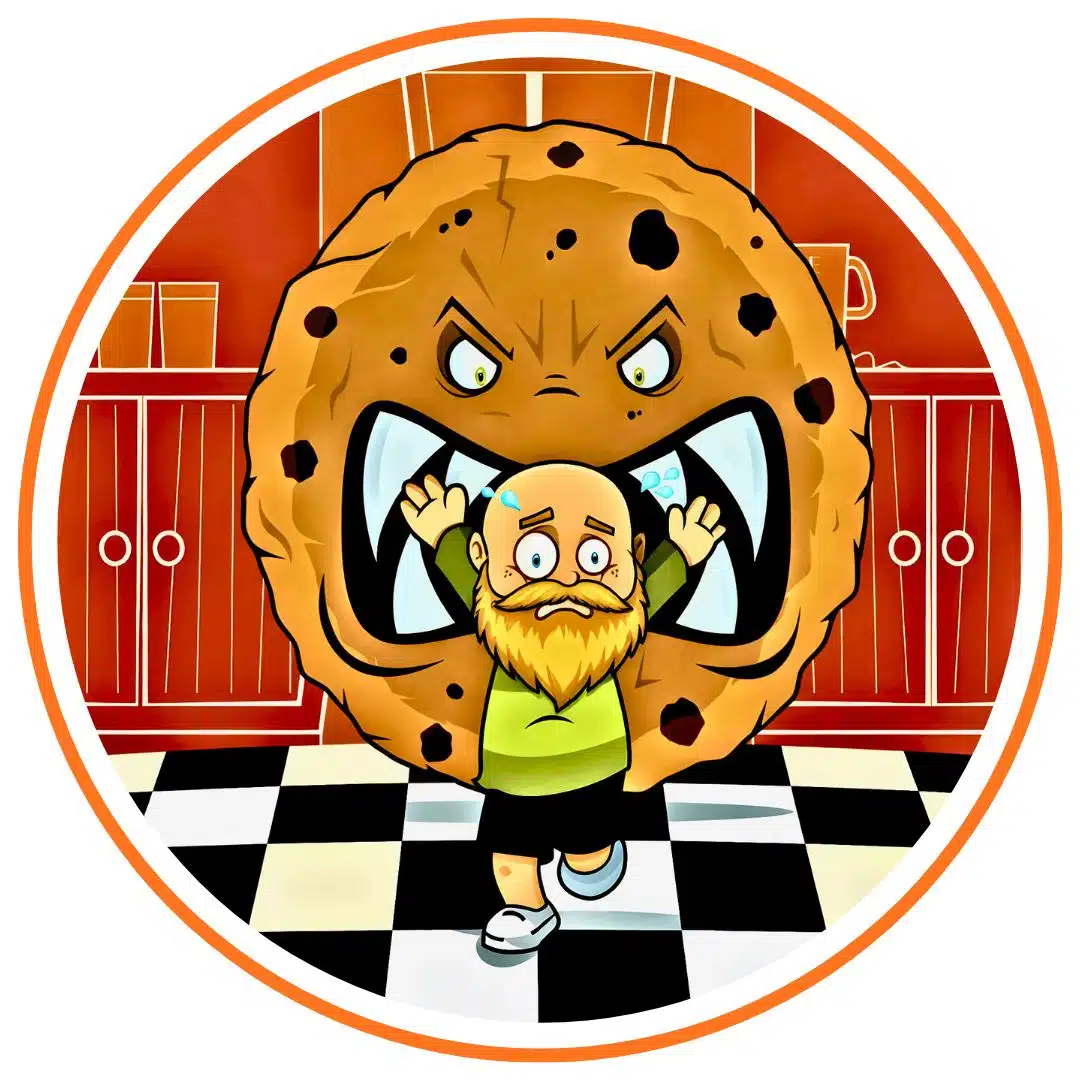


Nightmares that point toward the light.
Interestingly, the best horror often points toward the light. If you strip away the plot of most scary stories, you usually find a core of despair. Dr. Agonson takes a different approach. He crafts redemptive horror. This unique subgenre uses nightmares to plant vital seeds of hope.
On the surface, his collection, While the Elephants Danced, offers traditional chills. Readers encounter isolated towns, creeping dread, and minds slowly unravelling into absolute insanity. The shadows are thick. Yet, a clear purpose drives these psychological horror stories. Agonson builds structural chiasms to explore profound theological questions. He uses fear as a potent antidote.
Why do we seek out terrifying tales? The answer might lie in our need to confront darkness safely. Agonson understands this dynamic perfectly. He treats his monsters not as final destinations but as exit signs pointing toward something better. His work echoes the philosophical depth of C.S. Lewis and the narrative tension of Andrew Klavan. The result is striking. The prose demands your attention.
Are you tired of bleak endings? You will find a refreshing alternative here. Agonson weaves biblical theology into his narratives without sacrificing the genuine thrills of Christian horror fiction. He isolates characters to break down their false philosophies, stripping away their comfort zones until only the naked truth remains. He forces them to face reality. Sometimes, that reality is terrifying. Always, it is necessary.
This interview explores the mind behind the madness. Agonson discusses his writing process, the mystery of sudden inspiration, and the ongoing challenge of balancing intense terror with ultimate comfort. He speaks with remarkable candor about his successes and his lingering doubts. He writes simply to stay sane. We get to reap the literary benefits. Prepare yourself. You might just find a new favorite author hiding in the dark.
While the Elephants Danced, Writing Redemptive Horror: An Interview with Dr. Agonson

Let’s start at the very beginning. For our readers, please introduce yourself. Beyond the author bio, tell us a little about who you are when you’re not writing, what you love doing, what fascinates you, and what fuels your creativity.
Well, I fear I will sound rather cliché, but of course when I’m not writing, I’d rather be reading. Another great love of mine, though I’ve had to put it on the backburner recently, is languages. At university, I had the opportunity to study Hebrew and Greek, skills which are sadly slipping away. I’ve been taking an online Latin class with the Ancient Language Institute, but in the last few months, work has been rather hectic; I’ve not had much time for study.
In the early stages of a new project, what tends to come to you first: a compelling character voice, a central thematic question, or a vivid image/scenario? How does that initial spark then guide you in building the rest of the story?
It is a great mystery, I think. The ideas come. I try to make space for them, a fertile mind ready for them, but they arrive like storms, flashes of lightning, images, scenes, a feeling. Sometimes a character just shows up and starts pontificating; sometimes it is just that, a bare idea, almost a feeling of something there, like a smell or atmosphere; sometimes I do get some deep visual impression like a waking dream.
In all, they usually have a flavor, or something like a primary color, telling me that this new idea goes with these over here. I have my little pile of ideas, and I start trying to organize them. Usually, that process of arranging them brings new ideas, but if not, I wait for the next storm.
If you’ve ever read the bit in Ezekiel about the dry bones, it’s not wholly unlike that. I am at once both passively observing while yet am active as the director. I think Socrates was right in comparing poets to prophets.
Every book has its own unique set of problems to solve. What was the most difficult ‘puzzle’ you had to crack while writing this book? Was it a plot hole, a character’s motivation, the structure, or something else entirely?
Structure, definitely. The whole book is about its structure. You see, I had a few odds and ends lying around, half written stories and notes all circling around something I couldn’t name. I knew I wanted to arrange them in a chiasm. You see, I kept writing stories in pairs, getting two ideas at once, stories that were the same story but opposite each other. Then, I found the center, that inflexion point lying between them.
The journey from a finished manuscript to a book in a reader’s hands can be a surprising one. What was the most significant way your book evolved during the editing and publishing process, something you didn’t anticipate when you typed ‘The End’?
I don’t know that any significant change stands out to me. Perhaps, because I went the self-publishing rout, I was able to carry a sort of unified vision from beginning to end.
Once a book is published, it no longer entirely belongs to the author; it belongs to the readers and their interpretations. Has a reader’s reaction or analysis ever revealed something about your own work that surprised you?
One of my internet friends, Spencer Askew, I think understood my book better than I did when he used a phrase, something like, “redemptive horror.” I felt like a blind man receiving my sight. It was exactly what I had been striving to achieve without ever really knowing it.
Writing is a demanding, often solitary pursuit. Beyond the apparent goal of ‘telling a story,’ what is the specific, personal fuel that keeps you going through the difficult stretches? Is it the joy of discovery, the need to understand something yourself, the connection with a future reader, or something else?
I go crazy when I don’t write. I tried not writing, and then the stories would bushwack me. Wherever I was, whatever I was doing, I’d just have to stop and write.
We often hear about authors being influenced by other books. What are some non-literary influences on your work, such as a specific piece of music, a historical event, a scientific theory, or even a landscape, that have profoundly shaped your storytelling?
Well, I might be skirting the line with this answer, but theology has had a huge impact on everything I do. I’m skirting the line, because it’s really biblical theology that I’m talking about, which cannot avoid having roots in that foundational piece of literature, the Bible.
Is there an author, living or dead, whom you consider a ‘silent mentor’? Not necessarily someone you try to imitate, but whose approach to the craft made you feel permission to write in your own way?
Well, on the living side, I’d have to say Andrew Klavan. It was in listening to his podcast and his life’s story about becoming the man he is that gave me the courage, and something of a template to follow, to strive to become a writer.
Who was the first person to see your early drafts, and why did you trust them with your unpolished work? What is the most valuable piece of feedback they gave you?
Whoever was unfortunate enough to be near me at the time. Usually family members trying not to make eye contact. My dad is perhaps one of my best resources in this field as he taught me most of what I know about English. He is also, by his own confession, one of the densest minds as regards poetry. So I know, if I can achieve a poetic effect that even he can appreciate, then most people will understand what I am trying to say.
Horror is often most potent when it’s internal. Beyond external monsters, how do you explore the slow unravelling of a character’s sanity or the horror of their own mind?
Well, to take a concrete example from my book, the narrator in The Music Box is slowly going insane. I based it off of a friend of mine who I believe has gone insane. Part of his insanity is an insane philosophy, a sort of super-rigid Calvinistic atheism, but the major part was an inability, or refusal, to accept things as they are. Calvinism, the worst parts of it, is all about forcing scripture to fit Calvinism. Atheism, too, far too often, is always this game of “heads I win, tails you lose.”
They are both interpretive methods designed to come to a certain conclusion. That, I think, is the source of internal horror, when you’ve tied your identity so absolutely with the conclusion you’ve sought only to find that there is no conclusion because you’ve been reasoning in a circle; reality, even the simple reality of your own inner longing, shatters it all.
Setting in horror is often described as a character in its own right. How do you approach transforming a location, whether a house, a town, or a landscape, into a source of active dread?
Isolation is a good tactic, but also, I find, transformation. In my story, A Tale Told in the Fog, I try, at least, to get that feeling of dread across by emptying places. It’s the same place, but the life that was in it is gone.
Writing a terrifying buildup is one skill; delivering a satisfying payoff is another. How do you decide when to finally show the monster or reveal the source of the horror?
I never reveal or conceal anything. I’m just as surprised as you when the monster finally pops up.
The horror genre is rich with established tropes and archetypes. How do you engage with these familiar elements, the haunted house, the ancient curse, the final girl, in a way that feels fresh and surprising? Do you consciously seek to subvert a trope, or do you focus on executing it with such depth and authenticity that it becomes new again?
Well, I could look up the exact quote, but to paraphrase C. S. Lewis: The man who tries for originality will never be original. The man who tries to tell the plain old truth as best he can will surprise himself by being original.
How do you approach writing scenes of intense terror or violence to make them feel physically impactful without tipping into gratuitousness?
I’m not sure I do. I often worry that I go too far.
Do you have a favourite line or passage from your work, and would you like to share it with us?
“Have you ever wanted to be free?” she asked.
“Free to do what?”
“No,” she said. “You don’t understand. I mean free, just free.”
I laughed. “There is no ‘just free.’ Everything has a price, and you’re only free if you’re free to pay it.”
What is the specific, core truth you are trying to expose or explore through your horror?
I suppose, in a sense, if I could fit the idea into a single sentence, I wouldn’t have written so many. Yet, I shall try to eff the ineffable by stealing the ideas of others, a paraphrase from Centuries of Meditations: Those who will not look down into Hell from Earth will look up at Earth from Hell. No, that’s not it either. That’s only half of it.
The other half is something like Lewis’s idea in The Great Divorce, that some will call purgatory what others will call Hell. If my writing has not pointed to an ecstasy beyond the delightful horrors I’ve cast like shadows against the wall, then I fear I have failed. I play with shadows if only to play in the light.
You have precisely two minutes in a crowded bookstore to hook a reader who is sceptical of the entire horror genre. They look at your book’s cover and ask, ‘Convince me. Why should I read this? I don’t even like being scared.’
Easy enough in my case. Yes, I have written horror from a deep love of horror, but it is not meant, in the end, to leave you in horror. We all must walk through the valley. This is an exit sign. Here are my nightmares, and they’re actually quite fun to play with in the daylight. You will find, I think, that they are also an antidote.
I do not want to leave you as devastated as I leave some of my characters, but on the contrary, I wish to comfort you with the seeds of hope. Plant them in the darkness. “Remember the days of darkness, for they will be many.” But Christ has come to invert dreary old Ecclesiastes. There was an hour of the power of darkness, then, but now there is coming a new day, a city where He is the light.
BIO:
Dr. Agonson (a nom-de-plume) started a serious attempt at writing in 2017, challenging himself to post on his blog every day, and, with a few exceptions (currently two), he has fulfilled his own challenge. In 2020, he received his bachelor’s degree in Bible and Theology, and by that time realized that, whatever else he would do in life, it was written that he had to write.
A few of his short stories have escaped the boundaries of his blog: Brother & Blurryface were both featured in the Futurist Letters, and Ghosted was published on Faith K. Moore’s website as the winner of her ghost story contest. He has self-published a collection of his short stories on Amazon: While the Elephants Danced. Save for Lenten fasts, Dr. Agonson can be best accosted via Twitter @SAgonson.
While the Elephants Danced: Tale Told by Dr Sheldon Agonson

Narratio Neminis
Three young friends explore an abandoned castle.
From Salem
Survivors of a Zombie apocalypse fight for survival.
The Death of My Master
A fantasy poem about the fall of a great knight.
The Music Box
A postgraduate student goes insane.
The Judgement
A genius artist’s last three paintings cause some trouble.
Input Output
A criminal’s confession.
The End of the World
Two men, one hunting the other, are caught at the End of the World.
While the Elephants Danced
A sinister clown faces off with more than just a licentious stage magician.
Escape to the Stars
At the edge of reality, a soul is set free.
Ships in the Night
A philosophical question is left unanswered.
The Pornographer
A chance photo, and a photographer is haunted by the image he took.
No Business Dying
A good businessman makes a final deal.
Poison in the Telling
A fairy tale about a talking snake.
The Last Thing I Stole
A reformed thief’s eclectic journal.
A Tale Told in the Fog
Ghost towns, revenants, and one lost child.
Essential Horror Interviews on Ginger Nuts of Horror
For true devotees of the dark and macabre, Ginger Nuts of Horror stands as a premier destination for exclusive horror author interviews and in-depth horror director interviews. Our curated conversations go beyond the surface, offering unparalleled access to the visionaries shaping modern horror.
Why Read Our Horror Creator Interviews?
1. Uncover Creative Processes & Inspirations
Step inside the creative minds behind your favorite nightmares. Our interviews dissect the inspiration behind iconic horror stories and films, exploring how masters of the genre conjure fear. Learn how horror authors develop chilling narratives and how horror directors translate terror to the screen.
2. Gain Unique Industry Insights & Career Advice
Navigate the horror industry with wisdom from those who’ve succeeded. Our conversations provide practical advice for aspiring horror writers and filmmakers, covering:
- Breaking into horror publishing or film
- Overcoming creative and professional hurdles
- Understanding evolving horror trends and audience expectations
3. Explore the Psychology & Culture of Fear
Delve deeper into what makes horror resonate. Our interviews examine the psychology of fear, how horror reflects societal anxieties, and the genre’s exploration of themes like morality, existential dread, and identity.
4. Connect with a Community of Horror Enthusiasts
Join a vibrant community. Each interview sparks discussion, allowing you to engage with fellow fans and sometimes the horror creators themselves through comments and social media.
Featured Insights from Horror’s Finest
Our archive includes conversations with legendary horror authors discussing craft, and visionary horror directors breaking down their filmmaking techniques. Find guidance, inspiration, and a deeper appreciation for the art of horror.
Ready to explore? Visit the Horror Interview Section on Ginger Nuts of Horror today. It’s your essential resource for connecting with the minds that define fear, perfect for fans, aspiring writers, and future horror directors alike.
Searching for the best horror author interviews or seeking wisdom from horror directors? You’ve found your source. Click here to start reading now.