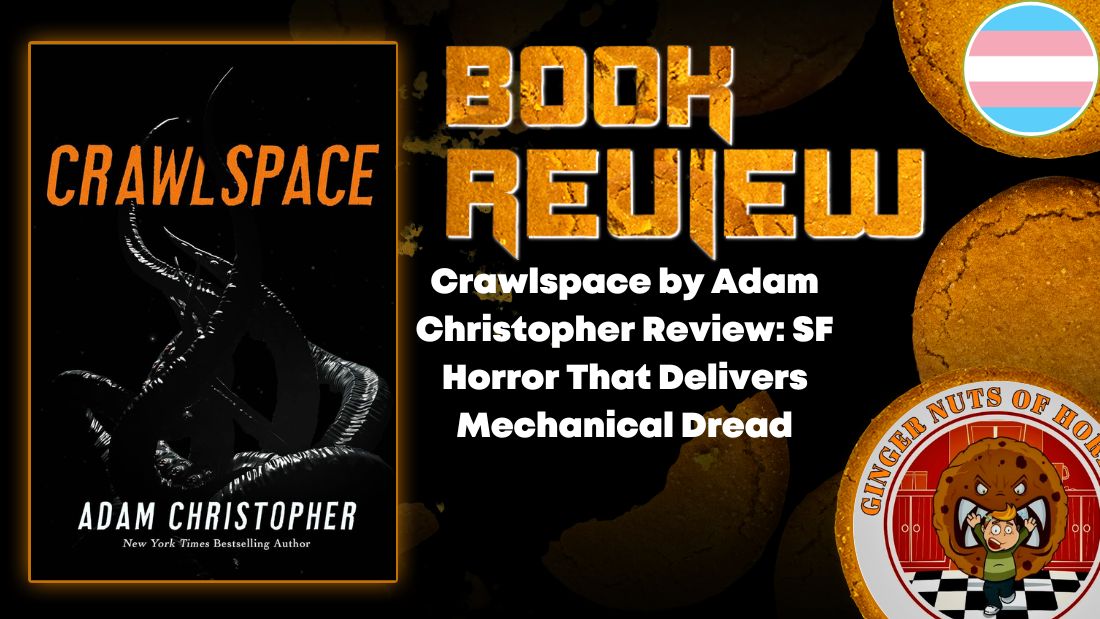
Adam Christopher’s Crawlspace delivers a tightly wound blend of SF horror and cosmic dread, a niche he’s perfected in works like The Burning Dark. For fans of psychological space horror reminiscent of Event Horizon, this novel follows a faster-than-light test flight that goes catastrophically wrong. When the Artemis Corporation crew encounters strange voices and symbols carved into their hull, the mission transforms into a claustrophobic fight for survival.
Crawlspace by Adam Christopher Review: SF Horror That Delivers Mechanical Dread
Adam Christopher’s latest, Crawlspace, takes primal anxiety and runs it through a grinder of corporate malfeasance, cosmic horror, and the psychological claustrophobia of being trapped in a tin can with people you’re not sure you trust. On the surface, it’s a familiar setup: Mission Lead Olivia O’Connor and her Artemis Corporation team are prepping for the first faster-than-light test flight. A military liaison is along for the ride, because of course one is. The goal is to crack open the universe. But if you strip away the plot synopsis, the book is really about what happens when the crack opens up, looks back, and finds the crew wanting.
Christopher who also writes tie-in novels Star Wars, Stranger Things, Doctor Who. The man knows how to work within a sandbox. But there’s a difference between playing in someone else’s sandbox and building your own haunted house from scratch. In his original work, specifically the Burning Dark cycle and now this, there’s a noticeable shift. He’s not just adhering to genre beats; he’s interrogating them. The prose in Crawlspace carries a weight that his licensed work, as polished as it is, doesn’t always allow for.
There’s a sense that he’s using the tools he honed on those massive franchises to build something smaller, tighter, and far more unsettling. It’s like watching a master carpenter who usually builds ornate cathedrals decide to construct a one-room cabin, then meticulously seal all the windows shut.
Reading this prose is like listening to a recording of your own voice played back slightly distorted. The cadence is familiar, the structure is sound, but there’s a hollow echo in it that makes your skin prickle. Christopher favours clean, functional sentences that build tension not through ornate description, but through accumulation. A strange sound. A symbol carved into a bulkhead. A face in the corridor that shouldn’t be there. Each element is a brick, and he lays them with the patience of someone building a wall. By the halfway point, you don’t realise you’re trapped until you try to look back and can’t find the way you came in.
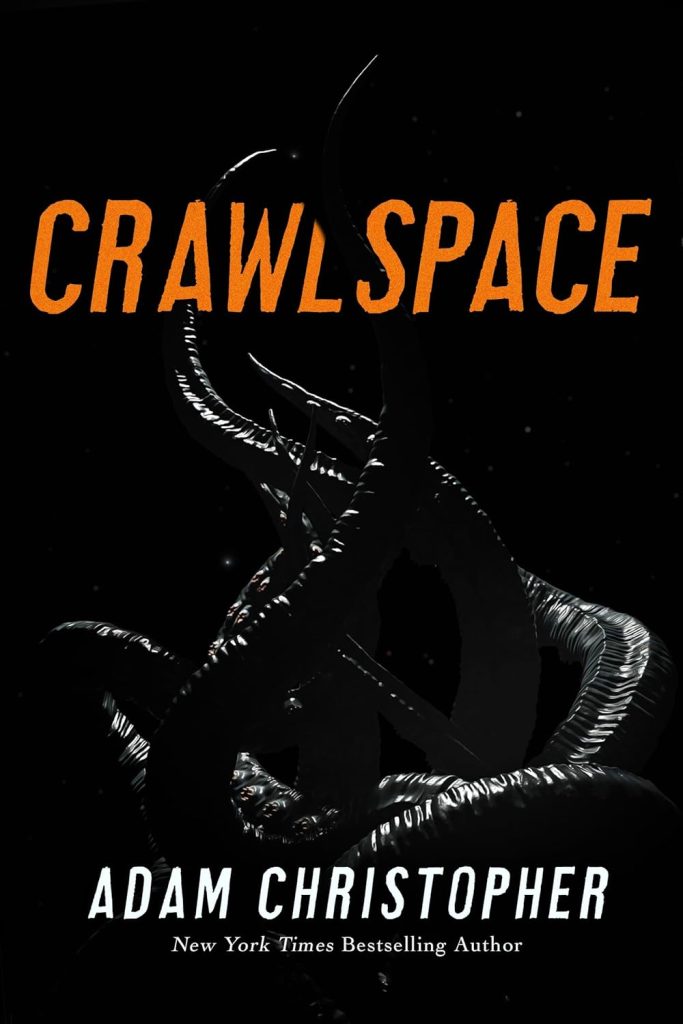
This is where the novel succeeds. The cosmic horror elements, the “ancient forces beyond reckoning” as the blurb puts it, are handled with a restraint that feels almost counterintuitive for a book about a faster-than-light ship tearing a hole in reality. Christopher doesn’t show you the monster. He shows you the scratch marks it leaves on the hull. He gives you the whispered conversations over the comms that cut out at the worst possible moment. He makes the ship itself a character, and like any good haunted house, the architecture is the primary antagonist.
The middle section sags. Just a little. There’s a stretch where the crew is running from one end of the ship to the other, uncovering cryptic messages, and the pacing becomes a series of escalating set pieces that start to bleed together. You can feel the plot’s mechanism turning. They need to find the next clue. They need to have a confrontation.
They need to split up. It’s not bad writing; it’s the structural tax that comes with this kind of contained horror. You have a finite space, a finite number of characters, and a finite number of places to run. Christopher manages the tension well, but for about fifty pages, the sense of dread plateaus. It stops escalating and just… persists.
Interestingly, this is where opinions seem to diverge. Some readers, based on the chatter, felt this was where the book lost momentum. I found it to be a necessary breather, even if it was a slightly clumsy one. It’s the calm before the final, genuinely unnerving descent into the ship’s core. I’d argue that Christopher, in trying to balance his corporate conspiracy plot (the “what did Artemis Corporation really know?” thread) with the supernatural horror, occasionally lets the former muddy the purity of the latter. We spend just a bit too much time on data pads and mission logs when what we really want is to see what’s scratching at the airlock.
That said, he sticks the landing. The final act pulls the rug out in a way that feels earned. It doesn’t rely on a deus ex machina. Instead, it circles back to a detail planted in the first twenty pages, a detail so mundane you’ve probably forgotten it. That’s the kind of craft I appreciate. It’s not flashy. It’s structural.
Thematically, Crawlspace sits in an interesting bracket. It shares DNA with Event Horizon, obviously. The “FTL drive opens a portal to hell” concept is the elephant in the room. But Christopher pushes past that. He’s more interested in the bureaucracy of horror. How do corporations commodify the unknown? If you could open a door to a dimension that housed sentient nightmares, how long would it take a board of directors to try to monetize it? In that sense, it owes as much to the cold, clinical horror of Alien as it does to the supernatural dread of Dead Silence by S.A. Barnes.
And unlike Dead Silence, which leaned heavily into the decaying opulence of a lost luxury liner, Crawlspace is all industrial grime. The ship isn’t a beautiful relic; it’s a machine. A tool. And tools, when they break, do so in a way that is profoundly ugly. This grounds the story in a specific kind of working-class horror. These aren’t explorers on a grand adventure. They’re employees on a job. The horror isn’t just the monsters; it’s the realization that their employer sent them into this situation knowing the risks, maybe even counting on them.
Christopher has been building toward this kind of voice for a while. His The Burning Dark had the same sense of isolation, but here, his time writing for the Stranger Things franchise seems to have sharpened his instinct for character dynamics under pressure. The crew of the Artemis feels less like archetypes and more like people who have spent years working in close quarters, with all the petty resentments and silent alliances that entails. Olivia O’Connor, as the lead, carries the weight of command in a way that feels heavy. She doesn’t have a Kirk-like swagger. She has the tired pragmatism of a project manager who just realized the budget cut is going to get people killed. It’s refreshing.
So why five stars? Because the flaws are the grain in the wood. A perfectly smooth horror novel isn’t scary. It’s sterile. The slight drag in the middle, the occasional over-explanation of the corporate conspiracy, these are the minor imperfections that remind you you’re reading a human being’s work, not a genre exercise. And when the book is hitting its stride, when the lights are flickering and Olivia is crawling through a maintenance shaft with only the sound of her own breathing and something else, something that is definitely not her breathing, echoing back at her, it achieves a state of pure, mechanical dread that few recent space horror novels have managed.
You close the book. You look at your ceiling. You listen to the house settle. And you wonder, just for a second, if that creak was the foundation contracting, or something else.
Crawlspace by Adam Christopher
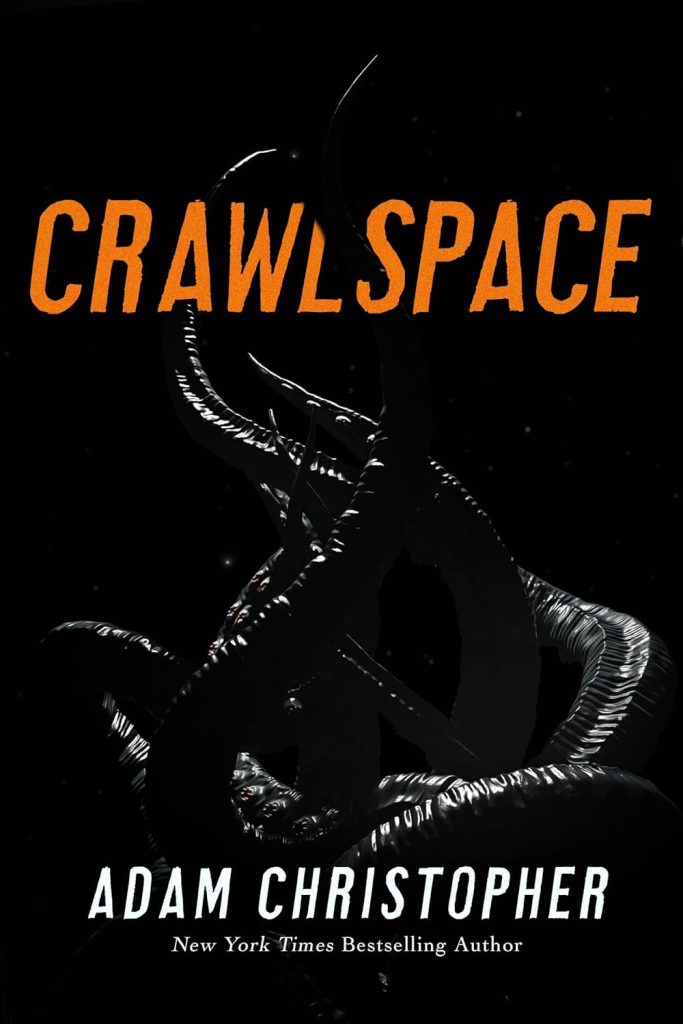
Mission Lead Olivia O’Connor and her team from the Artemis Corporation, along with their military liaison, are in the final preparations for an undertaking that will alter the course of human history: a test flight that promises to open up new frontiers in the expanse of the universe.
But their journey between dimensions is one they never trained for. Strange voices in the corridors. Long lost faces not forgotten. Strange symbols carved into the hull. And gathering outside the ship, ancient forces beyond reckoning.
The crew will need all their skills to survive and uncover the twisted truth behind their mission.
Commencing countdown…