
The horror doesn’t jump. It settles in. And by the time you feel it, it’s already under your skin.
Wolf Worm sits comfortably in the top tier of Kingfisher’s work. It shows an author who has refined her craft, who knows exactly what kind of horror she wants to write and how to write it. The prose is confident. The scares are earned. The central metaphor, the parasite, the host, the question of agency, resonates beyond the immediate plot.
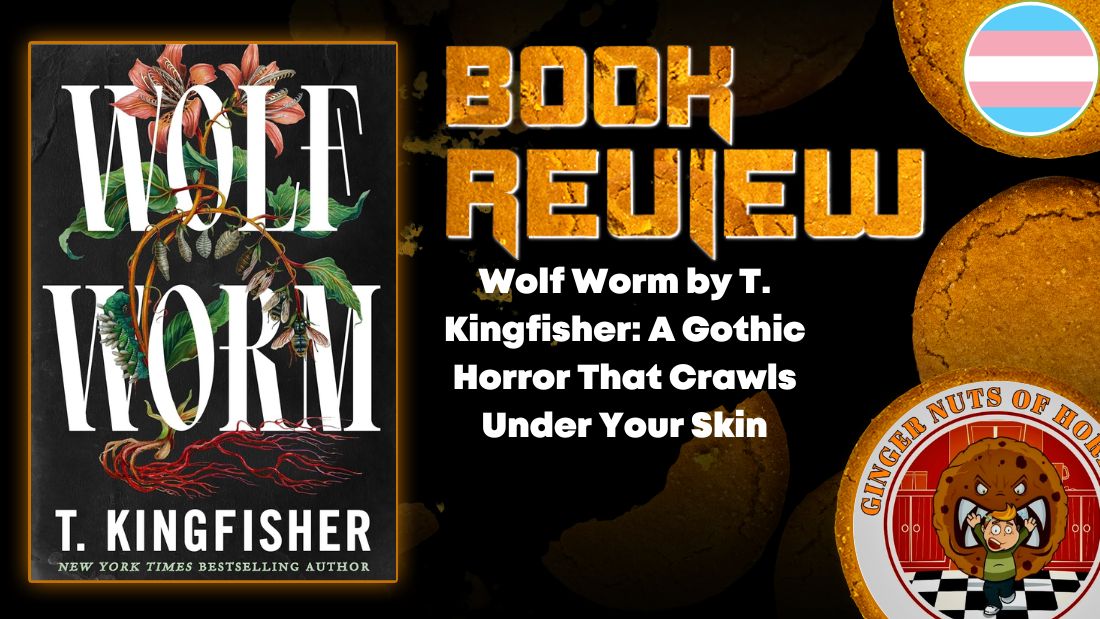
Wolf Worm by T. Kingfisher: A Gothic Horror That Crawls Under Your Skin
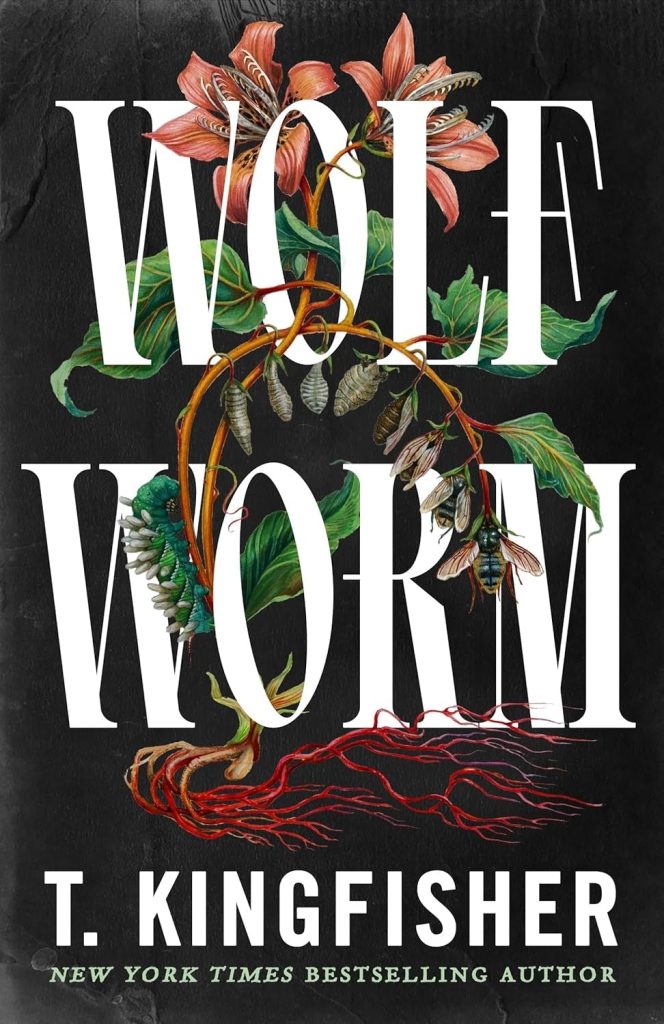
T. Kingfisher’s Wolf Worm arrives with the quiet authority of an author at the peak of her horror-writing powers. This review examines Kingfisher’s latest gothic horror novel, set in 1899 North Carolina, where a scientific illustrator discovers that the natural world hides darker secrets than any laboratory could contain. For readers who appreciate slow-burn atmospheric tension, body horror grounded in biological plausibility, and prose that rewards patience, Wolf Worm represents a significant addition to the author’s growing bibliography. We explore the novel’s strengths, its place in Kingfisher’s oeuvre, and why it works as both ecological horror and character study.
They say a good scientific illustrator learns to see what’s actually there, not what they expect to find. The discipline demands you set aside assumption, lay down your internal narrative, and simply record the curl of a leaf, the segmentation of an abdomen, the particular way light falls across a wing. It’s a kind of radical honesty with the world. And in T. Kingfisher’s Wolf Worm, that observational ethic becomes something more like a survival tactic.
Sonia, the illustrator at the center of this story, arrives at a remote North Carolina manor in 1899 with her pens and her watercolors, expecting to document specimens for a Dr. Hadler. She expects peculiarity, she’s worked for naturalists before, and eccentricity comes with the territory. She does not expect the quiet wrongness that has settled into the house like damp. She does not expect the doctor’s son, a man whose scientific curiosity seems to have curdled into something else. And she certainly does not expect the way the local soil seems to be hiding things that have no business existing in any rational taxonomy of the natural world.
This prose is like watching someone paint with a magnifying glass focusing sunlight, precise, deliberate, and capable of starting a fire if you hold it in one place too long. The sentences are clean, unfussy, but they accumulate heat. You feel the damp of that North Carolina autumn. You feel the crawl of something under your skin, even before you know what it is. The author has a gift for making the mundane menacing: a jar of specimens, a locked door, the particular silence of a house that has secrets.
If you’ve followed Kingfisher’s work from the fractured fairy tales of The Seventh Bride through the fungal horror of What Moves the Dead, you’ll notice a writer who has grown increasingly comfortable letting the grotesque breathe. Her earlier books often relied on a kind of dark whimsy to leaven the terror. Here, the humour is still present, and Sonia has a dry, practical way of thinking that cuts through the tension, but Kingfisher trusts her reader to sit with the unpleasantness longer.
The body horror, when it comes, is not gratuitous. It is earned. And it is, in the way of the best horror, unsettling precisely because it feels so biologically plausible. Parasites exist. The natural world does not care about our sense of propriety. Kingfisher simply asks: what if the parasites were smarter than we gave them credit for?
The story operates in that fertile space where gothic horror meets ecological body horror. Think Algernon Blackwood’s “The Willows” crossed with the creeping dread of Jeff VanderMeer’s Annihilation, but with a more grounded historical setting. Kingfisher knows her genre history. She knows that the best horror often comes not from monsters but from a violation of the boundary between self and world. Wolf Worm asks an uncomfortable question: how much of you is really you? And what happens when something else decides to take up residence?
She builds slowly, layering the dread like sediment. A strange growth here. A cryptic comment there. The sense that the locals know something they’re not saying. This is a book that rewards the patient reader, the one willing to sit with the unease and let it settle into their bones. If you need jump scares every chapter, this is not your book. If you want a creeping, intelligent horror that respects your ability to connect the dots, you’re in the right place.
The characters are sharp. Sonia is not a passive observer; she’s an active investigator, using her skills as an illustrator to literally draw out the truth. The novel understands that seeing clearly is a kind of power. The supporting cast, the quiet housekeeper, the local doctor with his own history, the unsettling son, all feel like people who have been living in this world long before the plot arrived to disturb them. Kingfisher gives them histories and motivations that extend beyond their function in the story. It makes the horror hit harder. You care what happens to them.
There’s a moment, about two-thirds of the way through, where the book shifts from atmospheric dread into something more active. Kingfisher handles the transition well. The tension that has been building finally breaks, and when it breaks, it breaks violently. The action sequences are clear without being clinical. You can see the geography of the manor, understand the escape routes, feel the weight of the choices the characters make.
Wolf Worm sits comfortably in the top tier of Kingfisher’s work. It shows an author who has refined her craft, who knows exactly what kind of horror she wants to write and how to write it. The prose is confident. The scares are earned. The central metaphor, the parasite, the host, the question of agency, resonates beyond the immediate plot.
You will feel this book on your skin. That’s the point. That’s the gift.
Wolf Worm by T Kingfisher
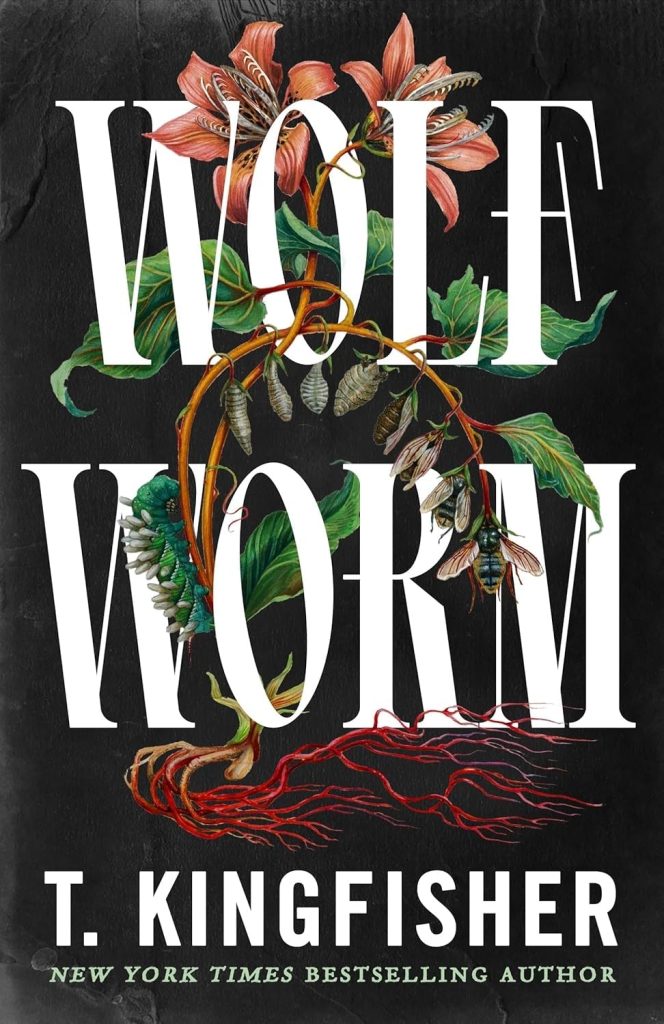
‘Wolf Worm is going to burrow straight into your brain‘ – Cassandra Khaw, USA Today bestselling author of The Library at Hellebore
Something darker than the devil stalks the North Carolina woods in Wolf Worm, an original gothic masterpiece from Sunday Times bestselling author T. Kingfisher.
Perfect for fans of Mexican Gothic by Silvia Moreno-Garcia and The Death of Jane Lawrence by Caitlin Starling.
The year is 1899 and Sonia Wilson is a scientific illustrator without work, prospects or hope. When the reclusive Dr. Halder offers her a position illustrating his vast collection of insects, Sonia jumps at the chance to move to his North Carolina manor house and put her talents to use.
But soon enough she finds that there are darker things at work in the Carolina woods.
What happened to her predecessor, Halder’s wife?
Why are animals acting so strangely?
And what is behind the peculiar local whispers about ‘blood thieves’?
With the aid of the housekeeper and a local healer, Sonia discovers that Halder’s entomological studies have taken him down a dark road full of parasitic maggots that burrow into human flesh – and that his monstrous experiments may grow to encompass his newest illustrator . . .
‘Only T. Kingfisher can write horror this lovely, even sweet, while simultaneously nauseating, grizzly, and revolting’ – Olivie Blake, New York Times bestselling author of The Atlas Six
Horror Book Reviews: Ginger Nuts of Horror, Your Premier Horror Website for 17 Years
For every horror enthusiast searching for authoritative horror book reviews and a definitive horror website, your journey ends at Ginger Nuts of Horror. As a trusted pillar of the dark fiction community, we have spent over 17 years building a reputation for the most passionate, insightful, and credible coverage in the genre.
Our dedicated team of reviewers lives and breathes horror. Our collective expertise, forged over nearly two decades, ensures every review is a deep, critical analysis. We don’t just summarise plots; we dissect the terror, explore the thematic depths, and connect you with the very emotional core that makes horror books so compelling.
Why Ginger Nuts of Horror is the #1 Resource for Horror Fans
Unmatched Depth & Legacy in Horror Book
Reviews: With 17 years of reviewing horror, we offer an unparalleled perspective. Our reviews expertly guide you from mainstream bestsellers to under-the-radar indie gems, helping you find your perfect, terrifying read.
Exclusive Access to Horror Authors: Go behind the scenes with in-depth interviews that reveal the minds behind the madness. We connect you with both legendary and emerging horror authors, exploring their inspirations and creative processes.
Award-Nominated Authority & Community: Founded by Jim McLeod, Ginger Nuts of Horror has evolved from a passion project into an award-nominated, essential horror website. We are a global hub for readers who celebrate horror literature in all its forms, from classic ghost stories to the most cutting-edge dark fiction.
Experience the Difference of a Genre-Dedicated Team
What truly sets us apart is our dedicated team of reviewers. Their combined knowledge and authentic enthusiasm ensure that our coverage is both intelligent and infectious. We are committed to pushing the genre forward, consistently highlighting innovative and boundary-pushing work that defines the future of horror.
Ready to dive deeper?
For horror book reviews you can trust, a horror website that champions the genre, and a community that shares your passion, Ginger Nuts of Horror is your ultimate destination. Explore our vast archive today and discover why we’ve been the top choice for horror fans for over 17 years.