- Dean Cade Author Interview: Queer Horror, True Crime, and the Summer 1973 Trilogy
- Cruising by Dean Cade, Review: The Summer of 1973 Never Felt so Terrifying
Desire to create is the fuel that stokes me to write. Cathartic and sometimes obsessive, creation is a rush, like taking something fictional and making it feel real, or in a memoir, expressing a crazy time that really happened. Similar to working out at the gym, every small action at the keyboard builds up into something bigger.
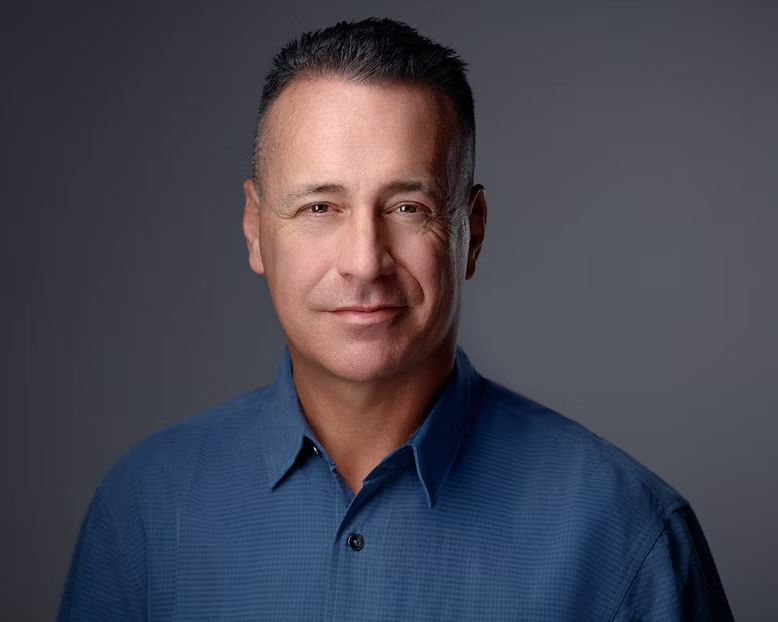
Dean Cade writes queer horror because he survived chaos. A Gen X writer who ran wild on the streets as a teenager, he now turns those experiences into memoir and genre fiction. His new novel Cruising kicks off the Summer 1973 trilogy, a coming-of-age horror story set against the real-life Houston Mass Murders. We sat down with Cade to discuss tone, terror, and why Clive Barker gave him permission to write gay characters to the forefront.
In this author interview on queer horror and true crime inspiration, Cade explains how a pauper’s funeral for an unidentified victim sparked the entire series. He describes balancing a sweet summer romance with the dread of a serial killer, Dean Corll, and his teenage accomplices. The conversation covers his unusual puzzle: how to write a story that offers hope without softening the horror.
Cade also reveals why he burned his old approach down during the 2020 pandemic. Music, weightlifting, and a Siberian Husky named Max keep him grounded. His partner Bo reads drafts despite not liking horror. That outsider perspective, Cade says, proves invaluable.
If you want to understand how a writer transforms true crime into LGBTQ horror without gratuitous violence, this interview delivers straight answers. No hype. No false notes. Just a calm, confident conversation with someone who has lived enough to know what scares us and why.
Let’s start at the very beginning. For our readers, please introduce yourself. Beyond the author bio, tell us a little about who you are when you’re not writing, what you love doing, what fascinates you, and what fuels your creativity.
I’m a Gen X writer who survived the chaos of running wild on the streets in my formative years. Now I use those experiences, the highs, lows, and redemptions, to write memoir and genre fiction. Beyond my bio is perception. I use my past to inspire creation, but I’m not the same wild punk I once was. It’s a conundrum, almost like something from quantum physics. If I change now, does it change my past and my future, or is it only how I perceive it? I am fascinated by the way my past portrays my current self-image and how others see it differently.
I love traveling, exploring, and spending time with my partner, Bo, and our Siberian Husky, Max, and I am psyched about weightlifting, which has kept me fit and strong through a recent back surgery. This phase of my life is a little slower, but it feels right.
The biggest fuel for creativity is being a lifelong film (especially horror) fan, as it helps me envision action in a cinematic way.
In the early stages of a new project, what tends to come to you first: a compelling character voice, a central thematic question, or a vivid image/scenario? How does that initial spark then guide you in building the rest of the story?
I feel the most important part is developing a character in relation to the world they inhabit. The spark for the Summer 1973 series was during the initial research phase; I was invited to the burial of one of the victims of the Houston Mass Murders. The cold case had reopened with new DNA technology, but there was one boy who they could not identify, known only as ML73-3356.
The funeral took place in 2009, at a pauper’s field, and beside the small casket of bones there was an image of what he would’ve looked like. It struck me in a profound way, making me curious as to what it would be like living in that time unaware of a serial killer, Dean Corll, and his teenage accomplices, Elmer Wayne Henley and David Brooks.
Every book has its own unique set of problems to solve. What was the most difficult ‘puzzle’ you had to crack while writing this book? Was it a plot hole, a character’s motivation, the structure, or something else entirely?
The tone was the most difficult to crack in balancing a coming-of-age story against the true crime horror of a serial killer. I couldn’t write a story so bleak with torture boards and shallow graves without any light to offer hope while amplifying the tension.
The journey from a finished manuscript to a book in a reader’s hands can be a surprising one. What was the most significant way your book evolved during the editing and publishing process, something you didn’t anticipate when you typed ‘The End’?
The most surprising evolution of Summer 1973 was the suggestion by Slashic Horror Press to split the long manuscript into a trilogy. It really helped in expanding some side characters, upping the stakes, and refining the horror, especially in the middle section.
Writing is a demanding, often solitary pursuit. Beyond the apparent goal of ‘telling a story,’ what is the specific, personal fuel that keeps you going through the difficult stretches? Is it the joy of discovery, the need to understand something yourself, the connection with a future reader, or something else?
Desire to create is the fuel that stokes me to write. Cathartic and sometimes obsessive, creation is a rush, like taking something fictional and making it feel real, or in a memoir, expressing a crazy time that really happened. Similar to working out at the gym, every small action at the keyboard builds up into something bigger.
We often hear about authors being influenced by other books. What are some non-literary influences on your work, such as a specific piece of music, a historical event, a scientific theory, or even a landscape, that have profoundly shaped your storytelling?
Music influences my work; not the lyrics, but the driving beat or a mellow melody pushes me along. In the Summer 1973 series, I tried to bring out the music that would’ve been on the radio so I could listen along with the characters and be transported to the time.
The one event that totally made me rethink my approach to writing was the pandemic of 2020. We were living in Washington, DC, and experienced curfews, riots, boarded-up buildings, security fences around the Capitol and White House, and, afterward, National Guard military vehicles, armed soldiers, and checkpoints. It was how I imagined Eastern Europe as a teenager in the 80s. During those strange times of lockdown, I took a long, hard look at my writing journey and decided to burn everything down and start over.
Is there an author, living or dead, whom you consider a ‘silent mentor’? Not necessarily someone you try to imitate, but whose approach to the craft made you feel permission to write in your own way?
I consider Clive Barker a silent mentor. Sacrament was the first time I read a book with a gay protagonist in a horrific, fantastical adventure. It inspired me to write what I know and put gay characters to the forefront.
Who was the first person to see your early drafts, and why did you trust them with your unpolished work? What is the most valuable piece of feedback they gave you?
I sent an early draft of my memoir, No Future, out to my best friend, Sean, who is a major character in it. He jogged my memory and brought up details I’d forgotten about those punk years as a street kid on Telephone Road and in suburbia. With Summer 1973, my partner Bo provided different story input. He’s not a horror fan, so it’s always interesting to hear what resonates with him from a story.
Setting in horror is often described as a character in its own right. How do you approach transforming a location, whether a house, a town, or a landscape, into a source of active dread?
In developing a setting, I believe I have to visualize the scene like I am watching a film. If I see and feel it in my head, hopefully I can convey the dread to the page.
Writing a terrifying buildup is one skill; delivering a satisfying payoff is another. How do you decide when to finally show the monster or reveal the source of the horror?
It depends on the story. Sometimes it’s just teasing bits until the reveal at the end. In other scenarios, like Summer 1973, there are separate chapters for the killers’ POV and the protagonists. The buildup and suspense are in what happens as they intersect.
The horror genre is rich with established tropes and archetypes. How do you engage with these familiar elements, the haunted house, the ancient curse, the final girl, in a way that feels fresh and surprising? Do you consciously seek to subvert a trope, or do you focus on executing it with such depth and authenticity that it becomes new again?
Tropes are important. Subversion should be organic to the characters and story. It has to feel right, not forced. On the other hand, it should never be boring and predictable.
How do you approach writing scenes of intense terror or violence to make them feel physically impactful without tipping into gratuitousness?
Intensity and violence in horror benefit from brief, impactful moments with just enough description to spark the reader’s imagination. A prime example is The Texas Chain Saw Massacre, where there is little gore, but it feels much more violent.
What is the specific, core truth you are trying to expose or explore through your horror?
I explore the human condition in my work. I like to see how characters change for good or bad and what the consequences of their actions lead to.
You have precisely two minutes in a crowded bookstore to hook a reader who is skeptical of the entire horror genre. They look at your book’s cover and ask, ‘Convince me. Why should I read this? I don’t even like being scared.’
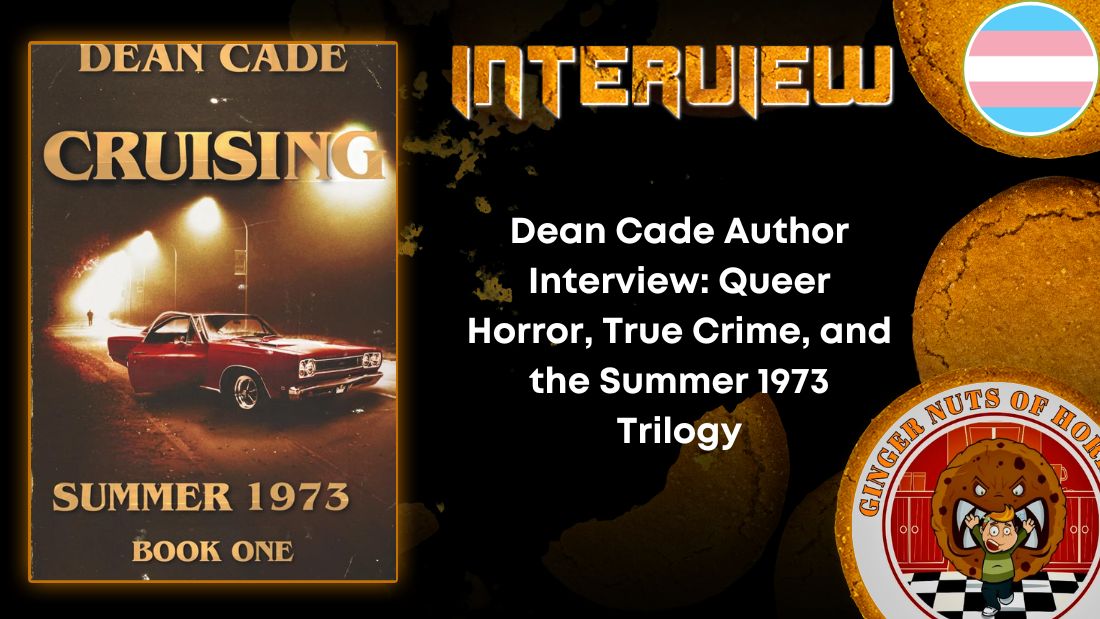
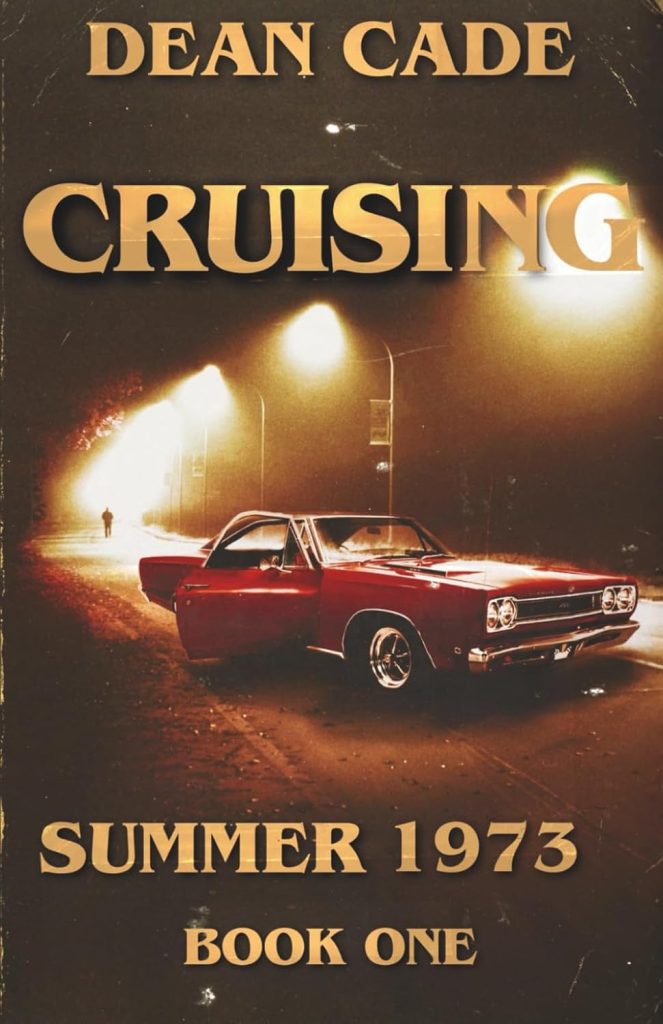
Cruising (Summer 1973) is a coming-of-age story about exploring life in a different time while hiding a secret. When Lane meets James, someone gay like him, he plans to one day escape to somewhere where they can be free to be themselves. The story is more than horror, as it is based on true events and real places. If you are curious about the characters, they will take you on a journey through the darkness.
Cruising: 1 (Summer 1973) by Dean Cade
In Cruising, Lane meets James, someone different like him. Together, they stumble into one of the most horrific crimes in the annals of American history.
Summer in the blue-collar neighborhood of the Heights is a time of partying, muscle cars, and rock music. Working as a gas jockey, Lane spends his time off with his roommate, Kyle, cruising the strip, hanging out in dives, and going on double dates at the drive-in. Lane knows he is different than other guys—gay in a time when it is not cool.
The Heights has a secret too, hinted at by the telltale signs of missing posters, an abandoned car, runaways, and an eerie, dark red ’68 Plymouth GTX that prowls the streets.
A chance encounter with James grows into something more for Lane. Dreams become vivid with omens of impending chaos as he crosses boundaries and sees a way to escape his dead-end life on the back of James’s BSA Lightning motorcycle. Ignoring the warning signs, he is unaware that a serial killer and his teenage accomplices are stalking them and intend for them to be the next victims.
Cruising (Summer 1973 Book I) is the first in a trilogy, followed by Lost Boys on May 15th, 2026, and Shallow Graves on July 15th, 2026, by Slashic Horror Press.
Dean Cade
Dean Cade is a Gen X writer who survived the chaos of running wild on the streets in his formative years. Now he uses those experiences, the highs, lows, and redemptions, to write memoir and genre fiction.
https://amazon.com/author/deancade
https://books2read.com/u/mdJEVy