
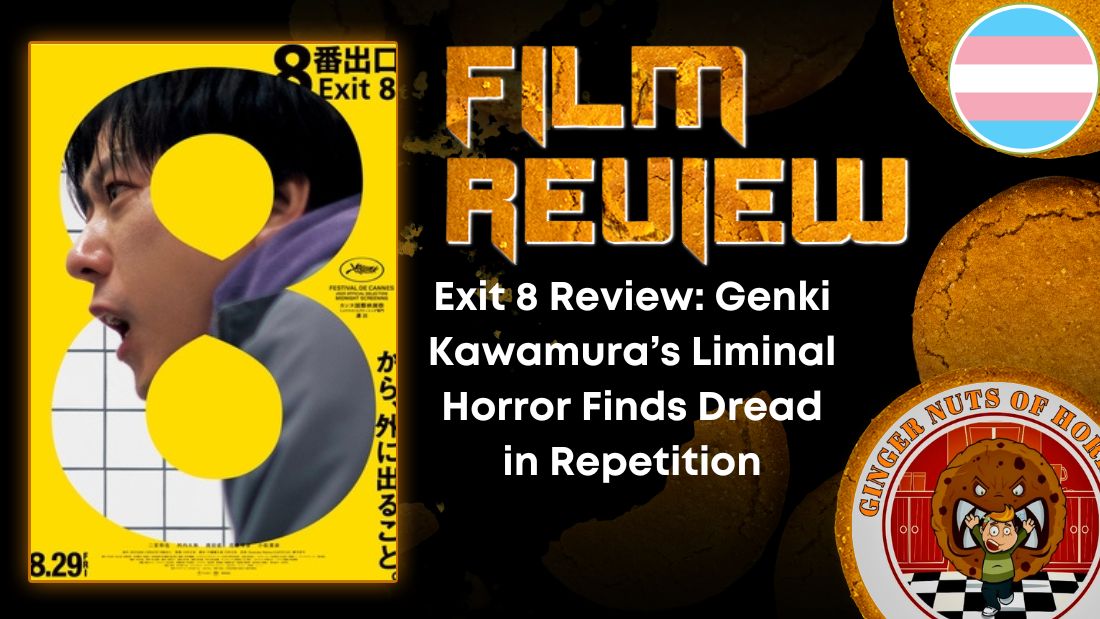
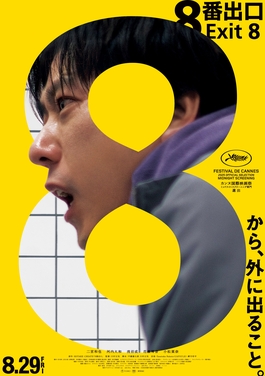
Spot the anomaly. Turn back. Repeat. Welcome to the underground.
Genki Kawamura made his name producing anime blockbusters. Your Name. Weathering With You. Massive hits. But horror? That felt unlikely.
Then came Exit 8.
Kawamura’s first directorial effort in the genre arrives quietly. No jump scares. No gore. Just white tiles, fluorescent lights, and a growing sense that something is very wrong.
The film adapts a cult video game. A simple one. You walk through an underground passage. Spot anomalies. Turn back if you see one. Move forward if you don’t. Repeat until you find Exit 8. That is the entire premise.
Video game movies usually fail because they overcomplicate. They add plot where none exists. Exit 8 does the opposite. It strips everything away. No backstory. No side characters. Just a man, his headphones, and endless identical hallways.
Horror video game adaptations are having a quiet renaissance. Iron Lung worked. The Mortuary Assistant worked. Both honored their source material’s simplicity. Neither tried to be a traditional film. Exit 8 follows that same path, and it might be the most unsettling of the bunch.
Where does Kawamura’s film sit in the horror genre? Not in haunted houses or slasher woods. Exit 8 belongs to liminal space horror. A subgenre built on transitional places. Airports. Stairwells. Hotel corridors. Subway tunnels. Spaces designed to be passed through, never lingered in. When you get stuck there, the ordinary becomes terrifying.
Japanese horror has always understood this. The original Ringu used a TV screen. Kairo used empty rooms. Exit 8 uses a metro passage. The location is mundane. That is precisely why it works.
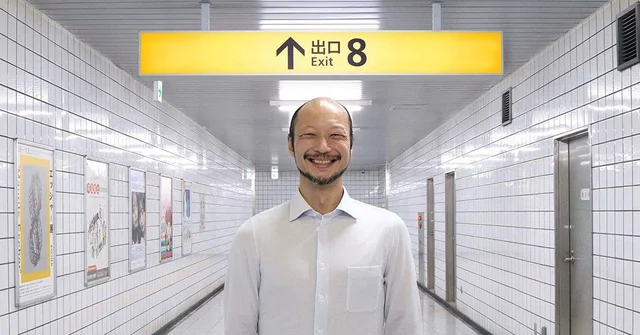
Kawamura brings a producer’s eye for pacing. Each hallway looks the same. The camera holds. You start second-guessing yourself. Did that sign change? Was the man in the coat always there? The film trains you to notice tiny details. A shifted doorknob. A different advertisement. A baby crying from somewhere you cannot see.
If you miss an anomaly, you restart from Exit 0. The nightmare begins again.
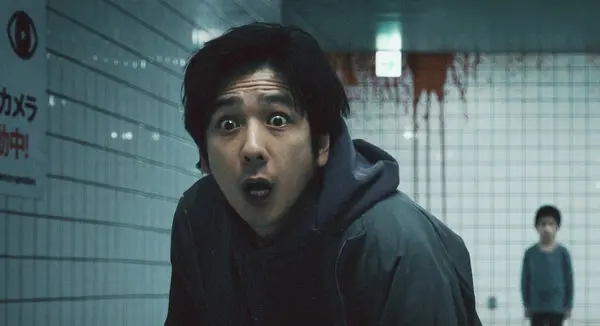
Kazunari Ninomiya plays Lost Man. He barely acts. That is the point. He stares at his phone, oblivious to the world, until the world forces him to pay attention. The performance works because it feels real. You have seen that person on the subway. You have been that person.
Kawamura’s previous works as a producer focused on emotional spectacle. Big skies. Teenage longing. Exit 8 offers none of that. The film is cold. Deliberately repetitive. Almost boring, until it is not. Then the boredom curdles into dread.
That tonal shift is hard to pull off. Most directors would add a score swell or a quick cut. Kawamura stays patient. He lets the setting do the work. The underground becomes a trap. The white tiles close in. You realize Lost Man has not spoken in twenty minutes. Neither have you.
So where does that leave us? A horror film that feels like a captcha test. A video game adaptation that refuses to explain itself. A director stepping into unknown territory and landing on his feet.
Here is what Exit 8 does right. And what it does not.
Exit 8 Review: Genki Kawamura’s Liminal Horror Finds Dread in Repetition
A Horror Movie Review by Hope Madden
Horror video game movies are having a moment. And the simpler the video game, the more unsettling the film adaptation.
Though the unendurable Return to Silent Hill might have sapped your will to live, both Iron Lung and The Mortuary Assistant honored their games’ uncomplicated storyline and reliance on viewer attention to generate dread and entertainment.
Perhaps the simplest and most unnerving is Genki Kawamura’s Exit 8, a captcha experiment in proving your humanity.
A minutes-long opening POV sequence announces the film as a video game, the first-person experience wearing thin just as Kawamura’s cinematic style alters. What has altered it? Our hero, faced with a deeply human choice, enters the bowels of the metro and loses his phone signal.
Kazunari Ninomiya is “Lost Man.” Buds in his ears, his eyes on his phone, he’s almost entirely unconnected from humanity. Even with no reception, he’s so oblivious that it takes him quite a while in the underground passages to realize he’s walking in circles, forever finding himself back at the exact same spot in search of Exit 8.
Finally, he notices an information sign. If you see an anomaly, backtrack immediately. If there’s no anomaly, keep moving forward.
The monotony and claustrophobia build as white tiled, fluorescently lit hallway after hallway deliver oppressive tension. As the numbers ascend—Exit 1, Exit 2, Exit 3—you may find yourself yelling at the screen. Slow down! Don’t get sloppy now! Because if Lost Man misses one anomaly, one misplaced doorknob, one altered advertisement, it’s back to Exit 0 and the whole nightmare begins again.
And nightmare it is. Blackouts, crying babies, frozen smiles, giant hairless rats with human noses are some of the more obvious anomalies.
It would all become too monotonous to bear were it not for the chapter breaks, which allow us to shift perspective briefly. Yes, the other two characters—Walking Man (Yamato Kôchi) and The Boy (Naru Asanuma)—are likewise trapped in the labyrinthine underground. But their presence offers some clues beyond the surface level anomalies, some hint at the quest to find our humanity.
Kawamura doesn’t dig too deep for character development, but the spare setting and liminal hellscape bring it forth. Exit 8 seems not like a game you play again and again. Likewise, the film is unlikely to be one you revisit every spooky season. But it is a uniquely challenging effort and another surprising win for horror video game adaptations.
Horror Movie Reviews from the Fright Club Podcast and Ginger Nuts of Horror
For horror fans seeking the ultimate guide to the genre, look no further than the horror movie reviews on Ginger Nuts of Horror. Our platform is the premier destination for in-depth horror film analysis, curated by our dedicated team of critics from the Fright Club Podcast.
Why Trust Our Horror Movie Reviews?
Our horror movie review team is powered by the seasoned expertise of the Fright Club Podcast, featuring Hope Madden and George Wolf from Maddwolf.com. This collective brings a relentless passion for the macabre to every critique. The Fright Club Podcast experts dissect the very fabric of fear in film, going beyond simple plot summary to analyse the unsettling cinematography, masterful sound design, thematic depth, and cultural impact that define both modern classics and hidden indie gems.
Discover Your Next Favourite Fright
Whether you’re a casual horror viewer or a dedicated aficionado, our reviews serve as your essential compass. We cover the full spectrum of the genre—from mainstream horror blockbusters to groundbreaking independent horror films. The Fright Club Podcast team’s insights reveal layers of meaning and directorial intention, enriching your viewing experience and helping you discover underrated horror movies you might otherwise miss.
Stay Ahead of the Horror Curve
The Ginger Nuts of Horror review website is your frontline for upcoming horror releases and emerging genre trends. Our critiques, fueled by discussions on the Fright Club Podcast, offer more than just a rating; they provide a comprehensive discussion that prepares you for what’s lurking in the theatrical and streaming shadows.
Deepen Your Horror Journey with the Fright Club Podcast
Exploring our horror film reviews is a vital step toward a deeper, more nuanced appreciation of horror. Let Hope Madden, George Wolf, and the Fright Club Podcast team guide you through the nightmares. Bookmark our section for the best horror movie reviews and join a community dedicated to the art of fear.
Ready to get scared? Browse the definitive collection of horror movie critiques on Ginger Nuts of Horror, and don’t forget to listen to the Fright Club Podcast for even more terrifying insights.