The zombie genre doesn’t need another outbreak origin story. We’ve watched the first bite, the first fever, the first neighbour chewing on the second neighbour more times than most of us care to admit. What feels rarer, almost defiant, these days, is a filmmaker who asks what happens after the chaos curdles into routine.
So when she stepped into the Sundance Midnight section with Didn’t Die, a black-and-white indie horror she co-wrote with her husband and cinematographer Paul Gleason, she brought something unexpected: a zombie dramedy less concerned with fresh corpses than with fresh angles on grief. The result is a film that wears its Romero homage like a worn jacket, comfortable, familiar, but maybe not quite warm enough for the weather it walks into.
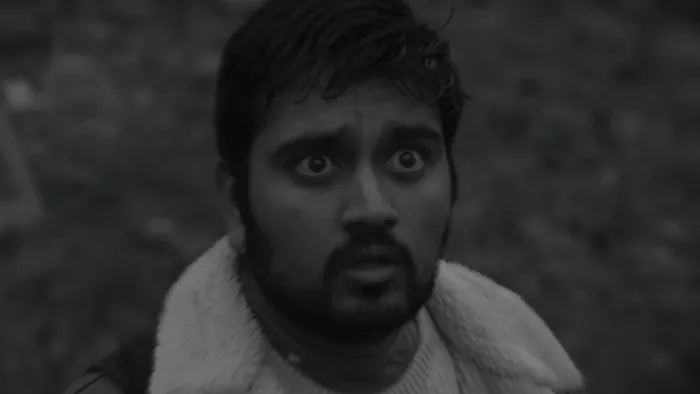
The premise arrives with a sardonic shrug. Vinita (Kiran Deol) hosts a podcast called “Didn’t Die” years into a zombie apocalypse, broadcasting survivor stories to an audience that, like civilisation itself, keeps shrinking. She’s heading toward her hundredth episode, a milestone that matters more than it probably should. Her younger brother Rishi (Vishal Vijayakumar) tags along as they drive toward their childhood home, where older brother Hari (Samrat Chakrabarti) and his wife Barbara (Katie McCuen) wait with their own complicated survival strategies.
The biters, Menon’s preferred term for the undead, lie dormant during daylight hours, which means the apocalypse unfolds not in frantic sprints but in long, uneasy pauses between threats. This is the film’s sharpest idea: not the end of the world as a scream, but as a dull, persistent ache.
Menon built this low-budget feature in the aftermath of COVID, financing it herself with Gleason, shooting largely in Monroe, New York where his family has roots, and casting friends, family, their daughter as the baby, and even their dog. The film’s black-and-white cinematography wasn’t just an aesthetic nod to Night of the Living Dead; it was a practical workaround for a minimal lighting package, turning constraint into style.
This Sundance Midnight zombie dramedy wants to be a meditation on grief, not a splatter show. Whether it earns both remains the question.
Then, weeks before its Sundance premiere, Menon and Gleason lost their Altadena home in the Eaton Fire, alongside producer Erica Fishman and editor Geoff Boothby. The house that appears in the film’s flashback sequences, shot as warm, 8mm memories, no longer exists outside the frame. That bittersweet irony shadows everything about Didn’t Die, transforming its questions about loss from abstract genre exercise into something uncomfortably real.
But a film’s production story and a film’s final cut are not the same thing. For all its clever bones, the podcast framing, the subversion of zombie fatigue, the refreshing refusal to make South Asian identity a plot point, Didn’t Die struggles to translate its ambitions into emotional momentum. Vinita remains sealed inside her own ironic distance, which makes her difficult to root for even when the third act raises the stakes.
The tone wobbles between wry comedy and family psychodrama, never quite finding the groove that would make both land. And yet, there is something undeniable about what Menon attempts: a Sundance Midnight zombie dramedy that wants to sit with grief rather than outrun it. Whether it earns that seat is what follows.
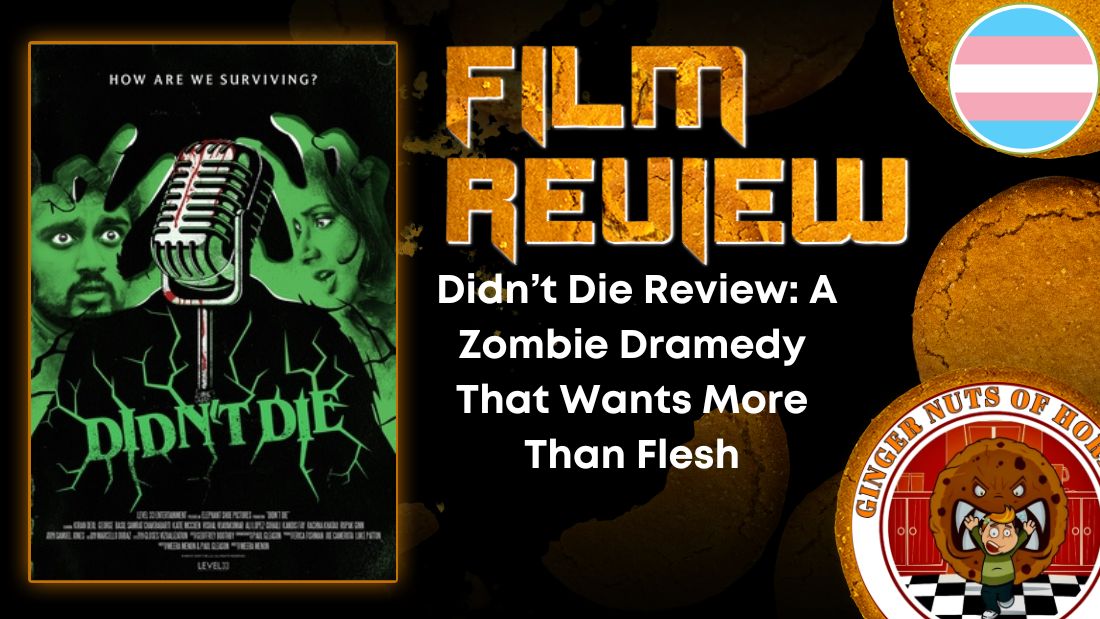
Didn’t Die Review: A Zombie Dramedy That Wants More Than Flesh
A Horror Movie Review by Rachel Willis
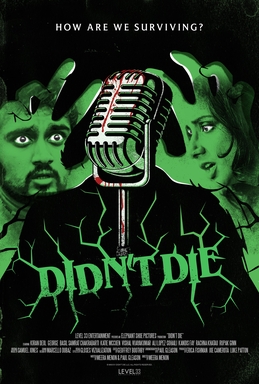
For her 100th podcast episode, Vinita (Kiran Deol) is hosting a live broadcast. Only warm bodies allowed – no biters! Director Meera Menon, co-writing with Paul Gleason, brings her own vision to life during a zombie apocalypse in Didn’t Die.
The people of this world have been surviving among zombies for some time. So, rather than bearing witness to the beginning of an outbreak of flesh-hungry undead, we get to occupy a world that’s more “been there, done that.”
Of course, every aspect of the zombie genre has been mined countless times in various mediums, so this take isn’t exactly new, either. However, Menon offers something a bit different in just how dull the apocalypse turns out to be.
There are several interesting elements at play. Zombies, known as biters, tend to lie dormant during the day. That leaves them vulnerable, but not everyone is comfortable killing them. One woman laments that her beloved dogs were bitten and had to be killed. These aspects create a lived-in world that helps ground the characters.
However, Menon struggles with the film’s tone, and Vinita never feels like a fully realized character. It’s clear that the intention is to paint Vinita as someone closed off from those around her; the way in which it is done, however, doesn’t allow for a connection with the audience.
For this reason, the movie lacks emotional depth. Though the second half picks up in intensity, without a connection to characters, the tension never quite leaves you on the edge of your seat.
The filmmakers are clearly doing what they can to create something different with Didn’t Die. They just don’t quite get there.
Horror Movie Reviews from the Fright Club Podcast and Ginger Nuts of Horror
For horror fans seeking the ultimate guide to the genre, look no further than the horror movie reviews on Ginger Nuts of Horror. Our platform is the premier destination for in-depth horror film analysis, curated by our dedicated team of critics from the Fright Club Podcast.
Why Trust Our Horror Movie Reviews?
Our horror movie review team is powered by the seasoned expertise of the Fright Club Podcast, featuring Hope Madden and George Wolf from Maddwolf.com. This collective brings a relentless passion for the macabre to every critique. The Fright Club Podcast experts dissect the very fabric of fear in film, going beyond simple plot summary to analyse the unsettling cinematography, masterful sound design, thematic depth, and cultural impact that define both modern classics and hidden indie gems.
Discover Your Next Favourite Fright
Whether you’re a casual horror viewer or a dedicated aficionado, our reviews serve as your essential compass. We cover the full spectrum of the genre—from mainstream horror blockbusters to groundbreaking independent horror films. The Fright Club Podcast team’s insights reveal layers of meaning and directorial intention, enriching your viewing experience and helping you discover underrated horror movies you might otherwise miss.
Stay Ahead of the Horror Curve
The Ginger Nuts of Horror review website is your frontline for upcoming horror releases and emerging genre trends. Our critiques, fueled by discussions on the Fright Club Podcast, offer more than just a rating; they provide a comprehensive discussion that prepares you for what’s lurking in the theatrical and streaming shadows.
Deepen Your Horror Journey with the Fright Club Podcast
Exploring our horror film reviews is a vital step toward a deeper, more nuanced appreciation of horror. Let Hope Madden, George Wolf, and the Fright Club Podcast team guide you through the nightmares. Bookmark our section for the best horror movie reviews and join a community dedicated to the art of fear.
Ready to get scared? Browse the definitive collection of horror movie critiques on Ginger Nuts of Horror, and don’t forget to listen to the Fright Club Podcast for even more terrifying insights.