Folk horror that moves the fear off the page and into your front room.
India-Rose Bower opens We Call Them Witches with a family warding their doors against creatures they barely understand, and the fear does not stay on the page. This post-apocalyptic folk horror sets Sara and her family loose in a ruined Britain where pagan folklore is the only weapon that holds, eldritch monsters stalk the moors, and a sapphic romance flickers like the last light left. Bower’s debut earns its place beside the best of the folk horror revival, patient with its dread and honest about family. Here is why this eldritch, ritual-soaked horror book deserves your shelf.
India-Rose Bower moves the fear off the page and into your own front room, building dread from damp wood until it catches all at once. Folk horror rooted in landscape and ritual, braiding eldritch monsters, family love and a sapphic heart into something that works on the body before the brain.
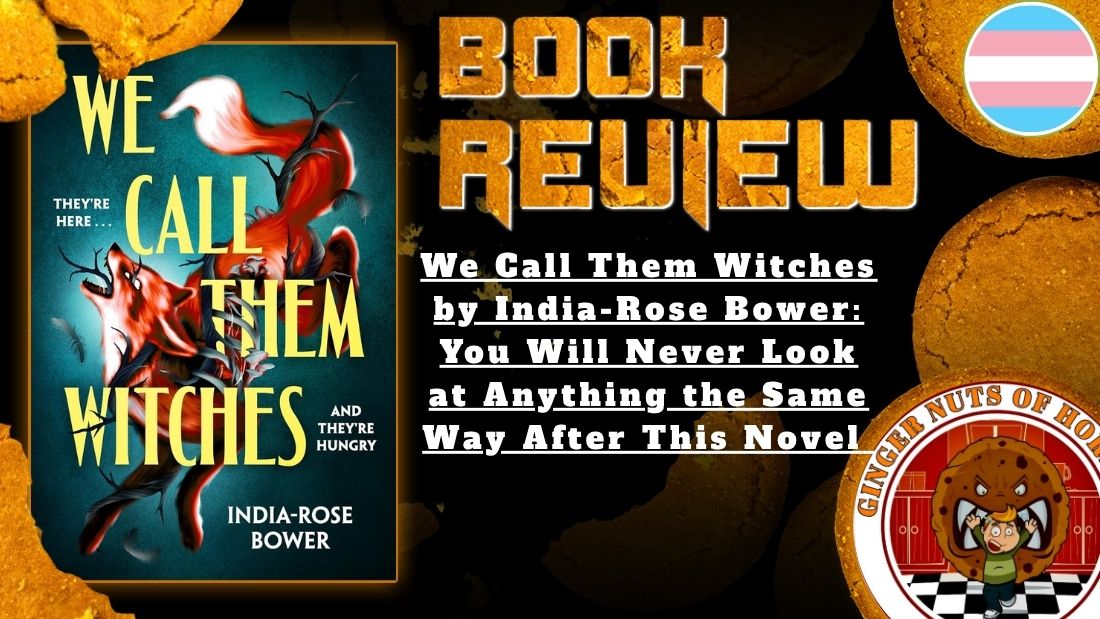
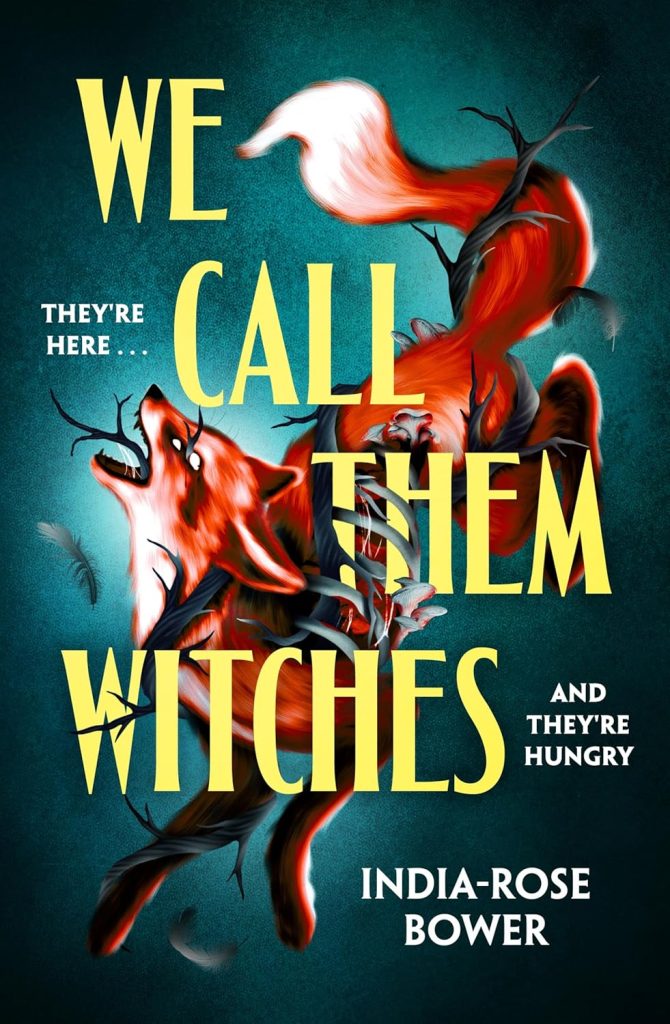
We Call Them Witches | India-Rose Bower | Michael Joseph (Penguin) |January 2026 |
Sara wards every door before the family sleeps, ties the knots, sets the poppets in their places, and a few chapters in I caught myself eyeing my own front door like it might let something through.
That is the trick of this book. It moves the fear out of the page and into the room you are sitting in. India-Rose Bower has written a folk horror that works on the body first and the brain second. You feel the cold of the moors before you understand what walks them.
The setup is simple, and the simplicity is the point. Two years ago, the things they call Witches tore through Britain. Most people died on the first night. Sara and what is left of her family survive by moving, hiding, and warding wherever they stop. Folklore is the only weapon that holds. Pagan ritual is the only fence.
The Witches themselves stay mostly out of sight for a long stretch. I loved this choice. No two of them are the same. One wears antlers. One looks stitched together from animals and plants and something that should not be either. By keeping them in the dark, Bower lets your own head do the worst of the work, which is exactly what good horror should make you do.
The pacing earns its scares. The early chapters live on a farm, warded and watched, where the threat is mostly pressure at the edges. Then the family splits, the road opens up, and the book changes gear. Bower walks her people through empty towns and decrepit pubs that feel wrong in a way I could not always name. Those middle chapters are where my pulse picked up and stayed up.
The prose is lean. Bower trusts the plain image over the fancy one. A twisted tree. A mark on a drystone wall. She takes the ordinary furniture of the English countryside and tilts it a few degrees until it turns strange, them horrific
That tilt is the whole method. The horror does not come from somewhere far away. It comes from the dressing gown on the back of the door that looks, for one second, like a person. Or the creepy door at work that no ones to open. Yeah I heard about the door an hour after starting this book. I’m not a happy chappy. Bower knows that our oldest fears are the familiar ones, the safe things that turn on us, and she writes them with a calm that makes them worse.
Her flashbacks are used with real control. They do not dump information. They drop a memory of the first night, let it sting, then pull back before it explains too much. The not knowing is deliberate, and it works as a foundation to the novel , not as a gap.
Underneath the monsters, this is a book about family, and about what we will do to keep the people we love alive.
Sara is parentified, carrying weight a kid should never carry. Her bonds with her siblings are knotty and difficult and real. Bower does not sand them smooth. Love here is not soft. It is a job you do at three in the morning when you are frightened and nobody thanks you for it.
The ritual thread runs deeper than set dressing. In Bower’s hands, the warding and the poppets and the herbcraft read as something more than magic. They are how frightened people hold the dark at bay. They are how you make the night feel survivable when nothing else will. My Gran was one of the women of the old ways, and this book hits hard, the rituals I do each day before I can walk out the door, and the dark shape that is always at the periphery of my vision when I walk through one of the local woods, makes this book one that unsettles me more than I care to admit.
There is real weight here for anyone who knows how ritual can be both a comfort and a cage. The book treats those small repeated acts, the knots tied just so, the words said in order, with tenderness rather than mockery. It understands why a scared person reaches for them.
And then there is the romance. Parsley appears in the garden with no memory of where she came from, and Sara is drawn to her fast. I took its speed as a feature, not a flaw. Of course, a girl starved of new faces falls hard. Of course, she wants something that is hers in a world that has taken everything. The pull between them is the hope that keeps the horror sharp. Bower has said you cannot have fear without light, and Sara and Parsley are that light. When the dark comes for them, it hurts more because of it.
The post-apocalypse setting does its own quiet work. Anyone who lived through recent years will recognise the texture of it, the locked doors, the rationing of hope, the way fear can curdle into paranoia inside a household. Bower does not lecture. She just lets you feel how thin the membrane is between an ordinary family and a desperate one.
This is Bower’s first novel, and it does not read like a first anything.
She comes to it with short stories and poems already published across magazines and anthologies, and with a longlisting for the Discoveries Prize behind her. You can feel that apprenticeship in the prose. The compression of a poet. The economy of a short story writer who knows that what you leave out does most of the cutting.
What this debut confirms is a writer who has thought hard about why we tell scary stories at all. In conversation about the book, Bower has linked her rituals to her own life, to OCD and its compulsions, to a Yorkshire childhood spent monster hunting on the moors. The folklore is not researched at arm’s length. It is inherited.
If there is an arc to watch, it starts here, and it points somewhere very good. The instincts on display, the patience, the trust in the reader, the refusal to over-explain, are the instincts of a horror writer with a long career ahead of her.
So what is this, exactly? It is folk horror, first and foremost, sitting squarely in the revival that has given us Francine Toon’s Pine and Andrew Michael Hurley‘s brand of damp, rural unease. It is also eldritch horror, in the older sense, closer to the unknowable dread of A.M. Shine’s The Watchers than to anything with a tidy mythology.
And it is post-apocalyptic survival fiction, with the lean family-on-the-run shape that genre does so well.
What Bower does that feels fresh is braid all three together and then run a sapphic love story straight through the middle. The folk horror gives her the rituals. The eldritch strain gives her the monsters she refuses to fully name. The apocalypse gives her the pressure. The romance gives her the heart. Most books pick one of these and commit. Bower commits to all of them, and the blend is what sets it apart from its neighbours.
Rooted in landscape. Honest about queerness without making queerness the lesson. Folk in its bones, modern in its anxieties. Bower has arrived right on the front edge of that wave, and she is not following it. She is helping shape where it goes.
Tie your knots. Salt your door. None of it will matter, and that is the whole terrible point.
We Call Them Witches by India-Rose Bower
THE BESTSELLING HORROR DEBUT* STEEPED IN PAGAN FOLKLORE AND A SAPPHIC ROMANCE SET IN A POST-APOCALYPTIC WORLD FULL OF HUNGRY ELDRITCH CREATURES . . .
‘A beautifully told story of dystopian apocalypse’ Daily Mail
India-Rose Bower’s debut offers a new take on horror, blending pagan folklore and sapphic romance – PinkNews
We Call Them Witches is a fresh take on dystopian horror, brimming with eldritch creatures, love and desire, and examining how far we’ll go to save our family from what hunts them. I love it. – Laura Elliott, author of Awakened
—
Sara and her family must keep moving.
Every few months, they’re discovered, and they have to pack up and get out quick.
For the twins it’s all they’ve ever known, for Danny, Noah and Ma, it’s a reminder of all they’ve lost.
For Sara, it’s just another day.
In yet another abandoned house, one they surround with Pagan wards – the only thing that protects them – Sara and her family think they might be safe, for a while at least.
And then they find a strange girl in the garden.
Parsley can’t remember where she came from or how she got here. The family sees only a threat, but Sara sees hope.
But outside they are waiting. The eldritch creatures. The ones they call Witches.
The ones who already stole everything.
And now, just days after the Parsley arrives, they steal something even more valuable: Noah.
It’s time to stop running. It’s time to leave the safety of the wards, and try to find Noah in the witches’ lair.
It’s just that no-one has ever done that and come out alive…
—
Readers are already loving We Call Them Witches!
‘Absolutely thrilling and keeps you turning the page to find out what happens’ Reader review
‘Blending folklore, fear, and queer romance, this book is as heartfelt as it is haunting. A must-read for fans of eerie, character-driven horror’ Reader review
‘ It is utterly addictive, such a perfect mix between fast paced action and tender reflection that I genuinely couldn’t put it down’ Reader review