
The Backrooms went viral because we’d all already worked there.
The original Backrooms photograph was taken in a half-renovated furniture shop in Oshkosh, Wisconsin, around 2002. Yellow walls, worn carpet, strip lights, nobody about. The location stayed a mystery until 2024, when it turned out to be the least frightening thing possible: a shop between tenants. That is the secret hiding inside Backrooms horror. Strip away the noclip and the lore and liminal space horror is simply the back of the shop, the stockroom, the staff room, the night shift. This is the case for the Backrooms as working-class horror, with Hunter’s Tryst, Stephen King, and a ghost called Charlotte as witnesses.
The Backrooms is Just a British Backshift With Better Lighting
The Backrooms aren’t a doorway out of reality. They are a doorway into yours, the windowless one where the carpet smells of damp and the lights hum and you cannot leave until someone says you can. We didn’t need a creepypasta to find that place. We had a swipe card.
The original Backrooms photograph was taken inside a half-renovated furniture shop on Oregon Street in Oshkosh, Wisconsin, sometime around 2002. Yellow walls. Worn carpet. Strip lights are doing that thing strip lights do. Nobody about. For years, nobody could say where it was, until the location got pinned down in 2024, and the answer turned out to be the least mysterious place imaginable: a shop, between tenants, photographed by whoever had been left to mind it.

Anyone who has ever cashed up alone, counted stock past closing, or waited on a manager to come and unlock the fire door so they could go home has stood somewhere just like it. Not that shop in Wisconsin. Its British cousin, the one out the back, past the swing doors, where the lights stay on and the day refuses to end.
The Backrooms went viral in 2019 off the back of a single post on 4chan’s paranormal board, where someone asked for images that “feel off” and got back a yellowed corridor and a paragraph about what happens if you “noclip out of reality.” The pitch was simple. Wrong turn, wrong moment, and you fall out of the world into roughly six hundred million square miles of empty rooms, the stink of damp carpet, mono-yellow everything, and fluorescent tubes humming at full whack. Something is in there with you. It has already heard you.
Millions of people felt that paragraph in their fillings. The usual reading is that the Backrooms tap a kind of digital nostalgia, the dead-mall, empty-office, 1990s-VHS feeling of places that should be busy and aren’t. That is true as far as it goes. I just think it stops one rung short of the floor.
Recognition is the whole trick
Here is the part everyone agrees on and then walks past. The Backrooms are frightening because you recognise them. The horror is not a monster. The horror is that you have been here, on a Tuesday, on minimum wage, and you could not leave until half past five.
The aesthetic people call “liminal space” is just the back of the shop. It is the stockroom with the buzzing tube nobody replaces. It is the staff room with the kettle, the rota nobody likes, and a window painted shut. It is the warehouse mezzanine at three in the morning when the racking goes back further than the lights reach. The Backrooms describe a building with no customers, no daylight, and no obvious way out, which is also a fair description of a Sunday backshift in any retail park in Britain.
Strip out the noclip and the lore and the levels, and the core image is a working environment. Yellow institutional paint, the kind chosen because it does not show grease. Carpet tiles. The hum. The absence of anyone who could help. A British worker reads that picture and clocks in.
Say “liminal” one more time
A word about the word. “Liminal” has escaped the seminar room and become the favourite adjective of a certain chin-stroking brigade, the ones who found the term about eighteen months ago and now deploy it over a flat white to mean “a photo of an empty swimming pool I think is quite nice.” It has gone full buzzword. It sounds clever, it costs nothing to say, and most of the people saying it could not define it if you put them on the spot.
So here it is. Liminal means threshold. It describes a space you pass through rather than one you arrive in: the corridor, the stairwell, the waiting room, the petrol station at three in the morning. The dread comes from a place built for crowds doing its empty impression of itself, somewhere designed to be a means and never an end. That is the actual idea under the buzzword, and the moment you say it plainly you notice the obvious thing the hipsters miss. Thresholds are mostly where we work. Nobody lives in a corridor. Plenty of us get paid to stand in one.
The ones that actually pull it off
Forget Severance and Ghostwatch for a minute. Those are workplace horror and class horror, which is an older and different animal, full of plots and villains and gags. Pure liminal horror has almost none of that, and the recent run of it is worth lining up, because each one quietly resolves into a British job without meaning to.
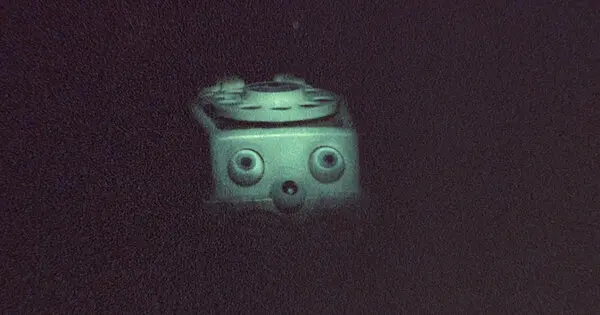
Skinamarink (2022) is the cleanest specimen. Two young children wake in the night to find the doors and windows of their house gone, the rooms lit only by a television, the floor strewn with toys, and at one point a dollhouse perched on a heap of toys in a hallway that simply does not end. Nothing chases them in any ordinary sense. The horror is that a familiar place has quietly stopped obeying the rules and there is no way out. That is the exact texture of a lone night shift, when the building you know in daylight turns strange after midnight and the exit stays locked until someone with a key says otherwise.
The Exit 8, the 2023 game filmed by Toho in 2025, traps you in a single Tokyo subway underpass that loops forever. You get out only by spotting the small anomaly, the poster that changed, the light that flickered, then turning back. Miss it, or turn back for nothing, and you are at Exit 0 again. Take away the supernatural and that is a commute. It is the staff corridor you walk forty times a shift, the underpass between the car park and the loading bay, the bone certainty that you have stood in this exact spot before and will stand in it again tomorrow.
Vivarium (2019) drops a young couple into Yonder, an estate of identical empty green houses, after a strange estate agent vanishes and strands them there. Every road loops back to house number 9. Food arrives in boxes from nobody. They are told to raise a child and they will “be released.” The estate agent is the masterstroke. Jonathan Aris plays Martin as a gurning, over-eager goblin in a slightly wrong suit, all rictus grin and answers that mirror yours straight back at you, which is the exact energy of every lettings rep who has ever called a box room “cosy” and a four-lane bypass “excellent transport links.”
He shows them house number 9, does his patter about it being near enough and far enough and just the right distance, then drives off and leaves them to rot inside the brochure. Every British worker who has sat through a viewing has met this man. He owns one company fleece, wears the lanyard to the corner shop, drives a Corsa with the agency name down the side, and he will hold your gaze and call the damp patch “character.”
Yonder is the show home as a trap and the property ladder as a custodial sentence. The dread is the precise one you get in the bright, clean, depopulated hush of an open-plan office at eight on a Friday, or a viewing nobody came to, or a new-build estate with four hundred houses, no shop, no pub, and no reliable way of telling Tuesday from Sunday.
Older and purer still, The Shining (1980) is liminal horror with a payslip. Jack Torrance takes a job, winter caretaker of a hotel that shuts for the season, and the terror is simply the building once the guests have gone: the long corridors, the silent ballroom, the carpet pattern you come to hate, the hedge maze you would have to be paid extra to enter. Strip out the ghosts and it is hospitality in the dead season, which is to say it is a British bar in February with the heating turned down to spite you.
The Overlook even comes with the defining feature of British bar work, which is management you never actually see. Mr Ullman hires Jack in the first ten minutes and then all but evaporates, the way an area manager pumps your hand once, says the words “ownership” and “wastage,” and is never glimpsed again except as a name on the rota and a passive-aggressive note about the cellar.
And there is always a Dave. Jack’s Dave is Lloyd, the barman who materialises behind an empty bar to pour for a man who is supposed to be alone in the building, but every pub in the country runs its own model: the creepy git on the closing shift who hovers by the optics, gives you the leery side-eye across the glass washer, stands a foot too close while you cash up, and says something quietly off that you will still be turning over on the night bus home.
The Overlook is a function room between bookings, one wedding swept up and the next not yet in the diary, and that posting, the dead bar, the lock-in that refuses to end, the hated carpet, the silence, and the Dave, is one most British workers have served.
Then there is the one nobody has filmed, the most liminal room in Britain, and it is the back of a supermarket in the second week of January. The seasonal aisle has been pulled. The warehouse holds everything that did not sell: selection boxes going for nothing, a cage of unwanted advent calendars, the talking toy that was a must-have in November and now sits reduced to clear and faintly deflated. Strip lights.
Nobody about. A radio playing to itself between the racking. Skinamarink put a dollhouse on a pile of toys and called it a nightmare. Every shop worker in the country has stood in front of that exact pile, scanning it down to half price, and called it a Tuesday.
Ours come with a supervisor
The American version of all this leans cosmic and suburban: the empty mall, the abandoned office park, the freeway underpass at dusk. The dread is absence. Everyone has gone, and the only wrongness is that nobody is left to tell you why. It is a fine idea, and the Americans do it at scale, all six hundred million square miles of it.
The British version is smaller, meaner, and better, because ours is never quite empty and never quite yours.
Yanks get the existential void. We get the void plus a man called Dave asking why you’re not on the tills.
That is the upgrade. The Backrooms imagine the terror of total solitude. The shop floor offers a worse one: solitude that can be broken at any second by someone holding a clipboard. You are alone enough to feel watched and supervised enough to never relax. The American liminal space removes the people. The British one keeps the supervisor, and the supervisor is the horror.
Peter Strickland understood this exactly. In Fabric, his 2018 film, follows a cursed red dress out of a department store called Dentley and Soper’s, where the January “Sales” play as literal hell, all hypnotic adverts and saleswomen circling like a Victorian funeral that learned to upsell. The dress kills people.
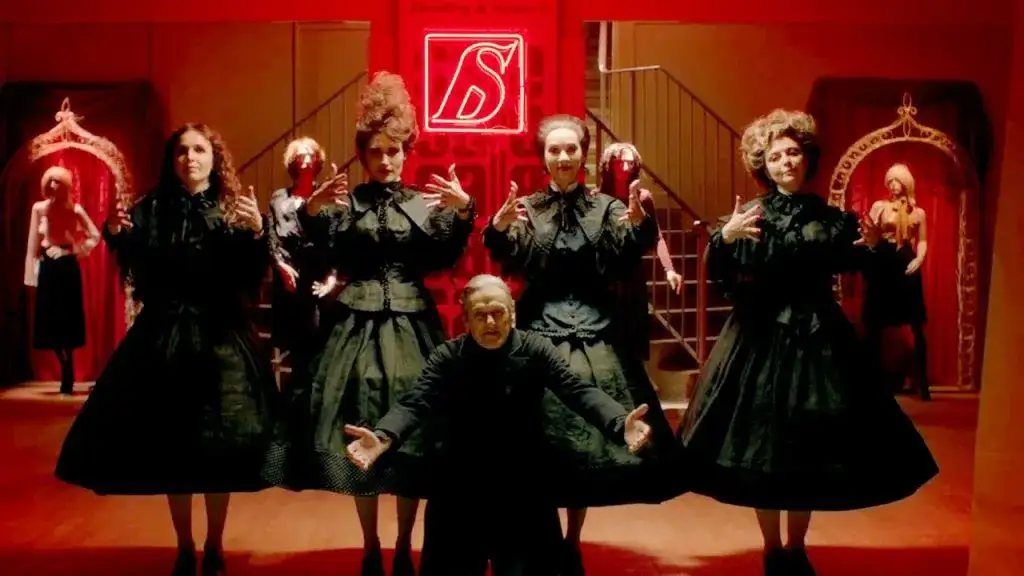
The truly frightening characters are the two bosses of Sheila, the bank teller played by Marianne Jean-Baptiste, who monitor her toilet breaks and tell her she is not “attuned” to the company philosophy. Producer Andy Starke called the film “a kitchen-sink drama being attacked by a European horror film,” which is the best one-line summary of the whole British register I have read. Our horror keeps the staff in the building and lets the rota do the killing.
The ghost is council issue
Consider the most British ghost story ever broadcast. On Halloween night in 1992 the BBC aired Ghostwatch, ninety minutes of fake live television fronted by Michael Parkinson, written by Stephen Volk and directed by Lesley Manning. It was convincing enough to pull an estimated million calls to the switchboard and keep the tabloids furious for a week.
The ghost is not in a manor. It is in a council house on a made-up cul-de-sac in Northolt, where a single mother called Pam Early and her two daughters are tormented by a poltergeist the youngest has nicknamed Pipes, after the knocking in the bad plumbing the family cannot afford to fix. Pam writes to the council to be rehoused. The council says no. A social worker suggests the whole family see a psychiatrist. The ghost is real, and so is the waiting list.
That is the British thesis in a single broadcast. American horror sends a wealthy family into a big house they chose to buy. British horror puts the ghost in social housing, names it after a maintenance fault, and makes the council part of the problem. Our monsters have read your tenancy agreement.
Move that same instinct out of the home and onto the shop floor, and the back rooms of Britain fill right up.
The pub by the Morrisons that Satan closed
Drive to Fairmilehead on the southern edge of Edinburgh and you will find Hunter’s Tryst, an old inn that lent its name to the whole area. These days, it sits among housing estates, next door to a Morrisons, and is served by the number 5 bus. It is about as liminal as Scotland gets.
A plaque near the entrance reads: “The inn closed in 1882 after being haunted by Satan.” Not a poltergeist. Not a grey lady. The actual Devil, apparently, ran a hospitality business out of trade. The precise tale behind that line has worn thin with retelling, so I will not invent the missing chapter, but the building has carried a reputation ever since. Ron Halliday recorded its stories in Edinburgh After Dark, and a previous manager’s account of the place has been passed along by local folklorist John S. Tantalon for Spooky Edinburgh, including a white-clad woman seen on the rear stairs toward the kitchen.
The detail that delights me is more recent. After lockdown lifted, the manager got a call from the alarm company in the small hours and drove over to wait for the police. While he sat outside, he watched the lights of the building switch on and off, section by section, in order. The police found nothing. No forced entry. Just a closed pub, lighting itself up room by room like it was doing the rounds.
I love this because it is so unglamorous. Before Hunter’s Tryst was a supermarket, it was a dairy until the 1960s. Before that it drew ramblers and the Six Foot Club, whose honorary members included Robert Louis Stevenson and Walter Scott, both let in despite being too short to qualify properly, which is the most Scottish bylaw ever written. A dairy. A pub. A bus terminus. And the Devil. The supernatural in Scotland does not require a castle. It will happily work out of a supermarket car park.
The shop ghost with a sense of humour
The folklorist Dr David Clarke’s archive holds a small gem from a man who worked for the toy and model retailer Beatties, sent round to restock newly acquired stores. Two of them, in Halifax and Huddersfield, came with resident ghosts. The Halifax one was called Charlotte. She had a sense of humour. She flushed the downstairs toilet on her own, and she would bang on the staff-room window if someone sat in her chair. Footsteps crossed the attic stockroom after the doors were locked.
That is the British workplace ghost story in miniature. Not a demon. A colleague who never left, who is mildly territorial about seating, and who haunts the one part of the building the public never sees. Whole genres of UK paranormal folklore are set in stockrooms, staff toilets, and the bit of the factory the foreman tells you not to go into.
Bigger sites grow bigger legends. The British Cellophane factory in Bridgwater, opened in 1937, generated decades of ghost talk among its workers, the kind handed down on the night shift until they hardened into local fact. And browse any UK paranormal podcast and you will find the supermarket episode: someone moved to the frozen aisle on nights, the cold reading wrong, the sense of company in an empty store. The Backrooms didn’t invent any of this. They just gave the night-shift dread a logo.
Horror has always clocked in
The genre worked this seam long before a teenager opened Blender. Stephen King wrote two of the great industrial nightmares back to back in Night Shift in 1978, and he had done the work to earn them. He spent time in an industrial laundry, which is precisely why “The Mangler” turns a possessed speed-ironer into something believable: a vast metal mouth on the factory floor that develops a taste for the people feeding it. “Graveyard Shift” sends a crew of put-upon mill workers into a textile basement nobody has cleaned in years, and the real predator down there is the boss who sent them.
Both stories were filmed, the laundry one by Tobe Hooper in 1995 with Robert Englund chewing the scenery, the mill one in 1990 with Brad Dourif as the maddest rat-catcher in cinema.
Thomas Ligotti pushed it into the office and won a Bram Stoker Award for doing so. My Work Is Not Yet Done is subtitled Three Tales of Corporate Horror, and its supporting story even relocates a company to a city smothered in a thick yellow haze, which is the Backrooms palette decades early. Ligotti’s terror is not the supernatural force his narrator eventually meets. It is the seven managers, the meetings, the sense that the job itself is the thing trying to eat you.
So when the Backrooms reached A24 this year, with Kane Parsons directing the film he grew out of the short he made at sixteen, it arrived into a tradition it pretends to have invented. It hasn’t. It has just rendered the break room in higher resolution.
Why the British win
Credit where it is due. The Backrooms reach a scale we rarely bother with, a depopulated, cosmic hugeness that does genuinely unsettle, and Kane Parsons shoots it beautifully. The purest liminal horror tends to come from elsewhere anyway, from America and Canada and Japan, and they can keep the trophy for square footage.
Scale is the easy part. What the British tradition does better is refuse the fantasy of escape. The Backrooms dangle a way out, somewhere, if you only survive enough levels. King, Ligotti, Strickland, Ghostwatch and a haunted Morrisons all know the thing the creepypasta flinches from: no level lets you clock off. The horror was never that you fell out of the world. It is that you are contracted to it until five, and someone else is holding the keys.
We win because we never pretended the call was coming from outside the staff room. We always knew it was Dave.
The Backrooms aren’t a doorway out of reality. They are a doorway into yours, the windowless one, where the carpet smells of damp and the lights hum and you cannot go home until someone says you can. We didn’t need a creepypasta to find that place. We had a swipe card.
Ginger Nuts of Horror: The Heart and Soul of Horror Reviews

Looking to get your horror book or film in front of the genre’s most dedicated audience? Ginger Nuts of Horror is one of Europe’s largest independent horror review websites, with over 30 contributors publishing horror book reviews and horror movie reviews almost every single day.
We offer far more than reviews. Authors, filmmakers and publishers can promote their work through in-depth horror book reviews, horror film reviews, comic and video game coverage, news features, and our popular author and director interviews like Five Minutes With. Our guest feature series, The Horror of My Life, Childhood Fears, The ? That Made Me and more, let creators tell their story while promoting their latest release.
Every feature is built to sell your work. We include backlinks to your website or Amazon author page, a full synopsis, and a universal purchasing link that sends readers straight to their local store. Add a large, engaged social following and an 18-year archive of trusted horror coverage, and you have a platform genuinely built to grow your readership.
Whether you’re an established author, an indie filmmaker, or a debut voice in indie horror, there’s a way for us to help you reach more fans. Explore our horror book reviews and horror movie reviews, then get your horror book or film featured today.


