
The death-drive to archive: why we can’t stop recording our own undoing.
Kristopher Woofter’s Archival Anxiety in Documentary and Mockumentary Horror arrives at a moment when our relationship with documentation has never been more fraught. From the footage of real-world conflicts flooding our feeds to the fictional horrors of screenlife cinema, we are drowning in recorded reality while simultaneously questioning its reliability.
Woofter’s ambitious study draws connections between gothic literature’s fascination with documents and contemporary found footage films, introducing the term ‘archival anxiety’ to describe our collective unease about what visual media can, and cannot, preserve. This isn’t casual genre criticism; it’s a rigorous investigation demanding readers keep pace with its intellectual ambitions.
Archival anxiety is a kind of death-drive to archive, and the films that form this study—whether popular or experimental, fiction or nonfiction—all address the spaces between reality and our readings of it.
Archival Anxiety in Documentary and Mockumentary Horror by Kristopher Woofter
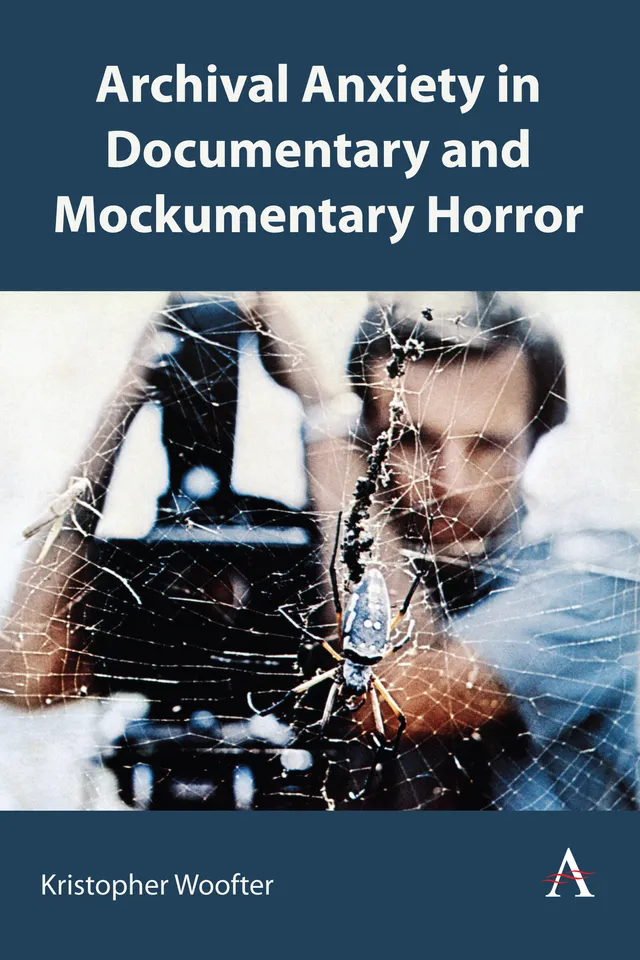
‘If the visual record is a way of capturing or preserving experience, what do we do when we are made aware of the presence and limitations of the mediating apparatus itself?…’ Kristopher Woofter asks: ‘…intersections of horror and documentary generate an archival anxiety relating to the capacity of visual media to access and preserve an experience of the world.1’ It’s this term-‘archival anxiety’-that links his broad subject together. Particularly in the modern surveillance age we live in, it feels an urgent thing to categorise our feelings, both real and fictional, on how we are documented and the limits of what our own documenting can prove.
‘The films that form the corpus of this study—whether popular or experimental, fiction or nonfiction—all address the spaces between reality and our readings of it.’2
I went into this book hoping to have my adoration for films like Ghostwatch and Lake Mungo validated within a more academic framework but emerged with a far less focused idea of the genre, if what Woofter is connecting can be grouped as such. In finally stringing together my thoughts I watched 1991’s JFK for the first time, not mentioned by Woofter, and was confronted by the way archival anxiety weaves through films we wouldn’t think to find it in.
‘In short, archival anxiety is a kind of death-drive to archive.’3
The book is headily intellectual and expects readers to keep up as it introduces terms to further define – gothumentaries, pseudodocumentaries, mockumentaries, found footage films, screenlife horror, fake found footage films – and how they’ve emerged from the traditional gothic to continue capturing the uncanny nature of what we can’t show or explain.
I respect Woofter’s instincts to avoid the more conventional route of beginning with Blair Witch’s box office explosion or it’s genre foremothers, but instead grounding the book with other forms of pseudo-real filmic devices, some of which would not even traditionally be categorised as horror.
‘Horror cinema, like Gothic literature before it, has always had a fascination with the document…An interest in investigation, witnessing, and revelation highlights the key epistemological paradigms and aesthetic questions that horror cinema shares with documentary cinema.’4
He regularly refers back to titans in the genre such as Poe and Lovecraft and the way they conceived of the limits of reality and horror with the genres they helped define, along with influential thinkers such as Niezsche and Freud whose theories had undeniable impacts on our creation and reading of fictional horrors.
‘The hermeneutics of gothumentary are negativistic: though interpretations are building up, a central void becomes the ultimate focus, the foregrounded problem, and a reason to reach out to a more full sensorial experience. Again, this highlighting of a void is not a simplistic nihilism, but a productive scepticism and ambiguity.’5
As the above may indicate, the sentences throughout remain lengthy. Even for a reader used to this kind of material it might still prompt the need for a dictionary. Every line is packed with meaning and it encourages you to meet it where it is: in the academic realm of film research. The question asked is not how these films entertain and more how they sit in a wider canon stretching back hundreds of years and what they reflect of our modern values and uncertainties. The Victorians had epistolary gothic novels like Dracula; in 2020 we had Host.
The section on screen life horror especially is revelatory. With so limited a critical literature evaluating this emergent genre it’s incredible having films like Unfriended be taken seriously as a wildly influential piece of art. Though Woofter regards the screenlife horror subgenre as still very linked to its found footage parent he notes with interest Bekmambetov’s belief in it as “a new cinematic language, a truly modern way to reveal the inner state of the protagonist …, destroying the fourth wall between spectacle and spectator, and radically changing the audience’s understanding of film”.6
I would have been interested to have seen Woofter incorporate theories on the consequences of viewing and curiosity in the genre writ large: Linda Williams’ ‘When the Woman Looks’ would have been fascinating to consider in this context. Woofter’s book is rarely interested in whether morality plays live within the films it references and whether the fictional documentarians are being blamed by the real filmmakers for filming; though it’s noted that the act of filming is often linked with violence.
‘In these films the camera-bearing subjects alternate consistently between two spectatorial positions in the phantasmagoria,’ he notes, ‘that of the badaud who ‘gawks’ and ‘gapes’ and tries to “get everything,” and that of the detective, who feels compelled to engage with the spectacle.’ 7 With this phantasmagoria frame, I would have loved to see films like Nope discussed, which follows characters who do gawk and gape as they attempt to create footage to show the world.
Though there may not have been space or the framework to speak about them, films whose use of in-narrative footage, some found, some live, not mentioning their influence feels like a hole in this thorough genre evaluation. Signs and Event Horizon; Japanese techno horrors like Pulse; much of Romero’s early works would have been interesting to hold up in comparison to contemporary screen horror films that are discussed such as We’re All Going to the World’s Fair which also can’t be grouped with almost any of the other films Woofter brings up.
I am personally very interested in the films that contain artifacts of found footage without framing their entire narrative conceit around it, but I completely understand why they were not lingered on.
I would also have loved to see Woofter tackle comedy’s intersection with these formats. Though horror-comedies such as Deadstream receive mention, comparing it to its more PG foremothers like Drop Dead Gorgeous would have felt deserved. But again I respect the mild narrowing of scope when so much of the book feels open wide to genre intersection.
Reading even made me surprisingly emotional as the book touched on different current events still being inflicted on the world, and what it means to be so inundated as a society with more horrific images of warzones and genocides than any film simulating horror could hope to match. Discussing Interceptés – no matter how successful Woofter found it – with its close following of Russian troops invading Ukraine, felt critical in emphasising the urgency of this criticism.
Understanding the politics and semiotics of what it means to keep filming, or keep documenting, or to slip into another reality with your camera is what Woofter is drawing together, and some of those examples speak to real conflicts and horrors that are ongoing. This only makes their subject matter more and not less frightening.
What Woofter offers with Archival Anxiety is an incredible broad study into often overlooked subgenres that reflect our cosmic fears of the uncapturable. These are all films more interested in creating questions than providing answers, and in that have become some of the most iconic horror produced in the last few decades while also standing as some of the more controversial films released – built to frustrate many of the people who seek them out.
From some of the first films ever made, to the ‘experimental documentary’ Homo Sapiens, to the post-postmodern take on found footage offered by the Outwaters, Woofter deftly highlights the similarities between much of the ways we highlight our relationship with technology as we use it to explain ourselves and our world while being trapped in the anxiety that it cannot be up to task.
It challenged me to concentrate on what I was reading and it’s made me want to watch and rewatch many of the films spoken about with such care and respect. On that note, Diary of the Dead is on Amazon Prime in the UK right now and I’m feeling lucky to watch a young Tatiana Maslany have the worst day of her life. I highly recommend Archival Anxiety in Documentary and Mockumentary Horror; my feelings on Diary of the Dead remain more fondly mixed.
- Archival Anxiety in Documentary and Mockumentary Horror – Kristopher Woofter, P3
- Archival Anxiety, P18
- Archival Anxiety, P183
- Archival Anxiety, P8
- Archival Anxiety, P27
- (Screenlifer 2025, n.p.) Archival Anxiety, P187
- Archival Anxiety, P122
Archival Anxiety in Documentary and Mockumentary Horror by Kristopher Woofter
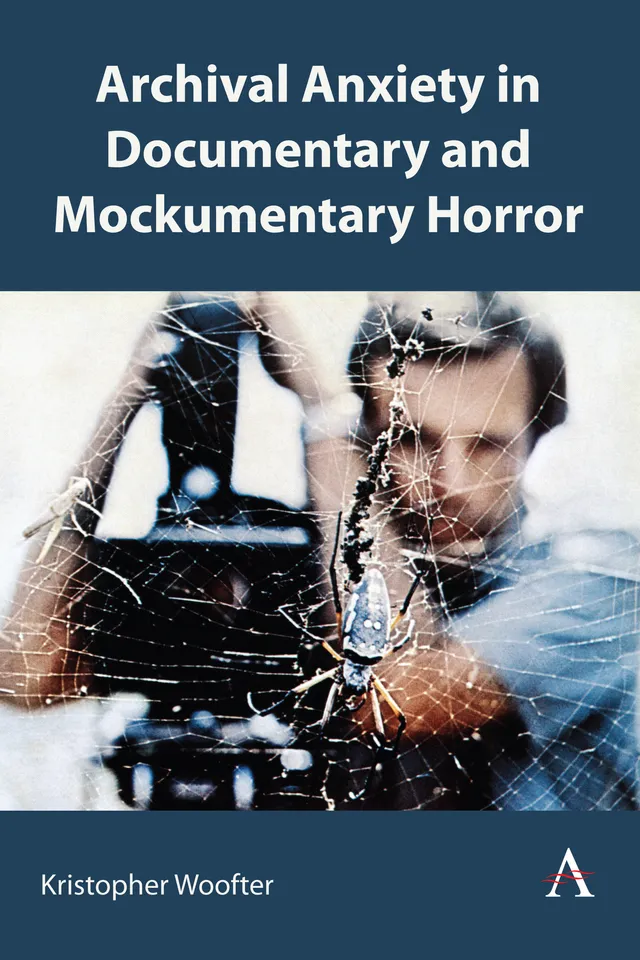
Examines Gothic realism in documentary and horror cinema, highlighting how films evoke archival anxiety and unsettling realities, from gothumentaries exploring ineffable subjects to mockumentaries and found-footage films addressing modernity’s overwhelming and mediated nature.
This study concerns the dark, sensorial epistemologies emerging from intersections of documentary and horror cinema. From the ineffable subjects of horror documentaries and pseudo-documentaries, to the obsessive chroniclers of mockumentary horror cinema, the films examined here express a generalized millennial and 21st-century archival anxiety around an unsettled and unsettling hypermediated reality.
Part I focuses on gothumentaries, nonfiction works evoking the Gothic unreadable subjects and undetected realities. Case studies show key documentary films such as Capturing the Friedmans, Cropsey, and The Hellstrom Chronicle bringing Gothic-horror tropes and conventions to bear upon documentary subject matter to produce skepticism of American environmental, social, and national stability from the 1970s onward.
Part II explores mockumentary, fake found-footage, and screen life horror cinema that turns to strategies of documentary and factual discourse to express an archival anxiety around human interaction with recording technologies. Case studies of pivotal films such as The Blair Witch Project, Diary of the Dead, Lake Mungo, Unfriended, Sickhouse, We Are All Going to the World’s Fair and The Outwaters, turn to Gothic reflexivity as a way of expressing the subject’s relationship to, and experience of, a modernity that overwhelms in terms of its immensity, speed, and recordability.
These fiction and nonfiction moving-image manifestations of archival anxiety adopt the mood, themes, and rhetorical strategies of horror and documentary to form a critical discourse that troubles the real—focusing spectatorial attention on the limits of representation and teleological forms, shifting viewers to questions of embodiment and sensation. The primary focus is on Anglophone cinema from the United States, the United Kingdom, and Australia, with reference to other works produced in Spain, Germany, and France.
Ginger Nuts of Horror: The Heart and Soul of Horror Reviews

Looking to get your horror book or film in front of the genre’s most dedicated audience? Ginger Nuts of Horror is one of Europe’s largest independent horror review websites, with over 30 contributors publishing horror book reviews and horror movie reviews almost every single day.
We offer far more than reviews. Authors, filmmakers and publishers can promote their work through in-depth horror book reviews, horror film reviews, comic and video game coverage, news features, and our popular author and director interviews like Five Minutes With. Our guest feature series, The Horror of My Life, Childhood Fears, The ? That Made Me and more, let creators tell their story while promoting their latest release.
Every feature is built to sell your work. We include backlinks to your website or Amazon author page, a full synopsis, and a universal purchasing link that sends readers straight to their local store. Add a large, engaged social following and an 18-year archive of trusted horror coverage, and you have a platform genuinely built to grow your readership.
Whether you’re an established author, an indie filmmaker, or a debut voice in indie horror, there’s a way for us to help you reach more fans. Explore our horror book reviews and horror movie reviews, then get your horror book or film featured today.
Jim "The Don" McLeod has been reading horror for over 35 years and reviewing it for more than 16. He's the editor of Ginger Nuts of Horror, Europe's largest independent horror review and culture site, and a British Fantasy Award nominee for his work in the genre. When he's not busy inflicting his opinions on the horror community, he can be found annoying his family or getting thoroughly outwitted by his two dogs, Casper and Molly.


