 By Jim Mcleod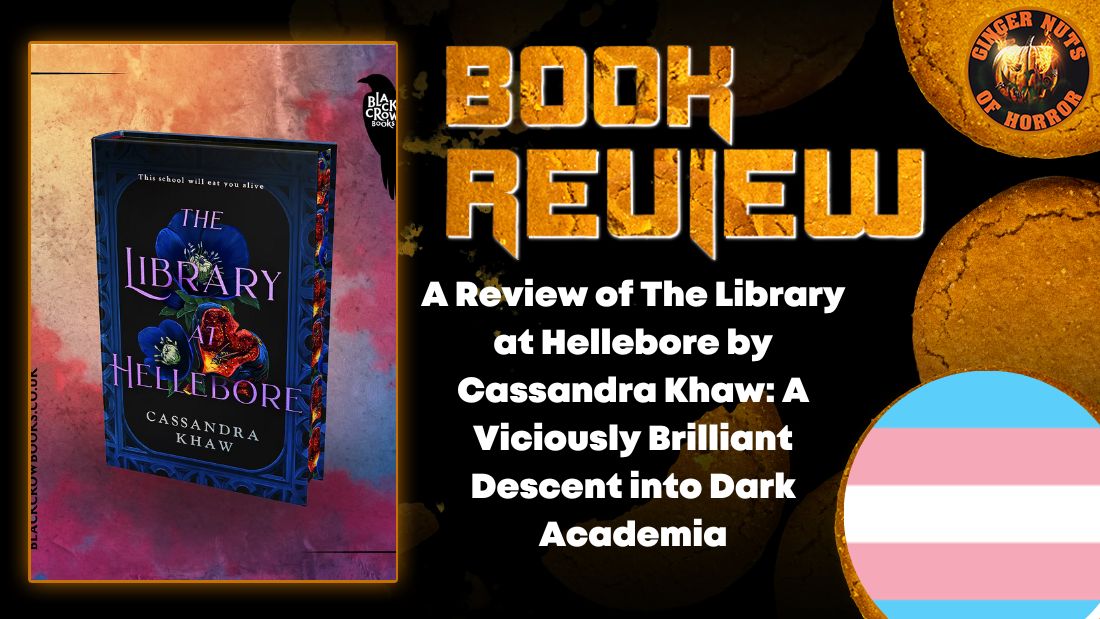
This is all in service of a gut-punch of a story that marries gore with potent social commentary, using its allegory of institutional violence to deliver an intelligent and impactful critique. The novel is notably more subversive and politically charged than many of its dark academia peers, offering a refreshing and brutal take on the genre.
A Review of The Library at Hellebore by Cassandra Khaw: A Viciously Brilliant Descent into Dark Academia

Cassandra Khaw’s The Library at Hellebore is not your typical magical school story. It is an unflinching and masterfully written novel that takes the dark academia genre to its most brutal and logical extreme. Released in July 2025 by Tor Nightfire and Titan Books in the UK.
Khaw, an award-winning game writer and author of works like Nothing but Blackened Teeth and The Salt Grows Heavy, delivers what may be their most compelling and disturbing novel to date. It is a story that is as much a pointed critique of institutional violence as it is a gory survival thriller.
The premise is deceptively simple: The Hellebore Technical Institute for the Gifted is the premier academy for the world’s most dangerously powerful youth, the Anti-Christs, Ragnaroks, world-eaters, and apocalypse-makers. The school’s promise is one of redemption and a normal life after graduation, a lie told to students like the protagonist, Alessa Li, who is kidnapped and forcibly enrolled. The horrifying truth is revealed on graduation day, when the faculty, rather than handing out diplomas, embark on a ravenous rampage to feast upon the student body.
The novel follows Alessa and a small group of her classmates who manage to escape the initial carnage and barricade themselves inside the school’s library. Yet, their sanctuary is a trap. Inside lurks the Librarian, a centuries-old, caterpillar-like creature with the face of a human woman, who demands a human sacrifice every night. Trapped between the ravenous faculty outside and the monstrous entity within, the students are forced into an impossible moral calculus of survival, where the choice is not if someone will die, but who, and by whose hand.
On its surface, The Library at Hellebore is a gripping survival horror, but its true power lies in its potent thematic undercurrents. Khaw uses the novel’s premise to launch a searing critique of institutional abuse and systemic violence. Hellebore is a perfect metaphor for systems that prey upon the vulnerable, promising transformation while secretly designed to consume them. The faculty’s literal consumption of the students serves as a stark allegory for how educational and, by extension, societal institutions can devour the very individuals they are meant to nurture.
The novel also subverts the concept of monstrosity. The students are, by any definition, monsters, each carries the potential to unleash an apocalypse. Yet, Khaw explores their humanity, their trauma, and their desperate attempts to forge connections in a world that sees them only as threats to be contained. This exploration is further deepened by organic and nuanced queer representation, where relationships develop naturally within the oppressive context of a survival horror setting.
The author adores language, employing a rich and sometimes obscure vocabulary. This style is perfectly matched to the novel’s content; the elegant, almost poetic descriptions of gore and disintegration create a dissonance that is deeply unsettling and immersive.
Khaw employs a dual timeline, alternating between chapters labeled “Before,” which detail Alessa’s introduction to Hellebore and the slow-building dread of the academic year, and the present-day sequences of the library siege. While this non-linear approach can be disorienting at first, it ultimately proves to be a device that builds suspense. It allows the reader to understand both the fragile alliances formed and the terrifying nature of the school as its true purpose is gradually unveiled.
At the heart of the chaos is Alessa Li, a compelling and deliberately unlikable protagonist. She is prickly, cynical, and morally ambiguous, yet Khaw paints her with a surprising kindness, revealing a tenacious will to survive and a reluctant loyalty that makes her deeply engaging despite her flaws.
The ensemble cast surrounding Alessa is equally complex, though some reviewers noted that the large cast could be difficult to keep track of. Among the survivors are figures like Rowan, a “death-worker” whose touch brings necrosis and who uses irreverent humour as a shield; and Adam, the illegitimate son of Lucifer, who craves the love his nature denies him. These characters are not mere archetypes; they are damaged individuals whose monstrous abilities are inextricably linked to their profound loneliness and trauma. It is in the quiet moments between these characters, moments of fear, caring, and strange intimacy, that the novel finds its unexpected heart.
The novel’s greatest strengths lie in its uncompromising vision and artistic daring. Khaw’s distinctive, rich prose establishes a powerful voice in horror that is both challenging and rewarding, creating an atmospheric dread. This is all in service of a gut-punch of a story that marries gore with potent social commentary, using its allegory of institutional violence to deliver an intelligent and impactful critique. The novel is notably more subversive and politically charged than many of its dark academia peers, offering a refreshing and brutal take on the genre.
The Library at Hellebore sits comfortably alongside, yet starkly apart from, other popular dark academia and magical school stories. It shares the ruthless environment of Naomi Novik’s A Deadly Education but cranks the gore and nihilism to a far higher degree. It possesses the complex relationships and elite setting of The Atlas Six, but is more politically charged.
So steel your nerve and step inside, Hellebore is waiting, and it is a lesson in terror you cannot afford to miss.
The Library at Hellebore by Cassandra Khaw

Dark academia meets cosmic horror in this murderous tale of betrayal and broken hearts at an elite academy for the gods and monsters of the world, perfect for fans of The Atlas Six, If We Were Villains and Bury Our Bones in the Midnight Soil.
The Hellebore Technical Institute for the Gifted is the premier academy for the dangerously powerful: the Anti-Christs and Ragnaroks, the world-eaters and apocalypse-makers.
Hellebore promises redemption, acceptance, and a normal life after graduation. At least, that’s what Alessa Li is told when she’s kidnapped and forcibly enrolled.
But there’s more to Hellebore than meets the eye. On graduation day, the faculty go on a ravenous rampage, feasting on Alessa’s class. Only Alessa and a group of her classmates escape the carnage. Trapped in the school’s library, they must offer a human sacrifice every night, or else the faculty will break down the door and kill everyone.
‘This is punk rock, eldritch god, carnage-fueled battle royale dark academia. The Library at Hellebore is more metal than I’ll ever be and too cool for most of you’ –OLIVIE BLAKE
‘Wonderfully inventive and thoroughly engrossing. Khaw takes dark academia to a terrifying new level’ –KELLEY ARMSTRONG
‘As rich and gruesome as a fresh-plucked heart, as sharp as a broken bone, The Library at Hellebore is a perfect horror novel by one of my favorite writers. It’s a book that draws a line between the monsters and the monstrous, and reminds us who to root for-and what it costs’ –ALIX E. HARROW
‘Devilishly entertaining, thrillingly structured, and full of unexpected blows to the heart’ –NAT CASSIDY
Initial dispatch estimated within one month of UK publication.
The Library at Hellebore by Cassandra Khaw
Product Details
Signed Endpapers
Royal Hardback
Jacket Matt Lam, Spot UV
Foil on Boards – Front & Spine
Digital Fore-Edge
Block Sprayed Top & Bottom
Head & Tail Bands
Published by Titan
Horror Book Reviews on Ginger Nuts of Horror
For fans of horror literature, The Ginger Nuts of Horror website is an essential destination that should not be overlooked. This platform offers a dedicated horror book review section that caters specifically to the needs of horror enthusiasts. With its unique blend of insightful critiques, expert recommendations, and a vibrant community, the site serves as a treasure trove for anyone seeking their next spine-chilling read.
One of the standout features of the horror book review section is its diversity. Readers can discover everything from classic horror novels to contemporary indie gems, ensuring that there’s something for everyone. Each review is thoughtfully penned, providing not just a summary but also a deep dive into the themes, writing style, and overall atmosphere of the works. This allows readers to gauge whether a particular book aligns with their preferences.
For those passionate about horror literature, checking out this section is a must!

 Benjamin Kurt Unsworth