Unseen Terrors: the Monsters in our Minds By Tee Wood
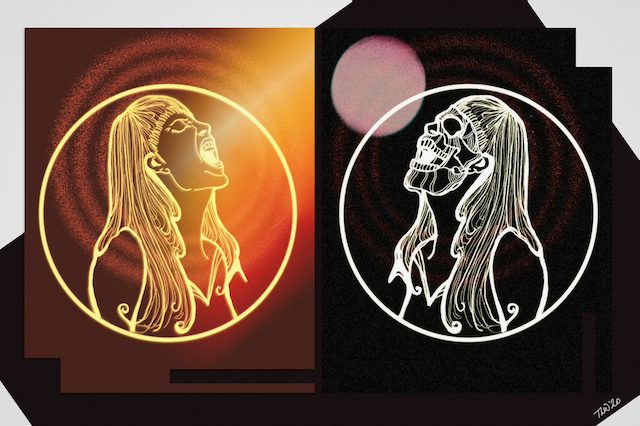
“What we fear most is the sensation of being afraid, which endows the most familiar objects with frightful possibilities.”
Julia Briggs, Gothic Horror: A Reader’s Guide from Poe to King and Beyond, Springer Press, 1998
The human brain is a powerful thing. It has the ability to create intricate and detailed images with just a few tiny prompts. In times of great stress, sometimes what we imagine is far worse than the reality, and the monsters we envision in our minds are more terrifying than the monster itself. The reason for this has roots far more complex than one essay could explore, but primarily, and most importantly, the brain is programmed to recognise and respond to fear.
At the height of the Great Depression in 1933, Franklin D. Roosevelt used his First Inaugural Address to say:
“… let me assert my firm belief that the only thing we have to fear is fear itself—nameless, unreasoning, unjustified terror which paralyses needed efforts to convert retreat into advance.”
While Roosvelt’s aim was to restore confidence to those who were suffering from the economic collapse, his words highlight how fear prevents action and worsens the situation. Much like Frank Herbert echoed in DUNE (1965) by reminding us, “Fear is the mind-killer.”
Horror, as a genre, is often subject to discussion and disagreement. As a general rule, for fiction to satisfy the criteria it should provoke an intense reaction of some kind, usually shock or revulsion. The catalyst for that reaction might be something so irrational or extreme it is impossible to comprehend, such as scary monsters, tons of gore, and intensely bloody deaths. But of course, there is never one easy answer. Horror, like any other genre, is made up of a massive spectrum of hundreds of sub-genres and thematic crossovers that weave their way into a thousand different personal paranoias and anxieties.
While some may argue that horror should, at the very least, be confronting in some way, it is also often seen as a safe space to explore those complex emotions, offering a cathartic outlet to experience fear with few unwanted side-effects. Modern research has proved that engaging in recreational horror (e.g. books, movies or video games) allows us to experience feelings of fear in a safe and controlled environment. Consequently, frequent consumption allows us to develop personalised strategies that help us regulate our emotions. These strategies can lead to stronger and more improved coping skills when faced with real-world trauma.*
(* If you’re interested in learning more about this, this is a great start: https://www.coltanscrivner.com/publications.)
As Jennifer Aniston once said, “Here comes the science bit…”
Fear, on the other hand, is an equally visceral, and personal, emotional reaction to a perceived threat or danger. A natural and primitive emotion managed by the body’s sympathetic nervous system. It triggers physiological changes and alters brain chemistry, kicking the body into a state of alarm known as the Acute Stress Response, which most people know as ‘fight or flight’. A third state, ‘freeze,’ renders the body so paralysed by fear, it cannot run away or protect itself. Additionally, a fourth state known as ‘fawn’ is prevalent in those who have suffered abuse or PTSD. It sees the individual attempt to manage the fearful situation by becoming compliant and agreeable.
As a survival mechanism, fear keeps us safe and helps us recognise danger. It is also very personal to the individual. The brain doesn’t necessarily want us to be happy; it wants us to be safe. This is a conundrum that has been widely studied, especially in people with depression and anxiety. Rumination is one of the biggest drivers of these disorders, and it’s something our brains are infuriatingly good at.
However, since the biology of fear involves some of the same chemical responses activated when experiencing pleasant emotions such as excitement and happiness—specifically, the release of cortisol (known as the stress hormone) and adrenaline (epinephrine)—people can experience either pleasant or unpleasant emotions to fear. Therefore, while the biological state of being frightened can be scientifically studied and monitored, the actual emotion of fear is closer to a psychological construct.
Our lizard brains are hard-wired to listen for unusual noises, or unexpected movement out of the corner of our eyes. We know to fear the things that go bump in the night in an empty house because anything could be a threat. It’s the reason why even if you’re not afraid of small insects, seeing one unexpectedly still might make you jump and your brain tells you, “It’s gonna bite you! Squish it while you can!”
Since fear is visceral, and personal, what scares me might not scare you, and vice versa. Our lived experiences give us a deep well of personal horrors to draw from, or sometimes our phobias have no real cause. There’s a reason I prefer psychological horror to actual monsters on screen. The thrill of imagining what it might be is often far more fascinating than what it is. So much so, I am often let down when the monster is finally revealed. Sometimes the barest glimpse can create the most terror. Everyone who has seen SIGNS (2002) knows what I mean here.

A slightly out-of-focus alien creature slinks past the camera pausing only for a second to make eye contact with the viewer before disappearing into the bushes. The screams of the children in the movie coincide with our own uneasy shivers. When we finally see the creature in all its glory later on, it barely lives up to the hype.
But how do you make great horror without featuring a monster or a villain? Answer: You tell a story so well you never need to reveal it, because the audience creates an idea of it themselves. The power of suggestion ensures that a vague description can be more terrifying than a precise one. By feeding the reader or viewer small crumbs, they in turn build up a bigger, and more frightening image in their mind. Some movie critics argue that the decision to omit an actual monster can make a film seem cheap or weaken the plot. It deprives the audience of facing the evil, or indeed, giving evil a face.
‘Horror without monsters’ is a wide and varied genre, with many different examples, certainly far more than I could list in one place. What follows is a very small sample. I believe it’s also important to acknowledge the limits of different mediums. While movies and video games rely on visual storytelling, books have a much wider scope and there are likely hundreds of examples I could provide. Notable titles include Shirley Jackson’s WE HAVE ALWAYS LIVED IN THE CASTLE (1962), IN THE DREAM HOUSE by Carmen Maria Machado (2019), WHITE IS FOR WITCHING by Helen Oyeyemi (2009) and THE OTHER by Thomas Tryon (1971).
Psychological horror fiction, especially those without a supernatural subplot, rely on a strong story and characters to elicit fear or anxiety in the reader. My personal, unprofessional, opinion is this is why when trying to make these complex texts into movies that impact is often lost. That said, the following movies do manage to capture the fear element very well.
In 1999, with the internet not being quite the obtrusive beast we know today, the makers of THE BLAIR WITCH PROJECT (1999) marketed it so authentically, many movie-goers actually believed it was real. Arguably one of the most definitive found-footage movies, the online hype generated enough interest to ensure it grossed over $200 million worldwide.
All the horror is suggested to us, through the protagonists’ reactions and decisions. The more they discover, the less they—and the viewer—actually sees. And the alleged Witch is never even shown on screen. Most interestingly, the movie can be watched in two very different ways: one which hinges on the characters slowly eroded mental stability and suspicion of each other, another which invites an unseen supernatural force into the mix influencing their experiences.
The element of confusion and erosion of safety is a common theme in psychological horror. For example, in Jordan Peele’s NOPE (2022) the UFO ‘monster’ named Jean Jacket takes many confusing forms before finally being revealed.

As a cloud, a flying saucer, and eventually, a one-eyed jellyfish-like blob, Jean Jacket has form but not face, and functions as a representation of fear, despite being a physical entity. The fear derives not from its horrendous appearance, but what it does to those around it. What makes it horror is the sense of discomfort and unease that prevails long after the movie is over.
Another play on the theme of you don’t need to see it to be afraid of it is found in EVENT HORIZON (1997) As Dr. William Weir tells Captain Miller, “Where we’re going, we won’t need eyes to see.” While the impact of whatever force is influencing the crew plays out in horrifying, gruesome detail, what it actually is is not revealed. It is a vague ‘something’ that wreaks carnage without ever revealing itself. Madness, or monster, it’s difficult to ascertain, but while gore is certainly a central part of the story, it’s the lack of control and the crippling claustrophobia of being trapped by the unknown that drives the fear aspect.
Similarly, the independent psychological horror, THEY LOOK LIKE PEOPLE (2015) by Perry Blackshear, explores mental illness as horror, as the protagonist becomes convinced humans are being taken over by demonic creatures. What the audience sees is a projection of Wyatt’s hallucinations, with truly unsettling moments weaved in with mundane, as the character’s mental health gets worse.
In THE TWILIGHT ZONE episode “The Monsters are Due on Maple Street” (1960) the ‘monsters’ (or rather, aliens) are indeed revealed at the end, but despite their direct involvement in the situation, it is paranoia and distrust that turn people into the real monsters. See also, 10 CLOVERFIELD LANE (2016) when aliens invade the world, it seems logical that human survivors would band together for safety. What transpires instead is a situation more terrifying than genocidal aliens, as a supposedly safe refuge becomes a prison, and the real danger is far closer to home.
Finally, JACOB’S LADDER (1990) that for me will always be the pinnacle of psychological horror, is primarily an [spoilers ahead!] exploration of what might happen to the human mind at the point of death. In JACOB’S LADDER, the horror does not come from the character’s eventual demise so much as what was done to him prior without his consent. It also includes a deeply thought-provoking quote that could offer comfort in such dire circumstances: you don’t always need to go out fighting, sometimes acceptance is the way to true peace.
“If you’re afraid of dying, and you’re holdin’ on, you’ll see devils tearin’ your life away. But if you’ve made your peace, then the devils are really angels, freein’ you from the world. It all depends on how you look at it.”
Louis, JACOB’S LADDER
In all of these examples, fear as a psychological construct is linked strongly to the loss of autonomy and control. Confusion, manipulation, paranoia, misinterpretation, over-imagination and isolation: all of these emotions invoke a fear response that converts into horror as the experience is so shocking or illogical it cannot be reasonably explained. Events outside the norm throw characters into emotional disarray or provoke them into acting in ways far beyond their baseline.
When recreational horror finds a way to tap into that fear response, the monster frequently takes second place. I suggest the reasoning for this is when evil has a face, we can punch it. We can beat it. An abstract psychological construct is a much more difficult to reckon with, like a foul smell that assaults not only our nasal passages but worms its way into our brains.
A cursory search on the internet for “the scariest horror movies of all time” seems to lend weight to the idea that a really scary movie doesn’t need a knife-wielding bogeyman or a monstrous beast to frighten audiences. Instead, movies like INSIDIOUS (2010), SINISTER (2012), HOST (2020) and SKINAMARINK (2022) top the lists. Found-footage movies also score highly, suggesting that when the horror is grounded in some semblance of reality, however unlikely, it’s even more frightening.
Based on feedback from my own studies and research, most people who say watching recreational horror eases their real-life anxieties also say that for it to be really effective, they need to feel genuinely scared, not horrified. Some horror-enthusiasts with PTSD also report “self-triggering” to provoke a controlled trauma response using books and movies, which allows them to process the traumatic event. (This is a medically recognised method known as ‘exposure therapy’, or ‘flooding,’ although it usually takes a more careful and controlled approach.)
The Acute Stress Response can be complex and multi-layered, as studies also show too much or too frequent cortisol can be a bad thing for our bodies, leading to hypervigilance and chronic stress. To reiterate, our brain doesn’t necessarily want us to be happy, it wants us to be safe. Although it does seem a bit counterintuitive to keep flooding the engine with the aim of keeping it running. It is also interesting to note that individuals who enjoy recreational horror often have higher levels of general anxiety than their peers and yet turn to horror to calm that anxiety.
Fear and horror may indeed be close bedfellows, but they are not co-dependant on each other. When we consider the question, “What is horror?” we often focus on revulsion and disgust. Things that are visceral, shocking and quite often supernatural. But fear runs deeper than that. Fear is what fills us when we are abandoned, confused and made weak in some way. When we are cut off from our safe spaces, our communities and our peers.
Being alone or isolated from support is incredibly scary. It’s the reason some of us get afraid of the dark or why being alone in an unfamiliar place makes us so uneasy. When the brain cannot see a monster, it will make one up for us. We crave that visualisation so we can respond and react. We need a psycho-killer to shoot, a bug to squish, or a ghoul to exorcise or immolate.
Most (not all) recreational horror has a resolution, most commonly that evil is vanquished, and the good guys get to relax knowing they’ve won. It sends a message that no matter how awful things might be, there’s always a chance that what’s wrong can be put right and all will be well in the world.
Fear… lingers. That biochemical and emotional reaction to a perceived threat, whether actual or imagined, is not easy to control once it kicks in. It stays in our brains and wriggles into our subconscious. It reminds us that no matter how strong we might be, how fast we can run, how clever, calm or confident we are, there will always be strange things that go bump in the night, and not all of them can be beaten.
Unless, of course, you like that kind of thing.
About me:
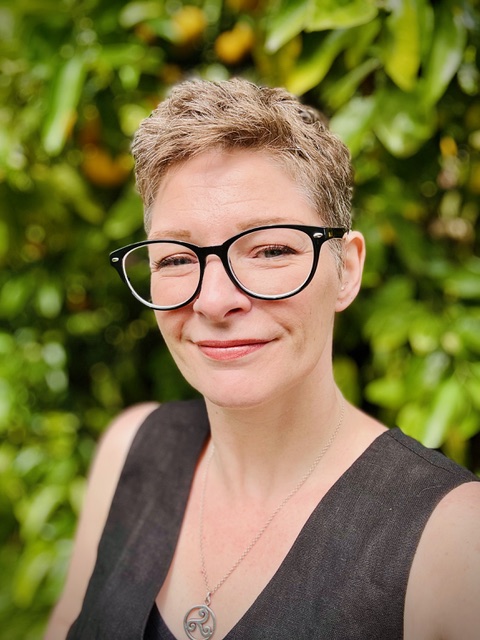
Tee (T.L.) Wood is an Australian Shadows and Sir Julius Vogel award-winning author of weird, dark, speculative fiction and quiet horror from Aotearoa, New Zealand. Disabled, queer and neurodivergent, they often write stories inspired by their lived experiences. When they’re not writing they like strong coffee, soft cats, and spending time by the sea.
You can buy their books, read more of their work, and follow them on social media via https://linktr.ee/Tlwood
Horror Features on Ginger Nuts of Horror
If you’re a fan of spine-chilling tales and hair-raising suspense, then you won’t want to miss the horror features page on The Ginger Nuts of Horror Review Website. This is the ultimate destination for horror enthusiasts seeking in-depth analysis, thrilling reviews, and exclusive interviews with some of the best minds in the genre. From independent films to mainstream blockbusters, the site covers a broad spectrum of horror media, ensuring that you’re always in the loop about the latest and greatest.
The passionate team behind The Ginger Nuts of Horror delivers thoughtful critiques and recommendations that delve into the nuances of storytelling, character development, and atmospheric tension. Whether you’re looking for hidden gems to stream on a dark and stormy night or want to explore the work of up-and-coming horror filmmakers, this page is packed with content that will ignite your imagination and keep you on the edge of your seat.
So grab your favourite horror-themed snacks, settle into a cosy spot, and immerse yourself in the chilling world of horror literature and film. Head over to The Ginger Nuts of Horror and embark on a journey through the eerie and the extraordinary. It’s an adventure you won’t soon forget!

 Jim Mcleod