It’s also a beautiful exploration of grief, not as something to be feared, but as a process that connects us to the past and helps us navigate the future. It’s about the choices we make, and how our freedom is often found not in isolation, but in the communities we build for ourselves.
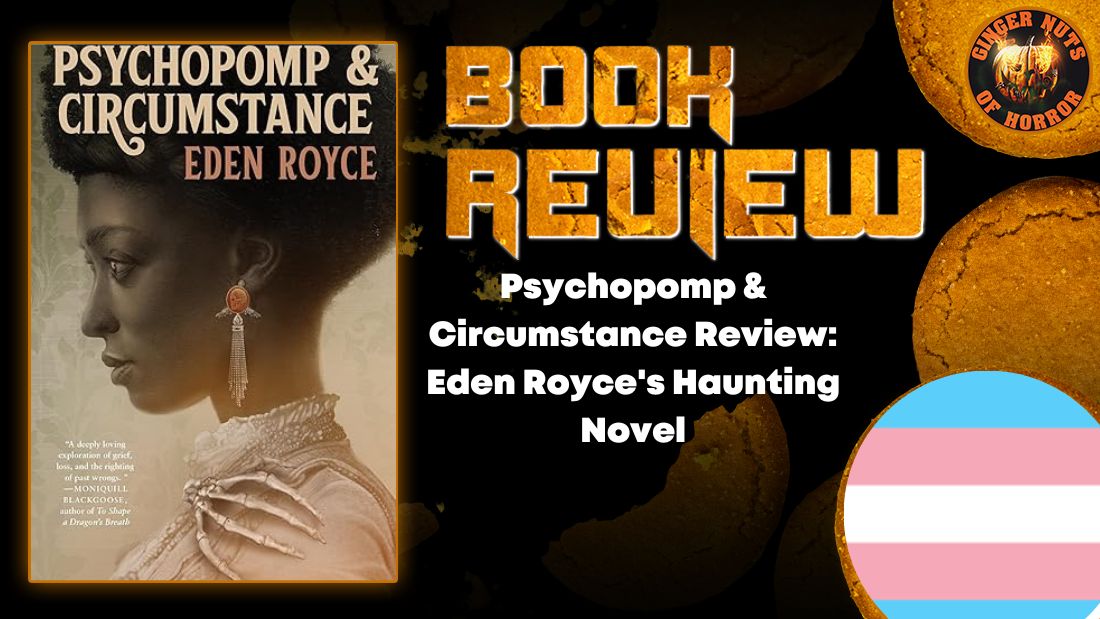
Psychopomp & Circumstance Review: Eden Royce’s Haunting Novel
Psychopomp & Circumstance. It’s a mouthful. But it sets the tone for this whole, dense, atmospheric world that Eden Royce builds. It’s her adult fiction debut, which is fitting because you can still sense that storyteller’s knack for making magic feel real and grounded, something she’s clearly known for in her other work.
So the premise. We’re in a fantastical version of the Reconstruction-era South, in a place called New Charleston. The main character, Phee, proper name Phaedra St. Margaret, is twenty-one and suffocating under the weight of her mother’s expectations, which basically boil down to: marry well, and stay under my thumb . It’s a vibe a lot of us can get, that feeling of being managed into a life you don’t want.
Anyway, the plot kicks off when news arrives that her Aunt Cleo, who had been long estranged from the family, has died. And Phee, in a move that feels both impulsive and deeply necessary for her survival, volunteers to be the “pomp” for her aunt’s homegoing. A pomp, here, is the psychopomp—the person who plans the funeral, who guides the spirit to its rest. It’s a huge deal, a role packed with social and even magical consequences, and her mother is, predictably, furious about it.
And that’s really where the story starts. Phee travels alone to her aunt’s town, Horizon, and settles into her aunt’s unsettling, kinda creepy house to figure out how to do right by a woman she loved but didn’t really know .
Let’s talk about the atmosphere first, because it’s probably the strongest character in the book. This is a Southern Gothic through and through, but it’s not all decaying plantations. Royce builds this incredibly specific, rich world of free Black communities, with their own social hierarchies, businesses, and magic. The magical elements are woven in so seamlessly that they feel mundane, which is the best kind of fantasy. Hippocampi draw carriages through perpetually flooded streets. Messages are delivered by little imp-like creatures or talking birds called tyefrins. It’s just part of the fabric of life.
And the cultural grounding is everything. The book is steeped in Gullah Geechee traditions and food, benne seeds, scuppernongs, and sweet potato pone. The concept of the “homegoing” service is central, a distinctly Black Christian funerary tradition that Royce adapts, imbuing it with a magical, spiritual weight. The narration itself even slips into the rhythm and language of Southern Black English, which makes the whole thing feel immediate and authentic. You aren’t just reading about this place; you’re living in it for a few hours.
Then there’s Phee’s journey, which is really the core of the book. This is a coming-of-age story, full stop. Or maybe a coming-into-power story. At the start, she’s reactive, making choices mostly to defy her truly oppressive mother. Her internal monologue is filled with this constant, grating doubt —a little voice that sounds exactly like her mother telling her she’s incapable. It’s a deeply relatable portrait of someone seeking their own strength.
As she pokes around her aunt’s house, a place full of visions in reflective surfaces and secrets that transcend life and death, she starts to uncover truths not just about the family scandal that drove her aunt away (something about a missing necklace ), but about her own mother’s manipulative, almost magical hold over her. She finds allies in a handsome, sympathetic funeral director, Prioleau Cross, and in the lingering presence of her aunt herself. Her choices become more her own. She stops just reacting and starts building. It’s satisfying as hell to watch.
Now, because this is a novella, a tight 176 pages, the experience is intentionally focused, and that shape is one of its most interesting features. It demands a particular kind of attention from you. If you’re used to sprawling epic fantasy, the rhythm here might feel different at first, but it’s a rhythm that really gets under your skin.
That middle section, where Phee is alone primarily in her aunt’s house? Let’s be real, that’s where the book does some of its heaviest lifting. It’s a deep, almost meditative dive into her interior world—the guilt, the grief, the quiet panic of being truly on your own for the first time. The pacing mirrors that feeling of suspended animation you get after a loss, where the world outside blurs and the only real movement is internal. It’s not a drag; it’s an immersion. You sit with her in that weird, creaky house, and you feel the weight of the silence.
And the world-building… honestly, the restraint Royce shows is masterful. She gives you just enough to make New Charleston feel lived-in and tangible, but she doesn’t over-explain the magic. The consequences of failing as a pomp hang over the story like a heavy humidity, you feel the pressure without needing a textbook on the mechanics. It leaves this excellent space for your own imagination to fill in the gaps, to wonder about the broader society. It makes the world feel bigger than the page, like you’re only seeing one corner of it.
As for the horror, calling it that might set up the wrong expectation. It’s less about jump scares and more about a pervasive, elegant eeriness that gets in your bones. The dread is subtle, built on visions in reflective surfaces and the profound unease of a house that holds its memories a little too closely. It’s the kind of quiet spookiness that sticks with you, the feeling you get walking through a quiet house at night, rather than something that makes you jump. And in a world saturated with loud horror, that subtlety is actually a surprising strength.
Psychopomp & Circumstance is a quiet, introspective book. Its biggest triumph is Phee’s character arc. Watching her shed the skin of her mother’s oppression and step into her own power is a profoundly cathartic experience. The ending is… chef’s kiss in terms of emotional payoff. She doesn’t just plan a funeral; she plans her own future.
It’s also a beautiful exploration of grief, not as something to be feared, but as a process that connects us to the past and helps us navigate the future. It’s about the choices we make, and how our freedom is often found not in isolation, but in the communities we build for ourselves.
You should read this book if you’re into slow-burn, atmospheric Gothic novels; you love stories about complex family dynamics and self-discovery; and you appreciate fantasy worlds built on specific cultural foundations rather than generic European lore. If you liked the vibes of C.L. Polk’s St. Valentine, St. Abigail, St. Brigid or the magical Black communities in Leslye Penelope’s Daughter of the Merciful Deep, this is absolutely your next read.
It’s a beautifully written debut for adults from Eden Royce. It’s a story that sits with you, a reminder that some secrets do transcend the borders of life and death, and that the most important journeys are often the ones we take to find ourselves.
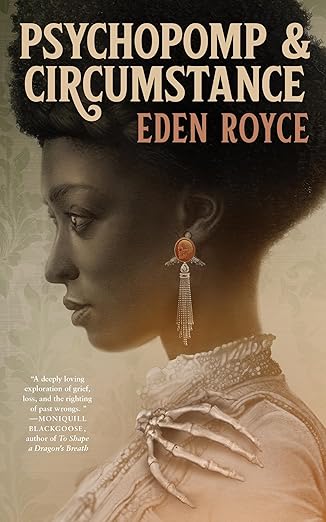
Psychopomp & Circumstance by Eden Royce
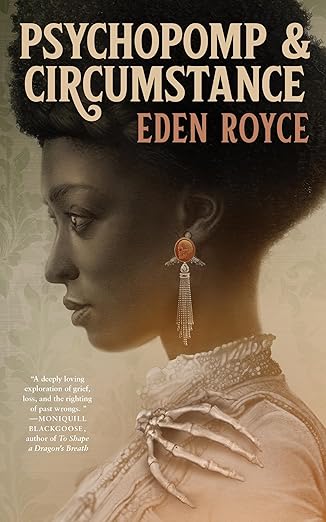
Shirley Jackson Award-winning author Eden Royce pens a Southern Gothic historical fantasy story of a contentious funeral.
“A tale of loss and hope and how the present can give way to new futures.”—Kirkus Reviews
Phee St. Margaret is a daughter of the Reconstruction, born to a family of free Black business owners in New Charleston. Coddled to within an inch of her life by a mother who refuses to let her daughter live a life other than the one she dictates, Phee yearns to demonstrate she’s capable of more than simply marrying well.
When word arrives that her Aunt Cleo, long estranged from the family, has passed away, Phee risks her mother’s wrath to step up and accept the role of pomp—the highly honored duty of planning the funeral service. Travelling alone to the town of Horizon and her aunt’s unsettling home, Phee soon discovers that visions and shadows beckon from every reflective surface, and that some secrets transcend the borders of life and death.
Why Ginger Nuts of Horror is a Top Destination for Horror Book Reviews
For dedicated fans searching for their next great scare, finding a trustworthy and passionate source for horror book reviews is essential. Look no further than Ginger Nuts of Horror, a cornerstone of the dark fiction community that has been delivering insightful and enthusiastic coverage for over 16 years.
Driven by a genuine love for the genre, the site offers far more than simple plot summaries. It provides a deep dive into the emotional and thematic heart of horror, exploring the feelings that make these stories so powerful and resonant.
What makes Ginger Nuts of Horror an indispensable resource for horror readers?
- In-Depth Horror Book Reviews: Find thoughtful, critical analyses that help you discover your next favourite read, from mainstream hits to hidden gems.
- Exclusive Author Interviews: Go behind the pages with fascinating interviews that explore the creative minds and processes behind the genre’s most renowned and emerging horror authors.
- A Commitment to the Genre: The site is renowned for highlighting innovative and boundary-pushing dark fiction, ensuring you stay on the pulse of what’s new and exciting.
Founded by Jim Mcleod, Ginger Nuts of Horror has grown from a passion project into an award-nominated, credible hub for a global community of readers. It’s a place built on a shared joy for horror, making it the perfect guide to help you navigate the vast and thrilling world of horror literature.
If you want to stay informed, inspired, and connected to the heartbeat of the genre, Ginger Nuts of Horror is your ultimate resource. Explore the site today and join a community that lives and breathes dark fiction.