

Most vampire stories begin in the fog-shrouded castles of Eastern Europe. This one starts in the dust and desperation of Juarez. Maria isn’t waiting for a count to summon her; she’s running from a cartel boss and an Aztec trafficker, her human life already stripped away before the first fang finds her throat. Maria the Wanted reshapes the undead myth into a story of displacement and defiance, where the thirst for blood is tangled with a deeper hunger for answers and a place to belong. This is a vampire tale that asks what happens when the monster is also the migrant, the protector, and the woman reclaiming her own savage power.
Our conversation with the Bram Stoker Award-nominated author explores how this blend serves as a powerful lens for themes of immigration, reclaimed identity, and raw political rage, making it a pivotal work in modern horror.
She’s wanted by an Aztec trafficker, a cartel boss, the people she fights for, and the devil. That’s a hell of a list. How do you balance the supernatural horror with the very real-world horrors embedded in that lineup?
Castro asks a simple, revolutionary question: “Why write about werewolves when my ancestors revered jaguars?” It’s a philosophy that doesn’t just insert a Latina face into an old trope. It insists that the entire mythological framework can and should be rebuilt with different cultural bricks. Maria isn’t just a vampire; she wonders if she’s an old god from a forgotten past.
V. Castro on Rage, Reclamation & Vampires: The Maria the Wanted Interview

That’s the beauty with horror! It lends itself to grappling with difficult emotions and harrowing situations. We can discuss real world horror in a way that everyone can relate to. We all experience fear. We all bleed red when our skin is peeled back. You can talk about a manic tyrant running for office and the consequences of it.
The book is called a “fierce and seductive horror thriller, pulsing with rage, fear, and desire.” When you’re drafting, which of those three fuels the engine first?
Fierce. I always want to push the boundary with lust, female sexuality, women being violent or beyond any stereotypes. It is also important to me to represent my heritage without fear.
She’s turned, not born. Her vampire nature is an imposed condition, much like the “otherness” thrust upon immigrants. How does her newfound power change, or fail to change, the core struggle of being seen as an outsider?
Watching her turn from human and experiencing a loss to vampire is all about evolution and transformation. She goes though the process of shedding shame so she can truly understand her place in the world. And as we see in the story, the entire world becomes her home. She isn’t confined by borders.
Being perceived shouldn’t stop anyone from fully becoming. What matters is how we see ourselves. At the end of the day, we might to do the hardest parts of life alone. This them is also visited in Immortal Pleasures.
Alejandra’s haunting is intimately tied to her motherhood, a role often painted as sacred. The book really grapples with the suffocation of that, the loss of self. Was there a moment in writing where you thought, “This is too raw, too real to be horror,” or is that precisely where the horror lives?
I wrote this book when I was at a low point in my life. I cried the entire way through and it was during the start of Covid. Life was just hard then. But writing it was a release for me. I also wanted to talk about post-natal depression which has a lot of shame attached to it. My hope was it could open a conversation for people or help them feel less alone.
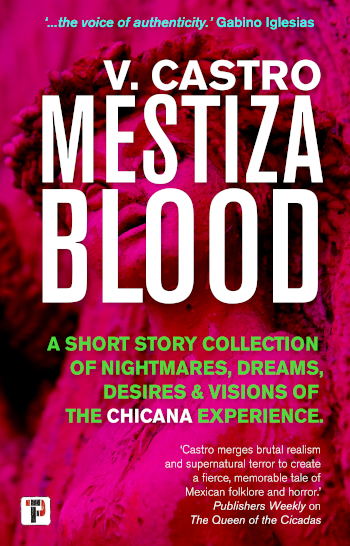
You’ve said your short story collection, Mestiza Blood, is a good entry point to the “weirdness of my brain.” What’s one story in there that you think best captures the blend of cultural history and pure, unadulterated horror?
I want to shout out the story Nightmares and Ice. It is real horror we are seeing playing out in real time. How do you navigate life when nowhere feels safe? When all hope is lost because you feel no one cares?
Cenotes. They keep showing up in your work, as portals, as sacred sites, as graves. What’s the personal pull? Is it the water, the darkness, or the connection to a world just out of reach?
It is a very real belief they are portals and actually used in sacrifices to the gods! People love to take photos of them for Instagram, but they are significant and sacred for the people who inhabited Mexico well before the conquest.
The collection is a mosaic of body horror, cosmic terror, and folk tales. If you had to pick one story that is the absolute, uncompromising core of your creative signature, which one would it be and why?
Truck Stop. It’s so weird. But also lots of vulnerability as the characters move through the story.
That famous line of yours: “Why write about werewolves when my ancestors revered jaguars?” Beyond being objectively cool, what does that philosophy do for the genre itself? What does it add that wasn’t there before?
HA! YES! Jaguar Nights! I loved writing that book. This means any trope can be expanded to include everyone and the folklore, history, legends of their culture. There are so many rich tales out there! That is also why I write about Mesoamerican deities. They are fascinating and frightening!
You’ve edited the anthology Latinx Screams to hold the door open for other voices. What’s the most important thing you learned from being on the other side of the page?
There is so much talent out there. I love giving writers a platform for their work because I know how tough this business is. Having the ability to give to others fills me with so much joy.
Let’s not mince words. Your work is fiercely, unapologetically political. The systems of oppression, immigration, colonisation, and reclaimed sexuality, they’re not subtext. In an era where some say “keep politics out of horror,” why is that directness not just your style, but a necessity?
Art in all forms has always been an outlet for expression. Why should it only be reserved for music, photography, paintings, sculpture? Also, knowing how someone else sees and experiences the world is valuable. It gives us empathy. Think about the photographs that came out of the Vietnam War. We could see the horror and hopefully know how wrong that was.
You’ve mentioned that you “never worry about going too far, considering how cis white men have long been able to write whatever they want.” Is that the guiding principle? To claim the same creative freedom that’s always been granted elsewhere?
Absolutely! I have written about sex work, sexuality, desire, rage. I want to write about how that feels coming from a lived experience. Stigmas exist because narratives are controlled. Social media is problematic in many ways, but it has also allowed people to share their experiences freely. We don’t have to accept what a handful of people have to say about something that affects many. Women don’t have to be the victim in every story or their story written from a skewed point of view.
Looking back at everything, Malinalli reclaiming her story, Alejandra facing down her tears, Maria fighting for answers in a world that wants her gone, what’s the one seed you’re trying to plant in the soil of the genre? Not just the book you hope someone reads, but the feeling you hope persists long after they’ve closed the cover. What do you need your body of work to do out there in the world?
I want my work to empower. Empower people from all backgrounds and walks of life. Courage to be who you are and live authentically is genderless. So many times we get stuck in situations and think perhaps there is no way out or change is impossible. I believe we can all live our lives to the fullest when we find that spark within and know it is outward.
Maria the Wanted by V. Castro
Newly turned Mexican vampire, Maria, is not just out for blood, she wants answers.
From the twice Bram Stoker-nominated author of The Haunting of Alejandra and Immortal Pleasures, a gripping tale of empowerment, desire and belonging, perfect for readers of A Dowry of Blood and Certain Dark Things.
Maria is a wanted woman. She’s wanted by an Aztec trafficker, a cartel boss, the people she fights for, and now the Devil she can’t resist. Her journey begins as a would-be immigrant turned vampire in Juarez, Mexico until the injustices of the world turn her into something else.
Forced to leave her home and family, she embarks on a journey across Mexico seeking those answers. She learns a new language and how to survive as a vampire. To ease her restlessness she finds work with an ex-boxer and learns to fight, becoming an unlikely bad ass enforcer of justice for the community that has embraced her. Is she a saint or an old God from a forgotten past?
An encounter with a violent, ruthless vampire boss leads her to finally find her creator, and he is nothing like she imagined. Drawn into a world of ancient vampires, deadly conspiracies and a dangerously seductive devil, Maria must find a way to fight for herself and all humankind.
A fierce and seductive vampire thriller, pulsing with rage, fear and desire, that explores the dark back streets of Mexico and a vampire woman’s determination to find her place in the world.
V.Castro is a two time Bram Stoker Award nominated author of Aliens: Vasquez, The Haunting of Alejandra, The Queen of The Cicadas, Goddess of Filth, Hairspray and Switchblades and Out of Atzlan. Maria the Wanted, a gripping tale of empowerment, desire and belonging is out now From Titan Books
www.vcastrostories.com
Instagram and Twitter – @vlatinalondon
TikTok – vcastrobooks
Essential Horror Author & Director Interviews on Ginger Nuts of Horror
For true devotees of the dark and macabre, Ginger Nuts of Horror stands as a premier destination for exclusive horror author interviews and in-depth horror director interviews. Our curated conversations go beyond the surface, offering unparalleled access to the visionaries shaping modern horror.
Why Read Our Horror Creator Interviews?
1. Uncover Creative Processes & Inspirations
Step inside the creative minds behind your favorite nightmares. Our interviews dissect the inspiration behind iconic horror stories and films, exploring how masters of the genre conjure fear. Learn how horror authors develop chilling narratives and how horror directors translate terror to the screen.
2. Gain Unique Industry Insights & Career Advice
Navigate the horror industry with wisdom from those who’ve succeeded. Our conversations provide practical advice for aspiring horror writers and filmmakers, covering:
- Breaking into horror publishing or film
- Overcoming creative and professional hurdles
- Understanding evolving horror trends and audience expectations
3. Explore the Psychology & Culture of Fear
Delve deeper into what makes horror resonate. Our interviews examine the psychology of fear, how horror reflects societal anxieties, and the genre’s exploration of themes like morality, existential dread, and identity.
4. Connect with a Community of Horror Enthusiasts
Join a vibrant community. Each interview sparks discussion, allowing you to engage with fellow fans and sometimes the horror creators themselves through comments and social media.
Featured Insights from Horror’s Finest
Our archive includes conversations with legendary horror authors discussing craft, and visionary horror directors breaking down their filmmaking techniques. Find guidance, inspiration, and a deeper appreciation for the art of horror.
Ready to explore? Visit the Horror Interview Section on Ginger Nuts of Horror today. It’s your essential resource for connecting with the minds that define fear, perfect for fans, aspiring writers, and future horror directors alike.
Searching for the best horror author interviews or seeking wisdom from horror directors? You’ve found your source. Click here to start reading now.


