What happens when two righteous men face off? A journey into the heart of biblical horror.
It’s a rare and thrilling event when a novel arrives that defies easy categorisation, demanding to be felt as much as read. David Scott Hay’s latest release, The Butcher of Nazareth, is precisely such a work. Already generating significant buzz for its uncompromising vision, the book has been aptly described as “The New Testament à la Cormac McCarthy,” a comparison that immediately signals a departure from standard biblical epics. This is not a Sunday school lesson; it is a visceral, stark, and deeply human exploration of one of history’s most terrifying footnotes, reimagined through the lens of literary horror.
At its core, The Butcher of Nazareth follows Titus, a man enlisted as an instrument of King Herod’s notorious “Culling”, the Massacre of the Innocents. Haunted by the ghosts of his past and the reality of what he has done, Titus embarks on a final, desperate mission that forces him to confront the very man he was once sent to kill. This gripping premise serves as the foundation for a profound meditation on grief, zealotry, and the impossible chasm between personal redemption and the world’s destiny. The story boldly asks: What happens when two righteous men face off, and what is the true cost of salvation?
In this exclusive interview, we sit down with author David Scott Hay to delve into the creative crucible that forged this powerful narrative. We discuss the conscious decision to strip away literary tricks in favour of raw, emotional storytelling, and how personal experiences of parenthood and estrangement shaped the novel’s central themes of fathers and sons.
From his unique use of voice-to-text technology to his meticulous research into the gritty reality of 1st-century Judea, Hay offers an unflinching look at the process of building a world that is both historically immersive and terrifyingly immediate. Whether you are a fan of biblical horror, a student of complex anti-heroes, or a reader searching for the next great novel that resonates with the power of a classic, this conversation with David Scott Hay about The Butcher of Nazareth is not to be missed.
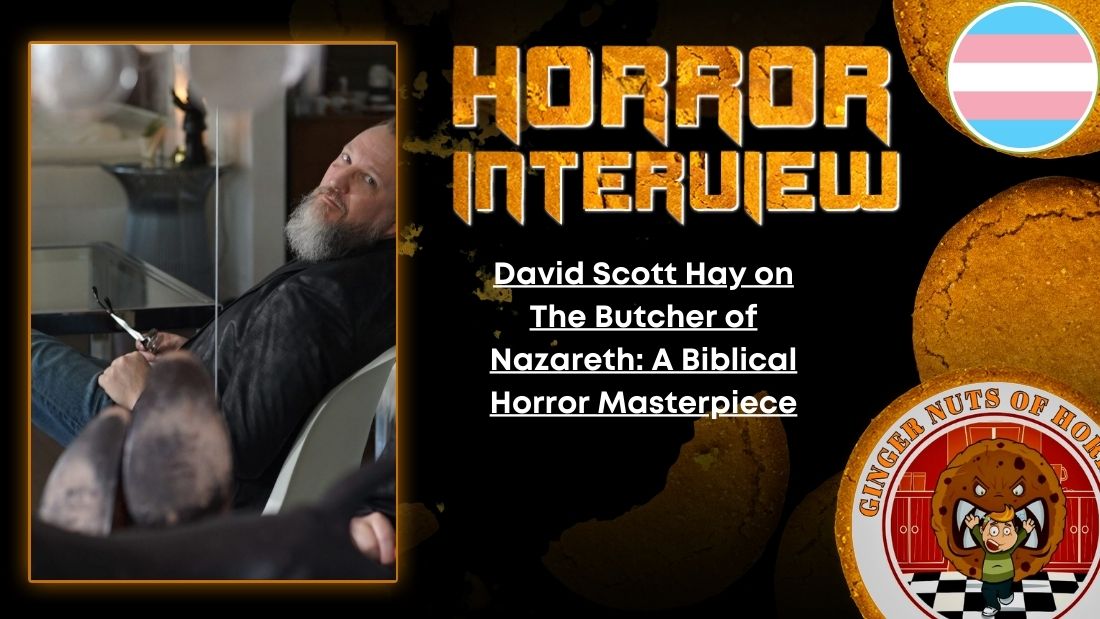
David Scott Hay on The Butcher of Nazareth: A Biblical Horror Masterpiece
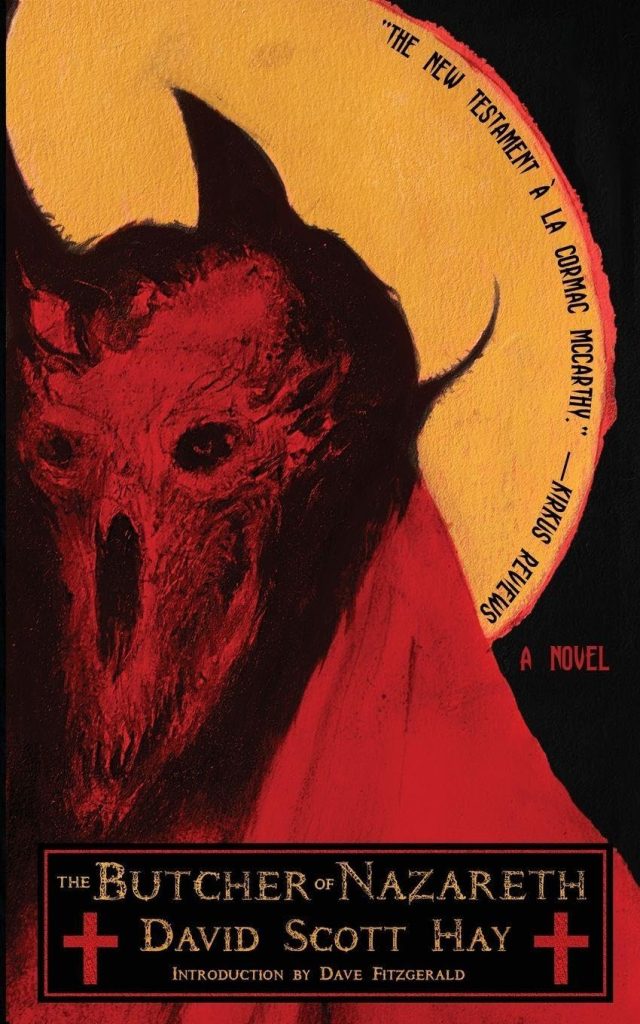
The Butcher of Nazareth has been described as “The New Testament à la Cormac McCarthy”. Can you elaborate on this comparison and discuss the influences that shaped the novel’s stark and visceral tone?
I tossed my writing crutches into the bin. I love to use literary tricks and experimental forms in writing, and with this project I emptied those from my toolbox and wrote stark naked, so to speak.
No more hey, look at me!
The idea was to stop being clever to entertain myself and dig into the story and truly explore the character and evolving mindset of the Butcher. Since I wasn’t writing about art or tech (my previous novels), I wanted the emotional weight of this story to carry the reader and very much put them in the mind of the Butcher and decide what would they do given the same obstacles.
And I wanted the book to read as effortless and timeless as possible, and that meant writing with a different approach and style.
An easter egg chapter I wrote in my novel [NSFW], was written to mimic a classic sci-fi novel and was an experiment in no-trick writing. It was a challenge I gave myself as the main text is much more experimental.
A scholar of sci-fi reached out to me to ask where he could find the entire novel and I told him I wrote it and he very politely told me to fuck off.
We had a laugh, but it gave me courage to write a story that was not meta (my “first” novel The Fountain, is all tricked out with footnotes, wiki pages, etc).
I did however experiment with process. Perhaps, 80% of the initial draft was written with voice-to-text. I found that to be a successful and joyful process and one I keep going back to. Partially, because it allows me to day dream without watching typos stack up on a screen, partially it allows for moments of inspiration that might elude me in an outline.
The language is a bit more formal, befitting of the time, and since it’s not a modern tale, the metaphors and similes are much more mythic and/or rooted in nature, much like Blood Meridian, though I shied away from that level of linguistic gymnastics, I did give it a good dusting and used language to evoke a much more physically immersive world.
Part of the McCarthy comparison perhaps has to do with a western vibe, going from town to town; and most likely the violence. Like McCarthy, I do not shy away from it (and neither does the bible). Whether it’s violence in the past, present, or future, it all drives the story. This is a biblical tale, after all. There is no looking away, hence the stark and visceral vibe. But it also make the moments of connection and joy resonate.
The novel follows Titus, a butcher recruited for King Herod’s “Culling”, who is then haunted by visions. What drew you to tell this story through the eyes of a man directly involved in the biblical massacre of the innocents?
My wife.
She’s a shit good writer as well (film/tv/stage), and I honestly was toying with the idea of writing a cozy biblical murder mystery. It was an experiment, a lark really, to play with form, and do something completely different for me, but playing it completely straight.
I was brainstorming a list of characters and suspects (Joseph was the murder victim) and my Catholic-raised wife, mentioned the “Massacre of the Innocents” as told in the book of Matthew – King Herod hears about a newborn that will challenge his rule and when the Magi (three wise men) don’t report back with his whereabouts, Herod orders a massacre of every male two years and younger in Judea.
I’d never heard this story, and I have a couple of religious themed projects under my belt.
And I thought great, an assassin comes back to finish the job since they clearly missed killing their target. And I moved on with the work. But…
…as I started filling out motives for my suspects, I had so many questions about this man. The thought of him being a mustache-twirling villain didn’t interest me.
But questions kept plaguing me: who is he, why did he take part in the Culling, where has he been since, why is he coming back? What does he have to gain? What was left in his wake of destruction, not only personally, but within the region?
This Culling would have eliminated many of Jesus’s peers and how would the families react when they returned, knowing Jesus was the sole survivor of a generational massacre?
None of this is addressed in the bible.
And then that voice, you know the one, that voice piped up and said:
“Hey, idiot, the Butcher is your story.”
And it’s true, his back story and history would have overshadowed any other character and suddenly I went from a cozy mystery to a full on biblical horror journey. And honestly, it was a writing journey of discovery. Sometimes just picking a direction will get you to the right place. Same thing happened with [NSFW]. It started as one thing and then, click, pivoted to another kind of project.
Always listen to that voice.
Always listen to the wife.
The book’s synopsis poses a powerful question: “How does one choose between personal redemption and worldwide salvation?”. How does the “dead newborn” that the Butcher adopts force this deeply personal conflict to the forefront?
This is a bit of spoiler territory, but the Butcher believes if Jesus can resurrect this long dead baby, he can finally return home with it to his long estranged wife and his family will be whole.
That’s his rationale.
Instead of murdering Jesus to stop the atrocities his followers will commit in the far future, he sacrifices that mission for redemption and the chance at a cozy life now. And to be honest, he sees a horrific communal stoning that makes him question the justice of saving the folks in this community.
You’ve described the book as reimagining “familiar events and figures with a modern sensibility”. What was your approach to blending historical and biblical elements with literary horror, and what new perspectives were you aiming to explore?
I researched so much to keep the reader from bumping on a misplaced word or gesture, but at the same time I didn’t want the characters to fall into a Shakespearean trap of dialogue, so it’s a bit more formal, but not so much as you feel like you’re reading a thesis.
And since this is a hunt for Jesus, I wanted the journey of the Butcher – who is following Jesus’ path from Bethlehem to Jerusalem to Nazareth – to parallel the journalist in Citizen Kain and Willard in Apocalypse Now.
I wanted people to get glimpses and hear and witness stories about a grounded Jesus –We learn about the Jesus the person in different stages of his life. We are told the true story of the Nativity. I added a midwife to the Nativity and she gives her perspective on the event, not what you’d imagine, but you would read it and go yeah, that makes sense.
We meet the Pharisee that teaches a young Jesus to read. We get a picture of him and then we finally meet him in the last half of the book.
But this is not the historical Jesus we know. He’s essentially stuck in failure to launch mode. He has not been called to his ministry, he doesn’t know when or if that’s going to happen, he’s got a sweet tooth and is betrothed to Mary Magdalene – a bad ass midwife. He squabbles with his family. He’s stuck with no sense of when or if he will be Called. It could be tomorrow or it could be another 20 years.
So what do you do in the meantime?
I tried to imbue him with a great sense of frustration and humanity in how he confronts the future. The same goes for Joseph, imagine being in his shoes for decades. Imagine being Mary and still having to parent a child. Imagine Magdalene falling in love with Jesus, but knowing you might lose him to the world. All of these folks are living with this hanging over their lives with NO IDEA when it might happen.
And then the Butcher meets Jesus.
What happens when two righteous men face off?
The thing I’m most proud of is, shockingly, both Christians and non-Christians have loved the book. I don’t bash religion. I don’t bash Christ, I try to give a glimpse of what might have shaped the man and his destiny.
But again this is a horror book, due to the seed of the story starting with infanticide. And like the bible, it has moments of violence and gore. I did not sanitize this world. (Stonings are BRUTAL and the reader gets to witness one unflinchingly.)
The Butcher of Nazareth is categorised as literary horror. How does the horror in this novel function to explore its central themes of grief, zealotry, and the relationship between fathers and sons?
I can’t adequately address the grief here, and zealotry is summed up in that line above: What happens when two righteous men face off?
But fathers and sons are shown in many configurations: There’s Joseph who adopted Jesus. There is the Pharisee that took to Jesus as if he were his own son and taught him far more than Joseph. There is the relationship of father-to-be to a woman. There is a father, many fathers, that lost their sons in the Culling. There is a father who rejects his dying son because of his beliefs. Nothing is one note, and the horror is sometimes chosen, and sometimes inevitable.
But horror for me is having something you love being torn away from you.
That’s horror.
And that can be the seed for not only grief, but zealotry.
On a personal note, I could not have written this book without being a parent. My son received two life-altering (he’s good now) diagnosis two weeks into the pandemic. Prior and after, my wife and I spent a few years in perpetual crisis mode. Again, all good and thriving now, but back then it was terrifying.
A few years later, I became estranged from my own father. So it was a long process of breaking a chain of behavior and confronting the past to enable a brighter future.
The protagonist’s profession is central to the title and, presumably, the novel’s identity. Beyond the literal meaning, how does the concept of “butchery” function in the story—as a metaphor for state-sanctioned violence, a personal burden, or perhaps a perverse form of creation or sacrifice?
Beyond the literal meaning, the Butcher’s visions of atrocities committed by Christ’s followers are true and historically undeniable, and you could argue that Jesus is, in fact, The Butcher of Nazareth.
“When they slaughter your kind, goat, if you are lucky, there is a ceremony, a dance, an acknowledgement of your sacrifice. If you are at a butcher’s there is no ceremony save a quick blessing, a wrestle to the table and a slit throat, your blood drained into a bucket. Your body hung to be skinned, carved to be eaten. a horn sold as a trinket. Your coat tanned and tailored. It is a death, true, but there is no waste. When you slaughter children,” the Butcher said, “it is all waste.”
That’s as far at the Butcher metaphor goes, but I do point out the barbarity of the state-sanctioned violence of stoning. It is a brutal punishment, and I wanted the reader to experience that in an unflinching way.
And to plant a bit of doubt in the Butcher as to the value of saving the descendants of these people.
Nazareth and the era of King Herod are not just a backdrop but an active force in the narrative. How did you approach building this world to feel immersive and threatening? What kind of research was involved in capturing the gritty, historical reality of the time?
Research. Research. Research.
Books and books. Illustrated books, illustrated bibles, maps and timelines.
I knew before I started the book, I wanted the journey to go from Bethlehem to Jerusalem to Nazareth, fortunately all these town lie in a fairly straight path. I toyed with using the Nile and leaning into the Heart of Darkness of it, but this was more direct and the thought of the Butcher on a raft making his way upstream didn’t lend itself to the kind of conflict I wanted to explore.
Plus, that damn goat needed room to get into trouble. So I got lucky there.
Most of the research on the period all said: this is our best guess, so I went with that. Fun fact, one passage said that beards at the time of Jesus were unfashionable and that when the bible was written 80 years later, they added beards. I thought that was a great nugget, and it pays off later in the book.
As a practical matter, I tried to keep it period appropriate. No forks. Orange carrots were a late 18th century hybrid of white and red carrots (Thank you, A.C. Wise). The word pregnant was coined in 14th century. So I combed out many words without turning the book in to an archaic text, I didn’t want the reader to trip on any words or phrases that might pull them from the story. I wanted the book and story to read as timeless.
I also watched Monty Python’s The Life of Brian (again)a great movie, but also good production design, and that helped create a clearer picture in my head. Before I started research, I made a list I knew I would need: commerce, diet, dress, shelter, customs, gender roles, ages, trades, communication, trade. The effect of Roman occupation, etc.
Luckily, nothing affected the plot I had in mind. And I feel I was able to portray a wide variety of people with dignity and humor. You can’t have a book this heavy without a bit of humor. I learned that from my time as a playwright in Chicago working with veterans on their war stories. Every one appreciates a spoonful of sugar.
Your previous novel, [NSFW], is an experimental, near-future satire about social media moderators. The Butcher of Nazareth is a historical religious horror. How do you see your narrative voice and approach to storytelling evolving across such different projects?
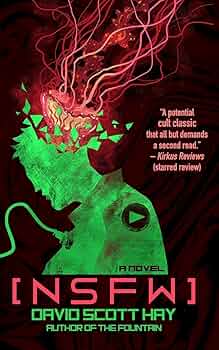
As stated before [NSFW] was an experiment, but as a challenge to myself I wrote a straight forward easter egg chapter that fooled some readers into thinking it was an actual chapter from Soviet-era pulp-sci novel that is referenced in the book several times.
And frankly, I could not bring myself to write another contemporary novel. I didn’t want to deal with tech, computers, phones, anything that had a screen. I wanted all interactions to be face to face. I love to play with form and structure and process. [NSFW] was written mostly on a phone, day and night.
Anytime a line or thought occurred to me, I wrote it down in my Notes app.
My wife called it my mistress. Gah.
But as I mentioned above, The Butcher was written mostly voice-to-text. I would do a broad outline, then narrow it down to scenarios and encounters then narrate the story. Because It was mostly over the summer while my son was home, I spent about 40 minutes a day doing a couple of recording sessions and then edited and formatted in the evening. And spend a bit of time sketching out options or goals for the next day’s work.
My old school 2,500 words/a day became 500-700, and let me tell you it was a great sweet spot. Not assholing my way to hit a quota, I always gave myself a good curtain line to end on (welcome to a decade plus of Chicago theatre), and the quality won out over the quality. No burn out.
And the ability to improv certain things or reactions lead to some great discoveries. The “dead baby” was not in my original outlines and changed the trajectory of the novel and I suspect the reader’s experience. And I love that part of the process. If I write only what I outline, it’s a snoozer for me, and I’m sure a snoozer for the reader.
Now at the end of process, I do make sure I play fair, look at clarity of situation, the emotional stakes and tend to the set-ups/and payoffs. That’s the craft aspect. But also doing the voice-to-text gave me a much fresher perspective when tackling the rewrite as I had no memory of writing it at the keyboard, because I hadn’t. So I was able to keep a keener editor’s eye on shaping the material.
Despite different genres, your works often feature characters in extreme situations, grappling with powerlessness and existential choices. In [NSFW], you defined horror as “having something you love being torn away and being powerless to stop it”. Does this definition also apply to Titus’s journey in The Butcher of Nazareth?
Yes. And it is the Butcher that does the tearing apart – again a moral dilemma. And later is faced with yet another unfathomable temptation. Again, I ask the reader: what would you do…?
I try to give a central moral dilemma in all my stories, The Fountain – would you drink the water? [NSFW] would you cut the live feed event?
Because that’s the kind of story I like to read. What would I do if I was in that situation? Books that plod with this happened and then this happened and give a pithy and ambiguous ending don’t feed the conversation. I need thematic work and engagement. YMMV.
Your novel The Fountain is a literary satire that “shreds fine art culture and all its pretensions”. What compels you to shift between the sharp wit of humour and the guwrenching, apocalyptic stakes of a novel like The Butcher of Nazareth?
Time.
I wrote The Fountain as a side project over about six years. Sometimes not touching it for six months. I broke all my writing rules. Then it occurred to me it was going to take another six to finish it, so I took it to an MFA program (Kids, stay away from an MFA program until you’ve lived some live, don’t jump right into one, they’ll beat the voice out of you), and sold it a number of years later.
I had been writing and producing plays and even got a movie project going, so after The Fountain sold, I thought I needed to write another one and not take 6 years. [NSFW] was a stew of all my thoughts and ponderings and preoccupations at the time. Hello, Covid and lock-down. I researched a lot, read white papers, etc. Shortly after the book came out a few things I’d described as spec future events came to pass.
That was weird.
But [NSFW] found readers in the horror community (so kind, so vocal) and I thought I’d like to play in the sandbox as horror can be broadly defined with several sub-genres etc. Again, my initial thought was a cozy mystery but playing it straight and after the Butcher’s character reared his head, I thought, well I don’t know if anyone is going to want to read about a hunt for Jesus, but this is intriguing for me and I would love to read a book like this.
In the end, no agent touched the book, but my steadfast publisher Miette at Whisk(e)y Tit welcomed it with open arms and we’ve sold out our first printing in pre-orders.
No one knows nothing.
With your extensive background as an award-winning playwright, how has writing for the stage honed your sense of dialogue, theme, and what resonates with a live audience? How do those lessons inform your novel writing today?
Oh man, nothing will sharpen your story sense than writing and seeing/hearing your work in front of a live audience.
You learn quickly what works on the page, what works on the stage and how to mix the two. How to control pacing with paragraph length. And also theme is essential for writing for stage and without it, it shouldn’t be there.
I read a lot of novels from the Big 5 and indies that don’t have any thematic quality. Same for Hollywood. If you’re not writing about something, I’m not interested. I find with prose that theme is the last thing a writer grasps. And more often or not, it’s missing from younger writers with not enough life experience.
That’s why The Fountain, [NSFW] and I hope the Butcher resonate beyond their plot. That they make you think, they make you choose a side in the thematic debate. And even then you still have to entertain and thrill.
My playwriting came in handy for the scene where the Midwife reenacts the Nativity for the Persian Royalty in the stall. I spent over a week with that one scene. I wrote her monologue, improvised out loud and recorded on my phone. Then I cleaned it up. Then I added the blocking, her using a Prince and Princess the audience as stand in for Joseph and Mary. Then I layered in the audience reaction, fidgets, interruptions, etc. Then I layered in the Butcher watching all of this from the back, his thoughts, his plans, his emotions.
It was like a painting.
And with seven people in a scene you have to do that. You have to know what the central focus on stage is, where the camera (reader’s attention) should be. What foreshowing should be better etc. It was a central scene and all had to be present and have an experience while keeping the story central.
Also, in theatre, I’ve been known to cut monologues in dress, replace a speech with a look or a word. The most powerful idea wins.
Whew.
Interestingly enough, these questions made me really go back and consider my thoughts at the time. With few exceptions I wasn’t thinking in these terms as I was writing each section. I was writing to discover answers, asking myself questions, while moving the Butcher forward in his quest. I’m still connecting dots in the Butcher that must have been made on a subconscious level.
Next up? I’m working on a slipstream novella for a fledging sci-fi publisher and a contemporary religious horror novel for my Butcher publisher. That and a nap.
The Butcher of Nazareth by David Scott Hay
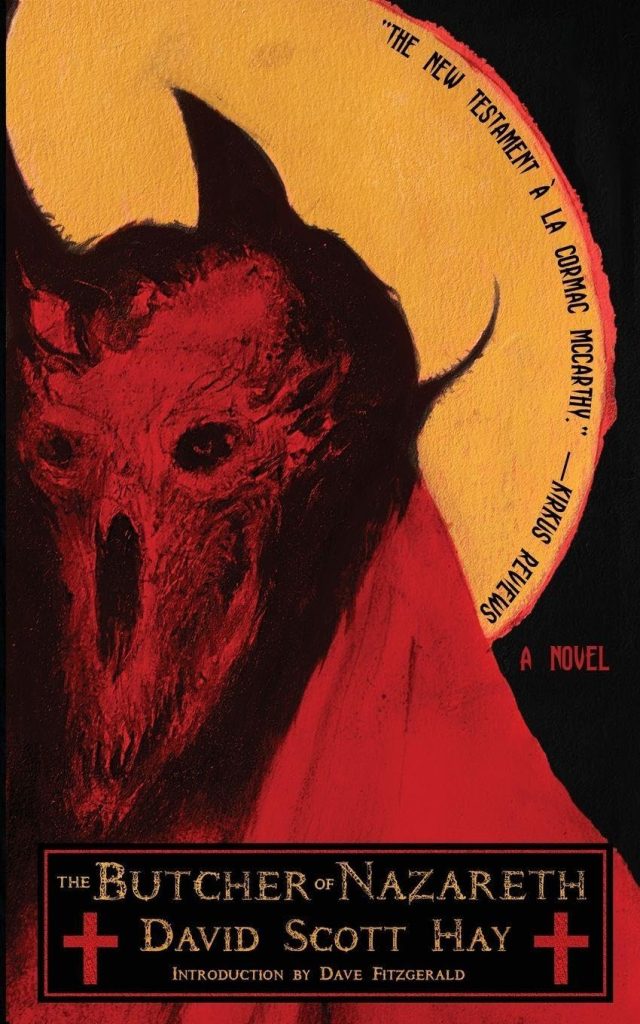
GOODREADS #1 HORROR TO READ IN 2026
Haunting visions drive a grieving butcher to hunt down an obese, pre-ministry Jesus to prevent an age of fire and ash.
But when the Butcher ‘adopts’ a dead newborn, his hunt for the son of Nazareth takes a personal and horrific turn.
How does one choose between personal redemption and world-wide salvation?
From Bethlehem to Jerusalem to Nazareth, familiar events and figures are reimagined with a modern sensibility, building to a gut-wrenching conclusion.
A heart of darkness story that explores: fathers and sons, grief, zealotry, and choice.
Foreword by Dave Fitzgerald (author of Troll – Kirkus Reviews Top Indie Books of 2023)
David Scott Hay
He is an award-winning playwright, screenwriter, and novelist; hailed by the Chicago Sun-Times as a new generation Albee-Mamet-Shepard. (“hailed” is a strong word, but it was a very nice review of one of my plays).
DSH’s screenplay adaptation of his play HARD SCRAMBLED* won Creative Screenwriting Magazine’s New Visions Filmmaking Fellowship enabling him to direct the indie feature film starring Kurtwood Smith (That 70s Show, RoboCop). The film held its premiere at the Cinequest San Jose Film Festival (2006) and went on to win Best Dramatic Feature at the Garden State Film Festival. (great night. previous night was even better, rockabilly at Asbury Lanes)
He has been a finalist to quarterfinalist in the Nicholl, Scriptapalooza, and Final Draft Big Break screenwriting competitions with his screenplays, AWOL Blues, Snow Dragon, and Straight Razor Jazz. He is the recipient of an Illinois Arts Council Finalist Award and Special Screenwriting Grant. (where I adapted, produced and directed a horrible short film)
As a playwright, DSH wrote the critically acclaimed plays HARD SCRAMBLED, CELESTE, [THE] VIOLENT SEX, and KILLING LUCIFER amongst dozens of assorted productions and staged readings. He is also the co-writer of the Civil Rights play THE MARKER with David Barr III and Glenn Jeffers. And the co-writer on THE FACE OF EMMETT TILL also with David Barr III.
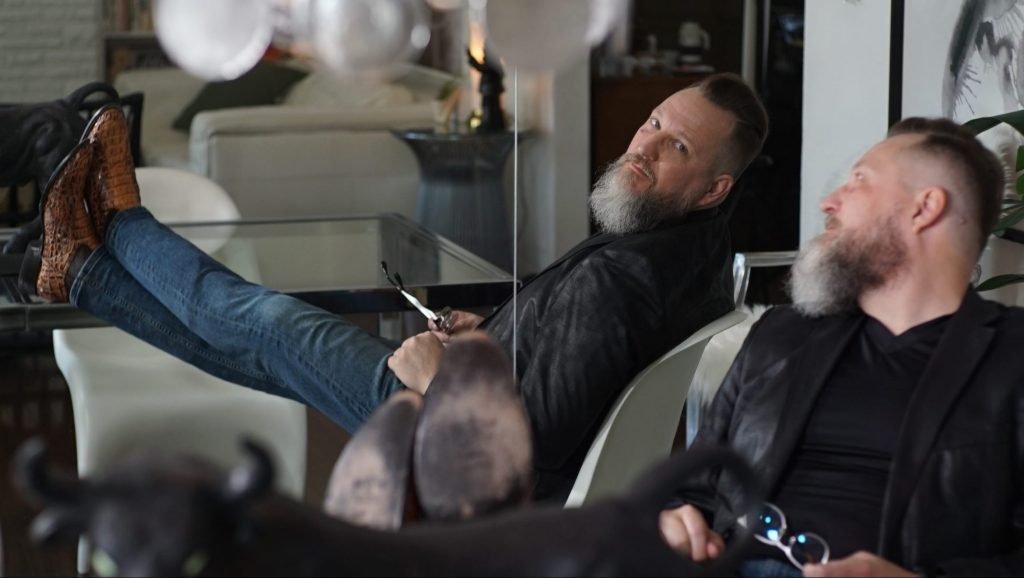
DSH was also the co-founder and Literary Director for the Chicago theatre company Visions & Voices where he co-produced new work including the critically acclaimed ACCIDENTAL RAPTURE, [the] VIOLENT SEX, and VINTAGE RED & THE DUST OF THE ROAD. (yes, indeed. amazing scripts, amazing productions). Fast forward seven years and WBEZ in Chicago named the VR & DOTR the number 2 production of the decade, right behind a Pulitzer winner. (that was a warm fuzzy)
He’s twice served as a Playwright in Residence at the world-renowned William Inge Center for the Arts and was a Guest Lecturer at Grambling State and the Newberry Library. (I did not get shhh’ed) He was a Resident Playwright at Chicago Dramatists, and then with the Vet Art Project and Warrior Art Studio where he worked with veterans tell their stories. (semper fi)
DSH then decided on grad school and an MFA, just to shake things up. (a vacation would have been cheaper) He was Contributing Editor for the former Digital Americana Magazine and wrote essays on baseball, space exploration, the craft of writing, and Superman’s day job.
His self-released novel Fall: The Last Testament of Lucifer Morningstar was an Amazon best seller.
The Fountain was his small press publishing debut. It received a starred review from Kirkus: “A passionate meditation on art wrapped in a hilarious sendup of artistic pretensions.” It is currently in its third printing and has also been translated into Russian and released there in early 2023. (holy shit)
His follow-up novel [NSFW], also received a Kirkus starred review: “A potential cult classic that all but demands a second read.” [NSFW] was listed by Tor.com as one of the most anticipated novels of 2023 and made Dennis Cooper’s Top Fiction of 2023 and was recently named a Top 100 Indie Book of the 21st Century by Genrepunk Magazine. (no, really)
The book was also picked up for Russian translation, but due to censorship laws, was deemed too controversial and was preemptively banned. Instead, [NSFW] will be released in Russian in the surrounding countries late 2025. (hold onto your hats)
He is EIC of Whisk(e)y Tit’s upcoming horror imprint, Headless. (stay tuned)
He is a full/active member and volunteer for the SFWA and HWA.
He is not nearly as pretentious as this bio makes him sound. (most days)
He lost the tip of a finger in chop-saw incident. (buy me an N/A beer and you’ll get that story in person)
Essential Horror Interviews on Ginger Nuts of Horror
For true devotees of the dark and macabre, Ginger Nuts of Horror stands as a premier destination for exclusive horror author interviews and in-depth horror director interviews. Our curated conversations go beyond the surface, offering unparalleled access to the visionaries shaping modern horror.
Why Read Our Horror Creator Interviews?
1. Uncover Creative Processes & Inspirations
Step inside the creative minds behind your favorite nightmares. Our interviews dissect the inspiration behind iconic horror stories and films, exploring how masters of the genre conjure fear. Learn how horror authors develop chilling narratives and how horror directors translate terror to the screen.
2. Gain Unique Industry Insights & Career Advice
Navigate the horror industry with wisdom from those who’ve succeeded. Our conversations provide practical advice for aspiring horror writers and filmmakers, covering:
- Breaking into horror publishing or film
- Overcoming creative and professional hurdles
- Understanding evolving horror trends and audience expectations
3. Explore the Psychology & Culture of Fear
Delve deeper into what makes horror resonate. Our interviews examine the psychology of fear, how horror reflects societal anxieties, and the genre’s exploration of themes like morality, existential dread, and identity.
4. Connect with a Community of Horror Enthusiasts
Join a vibrant community. Each interview sparks discussion, allowing you to engage with fellow fans and sometimes the horror creators themselves through comments and social media.
Featured Insights from Horror’s Finest
Our archive includes conversations with legendary horror authors discussing craft, and visionary horror directors breaking down their filmmaking techniques. Find guidance, inspiration, and a deeper appreciation for the art of horror.
Ready to explore? Visit the Horror Interview Section on Ginger Nuts of Horror today. It’s your essential resource for connecting with the minds that define fear, perfect for fans, aspiring writers, and future horror directors alike.
Searching for the best horror author interviews or seeking wisdom from horror directors? You’ve found your source. Click here to start reading now.