The haunting was always real. Thompson just gave it a name.
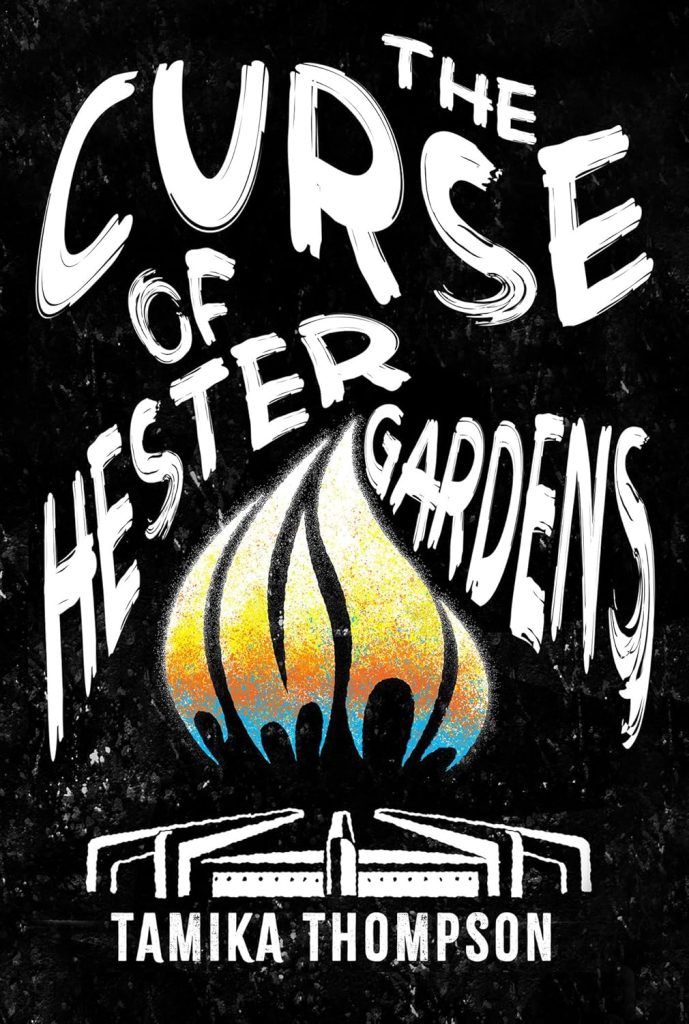
Social horror has always worked best when the monster points somewhere. At something. At us. Tamika Thompson’s debut novel, The Curse of Hester Gardens, published by Erewhon Books in March 2026, does exactly that, and it does it with the kind of precision that takes years of watching, thinking, and refusing to look away.
Set in a public housing project in Medford, Michigan, the novel follows Nona McKinley, a mother raising her two surviving sons after losing her eldest to gun violence. Strange things are happening in Hester Gardens. Footsteps sound when no one is there. Appliances switch on alone. And the murdered, Thompson tells us plainly, don’t know how to leave.
This is a haunted house story, yes. But the house is a system. The ghost is grief. And the curse is what America does to people it decides don’t matter.
If you’ve already read our review of the novel over at Ginger Nuts of Horror, you’ll know we consider it one of the defining horror releases of 2026. This interview confirms why. Thompson, a journalist by training and a horror writer by conviction, speaks about her work with the kind of calm clarity that only comes from someone who has already done the hard thinking. She doesn’t reach for easy answers. She doesn’t soften her edges.
What emerges from this conversation is a writer who understands that social horror fiction isn’t a subgenre with a political agenda. It’s horror doing what horror has always done: showing us what we fear most and asking why we built it that way. Supernatural horror, generational trauma, systemic racism, gun violence in fiction, and the particular terror of Black motherhood in America. All of it is here. None of it is decoration.
This is the interview. Read carefully.
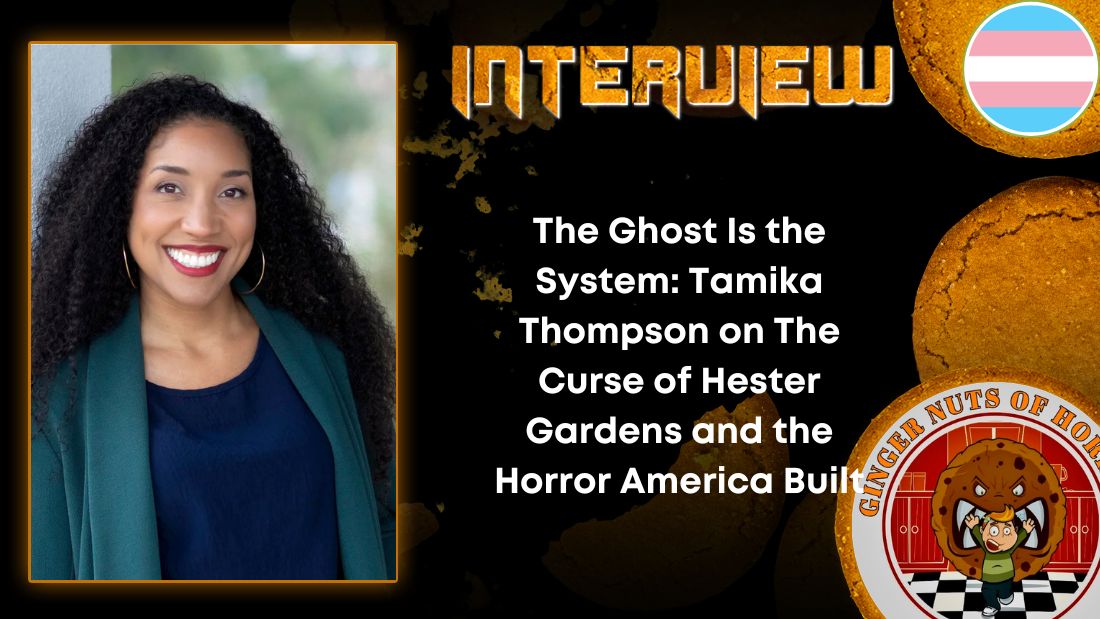
The Ghost Is the System: Tamika Thompson on The Curse of Hester Gardens and the Horror America Built

Renee Sweeney
The official synopsis reveals that the supernatural activity in Hester Gardens is directly linked to the spirits of those killed by gang violence, who “don’t move on peacefully.” How did you approach the task of making the haunting both a literal, terrifying presence and a powerful metaphor for the cyclical, inescapable trauma that violence creates in a community?
Not only those killed by the gang. It’s any murdered person. In Hester Gardens, the murdered don’t know how to leave. I began with my own beliefs. I don’t believe in ghosts, but I do believe in hauntings. Specifically, I don’t believe that in real life, spirits are lurking in our homes, but I believe trauma leaves an echo. Memories stay with us to haunt and torture, and when the grief is heavy, it is a private hell.
For death that is stigmatized — homicide, suicide, by substance use, for example — the grief experienced by the survivors carries the extra weight of shame. By telling those private stories, the larger systemic issues are addressed in the novel organically.
Nona is a “deeply flawed” character. How do her personal guilt and secret-keeping intersect with the larger, communal guilt and secrets that seem to be at the heart of the curse? Does the novel suggest that personal failings can have consequences that echo far beyond an individual’s life?
I’d say she’s flawed, but not deeply. Like her husband, sons, and other members of the community, she was born with the deck stacked against her — nonexistent financial resources, poor housing, underfunded education, no health insurance, and criminally negligent healthcare. The list goes on. In spite of that she manages to find joy, create a home, raise intelligent, loving boys, and survive a system that is designed to destroy her.
She is also hard-working, and a lot of her education in life came from reading books at the library and attending church. Her poor choices are a direct result of the trauma she suffered and the fear she carries, namely the anxiety she has about providing for her boys as a single mother enduring socio-economic oppression.
At the open, she is a bit self-righteous about herself and her sons because she is trying to distinguish herself and them from the other residents and to give her sons a vision beyond Hester Gardens, forethought she believes other residents do not have.
The secrets she carries do not fit with the persona and vision she has created for herself and her boys, which is why she is loath to share them. She is allowing the affair with the mega church pastor because she is lonely and also because he gives her sons access to resources they otherwise wouldn’t have. I do not believe her flaws led her to the crisis in the book, but her choices definitely did. Is that an indictment of her? No. Because I don’t think it’s fair to judge a person’s decisions when the options are unjust to begin with.
How did you balance systemic poverty and racism of the story with the supernatural threat? Did you set out to write a story where the social horror is the foundation upon which the ghost story is built, making them ultimately inseparable?
Yes. Exactly. This story is horrific without the ghosts. I could have told it as a straight narrative with no speculative element, and I don’t think it would have said everything it needed to say about the unseen elements of violence.
In society, we see the outcomes of violence—the mass shooting, the gang beating, law enforcement dragging the handcuffed person to the squad car. We don’t see the violent spirit that possesses a person, the grief that sits on their shoulders as they move through the day, the quiet moment when they’re polishing their gun and thinking about the person who has hurt them that they now plan to hurt. The social horror is the foundation of the story, but the haunting exposes the real evil at play in the narrative.
You write that these stories force us to ask, “Does dominion mean violence?” How does The Curse of Hester Gardens engage with this question on both a macro and micro level? Is the curse itself a form of retribution from those who were dominated by violence, rising to challenge a system that deemed their lives disposable?
Yes. People the world over have made violence the solution to our major problems. In the global West especially. We want a resource that another country owns? We’ll bomb them and take it. We want power over a group of people? We will criminalize their existence, lock them up by force or kill them. We want another country to do what we say? We’ll begin a protracted war with them and reduce their city to rubble. We want to silence a dissenter? Assassination.
In America in particular, we use law enforcement as the answer to bad social policy. We even have police resource officers in some of our schools. Through segregation and economic oppression, we have set up unsafe communities, and the violent policies lead to violent outcomes.
And the list goes on. We deform and mistreat our animals before slaughtering them. We pollute the air we breathe and poison the water we drink. We chop down trees. We extract resources from beneath the earth with little regard for the long-term impact.
Hester Gardens serves as a microcosm for these social ills. It demonstrates the echoes of violence, the reverberations of trauma. Brutality resounds in the very walls Nona and her neighbors inhabit. Screams, gunshots, and helicopter sounds destroy the little calm they are able to carve out for themselves each day. The violence spreads through their community like a virus, and the warning here is that if it goes on for too long, that violence eventually destroys everyone.
How do you balance the need for an entertaining, suspenseful horror narrative with the profound weight of this real-life epidemic? What is the responsibility of a horror writer when using such raw material?
My responsibility is to the story, always. To the narrative arc. To getting the pain on the page.
What I focused on balancing here was the emotion and sheer terror of motherhood with the reality of this perilous environment. Nona’s anxiety after losing her first-born to gun violence and her desperation to protect the remaining two were my guides in crafting this story. I knew that if I stuck with her panic in the midst of such dire circumstances, the suspense would come.
How does the novel explore the difference between willful ignorance of a problem and being trapped within a system that offers no escape from it?
All of these characters know exactly what is happening to them societally. They have not spent any time in America’s ivory towers, but each one has a clear-eyed view of how they were made to be poor, how they came to live in Hester Gardens, and what has been taken from them, including the societal levies they’ve paid for being marginalized.
Nona and Mable have a heated discussion about the impacts of gun violence and land seizures in America, and it points to their understanding of the country and its history. It’s not a textbook recitation either; the history lives in their bones. The history is present with them because what was taken from their ancestors lives with them every day as loss, lack, absence, and deprivation.
That knowledge, unfortunately, doesn’t always allow them to overcome their circumstances, but there is no ignorance here on the part of the characters. Or, as my family members would say, they always know what time it is.
Now, the dominant culture in society? I always ask whether that is ignorance or malice.
Your defense of Cocaine Bear is compelling, arguing it’s more than a “vapid premise” as it showcases how “human malice” creates the monster. In The Curse of Hester Gardens, the monster represents a cycle of violence and its ghostly aftermath. How do you view this novel as a spiritual successor to films like The Host, where the real horror stems from human actions, systemic neglect, poverty, and violence, that contribute to the monster’s existence?
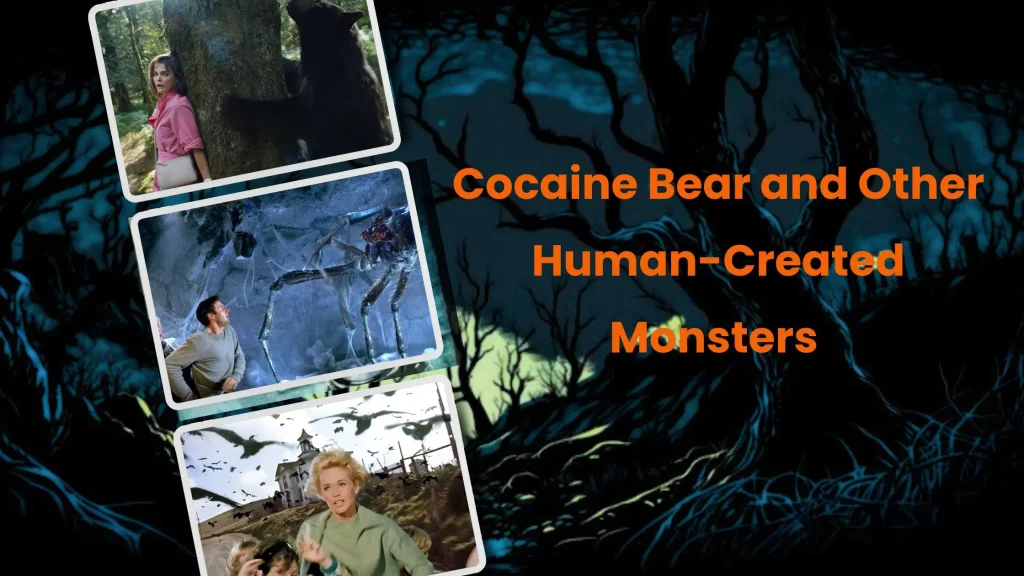
I love creature features like The Host and The Food of the Gods for the same reason that I loved writing this novel. Creature features allow an exploration of the creation of the so-called monster, and it reveals the real monsters at work in our society.
In the case of The Curse of Hester Gardens, the prologue shows the boys when they are young. Lance is a baby, Kendall, Marcus, and Peter are young boys between four and six.
But by Chapter One, not all of them are alive and the ones who remain are not all kind. Something happened to them between when they were young boys and when they became young men, and the journalist in this book, Marcus and Lance’s cousin Harlan, begins to uncover what creates that change.
That switch, that interference or interruption, that occurs in them is at the heart of monster stories. In creature features the interference is often caused by not just human error but human malice. And that is no different in Hester Gardens.
The setting shifts from a traditional isolated mansion to the Hester Gardens public housing project. This environment, where residents are trapped by systemic economic forces, alters the dynamics of a classic haunted house story. Unlike typical narratives where characters can simply leave, here, they are unable to escape.
Yes. It is exactly that. This is one of the reasons why I chose this setting. When I was young, I’d watch films in which a supernatural entity would stalk privileged people in their homes, and I’d struggle to connect with the characters because they could afford to get out.
In The Curse of Hester Gardens, the characters cannot afford to leave the real-world nor the supernatural threats they face, and when they suspect something unearthly is at play, the incident can be explained away by their living conditions. A mystery noise in their home could be a ghost, the failing infrastructure that makes up their units, or a burglar, gang member, or police officer entering the premises. They are in danger all the time, whether a ghost is present or not.
Comparisons to We Need to Talk About Kevin highlight a mother struggling with her unrecognisable son. Can you discuss the crafting of Marcus’s transformation? Is his growing anger and secrecy due to the curse, his environment, or a mix of both?
That question is at the heart of the story. In crafting Marcus and Lance, I leaned into the fact that they are dealing with heavy losses of their older brother to gun violence and their father to prison, that they are living in terrible circumstances and are feeling societal pressures on all sides, but also the added question for Marcus and Lance is whether their behavior can be tied to typical teen behavior of pulling away from their mother, being moody, questioning tradition, and challenging authority. In the end, I like to leave it to readers to decide for themselves what the real impetus is for Marcus and Lance to change.
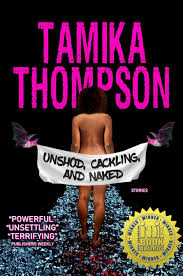
Your collection Unshod, Cackling, and Naked features stories where “beauty is violent” and “love and hate are the same feeling.” How does this idea of duality inform the relationships in The Curse of Hester Gardens, particularly the fierce, complicated, and sometimes self-destructive love Nona has for her sons?
In the text, Nona grows to oppose Peter, who is the leader of the Hester Boys gang, and who, like her, is flawed. They are both morally gray characters but to varying degrees. She can be read as the hero and he could be read as a villain, but I definitely challenge that idea. There are no human villains in this text, and Nona and Peter are both capable of profound evil and of tremendous love, which is demonstrated for both of them on the page. And this is how I think about all characters I craft. They live in both worlds and are capable of both good and bad, depending on the pressures and circumstances.
In Salamander Justice, you created a monster directly from military alteration. In The Curse of Hester Gardens, you’re working with ghosts born from social decay. How has your portrayal of “the monster” evolved? Are you moving towards entities that are less tangible, more physical manifestations of abstract, systemic failures?
My portrayal of the monster hasn’t so much evolved over time in my short and long work, rather I’m tackling different facets of societal ills in each work.
Civil rights leader Dr. Martin Luther King Jr. discussed the three evils in American society—militarism, racism, and poverty—and as a social horror writer, my work is generally going to fall into one of these categories.
Militarism includes several modes of violent interaction in society including via law enforcement, war, violent crime, abuse, rape, trafficking, terrorism, and imperialism.
Racism can be extended to all forms of marginalization, including sexism, homophobia, segregation, ableism, colonialism, and micro-colonialism (so-called gentrification).
And poverty (economic exploitation) is food insecurity, homelessness, unemployment, illiteracy, and the creation of slums.
As I continue to work in the genre, the social aspect might differ, but the underlying purpose remains and that is to hold up a mirror to society and the ways that we have gotten it wrong so that hopefully we can do better.
Your background as a journalist investigating real-world stories clearly informs your fiction. Is there a specific, perhaps overlooked news story about environmental injustice, gun violence, or systemic poverty that you believe is just waiting to be turned into a powerful work of horror?
There is, but I won’t spell it out for you, Jim, because I’m putting it in my next book! (Laughs maniacally.)
In that second novel, which I’m working on now, the world, characters, and setting are vastly different from those in The Curse of Hester Gardens, but I believe readers will be able to see the underbelly of capitalism and how in order to make money off of us, a company first has to get into our minds and change our thinking about ourselves. Capitalism can be violent, and the detrimental outcome isn’t always poverty. Sometimes it’s brainwashing and resource extraction.
If someone could read just one book this year to understand that the most terrifying monsters are those we create through neglect and indifference, and that despite this darkness, a mother’s love remains a powerful and complex force, why should it be The Curse of Hester Gardens.
If you don’t want to read The Curse of Hester Gardens for all of those elements, then read it for the hauntings, the rats, and the conjure woman. My first love is horror, and as much as I like to shine a light on society, I also love the thrill of a scary story. In this book, readers can find both.
The Curse of Hester Gardens by Tamika Thompson
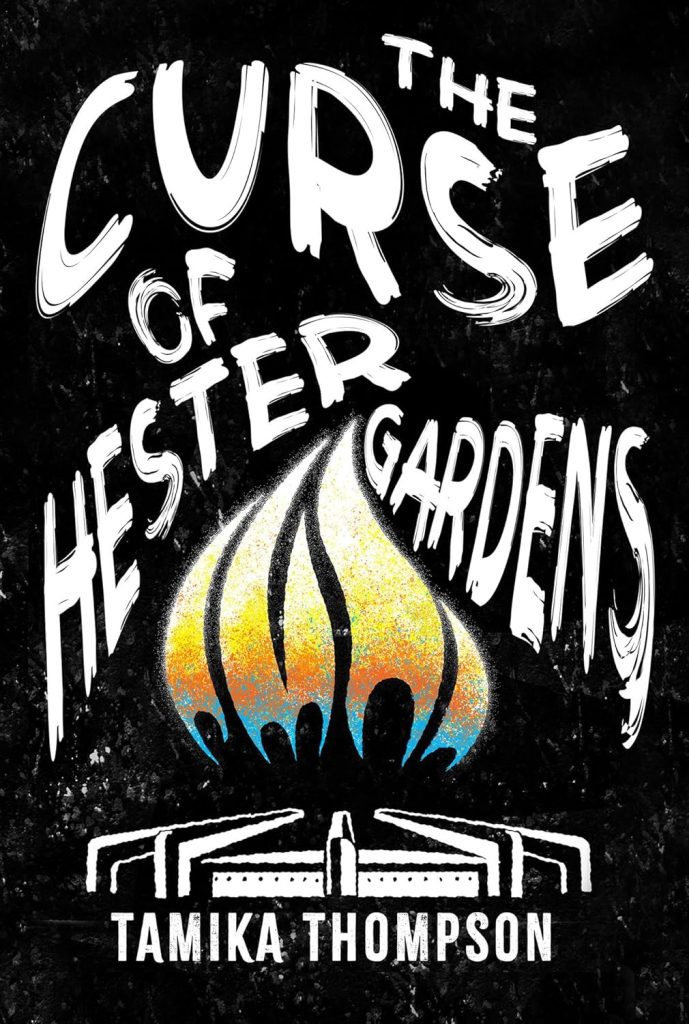
We Need to Talk about Kevin as if written by Jason Reynolds and Tananarive Due meets Model Home by Rivers Solomon in an innovative twist on the haunted house novel: about a mother desperate to protect her sons from the twin specters of gun violence and otherworldly menace in their public housing project.
Nona McKinley raised three boys in the Hester Gardens section of Medford, Michigan, an impoverished community divided by those who follow their faith in God and those who turn to crime to survive. With her drug dealer husband behind bars and her eldest son shot to death at eighteen, Nona has devoted herself to ensuring her other children escape their brother’s fate.
Her second son Marcus is on the right path. He’s a valedictorian heading to an Ivy League school. He can get out.
But then, strange things start happening to Nona and other residents: mysterious footsteps are heard when she’s alone, people have phantom encounters in the streets, unattended appliances go off at all hours. Even more concerning is the state of Nona’s living sons. Her youngest, Lance, is hanging around with a bad crowd, and Marcus becomes moody and secretive. Sometimes he even seems to act like a different person entirely.
Nona has her secrets too. Her affair with the married church pastor has been weighing on her conscience, but that’s not the only guilt haunting her. She fears that someone—or something— is seeking revenge for an act she made in a moment of weakness to protect her family. And now everyone in Hester Gardens must pay the price . . .
Further Reading
Review, The Curse of Hester Gardens by Tamika Thompson: A New Classic of American Gothic
Unshod Cackling and Naked by Tamika Thompson: 13 Short Stories That Refuse to Behave
Cocaine Bear and Other Human-Created Monsters
Tamika Thompson
Renee Sweeney
Tamika is author of The Curse of Hester Gardens (Erewhon/Kensington), Unshod, Cackling, and Naked (Unnerving Books), which is the 2024 Next Generation Indie Book Awards WINNER for Horror, and which Publishers Weekly calls “powerful,” “unsettling,” and “terrifying,” as well as author of Salamander Justice (Madness Heart Press). She served as fiction editor for Foreword INDIES Award-winning anthology, Graffiti.
Her work has appeared or is forthcoming in several speculative fiction anthologies as well as in Andromeda Spaceways Magazine, Interzone, Prairie Schooner, and The New York Times, among others. Her long fiction tale, “Bridget Has Disappeared,” was translated to Italian for Independent Legions’ Molotov Magazine, her story, “The Sand Ate Her,” is available in audio format at the Creepy podcast, and her tale, “The Creak on the Attic Stairs” is available in The Rack, Volume II, edited by Tom Deady.
An active/pro member of the Horror Writers Association (HWA), Science Fiction & Fantasy Writers Association (SFWA), as well as International Thriller Writers (ITW), she has attended the VONA/Voices Writing Workshop and the Community of Writers. A former journalist and producer, she has producing credits at Clear Channel Media and Entertainment, as well as at NBC and ABC News. She received a Bachelor of Arts in Political Science from Columbia University and a Master of Arts in Journalism from the University of Southern California. She lives in the San Francisco Bay Area.