Some authors arrive at horror through fear. Michal Polgár arrived through bone.
I write cosmic horror now. Not because I find the universe frightening, though I do. But because catastrophic events, the moments when the world stops making sense, contain something I recognise from the tombs and the bone trumpet and the polar dark. Something essential. The horror I write is not about shock. It is about the moment when the familiar becomes strange.
Michal Polgár traces the unlikely path that led him to writing cosmic horror fiction: a classical archaeology degree in Trnava, a thesis on the mythic guardian creatures ancient Greeks carved at the threshold of death, years composing dark ambient music from ritual instruments and silence, and eventually, the making of a kangling, a Tibetan ritual trumpet carved from a human femur. He cleaned the bone himself. He drilled the holes. He recorded it across several sessions and built an album around it called Buried Visions.
None of this was performance. Michal Polgár describes it as honest. A continuation of something the Greeks had already understood thousands of years earlier: that catastrophe and beauty are not opposites. That the same force which ends things begins them. That destruction carries something fertile inside it.
That idea sits at the heart of his essay, and it sits at the heart of his fiction. He moved to a small island in Nordland, Northern Norway, above the Arctic Circle, where winter means months without sun and the sea is closer than the nearest road. He writes that the landscape strips away what is not necessary. What remains, he says, is rock, water, weather, and silence that has texture. For a writer of cosmic horror and literary horror, that is not a hardship. It is the point.
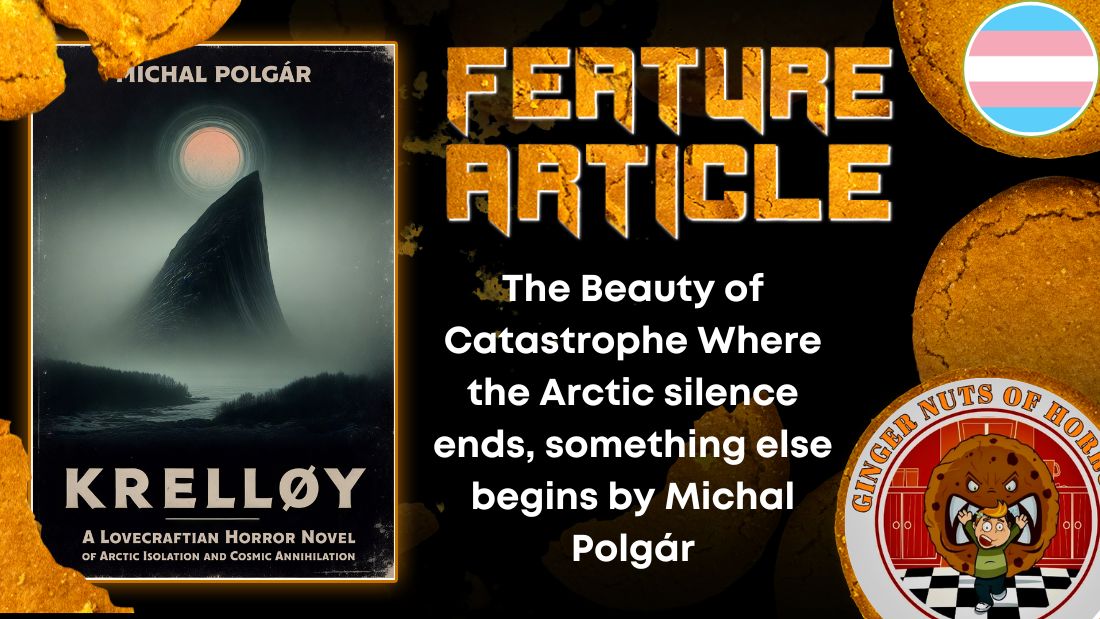
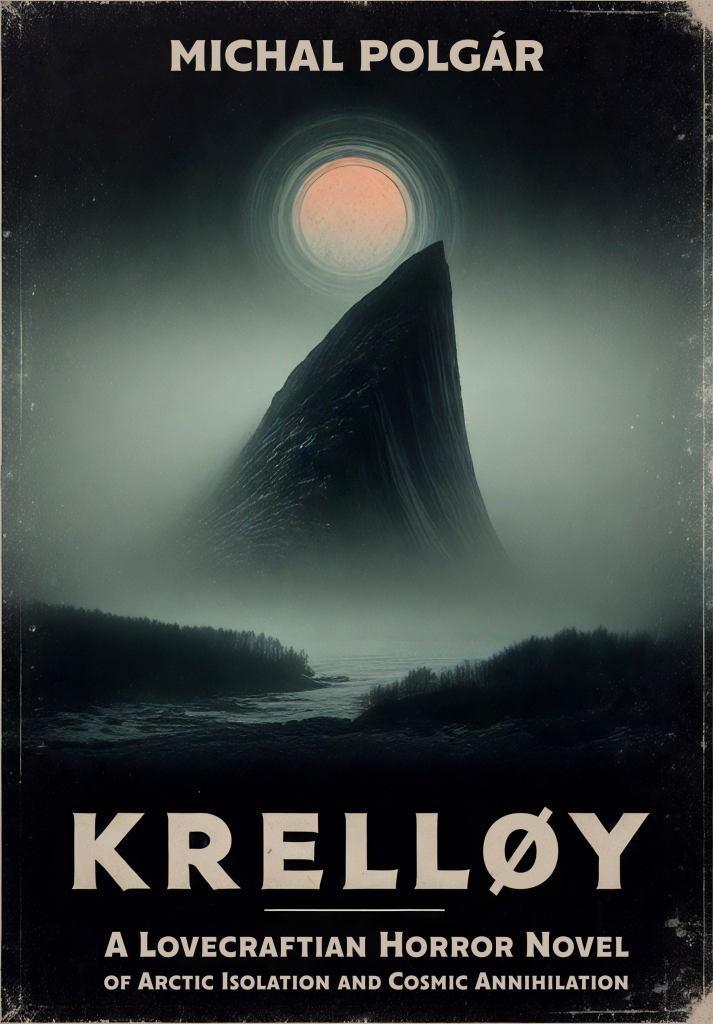
His debut novel, Krelløy, the first book in the Quiet Ends series, grows directly from everything described in this essay. A remote Norwegian island. A couple. A natural world that begins behaving wrongly. Something vast and irreversible arriving without announcement.
The Beauty of Catastrophe Where the Arctic silence ends, something else begins by Michal Polgár
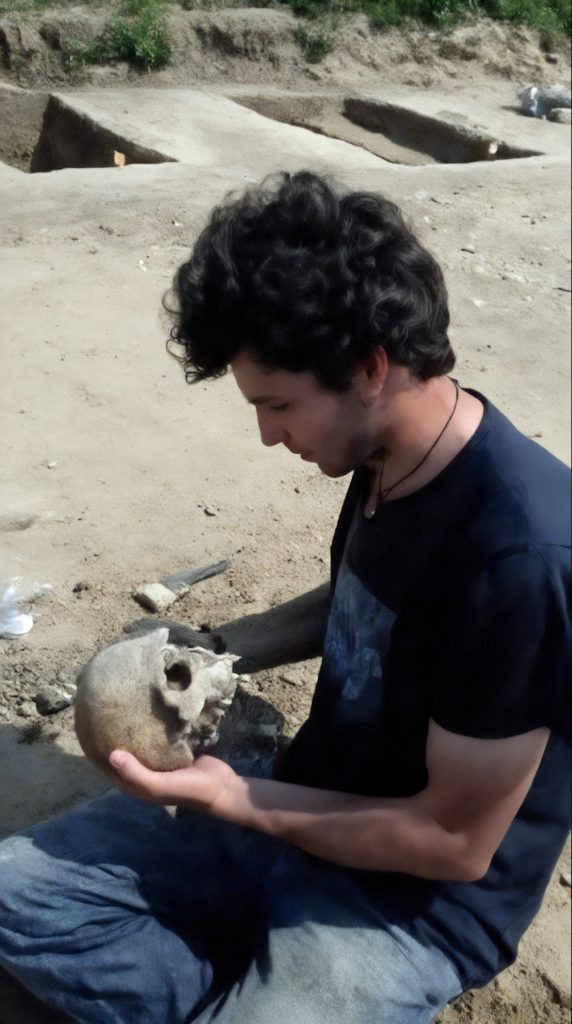
The first time I held a human bone in my hands, I expected to feel something dark. Something heavy with meaning. I was a student at the University of Trnava in Slovakia, studying classical archaeology. We were often part of interesting excavations. Burial grounds, sacred places of worship, or something completely different and intriguing. It was here that I first came into touch with human remains. Touching and exploring not only matter, but also the last in between.
What I felt was not darkness, exactly. The bones, especially the femur bone, was lighter than I expected, dry and smooth. Someone had lived inside this. Someone had walked with it, carried their weight on it. I turned it over in my hands and tried to imagine the person. Not their name or their face. Just the fact of them. That this had once been warm, wrapped in muscle and skin, and had moved through the world without knowing it would end up centuries later in my hands.
That feeling never left me.
My thesis focused on fantastic animals in ancient Greek funerary art. The creatures carved into tombs and burial vessels at the threshold between the world of the living and whatever came after. Sphinxes, griffins, sirens. Not monsters in the way we think of them now. They were guardians. They stood at the boundary and watched over the crossing.
What struck me was that the Greeks did not separate death from life the way we do. Persephone ruled the underworld, yes. But she was also the force that pushed seeds through the soil in spring. She held both the darkness below and the growth above. The same hands. The same goddess. The chthonic cults understood this. The rituals performed at graves were not only about mourning. They were about renewal. You buried the dead and the earth gave back.
This duality has stayed with me longer than anything else I studied. The idea that catastrophe and beauty are not opposites. That destruction carries something fertile inside it. That the most terrifying things can also be the most generative. The Greeks carved those guardian creatures on tombs not to frighten, but to honour the strangeness of the crossing. To say: here is the boundary, and it is sacred.
Years later, I made a kangling.
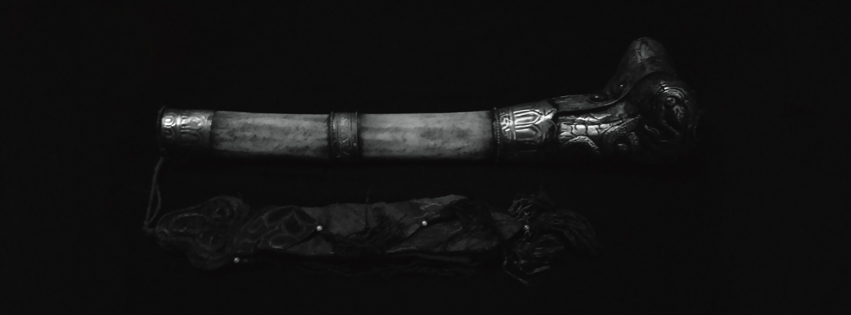
A kangling is a Tibetan ritual trumpet carved from a human femur. In Buddhist practice it is used during chöd rituals to confront attachment and the fear of death. The practitioner blows through the bone of someone who once lived, and in doing so faces the reality that they too are temporary. The sound it produces is not melodic. It is raw, breathy, something between a cry and a whisper. It does not comfort.
The bone came from a burial ground. It still had dirt on it when I first held it. I cleaned it, drilled two holes at the ends, and fitted a silver trumpet mouthpiece to one side. That was how it became an instrument. The process was slow and careful, and I did not talk about it with many people. For a long time I kept it mostly to myself. As years pass, I find I am okay to share it now.
I had been composing dark ambient music under a project called Asath Reon, building soundscapes from drones, field recordings, gongs, and ritual instruments. The music was slow and immersive, built on layers of resonance and silence. I was drawn to sounds at the edge of hearing. The deep hum of a gong after the strike has faded. The creak of metal cooling. The breath before a note begins. When I decided to bring the kangling into the work, it was not a provocation. I had been circling the boundary between the living and the dead for years in my studies. Now I wanted to hear what that boundary sounded like.
You feel the vibration in your hands before you hear it in the air. The tone is thin, breathy, and it carries something that no manufactured instrument can replicate. It is not loud. But it fills whatever space it enters with something you cannot ignore. Not supernatural. Just deeply, physically human.
I recorded the kangling across several sessions and it became part of an album called Buried Visions. That name was not accidental. Everything I was doing at that time felt like excavation. The album was dark, meditative and narrative.
I think people might expect me to say the experience was unsettling. That working with human remains felt transgressive. But it did not. It felt honest. It felt like the right continuation of what the Greeks had understood thousands of years earlier.
Dark ambient taught me something I could not have learned any other way. Atmosphere is a form of meaning. You do not need language to create dread, or beauty, or the place where the two meet. A drone held long enough becomes a landscape. Silence, placed right, becomes a door.
When you compose music like that for long enough, you start to understand narrative differently. There is no plot in a dark ambient piece. No character arc. But there is movement. Tension and release. The feeling of being taken somewhere and left there. That shaped how I later approached fiction. The story is not only in what happens. It is in the air around it.
When I stopped composing and started writing, the impulse did not change. Only the medium. I was still asking the same question I had been asking since I first held that femur in Trnava. What is beautiful about the things we fear?
I moved to a small island in Northern Norway. Above the Arctic Circle. Winter here means months without sun, and the sea is closer than the nearest road. The landscape does not let you pretend. It strips away what is not necessary. What remains is rock, water, weather, and silence that has texture. In the polar night, when the only light comes from the aurora or the moon on snow, you understand that darkness is not absence. It is a presence. It has its own qualities and its own beauty. The Greeks would have recognised it. They built temples in caves for a reason.
I write cosmic horror now. Not because I find the universe frightening, though I do. But because catastrophic events, the moments when the world stops making sense, contain something I recognise from the tombs and the bone trumpet and the polar dark. Something essential. The horror I write is not about shock. It is about the moment when the familiar becomes strange.
The beauty of catastrophe is not a contradiction. It is the oldest truth we have. The same force that ends things begins them. The same ground that swallows the dead feeds the living. Writing horror, for me, has always been about standing at that boundary and paying attention.
ABOUT THE AUTHOR
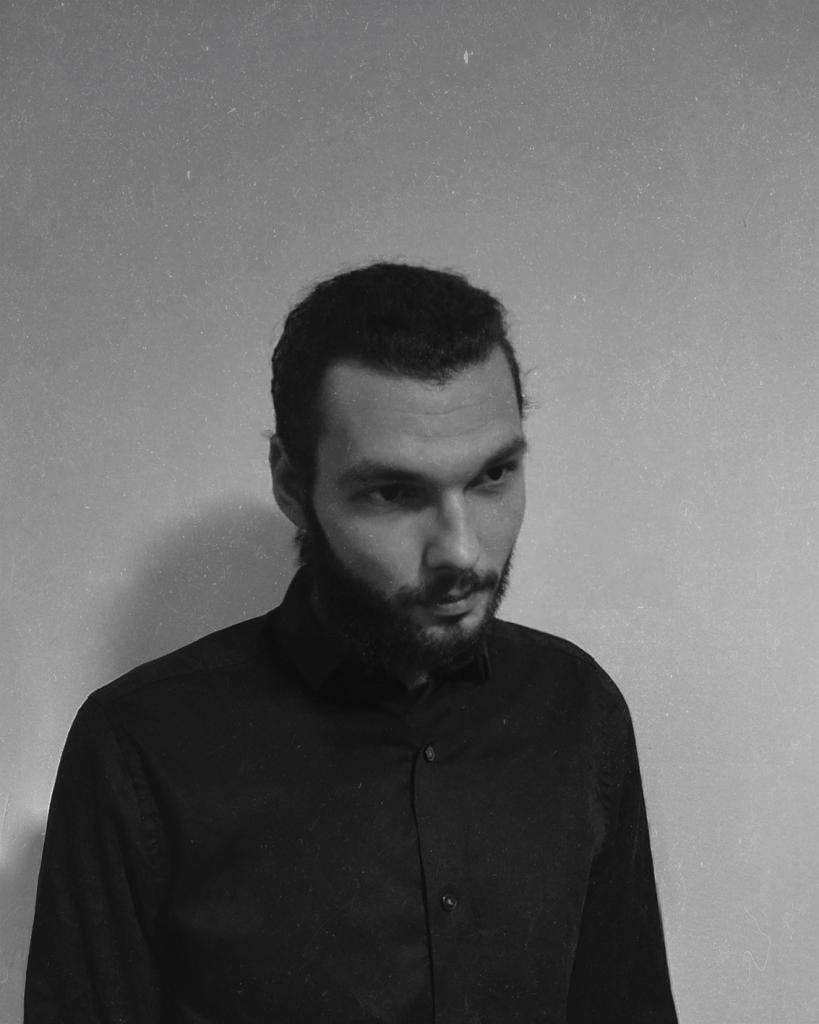
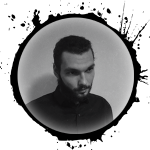
Michal Polgár is a Slovak-born author based on a small island in Nordland, Northern Norway. He studied Classical Archaeology at the University of Trnava, where his thesis examined the mythic creatures ancient Greeks carved at the threshold of death. Before turning to fiction, he composed dark ambient music under two projects, building immersive soundscapes from ritual instruments, field recordings, and silence. Krelløy is his debut novel and the first book in the Quiet Ends series. The second book is currently in progress.
On a remote Norwegian island, a couple’s quiet life is slowly consumed by environmental and cosmic phenomena that defy explanation. What begins as subtle wrongness in the natural world escalates into something vast and irreversible, testing the boundaries of love, perception, and human comprehension.
Genre: Cosmic horror / literary horror
Pages: 331
ISBN: 978-8269433302
Available in paperback and on Kindle.
“Unforgettable, unsettling, and deeply thought provoking — this is a literary thriller that lingers long after the final page.”
Alice Oliver, Amazon review
“Michal Polgár has created something here that’s well worth a read. Something outside of my normal reading choices. It wasn’t what I was expecting, but engaged me from the first page to the last.”
Peter Wood, Amazon review
“Just finished Krelloy by Michal Polgar. Horrific implications, beautiful and heartbreaking all at the same time. As an avid Lovecraftian/Cosmic horror read this brings an elegance seldom seen in the genre. This book has set a higher standard for the genre, that I wish to read more of from Michal.”
Why Ginger Nuts of Horror is the #1 Resource for Horror Fans
Unmatched Depth & Legacy in Horror Books
Reviews: With 17 years of reviewing horror, we offer an unparalleled perspective. Our reviews expertly guide you from mainstream bestsellers to under-the-radar indie gems, helping you find your perfect, terrifying read.
Exclusive Access to Horror Authors: Go behind the scenes with in-depth interviews that reveal the minds behind the madness. We connect you with both legendary and emerging horror authors, exploring their inspirations and creative processes.
Award-Nominated Authority & Community: Founded by Jim McLeod, Ginger Nuts of Horror has evolved from a passion project into an award-nominated, essential horror website. We are a global hub for readers who celebrate horror literature in all its forms, from classic ghost stories to the most cutting-edge dark fiction.
Experience the Difference of a Genre-Dedicated Team
What truly sets us apart is our dedicated team of reviewers. Their combined knowledge and authentic enthusiasm ensure that our coverage is both intelligent and infectious. We are committed to pushing the genre forward, consistently highlighting innovative and boundary-pushing work that defines the future of horror.
Ready to dive deeper?
For horror book reviews you can trust, a horror website that champions the genre, and a community that shares your passion, Ginger Nuts of Horror is your ultimate destination. Explore our vast archive today and discover why we’ve been the top choice for horror fans for over 17 years.