
- Bodies of Work by Clay McLeod Chapman Review: Supernatural Revenge Horror Delivers Ghosts, Art, and Unease
- Wake Up and Open Your Eyes by Clay McLeod Chapman: A Masterclass in Horror Writing
- What Kind of Mother by Clay McLeod Chapman
- Clay McLeod Chapman on Devil Inside and the Art of the Horrormance
- Devil Inside by Clay McLeod Chapman: The Horrormance That Makes Love Look Like an Infestation
“Clay McLeod Chapman’s ‘Bodies of Work’ is a supernatural revenge novella that turns the serial‑killer trope inside out. The ghosts don’t just haunt, they rewrite the story.”
Horror readers looking for a supernatural revenge novella with literary heft should put “Bodies of Work” on their radar. Clay McLeod Chapman, known for “Ghost Eaters” and “Wake Up and Open Your Eyes,” delivers a compact, unsettling tale about Winston Kemper, a janitor who murders forgotten women to fuel his sprawling fantasy epic, “The Butterfly Girls.” But the dead don’t stay silent. Chapman’s novella blends psychological horror with ghostly justice, asking uncomfortable questions about art, obsession, and who gets to tell a story.
Bodies of Work by Clay McLeod Chapman Review: Supernatural Revenge Horror Delivers Ghosts, Art, and Unease
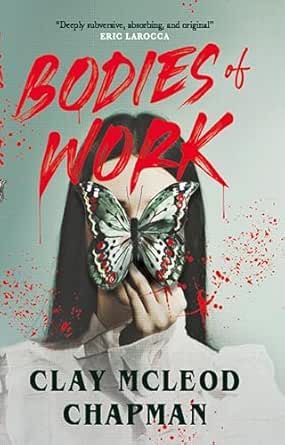
Some stories sit with you like a splinter. You can’t quite locate it, but you feel it every time you move.
Clay McLeod Chapman’s “Bodies of Work” is one of those splinters. I picked it up expecting a straightforward supernatural revenge horror, a serial killer haunted by his victims, end of story. What I got instead was something more slippery. A novella that refuses to settle into easy categories. Part psychological character study, part ghost story, part meta‑fiction about the act of creation itself.
At its centre is Winston Kemper. Sixty‑six years old. Janitor at a local church. Groundskeeper by default. Invisible to almost everyone who crosses his path. Some call him feeble‑minded. He has no friends, no family. When his workday ends, he retreats to a single room above a garage. And that’s where his real work begins.
Winston is building something. A sprawling fantasy epic he calls “The Butterfly Girls.” It has no single canvas, no particular frame. It lives everywhere, scribbled on walls, the floor, and countless notebooks. Words, images, and blood. To complete his vision, he murders women who slip through society’s cracks. Addicts. Runaways. Mothers and sisters and daughters that no one’s looking for. He takes their lives. Their voices.
Then they start whispering back.
Chapman doesn’t give us a simple monster. That would be too easy. Instead, he builds Winston from fragments: his childhood, his transient life, and the abuses that shaped him. The narrative structure mirrors the chaos inside Winston’s head. Voices bleed into one another. Memories surface in no particular order. The women he killed become narrators, telling Winston’s own story back to him in fits and starts.
This fragmented approach could feel gimmicky in less capable hands. But Chapman knows exactly what he’s doing. He lets the gaps breathe. You never get a neat psychological explanation for why Winston became what he is. The novella suggests causes, trauma, isolation, and mental illness, without ever reducing him to a case study. That restraint matters. It leaves room for discomfort. For the kind of unease that doesn’t come with a tidy moral.
You might find yourself feeling something close to pity for Winston at certain moments. Then you remember what he’s done. Chapman never lets you forget. But he also doesn’t let you look away from the machinery that made him.
Reading this prose is like watching someone build a house of cards in a windstorm, precarious, delicate, and you’re never quite sure when it’s all going to collapse. But when it holds, even for a moment, the effect is breathtaking.
Chapman’s sentences have a nervous energy. They dart and double back. Long, winding passages that mimic the flow of thought, followed by short, punchy fragments that land like a punch. He uses intentional sentence fragments for emphasis. Lets run‑on sentences slide in when they mimic the natural pace of a mind unspooling. The result is a reading experience that feels less like consuming a story and more like eavesdropping on someone’s hallucinations.
The Butterfly Girls remain elusive. We learn just enough to feel their absence, their erasure. Their voices are as fragmented in death as they were in life. Chapman trusts the reader to sit with that incompleteness.
If you’ve read Chapman’s previous work, “Ghost Eaters,” “Wake Up and Open Your Eyes,” “What Kind of Mother”, you’ll recognise his preoccupations. Family dysfunction. The rot beneath polite society. The ways violence becomes ordinary. But “Bodies of Work” feels different. Leaner. More controlled. There’s no excess filler. Every moment feels intentional and tightly wound.
The novella shares DNA with John Fowles’ “The Collector”, that same claustrophobic focus on a captor’s interior world. But Chapman updates the formula. He gives the victims narrative agency, even in death. The revenge isn’t just physical. It’s structural. The ghosts don’t just haunt Winston. They rewrite his story.
Chapman has cited outsider artist Henry Darger as the real‑life inspiration for Winston. Darger, a reclusive janitor who created an enormous fantasy epic in obscurity, died before anyone discovered his work. Chapman takes that premise and twists it into something darker. What if the artist’s muses weren’t imaginary? What if they were real women, murdered and transformed into characters?
That’s the question at the heart of “Bodies of Work.” And Chapman doesn’t offer easy answers.
Chapman uses the novella format deliberately. At 176 pages, the book has no room for padding. Scenes that might stretch for chapters in a longer novel are compressed into sharp, evocative moments. It feels cinematic in the way that screams movie adaptation. I’d go further. It feels like a tone poem. A long, sustained piece of dread that builds without ever overstaying its welcome.
Winston’s internal monologue is chilling precisely because it’s recognisable. His delusions aren’t cartoonish. He believes he’s chosen. That his art justifies the cost. That the women he kills are being transformed, not destroyed. Chapman walks a tightrope here. He could easily have made Winston a caricature. Instead, he’s terrifying because he’s plausible.
The ghosts don’t appear as vengeful spectres in the traditional sense. They whisper. They nudge. They unravel Winston’s reality from the inside. You could read the entire novella as a psychological breakdown, Winston’s guilt manifesting as auditory hallucinations. Or you could take the ghosts at face value. Chapman leaves the door open either way. That ambiguity is the point.
The novella’s length works both for and against it. The brevity means Chapman can’t explore every victim’s backstory in depth. We get glimpses of a woman escaping abuse, an addict, a runaway, but never enough to fully individualise them. That’s intentional, I think. The point is their erasure, their interchangeability in Winston’s eyes. But as a reader, I wanted more. Just a little more texture for each Butterfly Girl.
Still, this is a very minor quibble. The novella format demands trade‑offs. Chapman makes smart ones.
I’ve followed Chapman’s career since “The Remaking.” His earlier work often leaned into maximalism, big ideas, sprawling casts, and ambitious structures that sometimes buckled under their own weight. “Ghost Eaters” was a step toward tighter control. “Wake Up and Open Your Eyes” showed him blending social satire with genuine terror.
“Bodies of Work” feels like a consolidation of those lessons. Chapman has learned when to pull back. When to let silence do the work. When to trust that a single image, a room covered in scribbled fantasies, a whisper from a dead woman, can carry more weight than paragraphs of explanation.
The praise from other writers isn’t hyperbole. Jordan Peele called Chapman “one of my favorite horror storytellers working today”. Shaun Hamill described “Bodies of Work” as “beautiful, horrifying, and timely”. Those aren’t just blurbs. They’re accurate assessments of an author hitting his stride.
Horror has a long tradition of exploring the artist as monster. From Poe’s disturbed narrators to Barker’s cenobites, the genre has always been fascinated by creation’s dark side. But “Bodies of Work” does something slightly different. It shifts the focus from the artist’s genius to the cost of that genius. The women Winston murders aren’t just victims. They’re collaborators, in the most grotesque sense. Their voices become part of his art. Their deaths fuel his vision.
Chapman is also working within a recent wave of horror that centres marginalised voices. Think of Stephen Graham Jones’ “My Heart Is a Chainsaw” or Alma Katsu’s “The Hunger.” These books use genre conventions to ask who gets remembered and who gets erased. “Bodies of Work” fits comfortably alongside them. It’s a standard‑bearer for horror that’s both entertaining and intellectually rigorous.
The Butterfly Girls’ Final Flight
I keep coming back to that image. Winston’s fantasy epic, scrawled across every surface of his apartment. A world built from stolen lives. The women he killed, reduced to characters in his private mythology.
Then the whispers start.
Chapman doesn’t give us a tidy revenge fantasy. The ghosts don’t simply tear Winston apart and call it justice. Their revenge is more insidious. They take over the narrative. They become the storytellers. By the end, Winston isn’t sure whether he’s the author or the subject. Whether “The Butterfly Girls” is his creation or theirs.
That’s the book’s quiet genius. It asks uncomfortable questions about who owns a story. The artist who creates it? Or the people he exploits to make it?
You’ll close “Bodies of Work” and wonder whose voice you’ve been hearing all along.
Bodies of Work by Clay McLeod Chapman
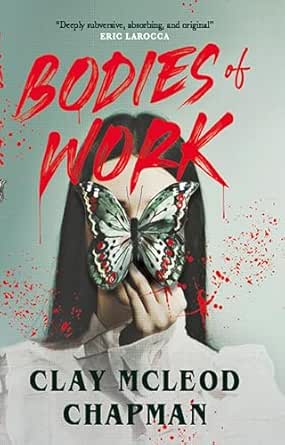
A chilling supernatural revenge novella from the acclaimed author of Wake Up and Open Your Eyes. Perfect for fans of Joe Hill and Delilah S. Dawson.
At sixty-six years old, Winston Kemper has always been a nonentity. No one notices him. His simple existence barely registers for those who come into contact with him. Some call him feeble-minded. He is a janitor at the local church, a groundskeeper by default, and that’s it. No friends, no family. When he’s done with work, he returns home—a remote, single room apartment located above a garage—and that is where his true work begins.
Winston Kemper is a collector of voices, and his magnum opus—The Butterfly Girls—is a sprawling epic of untapped imagination. It has no single canvas, no particular frame. It is everywhere—scribbled on the walls, the floor, and countless notebooks.
Winston is creating a fantasia which exists in words, images and blood. As part of his ‘art’ he has been murdering forgotten women. Poor souls who slip through the cracks of society, who no one’s looking for. Mothers, sisters, daughters to someone, but no more.
Winston takes their lives, their voices.
But now he can hear them. They whisper to him. They talk of revenge.
Winston Kemper might not believe in ghosts, but he is about to learn they are very real. And they are very, very angry.