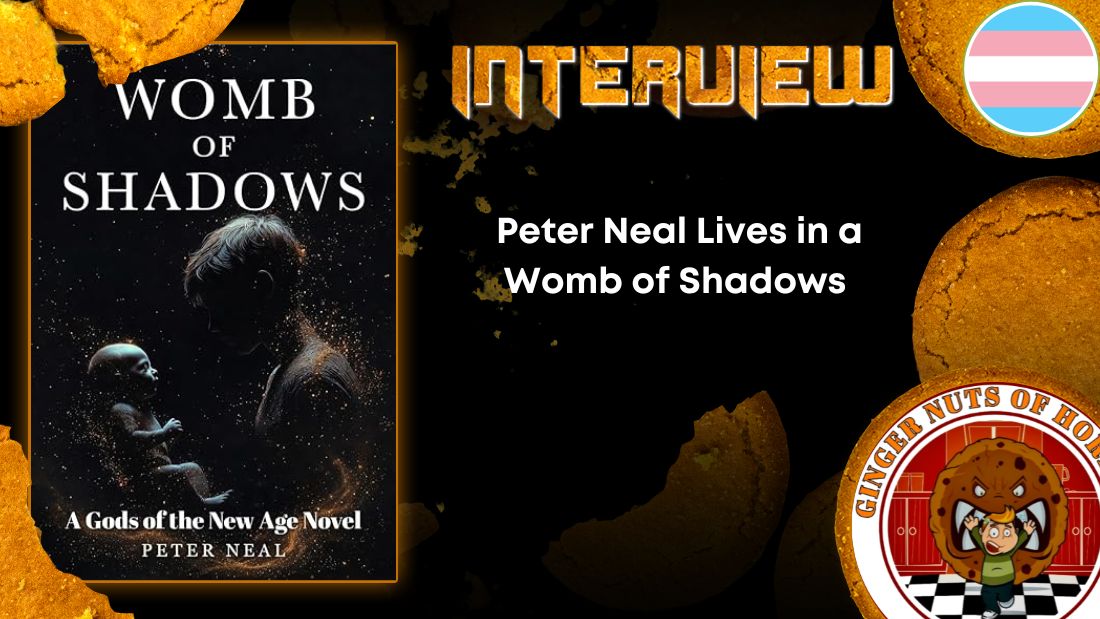
Peter Neal Lives in a Womb of Shadows
The compound at the heart of this story doesn’t attack people physically in a traditional sense; it makes them feel safe, loved, and needed. What inspired this specific, insidious form of biological horror?
I kept thinking about how the most dangerous things in our lives are rarely the ones we can see coming. A car accident is loud. Cancer is quiet. Addiction is quieter still — it doesn’t announce itself as a threat because it feels like a reward.
I wanted to write a horror novel where the weapon had the exact shape of the thing we all spend our lives looking for: warmth, belonging, the feeling of being chosen by someone. And then I wanted to ask — what if that was the trap? What if the worst thing that could happen to you was being loved in a way your biology couldn’t refuse? Because at that point, the horror isn’t coming from outside. It’s coming from the part of you that says yes.
Womb of Shadows weaves together multiple perspectives, including classified military memos (“Synapses”), Dr. Evelyn Hart’s research journal, and the firsthand experiences of characters like Marcus and Elara. How did you approach constructing this multi-layered narrative, and what does each document type allow you to reveal that a more traditional POV might not?
The story is about something too large for any single person to see completely. Evelyn sees her baby. Marcus sees his job. Elara sees static in her bones. Arnaud sees a boy through glass. Nobody has the whole picture — and the compound thrives in that blindness. So the structure had to mirror the biology.
The Synapses are institutional voice, clinical, redacted, the way a bureaucracy talks about something it doesn’t fully understand but refuses to admit it doesn’t. The chapters are intimate, lived, written from inside the experience. The journal entries are Evelyn talking to herself at three in the morning when nobody else is listening. Every format does work the others can’t. Together they triangulate a horror that none of them alone could contain.
The novel is described as existing at the intersection of “literary fiction and biological horror.” How do you balance the intimate, character-driven story of a family in crisis with the larger, more clinical horror of weaponized biology?
I don’t think of them as separate. The family IS the biology. The biology IS the family. Evelyn injecting Nunnally at three in the morning is a mother’s act and a scientist’s act simultaneously — you can’t separate them without losing the meaning. The horror of the compound is that it exploits exactly the architecture that makes us human: our need to connect, to care, to stay. A thriller might have asked “what can this weapon do?” I wanted to ask “what does this weapon reveal about what we already are?” Love is biology. Attachment is chemistry. Home is a neurochemical state. The compound doesn’t invent anything new — it just turns the dials up until the dials break.
The character of Elara arrives at the Hart household with “silver scars and silence in her bones.” Without giving away her full story, what is it about her past and her unique connection to the compound that made her such a crucial lens for this story?
Elara is the only character in the book who knows what loneliness sounds like from the inside and has survived it. She’s carrying a wound the compound recognizes — because the compound IS that wound, weaponized. Everyone else in the book is meeting the compound for the first time. Elara has been listening to it her whole life and didn’t know. That makes her the most dangerous person in the story and the most fragile. She’s the reader’s way in — because we’ve all, at some point, felt the static she feels. The question is what she does with the recognition. That’s what makes her the hinge the trilogy turns on.
The “Synapse” sections, such as the one documenting Dr. Marsh’s exposure, read like chilling, redacted government documents. What kind of research or world-building went into making these institutional voices feel so authentic?
I spent a lot of time reading declassified DARPA documents, military medical reports, and actual incident reviews from biological safety investigations. What struck me is how flat the language is when describing catastrophes. Institutional voice doesn’t do horror — it does process. “Subject exhibited cardiac arrhythmia consistent with Stage 4 withdrawal” is more terrifying than any adjective could be, because the tone itself is the horror.
The tone says: this is normal to us. This has a protocol. The scariest thing about institutions is that they can file anything, including the end of a person, under the correct subcategory. I wanted the Synapses to feel like real documents written by real people doing real jobs — which is exactly what makes them unbearable.
The novel grapples with themes of parenthood, medical ethics, and the terrible choices made out of love. In the opening chapter, Evelyn decides to treat her daughter with an untested gene therapy. What do you hope readers will wrestle with when they see this “monstrous love” on the page?
I want readers to understand Evelyn completely and still not know what they would have done. That’s the line I was trying to find. If the reader dismisses her as reckless or unethical, I’ve failed — because she’s neither, she’s a mother looking at a baby who cannot see, cannot hear, cannot reach, and she has in her hands the only thing that might change that.
What else is she supposed to do? At the same time, if the reader fully endorses what she does, I’ve also failed, because the cost is real and the cost compounds across the entire story. I wanted to write a decision that is both completely understandable and completely catastrophic. That’s what monstrous love is. It’s not cruelty. It’s need, with consequences.
The story is set against the backdrop of a classified military project, but the horror is deeply personal. Was this a conscious choice to make the “monsters” born from intimacy and human connection rather than external, invading forces?
Absolutely. The scariest monsters in real life aren’t the ones that break down your door. They’re the ones who come in because you let them, because you loved them, because you needed them. I wanted the military apparatus to be the backdrop rather than the subject — because the military didn’t create the compound’s horror. The compound’s horror lives in human biology. The military just weaponized what was already there. Every monster in this book is born from an act of care. That’s not a twist. That’s the architecture of the entire series.
The website for Womb of Shadows mentions you are a debut novelist based in Virginia. Can you tell us about the moment this story first took root? Was it an image, a character, or a question about biology and weaponization?
It was a question. I was thinking about what it means to be close to someone — physically, chemically, emotionally — and I asked myself: what if that closeness had teeth? What if intimacy itself was the mechanism of harm? The first image was a boy behind glass with his palm pressed to the surface, and a man on the other side pressing his palm back. And the man was dying. And the boy didn’t know. That image wouldn’t let me go. Everything in the book grew outward from that moment of contact.
What was the most challenging part of writing this novel — whether a particular chapter, a character’s voice, or a plot point — and how did you work through it?
The technician’s chapters. Arnaud. Because I knew what had to happen to him, and I loved him, and the book required me to take him exactly where I didn’t want him to go. Writing the scenes where he understands what’s happening and stays anyway — that’s the hardest thing I’ve ever written. I worked through it by letting him be kind all the way to the end. That’s the point of him. The compound uses his kindness as the trap, but the kindness is still real. That was the emotional key. His love didn’t become a lie just because the compound exploited it. It stayed true. And the truth of it is what makes what happens to him unbearable.
The path to publication for a debut novel, especially one that blends genres, can be arduous. What was your personal journey like to get Womb of Shadows into readers’ hands?
Fourteen years. I started this story and walked away from it four or five times. I couldn’t find the right shape. I knew what I wanted to say — that love can be the thing that kills you — but I didn’t yet know how to build a structure that would hold it. The book sat in drawers and abandoned files for most of that decade.
What finally broke it open was committing to the hybrid form: chapters and Synapses together, institutional and intimate, cold and warm. Once I had that, the book came fast. And once it was done, I decided to go directly to readers — because this isn’t the kind of book that would have survived a traditional acquisitions meeting. It’s too strange. So I built it myself, found a cover that matched the vision, and put it into the world.
The book is available for direct purchase on your website, and you offer the first three chapters as a free sample. What was your decision-making process behind this direct-to-reader approach?
I trust readers. If the first three chapters don’t hook you, nothing I say in an interview will change that. Give them the opening. Let them decide. The free sample is the same thing the compound does to the characters — it offers you something warm, and either you say yes or you don’t. I want readers to choose this book the way Arnaud chooses the boy. With their eyes open. Knowing what they’re walking into. The direct-to-reader model also means I keep a closer relationship with the people reading it, which matters to me for a trilogy. These readers aren’t customers. They’re companions.
You’ve built a community element into your author website with a discussion forum. What do you hope to gain from a direct line of communication with your readers?
The trilogy goes to some dark places. Book Two is geopolitical and the prose starts to fracture the way the characters do. Book Three is a catechism of despair — there’s no easy ending available. I want to walk that road with readers who are in it, not past it.
Horror at this level needs a community around it, because the experience of finishing a chapter at two in the morning and feeling the need to talk to someone about it — that’s part of what the book IS. I want to be accessible to those people. I want to answer their questions. I want to know what stayed with them. Writers who hide after publication are missing the best part of the work.
The Womb of Shadows website describes your work as sitting “at the intersection of literary fiction and biological horror.” Can you tell us about the path that led you to this unique literary niche? Were there specific authors or works that you consider foundational to your development as a writer?
Jeff VanderMeer’s Annihilation showed me that horror could be written as literature without apologizing for either. Agustina Bazterrica’s Tender Is the Flesh showed me how much damage you can do with restraint. Junji Ito’s Tomie taught me that beauty and grotesquerie don’t have to be opposites — they can occupy the same body at the same time. And Cormac McCarthy, especially Blood Meridian and The Road, taught me that the sentence itself can be a carrier of dread. Long, rhythmic, almost biblical sentences that keep accumulating weight. The prose in Womb of Shadows is my attempt to write that kind of sentence about the horror of being loved.
The technical and scientific details in the book, from messenger RNA therapeutics to the mechanisms of biological dependency, feel meticulously researched. Can you share a bit about your background and the process of building this story on a foundation of plausible science?
My wife is a PhD scientist at Pfizer, and she’s the reason the science in this book works. I would come to her with questions — sometimes embarrassingly basic ones, sometimes impossibly specific ones — and she’d walk me through the mechanisms, the plausibility, the edge cases. When I wanted a gene therapy vector to do something, she’d tell me whether it could, how it might, and what the failure modes would look like.
When I wanted a compound to create dependency, she helped me understand the neurochemistry well enough that the fictional biology felt earned. Without her, Womb of Shadows would be a horror novel pretending to be scientifically literate. With her, it’s a horror novel that actually is. She has my gratitude in every sentence of this book — and in the two that come after it.
What does a typical writing day look like for you now, as you work on the second book in the trilogy?
Early mornings before the world is awake. Coffee measured carefully — my technician character taught me to respect that ritual. I write longhand first when something important is happening, because the pen slows me down enough to hear the sentence before I commit to it. Book Two is harder than Book One because the scope has opened up — it’s geopolitical, multi-POV, and the prose has to fracture on the page in ways that reflect what’s happening to the world.
I’m also trying to be ruthless with myself. Book One was the seduction. Book Two has to be the horror that lives inside the seduction. The writing days are longer. The weight is heavier. But I know where this is going now, and I trust the road. The compound is patient. I try to be, too.
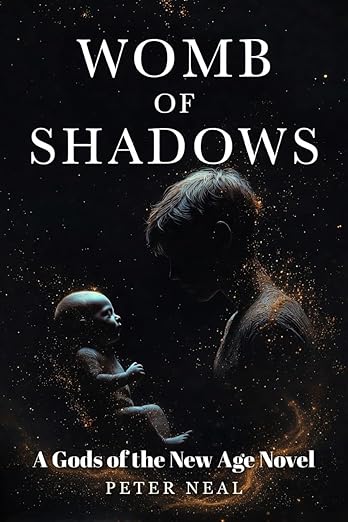
Womb of Shadows: Gods of the New Age, Book One by Peter Neal
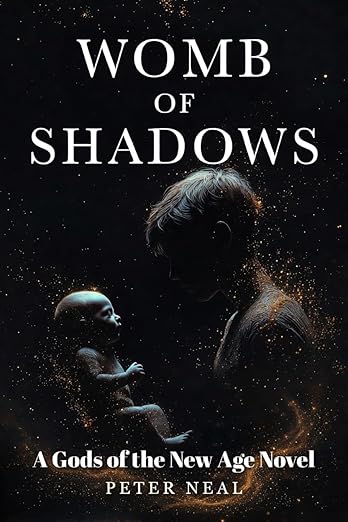
The baby did not cry.
That was the first thing Dr. Evelyn Hart noticed — and the last thing she would ever forgive.
When her daughter is born blind, limbless, and silent, geneticist Evelyn Hart breaks every rule she swore she’d never break again. The unauthorized therapy works. But it is not working the way she designed it.
Thirty-seven miles south, in a classified military facility, a teenage boy sits in permanent containment. His skin produces a compound that rewrites human biology through proximity. Through touch. Through love. Everyone who gets close becomes dependent. Everyone who leaves begins to die. And Evelyn’s husband, who stole three drops of their daughter’s blood to keep the boy alive, is already too deep to pull free.
When sixteen-year-old Elara Voss arrives carrying compound in her own scars from a tragedy she barely survived, the line between weapon and victim dissolves. The boy is not a monster. He is lonely. And the compound spreading through the Hart family does not trap them — it makes the trap feel like home.
WOMB OF SHADOWS is dark literary sci-fi horror — biological dread with the prose of literary fiction and the gut-punch of body horror. A 97,000-word debut and Book One of the GOTNA trilogy.
For readers of Jeff VanderMeer’s Annihilation, Agustina Bazterrica’s Tender Is the Flesh, Caitlin Starling’s The Luminous Dead, and Nick Cutter’s The Troop.