Jill Palmer’s Frostbite is a masterclass in character-driven horror, proving the most terrifying apocalypse isn’t the monsters outside the gates but the inherited trauma found in a mother’s cold, calculating stare. It redefines survival as a brutal, hopeful act of choosing your own family.
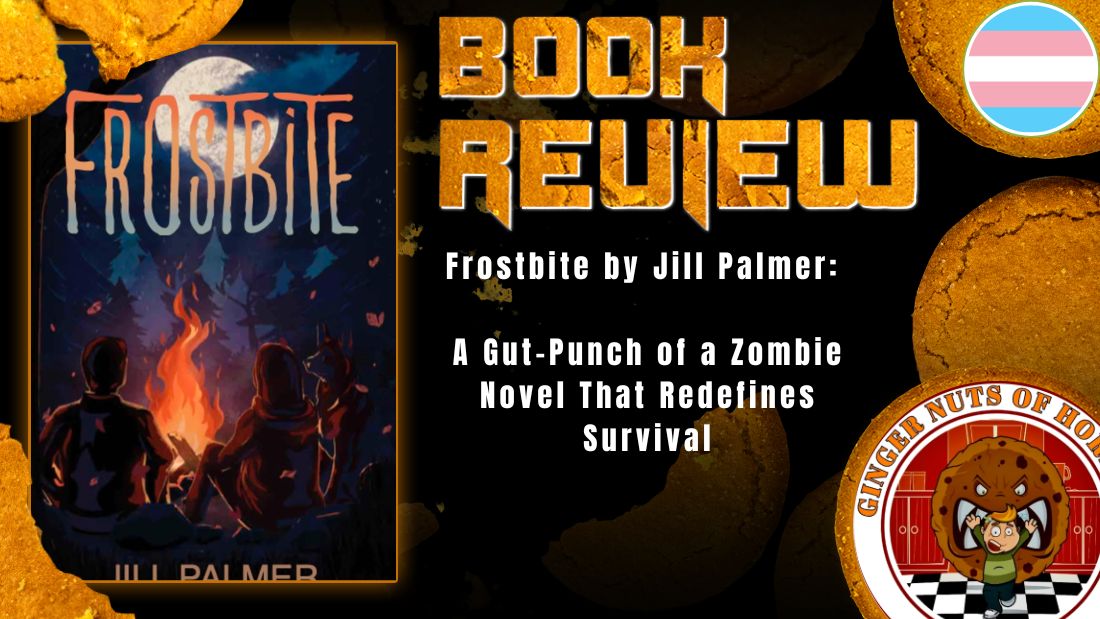
Frostbite by Jill Palmer Review: A Gut-Punch of a Zombie Novel That Redefines Survival
The zombies will kill you, but your family is what breaks you.
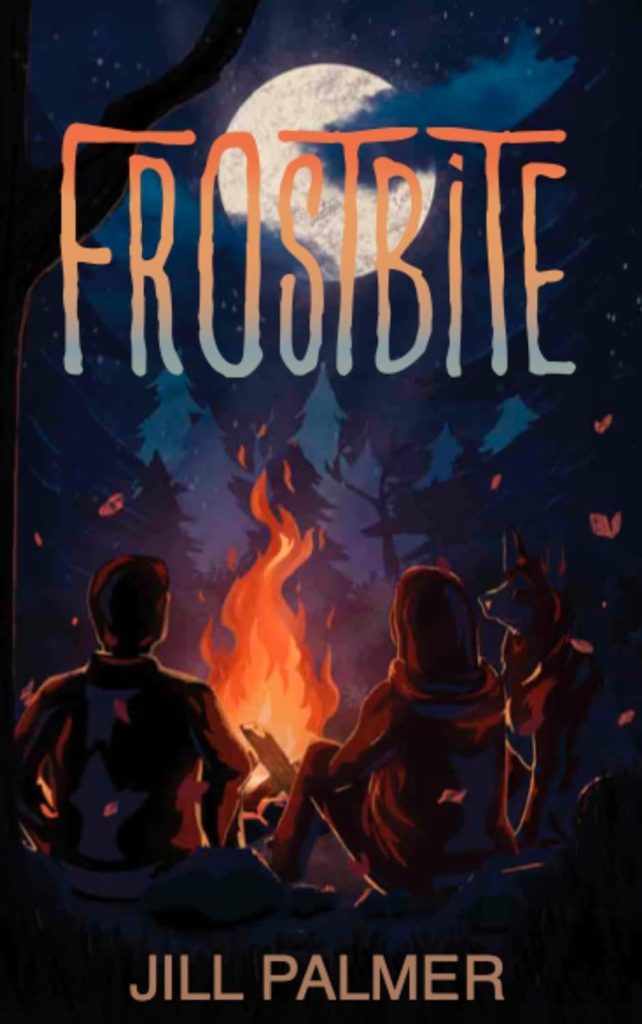
Sometimes the best apocalyptic fiction isn’t about the end of the world. It’s about what happens when the world has already ended and you still have to figure out who you are. Jill Palmer’s Frostbite is a post-apocalyptic zombie novel that understands this distinction perfectly. It follows Winter, a diabetic teenager navigating a Pennsylvania overrun by gulpers, but the monsters quickly become secondary. The real horror lies in her unexpected reunion with the mother who abandoned her. This is a young adult horror story that trades hordes of undead for something far more haunting: the inherited damage of a broken family.
Most zombie media asks a simple, brutal question: what would you do to survive? We’ve seen the farmhouse standoffs, the desperate supply runs, the slow erosion of morality when the dead start walking. Frostbite, the debut novel from Jill Palmer, isn’t particularly interested in that question. Oh, the survival mechanics are there, and they’re rendered with the gritty, lived-in detail of a true genre lover. But the book is asking something quieter and much more painful. It wants to know, what if the person you need to survive is the very person who made you believe you weren’t worth saving?
Winter, our sharp-edged and deeply stubborn narrator, is a standout protagonist for the genre not because she’s a crack shot or a tactical genius, though she’s competent enough with a baseball bat and a pocketknife. She’s remarkable because she’s a diabetic teenager managing a failing insulin supply in a world without functioning pharmacies. Palmer’s rendering of a chronic illness in the apocalypse is precise, brutal, and never cheap.
We don’t just hear Winter talk about her numbers; we feel the disorienting, fuzzy-brained collapse of a low blood sugar episode as she digs through a dumpster for a flattened Twinkie. This isn’t a cosmetic character detail. It’s the engine of the plot. When her emergency stash is shattered in the chaotic opening chapters, the ticking clock isn’t an abstract thriller mechanism. It’s her actual body shutting down, and Palmer writes these moments with a clinical bluntness that is far more terrifying than any moaning creature. “I’ll be dead by Christmas,” Winter thinks, and we believe her.
The story’s spine is a reluctant road trip with Eliot, the sunshiny, infuriatingly optimistic leader of a nearby settlement of kids. Their dynamic starts in a familiar place, the loner who trusts no one and the golden boy who trusts everyone, but Palmer quickly complicates it. Their stilted, combative road trip banter feels authentic to two teenagers who have been forced into adult roles, their conversations circling around favourite colours and dead parents with the same awkward intensity.
Many readers will likely note that Eliot is almost too good to be true, a natural caretaker in a world that punishes kindness. His backstory delivers a stark reason for that cheery mask. He’s not naive; he’s a boy who has been making impossible choices for years, and his sunny demeanour is a choice, a discipline, a deliberate counter-spell against the darkness. The scene where he urges Winter to call him “El,” insisting “We are friends, you dingus,” (Chapter 21) is a small, heart-clenching pivot point that the whole story turns on.
If the first half of the book is a tense, intimate survival thriller, the second half detonates into something stranger. Winter and Eliot fall into the orbit of a settlement called Green Dreams, run by a maternal figure known only as Ma. It’s here that Palmer’s real subject snaps into focus. Ma is Penelope, Winter’s biological mother, who abandoned her as a toddler.
The novel transforms into a contained, psychological horror about a cult of personality. Penelope is a brilliant creation, a woman who wields the language of motherhood and destiny like a scalpel, all while employing a small army of child soldiers and conducting grotesque experiments on captive gulpers. She speaks in the gentle, passive-aggressive cadence of a wellness influencer, and Palmer correctly makes her more chilling than any shambling corpse. The reveal is less about “will Winter escape?” and more about “will Winter become her?” A certain confrontation, where Penelope cuts Winter’s hair against her will while cooing reassurances, is a masterstroke of intimate violation, a quiet act of ownership that says everything about their twisted bond.
Reading Palmer’s prose is like watching someone stitch a wound with dental floss. It’s functional, urgent, and deliberately unpretty, but there’s a surprising tenderness in the precision. The sentences are tight and punchy, often clipped to mirror Winter’s own guarded thought patterns. Yet the book knows exactly when to let a description unfurl into something almost beautiful.
There’s a haunting early scene where Winter discovers a gulper trapped in a thicket, its body merged with the forest, a chrysanthemum blooming from a vacant eye socket. The image is pure body horror, but it’s rendered with a strange, solemn poetry that hints at Palmer’s thematic ambitions. This is a world that is rotting, yes, but new, strange life is sprouting from the decay.
Jill Palmer’s Frostbite is a masterclass in character-driven horror, proving the most terrifying apocalypse isn’t the monsters outside the gates but the inherited trauma found in a mother’s cold, calculating stare. It redefines survival as a brutal, hopeful act of choosing your own family.
Palmer also has a genuinely fresh take on the zombie itself. The gulpers, with their pharyngeal jaws and snake-like swallowing mechanism, are biologically creepy. But the lore goes deeper. Rumors of paralytic venom, which Tulip, Winter’s scientist half-sister, is obsessed with, pay off in one of the novel’s most brutal and inventive action sequences. Winter is partially swallowed by a gulper and discovers a terrifying immunity. Her realisation that “I’m invisible to gulpers” isn’t delivered as a triumphant superpower reveal. It’s a nauseating, existential crisis. The implications that she is somehow linked to the monsters, that her very biology is a weapon, are left to simmer in the subtext, a brilliant narrative choice that avoids easy answers.
The book sits comfortably on a shelf next to M.R. Carey’s The Girl with All the Gifts, another story that finds its deepest horror not in the undead but in the clinical, calculating cruelty of humans who are trying to save the world. Both feature young female protagonists whose very biology makes them a target and a potential saviour. But where Carey’s narrative is a dystopian thriller about scientific ethics, Palmer’s is a domestic drama weaponised into an apocalypse.
You could also imagine Frostbite in conversation with the emotional core of a show like The Last of Us, specifically the idea that a surrogate father-daughter bond can be a lifeline. Winter’s arc, however, is a fierce rejection of the idea that blood is a bond that must be honoured. Her father, a doomsday prepper who died of cancer before the first gulper rose, lives in her head as a gruff, critical ghost. Her journey isn’t about finding a new daddy figure in the wasteland. It’s about exorcising the critical voices of both her parents so she can finally hear her own.
The novel does occasionally show the strain of its debut status. The breakneck pacing in the final act, a chaotic scramble through a burning research facility, relies a bit heavily on convenient interruptions and last-second saves. A few of the supporting characters in Penelope’s cult, particularly the dim henchman brothers, feel sketched in compared to the deeply layered Aaron, whose complicated devotion to Penelope and protective love for his little sister creates one of the book’s nauseating moral knots.
Aaron’s fate, a desperate fight that ends with a knife in his throat, is a moment that will divide readers. It’s brutal and abrupt, and Winter’s immediate, visceral guilt suggests a story that isn’t done with the consequences of that violence.
That seems to be the point. In a literary landscape saturated with gritty reboots of zombie tropes, Frostbite doesn’t try to out-gritty the competition. It goes for the heart and the jugular simultaneously. It understands that the apocalypse isn’t just a breeding ground for monsters; it’s a pressure cooker that amplifies every childhood trauma, every buried resentment, every desperate need to be loved.
It’s a novel about learning that survival isn’t just about not being eaten. It’s about building a reason to live that isn’t rooted in fear or obligation, but in something as simple and radical as a warm bed, a full belly, and a loyal dog named Crowbar. It asks, bluntly, what you owe to the people who made you, and what you owe to the people who actually see you.
The most frightening thing in Palmer’s ruined Pennsylvania isn’t the gulper with its double jaws unhinging in the dark. It’s a mother’s voice, sweet as cream, insisting she knows you better than you know yourself, while she reaches for a pair of scissors and a cage.
Frostbite by Jill Palmer
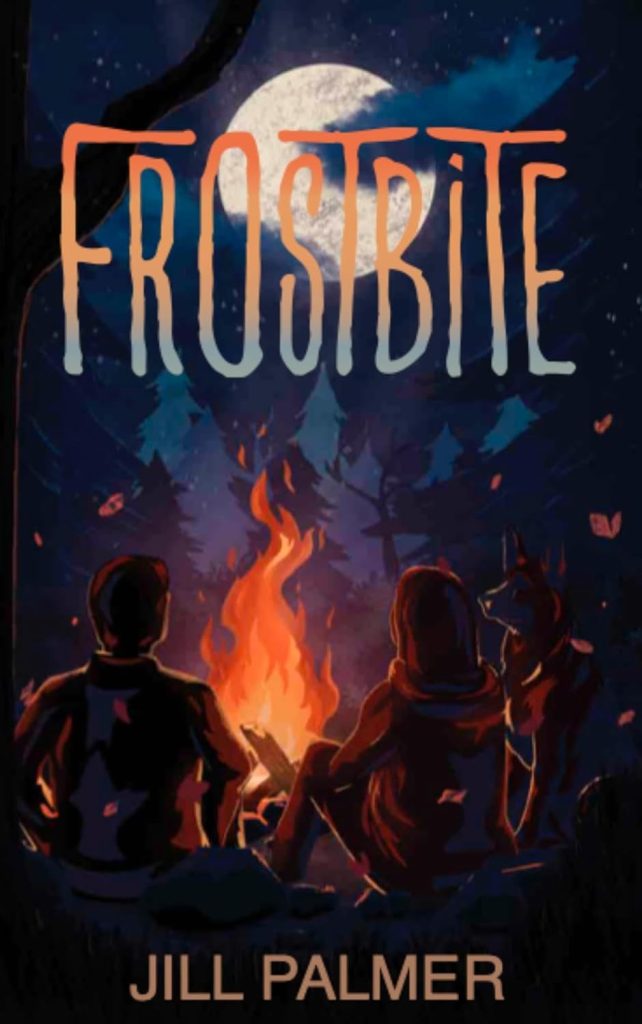
They’ll chase you. They’ll catch you. They’ll swallow you whole.
Even before the frostbite virus started turning people into mindless, flesh-eating monsters, 17-year-old Winter preferred being alone. Crowbar, her diabetic service dog, is the only one she trusts in a world that has never felt safe.
However, when her insulin supply is destroyed, Winter is forced to embark on a perilous road trip across Pennsylvania with Eliot, the idealistic leader of a nearby settlement. To survive, they must learn to trust one another, though Eliot is everything Winter isn’t: generous, kind, and convinced she’s worth saving.
As they battle hordes of undead, teenage cultists, and car trouble, a figure from Winter’s past resurfaces, threatening not just Eliot and Winter’s fragile bond, but also their lives.
At the end of the world, the worst monsters are those with human faces.