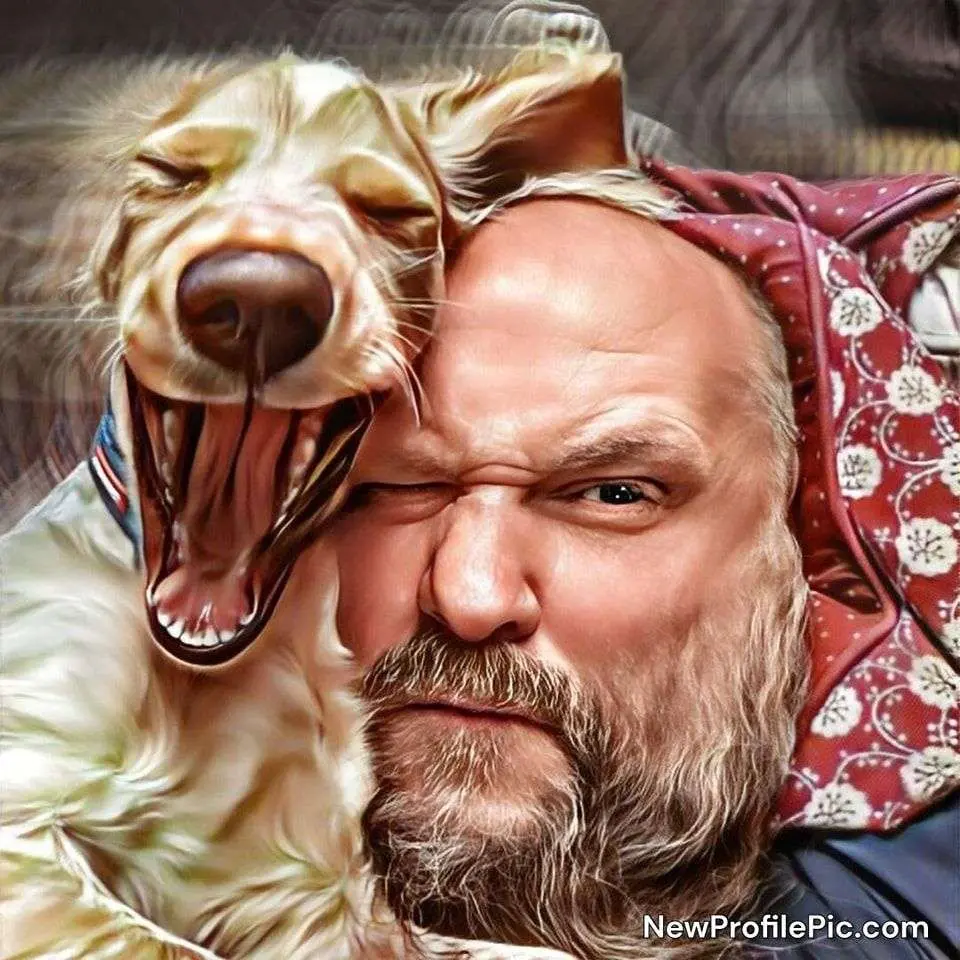
- Stephanie Campisi on The Unfinished Business and the Ghosts We Keep
- Stephanie Campisi’s The Unfinished Business: A Cosy Ghost Story
Maude Mauffersette barely survives chapter two of her own book, tumbling down a staircase while wondering whether it is too late to sue the Heritage Board. The Unfinished Business is all the livelier for it. Stephanie Campisi’s middle grade ghost story, published in March by Fitzroy Books and the first half of a duology, hands a haunted town to a twelve-year-old tuba player named Dari Glenn and asks her to close the accounts of the dead.
Campisi, Melbourne born and now based in Southern California, has spent a decade publishing across an improbable range: picture books like The Ugly Dumpling and Luis and Tabitha, the Warrior Fairies series, chapter books as Kit Holliday, spooky romcoms as Hazel Graves, cosy romantasy as Heather Spellman. The Unfinished Business is where her wit and her preoccupation with loss finally share a room. It is a ghost story in which the most frightening thing is a hospital room with no ghost in it at all. That absence seemed like the place to begin.
Stephanie Campisi on The Unfinished Business and the Ghosts We Keep | 24 June 2026 |
The Unfinished Business reportedly began life as a Post-It note that read “favours for ghosts?”, which sounds like a premise for a comedy of errands. The finished novel is something stranger: a book where every ghost is a ledger entry, a debt waiting to be settled. How did three words on a Post-It grow into a whole metaphysics, and at what point did you realise the “favours” were going to be about grief rather than chores?

Great question. It took me a few aborted drafts to really nail down the theme – holding on and letting go. Once I had that as a throughline, the book really started to come together, and each character started to take on a life of their own. I do think the end result is much more cohesive and interesting than the “favours” I’d originally conceived!
Maude dies on page eighteen, midscheme, and the narration plays it for laughs before the reader has even had time to like her properly. It is a bold piece of timing: the mentor figure killed off before the mentorship begins, then rehired posthumously. What made you certain that her death could carry comedy, and how did you calibrate that joke for readers aged ten to twelve who may be meeting death on the page for the first time?
Poor Maude! It was rude of me, I know. I think key to pulling off the many deaths and “finishings” in the book is the tone, and working in an omniscient point of view with a very wry narrative voice helps insulate young readers from all the death that’s going on. Couched in humour, and immediately undercut by a reference to her ghost two paragraphs into the next chapter, Maude’s death becomes a transition rather than a tragedy – even she plays the whole thing for laughs. She’s a tricksy one like that.
The scene I keep returning to is the one the book never resolves. Mina’s grandmother dies and leaves nothing behind: no ghost, no message, no goodbye, just switched off hospital machinery and a granddaughter staring through a camera that refuses to show her anything. In a novel where every other loss gets a visible, talkative afterlife, you chose to give your most intimate death no consolation at all. What did that scene demand of you, and why did the book need it?
Oh, this was a tough one. I did actually have a chapter in an earlier draft that gave us more time with Mina’s grandmother, her beliefs and the type of life that she’d lived. Mina’s grandmother is a Buddhist, and doesn’t return as a ghost – she’s simply transitioned into her next state of being, whatever that might be. To me, the simplicity of her death signifies something beautiful: a life of contentment and acceptance, lived in the moment, rather than looking ahead or behind.
Dari spends the novel listening to her absent father’s cassettes and building him into a travelling musician whose greatness excuses his absence. Then Timothy Odeline reports back that Parrish Whickman is a night clerk at a bank in Underbourne, “just some bloke”, balding a bit on top. The father never appears on the page; the entire reckoning happens through a shouted conversation out a bus window. What drew you to resolving the book’s deepest wound entirely offstage?
Ouch, this is such a heartbreaking reveal, I know. The ghost that truly haunts Dari isn’t a ghost in the ectoplasmic sense at all, but the ghost of a memory. Dari’s father is a painful absence in her life, and for a long time we’re not sure whether he’s dead (or whether on some level she wants him to be, because otherwise, how can a young child come to terms with her dad not wanting to be in her life?)
I didn’t want this to be a moment of confrontation or explanation – Dari’s father isn’t a ghost she can simply “solve” the way she does the others – but rather an opportunity for Dari to look around at the people who are there for her. I think bringing Dari’s dad onto the page would’ve made it about him, whereas the scene was meant to be about Dari and the people who truly function as her family.

When Dari finally finds Felix’s chocolate gateau recipe stuck to a roll of cling wrap, she pockets it, because finishing Felix means losing her first friend in Widderwends. It is a quietly shocking moment: your heroine deliberately prolongs a ghost’s limbo for her own comfort, and the book declines to scold her for it. How do you think about the ethics of finishing, and did you ever worry that Dari’s choice would read as cruelty rather than love?
I wrestled with this moment as well! There is a little of ambiguity around the impact of Dari’s actions: when Felix sees the chocolate gateau baked with the recipe that is apparently his unfinished business, he’s quick to deny that the cake isn’t the one from his recipe. Is he lying?
Is there some other piece of unfinished business he’s hiding from us? Has he, in his friendship with Dari, created new unfinished business? It’s all bit tangly and complicated, and I think Dari is still trying to come to terms with it all as well. The second book (a ghostly middle grade legal thriller of sorts) will revolve more heavily around the ethics of finishing – is it right to finish a ghost? Who should be given the responsibility of making that call?
The Woollex factory sequence turns a 1946 industrial fire into something I did not expect to find in a middle grade ghost story: a labour rights satire, in which hundreds of dead workers cross over upon learning about fire escapes, paid leave and the expiry of their nocomplaint clauses. Mr. Berezhin then delivers what reads like the book’s thesis: there is no unfinished business, only unfinished people. How deliberately were you smuggling a workers’ history lesson into the haunted house, and is Berezhin right?
Good old Mr Berezhin, always doing his bit to stand up for workers! As someone who happily helps himself to phone calls, stationery and days off, Mr Berezhin obviously has quite strong thoughts about the roles and rights of workers, so little wonder he becomes the hero of this scene! Many of the ghosts in the book have their own personal unfinished business – something like a lost stuffed animal or love that goes unspoken – whereas the factory fire creates 300 ghosts whose unfinished business is instigated by something external and systemic.
I wanted to very gently point at the violence inherent in capitalism, and how that exploitation becomes part of the fabric of our world. I think Mr Berezhin’s statement is an interesting one that if you think about it in concert with Maude’s niece’s assertion that if you’re doing it right, everyone’s unfinished business is love. It’s wanting to connect with a loved one in some way, or wanting to make sure that others don’t hurt in the way that you have. For the factory workers, knowing that their workplace conditions are no longer the norm gives them the safety they need to move on.
You spent the first decade of your career in picture books, where The Ugly Dumpling told a whole story of mistaken identity and self acceptance in a few hundred words, and Five Sisters compressed a folktale into spreads. The Unfinished Business runs to novel length but its sentences still behave like picture book sentences, each one doing two or three jobs at once. What did those years of extreme compression teach you that survived the jump to fifty thousand words, and what habits did you have to unlearn?
I actually had about four or so novels that went out on submission (but didn’t sell, alas) before I turned my hand to picture books, so I’m reasonably comfortable working at longer lengths. I think the difference is not so much one of length, but of the type of story you’re trying to tell – some stories work as picture books the way others might as short stories or films. So it’s not just an economy of language, but an approach to story you’re dealing with. Is this idea big enough to carry a novel? How does this cobweb of characters interact to build on a promise? What does the structure look like?
Under the name Hazel Graves you wrote The Little Coffee Shop of Terrors, a romcom about a Brooklyn coffee shop with something wrong in its basement, and under your own name you have now written a patisserie with a ghost in its pantry. Food, commerce and the supernatural keep converging in your work across pen names and age categories. What does each name license you to do that the others will not, and which version of you does The Unfinished Business actually belong to?
You’re right – I’m up to three Hazel Graves books, and two Heather Spellman ones, and all deal with small businesses, food and mystical shenanigans! I think all of these things are quite integral to the cosy feel of these books. Small businesses are great for characterisation, give your characters flexibility in how they spend their time, and lend themselves to community-building around your character.
Food scenes are a great way to convey comfort and safety, while the supernatural provides an interesting lens to explore theme and motivation. I think the latter also has a bit of a protective effect on characters in this type of book: it can stand in as the “bad guy” without having to turn a character into a villain (or, if a character becomes a villain, the blame can be placed on the supernatural!) I do think all three pseudonyms are me, just with varying degrees of being unhinged! I think there’s always a certain sensibility that comes through, regardless of genre or age category.
On your website you once described a “Year of Being Shameless”, and your bibliography since then suggests a writer who stopped waiting for permission: series under three pen names, picture books, a duology, the forthcoming Broomsticklers. Looking back across all of it, what was the single decision or moment that most changed how you approach the work itself, not the career but the writing?
Great question! I think the “year of being shameless” probably ties in with the theme that has most shaped my career – just letting go of the rigid expectations of what a creative career should look like. (My own ghost, I suppose!) Giving myself permission to have fun with my work and being open to the opportunities that came my way definitely precipitated a major shift in my career. I’ve also done quite a bit of IP work in recent years, and I think working at volume to tight deadlines has really taught me to be efficient with plotting, planning and time management. I’ve definitely improved as a writer!
Christine Virnig blurbed The Unfinished Business as perfect for kids who love a good ghost story but don’t want to be scared, and the book sits squarely in the gentler register of middle grade horror, closer to The Graveyard Book’s warmth than Coraline’s button eyes. That cosy end of the genre is having a moment, and it has its detractors, who argue that children deserve to be properly frightened. What can a ghost story that refuses to terrify accomplish that a scary one cannot, and where do you think this corner of the genre goes next?
I write cosy fiction for both kids and adults, and it’s where I’m personally happiest – I think it’s because my voice tends to be quite whimsical and humorous, so that end of the horror spectrum is a natural fit for me. That said, I have a 6-year-old who would probably agree with you that the scarier, the better.
I do think there’s plenty of room out there for the scary and the not-so-scary, and if together we can reach more readers, then brilliant! Both scary horror and non-scary horror deal with our own inner fears, but externalised in a way – I think the difference is one of focus, and perhaps of degree. The cosier side of things has always been quite robust in kidlit, but I do find it interesting watching it take hold in adult. We’re definitely seeing a lot of genre mashups there, and absolutely some experimentation in tone as well.
Horror written for children has a way of outlasting horror written for adults; people forget the slashers they watched at twenty but remember the book that unsettled them at ten for the rest of their lives. Which children’s ghost story or horror novel by another writer genuinely got under your skin, at whatever age it found you, and what do you think that early formed fear does for a reader that no other genre can offer?
I adored horror as a kid, and read my way through my local library’s extensive collection of R.L. Stine, Christopher Pike and the whole Point horror series. That said, His Unconquerable Enemy by William C Morrow was the first story I read as a kid that gave me nightmares – to this day it unsettles me! I think the horror genre is a safe way for kids to explore the things that scare them on their own terms. It allows you to confront or consider difficult themes or situations at length instead of in a reactive way, and build emotional resilience in doing so.
I do think there’s something inherently hopeful about horror – no matter the situation, we do everything we possibly can to prevail. It’s a repudiation of that feeling of powerlessness, and I think that’s really powerful for young readers who are starting to come into their own as agents over their own lives.
Half the dialogue in this book is inaudible to half the characters in the room. The opening kitchen scene runs two conversations in parallel, Dari and Felix on one channel, Celine and Terrance on another, with Celine repeatedly intercepting transmissions meant for the dead. Later, Dari has to interpret for Mina and Trent in real time while ghosts talk over her. What was your method for choreographing those split channel scenes on the page, and how many drafts did it take before a reader could follow who hears what?
I definitely set myself up for a challenge with this choice! It did allow for some fun comedic moments, and for some opportunities to have characters talking at cross-purposes. I had to make sure right up front that readers understood how ghosts functioned in the book and who can see or talk to them, and under what circumstances, which is why the opening scene plays out the way it does. I also gave Mina a camera that can film ghosts as a way to cut back on the need for real-time interpreting, because otherwise it was all starting to get a bit unwieldy!
In Widderwends, the inanimate world is more alive than the dead are frightening: staircases promise not to kill again, doors cling to their hinges, a decorative fruit basket considers hurling wax grenades. The personification is relentless and it is doing structural work, because a town that animated makes ghosts feel like neighbours rather than intrusions. How do you police the line between whimsy and preciousness at the sentence level, and what tells you when a metaphor has earned its place rather than just performed?
As its very name suggests, Widderwinds is a town out of time – technology is unreliable and often analogue, and the city itself is full of old buildings that have lived more than one life. I wanted it to feel cosy and homely, and a place where the ghosts we encounter are pleasant ones, not scary ones. The language itself has a similar vibe – a bit old-timey, a bit silly, and always happy to poke a bit of fun at itself. I don’t know that I always successfully walk the line between whimsy and preciousness, but I love having fun with language, and I hope that readers are happy to come along for the ride!
Your dedication reads: “For Wes and Leo. I’ll always stick around for you.” In this book, sticking around is precisely what ghosts do; it is the condition the entire plot exists to cure. You have written a novel arguing that the kindest thing the dead can do is leave, and then opened it with a promise to stay. Did you notice the contradiction when you wrote it, and what does it tell you about which side of the book’s argument you actually live on?
There is absolutely an irony there, and it’s one that I think is at the heart of the novel: the holding on and letting go of it all. I suspect that I might be an unfinishable ghost, one that just hangs around keeping an eye on the ones I love. Just don’t tell Maude…
Every ghost in Widderwends is held in place by one unmet need: a recipe, a catch, a film, a person. The book’s hardest lesson is that Dari cannot finish her own business, only confirm it. So here is the question the novel kept asking me to ask you. If a ghost finisher knocked on your door tomorrow, notebook open, what would they find at the top of your list, and is writing the way you finish it, or the way you make sure it stays unfinished?
Oh, an impossible question! I worry that I might be a bit like Maude (or Felix) and not know my own unfinished business. I might possibly come back as a ghost who keeps everyone awake with the stories I never got to tell, or that I wish I had the skills to do justice.
It’s a bottomless well, and I just do my best to fish out ideas and send them on their way. But I think, truly, the most important thing would be knowing that my family are safe and loved – but as in the previous question you asked, knowing that is the case and then being “finished” as a result and not being around to see them happy is so, so haunting. Mina’s grandmother is clearly in much more of a place of enlightenment than I!!
The Unfinished Business: Book One by Stephanie Campisi
When Dari Glenn’ s eccentric neighbor Maude, owner of The Unfinished Business, meets an untimely end, Dari’ s ability to communicate with ghosts goes from being a family embarrassment to a surprising gift. Maude, back in fine ghostly form, has some unfinished business of her own that she needs Dari’ s help with: the myriad local spirits who must be ” finished” before Maude can rest in hard-earned peace. But handling the unfinished business of others proves no easy task— especially when Dari has ghosts of her own to deal with.
As Dari navigates the world of the living and the dead, she realizes that sometimes, letting go of the past is the hardest business of all.
Praise for The Unfinished Business
A ghost story you can read with the lights on, and I mean that as the highest compliment. Stephanie Campisi writes horror’s gentlest dialect, funny and true at once, building a whole comic afterlife to earn one quiet act of letting go. She hands a grieving kid the door, then lets her decide when to walk through it. – Ginger Nuts of Horror
Ginger Nuts of Horror: The Heart and Soul of Horror Reviews
Looking to get your horror book or film in front of the genre’s most dedicated audience? Ginger Nuts of Horror is one of Europe’s largest independent horror review websites, with over 30 contributors publishing horror book reviews and horror movie reviews almost every single day.
We offer far more than reviews. Authors, filmmakers and publishers can promote their work through in-depth horror book reviews, horror film reviews, comic and video game coverage, news features, and our popular author and director interviews like Five Minutes With. Our guest feature series, The Horror of My Life, Childhood Fears, The ? That Made Me and more, let creators tell their story while promoting their latest release.
Every feature is built to sell your work. We include backlinks to your website or Amazon author page, a full synopsis, and a universal purchasing link that sends readers straight to their local store. Add a large, engaged social following and an 18-year archive of trusted horror coverage, and you have a platform genuinely built to grow your readership.
Whether you’re an established author, an indie filmmaker, or a debut voice in indie horror, there’s a way for us to help you reach more fans. Explore our horror book reviews and horror movie reviews, then get your horror book or film featured today.