- Eliza Jabore on Backstabbers: Weaponising Slasher Tropes & Dismantling Friendship in Her Exceptional Debut
- Backstabbers by Eliza Jabore Review: The Slasher That Bites Back
A slasher where the real threat isn’t the man in the cabin, but the decay of trust between women who have known each other for years — Backstabbers suggests the scariest thing in the woods might be the friend standing right behind you.
Anyone can run from a masked stranger. The real terror arrives when the danger is wearing a familiar face. Eliza Jabore understands this intimately. Horror has understood it for decades; the final girl survives because she refuses to let anyone close enough to hurt her. But what happens when the genre trains its blade on the bonds that are supposed to save you?
For a long stretch of the slasher’s evolution, friendship was presented as the thing that got characters out of trouble. Final girls linked arms. Best friends refused to abandon each other. The genre’s was simple: stay loyal, stay alive. Recent years have complicated it Bodies Bodies Bodies turned a party game into a demolition derby of narcissism and mistrust. Yellowjackets stretched teenage camaraderie across a rack of trauma and cannibalism. The message has shifted. Sometimes the people who know you best are the people best positioned to destroy you.
Eliza Jabore’s debut novel Backstabbers arrives into exactly this cultural moment, and it arrives swinging.
Set on Washington’s Bones Hollow Trail, Backstabbers follows childhood friends Jade, Stef, and Zoe as they hike into Olympic National Park, into the legend of the Bones Hollow Hunter, a serial killer whose hunting ground they’ve chosen as their annual adventure destination. A true crime podcast plays in their earbuds. A twisted ankle turns a day hike into a survival scenario.
A cabin appears, straight out of a horror movie, occupied by a man named Jeremiah whose folksy charm does not quite conceal the menace radiating from his kitchen. What happens next has earned the novel comparisons to Bodies Bodies Bodies and Yellowjackets, but Eliza Jabore’s project is more focused and, in some ways, more unsettling: she wants to know what happens when friendship itself becomes the antagonist
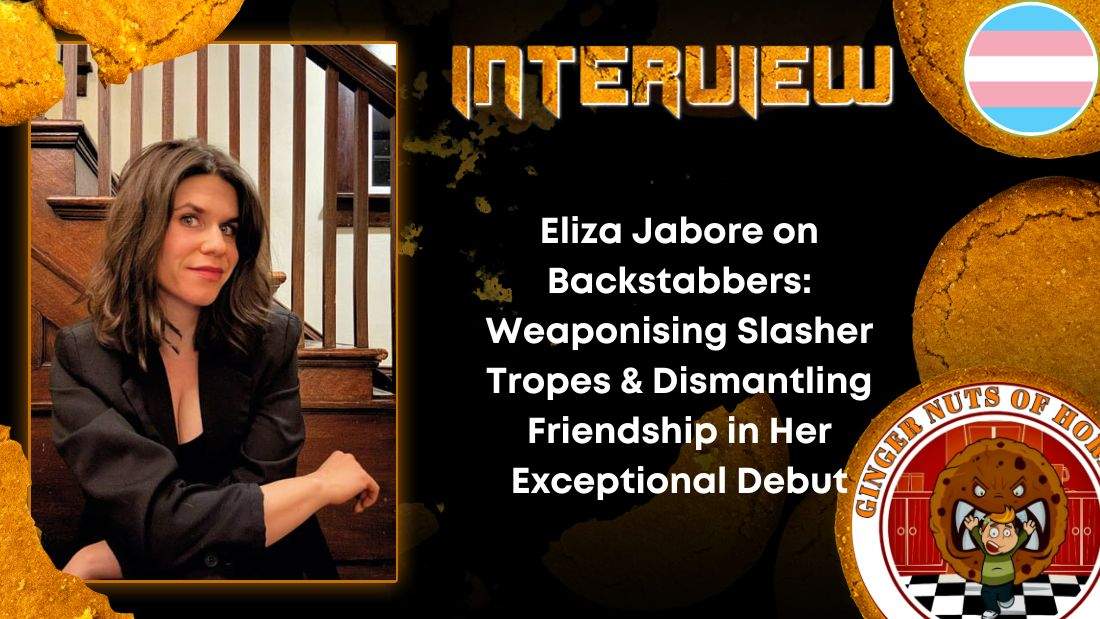
Eliza Jabore on Backstabbers: Weaponising Slasher Tropes & Dismantling Friendship in Her Exceptional Debut
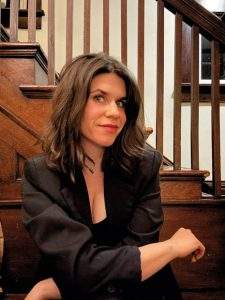
The slasher genre is built on archetypes: the final girl, the remote location, the lurking threat. In Backstabbers, the three friends are also listening to a true crime podcast about the very serial killer who once haunted the trail. It feels like you’re deliberately weaponising the trope of the “informed” or genre-savvy character. How did you use that podcast, that meta-commentary, not just as atmosphere, but as a tool to misdirect or surprise the reader actively?
I’m very interested in how true crime podcasts take a set of facts, of evidence, and weave them into a story which is then essentially dramatized for entertainment. Reasonably, there’s only so much the podcaster can be certain of and, to do what they do, they need to look at the given evidence and make assumptions and assertions. It seems to me that there’s a lot of trust put into them, an assumption they should get held to a journalistic integrity, and yet aren’t they also entertainers? Where is that line between podcasters offering these stories as a sort of public service, giving voice to victims who might otherwise be forgotten, and being online performers creating content?
So, I used this assumption of trust to create what is an essentially unreliable narrator.
I wanted to explore this and also to explore the idea of the true crime listener not just as a passive voyeur to macabre crimes but an active participant.
You dismantle a convention many horror readers have complicated feelings about, the idea that an external threat inevitably reveals true character, forging stronger bonds. Here, the threat in the woods seems to act more like a pressure cooker that accelerates the pre-existing fractures in the friendship. What is it about the “crisis as unifier” convention that you sought to dismantle, and why was it important for you to show that survival doesn’t always equal solidarity?
In my experience, crises are the best stress tests for any relationship. So, of course, sometimes they really do bring people together and magnify their strengths. But they can also hold a microscope to every fissure. And with enough pressure, those cracks start to widen until…they break. And I find that sort of psychological experiment incredibly interesting.
I think in part my interest in exploring this comes from my background as a longtime traveler. When you’re traveling, it is inevitable that something will go wrong—from little things like the airline losing your luggage to bigger things, like showing up at an Air Bnb in the rainforest in a torrential downpour only to find the person meant to give you the keys isn’t where he said he’d be and you have no way of contacting him and now you’re stranded in a jungle and it’s almost nightfall. (Yes, that really happened to me, but it all worked out!)
One of the reasons I love traveling so much was that I discovered something in myself during these challenging moments, I discovered that I have this ability to rise to an occasion and keep my head and roll with the punches in a way that I never did when I was back at home. And it was a part of me that I then nurtured and eventually learned how to bring back home with me from these trips. But just as quickly as you learn that a crisis can bring out the best in someone and see them rise to the occasion, you find that it can also have the absolute opposite effect.
That’s why I always say you should choose travel companions wisely. Even your best friend might not be a compatible travelling partner and that’s precisely because these kinds of high stress situations don’t always bring out the best in people. They can be very revealing as to a person’s flaws. And you don’t always realize that until you’re stuck in the mud and you’re in it and by then you might have some serious regrets about who is by your side.
And specifically, when it comes to life and death scenarios, survival instincts can bring out a person’s selfishness more than anything else. When the ship starts sinking, some people might be helping each other onto life rafts and others might be wrestling each other to steal a life vest. A drowning person is most likely to drown their savior, right?
So, I think mainly I sought to show a more common reality. That the disaster doesn’t always bring out your best and doesn’t always bring you together.
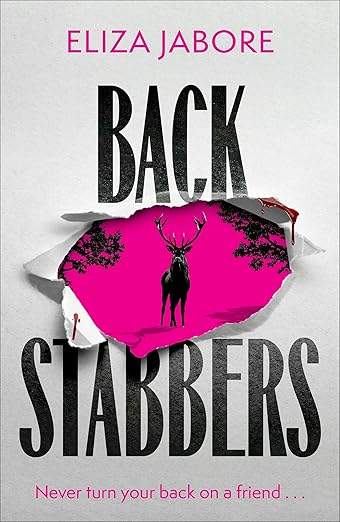
Backstabbers is being marketed as a Mystery/Thriller, a slasher. But given its sharp, spiky focus on the psychologies of Jade, Stef, and Zoe and the slow-burn collapse of their dynamic, is there another genre you secretly believe the book belongs to? A work of literary fiction disguised as a slasher, or perhaps a dark social satire wearing a slasher’s skin?
To be honest, I’m terrible when it comes to genre classification. But what I can say is that, to me, this is a story about their friendship, wrapped up as a slasher. The slasher aspect was always the backdrop rather than the forefront in my mind. My primary focus was always on their psychology, and for sure I was trying to weave some dark social satire in there.
The slasher genre has a long history of punishing characters, often female characters, for their perceived transgressions. Here, the friends are listening to a podcast about a serial killer who hunted this trail. Without giving anything away, did you find yourself deliberately subverting the “morality play” aspect of the genre? In what way does Backstabbers use the classic “hunting ground” setting to critique, rather than reinforce, those old moralistic conventions?
Oh yes, I was definitely trying to subvert the punitive element of the genre. So here you have the hunting ground where the serial killer isn’t picking off teenage girls hooking up in cars—which is seen as a sort of punishment for their perceived impropriety. The victims here are self-actualized, adventurous, independent women who have dared to go on solo hikes in the wilderness.
So, if in a traditional slasher the death element is a reprimand, then here the target on them is, if anything, a badge of honor, the attempt to knock them down a peg. Instead of predators who hunt for weak prey, these are trophy hunters who want elite kills. And I did hope to kind of challenge that traditional slasher genre trope and ask readers to interrogate it through this inversion.
On the surface, the novel’s stated theme is about survival against an external predator. But the subtext, as the title Backstabbers suggests, is about the predation that exists within a friendship. There’s a fascinating tension between these two layers. How did you manage the narrative architecture to ensure the physical threat of the woods and the cabin never became merely a metaphor for the emotional threat the friends pose to each other, that both remained equally, viscerally real on the page?
I suppose because I used the real physical threat of the woods and the cabin to reveal and expose the predation within their friendship. One peeled back the layer of the other and as such could coexist on the page in real time.
The setting, the Bones Hollow Trail, the remote cabin, feels like more than just a backdrop. In what way do the landscape and the objects within it, the true crime podcast, the discovered jewellery, and the cabin itself act as “shadows” to the main argument of the book? For instance, does the history of the Bones Hollow Hunter serve as a kind of dark mirror for the characters’ own hidden histories with each other?
What a fantastic question! So, I sort of had two thematic touchstones that I kept going back to as I wrote the book: obviously, as the title suggests, backstabbing is a core theme, but also being a predator was another big one in my mind— who is the real predator, who is being hunted… And it was important to me that all the different elements of the book served as hammers to beat this drum, if you will, and really drive those questions home. To, as you said, hold up a dark mirror and show those parallels between our main characters’ histories with each other and the actual Hunter himself.
A novel that tackles themes of trust, paranoia, and female friendship faces a constant risk of tipping into didacticism, of spelling out a “lesson” about who to trust. Backstabbers seem to luxuriate in ambiguity. How did you navigate that line? Was there a specific technique, like shifting close third-person perspectives or controlling what information the reader has versus what the characters have, that you used to preserve that crucial uncertainty?
I’m not sure I could say I consciously used a specific technique so much as I just very much had it in my head that life is rarely didactic. Friendships and relationships aren’t black and white, and it was important to me to capture that complexity. But I think that by focusing on Jade’s perspective and highlighting how her own interpretations of past events changes with time and through the lens of these current events, that this helped me illustrate this as well.
There’s a moment where the friends’ suspicion falls on the cabin’s owner, a loner with a “blend of menace and folksy charm.” This pivots the paranoia onto a classic horror archetype. But the novel’s philosophical core suggests that the true “backstabbers” might be much closer to home. Where do you think a reader might most easily misinterpret that philosophical core, perhaps by focusing solely on Jeremiah as the sole source of evil, and why might that misinterpretation itself be a valid or even intentional reading experience?
Backstabbing is obviously an essential theme of the book. And I wanted to demonstrate backstabbing and betrayal on multiple different levels. I intentionally wanted all these layers. So yes, I would imagine some readers might assume Jeremiah is the sole antagonist, that he is the main “Backstabber.” But that’s not wholly invalid. Because if Jeremiah is misrepresenting himself as a trustworthy character, isn’t that a form of backstabbing? If he is masking his true intentions, isn’t that a betrayal? The assumptions readers make about Jeremiah might not necessarily be wrong. And I’m quite happy if readers initially hang their hats here because then hopefully it makes for an exciting ride as the rest of the plot plays out.
You’ve created three distinct protagonists, cautious Jade, true crime–obsessed Zoe, easygoing Stef, and the narrative seems to resist making any one of them a simple hero or villain. Their friendship is “twisted” long before the hike. How did you use their specific backstories and psychologies not just to drive the plot, but also to structurally embody the novel’s central tension between the terror of the external hunt and the quiet horror of intimate betrayal?
Everything that has happened to them before page one has brought them here to this cabin. This is a crisis that reveals rather than strengthens their relationship and so I wanted to highlight moments in their past that showed the cracks that would eventually widen. Memories that maybe, at the time, hadn’t felt sore but now, given greater context, are seen in a different light. And each of these memories that occur to Jade as she’s going through these horrors are ones with direct relevance to what’s happening to her now, but that she’s looking at through this new lens, and I think that’s what helped them embody that tension.
The cabin in the woods is a horror staple, but yours comes with a loner, Jeremiah, whose “folksy charm” is noted in the Publishers Weekly review. You’ve created a character who exists in that liminal space between potential saviour and potential predator. How did you calibrate his dialogue and behaviour to keep that ambiguity alive for as long as possible, especially given that the podcast primes the reader to see him as a threat from the start?
Well I’m so glad to hear that I did, because that was the challenge (and a fun one!) I was constantly trying to straddle that line, not just to keep the ambiguity for plot purposes, but because in these situations as a vulnerable woman seeking help from a male stranger, there is an inherent power imbalance that I was trying to encapsulate and show.
A guy can offer you a glass of water and it could be the most harmless thing in the world, a simple gesture of kindness, or there could be a nefarious motive and as women in these sorts of desperate situations, we have to see the man as a potential threat without completely ruling him out as a possible savior. And I wanted to really capture that. So, everything he did and said could be seen through that double lens.
The title Backstabbers is provocative and direct, but it also carries a weight of betrayal that feels intimate and almost domestic. At what point in the writing process did the title reveal itself to you, and did it shift how you shaped the friendship dynamics? In other words, did you write toward the title, or did the title emerge as a kind of thesis from the characters’ actions?
The title was there from the start of the creative process. So everything about what I wrote was always focused on that centralized theme; it was the ultimate thesis.
You’re working within a genre that often relies on a clear distinction between the “monster” and the “victims.” Yet your novel seems interested in a more unsettling grey area, where the characters’ own choices, secrets, and petty betrayals become a parallel horror. Was there a scene or a line of dialogue that, when you wrote it, made you feel you were successfully collapsing that distinction, forcing the reader to wonder if the real threat was ever outside at all?
It was definitely a question that I wanted readers to ask in varying degrees along the way: who is the predator? And the answer was never meant to be black and white. It’s a little tricky to discuss specific lines and scenes without giving anything away, and I think there were a lot of them, but one of the first ones that springs to mind right now that felt symbolic as I wrote it was the scene in the kitchen where we saw some of the characters taking pictures with a recent kill. That, for me, felt like a turning point, where we started to see some of those lines begin to blur.
For a debut novel, Backstabbers arrives with an extraordinary amount of confidence, balancing high-tension set pieces with slow-burn psychological excavation. What was the most unexpected challenge in writing a thriller that also functions as a character study? And what did you learn about your own process, perhaps about how you handle pacing or perspective, that you’re already carrying into your next project?
The main challenge for me was finding that balance. I wanted the fast-paced excitement that comes with life-or-death stakes but with that introspective character analysis. As I said before, for me this book has always been primarily about the latter, the one being the vehicle to expose and explore the other. I learned that the right scenario creates the perfect conditions for that character study to thrive, like a bacterial culture, which is something I’m certainly striving to find for my next projects.
The novel’s setting, the Olympic National Park’s Bones Hollow Trail, feels almost mythological by the end. In creating this place, you’ve built a landscape that carries the weight of both natural danger and human atrocity. Was there a real trail or a specific piece of Pacific Northwest geography that served as your touchstone? And how did you approach rendering the wilderness not just as a backdrop but as an active, almost conspiratorial participant in the story?
Yes, there were two trails I used inside Olympic National Park for my touchstone. Graves Creek and Enchanted Valley, and the latter leads to the Enchanted Valley Chalet which is an abandoned house along a river that I also sort of had in mind when fashioning the cabin.
I wanted the trail to feel alive—to feel like an actual character—and so I kept drawing back to the emotion that it evoked. The feeling that the wilderness itself could be watching you, hunting you, or working against you somehow. As though the wilderness might have desires and motives of its own.
Backstabbers by Eliza Jabore
A deliciously tense, edge-of-your-seat reading experience that will have you turning the pages well into the night’ LAURIE ELIZABETH FLYNN
Never turn your back on a friend.
Jade, Stef and Zoe are hiking Washington’s Bones Hollow Trail, braving cougars, snakes and the storms that roll in without warning. The friends’ paranoia isn’t helped by listening to a true crime podcast about the serial killer whose hunting ground they’re hiking through.
Then when Stef twists her ankle – badly – there’s no one to hear them scream for help. The only sign of life for miles is a cabin that looks straight out of a horror movie, with an owner who’s a little too eager to invite them in.
The friends must soon find a way to survive as things spiral out of control. After all, who can you trust when your back’s against the wall? But unfortunately for them, the only thing more twisted than this nightmare is their friendship…
‘Filmic, fresh and frightening with shocks galore’ ALLIE REYNOLDS
‘Full of twists and unexpected turns’ TASHA CORYELL
‘Don’t you dare turn your back on Backstabbers, a deliciously sinister sojourn into true crime country’ CLAY McLEOD CHAPMAN
‘This book has everything you need for a rip roaring adventure and jaw dropping twists…Read it if you dare!’ 5* NETGALLEY REVIEW
Eliza Jabore
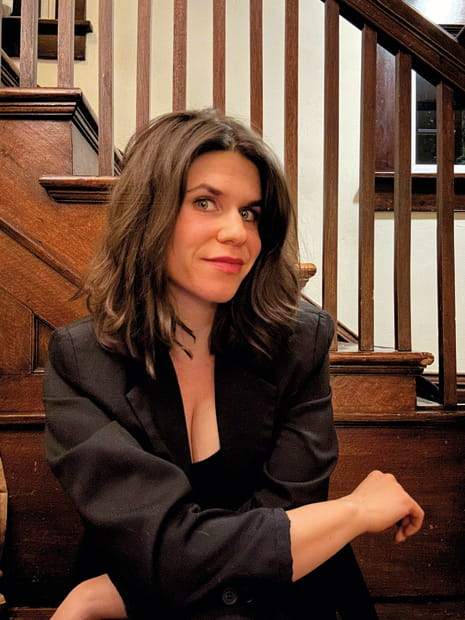
Eliza Jabore began globetrotting at seventeen and spent the next decade devoted to traveling. She met her husband abroad and, after many years of adventure, finally planted roots back in her hometown in Iowa, where she has two kids, two cats, and a dog. Backstabbers is her debut novel.