The folklore Disney left out: mermaids as prostitutes, plague-carriers and drowners of men.
Most of us learned about mermaids from Disney, all red hair and wistful longing for legs. The real folklore is stranger and a good deal nastier. Author Ava Morwood, whose novel Until We Drown grew out of the mermaid-haunted pools of the Peak District, takes us through the merfolk lore that never made it into a singalong: mermaid as Elizabethan slang for prostitute, the grisly ningyo and Feejee Mermaid, flesh that grants eight hundred years of unwanted life, and a seventeenth-century theory blaming the plague on rotting merfolk. Dark mermaid legends, served up for your delectation.
Behind the shimmer and the monofins lies a far stranger history: mermaids were once slang for prostitutes, their flesh promised eight hundred years of life, and one seventeenth-century scholar blamed the plague itself on their rotting bodies. Ariel never mentioned any of that.
The Dark Side of Mermaids: Folklore, Plague and Drowning By Ava Morwood
For anyone whose idea of mermaids is shaped by Disney’s Ariel in The Little Mermaid,(though I’m sure readers of GNoH don’t count among those), some of the darker lore around merfolk might come as a revelation.
I first got interested when I discovered the mermaid lore of the Peak District, a landlocked region. It seemed as if every pool, no matter how insignificant, had at least one mermaid tale attached to it, and sometimes two or three. They were the kernel around which I built my novel, Until We Drown. There was beauty in those old stories, and love, but they also got delightfully dark, even – avoiding spoilers – somewhat murdery.
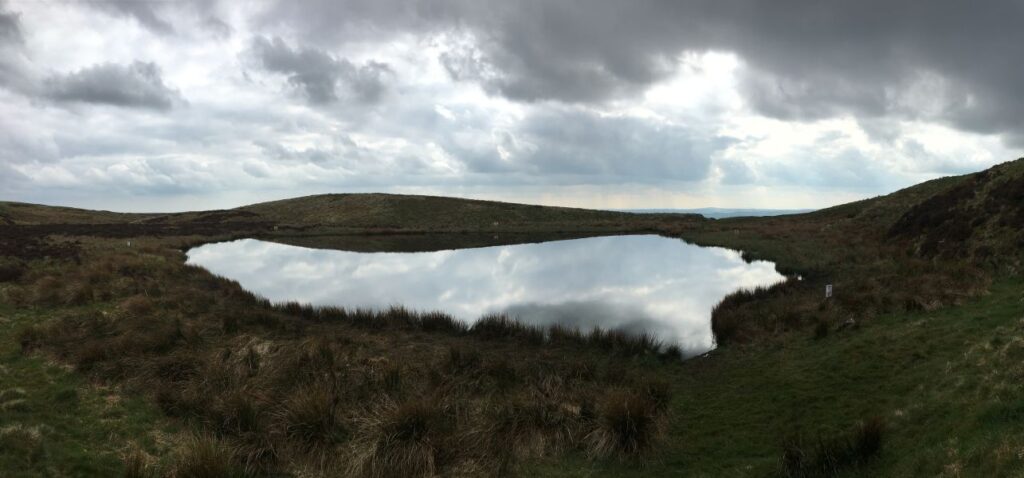
Blake Mere – one of the mermaid-haunted pools of the Peak District
I got a little carried away with the research after that, reading about mermaids from different cultures and eras. I uncovered aspects of merfolk that didn’t make it into the novel, but are too good not to share. There isn’t space here for an exhaustive list, but this is a taster, for your delectation…
Mermaids and Prostitution
The classical picture of mermaids is beautiful and desirable, reflected in the current craze for wearing monofins and shimmery makeup to go ‘mermaiding’. But the word mermaid was once slang for a prostitute. Prevalent in Elizabethan times, the slur was used against Mary Queen of Scots when she married Bothwell in 1567. This came close upon the murder of her second husband, Lord Darnley, and it was widely speculated that Bothwell had orchestrated his death.
It is believed that Shakespeare was referring to Mary in A Midsummer Night’s Dream, with the line, ‘And heard a mermaid on a dolphin’s back’ – the dolphin being the Dauphin, her first husband. It’s also thought that Queen Elizabeth presented herself more strongly as the virgin queen in counterpoint to the wayward, wicked mermaid, Mary.
Not So Pretty
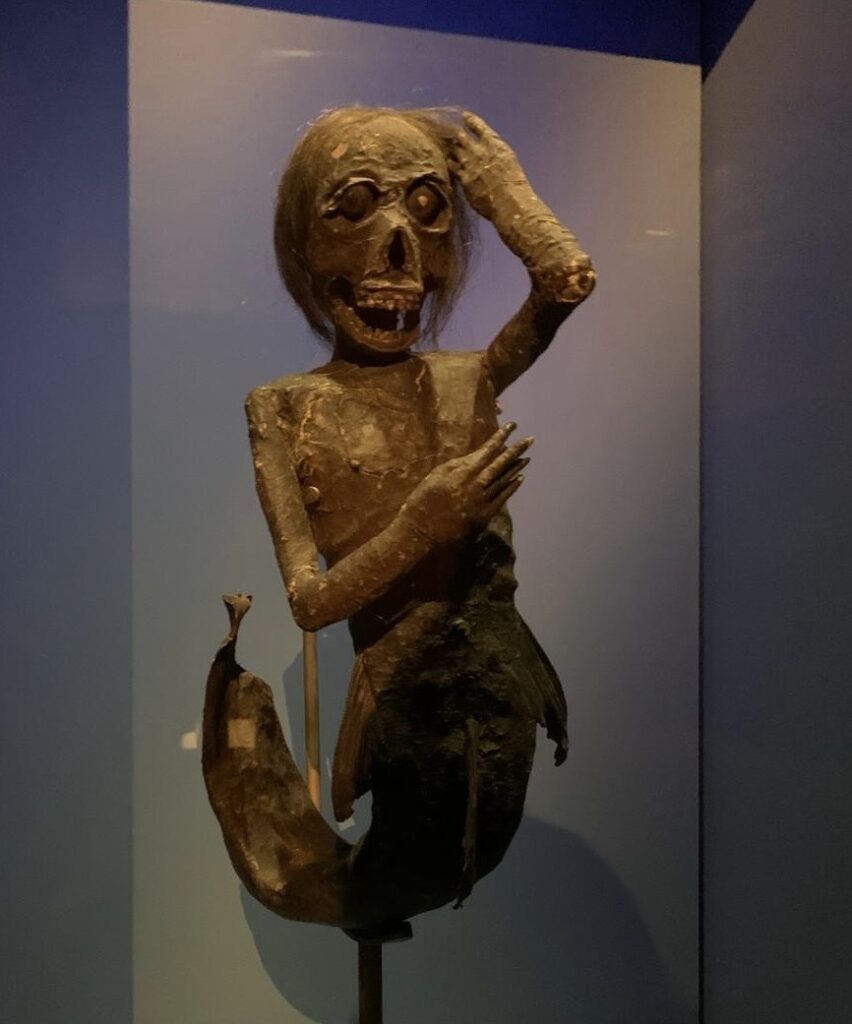
The Far East was once known for creating ningyo or ‘human-fish’ – fake mermaids made from wire, fish skin, papier-mâché, shell, gypsum, cloth, wood, and fish or monkey jaws. They were meant to represent a Japanese spirit and displayed in temples, but became a handy source of income when it was realised that western sailors would pay good money for them.
One famously ended up being displayed by P. T. Barnum for coin in the nineteenth century, though his ‘Feejee Mermaid’ actually came from Indonesia. There’s a fascinating history about its discovery by a Captain Eades, who believed it to be real and sold his ship to buy it – a ship which, sadly for him, he didn’t entirely own. It’s too long to recount here, but you can read the full story of how he was tricked into buying the world’s most expensive mermaid and lost his fortune in this Guinness World Records article.
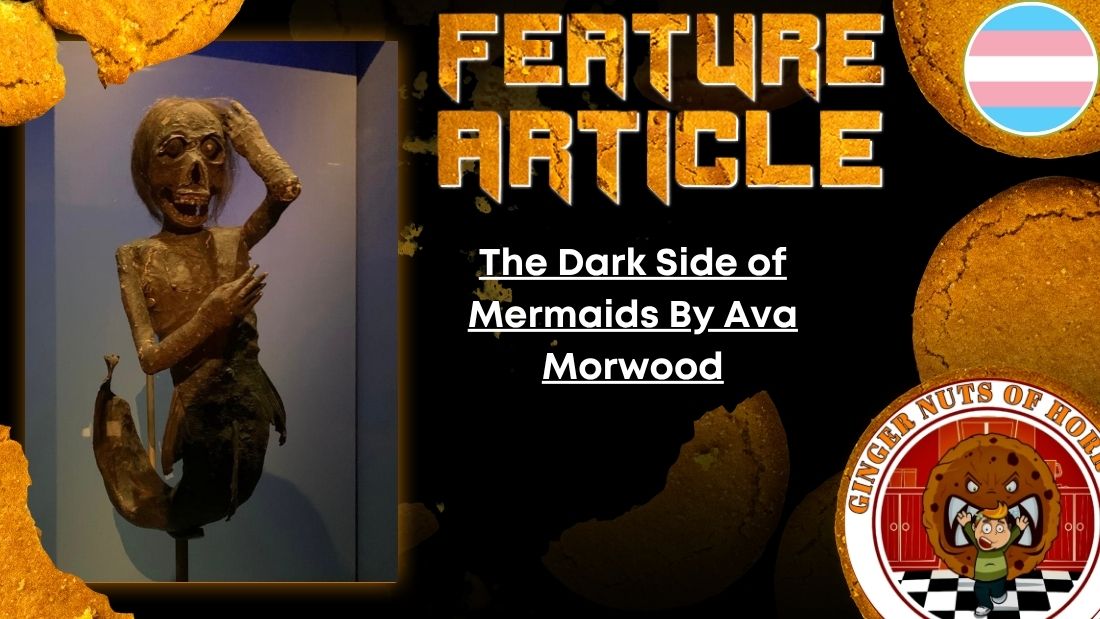
Which brings me back to the Peak District. Besides mermaid folklore, it also has its very own ningyo. The Buxton Mermaid looks like a shrivelled, grinning creature from a horror story, and the four-year-old in my novel certainly didn’t expect to meet a mermaid who looked anything like her.
Cannibalism, or…?
In Japan, there’s a belief that eating a ningyo or mermaid’s flesh can grant long life or even immortality. I’m not sure if this qualifies as cannibalism – perhaps it depends which bit you chomp into!
The legend of Yao Bikuni has it that she accidentally ate mermaid flesh, and lived for 800 years. Sadly, this brought her grief; she could only look on while her family and several husbands grew old and died. Eventually, she planted a particular camelia tree, claiming she would die when it did – perhaps unfortunately for her, the tree is still living.
The connection between mermaids and long life can also be found in the UK, and there are two stories from the Peak District that touch on it. One resident mermaid has the ability to grant her chosen love immortality – unless she decides to drag him under and drown him instead, naturally.
Close Encounters
One of the most famous supposed historical mermaid sightings was by Christopher Columbus in 1493, when he recorded seeing three mermaids off the coast of Hispaniola. Despite the magic of the encounter, he was disappointed, writing that they were ‘not as beautiful as they are painted,’ and ‘their faces had some masculine traits.’
It is believed that he actually saw manatees. This may have been a common mistake – the scientific name given to manatees is Sirenia, reminiscent of sirens.
Avoid like the Plague…
I’ll finish with my favourite piece of mermaid weirdery. Athanasius Kircher (1602-1680), a pioneer microscopist, once put forward the theory that the plague was caused by rotting mermaids.
This pinpoints something I love about history: when we put ourselves in someone else’s shoes, ideas that seem patently bonkers can actually have a clear logic behind them. So in the seventeenth century, miasmatic theory prevailed – the idea that disease was caused by miasmas or noxious vapours. The word ‘malaria’ reflects this neatly, coming from the Italian mala aria, literally meaning ‘bad air’. The name was coined before the spread of the disease by mosquitoes was understood.
Decaying organic matter was considered one of the prime sources of illness – and we’re talking about the plague here. Naturally, such a thing must have emerged from something particularly powerful and virulent, perhaps even a little macabre. Enter mermaids…
Remember that, the next time Ariel is singing about how she’d love to be Part of Your World.
About Until We Drown by Ava Morwood
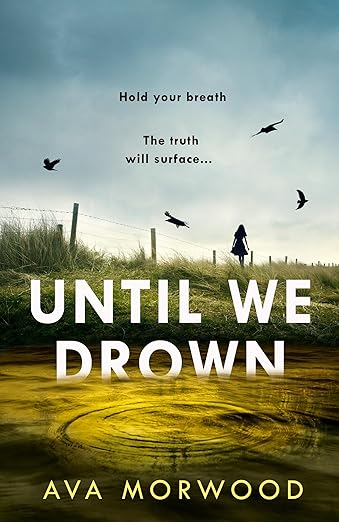
When Ellie Kellaway and her family seek a fresh start in the tranquil Peak District, she hopes to leave behind her haunting memories of the sea – and of Ethan’s affair with the younger, beautiful wild swimmer he met there.
But Ellie’s new home harbours dark secrets, where ancient legends of mermaids intertwine with chilling realities. As eerie occurrences unfurl and truths rise to the surface, it becomes clear that the mermaid’s curse might be real. Ellie’s family is fast becoming entangled in a web of betrayal and vengeance, which threatens to drown them all…
A spine-tingling novel where love, loss, and the lure of the water collide in a terrifying crescendo.
About Ava Morwood
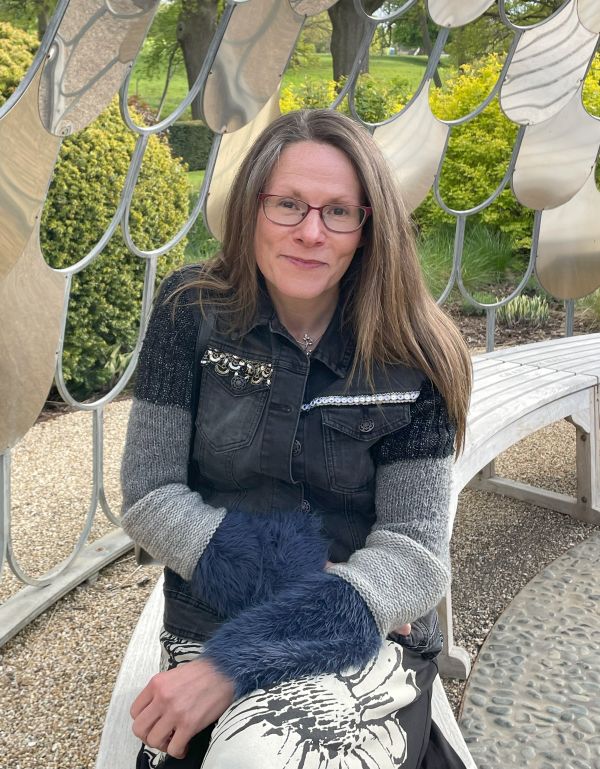
Ava Morwood is a pen name of Alison Littlewood. She also writes as A. J. Elwood.
Her latest book is Until We Drown. As Alison Littlewood, she has written a number of novels, including the Richard and Judy Book Club bestseller, A Cold Season. Other titles include Mistletoe, The Hidden People, The Crow Garden, The Unquiet House and Path of Needles. As A. J. Elwood, she published The Other Lives of Miss Emily White and The Cottingley Cuckoo.
She hails from deepest darkest Yorkshire, England, where she lives in a three-hundred-year old house that creaks and whispers around her as she types. You can find further information at www.avamorwood.com

Ginger Nuts of Horror: The Heart and Soul of Horror Reviews

Looking to get your horror book or film in front of the genre’s most dedicated audience? Ginger Nuts of Horror is one of Europe’s largest independent horror review websites, with over 30 contributors publishing horror book reviews and horror movie reviews almost every single day.
We offer far more than reviews. Authors, filmmakers and publishers can promote their work through in-depth horror book reviews, horror film reviews, comic and video game coverage, news features, and our popular author and director interviews like Five Minutes With. Our guest feature series, The Horror of My Life, Childhood Fears, The ? That Made Me and more, let creators tell their story while promoting their latest release.
Every feature is built to sell your work. We include backlinks to your website or Amazon author page, a full synopsis, and a universal purchasing link that sends readers straight to their local store. Add a large, engaged social following and an 18-year archive of trusted horror coverage, and you have a platform genuinely built to grow your readership.
Whether you’re an established author, an indie filmmaker, or a debut voice in indie horror, there’s a way for us to help you reach more fans. Explore our horror book reviews and horror movie reviews, then get your horror book or film featured today.

Jim "The Don" McLeod has been reading horror for over 35 years and reviewing it for more than 16. He's the editor of Ginger Nuts of Horror, Europe's largest independent horror review and culture site, and a British Fantasy Award nominee for his work in the genre. When he's not busy inflicting his opinions on the horror community, he can be found annoying his family or getting thoroughly outwitted by his two dogs, Casper and Molly.