The real horror wears the face of someone who once loved you.
Scary Movie Night | Interview With Miranda Smith | Bantam Dell Pub Group
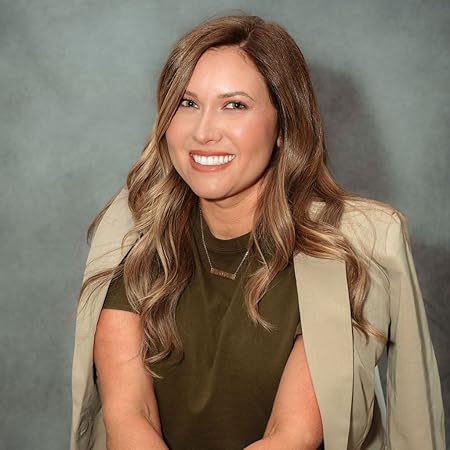
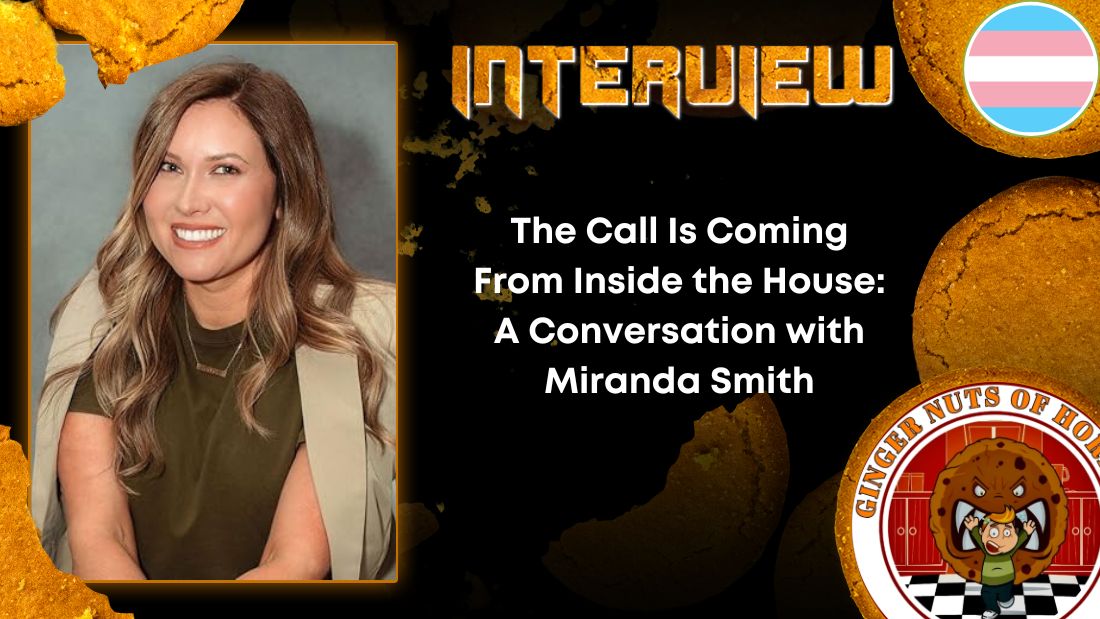
Miranda Smith spent her childhood in the lobby of her parents’ video rental store, doing homework under shelves of blood-splattered VHS covers while slashers ran on a loop. That apprenticeship shows. After a dozen domestic suspense novels with Bookouture, books like Not My Mother and His Loving Wife that mined complicated women and buried family violence, she crossed to Bantam and to the genre that raised her.
Smile for the Cameras, her 2025 locked-room thriller about a former scream queen forced to relive her own slasher, was the opening argument. Scary Movie Night, out July 14, sharpens it: a woman named Tippi, newly free of a controlling fiancé, throws a horror-costume party at a secluded mansion, the guests start vanishing, and the messages keep insisting the call is coming from inside the house. Smith writes from East Tennessee, where she taught high school English before any of this. She has become a deliberate student of the familiar, of the images we already flinch at, which makes the most obvious question the one worth opening with.
The Call Is Coming From Inside the House: A Conversation with Miranda Smith
You build Scary Movie Night out of furniture every reader already owns: the costume party, the secluded mansion, the line about the call coming from inside the house. Working that close to material this recognizable seems like the riskiest thing a writer can do, because the audience can see the gears. What does a worn image give you that a fresh one can’t?
I approach every project as a reader first, ultimately crafting the same kinds of stories I would like to read. Leaning into the familiar provides a sense of comfort in that sense, but from a writer’s perspective, revisiting genre tropes gives me the opportunity to subvert expectations.
One of my favorite pieces of writing advice comes from Jessica Brody’s Save the Cat Writes a Novel: “Original is not an achievable goal in novel-writing…What is achievable is fresh.” I aim to take the most beloved elements of crime fiction and find new ways to modernize them.
Smile for the Cameras and Scary Movie Night are sister projects, both at Bantam, both locked rooms, both love letters to horror cinema. When you finished Ella Winters’ story, what felt unfinished enough about that mode that you wanted to build a second house in it rather than move on?
My love of movies was the biggest influence, and I wanted to explore that subject matter from different angles. Smile for the Cameras leans more into slasher movies while Scary Movie Night focuses on films from a different time period, mainly the Hitchcock era.
I thought about this a lot when I was crafting the protagonist for each book. Ella and Tippi are very different. Ella embodies the characteristics we were used to seeing from films in the nineties and early-aughts (think Sydney Prescott in Scream) while Tippi presents as a more mature, Hitchcockian lead.
Every guest at Tippi’s party arrives dressed as a different icon from a different film, which means the room is full of masks before anyone is actually hiding anything. How did that costume conceit change the way you could withhold and reveal information, and where did it start fighting you?
People tend to hide behind masks whether they’re in costume or not, which is an interesting element to explore. The members of this friend group cling to a dynamic that no longer exists, and that becomes clear to them in different ways as the night unfolds. The specific costume choices amplify certain personality traits, and present a fun way to highlight just how much the characters are concealing from one another, and themselves.
The novel runs on a single night and kills the lights on guests one by one, which is a structure that lives or dies on the reader trusting your clock. How did you pace the disappearances so the math of a locked room stayed frightening instead of turning into a puzzle the reader solves ahead of you?
That’s always the challenge when you’re writing this type of story. The goal is to plant enough clues so that when the reader reaches that final conclusion, the ending feels earned. I try to increase the intensity and tension as the story progresses, and make each reveal/disappearance as devastating as possible for the characters that remain.
I also love a one-night thriller story because it magnifies every choice the characters are making. There’s not enough time to fully process repercussions, so each reaction tends to snowball into the next.
Underneath the popcorn, the engine of the book is Oliver, the controlling ex threatening to expose a secret Tippi would take to the grave. That is domestic suspense, the territory of your Bookouture years, wearing a slasher costume. What were you trying to work out about intimate coercion that the cinematic frame let you say more honestly than a straight thriller would?
There’s certainly some crossover. With my domestic suspense novels, the storylines are fairly linear. With Scary Movie Night, I had the flexibility to play with story structure a little bit. I could show characters in one scenario, then transport the reader to a different timeline to provide more context–almost as if you were watching a flashback scene in a movie. I value the chance to explore familiar dynamics through a more complex lens.
Your protagonist is a horror obsessive trapped inside a horror scenario, and the book leans on the idea that some things really are like in the movies. There is also the matter of her name; Tippi is not a casual choice in a book the blurbs call a love letter to Hitchcock. How much is genre literacy armor for her, and how much of it is the trap that keeps her from seeing what is actually happening?
Tippi is independent, smart, and resilient but she’s also capable of making mistakes. She’s human. Even the most well-rounded people ignore red flags and end up in difficult situations. I created a story with a woman who knows she’s in over her head, but is still determined to find a way out, which feels very Hitchcockian when you look at movies like Suspicion or Psycho. Even Rebecca. And this desire to resolve an unraveling situation extends to several characters in the book.
Across the Bookouture run, from Not My Mother to His Loving Wife to Loving Mothers, your fixations were family, motherhood, and the violence that hides inside a household. The Bantam books trade the kitchen for the cabin and the multiplex. What obsession survived the move intact, and what did you have to leave behind?
The biggest betrayals come from the people we care about–that’s a common thread across all my books. In Smile for the Cameras and Scary Movie Night, the focus shifts away from family and onto toxic friend groups. These characters are also grappling with their identities in relation to the past.
With Bantam, there are fewer restrictions in terms of how dark a situation can be. And a higher death toll!
His Loving Wife turns on a marriage curdling into control, which is the same nerve Oliver presses years later. When you look back at that book, what did writing it teach you about staging a dangerous man on the page that you were still using when you built Tippi’s ex?
His Loving Wife leans on different tropes: family secrets, a vacation gone wrong. It was one of my favorites to write because I explored the breakdown of a family unit over time.
As a society, we’ve become more aware of different types of abuse, and so even though both books deal with coercive control, each character’s methods and motivations are unique to them. There’s no shortage of ways to portray abusive relationships and cruelty. Good for a thriller writer, sad for humanity.
You have described Smile for the Cameras as a side project you wrote without a contract or a deadline, your thirteenth published novel, and the one that sold in days. Set the speed of the sale aside. What changed in how you saw yourself as a writer once you let yourself write the genre you actually grew up on instead of the suspense you were under contract to deliver?
My primary goal as a writer is to deliver an entertaining, thought-provoking story. Having a tight deadline can curb that experience. Smile for the Cameras was the first book I’d written since my debut (Some Days Are Dark) where I could dedicate as much time as was needed and really let the story breathe.
A crucial part of the editing process is stepping away from the story in between drafts to gain perspective. Smile was a project where I could really let the art take the driver’s seat and deal with the industry side of things later.
The literary slasher has its own canon now, with Stephen Graham Jones interrogating the final girl in My Heart Is a Chainsaw and Grady Hendrix doing it through trauma and support groups. You are working the more populist, homage-driven end of that same street. Where do you think the page version of the slasher goes from here before the meta-nostalgia runs dry?
Again, there are endless ways to make a universal topic feel fresh. This appears to be the summer of trad wife horror. I’m looking at books like Yesteryear by Caro Claire Burke and Trad Wife by Saratoga Schaefer and The Spin by Faith Gardner. Each novel explores the subject matter in unique ways, and I’m having a fun time exploring them all.
In terms of the Final Girl trope, I think our fascination has shifted to where we don’t only want to see these characters survive, we want to witness them take back control and thrive moving forward. How do we portray that in a modern way?
Forget the influences you cite in every interview. What is a horror novel that genuinely unsettled you, the kind that followed you out of the book and into the dark of your own hallway, and what was it doing on the sentence level that you have never quite been able to reproduce?
Liz Nugent’s writing in general is incomparable, but I particularly love Lying in Wait. Her breakdown of family dynamics is brilliant. She has this stream-of-consciousness style of writing that is just breathtaking. I couldn’t emulate it if I tried! Jennifer McMahon is another writer who does an excellent job of weaving folklore and generational trauma into every story she writes. Fascinating!
For Smile for the Cameras you wrote an actual screenplay for the fictional film Grad Night because you wanted to see the scenes on a screen. Scary Movie Night asks readers to recognize a whole party’s worth of movies that may not exist. What is the technical trick to making an invented film feel like one the reader is sure they rented, and how far did you have to build those movies out before the prose felt true?
In Scary Movie Night, I chose to highlight films that are considered iconic within the genre—think, The Shining, Rosemary’s Baby, and Midsommar. Even if a reader hasn’t seen them, they’re likely at least familiar. Watching all the films mentioned within the novel isn’t necessary, but will hopefully enhance the reading experience.
For Smile for the Cameras, I was creating a completely original screenplay that would rival Scream or I Know What You Did Last Summer, something that would lean into those slasher tropes and character archetypes. I wrote Grad Night: four friends rent a cabin in the woods to celebrate their high school graduation and they’re hunted by a masked killer with a personal vendetta.
The book is being sold as relentlessly paced summer entertainment, and yet dread is a slow chemical; it needs stillness to work. When the brand of the book is speed, how do you engineer the quiet at the sentence level so a reader’s pulse actually climbs instead of just turning pages faster?
It’s really difficult. Calling back to one of my earlier responses, there are industry, commercial expectations and then there are story-level requirements, and writers are constantly finding ways to marry the two. Each story has its own unique trajectory, and that tends to develop over the course of writing it. So, just sit down and write!
The end goal is always the same: produce something entertaining that will resonate with readers. You never really know what will sell, so it’s best to focus on what the story needs and produce that to the best of your ability.
Here is something I keep circling. You found comfort as a kid in the back of a video store watching women get hunted across a screen, and you have built a career returning to that scene and making it pleasurable for the rest of us. When you sit with that honestly, what do you think the genre was giving the girl in that lobby, and is it the same thing you are giving readers now?
I grew up in a very small town. All forms of storytelling, whether through prose or cinema, introduced me to new ideas and allowed my imagination to run wild. I wish I could tell you why I’m drawn to these types of stories–I still don’t know! People will ask if I’ve ever considered writing another genre, like romance; I wouldn’t even know where to start.
I’ve always been fascinated by the macabre. Those are the stories that get my heart racing, so I try to create that same experience for readers. And I value the opportunity to write endings that feel satisfying because real life doesn’t always provide that closure.
Across thirteen books, the person holding the knife is almost never a stranger. It is a husband, a mother, an ex, a co-star, someone who once knew the character tenderly, and even when everyone in Scary Movie Night is literally wearing a killer’s mask, the real threat is intimate. If the horror you keep returning to is always wearing the face of someone who once loved you, what is it that you understand about love that keeps walking you back to the blade?
Masked killers and monsters elicit satisfying scares, but the most disturbing types of horrors are the kinds that exist in our everyday lives. Personal betrayals, toxic environments, and social injustices.
I love pushing characters to the absolute extreme while also leaving space for the reader to ask, “How would I react if that happened to me?” Those are the stories that stick with us.
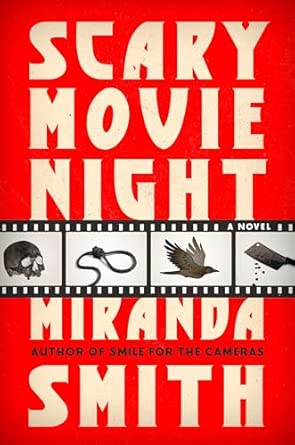
In this nail-biting thriller, a horror-themed birthday party turns deadly when guests start disappearing—and the birthday girl realizes that she must face a long-buried secret to make it out alive.
Scary Movie Night by Miranda Smith
Tippi is ready for a fresh start. After breaking off her engagement to an increasingly demanding, controlling, and emotionally unstable man, she is newly inspired to do whatever it takes to put herself first. Plus, her thirty-fifth birthday is coming up: a perfect occasion to ring in this new era. Tippi’s friends see the opportunity, too, and lean into her love of horror films by throwing her a lavish theme party at a secluded mansion, where everyone dresses as characters from iconic scary movies. But Tippi’s attempts to enjoy the night are shattered when she starts receiving terrifying messages from her ex, Oliver, to expose a secret she was ready to take to the grave.
At first, Tippi can’t believe her eyes. Oliver moved across the country after they broke up—he can’t have crashed her party. Could one of her friends have found out? But when her guests begin to disappear one by one, it becomes clear that the threats have very real consequences. And the messages make clear one thing: the call is coming from inside the house.
As Tippi is forced to navigate the deception of those closest to her, she realizes that in the end, some things are indeed like in the movies, and she’ll do whatever it takes to just survive the night.

Ginger Nuts of Horror: The Heart and Soul of Horror Reviews

Looking to get your horror book or film in front of the genre’s most dedicated audience? Ginger Nuts of Horror is one of Europe’s largest independent horror review websites, with over 30 contributors publishing horror book reviews and horror movie reviews almost every single day.
We offer far more than reviews. Authors, filmmakers and publishers can promote their work through in-depth horror book reviews, horror film reviews, comic and video game coverage, news features, and our popular author and director interviews like Five Minutes With. Our guest feature series, The Horror of My Life, Childhood Fears, The ? That Made Me and more, let creators tell their story while promoting their latest release.
Every feature is built to sell your work. We include backlinks to your website or Amazon author page, a full synopsis, and a universal purchasing link that sends readers straight to their local store. Add a large, engaged social following and an 18-year archive of trusted horror coverage, and you have a platform genuinely built to grow your readership.
Whether you’re an established author, an indie filmmaker, or a debut voice in indie horror, there’s a way for us to help you reach more fans. Explore our horror book reviews and horror movie reviews, then get your horror book or film featured today.