- A Forest Darkly by A.G. Slatter: A Witch’s Story for Grown-Ups
- A Forest, Darkly, The Witch in the Woods Gets a Voice: A.G. Slatter on Menopause, Monsters, and A Feminist Gothic Fantasy
- The Cold House Review: A.G. Slatter’s Folk Horror Novella Chills to the Bone
- The Sourdough Compendium Review: A. G. Slatter’s Gothic Triumph
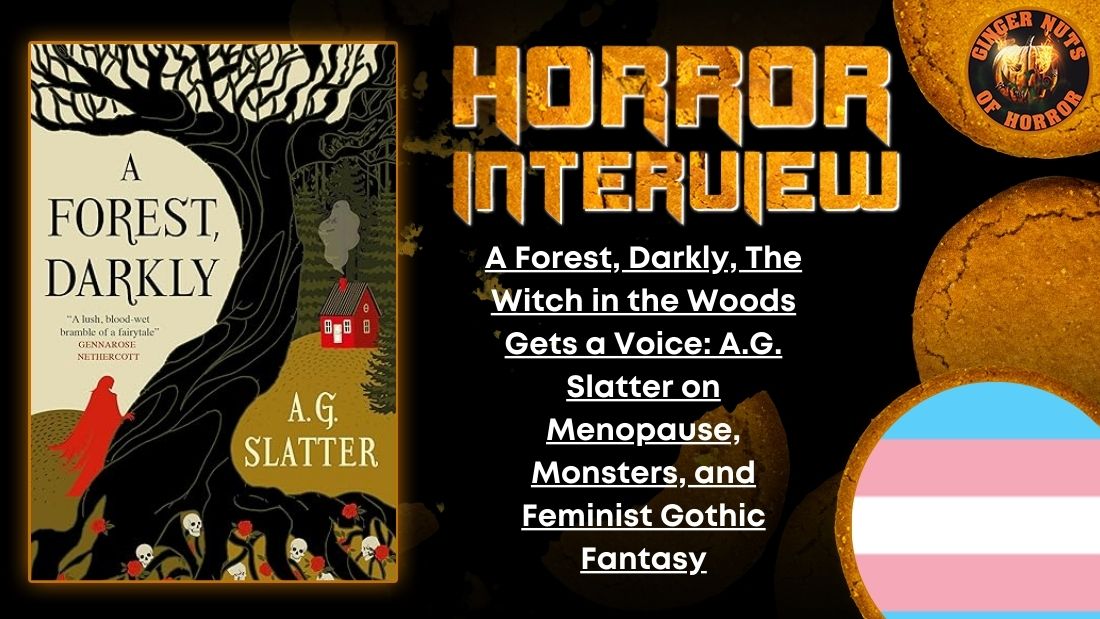
In a genre often obsessed with youth, A.G. Slatter’s latest novel, A Forest, Darkly, offers a refreshing and powerful shift. Set in her acclaimed, bewitching Gothic Sourdough universe, this dark fantasy introduces us to Mehrab, a blunt, grumpy, and deeply compelling witch in her fifties who has retreated from the world to battle her own demons in solitude. Her peace is shattered when a terrified young woman appears on her doorstep, pursued by merciless godhounds intent on extinguishing all magic.
As Slatter weaves a narrative rich with folklore, body horror, and biting wit, A Forest, Darkly explores themes of patriarchal control, the transformative power of menopause, and the messy, beautiful process of forging a family on one’s own terms. For readers seeking immersive fantasy with a heroine who is as “prickly” as she is powerful, this novel is an unmissable journey into the woods
A Forest, Darkly, The Witch in the Woods Gets a Voice

Your latest novel, A Forest, Darkly, introduces us to Mehrab, a witch living in seclusion who is forced out of her solitude when a young woman appears on her doorstep. Mehrab is described as “coping with loneliness in her own strange ways and quietly battling her demons.” What drew you to the archetype of the witch in the woods, and what makes Mehrab’s iteration of that archetype distinctively yours?
I think I wanted to write someone with the ability to fight back. When you read about the witch trials across the world, there are all these claims of women being witches, of having power, of having used it to harm people – and when you actually read the charges, they are so clearly bullshit: “Stole the cream from a cow’s udder by means of a magical hare”, “Looked sideways at someone and made them cough up iron nails”.
The thing is that if any of these thousands of women who were burned, drowned, hanged and tortured had any kind of power, they’d never have died like that. They were poor and marginalized and unprotected. They were generally grumpy women who didn’t care about pleasing anyone and that made them both dangerous – not caring for male power, uninfluenced by it – and also vulnerable, because no one was going to stick their neck out for a bunch of crones with no “value” to society beyond babysitting. So they could generally be got rid of as an example to the rest of the women.
But what if they did have power and they could fight back?
Mehrab is described as “blunt, ballsy,” “grumpy,” and “prickly,” yet simultaneously trying very hard to be kind and patient. How do you balance those contradictory traits to ensure the reader loves her because of her sharp edges, rather than in spite of them?
I think that comes largely from the internal monologue that the reader is witness to – first person narrators are my favourite because they’re so intimate, they allow the reader to ride along in the character’s head and heart and really know what they’re thinking and why. I think the fact that Mehrab is so honest about herself to herself and she consciously treads a path between being a bit curmudgeonly and also knowing that applying kindness to everyone is a better way to live (while also being wary of those who think kindness is weakness), makes her really honest and interesting.
Years ago, someone said to me that love is tolerance – I didn’t think it was right then, but it’s an idea that’s never left me and I think it probably is right. It’s about showing patience to people and kindness as your first choice – give them the chance to screw up later, but at least it won’t be because the first thing they got from you was distrust that pushed them closer to poor choices.
I think Mehrab is aware that just because she’s having a bad day, doesn’t mean everyone else around her has to suffer. She’s no saint, she’s grumpy and easily annoyed, she can be snappy and cruel – but she’s also got this little alert in her own head that says “Don’t start with being an arsehole – you can always fall back on that later!”
When populating these woods, are you consciously drawing from specific Celtic or European mythological sources, or are these creatures emerging purely from the internal logic of the Sourdough universe?
I draw on a mishmash of European fairy and folktale creatures because those were the creatures in the fairy stories and folklore I was read as a child. My family background is largely Irish, Scottish and Welsh with some French, German, Danish and Portuguese thrown in (according to family lore).
So all of those tales contributed to my earliest fantastical world; those creatures all still live in my head. Because the Sourdough world is similar to ours, but it’s not ours, I like to make changes that set it off to the side a bit more – like the hind-girls I made up years ago when I was first starting the original Sourdough stories, girls and women who one day just went “Nope” and walked out of their homes and into the forest. They discarded their shoes, their feet began to be cloven, and they grew horns on their heads; they just kind migrate across continents, dancing through the woods.
We don’t often see fantasy heroines in their 50s grappling with lingering feelings for old flames. Without spoiling the resolution, what drew you to giving Mehrab this particular thread of unfinished business?
I’ve got a bit sick of the Maiden, Mother, Crone trinity we keep getting fed because it says that you have to leap from mother to dried up old woman – except you don’t. Menopause burns away a lot of the people-pleasing garbage women go through their whole lives; they’ve also got a lot of experience in life, work, etc. – we are surely not suddenly useless because we can’t have kids anymore. But it’s in society’s favour if we think we’re done, the way everyone tells us we are.
But we’re not done – you go through a couple of years of brain fog, joint aches, absolute rage whenever anyone breathes too close to you, but you’re also transforming. Your brain is rewiring. You’re exhausted but you’re also stepping into your own power (also the age when so many women got burned as witches because they were refusing to shut up and be pleasing – coincidence?) – my point is that women aren’t done when menopause hits. It’s not the end, it’s just a transition. So, there’s not just this tripartite lifecycle – you get spring, summer, autumn and winter. Women in their fifties are in autumn, which is when the harvest happens.
Also, you’re looking back on your life and wondering why you behaved the way you did, questioning those choices. I think Mehrab’s not someone to think that everything’s over; she likes sex. There were circumstances around what happened – and now here’s this man admitting he was wrong. I think, again, you’re in autumn and you look back at what you’ve done, what you’ve achieved and you’re taking stock before the next phase.
It’s why a lot of women leave marriages and relationships in their late forties and fifties because they have this moment of “I’ve been unhappy for more years than I’ve been happy, my kids don’t need me anymore, I’m married to someone who’s never once thought ‘It’s not so much trouble to learn to put the toilet seat down in order to keep my wife happy’ – do I want to keep doing this until I’m dead?” The answer is often “No, I want to travel; I want to start living for me; I want to sleep in my own bed with someone who doesn’t snore and fart all the time.”
Even though this is a fantasy book, I think it’s still pretty realistic. I want it to ring true for readers. Even readers who don’t generally read fantasy, I think they’ll find something to vibe with in this book.
On the Sourdough Universe & Recurrent Themes
A Forest, Darkly is set in your “bewitching gothic Sourdough universe”. For readers who are about to enter this world for the first time, how do you view the connections between your books? Are they a series to be read in order, or more of a shared literary landscape to be wandered through?
The latter – you can read one book without having read the others. We’re bringing out a reprint of the original Sourdough collections in June this year (they’ve been out of print for several years now), and I’ve always regarded those short stories as the fairy tales my characters were told when they were growing up. So, just as we’re told fairy tales as kids, that are warning tales (“Don’t stray from the path because the wolf will eat you.”) so too I feel these are the warning tales my characters were given, and which will often help them save themselves at the end.
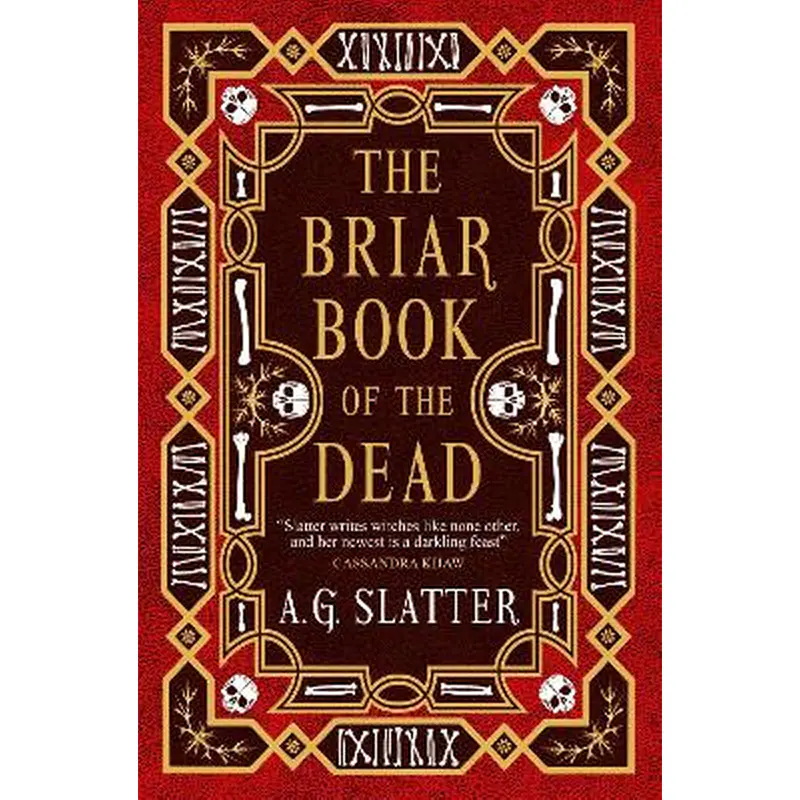
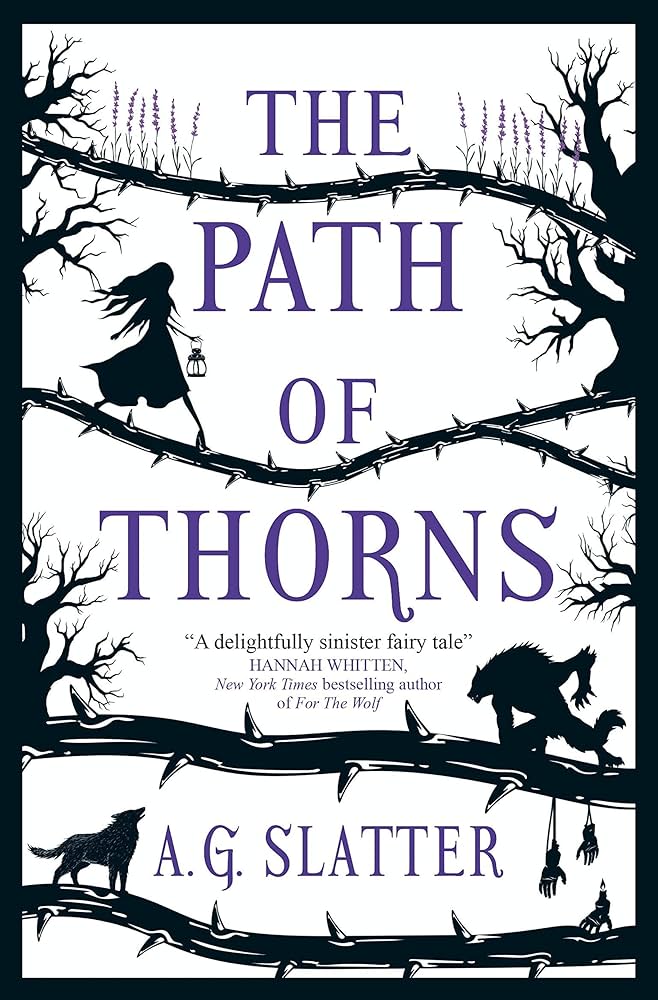
I feel like the first four novels cluster together nicely (All the Murmuring Bones, The Path of Thorns, The Briar Book of the Dead, The Crimson Road), then the next three will do the same kind of thing. In my brain, there’s a vaguely coherent (kind of) plan to write towards a big finish novel called The Witches’ War – but I’m not quite there yet. I’ve pitched three more books to Titan, so we’ll see what happens there.
Looking at works from The Path of Thorns to The Briar Book of the Dead, a recurrent theme is the institutional oppression of women, specifically the denial of education, medical knowledge, and agency by church-like structures. In A Forest, Darkly, Mehrab is literally hunted by “godhounds.” How does this novel continue, or perhaps complicate, your exploration of how patriarchal power polices female knowledge and magic?
I don’t think I’m doing anything special – I’m just reflecting the real world back in fiction. Currently, women’s rights are being removed worldwide, either quietly or loudly, and it’s not looking good for us at this point. We’re taught to be polite. We’re taught we need to be pretty and polite and gentle or no one will like us.
We’re often taught this by our mothers because their mothers also taught them that and not being liked is the biggest fear because it means, shock! Horror! No one will marry you! You won’t get a mortgage and 2.5 children, and a family car. You won’t be like everyone else! And your mother will be judged because how could this child turn out so wrong?! Surely it’s the mother’s fault. It’s a very Boomer mentality and it’s hard to shake.
In A Forest, Darkly I wanted one of the broad themes to be older women breaking away from that idea and showing the younger women that there are other ways to live, to be. You don’t have to want what everyone else has – but you also need to remember that it’s hard to live life off the same path as everyone else.
You need to know yourself – and that’s often something that only comes with age – so I like to think one of the things it maybe shows is that there are choices, and it’s worth being true to yourself. Just because you don’t have what everyone else does, doesn’t mean your existence is worthless. If it makes you happy, it’s invaluable.
I think one of the ideas in A Forest, Darkly is that we’re seeing a period of “cracking down” on these rebel witches – because if they refuse to be part of the societal structure that benefits patriarchy, then Oh NO! Other women might do the same thing and the whole thing will collapse and men will have to darn their own socks. So, it’s not just a fantasy book, is it? Churches are run by the patriarchy for the benefit of the patriarchy – it’s all about power. If women don’t buckle under and keep giving their free labour because of a promise of “true love” and “protection” then both church and patriarchy fall apart.
Your protagonists are rarely simple saints or sinners. Asher Todd in The Path of Thorns has been described by some as a badass heroine filled with “determination and rage”. Similarly, Mehrab is battling her own demons while also trying to save a family. Why is it important for you to write heroines who are “flawed,” “frail,” and “frightened” as well as “brave” and “bold”?
Because I don’t think anyone’s just one thing or the other. I don’t think characters who are one-dimensional are at all interesting – at least not to me as a writer. And I think we all do bad things and we all do good things in our lives. I’ve always been fascinated by ideas about redemption – not in a religious way, but more in a karmic fashion; life’s about balancing the scales. If you’ve done something terrible in your life – especially when you were younger and it’s a thing you wouldn’t do now – then can you ever atone? How do you redeem yourself?
What’s the cost? What are you prepared to give? And I don’t believe that making up for bad deeds is about being afraid of a god who will punish you – it’s about being right with yourself and not letting the memory of bad deeds, poor choices, fester for the rest of your life. Apology isn’t enough – you need to change behaviours or it’s just lip service and means nothing. I guess I want to write characters that I believe can be better and who try to do better.
Asher doesn’t go to Morwood Grange to do good. She goes there to try and fulfil a promise (a bad, ill-considered promise), and she is also a very flawed creature, terribly abused in life. But I think she finds her redemption, she gets to a point where finding a release for herself isn’t worth it in terms of the damage she’d have to do – that’s moment she starts climbing out of the pit towards being a better person.
Forests are central to the Gothic and fairy-tale imagination; they are places of transformation, danger, and refuge. Mehrab’s forest is clearly all three. This leads to a more personal question: If you could disappear into a forest to live, like Mehrab, or perhaps Lavinia from your earlier work, would you? And what books would you absolutely have to smuggle in with you?
Ha! Every so often I do think “Must disappear into forest and become the thing that scares the villagers”, but then I remember that I love coffee and danishes and I hate to cook, so I need to be close enough to get to a café. I think it was one of the things playing on my mind with Mehrab: how far away can your cottage be from the village that you won’t get a lot of random drops-ins, but also close enough that you can walk into town and get the things you can’t make for yourself?
The books! It would have to be a complete set of Tanith Lee’s works because she was so prolific. All of Umberto Eco’s novels and commentary on modern life for the days when I’m feeling clever. An old set of Encyclopaedia Britannica, an Oxford Classical Dictionary and Brewer’s Phrase and Fable for reference. All of John Connolly’s novels. All of the anthologies Ellen Datlow and Terri Winding have edited. All of Mike Mignola’s graphic novels.
Is that enough? No. It is not.
Critics have noted that your prose often feels “reminiscent of oral storytelling,” as if these are “legends that have been handed down”. When you are writing a novel set in this world, do you hear the voice of a storyteller speaking these tales aloud?
I do. I can’t write until I hear the voice, until I’ve got a name for the narrator and I hear the first time she makes an observation about the world/situation she’s in. I need to know there’s something I’d empathise with – not even like, but just some reason I will have a moment where I go “Wouldn’t have made that choice myself, but I can see why you did.” My mother and grandmother read and told me tales when I was a kid, and I remember that as absolutely magical, having someone knit something up from inside themselves, to give you the gift of their time and their voice, to tell you a story that transported you.
I also remember listening to comedians like Dave Allen who was an incredible raconteur, had a real gift for leading a listener along the path of a story, and I think that’s one of the places I learned about the pacing of a story, how to keep people interested. So, I hope it’s something I’m able to do with my writing.
Your work is frequently described as existing at the crossroads of fairy tales and Gothic horror. Reviewers of The Path of Thorns described it as a “twisted Gothic fairy tale” perfect for fans of House of Hollow. Why do you think this intersection, the blending of the familiar, moralistic structure of fairy tales with the dread of folk horror, is so potent and appealing to modern audiences?
I think we recognise fairy tale patterns because we’re told those sorts of stories as kids, even though they weren’t originally for children – everyone listened to them. I think that we become very familiar with them and there’s a kind of encoding that happens, so that if I write the words “a wolf in the woods”, then anyone familiar with Little Red Riding Hood will immediately get a visual image or a frisson that the story had for them when they were children.
It’s the way I felt when I first read an Angela Carter story – and the Neil Jordan film of The Company of Wolves is basically like the wallpaper inside my brain. It just strikes such a strong chord for me.
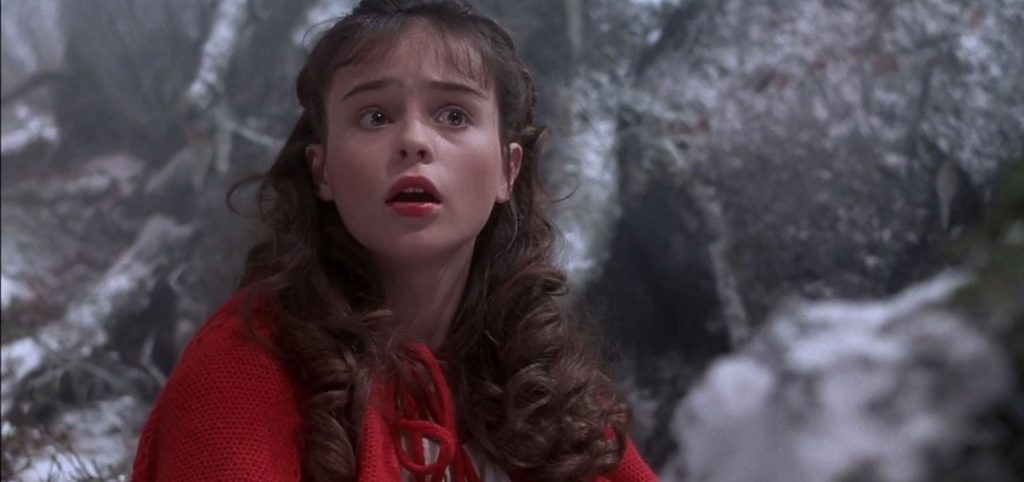
Think about the fairy tale girls are sold of happily-ever-after – which is never actually described, but we’re told over and over that that’s what we want, that’s what we aspire to, so there are all these women rushing into marriages because they get to wear a princess dress and tiara for a day without thinking that it is literally ONLY for a day. You’re signing up to cooking dinners and cleaning toilets for the rest of your life… But the pull and promise of that fairy tale you’re told in childhood is enough to support a multi-million-dollar wedding industry… All because of a once-upon-a-time…
You’ve received significant acclaim for your style of “reloading” fairytales. While A Forest, Darkly appears to be an original story rather than a direct retelling, it certainly evokes the atmosphere of tales like “Vasalisa” or “Hansel & Gretel.” Do you see this novel as being in conversation with specific fairy tale traditions?
I wanted to explore the idea of the witch in the woods. How far might you run to get out of contact with other people, away from danger, away from your own past. I also wanted to examine the idea that while many of us are in love with the idea of absolute solitude, absolute solitude is actually quite grinding after a while.
Even with books, most of us do go looking for someone to talk to eventually. So, it’s also an examination of what community is and hopefully should be – and also where it fails. The idea that even if you’re not a people person, you will probably still need to engage with others on a regular basis just in order to live and not become entirely feral.
I wanted the witch in the woods not to be what you expected. I wanted her to be a surprise. Amal El-Mohtar’s short story “John Hollowback and the Witch” in The Book of Witches (Jonathan Strahan, ed.) does something similar.
When I was first thinking about the book and considering the tales that might have an echo with it, Hansel and Gretel definitely rang through, ideas about Baba Yaga and Vasilisa, Little Red Riding Hood, and also riffing on the idea of the green man turned into a green woman. I hope I’m at the point now where, as I writer, I can blend the traditional with something new and “mine” so that a reader gets the echoes of the old but is refreshed by the new, and it all feels seamlessly woven in.
Finally, looking beyond A Forest, Darkly, you have a contemporary horror novella, The Cold House. It’s always exciting to see an author renowned for gothic fantasy pivot to contemporary horror. What can readers expect from Angela Slatter in the future? Are we likely to see more of the Sourdough universe, or are there other genres and shadows you’re looking to explore?
I literally just handed in (Monday at 3.31am) the next Sourdough novel, Our Lady of Battles, which is one I’ve been thinking about for ten or so years (maybe more), but it’s finally crystalised for me. It’s a kind of a riff on the idea of how Loki always says he’s “burdened with glorious purpose” – so what if the Princess Emlyn Mentoras, the last of her family, has been given a burdensome glorious purpose or a gloriously burdensome purpose not of her own choosing? She’s fought for something for years and years, it’s within reach – what happens now?
After that is The Scarred Queen, which I think will be a pirate tale. Currently that’s the last of the contracted Sourdough world novels.
In October another contemporary horror novella, Fitcher’s Bird, will be published and I’m about to start writing the third novella, By Fire, By Water. That is it for the moment! I think that’s enough, yes?
A Forest Darkly by A.G. Slatter
Perfect for fans of Ava Reid and Lucy Holland, this is a page-turning dark fantasy of persecuted witches, snatched children, twisted magic, changelings and the sins that bind.
Set in the multi-award-winning author’s acclaimed Sourdough universe, this standalone story sits alongside previous novels, including All the Murmuring Bones and The Briar Book of the Dead.
Deep in the forest lives Mehrab the witch, quietly battling her demons. One evening, a young woman arrives at her door pursued by god-hounds, who wish to destroy all those practising magic, and Mehrab’s solitary existence is disrupted. Together they forge a cure for their isolation with heartbreaking consequences… Meanwhile, in the local village, children begin to disappear. Sinister offerings appear on Mehrab’s doorstep, and a dark power pursues her through the trees. As the villagers turn hostile and the god-hounds close in, Mehrab finds herself at the centre of a struggle to save the soul of the forest, the life of an old love – and her own new-formed family.
Set in Slatter’s bewitching gothic Sourdough universe, this is a haunting, gripping tale written with wit and heart. A book to both savour and devour.
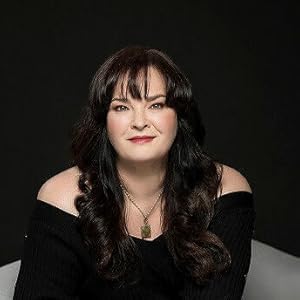
A.G. Slatter
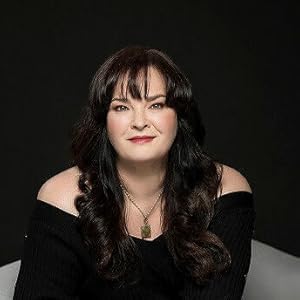
A.G. Slatter is the pen name of Angela Slatter, the author of the gothic fantasy novels All the Murmuring Bones and forthcoming The Path of Thorns (Titan Books), and the supernatural crime novels Vigil, Corpselight and Restoration (Jo Fletcher Books). She’s also written eleven short story collections, including The Girl with No Hands and Other Tales, Sourdough and Other Stories, The Bitterwood Bible and Other Recountings, and A Feast of Sorrows: Stories, and the novellas, Of Sorrow and Such and Ripper.
Vigil was nominated for the Dublin Literary Award in 2018, and Angela has won a World Fantasy Award, a British Fantasy Award, a Ditmar, two Australian Shadows Award and seven Aurealis Awards. All the Murmuring Bones was shortlisted for the Queensland Premier’s Literary Awards’ Book of the Year in 2021.
Angela’s short stories have appeared in Australian, UK and US Best Of anthologies such The Mammoth Book of New Horror, The Year’s Best Dark Fantasy and Horror, The Best Horror of the Year, The Year’s Best Australian Fantasy and Horror, and The Year’s Best YA Speculative Fiction. Her work has been translated into Bulgarian, Chinese, Russian, Italian,
Spanish, Japanese, Polish, Hungarian, Czechoslovakian, Turkish, French and Romanian. Film rights have been optioned for her novelette “Finnegan’s Field”.
She has an MA and a PhD in Creative Writing, is a graduate of Clarion South 2009 and the Tin House Summer Writers Workshop 2006, and in 2013 she was awarded one of the inaugural Queensland Writers Fellowships. In 2016 Angela was the Established Writer-in-Residence at the Katharine Susannah Prichard Writers Centre in Perth. She has been awarded career development funding by Arts Queensland, the Copyright Agency and the Australia Council for the Arts.
Essential Horror Interviews on Ginger Nuts of Horror
For true devotees of the dark and macabre, Ginger Nuts of Horror stands as a premier destination for exclusive horror author interviews and in-depth horror director interviews. Our curated conversations go beyond the surface, offering unparalleled access to the visionaries shaping modern horror.
Why Read Our Horror Creator Interviews?
1. Uncover Creative Processes & Inspirations
Step inside the creative minds behind your favorite nightmares. Our interviews dissect the inspiration behind iconic horror stories and films, exploring how masters of the genre conjure fear. Learn how horror authors develop chilling narratives and how horror directors translate terror to the screen.
2. Gain Unique Industry Insights & Career Advice
Navigate the horror industry with wisdom from those who’ve succeeded. Our conversations provide practical advice for aspiring horror writers and filmmakers, covering:
- Breaking into horror publishing or film
- Overcoming creative and professional hurdles
- Understanding evolving horror trends and audience expectations
3. Explore the Psychology & Culture of Fear
Delve deeper into what makes horror resonate. Our interviews examine the psychology of fear, how horror reflects societal anxieties, and the genre’s exploration of themes like morality, existential dread, and identity.
4. Connect with a Community of Horror Enthusiasts
Join a vibrant community. Each interview sparks discussion, allowing you to engage with fellow fans and sometimes the horror creators themselves through comments and social media.
Featured Insights from Horror’s Finest
Our archive includes conversations with legendary horror authors discussing craft, and visionary horror directors breaking down their filmmaking techniques. Find guidance, inspiration, and a deeper appreciation for the art of horror.
Ready to explore? Visit the Horror Interview Section on Ginger Nuts of Horror today. It’s your essential resource for connecting with the minds that define fear, perfect for fans, aspiring writers, and future horror directors alike.
Searching for the best horror author interviews or seeking wisdom from horror directors? You’ve found your source. Click here to start reading now.