
When Hollywood Gave Cockroaches Superpowers: A Loving Look at Bug (1975) and Damnation Alley
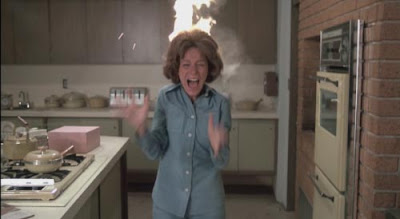
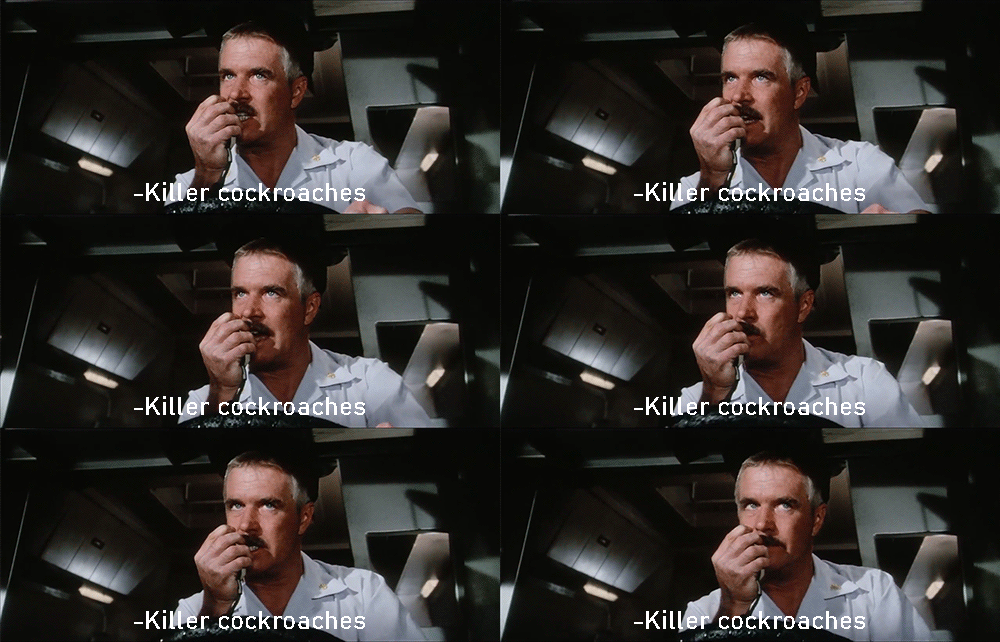
Sci-fi horror in the 1970s had a peculiar obsession. After the ecological anxieties of the early part of the decade, filmmakers started looking at the insect world with fresh, paranoid eyes. Two films stand out for their commitment to one unlikely creature: the cockroach. Bug (1975) and Damnation Alley (1977) both feature mutant cockroaches as central threats, but their approaches could not be more different. The former gives us pyromaniac roaches from a hellish fissure. The latter drops armoured, flesh-eating monsters into a post-apocalyptic road trip. Comparing these two mutant cockroach movies reveals a lot about how B-movie terror evolved in just two short years.
Fire-Starter Roaches vs Armoured Killers: Dissecting the Mutant Cockroach Genius of Bug (1975) and Damnation Alley
“Bug and Damnation Alley aren’t good movies. They’re better than that. They’re sincere, bizarre, and surprisingly lovable attempts to turn cockroaches into legitimate threats. One gives you fire-starting roaches from hell. The other drops armored killers into a post-nuclear road trip. Neither succeeds entirely. Both are unforgettable.”
I have a theory. Somewhere in the mid-1970s, a studio executive looked at a cockroach scurrying across his desk and thought, “You know what this little guy needs? A flamethrower.” Or maybe it was nuclear fallout. Either way, we ended up with two of the strangest insect-centric sci-fi films ever committed to celluloid. Bug (1975) and Damnation Alley (1977) share a common pest and little else. One is a slow-burn psychological horror about a scientist losing his grip on reality while playing god with fire bugs. The other is a post-nuclear road movie where giant roaches snack on George Peppard’s colleagues.
Let’s be clear about something upfront. Neither film is good in the conventional sense. Critics didn’t exactly roll out the red carpet. In a 2025 retrospective, one piece noted that Bug “has surprisingly few moments of genuine horror” and that its special effects are “underwhelming,” with roaches lacking “the menacing quality that one might expect from a creature feature”.
The AV Club described Damnation Alley as a film where “the effects are awful—Irwin Allen television show awful”. IGN called it “trashy, awful” but admitted it was “ambitious”. Another reviewer for The Spinning Image noted that Damnation Alley would have been released a year earlier if not for the post-production work on the sky effects in every outdoor scene. The film reportedly cost a staggering $17 million back then, which makes its cheap-looking rubber bugs even funnier.
But here’s the thing. I like them anyway. Not in spite of their flaws, but because of them. These movies have the kind of earnest, unselfconscious weirdness that modern blockbusters can only dream about. And the cockroaches? Oh, the cockroaches are a delight.
The Fiery Little Menaces of Bug (1975)
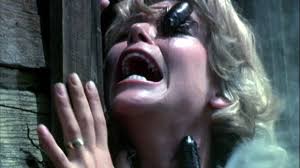
Let’s start with the film that takes its name from the creature itself. Bug, directed by Jeannot Szwarc (who would go on to make Jaws 2 and the cult romance Somewhere in Time), opens with an earthquake. This isn’t just any earthquake. This is one of those movie earthquakes that splits the ground open like someone unzipping the earth’s pants, revealing a glowing reddish fissure that one blogger aptly described as “indicative of a gateway to Hell, replete with literally smoking denizens”.
Out of this hellmouth crawl some very unusual cockroaches. They’re large, sluggish, and they have a party trick. When threatened, they rub their cerci together to produce sparks. Then flames. Then full-on vehicular homicide via car exhaust pipe ignition.
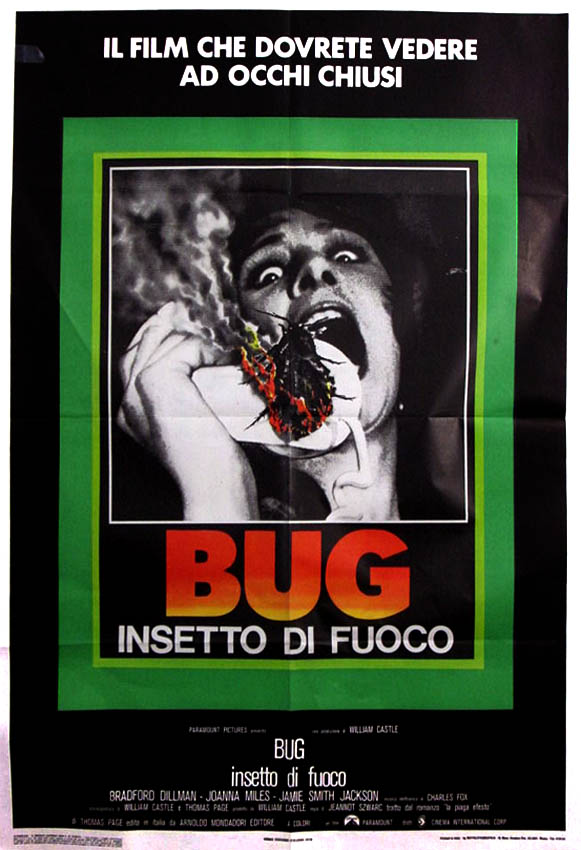
The plot, such as it is, follows Professor James Parmiter (Bradford Dillman), a widowed scientist who becomes obsessed with these creatures. He crossbreeds them with ordinary cockroaches, creating a breed of intelligent, flying super-cockroaches. This is where things get weirdly philosophical. The film initially depicts a new insect species facing extinction, and Parmiter frames his intervention as a form of salvation.
But the film scholar in me (the one who watches too many B-movies) might read this as a classic mad scientist narrative. The professor doesn’t just study the roaches. He becomes like them. There’s a reading of the film that suggests the cockroaches represent unchecked hubris and technological overreach. Or maybe they’re just bugs that set things on fire. Sometimes a cigar is just a cigar, and sometimes a fire-starting roach is just a fire-starting roach.
The most memorable scene? Late in the film, Parmiter re-introduces a mother cockroach to her offspring. They kill her. The professor sobs. It’s a genuinely bizarre moment of pathos for a B-movie about killer bugs. As one Letterboxd user put it, “This is the kind of movie that is best enjoyed with a group of friends, popcorn in hand, ready to revel in its delightful silliness and occasional scares”.
And then there’s the ending. Without spoiling too much, Parmiter gets his comeuppance in a way that emphasises the parallels between him and his creations. The roaches drag him into the same fiery crevice from which they emerged. It’s the cinematic equivalent of a mic drop, if the mic was on fire and being dragged into hell by angry insects.
The Armored Terrors of Damnation Alley (1977)
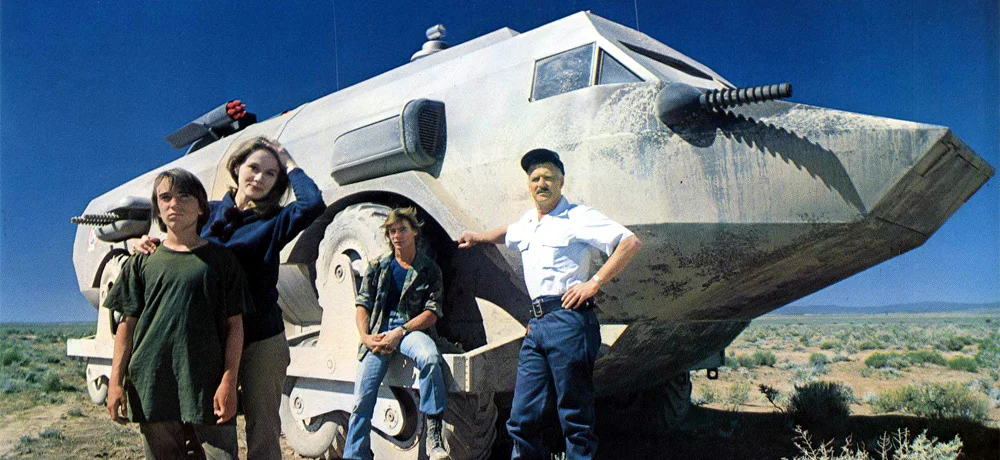
Now let’s talk about Damnation Alley. This film has a reputation that precedes it. Based on a novel by Roger Zelazny (who reportedly hated the finished product), it was meant to be Fox’s answer to Star Wars. Instead, it became a legendary flop. The production was plagued by delays, budget cuts, and the baffling decision to add complex optical effects to make the post-apocalyptic skies look “irritated,” which pushed the release to December 1977.
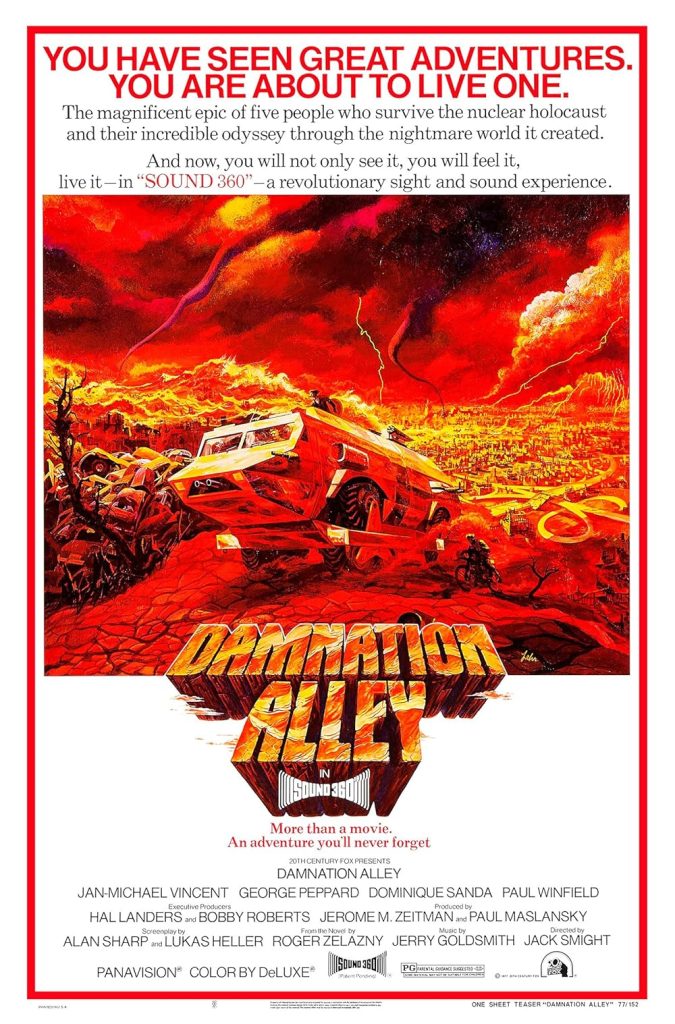
The premise is classic 1970s paranoia. Nuclear war has knocked the Earth off its axis. The skies are green and purple. A small group of Air Force survivors travels from a California base to Albany, New York, in a ridiculously awesome armored vehicle called the Landmaster. Along the way, they encounter giant scorpions, crazed survivalists, and yes, mutant cockroaches.
The cockroach encounter happens in the ruins of Salt Lake City. The film describes them as “flesh-stripping giant cockroaches” and they live up to the name. One character, Keegan, gets eaten alive while trying to pump gas. The cockroaches themselves are played by actual Madagascar hissing cockroaches, which are about three inches long and, in reality, quite harmless. But the film tries to sell them as armored killing machines. Wikipedia notes that “large numbers of rubber bugs … looked unconvincing onscreen as the strings pulling mats covered in fake insects were plainly visible”.
And yet. There’s something charming about the sheer audacity of it. Here’s a film that treats giant cockroaches with the same solemnity that The Road treats existential despair. The cast plays it straight. George Peppard, Jan-Michael Vincent, and Paul Winfield deliver lines like “The town’s infected with cockroaches” with the gravity of Hamlet contemplating mortality. The Landmaster, which cost $350,000 to build, deserves its own spin-off. It’s a six-wheeled, two-engine behemoth that looks like a school bus designed by someone who really hated pedestrians.
A Brief Stroll Through Cockroach Cinema
Bug and Damnation Alley weren’t working in a vacuum. The 1970s and 1980s saw a small explosion of cockroach-themed horror. The Nest (1988) features roaches that can fuse with anything they kill. Mimic (1997), directed by Guillermo del Toro, gave us the Judas Breed, a genetically engineered cockroach species that evolves to mimic humans. There’s the gloriously weird Joe’s Apartment (1996), where the roaches sing and dance and help a guy get the girl. And let’s not forget the segment in Creepshow (1982) about the cockroach-phobic woman who meets a suitably ironic end.
But most of these came later. Bug and Damnation Alley were pioneers. They established the template. Cockroach + environmental catastrophe + hubris = profit. Or, in this case, cult status.
The Great Cockroach Face-Off
So which film does the mutant cockroach better? The honest answer is neither. But if you force me to choose, I’ll break it down.
Bug treats its roaches with something approaching respect. They’re not just mindless killers. They have a life cycle. They have social dynamics. The film is interested in them as creatures, even if the execution is clunky. The fire-starting gimmick is legitimately clever in a comic-book sort of way. Who hasn’t looked at a cockroach and thought, “I bet that thing could start a fire if it tried”?
But the pacing is a problem. Review after review notes that the film moves at a “woefully slow” pace, and they’re not wrong. It takes forever to get to the good stuff. And the ending, while thematically interesting, feels rushed.
Damnation Alley, on the other hand, gets in, gets out, and lets the roaches do their thing. The Salt Lake City sequence is tense and gross in the best possible way. The giant superimposed scorpions are hilarious. But the cockroaches themselves are almost an afterthought. They show up, eat one guy, and then the film moves on to storms and outlaws and the inexplicable flood in Detroit. For a movie that features “armour-plated killer cockroaches” in its marketing, they get surprisingly little screen time.
In a 2015 eco-media essay, scholars Heumann and Murray argued that Damnation Alley “illustrates how cockroaches might transform into killers after a nuclear holocaust,” positioning the film within a broader conversation about Cold War anxieties and environmental collapse. That might be overthinking it. Or maybe it’s exactly right. These films reflect a moment when Americans were genuinely worried about what we were doing to the planet. The cockroaches were the bill coming due.
The Verdict (Such as It Is)
Here’s the truth. You shouldn’t watch Bug or Damnation Alley because you want a good movie. You should watch them because you want to see what happens when sincere craftsmanship meets absolutely bonkers premises. Bug is the more thoughtful of the two, a film that one reviewer noted “makes a weird sort of compelling movie-land” sense even when its science falls apart. Damnation Alley is the more purely entertaining, a film whose ambitions far exceeded its budget and whose failures are more interesting than most films’ successes.
The Madagascar hissing cockroaches that appear in both films (used live in Damnation Alley, presumably as reference or actual creatures in Bug) have become unlikely movie stars. They didn’t ask for this. They’re just bugs that hiss when you poke them. But Hollywood looked at them and saw something else. Fire-starters. Flesh-eaters. Harbingers of doom.
So the next time you see a cockroach scurry across your kitchen floor at 3 AM, don’t reach for the shoe. Pause for a moment. Consider what superpower it might have. Does it breathe fire? Is it wearing tiny armour? Has it been waiting two years for the radiation levels to drop so it can finally eat your leftovers?
Probably not. But the 1970s taught us to be prepared for anything.