What if love, pushed to its limits, creates the very thing it fears most?
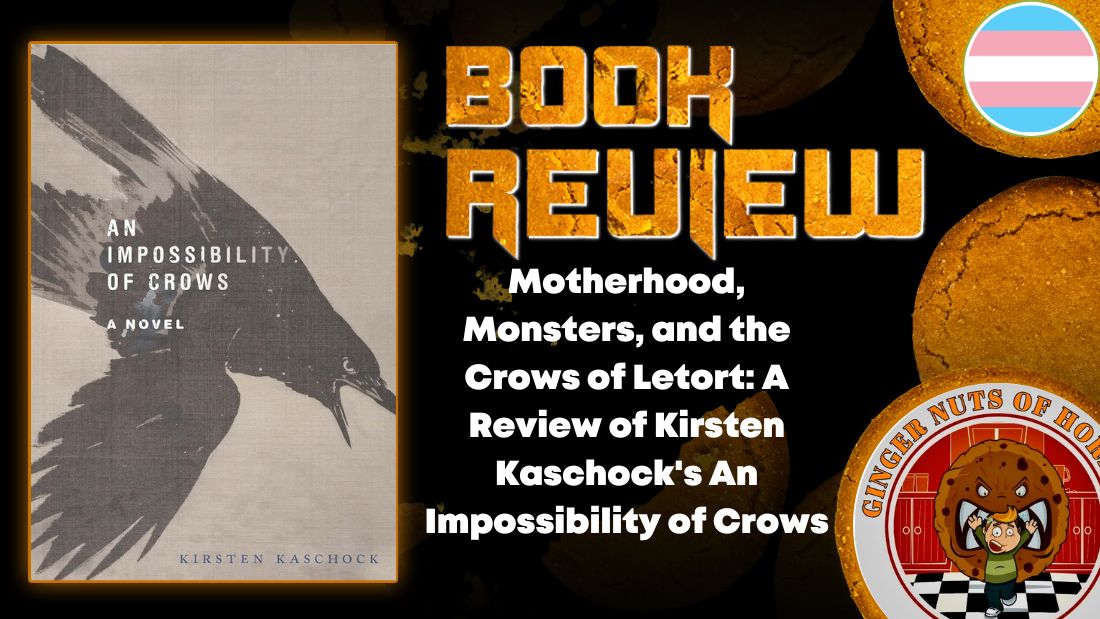
What does it mean to love someone so completely that you would reshape the natural world for them? And what happens when that reshaping becomes its own kind of violence? These questions sit at the heart of Kirsten Kaschock’s new novel An Impossibility of Crows, a book that takes the familiar terrain of maternal devotion and makes it strange, even terrifying. The novel follows Agnes Krahn, a Philadelphia-trained chemist who returns to her family’s farmhouse in Letort, Pennsylvania after her father’s death.
The town sits near the haunted fields of Gettysburg, and Kaschock uses this landscape to brilliant effect—the soil itself seems to remember things, to hold onto trauma like groundwater. Agnes comes home with her daughter Mina, hoping to settle an estate, but finds instead a family history steeped in folk belief and silence. Then she discovers an abandoned nest in the barn. What follows is a narrative that moves between diary entries and her late mother’s journals, between the present moment and the weight of generations.
Agnes begins an experiment: she will breed a crow large enough and intelligent enough to carry Mina to a freedom Agnes herself has never known. The bird grows. It learns language. It develops cunning. And the novel becomes something else entirely, a meditation on care and control, on the thin line between protection and possession, on whether love can become monstrous when shaped by unexamined trauma.
Kaschock, a Pew Fellow in the Arts and author of seven poetry collections along with the novel Sleight, writes with a poet’s precision and a horror writer’s instinct for dread. An Impossibility of Crows arrives in March 2026 from University of Massachusetts Press, and it deserves attention not just as genre fiction but as a literary work that uses the tropes of horror to ask serious questions about motherhood, legacy, and the stories we inherit.
The crow grows too fast. That’s the first thing you notice, the way the bird outpaces expectation, outpaces the careful scientific protocols Agnes tries to maintain. She’s a chemist by training, someone who believes in measurable outcomes and controlled variables, but the farmhouse pulls her back into older ways of knowing. The Krahns have lived on this land for six generations, bound by twisted folk wisdom and what the publisher’s copy calls “an uncanny kinship with the crows that loom over their land.” You can feel that loom on every page.
Kaschock structures the novel through fragments, diary entries, journal passages, and moments that slip between past and present. It sounds gimmicky when described. It doesn’t read that way. The fragmentation mirrors Agnes’s own unravelling, the way her scientific rigour gives way to something more obsessive, more desperate. The narrative is disorienting but precisely rendered. The disorientation isn’t chaos. Its design.
Here’s the thing about crows, about the collective noun for them. A murder, yes, everyone knows that one. But also: a horde, a mob, a storytelling. And an impossibility. That’s the term for a group of crows when they’re acting against expectation, when they do something that shouldn’t be possible. Kaschock knows this. The title isn’t decoration.
Agnes wants to breed a crow that can carry her daughter to freedom. Read that sentence again. Let it sit there. A bird large enough to lift a child, intelligent enough to navigate, loyal enough to bring her back? Or not bring her back. The freedom Agnes imagines might be a one-way trip. She never quite says this, never quite admits it to herself, and that refusal is the novel’s engine. The love that won’t examine itself. The care that becomes control because it can’t stop moving, can’t stop wanting.
The bird gets a name: Solo. Solo learns words. Solo develops a will. And Solo, like the crows in folklore, like the crows that have haunted the Krahn family for generations, starts to act like something that shouldn’t exist.
Kaschock has written poetry for years, seven collections, and you can feel that training in the prose. The sentences are clean but textured. She doesn’t overwrite. She doesn’t explain too much. Reading her style is like watching someone build a stone wall without mortar. Every word fits against the next, held in place by weight and friction, not by glue. There’s no excess. But there’s also no spareness that feels cold. The wall holds warmth.
The horror doesn’t come from the crow, not exactly. It comes from Agnes’s devotion, from the way love curdles into obsession without ever ceasing to be love. The bird is just the symptom. The disease is the family, the legacy, the stories that get passed down like heirlooms you never asked for.
This puts the novel in interesting company. You think of Frankenstein, obviously. The publisher’s copy makes that comparison explicit, and it’s earned. But also Jeff VanderMeer’s Annihilation, that sense of the natural world turning toward you in ways you can’t predict. Also, Helen Oyeyemi’s White is for Witching, another book about a house, a family, a female inheritance that feels like a curse. Also, Shirley Jackson, always Shirley Jackson, that particular dread of domestic spaces, of the things that happen in kitchens and bedrooms when no one’s watching.
But Kaschock does something different with the maternal angle. Frankenstein’s monster is born, abandoned, left to find his own way. The creature demands a mate, demands recognition, demands that his creator take responsibility. Solo is different. Solo is wanted, desperately wanted. Solo is the product of intention, of hope, of a mother’s desire to give her child something better. The tragedy isn’t abandonment. It’s the opposite. It’s the weight of too much care, too much wanting, too much need projected onto a creature that can’t possibly carry it.
Agnes’s mother, Ruth, hovers over the novel through her journals. She’s dead before the story starts, but her presence fills every page. The journals echo Agnes’s own diary entries, the same concerns, the same fears, the same desperate love. Kaschock weaves them together without commentary, letting the parallels speak for themselves. Generational trauma is a tired phrase at this point, overused until it’s lost most of its meaning. But here it feels fresh again. Here it feels like something is happening in real time, not a concept but a process, a slow poisoning of the ground.
The setting helps. Letort, Pennsylvania, near Gettysburg. The soil remembers the battle, remembers the blood. Kaschock doesn’t belabour this. She mentions it once or twice and moves on, trusting the reader to hold the connection. A town haunted by history. A family haunted by history. A woman haunted by her mother. The crow rises from all of it.
Kaschock’s background in poetry shows in the imagery. Crows on the page, crows in the air, crows watching from fence posts and barn roofs. They accumulate. They watch. They wait. The collective noun feels right: an impossibility of crows, a thing that shouldn’t happen but does, a gathering that defies explanation. By the end, you’re not sure if the crows are real or metaphorical, and it doesn’t matter. The line between them has dissolved.
The book runs a little over 200 pages, depending on the edition. It’s short but dense. You could read it in an afternoon. You shouldn’t. This is a book that needs space, that needs you to sit with it between chapters, that needs the silence after the last page. Kaschock trusts her readers to hold complexity, to sit with discomfort, to resist the urge for easy answers.
If there’s a weakness, it’s that the secondary characters can feel like outlines. Mina, the daughter, remains somewhat distant. We see her through Agnes’s eyes, through Agnes’s hopes and fears, and that means we never quite get her on her own terms. Maybe that’s intentional. Maybe the point is that Agnes can’t see her daughter clearly, can only see what she wants Mina to become. But I wanted a moment where Mina pushes back, where she speaks for herself.
Then again, that’s not the story Kaschock is telling. This is Agnes’s book, Agnes’s unravelling, Agnes’s desperate attempt to break the pattern by repeating it. The mother’s tragedy is that she can’t see her daughter clearly. The reader’s tragedy is that we can’t either.
March 2026 is when it arrives. University of Massachusetts Press publishes it, which means it won’t have the marketing budget of a big house, won’t be in every airport bookstore, and won’t be the book everyone’s talking about. But it will find its readers. It will pass from hand to hand, recommended in quiet tones. It will last.
Here’s what I keep coming back to: the question of whether love can become harm. Not malice, not cruelty, but harm delivered with good intentions, harm wrapped in care, harm that looks like devotion because it is devotion. Agnes loves Mina. Agnes would die for Mina. Agnes would also reshape the world for Mina, would bend nature to her will, would create a creature that shouldn’t exist. And that love, that fierce, impossible love, is what makes the novel hurt. Because you understand it. Because you recognize it. Because you’ve felt something like it, maybe, and wondered where it leads.
The crow grows too fast. The crow learns to speak. The crow becomes something that can’t be controlled. And Agnes, watching, still loves it. Still wants it to succeed. Still believes, against all evidence, that this will work, that Mina will fly, that freedom waits on the other side of the impossible.
You think about what you’d do for the people you love. What you’d create. What you’d unleash.
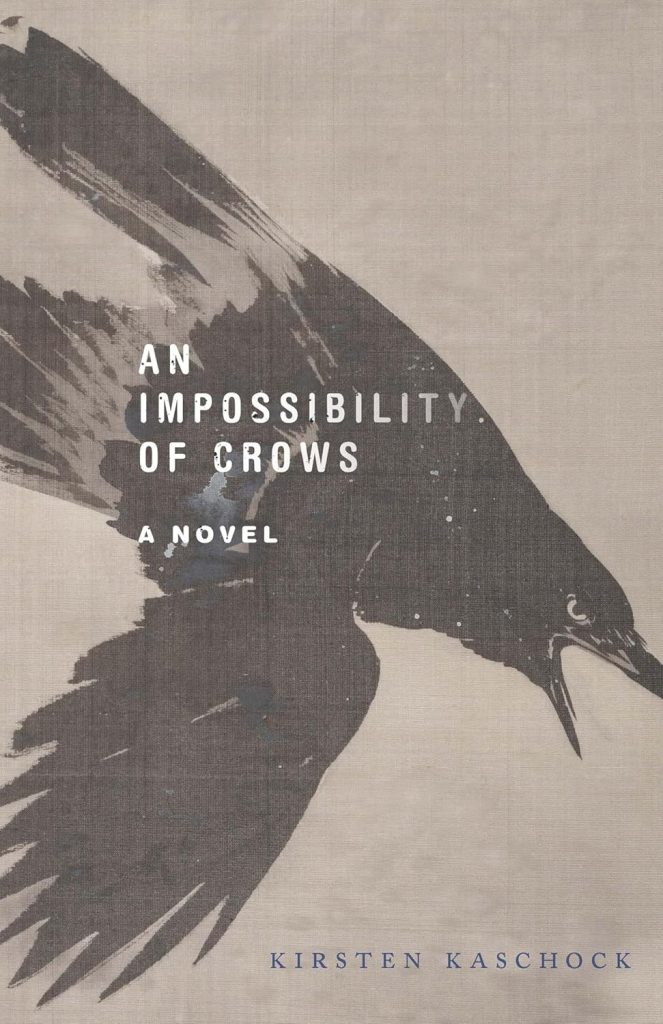
An Impossibility of Crows by Kirsten Kaschock
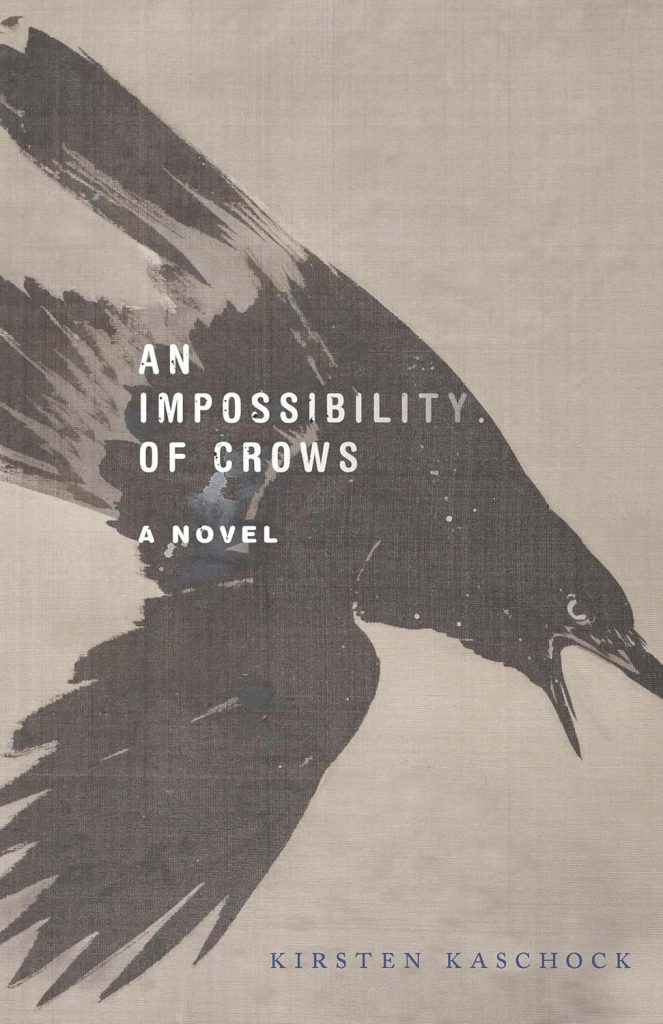
A story of mothers, monsters, and the science of longing
In this daring and evocative tale, Agnes Krahn, a chemist trained in Philadelphia, returns to her childhood home after the death of her father. Just a stone’s throw from the haunted fields of Gettysburg, the small town of Letort, Pennsylvania is where the Krahn family has lived for six generations—bound by twisted folk wisdom and an uncanny kinship with the crows that loom over their land.
Back in the grim farmhouse of her youth, Agnes is drawn into the strange legacy she tried to leave behind. When she discovers an abandoned nest in the barn, she becomes consumed by a scientific—and deeply personal—experiment: to breed a crow large and intelligent enough to carry her daughter, Mina, to a freedom Agnes has never known herself. As the bird grows, so does its terrifying potential—manifest in language, cunning, and a violent will of its own. What begins as a gesture of love and liberation turns darkly obsessive, echoing the dangerous ambition of Frankenstein’s monster and the generational trauma buried in the soil of her family’s past.
A thoroughly modern, feminist novel, this is a story of mothers and daughters, inheritance and isolation, and the thin line between care and control. It confronts themes of self-harm and self-preservation, as well as memory and myth, in a narrative as visceral and uncanny as the bird that rises at its heart.
Horror Book Reviews: Ginger Nuts of Horror, Your Premier Horror Website for 17 Years
For every horror enthusiast searching for authoritative horror book reviews and a definitive horror website, your journey ends at Ginger Nuts of Horror. As a trusted pillar of the dark fiction community, we have spent over 17 years building a reputation for the most passionate, insightful, and credible coverage in the genre.
Our dedicated team of reviewers lives and breathes horror. Our collective expertise, forged over nearly two decades, ensures every review is a deep, critical analysis. We don’t just summarise plots; we dissect the terror, explore the thematic depths, and connect you with the very emotional core that makes horror books so compelling.
Why Ginger Nuts of Horror is the #1 Resource for Horror Fans
Unmatched Depth & Legacy in Horror Book
Reviews: With 17 years of reviewing horror, we offer an unparalleled perspective. Our reviews expertly guide you from mainstream bestsellers to under-the-radar indie gems, helping you find your perfect, terrifying read.
Exclusive Access to Horror Authors: Go behind the scenes with in-depth interviews that reveal the minds behind the madness. We connect you with both legendary and emerging horror authors, exploring their inspirations and creative processes.
Award-Nominated Authority & Community: Founded by Jim McLeod, Ginger Nuts of Horror has evolved from a passion project into an award-nominated, essential horror website. We are a global hub for readers who celebrate horror literature in all its forms, from classic ghost stories to the most cutting-edge dark fiction.
Experience the Difference of a Genre-Dedicated Team
What truly sets us apart is our dedicated team of reviewers. Their combined knowledge and authentic enthusiasm ensure that our coverage is both intelligent and infectious. We are committed to pushing the genre forward, consistently highlighting innovative and boundary-pushing work that defines the future of horror.
Ready to dive deeper?
For horror book reviews you can trust, a horror website that champions the genre, and a community that shares your passion, Ginger Nuts of Horror is your ultimate destination. Explore our vast archive today and discover why we’ve been the top choice for horror fans for over 17 years.