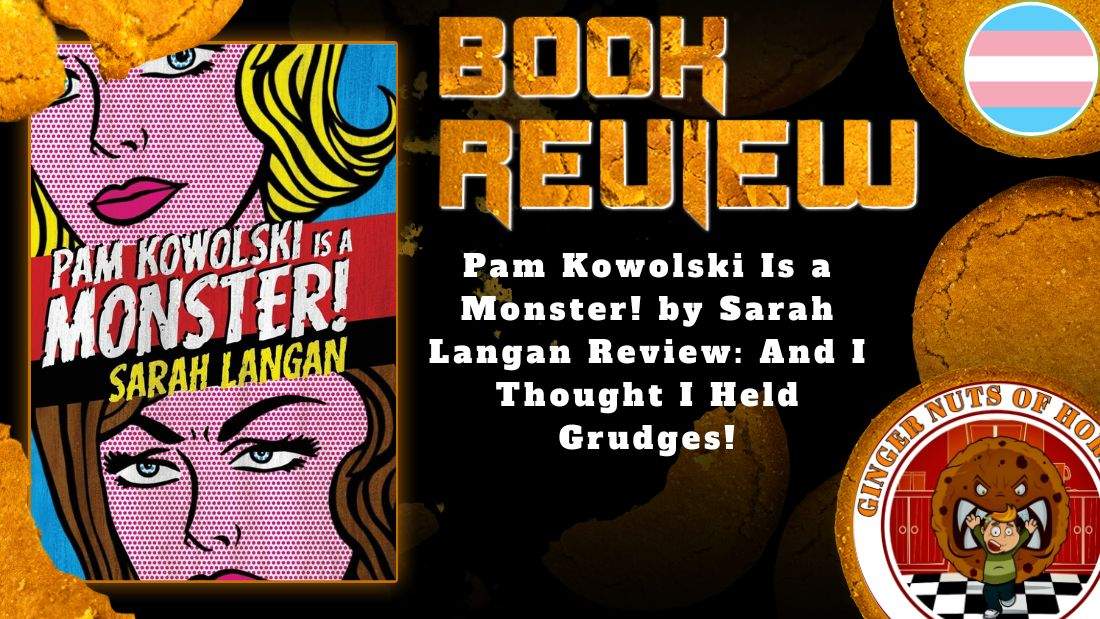
PAM KOWOLSKI IS A MONSTER
Sarah Langan | Raw Dog Screaming Press | May 2025
Sarah Langan’s Pam Kowolski Is a Monster! arrives from Raw Dog Screaming Press as 119 pages of concentrated, satirical psychological horror that knows exactly what year it’s operating in. The novella follows Janet Chow, a failed journalist who recognises her high school nemesis on TV, now reborn as “Madame Pamela,” America’s favourite doomsday psychic, and sets out to destroy her.
What follows is part unreliable-narrator horror, part dark comedy about influencer culture and class anxiety, and part ghost story about the versions of our past we carry instead of the true ones. Langan makes it look effortless. It absolutely is not.
Sarah Langan builds her horror from the inside out, starting with a woman whose grudge has calcified into a worldview and letting the structural rot spread from there. Bitter, funny, and genuinely frightening, Pam Kowolski Is a Monster! dismantles the stories we construct to explain our failures, and then, quietly, dismantles the world around them.
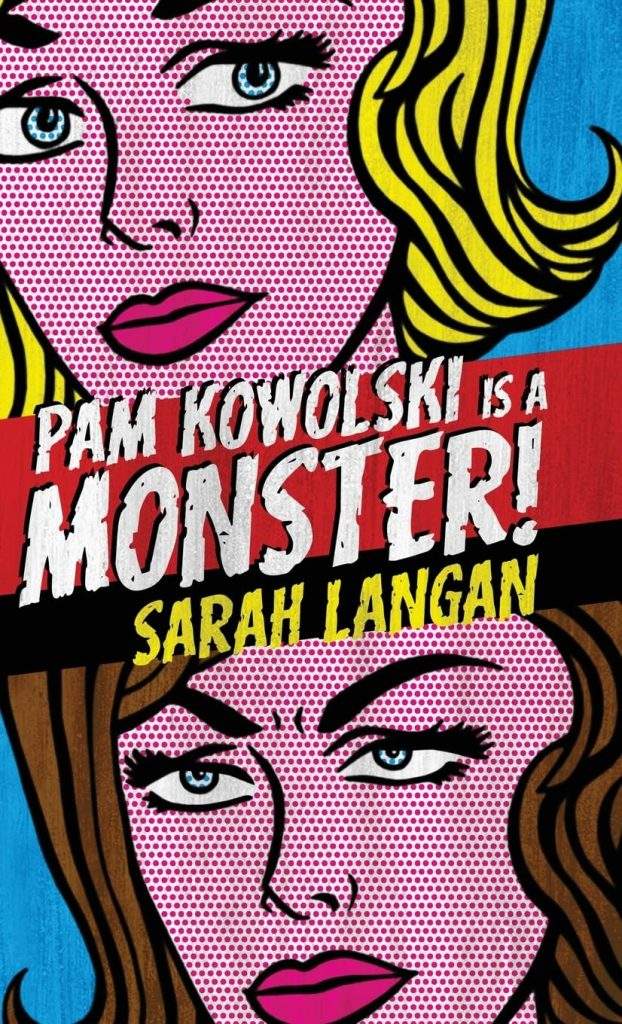
Pam Kowolski Is a Monster! by Sarah Langan Review: And I Thought I Held Grudges!
Janet Chow has spent twenty years building a grudge so load-bearing she’s mistaken it for a personality.
That’s where Pam Kowolski Is a Monster! begins, and it’s a hell of an entry point. Sarah Langan’s novella arrives from Raw Dog Screaming Press at a lean 119 pages, and it does in that space something a lot of longer books spend twice the real estate failing to pull off: it makes you genuinely uncertain whether the horror you’re reading is supernatural, psychological, or a particularly vicious comedy of self-delusion.
Often, by the final act, it feels like all three simultaneously. The book is a burn that starts small and ends with the walls on fire.
Janet is a failed journalist grinding out her days at a company called Congo, an obvious and affectionate skewering of Amazon, living in an Astoria, Queens walk-up she describes with such pitch-perfect grimness (white bedsheets spread over filthy old carpet to kill the dust mould, giving the whole apartment the look, she notes, of a perpetual crime scene) that you feel the dampness of it. Her life has the quality of a fruit going soft.
She was supposed to be someone. Then she spots Pam Kowolski on TV, her high school nemesis, except Pam is now “Madame Pamela,” America’s favourite psychic, sitting atop a gleaming online empire and counting down toward some unnamed Big Reveal that the world is treating with the feverish seriousness we now extend to doomsday influencers.
Reading the first third of the book feels like watching a very good, very mean sitcom about millennial disappointment. The dread is ambient, not acute. Langan lets Janet’s voice run hot, and it’s a pleasure to be inside a narrator this corrosively funny, this unaware of herself. The comedy is the tension. Somewhere around the halfway mark, however, the geometry shifts.
The repressed memories start surfacing. The nosebleeds start. The suicides accumulate in the world around Janet like bad weather. Langan handles the escalation with the confidence of someone who knows exactly when to stop being funny and start being frightening, and the transition is almost imperceptible until you’re already somewhere very dark.
The dread architecture here is not the slow-build creep of folk horror or the sustained crush of cosmic dread. It’s more like a pane of glass developing a hairline fracture. Everything seems fine, then slightly wrong, then structurally compromised. By the time Janet arrives at Pam’s mansion to conduct the interview that might revive her career, the world of the novel has warped enough that even the physical environment feels suspect.
The novella’s famous in medias res opening, which plants you at the moment the Big Reveal goes catastrophically wrong, staffers fleeing, Janet watching from the guesthouse, something dreadful arriving in the dark, creates a retroactive dread over everything that follows. You already know the destination. Getting there is terrifying anyway.
Langan’s prose in this novella is bright, direct, and often laugh-out-loud funny in the middle of sentences that are edging toward something terrible. Her first-person voice for Janet has the rhythm of someone who talks too fast because she’s been interrupted her whole life. Reading it is like watching an accelerating pinball machine, where the ball keeps hitting the same bruised spots.
The mixed-media construction that Langan deploys here, as she did to notable effect in Good Neighbours, earns real structural dividends. Good Neighbours used newspaper excerpts and future retrospectives to build suburban dread; here, the mixed register operates more internally, shifting tonal frames within Janet’s narration to mirror her increasingly unstable relationship with truth. The effect is of a document that doesn’t entirely trust itself. Every claim Janet makes feels like it’s being made and quietly qualified simultaneously, and Langan calibrates this with real precision.
The chapter construction is worth particular attention. Langan opens in medias res, then slides back to origins in a way that feels less like backstory and more like excavation. The novel moves forward in time even as Janet moves backward through her own memory, and the collision of those two trajectories, past trauma rising as present catastrophe descends, gives the narrative its peculiar momentum.
It builds like water pressure behind a dam. The dialogue crackles. Janet’s voice in direct address has the staccato, slightly deranged quality of someone who has rehearsed too many conversations in the shower. The gap between what she says and what the text implies she means is where most of the horror lives.
The moment near the end where Janet, standing outside Split Foot’s door with Pam’s staff in flight, registers that there was never a choice, there never had been, lands with the cumulative weight of everything that has come before it. Langan earns her endings. This is not a writer who resolves her horror into explanation; she resolves it into reckoning.
Strip away the psychic powers and the doomsday countdown and what you have is a book about the stories we tell ourselves to explain why our lives didn’t work out the way we planned. Janet’s case against Pam Kowolski is, at its core, a way of not having to file a case against herself. The investigation into Pam’s fraudulence is also, necessarily, an investigation into Janet’s own version of the past, and that past, it emerges, is not what Janet has been carrying it as.
This is a rich and uncomfortable theme because Langan refuses to make it simple in either direction. Janet is not entirely wrong about Pam, and she is not entirely wrong about herself. The novella holds both possibilities in suspension without resolving them cheaply. The horror of repressed memory is handled not as trauma-revelation mechanics but as something more philosophically unsettling: the possibility that the self is not a reliable narrator of its own history, that the grudges we use as structural support might be built on foundations we’ve misremembered.
The near-future setting, with its AI unease, accelerated social decay, and a company called Congo that has swallowed the working economy whole, resonates beyond backdrop. Langan is making a point about the specific texture of contemporary failure: the way platform capitalism has flattened the gap between a celebrity psychic predicting the apocalypse and a warehouse worker deciding she’s the one who can stop her.
Both are producing content. Both are curating a self. The world of the novella is one in which nobody’s grip on reality is especially secure, which makes Janet’s particular unreliability feel less like pathology and more like an extreme point on a shared spectrum.
Influencer culture comes in for sharp, intelligent handling. Pam’s empire is not satirised crudely; Langan is too smart for that. Madame Pamela’s apocalyptic countdown is compelling precisely because it gives people something the current information environment cannot: a narrative with a fixed endpoint. The horror of the Big Reveal is partly that the world might actually be ending, and partly that even if it is, the mechanism by which we’d know about it would be an online psychic with good lighting.
Pam Kowolski Is a Monster! feels like a writer who has earned the right to play. The novella is lighter in register, more audacious in its comedy, less interested in the slow build than in the sudden lurch. But it is not a departure from her themes: it circles the same territory of self-deception, class anxiety, and the American mythology of deserved success that has animated her best work.
What has evolved is the confidence with which she holds humour and horror in the same hand, letting them reinforce rather than undercut each other. The Janet Chow voice is the product of everything Langan has learned about character since Good Neighbors, stripped to its most kinetic form.
The novella also signals a new formal ambition. Where Good Neighbours and A Better World worked at a novel scale with structural complexity, this book achieves something comparable in 119 pages, which is a different kind of craft entirely. Compression is not the same as abbreviation. Langan compresses without losing substance, which is the hardest thing to do.
Mona Awad’s Bunny (2019) shares the female protagonist whose unreliability is also her most searching self-examination; it shares the dark comedy sensibility and the ambiguity about what is literally happening versus what is psychologically collapsing. But where Awad’s horror is campus-gothic and inward-turning, Langan’s is outward-facing, angrier, rooted in class and economic failure in ways Bunny is not. Janet Chow works in a warehouse. Her failure is not about artistic belonging but about the American promise of meritocracy proving to be a lie.
A closer genre comparison might be Carmen Maria Machado’s In the Dream House (2019), in the way both books use structural experimentation to approach traumatic memory, though Machado works in memoir-horror and Langan in satirical fiction. Paul Tremblay’s work, particularly A Head Full of Ghosts, shares the media-savvy horror framework and the question of whether the supernatural is real or an elaborate performance. But Pam Kowolski Is a Monster! is funnier than either, and its comedy is not a softening agent; it’s the sharpest tool in the kit.
The novella belongs to a wave of horror that takes the experience of being terminally online as its primary phenomenology: the feeling of reality fragmenting into competing feeds, the impossibility of distinguishing genuine catastrophe from content, the specific anxiety of watching someone else’s curated success from the vantage point of your own unspooling life.
Horror has always been good at externalising internal fears, and Pam Kowolski Is a Monster! externalises some of the most specifically contemporary ones: the fear of having believed the wrong story about yourself, of having blamed the wrong monster, of discovering that the world might actually be ending and your response to it has been to draft an article.
The horror canon has plenty of books about external monsters. What Langan is doing here, and has been doing with increasing precision across her recent work, is something more unsettling: writing about the monsters we construct, the ones made of misremembered history and deflected shame, the ones we feed for twenty years and then try to pass off as someone else’s creature.
Pam Kowolski Is a Monster! by Sarah Langan
If Janet Chow hadn’t been such a jerk to everyone at Sewanhaka High, they might have voted her Most Likely to Succeed. Twenty-plus years later, life hasn’t turned out how Janet expected. She’s rudderless, her career in journalism crashed, burned, and buried. How did it come to this?
But then one day, Janet recognizes her mortal enemy from high school-Pam Kowolski! Somehow, Pam’s become America’s manic pixie sweetheart, an online psychic predicting the end of the world. Pam’s rich, hawt, and famous, meanwhile Janet looks…middle aged. How did this happen? How did Pam Kowolski steal Janet’s life?
Janet knows the truth: there’s no way a dumb ass like Pam earned her success. She’s lying about her powers. The world isn’t ending. Pam’s a FRAUD. It’s time for Janet to wake up and claim what’s hers by writing an article that TAKES PAM DOWN. But to reveal Pam, she’s got to dig deep into their shared past. There’s bad stuff back there, scary stuff, and the more Janet learns, the more she worries: what if Pam Kowolski is right?
“A high school reunion is the end of the world in this slap-happy, upbeat carnival ride into the Apocalypse.”- Grady Hendrix, author of Witchcraft for Wayward Girls
“…simply genius in the way it explores the changeable nature of memory and whether it’s possible to escape a traumatic past. No one writes defiant, damaged characters like Sarah Langan; no matter how they try to hide it, you see every bruise.” –Alma Katsu, author of The Fervor
“Creepy and manic, Langan’s mixed media novella will grip you, pull you in, and take you right to the center of its beating, bloody heart.”
–Kate Maruyama, author of Bleak Houses, The Collective, and Harrowgate
“…totally unhinged, absurdly delightful, a ripper of a novella.”-Lindy Ryan, author of Another Fine Mess
“I couldn’t have loved this more. Funny, smart, disturbing, creepy. The novella that 2025 deserves.”-Paul Tremblay, author of Horror Movie