“A working‑class kid, a London built from broken skyscrapers, and a chaos magic system that bends probability instead of rules. Philip A. Suggars delivers urban fantasy that feels genuinely new. No chosen ones. Just grit, wit, and inherited trauma.”
Philip A. Suggars grew up in Tooting, South London, watching double‑decker buses and rag‑and‑bone men share the same street. That incongruity now shapes his debut urban fantasy novel, The Lighthouse at the End of the World (Titan Books, April 2026). This isn’t your typical London fantasy book. Suggars builds Greater London from the detritus of our own world: leviathans crafted from broken skyscrapers, ink beetles nesting under skin, and a chaos magic system that bends probability instead of shooting fire.
Oyster McLellen, a working‑class kid abandoned by his father, hustles for a small‑time gang. He’s no chosen one. His social mobility fantasy unfolds through grit and wit, not prophecy. The author, a South London author himself, infuses the narrative with inherited trauma and fractured families. These themes drive Oyster deeper into the Drift, a surreal London where nothing is true and everything is permitted.
Fans of new weird fiction and chaos magic novel enthusiasts will find familiar ground. Suggars dismantles genre conventions. His magic relies on dérive, a Situationist concept of wandering without maps. The result feels uncanny, dreamlike, and deeply grounded in working‑class reality.
Why does Oyster need a lighthouse at the end of the world? The answer lies somewhere between a fixed point and a fever dream. Suggars wrote the climax first, pulling Oyster toward an image of blue ice and a solitary tower.
This debut fantasy novel doesn’t just build a world. It asks who gets to survive it.
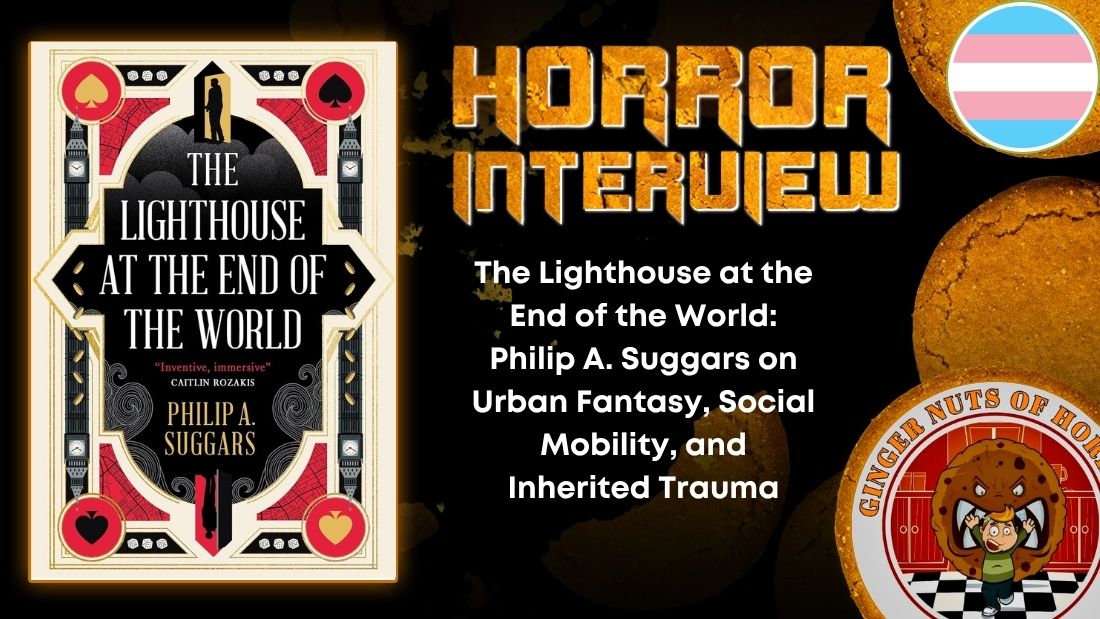
The Lighthouse at the End of the World: Philip A. Suggars on Urban Fantasy, Social Mobility, and Inherited Trauma
Oyster washes up in ‘Greater London,’ a surreal city built on our world’s detritus, featuring leviathans from skyscrapers and ink beetles. As someone from South London, how did your relationship with the city influence the rules of this broken mirror-world?
I was born in St. Georges Hospital in Tooting (big up the Wandsworth massive) so the smells, sounds and textures of the city went in early. As a kid, I loved my town’s chaos and magic. I remember seeing a double decker bus cutting up our road which was a rarity. The thing felt like a tank, massive, red, all stinks and rattles. Moments later it was followed by a rag and bone man on a horse and cart. The weirdness of that moment was like a time slip and it stayed with me. It was that sense of incongruity, of anything being able to happen at any moment, that informed ‘Greater London’.
Oyster isn’t a traditional chosen one; he’s a working-class kid hustling with a small gang after his father’s abandonment. How important was it to ground this sprawling fantasy in the gritty reality of a kid like Oyster working for ‘Big Mickey’?
Growing up, I was very aware that the heroes in the fantasy literature I read didn’t seem to share my background. Class was rarely articulated, but I do remember reading the Narnia books and thinking, who the hell has a house with so many rooms that they get lost in it? So, it was important to me that my main character had a working-class background.
Oyster’s loyalties are torn between Nonesuch, Marya Petrovna, and Mr. Primrose. What do these characters represent to Oyster, and how do their contrasting ideologies shape the book’s moral core?
Oyster’s biggest obstacle is social mobility or the lack of it. In that sort of situation, your family is largely your destiny and Oyster’s family (with the exception of his sister, Cécile) don’t really offer him anything in the way of love or choices.
Consequently, Marya Petrovna becomes a sort of ersatz parent, Nonesuch is the exotic allure of the possibilities he never imagined and Mr Primrose? Yeah, Primrose is that that creepy uncle who smells of stale milk who you wouldn’t leave alone with your pets.
Driven partly by his father’s abandonment and the hope of finding him, how do themes of inherited trauma and fractured families propel the plot?
Growing up, my family life was complicated. My parents were young when I was born and they did the best they could. I was still at school when they divorced and it was a pretty rough period. I think Oyster’s underlying sense of wanting to be in a different place, the hope that if he can just change this one little thing then everything will be alright, probably stems from that experience.
The lighthouse in the title suggests a fixed point or a warning. For Oyster, defined by instability, is the lighthouse a literal destination or the unattainable ‘North Star’ of his identity?
That’s a fascinating reading. Interestingly, the image of the lighthouse in a sea of blue ice was the first thing I wrote. When I started the novel, I was at a loss where to begin and my partner said, “why don’t you start at the end” which was brilliantly random. So, the section that now makes up the book’s climax was written before anything else. Marya Petronva, Oyster and his sister, Cécile were all just there straight away on the page. To your point then, the Lighthouse acted as both a pole star and a destination, it pre-existed the rest of the book, kind of drawing Oyster toward it.
The book features a unique language blending modern South London slang with 17th-century vernacular. How does this ‘linguistic archaeology’ reflect the physical world-building of the city? Are the characters literally speaking the ‘detritus’ of history?
Yes, that’s totally it. If London is a palimpsest and ‘Greater London’ is that writ large, I wanted the language to have a similar texture. I find the 16th/17thcenturies fascinating and terrifying in equal measure and there are so many parallels with now. Libel and disinformation were rampant, the printing press and pamphleteers were the social media influencers of their day and coffeehouses spread conspiracy theories virally.
Perhaps because of that the slang from that period is brilliantly funny and creative and some of the words that were slang back then are now just part of our lexicon (e.g chat, bouncer, fib). Also: arseworm and cacafuego (from Spanish for “shit fire”) are in heavy rotation in our household.
In a genre obsessed with ‘Hard Magic,’ the Drift operates more on a dream-like frequency. What rule of world-building did you find stifling, and how did you dismantle it to keep ‘Greater London’ feeling uncanny?
I’m really glad you noticed that. I wanted the magic in the book (such as it is) to be more about playing with probabilities than people learning magical recipes and blasting rays out of their fingers (if you’re into that though, that’s cool). I struggled a lot initially as I wanted things to be quite anarchic, but also grounded.
In the end, I took a real magic system (chaos magic) and enhanced it with ideas from the Situationists and Baudelaire’s flâneur. For example, the main way of travelling between worlds relies on the libertarian-marxist idea of a “derive”, where practitioners navigate a landscape using a mismatched map. In the novel, that dislocation untethers you from our reality and you end up somewhere else.
Marya Petrovna’s primary teaching, “Nothing is true. Everything is permitted” is a direct lift from Hassan-i-Sabbah, the 11th-century founder of the Hashshashin via William Burroughs, also a chaos initiate. In the book, it’s a denial of absolutism and nihilism. Essentially, if you take your self out of the equation enough, any magic works.
Titan Books positions this as New Weird/Urban Fantasy, but every book has a ‘secret’ genre. At its emotional core, do you see this as social realism, noir tragedy, or Gothic picaresque, and why did it need fantasy trappings?
I guess all I’d say is that “fantasy trappings” suggests the fantasy was an afterthought, but it was always fundamental to at least one of the things that I wanted to do, which was create a world where categories (living/dead, machine/animal) were revealed as arbitrary. Fantasy is the perfect genre for that kind of play.
That said, there’s definitely a picaresque vibe to this novel and the underlying narrative engine in something like El Buscon or Lazarillo de Tormes is “someone of low social standing who gets by on their wits”. That’s as good a definition of Oyster as you could come up with.
As well as the books above, I’m a massive fan of Don Quixote which is a genuinely hilarious book (more poo and fart gags than you’d expect). So, hopefully there is a Sancho/Quixote vibe to Marya Petrovna and Oyster’s relationship.
Before this, you excelled in short fiction, did mastering the tight mechanics of short stories help or hinder you in writing a 400+ page fantasy novel?
In my head, there was a sort of pyramid I had to climb to get to the point where I could write long form: sell one story to a pro-paying market, sell two, and another, join the Science Fiction Writers of America. Then write a novel!
Short stories were a great way for me to find my voice and build confidence. So, from a craft perspective they taught me an enormous amount, but from a structural point of view, the mechanics of the short story are very different from the novel.
With hindsight, I don’t think you have to graduate into novel writing. Nothing teaches you more about writing a novel than writing a novel. If I had my time over, I probably would have started kicking novel-sized ideas around earlier and learned as I went.
Did the concept for Cities of the Drift marinate in your mind since your early short story days, or did Oyster’s journey spark more recently?
The central image came from an actual fever dream. I was in bed with a bout of flu at the time and dreamt of a version of London being piloted down to the seaside for a holiday. I woke up, scribbled the image down and tried to get back to sleep, but couldn’t shake the idea.
It ended up as the central image in London Calling a short story published by Strange Horizons a few years back, but that wasn’t enough to rid me of it entirely. Later, that image metamorphosized into the idea of the looüt: massive walking cities that fight, mate and lay eggs. I knew I wanted to get them into a book and once I started writing Lighthouse I knew they’d found a home.
For writers currently submitting to anthologies and seeking agents, what unvarnished advice would you give them for surviving the journey to a debut novel?
It took me a couple of years to get an agent. Honestly, that part of the process was probably the most difficult and the only point at which I semi-seriously considered jacking it all in.
Obviously, everyone is different, but for me just being relentless about getting my manuscript out to agents is what worked. If you honestly believe what you’ve written is the best you can do, then keep sending it out to people. If you’re lucky enough to get some feedback, sit with it, consider whether it rings true and then decide if you want to act on it.
Don’t be too discouraged by rejection. Sadly, it’s just the meat and two veg of publishing. It doesn’t mean you’re a bad writer. It just means they didn’t want that particular manuscript at this particular moment in time (and someone else still might). Give yourself a day to recover, cross that candidate off your list, send your manuscript out again and get on with writing something else. Having a new project to focus on is by far the best way to deal with the publishing process.
When you aren’t writing, you’re recording music as one half of the post-punk electronica outfit we are concrete. Do you find that your background in producing music influences the pacing, rhythm, or atmospheric tone of your prose?
I’ve not really thought about this before, but I probably do tune in to the rhythm of prose and it does inform my dialogue. Mostly, the music side of things has become more of a creative outlet as writing has become more of a job.
Your author bio jokes about you having a ‘single yellow eye in the middle of your forehead.’ Even in dark, high-stakes urban fantasy, a sense of humour is vital. How do you balance the apocalyptic stakes of the Cities of the Drift with levity and wit?
Oyster’s voice and facetiousness were fun ways of grounding events. As a character, one of his flaws is that he always has to say something: get a little verbal tap in; show you you’re not better than him. But the balance you mentioned here is key. In earlier drafts, he was a lot younger (and even more facetious), but his humour meant that some of the more serious plot points didn’t have as much impact as they should. Aging him up a little actually led me to dial the humour back a bit which hopefully also allowed the dramatic beats to land more significantly.
Every book has its “soundtrack” or mood. What song or piece of music now best encapsulates the entire experience of writing this book for you?
Blimey, it’s hard to untangle this from what I was listening to when I wrote the book. Different drafts had different soundtracks, so there’s never been a single overarching song or mood.
Mostly, I was listening to a load of drones/ambient/soundtracks, but also vintage Massive Attack, a ton of Bowie (especially the Berlin era), but also Burial, Little Simz, Kae Tempest and Anthony Joseph. Tracks with a bit of urban flavour, a bit of grit to them. Any of those last three would work as soundtracks to the book. (Here’s a link to one of my playlists if you want to listen along while reading.)
If a reader could take away only one feeling or idea from your book, what would you want it to be?
I’d like the reader to close the back cover with that bittersweet feeling you sometimes get when you’ve been on a journey with good friends and have just arrived home. You’re a little sad that it’s over, but it was a journey that was worth your while.
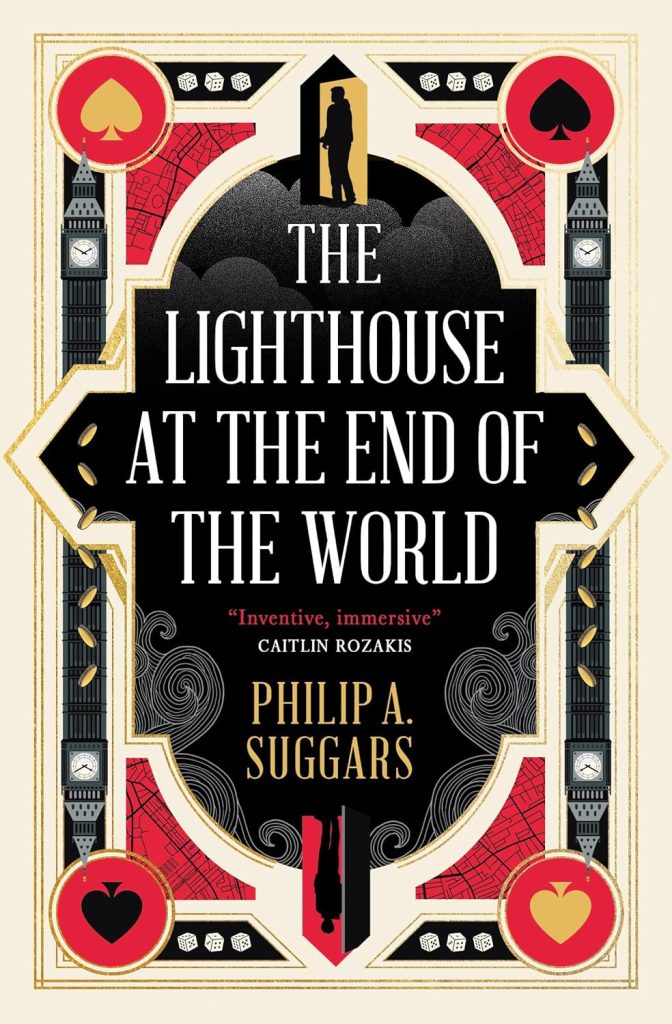
The Lighthouse at the End of the World by Philip A. Suggars
Enter a London like no other in this fast-paced, captivating fantasy novel, perfect for fans of V.E. Schwab and Genevieve Cogman.
Oyster McLellen has spent his life causing mischief. Running with a small-time gang and fleecing money from tourists in Hyde Park to support his struggling family in the absence of his father, who abandoned them years ago.
When a simple money drop for his boss, Big Mickey, goes wrong, Oyster’s future looks bleak. His only chance to redeem himself in the eyes of Mickey is to get the money back, but as he pursues the thieves across South London he suddenly finds himself washed up on a beach, surrounded by broken phones and shattered office furniture.
His new world: Greater London. A city built on the detritus of our own, where leviathans crafted from broken skyscrapers roam the seas, where ink beetles nestle beneath the skin of its residents and where Oyster’s father, Lucas, may well have escaped to all those years ago.
But there are bigger things at stake. Oyster’s allegiances are torn between the enigmatic Nonesuch, the eccentric escapist Marya Petrovna, and the terrifying Mr Primrose – and he will have to choose who to align himself with quickly. Because plans are afoot: something ancient is brewing, and a choice needs to be made, the consequences of which will determine the fate of Londons, and life, everywhere.
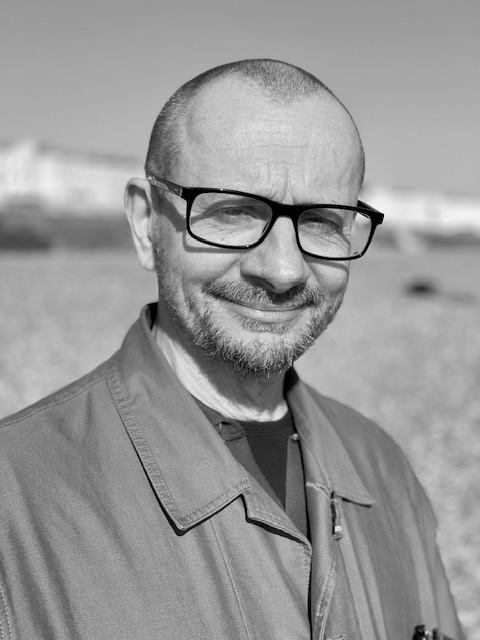
Philip A. Suggars
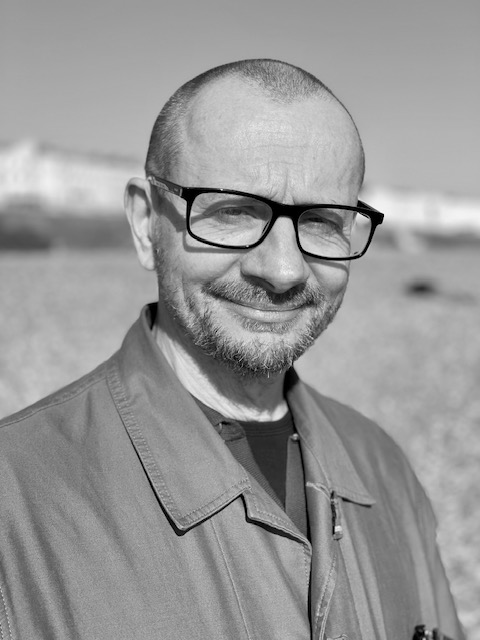
Philip A. Suggars has a single yellow eye in the middle of his forehead and a collection of vintage binoculars.
His work has appeared in a range of publications including Strange Horizons, The Guardian and Interzone as well as being featured on many short-form podcasts. His writing has won the Ilkley short story prize, been long-listed for the BSFA short story award and been included in The Best of British Science Fiction Anthology series.
When not writing words, he records music as one half of the post-punk electronica outfit, we are concrete. Born and raised in South London, he currently lives on the south coast with his family. His debut novel The Lighthouse at the End of the World will be published by Titan Books in 2026.
Essential Horror Interviews on Ginger Nuts of Horror
For true devotees of the dark and macabre, Ginger Nuts of Horror stands as a premier destination for exclusive horror author interviews and in-depth horror director interviews. Our curated conversations go beyond the surface, offering unparalleled access to the visionaries shaping modern horror.
Why Read Our Horror Creator Interviews?
1. Uncover Creative Processes & Inspirations
Step inside the creative minds behind your favorite nightmares. Our interviews dissect the inspiration behind iconic horror stories and films, exploring how masters of the genre conjure fear. Learn how horror authors develop chilling narratives and how horror directors translate terror to the screen.
2. Gain Unique Industry Insights & Career Advice
Navigate the horror industry with wisdom from those who’ve succeeded. Our conversations provide practical advice for aspiring horror writers and filmmakers, covering:
- Breaking into horror publishing or film
- Overcoming creative and professional hurdles
- Understanding evolving horror trends and audience expectations
3. Explore the Psychology & Culture of Fear
Delve deeper into what makes horror resonate. Our interviews examine the psychology of fear, how horror reflects societal anxieties, and the genre’s exploration of themes like morality, existential dread, and identity.
4. Connect with a Community of Horror Enthusiasts
Join a vibrant community. Each interview sparks discussion, allowing you to engage with fellow fans and sometimes the horror creators themselves through comments and social media.
Featured Insights from Horror’s Finest
Our archive includes conversations with legendary horror authors discussing craft, and visionary horror directors breaking down their filmmaking techniques. Find guidance, inspiration, and a deeper appreciation for the art of horror.
Ready to explore? Visit the Horror Interview Section on Ginger Nuts of Horror today. It’s your essential resource for connecting with the minds that define fear, perfect for fans, aspiring writers, and future horror directors alike.
Searching for the best horror author interviews or seeking wisdom from horror directors? You’ve found your source. Click here to start reading now.