Introduction
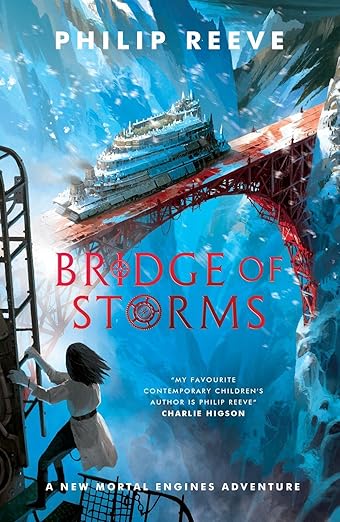
Ever had that moment? The blank page. The blinking cursor. The sheer, weighty silence of a world that needs inventing from nothing. Where does a story even begin?
For Philip Reeve, it wasn’t a grand plan. Wasn’t a map. It was a vibe. A single, glorious, ridiculous image that refused to leave: a city on wheels.
Twenty-five years. That’s how long those wheels have been turning in readers’ imaginations. A quarter-century since Mortal Engines first chugged onto the scene and reshaped the landscape of steampunk fantasy. And here we are again, back in the Hunting Grounds. But something’s different this time. The air feels… older. A bit less ruthless, perhaps.
Reeve’s back with Bridge of Storms, the next chapter in the Thunder City prequel series. It’s a homecoming of sorts, but to a home that’s changed its furniture. He’s not retreading old pavement. He’s deliberately steering clear of the places and faces from the original quartet. Smart, that. It gives new readers a door to walk through, and gives the old guard a new window to look through. A fresh perspective on a beloved chaos.
This time, the chase revolves around Museion. A university city, all spires and scholarly ambition on tracks, holed up in a defensive fortress called the Frying Pan. Its problem? It’s too genteel for its own good, hoping to be politely consumed by London while fending off motorized nomads and, of all things, a sinister suburb. The stakes are personal, intimate. A traitor on board. A closed-circle mystery unfolding within the clanging metal heart of a mobile city. You can’t have world-shattering events in a prequel, Reeve notes with a writer’s pragmatism. The characters from the future books would have mentioned it. So the tension comes from within. The enemy in the mirror.
It’s all drawn from the well. That’s the phrase Reeve uses. The well of a life spent absorbing art, history, and culture. A Bruegel painting subconsciously lending grandeur. It happens organically. The world isn’t built so much as it accumulates, layer by layer, scene by haphazard scene. He discovers it as he writes, following characters like Tamzin Pook and Max into the fog of the plot and seeing what landscapes take shape around them. It’s a messy, thrilling way to work. Terribly unscientific. The weather is always awful, the geography is vibes-based, and if the story needs a mountain, a mountain appears. It shouldn’t work. But it does. It really, really does.
This is a farewell, he says. A final, glorious chase sequence before the narrative shifts. A last ride across the wastelands with ice storms howling and diesel engines roaring. So get ready. The Frying Pan is heating up, and the only way out is over a Bridge of Storms.
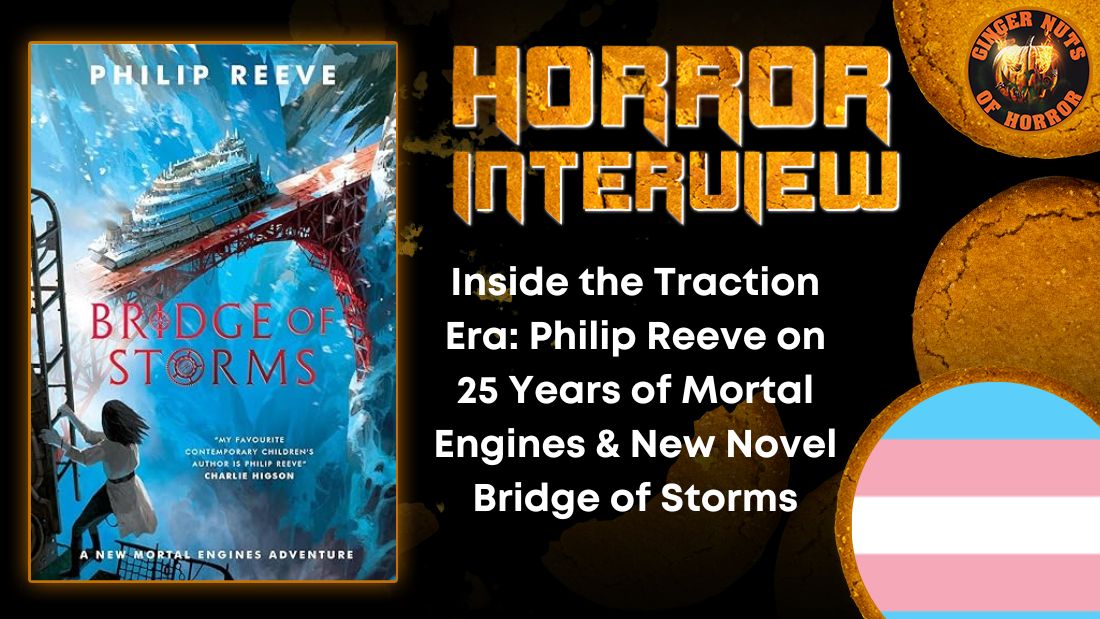
Inside the Traction Era: Philip Reeve on 25 Years of Mortal Engines & New Novel Bridge of Storms

Without further ado. So, the iconic image of predator cities has an origin in Peter Bruegel the Elder’s painting “The Tower of Babel”. How do classic works of art, literature or music continue to serve as a mood board when you build out new corners of this world?
Oh, I don’t know, it’s not a particularly conscious thing. And the Bruegel thing, I didn’t look at The “Tower of Babel” painting and think, oh, that would be good with wheels on, you know, I kind of thought of a city on wheels and then thought, well, what would it look like? And that was the first image that came to mind.
So, yeah, I think if you’ve got a sort of reasonable, sort of middle brow kind of knowledge of art and culture, you have all these things that you can just draw on when you need to. So, yeah, the things will suggest themselves to you.
So, it happens organically?
Yeah, it’s all just sort of laid down. It’s sort of the well that you draw from, really, I think, these sort of images and quotations and things like that kind of spring to mind.
So, yeah, is that an answer? I’m not sure.
That’s definitely an answer. It leads into the second question. You’ve said in the past, I think, that you develop worlds through a haphazard process of writing scenes and letting the setting take shape around the characters. Has this method evolved from the original quartet to the Thunder City books? Is there more planning now or do you still prefer to discover as you write?
No, I still kind of prefer to discover as I write. I mean, the difference with Thunder City is that I’m sort of going back to a world that I created, well, I mean, the first book was published 25 years ago, but I probably started writing it about 35 years ago, really. I was tinkering around with it for a long time before it saw publication.
So, a lot of it’s kind of set down now and I can’t change it much as I’d like to. So, you know, I’m kind of stuck with what’s there to a certain extent. So, with Thunder City, I felt the only way of doing it was to very deliberately avoid all the places and people that I’d mentioned before.
You know, I wanted it to be new, partly because that would be more interesting, but also, I think, so that new readers who haven’t read the originals could come to this as the first one, if they want to. So, yeah, I was sort of careful to avoid the sort of places I’d visited before, settings and things like that. But yeah, you know, the basic rules of the world that were established long ago.
So, I have to follow them. So, in a sense, it feels more planned, you know. I’m not actually inventing everything afresh as I go along.
You’ve described Thunder City, I gather, as having a more genteel, low stakes and swashbuckling feel compared to the later, more ruthless time. How do you balance maintaining the core vibe of the Traction Era while letting the tone evolve across centuries of in-world history?
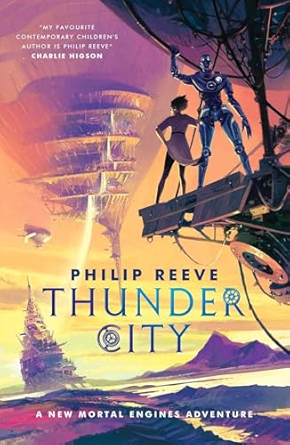
Well, the thing with Thunder City, I set it about 100 years before the original quartet, so it needed to be a little bit different, you know. It needed to feel that the world has sort of changed and developed when you get to Mortal Engines. But I didn’t want it to be that different, because then it wouldn’t have all the things people like about Mortal Engines in it.
So, it’s really pretty similar. And the way the cities relate to each other isn’t quite as ruthless as it is in Mortal Engines, but, you know, it’s still basically the same world. And there’s something else I was going to say.
What was it? I can’t remember. Yeah, and also the stakes thing.
The trouble with the prequel is you can’t have anything happen that’s so big and important and world-shattering that people in the next book would have known about it and talked about it, you know. So, nothing could happen really in Thunder City’s book that anybody knows about that is colossally important. So, I can’t have end-of-the-world stakes.
But that doesn’t really matter, because, you know, sort of individual person trying to survive or an individual city trying to survive, that’s high enough stakes to build a book around. So, that’s not a problem. But that’s something to bear in mind, the stakes can’t get too high or people in the books I wrote 25 years ago would have known about it.
Good point. And on a somewhat related theme, in the past, you’ve mentioned that you destroyed America in the first book because Traction Chicago and New York felt too big and cool to deal with, I think, but later acknowledged this was a Traction Era myth, ripe for overturning.
As you expand the timeline with the new books, is the “dead continent” a frontier you’d like to explore?
Yeah, I mean, I’ve been trying to get there for years and years and years. I mean, this book has been slightly delayed for some reason. And the next one is already pretty much written.
And in the next one, yes, we do finally cross the Atlantic, finally get South America and possibly North America. But yeah, so there’s all sorts of goings on in that one. But this one, Bridge of Storms, is very sort of back-to-basics kind of Mortal Engines.
It’s one big city. I always thought it might be interesting to try and do a book that was just one chase, you know, one city trying to escape somewhere. And I suppose I sort of did with Predator’s Gold, but this is more so, I guess this is probably the last city chase I’ll write because there isn’t a lot of room for that sort of thing in the next one.
So, this is my farewell to cities pursuing each other across wastelands. So I’ve tried to make it a good one.
As you mentioned, the core mission, I think, is to guide Museum out of a mountain valley known as the Frying Pan.
In a world of moving cities, how do you design compelling geography and environmental challenges that feel like a genuine threat to an entire city?
I just make it up as I go along. Yeah, you know, the good thing about the vagueness of the Mortal Engines world is that I can just sort of stick a mountain or a swamp or something in front of them if I feel that the going is getting a bit too easy. And the weather is always terrible in Mortal Engines. Ice storms and things descend on them. But it’s very vibes-based, you know. I don’t think it bears a lot of relation to actual geography, geology, or meteorology.
You know, if it serves the story, then in it goes, basically.
The Frying Pan isn’t a mountain valley, it’s a city nest, which is a sort of fortification that was built hundreds of years ago by a town that was busy motorising itself. They built these kinds of walls around them while they’re putting their wheels on, basically. We established that when I was writing with Jeremy Levett, the Illustrated World of Mortal Engines.
We came up with that notion. And I’ve always wanted to use it in one of these stories. That’s the Frying Pan.
Right, so you very wisely haven’t made a rod for your own back by having a map that you have to follow.
No, people always want maps, and it’s really hard to make a map of the world of Mortal Engines because places move around all the time. I tried one of these, it was just lots of dotted lines, you know, this is where everything goes, this is where another city goes, which is both complicated and sort of unsatisfactory and kind of gives the story away as well. So yeah, I try and avoid maps.
Hester Shaw evolved from a character with a gruff exterior into a damaged and morally complex figure, which you found necessary, I think, to sustain the sequels, the original sequels.
So, when developing a new protagonist like Tamzin Pook, who you’ve described, I think, as Hester-like, but not quite so damaged, how do you chart their potential for change across multiple books when you start out?
Well, that makes it sound like I think about it at all. I don’t really, I just sort of get writing and see where they go. I don’t really.
Yeah, I just sort of start off with somebody in a situation that hopefully makes them interesting to the reader and then just put them into lots of other situations and see how they react and try and make it sort of feel consistent. They do sort of surprise you from time to time, which is quite nice, I think. But yeah, again, it’s not really a kind of conscious thing. People always want to know what you’re thinking when you’re writing, but I think the only time you really have to think is when it’s gone wrong. And then you have to think, oh, why isn’t this working? And then you have to sort it out. But when it’s working, you don’t really think. Thinking isn’t actually part of the process. You just write. You just tell the story.
And a notable trait of your work is putting tough and resourceful heroines at the centre of the action. What do you think is the key to writing a character whose strength feels authentic rather than just the trope of, you know, tough, resourceful female character?
Well, I don’t know. I think not thinking, oh, I need to put a tough, resourceful female character in. I think just writing comes naturally. I do always tend to. I’m making little films at the moment as sort of a hobby, and I’ve just written one. And there’s no role for me in it at all, because there are so many actresses we work with. I think, oh, yeah, I’ve got to write a part for her and a part for her.
And it’s all women. And I think the reason for that is because the sort of stuff I like, the kind of genre stuff that I like, kind of adventure and action. And the last film we did was a Western.
The books I read when I was growing up and the films I watched when I was growing up, they tended to be very male-dominated. So, if I put women in, then immediately it feels, or a girl in a children’s story, immediately it feels different to those. So, I feel I’m sort of like, you know, doing my own thing. I think that’s probably why I tend to go for female characters more often as leads. I don’t know. But again, it’s not particularly something I think about a great deal.
I did notice that the Mortal Engines world has always sort of lacked an actual proper heroes. You know, the boys tend to be a bit flimsy and rubbish. So Max, who in Thunder City sort of started out a bit flimsy and rubbish, he’s actually evolving into an actual proper, you know, a proper admirable hero.
And by the third book, he’s going to be, you know, a real action hero. But Bridge of Storms is sort of like, it’s a transitional thing for him. So, by the end, you can sort of see what he’s going to become.
But that’s been fun. And again, because I haven’t done it before, I’m trying to do something different.
One of the reasons I like Tom was that, to me, he felt more authentic because he wasn’t this, you know, “chosen one” hero.
I did try to make him as rubbish as possible. And every time he does try to do anything heroic, it goes wrong and makes things worse, which I thought was quite funny.
But he has his moments, obviously, of sort of that stiff upper lip, resistance and resilience.
Oh yes, he means well. He’s sort of borrowing[?] brave, I think.
Alongside the external threats of motorised nomads and sinister suburb, there is, in Bridge of Storms, an internal mystery, a traitor killing citizens one by one. How did you approach weaving a closed circle murder mystery into the larger-scale adventure plot, or was that, again, an organic thing?
Again, it’s the organic thing, but that was one of the first things I started with, this sort of almost like a murder mystery. The city is a little sort of like a university town, basically, sort of like Oxford or Cambridge on wheels, a museum, university place. So it seemed like a natural place for that kind of thing to happen, this very kind of contained little environment with a small group of…
Sorry, I’m just going to let the dog out the room because I shut the door, he’s prowling about. Yeah, it seemed like a kind of natural place for that sort of thing to happen, so it did. And then the motorised nomads are always in pursuit. That’s like the sort of the hook the story hangs on is that the city has to get away from them at the start.
And then the whole sinister suburb element sort of developed as I was writing, it sort of developed out of the murder mystery, actually. There had to be something, you know, there’s a traitor on board who’s signalling to somebody kind of thing. It kind of evolved out of that, but it just really comes from writing and rewriting and just trying to sort of make it big enough to, you know, by the time you get to the end, I want you to feel like you’ve been on a journey and there’s been a lot of different incidents. So, you kind of need to keep packing stuff in and filling all the little cracks and gaps with detail and incident until hopefully it feels like a book.
For fans of the first quartet, what are the key thematic links that you hope they’ll find with Bridge of Storms? And as an addendum, you kind of touched on it earlier. It’s the Star Wars question, if you like: Given that the new books are prequels, what order would you suggest fans read the books in once the two sets are complete?
Well, the thing is, as I was saying, they don’t really connect, because I was very careful not to make them connect in that way. I still think the one to start with is Mortal Engines. I think start with the original quartet, because hopefully the writing will get better, because that’s 25 years ago.
I hope I’m better now. But yeah, start with Mortal Engines, and then you can go back to Fever Crumb and find out how it all started. I think reading them in publication order would probably be best.
It’s difficult with a series, but I try and make it so each book stands alone, because you’re at the library and they’ve only got one. I want people really to be able to come in at any point, and it will more or less make sense. So I try to make them as stand-alone as possible.
Thematic links. Well, you know, there sort of aren’t really any in the first book, I don’t think, except that it’s the same sort of story and set in the same world. It’s, you know, the link is the world.
But in this one, there are some tiny hints in this one, I think. If you’ve read Mortal Engines, you’ll sort of see the origins of the engineers versus historians thing in Mortal Engines, it’s sort of in this one. You can kind of see where various characters are making their way to London, and you can sort of see when they get there they’re going to have the influence 100 years later. The Guild of Engineers and the Guild of Historians will be at each other’s throats. And then, you know, the third book is going to have… things will be sort of explained in the original series, so it will connect both backwards to Fever Crumb and forwards to Mortal Engines. But at the same time, I want to kind of keep it completely separate in the sense that people can just read that one if they want, or this little series if they want to.
As an engineer myself, professionally, it always tickled me that engineers were the bad guys.
Well, yeah, that’s because engineers can build cool stuff, you know. You couldn’t really have bakers as the bad guys.
Megalomaniac engineers, yes, I can definitely relate to that, yes.
So, finally, you’ve spoken about the freedom of, and indeed in this interview, you’ve mentioned the freedom of setting Thunder City a century before the original series with an all-new cast of characters. Do you feel that that sort of approach would work again, and that it’s reopened the world [of Mortal Engines] for further standalone novels?
I guess. I think I’m probably… I think it probably is coming to an end, you know. I think probably the next one will be the last one, but then I thought that when I… [completed the previous series]. See the problem?
So I don’t know. I mean, technically, I don’t know what people’s patience is for stories about motorised cities. I don’t know if there’s a limitless demand. So, we’ll see. Maybe I’ll come back to it in another ten years if I’m still around.
Never say never, yes.
See what happens.
I don’t think I want to stray too far from this particular time period, you know, this sort of hundred-year window, because get back before that and not much is happening. Or maybe it is, who knows? I don’t know, maybe it is.
Yes, who knows? I’ll just mention that I watched Gwenevere yesterday: you mentioned [your] films, and I thoroughly enjoyed it. Obviously, a lot of effort went into that.
Yes, a ridiculous amount of effort. Watch Prairie Rascals next. I think that’s more of a crowd-pleaser.
But no, it was very clear that a lot of love and work went into [Gwenevere], I enjoyed that.
Oh, brilliant. Thank you so much for watching it.
Not at all. And thank you very much, Phillip, for answering the questions.
Thank you. Really nice talking to you, Robin. Thanks a lot.
Bridge of Storms (the brand new action-packed, city-eat-city adventure from master storyteller Philip Reeve) (Mortal Engines) by Philip Reeve
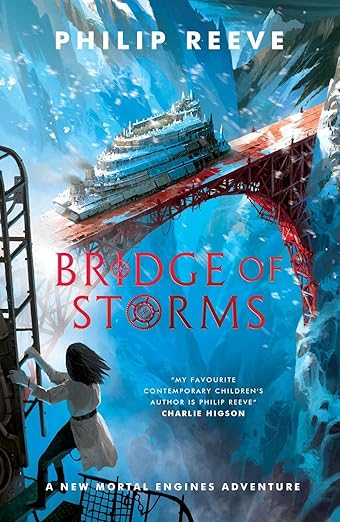
“My favourite contemporary children’s author is Philip Reeve” – Charlie Higson
“Like all Reeve’s books, this is thrilling, witty and full of heart” – The I
A brand new epic, thrilling, action-packed city-eat-city adventure in the iconic and globally bestselling series – celebrating its 25th anniversary in 2026! Brave fighter Tamzin Pook and her oddball gang of mercenaries are caught up in the squall of another adventure across the Hunting Grounds. When they visit the city of Museion, they find themselves unexpectedly chased by a gang of bloodthirsty raiders intent on their capture. Their epic attempt to escape leads to a showdown on a majestic bridge during a ferocious ice storm – can Tamzin and her friends lead Museion out of danger? Page-turning, witty, astonishingly imaginative storytelling from a writer at the top of his game.
- The Mortal Engines series has sold over half a million copies in the UK alone via Nielsen Bookscan. Its epic appeal crosses all age ranges
- Reeve’s novels have won the Guardian Children’s Award, Blue Peter Award, Smarties Gold Prize and the Carnegie Medal.
- Mortal Engines is a blockbuster feature film produced by Lord of the Rings director, Peter Jackson
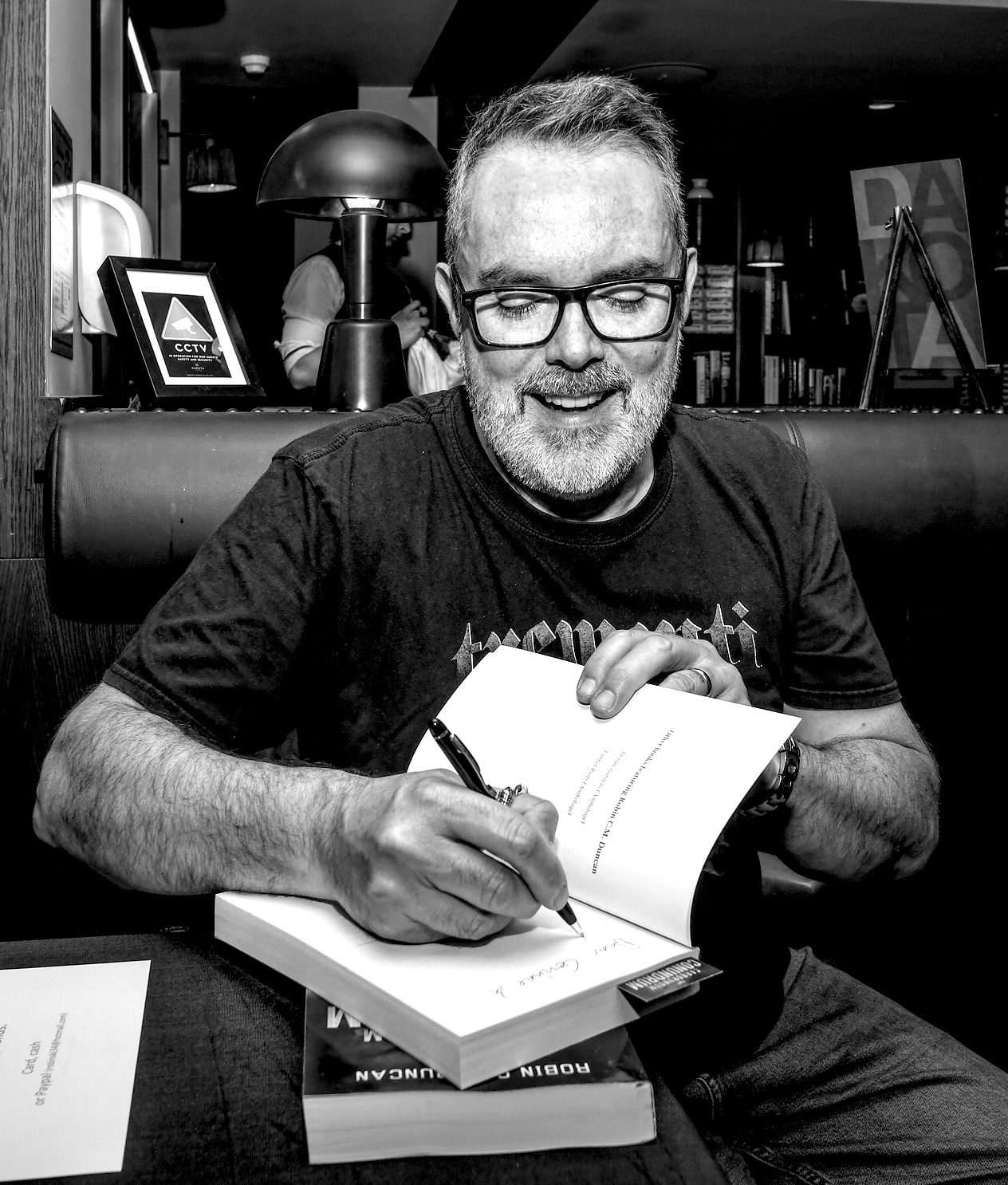
About the Author – Robin C.M. Duncan
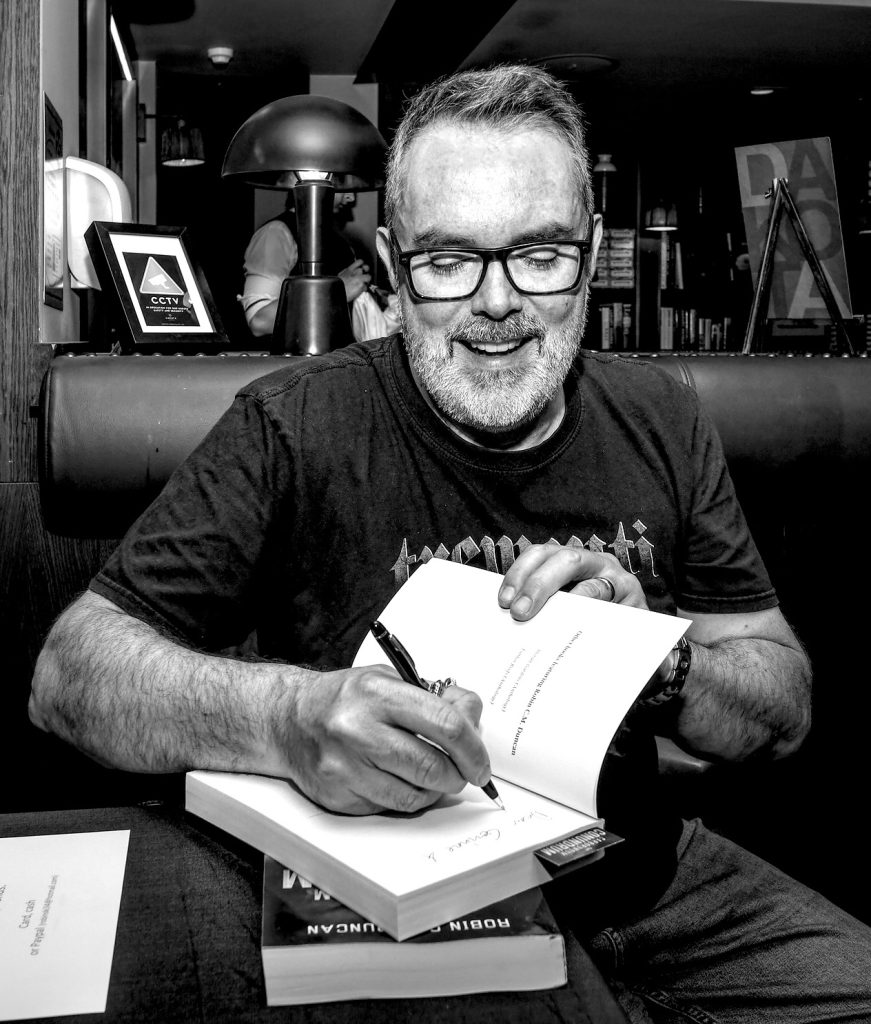
Robin is the editorial officer of the British Fantasy Society, the editor of BFS Horizons, and co-host/producer of the BFS podcast, Long Story Short. His debut SF detective novel The Mandroid Murders published in 2022, followed by further Quirk & Moth adventures The Carborundum Conundrum (2023), and The Rigel Redemption (2024). His stories feature in Space Wizard’s Worlds Apart anthologies (2021-24), Gallus, The Tiny Bookcase Podcast, LiS2: The Sapphics Strike Back, and SF Caledonia. His story “The NEU Oblivion” was long-listed for the James White Award, and The Rigel Redemption was a Small Spec Book Awards semi-finalist in SF. He is currently writing Quirk & Moth, Book 4.
Horror Author & Director Interviews on Ginger Nuts of Horror
For true devotees of the dark and macabre, Ginger Nuts of Horror stands as a premier destination for exclusive horror author interviews and in-depth horror director interviews. Our curated conversations go beyond the surface, offering unparalleled access to the visionaries shaping modern horror.
Why Read Our Horror Creator Interviews?
1. Uncover Creative Processes & Inspirations
Step inside the creative minds behind your favorite nightmares. Our interviews dissect the inspiration behind iconic horror stories and films, exploring how masters of the genre conjure fear. Learn how horror authors develop chilling narratives and how horror directors translate terror to the screen.
2. Gain Unique Industry Insights & Career Advice
Navigate the horror industry with wisdom from those who’ve succeeded. Our conversations provide practical advice for aspiring horror writers and filmmakers, covering:
- Breaking into horror publishing or film
- Overcoming creative and professional hurdles
- Understanding evolving horror trends and audience expectations
3. Explore the Psychology & Culture of Fear
Delve deeper into what makes horror resonate. Our interviews examine the psychology of fear, how horror reflects societal anxieties, and the genre’s exploration of themes like morality, existential dread, and identity.
4. Connect with a Community of Horror Enthusiasts
Join a vibrant community. Each interview sparks discussion, allowing you to engage with fellow fans and sometimes the horror creators themselves through comments and social media.
Featured Insights from Horror’s Finest
Our archive includes conversations with legendary horror authors discussing craft, and visionary horror directors breaking down their filmmaking techniques. Find guidance, inspiration, and a deeper appreciation for the art of horror.
Ready to explore? Visit the Horror Interview Section on Ginger Nuts of Horror today. It’s your essential resource for connecting with the minds that define fear, perfect for fans, aspiring writers, and future horror directors alike.
Searching for the best horror author interviews or seeking wisdom from horror directors? You’ve found your source. Click here to start reading now.