
The best horror sneaks up on you dressed as something else.
A sheep farm, for instance. Rolling green hills, a guardian dog trotting past, tail high and proud. Then you notice the leg in its mouth—woolly, bleeding, ripped clean from a sheep it was supposed to protect. The farmer shrugs. His bad. Left the body in there too long. [unverified—check before publishing]
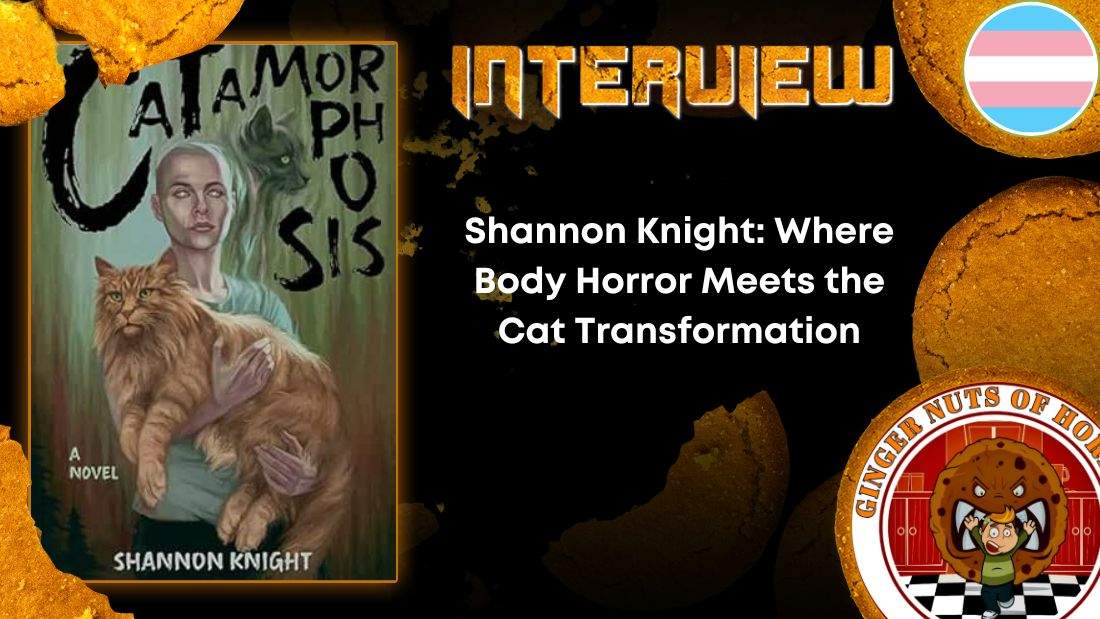
That moment, Shannon Knight tells me, basically forced her to write a horror novel. Domestication came out of it: a brutal farm-set nightmare about power, control, and the terrifying question of whether humans deserve better treatment than livestock. But Knight doesn’t stop at one kind of horror. Her latest release, Catamorphosis, takes a stranger turn. Cancer leaves Jasmine’s body failing, her husband gone. Only her orange tabby remains.
The result is body horror that refuses to play by the usual rules. Jasmine doesn’t fight her transformation. She accepts it, almost creepily so. Her memory gaps, her missing time—she still trusts those choices as her own. Readers may find that acceptance more disturbing than any gore. Knight has supplied a Spotify playlist to accompany the book, a collection of American folk music meant to capture the melancholy and haunting beauty of backwoods isolation, created while wreathed in fog and rain to the call of owls and coyotes.
What follows is a conversation about identity, disability, power dynamics, and why a woman turning into a cat might be the most hopeful thing Knight has ever written.
Change comes to us all, but in Catamorphosis, Shannon Knight asks a stranger question: what if becoming something else never meant losing yourself at all?
Shannon Knight: Where Body Horror Meets the Cat Transformation
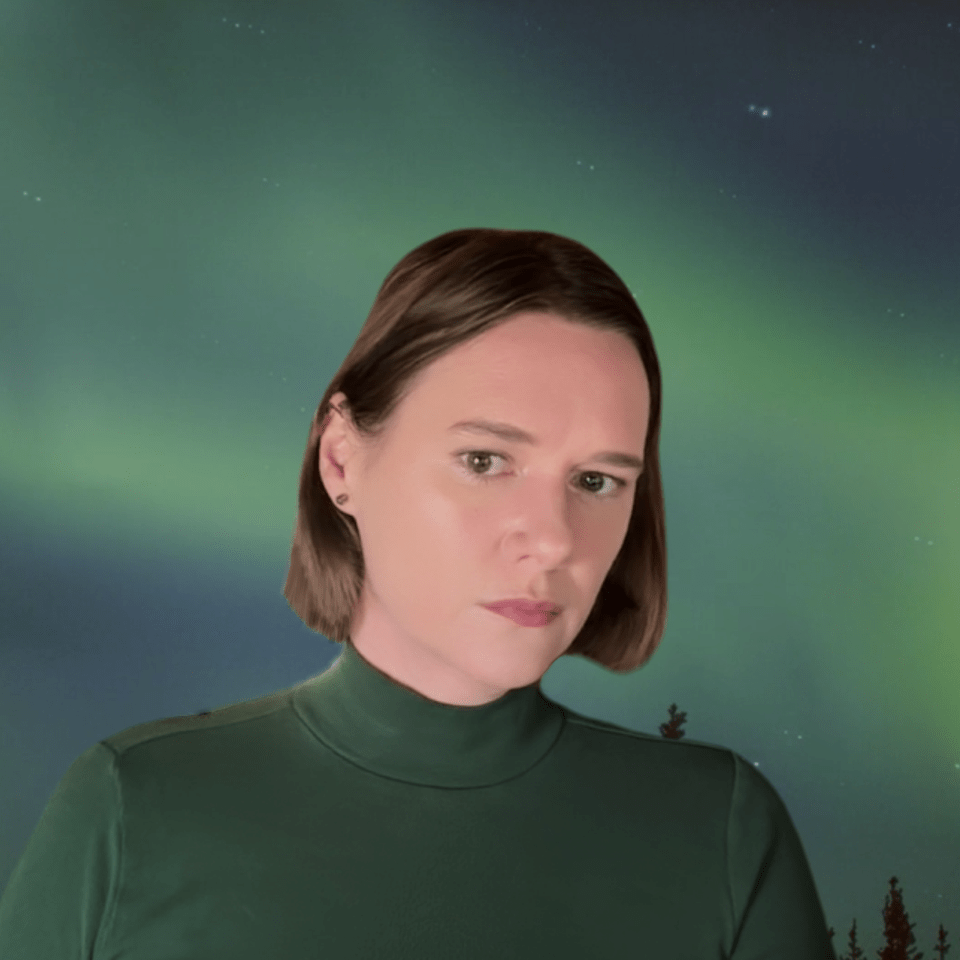
Let’s start at the very beginning. For our readers, please introduce yourself. Beyond the author bio, tell us a little about who you are when you’re not writing, what you love doing, what fascinates you, and what fuels your creativity.
I’m Shannon Knight. I write horror, science fiction, and fantasy. My latest release is Catamorphosis.
Classic horror story, but I got COVID in 2020, and I never got better. There were all sorts of things that I loved doing prior to disability from COVID making them no longer possible. Is it a lie to say that I’m a hiker when I no longer can? My latest book, Catamorphosis, regards a woman whose cells have already been mutated by cancer slowly turning into a cat. Part of what she finds herself asking is if she’s still herself.
Of course, this is in part because of the self-identity crisis that comes with disability and other bodily changes. Age and menopause, for instances, are natural changes that happen to bodies. But we all get rather attached to how we are—whatever that might be—so it’s difficult to look at these changes as good. Cats, though—cats are great. When I was sick in bed with my cat, I started comparing my illness and bodily changes to my cat (sleeping all day, etc.), and suddenly, change wasn’t so bad. In Catamorphosis, the protagonist is almost creepily accepting of her catification.
A previous horror I wrote, Domestication, is set on a sheep farm and fueled by power dynamics. The main character has fled from an abusive husband, but on the farm, the animals are managed in a very similar way. Why do we consider it okay in one situation and not in the other? What would it mean if we treated humans the same way we treat other animals? I like stories that delve into ideas.
In the early stages of a new project, what tends to come to you first: a compelling character voice, a central thematic question, or a vivid image/scenario? How does that initial spark then guide you in building the rest of the story?
Each project is wildly different. For Domestication, I wanted to write about a sheep farm because, wow, gross! And I kept having these horrifying moments, like the farmer plunking a rooster upside down over the blood bucket, pointing out where, inside the mouth, you stab so that the blade goes straight into the brain, and then offering me the knife with a comment that it’ll help me feel better. (!!!) Another day, my favorite guardian dog went trotting past my window all proud with a wooly sheep leg, clearly ripped right off the sheep’s body, in his mouth.
Mind you, this guardian’s job was to protect the sheep. I carefully let the farmer know his dog had passed with a sheep leg in mouth, and he replied very casually that he’d just been too busy and left the body in there too long, so naturally it had come to this when he really hadn’t wanted his guardian dog to ever get a taste of sheep. His bad! I basically had to write a farm horror.
Meanwhile, with Catamorphosis, I’d been planning a fishing-related creature feature when my precious cat died, and I couldn’t handle it. My feline buddy was right by my side all the time, and then he wasn’t. Everything became cat-focused, and so did the story, which immediately fell into place.
Whereas with Memento Mori Station, my first thought was a visual of a space station with the walls lined with bones like the French catacombs. I wanted a medieval death cult in the far future reaches of space. I wanted the contrast of high-tech future space travel with a medieval aesthetic and mentality. The Grave Chronicles series, which Memento Mori Station is the third book in, is science fantasy. However, the dead are being used as an energy source, and our heroes need to protect the dead.
Every book has its own unique set of problems to solve. What was the most difficult ‘puzzle’ you had to crack while writing this book? Was it a plot hole, a character’s motivation, the structure, or something else entirely?
Catamorphosis is primarily focused on the woman changing into a cat, but there’s a whole, external thriller going on, and I was worried that the villains were just too boring. See, I wanted them to be super realistic, and look at the villains we’re dealing with today in 2026. Please. We’re all bored of these vanilla narcissists who think everyone should fawn at their feet. So much of Domestication is trying to understand the main characters and what their deal is, so I couldn’t let my readers down just because we have so many entitled assholes navel-gazing and surrounded by yes-men.
The journey from a finished manuscript to a book in a reader’s hands can be a surprising one. What was the most significant way your book evolved during the editing and publishing process, something you didn’t anticipate when you typed ‘The End’?
I didn’t expect all the local villainy and what they were up to. I was writing about cats and a girl gang!
Writing is a demanding, often solitary pursuit. Beyond the apparent goal of ‘telling a story,’ what is the specific, personal fuel that keeps you going through the difficult stretches? Is it the joy of discovery, the need to understand something yourself, the connection with a future reader, or something else?
Stories are a vital way that we connect with each other. Stories also help us endure the suffering inherent in life. Whether it’s getting through a ridiculous workday or a major injury or heartbreak or whatever—stories provide a lifeline.
Maybe you’re side-eyeing horror as a lifeline, but sometimes reality is so dark that only dark stories feel authentic and believable. Horror can be cathartic. When readers call my horror inspirational, I love that.
We often hear about authors being influenced by other books. What are some non-literary influences on your work, such as a specific piece of music, a historical event, a scientific theory, or even a landscape, that have profoundly shaped your storytelling?
Comic artist Jen Bartel has a lot of girl gang artwork in vibrant colors with lots of fashion details, and her girl gang work certainly influenced parts of Catamorphosis, particularly Jasmine’s murder besties from LA. The contrast between the femininity, fashion, bright colors, and the violence and threat of their various weapons caught my imagination.
Domestication has a solid folk playlist that oozes isolation. There’s a texture to the songs that matches the fog in the mountains and the isolation of hundreds of thousands of forested acres of land without humans. Domestication is built, in part, on the type of isolation you can only get in a very rural area of a large country. And part of that, for sure, is from me hiking to the highest ridge and turning slowly to view all the other ridges as far as the eye can see with no human habitations in sight.
Horror is often most potent when it’s internal. Beyond external monsters, how do you explore the slow unravelling of a character’s sanity or the horror of their own mind?
In Catamorphosis, Jasmine is changing. We see some very clear changes in how she interacts with her cat as she herself becomes more catlike. While she’s horrified with any changes that cancer or sickness has caused to her body, she can only look positively on changes that she relates to her cat, so one of the interesting (to me!) aspects of Jazz’s catification is how comfortable she is with the change.
For instance, Jazz has troubling memory gaps where she is missing time, but she accepts that whatever choices she makes during those times are still her own choices made by herself. She never stops being herself. However, I expect readers to find her changes more disturbing than she does, especially the internal ones.
Meanwhile, in Domestication, Janie keeps her thoughts close to her. As the author, I manipulated common expectations, aiming to trick readers into various perceptions regarding Janie’s mindset or plans. Otherwise, Janie has a tendency to see the villains’ explanations as reasonable, so much so that one might wonder or dread if Janie will be joining their ranks.
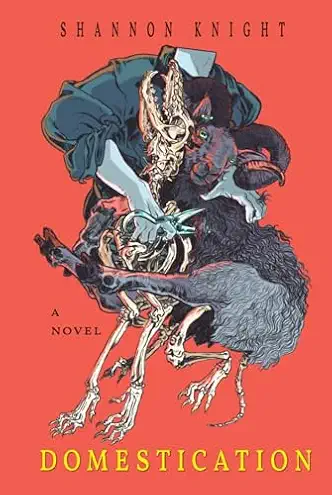
Beyond the reasoning that each character uses to defend their actions, Janie also has a number of coping mechanisms, such as taking a thought that is too troubling to handle in the moment and compartmentalizing it for later. I wanted to show that not only do we humans have many ways of coping with trauma, but we can also reason away monstrous deeds into something we can dismiss from our minds.
Setting in horror is often described as a character in its own right. How do you approach transforming a location, whether a house, a town, or a landscape, into a source of active dread?
Dread is always about the ideas. Domestication is my best example of dread as setting, and Janie understands that she is the equivalent of the farm animals around her, turning the entire farm into a terrible sort of trap. The gorgeous view of the mountains is one kind of cage. As Janie herds sheep to or from bright green fields, we understand that she is part of what is being herded. Therefore, whether or not it’s more overt imagery, like the light cast against the barn boards creating a cage of light bars, the cage is there.
Writing a terrifying buildup is one skill; delivering a satisfying payoff is another. How do you decide when to finally show the monster or reveal the source of the horror?
Without the building dread, the reveal wouldn’t be impactful. Even then, I prefer some twists or misdirection. Basically, you’ve tip-toed up to the monster and will soon, finally, see the monster yourself. But the whole time, you have no awareness that the monster’s mother is leaning over your shoulder.
What is the specific, core truth you are trying to expose or explore through your horror?
In Domestication, the core truth is the concept of domestication itself applied both to livestock and humans. Domestication is terrifying.
In Catamorphosis, the core truth is that change comes to us all, and that no matter how that change might mess with your sense of self-identity, you will always be you—no other option is available.
You have precisely two minutes in a crowded bookstore to hook a reader who is sceptical of the entire horror genre. They look at your book’s cover and ask, ‘Convince me. Why should I read this? I don’t even like being scared.’
Catamorphosis is a story about a woman slowly becoming a cat. Who doesn’t adore those cuddly little murder beasts? Wouldn’t you love to live the life of a cat?
Catamorphosis Kindle by Shannon Knight
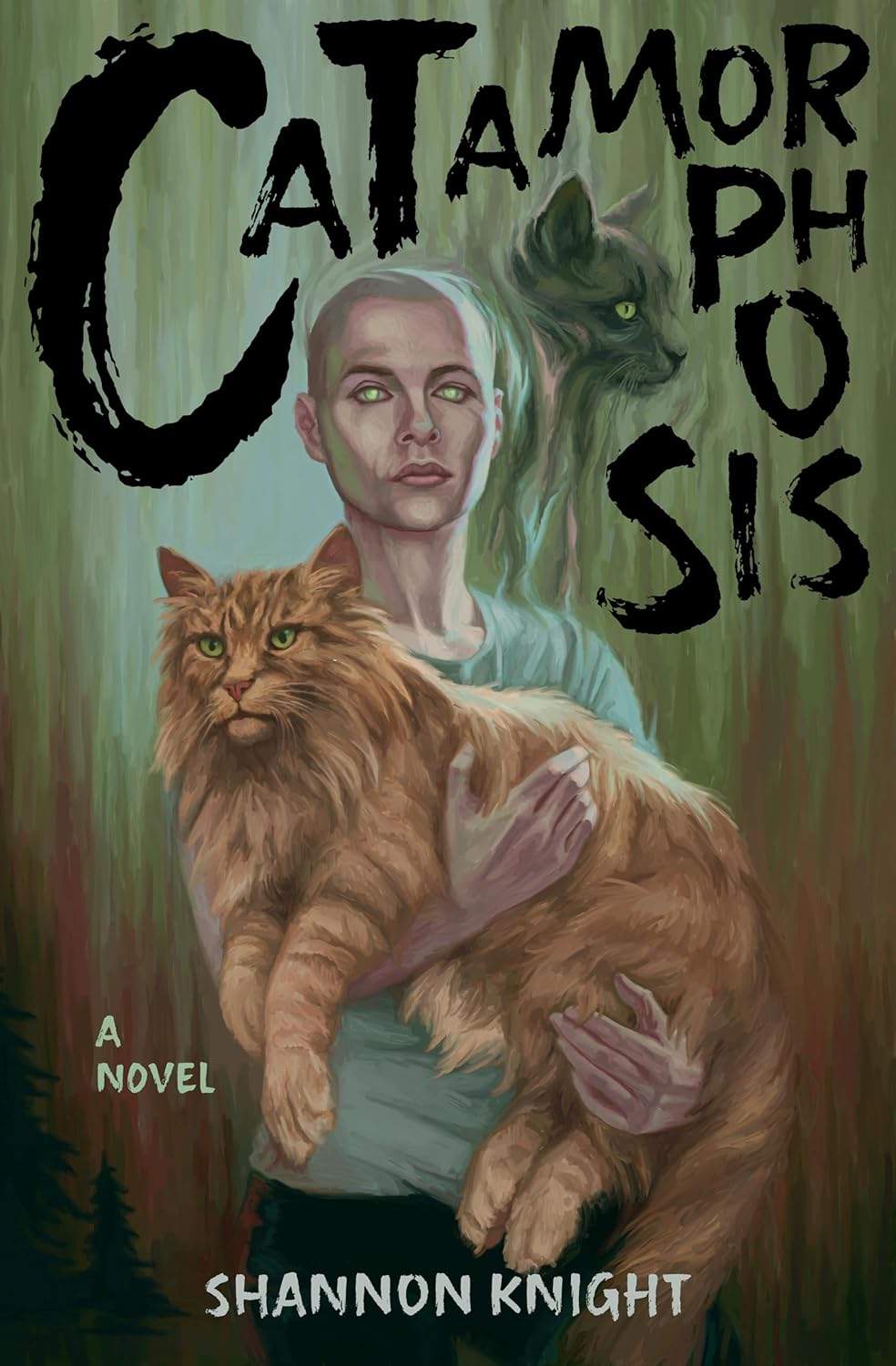
Cancer was the start of Jasmine’s life falling apart. Her body betrayed her, her husband left, and as she lay dying, the only one remaining at her side was her orange tabby, Otto.
Then something uncanny occurred.
At a fishing lake in the Oregon Coast Range, Jasmine is ready to reassess her priorities when a stranger catnaps Otto. One transgression leads to another, and Jasmine has never believed in turning the other cheek.
Jasmine is transforming, but whether the cancer still has anything to do with her mutating cells is beyond her. Otto has given her something, and anything from her sweet boy can only be a boon.
Jasmine may have died, but she came back.
And when a cat’s around, no one is surprised by a body count.
Shannon Knight
Bio: Shannon Knight lives in the Pacific Northwest with her cat, a wild forest creature called Little Bat. She is the author of horror, science fiction, and fantasy, including her latest release, Catamorphosis. Sign up for her newsletter at https://shannonknight.net.
My two horror novels are Catamorphosis and Domestication. The links below go to pages that include cover photos (large ones at the bottom), blurbs, and store links, so you can grab what you need.
https://shannonknight.net/Domestication
https://shannonknight.net/Catamorphosis