Short Story, Heaven Is Hungry by Michael Botur: A Hellish Vision of the Afterlife
Introduction
Michael Botur’s award-winning short story, Heaven Is Hungry. This piece of dark religious horror, which secured second place in the Australasian Horror Writers Association Robert N Stephenson Short Story Award 2024, is far more than a simple hospital ghost story. It is a devastating critique of faith, a character study of complicity, and a truly unique take on the afterlife.
A retiring nurse at a sinister Christchurch hospital reveals to a reporter the dark side of her career guiding patients into the afterlife – and the desperate decision she made when death came for her.
Second place – Australasian Horror Writers Association Robert N Stephenson Short Story Award 2024

Heaven Is Hungry by Michael Botur
I’ve wanted to get this off my chest for a while now.
The saga of my career in Princess Margaret Hospital’s hospice ward; the saga of the unpleasantness that eventuated there. Can’t bear the burden another year.
I’ve been with so many as they died – hundreds, child. I walked to the lip of death with them. Saw a little of what was over the edge, too – well, more than a little. And I intend to explain it all. Within the hour. Woman to woman.
I beg your pardon? How does it feel to be the oldest what now volunteering here at the hospital? ‘Woman of colour?’ I don’t understand all this newfangled gobbledygook, child!
Now, which university did you say you’re a journalist with, dearie? Massey? Excellent, excellent. And I’m glad you’ve reached out now before I kick the bucket, sweet thing. You’re as surprised as I am that I’ve lived to this ripe old age! Dearest, it’s important I tell my story before I move on. In my time I’ve seen nuclear brinkmanship. Seen America’s president killed on television, I’ve lived through oil embargoes and car-free days, the Six Day War and the Six O’Clock Swill. Watched the Sky Tower rise, the Twin Towers tumble, seen countries put up walls and tear them down. And I’ve certainly seen reporters come and go, darling.
Something a little different today to the usual fare you write, if you’ll permit me.
If you’ve ever woken in the bowels of the night knowing you have to confess, knowing you’re on God’s Naughty List, you’ll understand why I have to tell you this. Tell you how I coped across decades with the dying. What my hospice patients were aghast to discover when they finally met their maker. You need to understand why I’m about to spill everything, because the tenets of our entire faith, child, this church of ours, this agreement with God we’ve been raised to hold so sacred: it’s all a set-up. Cheese in a mousetrap.
Oh! I do apologise. Your tea, sweet thing, before we begin.
Lady Grey, soy milk, no sugar, yes? Pleased I didn’t stuff it up, hope you admire the cup! That’s Royal Doulton- almost as ancient as me! I’ll be happy to pull out the crockery chest and show you some heirlooms after our chat and – I beg your pardon? Hearing isn’t what it used to be – how old am I? You can jolly well have a guess! Nurse Rosemary Vatabua – that’s VATAM- you’ve got it, dearie, there’s a silent M in Fijian – wonderful, wonderful, oh dear, what are you scribbling there, child – 83, you estimate my age? Sounds rather young for me, ha ha, but I shall take it!
Anywho, Iiiiii’m well-aware we’ll both benefit from this ‘scoop,’ as you call it. After all, the tale I’m about to tell is… unique, to say the least.
Here – I trust you prefer the Digestives with chocolate?
Please, sweet thing. I insist.
Essential to have something to nibble. This could take a while.
1.
I disembark my Queen Mary Coach, dodge an oncoming tram. English trees drip April leaves on the pavers. Smoke in my nostrils. I scan Cathedral Square for other Melanesians. Alas, not a brown face in sight, child.
It’s February 1959 and this Aucklander has arrived in the Garden City to undertake a Diploma in Nursing and a work placement. Christchurch has been promised as a stiff, formal, unbearably bunged-up bastion of colonial propriety, I’ve been told to expect children to gawp at my pale palms and kinky hair and I’ll soon find the city doesn’t disappoint.
After a number of rejections (each flat I apply to rent going to some yoghurt-skinned English girl) I find a place at the base of the Port Hills, where identical weatherboard bungalows are home to men who once served in El Alamein or Alsace, men whose livers and brains are now quietly rusting up.
V-Day celebrations long gone cold, these men will begin to collapse as they hit their 60s, felled not by Kraut bullets but by emphysema, stroke or dementia, and they’ll be transported to that redbrick fortress on the hill, the place where people are sent to piddle in their nappies, strapped to a bed so they don’t disturb polite society. Princess Margaret Hospital, or as the locals call it, ‘Princess Cark It,’ where those who can’t recover are given to the good lord.
Bussing across town, I find all the other hospitals have filled their quota for Coloured nurses, so it’s a December day when I clop up the stairs to the entrance, tug the silver cross out of my collar so they can see I’m a godly woman, suspend embarrassment and introduce myself as Miss Rosemary Vatabua and – speaking over the nearby kerfuffle of a man begging not to be wheeled to the basement – I lie to the Registrar of Enrolments that I’ll be ever so delighted to undergo training here.
*
My training-cum-employment begins in autumn with 28 creamy-white Daughters of the Empire, as well as yours truly, coloured like an overripe banana. Eldest in my cohort, too, and they never let me forget it.
Buttoned-down in our collared smocks and cardigans, we smile through lectures, shifts, assignments, homework, coursework, practicals, observations.
Hoping our time at Princess Carkit is merely training and that we can get jobs at a better hospital upon graduation, we suffer through each monologue-lecture deliver by the legendary Reverend Charles Gordonsmythe, Princess Margaret’s Chief Nursing Officer, a wall of a man in a black suit with lab coat, six foot four, voice as loud and nasal as a goose-honk, mouth like a scouring pad, eyes with little spectacles which magnify his glare as he looks at each new nurse with disdain. Part Mother Superior, part Führer, he’s known as ‘The Reverend Matron,’ the girls tell me. Always sniffing. Always judging. Always blowing his nose, allergic to some Port Hills pollen or doormat-dust.
Reputation for being handsy, too. This, Cadet Nurse Frederica tells me over bathroom giggles. She’s the only other coloured woman, thus my Freddie becomes the closest thing I have to a friend. Part native, freckled, cheeky, impish, and with a series of failed beaus, I get all the goss from dear Freddie as we snicker and whisper while lying on the banks of the Heathcote watching clouds in rare breaks between blocks of work experience.
She tries to ask about my life before this, in Auckland, in Fiji, and I tell Freddie as little as possible. Keep the conversation centred around my RNZSPCA rescue pets, my mini menagerie, the possums, budgies, guineas and handicapped hedgehogs I’m seeing less and less often as my hours increase.
‘You have every warm-blooded creature but a hubbie,’ Freddie jests, lips on my ear, poking my belly, tickling my armpits, pinching my nipples as we pretend to study. Freddie (engaged, living a lie) is the only person to share my bed during those first eighteen months of training. I dream of Freddie moving in with me but, well. Appearances and all that.
In 1962, with three months to go before graduation, I’m offered three shillings and eight-and-a-half pence per hour for a Registered Nurse position at the castle of dark winding corridors, squashed ceilings, the place where a smokestack burns the bedlinen of the dead day and night. The only good thing one can say is its pharmacy is well-stocked with The Comfort, the powerful pain relief easing the end for many of these people. Pethidine, morphine, diamorphine so patients in agony can have a cushioned death.
Princess Carkit is the last choice hospital, a place in which families dump their undesirables to die, a punishing place to be offered to work – but I can’t get a job anywhere better.
*
Like every other nurse, when I commence I’m wanting to make a difference, to excel, to finish each shift feeling I’ve done His work. I do my utmost to diligently chart blood pressure and body temperature, replace bandages and send samples to the centrifuge better than all the other girls on the wards. I endure 12 hours on wooden chairs, getting up every 30 minutes to walk the empty echoing corridors at 2am, listening out for The Great Sigh indicating Death wants to claim the patient and urgently telephoning the Reverend Matron if any patient is on their way out and needs to die in hospice.
Hospital policy is to push the demented and dying downstairs to the Basement Ward, though I don’t like so much as going near the basement ramp, even if Freddie’s pulling the other end of a patient’s bed. Gives me the heebie-jeebies, that dim cavern with its dripping pipes and puddles, packed with coiled cable and fossilised machines and – lying in beds between the disused benches and barrels – whimpering invalids awaiting the end. All of us sisters occasionally have to do shifts down there, and we need a full time hospice specialist, though no self-respecting Daughter of the Empire would be caught dead taking such a disreputable dirty role.
I would refuse to pop down there – disobey, protest, to resign, even – but this nurse values her job, there isn’t another job, and I can’t return to Auckland, for reasons I shall explain in due course, so Nurse Rosemary does what she’s told.
By 1963 I’m part of the furniture, resigned to my rounds between upstairs and underground. Not expecting life to get any better. Just grateful to have work.
In May I find myself caring for one Mrs Edna Pencarrow. Her brain mouldering, her body breaking down, Mrs Pencarrow sleeps twenty hours a day, like many other invalid patients, waking sporadically to splutter awful epithets, babbling that there’s a special place in hell for homosexuals, looking at me as if to say I can see you’re one of the perverts.
Can’t tell if the nastiness is heartfelt or merely an unintended symptom of her stroke blocking the part of her brain otherwise responsible for kindness.
The sisters tell me it’s Parkinson’s Disease; I suspect Pencarrow is just a horrid human being. Hard to write each slander off as simply a shortage of serotonin caused by dementia. There’s hatred behind the words, as if these upper-crust Christchurch retirees are so assured that a lifetime of church gives them automatic entry into Heaven that they can let rip their most obscene private thoughts with no chance of repercussion. “Big-lipped Lesbian,” Mrs Pencarrow calls me, annoyed that her catheter has slipped out. “Dirty Darkie Dyke” when I spill a drop of leek-and-potato soup on her bedlinen. Islander, Fob, Coconut, Coon.
Don’t take it to heart, Freddie tries to tell me, lips on my shoulder as we sneak a shower together. It’s all forgivable with enough prayer and patience, she says, pinching my bum, winking. And you are praying regularly, aren’t you, Rosie?
He’ll know if you don’t.
*
Two parents with drowning eyes and melting mouths rush their daughter into the hospital at 8am on a Tuesday, the wee daughter’s head so purple-swollen that steam nearly boils from her ears. We can’t turn the family away. Their child, Indira Singh, tears at her scalp in agony.
Little Indi hails from a dusty village near Nadi; her parents have been here not quite a year, immigrants busting their humps picking peas – and it’s peas, in a way, that have been steadily killing their daughter.
For four years and eleven months, Indi has had a tumour the size of a pea grow beneath her parietal lobe. Over the past two weeks, the pea-tumour has been expanding like a tadpole sprouting legs, kicking against her brain stem, stirring seizures like little earthquakes. We can sedate her, though the tiny tumour will only get worse as it expands toward the Off button.
The illiterate, confused parents don’t understand they’re better off at any other Christchurch hospital. They understand only urgency.
‘Might want to phone the funeral director, pet,’ Nurse Freddie tells me as we make Indi’s room up. Pointless, really. The child won’t last a week.
Our afternoon is all upset, panic, shouting, my patients complaining their meals are late, and by knock-off time I’m shaken up and urgently stripping out of my bloomers and pouring my frustration into Freddie’s hot mouth against the cold steel lockers. As my thigh splits hers and I lick Freddie’s neck and she tips her head back in ecstasy, the door bursts open and in marches the Reverend Matron and we detach hurriedly, pantyhose pulled up. He scolds me for being such a sook about “the Indian urchin.” He takes an eyeful of Nurse Freddie in her bloomers while he’s at it.
We hurriedly put our kit on, feel his eyes scour our skin as he stands stiffly in our locker room, eyes lapping Freddie – who blushes and smiles back.
‘You need to quit being so sentimental about that little six-year-old,’ he announces, heavy-browed, dumping his attention on me. ‘A child summoned to the Pearly Gates is nothing to lose composure over. Read your bible. Galatians, chapter 2. Heaven is hungry for the good and the pure, nurse.’
For three difficult days I puff love and life into the little dying girl, laugh as she translates my English into Hindi for her sorrow-soaked parents. She’s afraid of being left alone in the dark – terrified of caves, in particular, says they look like mouths full of jagged molars, sharing some story about lepers’ corpses being tossed in a cave in the highlands up in Koroyanitu– so I cuddle up and read to her with the lights on, The Princess and the Pea and I sing Ulu Taba and Kana Mada, all the Fijian nursery rhymes and songs I thought I’d forgotten, until little Indi asks for Isa Lei, which has me sniffling in my cuffs.
Isa Lei means Goodbye.
The family are country bumpkin Girmitiya, I hate to say it. Indentured Indian slave-descendants; a reminder of the callousness of the British Empire. Perhaps the same callous force that’s planted a timebomb inside this child, some cruel god eager to pull people into heaven. Impatient, greedy, the bastard upstairs isn’t even waiting until this one turns double digits.
It is a freezing Wednesday – July 6, 1964 – when cerebral edema causes the petrous temporal and sphenoid bone plates to swell on both sides of her eggplant-head and Indi drops the paper on which she’s been drawing an angel-nurse in crayon.
Jittering, limbs grasping like a half-squashed bug, Indi squeaks ‘Cave, cave’ then begins shuddering, froth on her lips.
Freddie helps me shunt the wee thing in a wheelchair, down to the basement. Nothing separating the patients’ beds but thin curtains. Our ‘hospice ward’ not much more than a painted cave.
Under a cracked and fizzing lightbulb, we clear aside the caretaker’s slop-bucket and mop and find Indi a bed somebody died in last week.
I offer the gnarled purple little girl a cup of water. It runs off her swollen tongue, stains her chest. She claws strands off her skull. Her brow boils.
Eight other patients on their death beds meet our eyes. Welcome to the final place.
Indi’s father settles on a rickety chair, squeezes his sweaty grass-dusted cap. His eyes understand it’s over.
That evening, The Reverend Matron marches in with a single syringe and prepares 10 millilitres to cool the fire. ‘Always diamorphine, the strong stuff,’ he utters as I lean in, studying his methodology, ‘Never morphine. Weak, watery nonsense.’
My princess groans and writhes.
‘Time to move this one along, nurse. She’s been baptised, I assume?’
I look at the parents. They’re trembling.
These people aren’t Christian, for crying out loud, I want to scream.
The Reverend fizzes with frustration, fists like lemons.
I run upstairs, bring back a bible.
‘Psalm 23, simpleton,’ he barks. ‘Read it, if you speak the fucking language.’
Indi claws at her face as the tiny tumour on the pons varolii brainstem expands by just a few cells. Gradually pressing the Off button.
‘The, the um, the Lord is your sh-shepherd, Indi, you lack nothing,’ I begin, ‘And-and-and though you walk through the-the valley of the shadow of death you will fear no evil, for he is with you.’
I haven’t done this before. My hands stammer. Can barely bring myself to articulate the words. Haven’t killed a child.
The Reverend instructs me to slide the needle into Indi’s inner elbow, the median cubital vein, big and dark as an earthworm, and bathe Indi in warm heroin-honey to ooze her into Heaven–
Except Indi sits up. Clutches her ribs, shivering.
‘C-cave,’ she gasps. ‘The-the-the-the teethy mouth.’
Indi dies, then.
The Reverend Matron laces his fingers primly, as if business is complete.
He sends the parents – melted, fallen – upstairs to reception to pay the bill.
‘I’d been wondering where to stick you, Nurse Rosemary,’ the Reverend Matron tells me afterwards, bursting into the ladies’ locker room for one of his “surprise inspections.”
‘I think you belong in the basement.’
2.
The world falls apart. Assassinations, coups, counterrevolutionary killings. Colonies send their unwanted Whites our way. Revolts in Ceylon, Siam, the Suez, the Sinai, the Sudan. Student sit-ins turning toxic. Bombings in Germany, France; here, at home, Māori women with skin like mine stand up and ask for better things – always dressed respectably, always composed and dignified. In America’s South, Negro women are savaged by police dogs, walloped with fire hoses and I watch it all in black and white, feeling waterblasted just like them. Trying to hold onto something I trusted that wants to wash me away.
Full-time Hospice Nurse Specialist is what I become. No ceremony, just a slight change, one Monday, of how much mercy I’m permitted to dispense unsupervised.
The Reverend is supposed to approve every terminal dose of The Comfort, though the dirty work is done by yours truly. Word in the staffroom is that that Darkie Rosemary Vattum-booer likes killing.
The Goodnight Nurse, some call me. The Death Doula.
By ‘65 I essentially live in the darkness downstairs, reading aloud crossword clues or letters from loved ones who never visit, as well as holding patients’ hands through prayers they’re certain will favour them for Heaven.
Little nicety or gratitude comes from my anxious patients by day though, and none at night.
Nightmares strike, and one in ten will wake, shocked and twisting and spitting something hateful at me when I drop my Daphne du Maurier to rush over to soothe them. Delirium or deliberate cruelness, I’m not sure. Dying just exposes the ugliness under Christian society.
Most patients I pity, and make a lot of effort with. Mrs Grace Nilson of Waltham, however, tries my patience more than any other. The 85-year-old is condemned to my basement with a trochanteric fracture, top of the femur, for which pulsatile lavage doesn’t wash the infection from the bone. Jaundiced, rotting, she ends up in Bed 3, telling me the same story on repeat about her ANZAC biscuit recipe, lolling in the morphine I have to give her with tablets because she’s deathly afraid of needles. She tells of tripping and landing hard on a box of needles when she worked in a Hokianga smallpox clinic in 1913. Hates injections, hates nurses.
I am a Methodist, and I have sworn an oath to serve these patients, but Mrs Nilson becomes almost impossible to care for.
When she’s not babbling about baking, Mrs Nilson grips my wrist and tells me Overstayers must be sent back to the Islands. They’re uncouth, she explains as I try to leave the room, demanding I return or else she’ll call my supervisor. Overstayers are uncivilised, noxious, crass. Their kinky hair savage, unkempt, their raw fish meals repugnant.
Nice Nurse Rosemary can’t smile it all off. There have been thirty, forty patients over the last couple years uttering the same filthy stuff, and – being a good Christian and a good nurse – I’ve made excuses for them all. And just after eleven on a weary Tuesday, after a day during which I have thrice changed her piss-and-pus-soaked sheets, I realise I’m all out of compassion.
Midnight, I find Mrs Nilson writhing. Gurgling in her mouth like sucking a milkshake full of gravel. A bulge on her hip indicates Clostridia has now invaded Mrs Nilson’s pelvic organs. Like a bad watermelon, under the flesh she’s rotten.
It’s late. 11 o’clock, by my watch. Wet wind whips the side of the building. Something booms and the walls shake.
I am supposed to telephone the Reverend Matron for authorisation before administering The Comfort, though I’m in no mood for an ear-bashing.
I stand over Nilson as her body shudders with turbulence.
‘I’m just going to give you a little pain relief– ’
‘Fuggoff. No needles.’
‘Grace, dearie,’ I venture, ‘Shall I recite the scripture for you?’
‘What, you think I’m not holy enough to enter The Good Place?’
She finds me in the blackness. The mean eyes of a cornered cat.
‘Certainly holier than you, Nigger Nurse.’
An entire room of patients hears this. They’re pretending to sleep, but I know they’re keening their ears.
I’ve had quite enough of this.
I stick the needle in her rubbery left arm, just three millilitres of The Comfort at first, gently introduced, then I ram the needle up, push harder. She inhales, wincing for a long fifteen seconds. Then, the endless exhale.
Foam bubbles out of her nostrils. Her hips thrust. Mrs Nilson dies.
I withdraw the needle. Puts its lid back on–
Then Mrs Nilson erupts into life.
Sits bolt upright, inspecting her arms, reaching for her back, writhing–
‘Needles! Millions of them.’
‘But you’re supposed to be dead– ?’
Her eyes are fanged with hate. She bulges, settles, bulges again. Agonised.
I bolt toward the telephone, ring upstairs.
‘I-I-I gave Mrs Nilson p-pain relief and she was supposed to, supposed to pass on comfortably but she’s BACK, I don’t know, I was just trying to ease her– ’
‘Blasted bimbo, how much did you dispense?’ The Reverend demands. ‘You’ll need to administer Naloxone. NALOX-one. The opioid antagonist. Then send her back again. And get the dose correct this time.’
‘Can I – can we get Nurse Freddie in here to assist?’
‘Frederica is preoccupied.’
What on earth? I want to ask, What’s Freddie doing with you?
‘Vatabua. I don’t care how you handle things downstairs. Just deal with it.’
He hangs up.
I fetch Naloxone.
Walk on porcelain legs back into the Basement.
Stab the needle into Mrs Nilson’s heart and balance her.
Ten minutes later, we both have cups of tea. Rattle on her saucer. Quivering fingers.
It’s midnight now. Patients pretend to sleep, but I know everyone in the room is listening.
I ask her what it was like. The kingdom of Heaven.
Silence, while the weather decides the mood.
‘Hundreds of them,’ she whispers at last. ‘Omapere, the Hokianga, I, I-I stumbled, fell on a box of inoculation kits, crushed them and they were, they were in my bosom like a pin cushion, good God… .’
‘Hundreds of what?’
‘Needles, God damn you.’
After a difficult silence, I say ‘At least it was brief. Just a nightmare, right?’
She screws up her face. Tips her tea on the floor, slides the cup and saucer aside. ‘Years down there. And it was real.’
That can’t be right. That doesn’t sound like heaven.
She tells me there is no heaven.
I squeeze a pillow. I don’t like this.
‘What are you talking abou– you, you went to the good place just now, surely?’
‘Don’t you understand, Nurse Nitwit? Worshipping that bloody …time-waster is POINTLESS.’ She pants through clenched fangs. ‘Something else down there. P-pulling you down. I shalln’t go back..’
‘Tell me what’s after. I have to know where Indi went.’
She shakes her head ferociously.
Very well. The woman’s obviously delirious. Needs to be tied down for her own protection.
I fetch the restraints, kneel on her chest, using my teeth to pull the buckle tight. I’m doing her a favour.
I crawl up onto the bed, knees on her shoulders. Pull a pillow out from under the rude woman’s head.
I can feel them listening. A roomful of patients petrified. Peering through their fingers, ears keened.
‘Why wouldn’t you want to return to heaven?’
‘Dumb bitch. There IS no heaven.’
Enough.
I force the pillow over her mouth. She wriggles, she wrestles. Her feeble fingers claw and scrabble.
Holding the pillow down with elbows and wrists, I produce a bottle of The Comfort and withdraw 20 milligrams of diamorphine, no, 30 milligrams. 35. The needle heavy and thick and dripping.
I jam it right through the pillow and push her medicine in. Pierce her tonsils and tongue. She gags, splutters. Arms pinned under my knees, useless as flippers.
Check my pulse five minutes later. Eighty over forty.
I crawl off the bed. Straighten my smock. Tidy Mrs Nilson’s arms, arrange her legs neat and straight.
I’m curious now, about this after-thing, this astonishing claim of hers that there is no heaven.
Could use a second opinion.
Must ask the next patient.
*
That night – some night, God, any night after I dunk these patients into the afterlife – I go see the Reverend Matron for his sign-off. Documentation to fill out.
I find him coming out of the women’s lavatory.
I thrust my clipboard at The Reverend as he exits. He’s suddenly sheepish upon encountering me. Following him is a young caramel woman who giggles until she sees me, then puts a hand on her lips. Does a button up, blushing, covering breast with cardigan.
Freddie. Two pearls of some sticky goop on her chin.
The Reverend Matron is hurriedly cramming his wedding ring back onto his ring finger.
Zipping up the fly of his trousers.
There is lipstick on his pants.
A cardboard box under his foot. The packaging of pethidine.
The Reverend picks it up, attempts to place the drug box in a rubbish bin, pretending it’s not his.
He swoons and stumbles. Tries to straighten his clothes.
Except he’s woozy. The man’s on drugs.
‘Nurse,’ is all he can come up with, losing his balance.
I jab him with my clipboard. The patient notes that I need him to co-sign. Blue form, M19.
He ticks the box to attest to Mrs Nilson’s cause of death. A perfectly natural passing.
We lock eyes, and for a second I wonder if hypocrites go to heaven.
Or, to some other place.
3.
I try to terminate my life that night, sick with guilt in the blue horror of the dawn. I’ve done something despicable. Unjustified. I do my best to kill myself later that week, again and again, thrice writing farewell notes to Freddie. On each attempt, something makes suicide impossible.
I attempt to hurl myself down the fire stairs from the twelfth story. I stand up afterward, unbruised.
I attempt to hop the railing of the Cashmere Road bridge and plunge into the Heathcote, rocks in my pockets. Soon as I die, I awake, lying prostrate in bed. Leather pinning my shoulders. My teeth biting into a cake of wood. Wriggling, sweating desperately while a nurse – iTaukei Fijian-looking, empty eyes, bored mouth – fills a thick needle, holds it over me, stabs down, pouring me into–
–into a hospital bed, in which I’m strapped, wincing as I twitch to avoid the Fijian nurse’s banal, baleful black eyes as she sedates me down through the ceiling into–
–another layer down into–
–another Basement bed and I’m being put to sleep again and I’m–
‘OkayokayokayI’llfeedyouI’llfeedyouI’llfeedyou,’ I scream through bubbles at the sunlit surface, ‘Just let me UP, let me BE.’
I haul my sopping self onto the riverbank after thirty pointless minutes. Barf up a bellyful of river-water. Later, destroy the notes left for Freddie-the-sellout. Freddie-the-fucker who’ll do anything for a promotion.
If I can’t kill myself, I suppose all I can do is work and move forward and feed It more Mrs Nilsons.
By 68, Commonwealth replaces colonies, communists in Saigon kill Kiwis, partition sends Indians to this country (oh sweet wee Indi, little Girmitiya), and women are given power in Iceland, Israel, Argentina. Not that the men who run this hospital seem to notice.
I’m always on shift by this point. 58 hour weeks if Freddie’s not around, 66 if she is. We both pretend to study the bible to please the Reverend Matron when he passes by for surprise inspections.
One would think most of these patients would go to heaven after I release them from life – if not the majority of them, then a large proportion, surely, but no. Not one. Not according to what they tell me after I euthanise them then bring them back to life for a quick catch-up before, well. Before sending them back.
Jeremy Monk – former Christchurch United football captain, pride of the Santa Parade – comes to me corroding with Lewy body dementia.
Monk is lucid sometimes, sitting up, shuffling cards, playing the jester, mocking me to entertain other patients. Never a kind word for his hardworking nurse.
After lights out I put him down with a drink of diamorphine, pull him back minutes later with Naloxone. Monk begs not to go back, gasping that what awaits is a foggy field and he’s stuck in spiderweb-net as his enemies kick goals at his head for months.
Doesn’t make sense – I’d been told hell was a cave? Or some kind of place prickly with needles? How could hell be different for each person?
He doesn’t have my answer. I give him a decisive dose of The Comfort, and his dumb jokes are done.
Some other night (Gosh, it’s hard to remember, child, this was sixty years ago) I dip a Mister Maurice McCaw into the inferno. The 91-year-old McCaw presented to me is struggling with emphysema, drowning in mucusy breath, so I don’t feel it’s unreasonable when I give him his last drink. Very reasonable, in fact, once I’ve learned the man spent his life as a headmaster caning pupils till their trembling legs were striped with scars.
McCaw comes back gasping about a world in which he’s kicked around in a sandpit, jumped upon by hordes of impish demon-children, his face held down till he swallows sand, grit on his teeth, snot clogged with silica.
He-he-he knows, McCaw stammers as I bring him back to the surface to ask what hell looks like, He-he-he somehow knows I-I had the accident, when my sand cave co-co-collapsed at New Brighton Beach, I-I was t-ten, I-I-I-
McCaw is much too noisy. I take a plastic bin bag, wrap it around his head, twist it till it turns misty. I’m calm as I do this, blissed-out. Intrigued by this funny thing going on, this blurring of the lines between heaven and hell. Doesn’t make sense that heaven would come with such horror, and it doesn’t make sense that these Christians would go to hell…
Unless neither of those destinations exists.
Unless once we die, all that awaits us is an anteater’s tongue, slurping us into his belly, softening us with fear till we’re easy to eat.
I double-check that each person has failed to find my little Indi, thank each person for sharing their report, then I push them down again.
I bask, afterwards, in the basement’s serene silence, then I get up to unstrap their watches, slide off their rings. Stuff my pockets with the necklaces, brooches and earrings of the dead. Pawn the stuff on days off and buy expensive pet food for my babies, or simply pour the loot into the bowl beside my bed.
The Reverend Matron conducts occasional inspections, although the witnesses, the living patients, are always too terrified to complain.
The wise ones avoid Nurse Rosemary’s wrath. They hunker under bedsheets.
Happens in the staff room, too.
I catch nurses snickering about me on some Tuesday afternoon tea and it becomes the final time. I’ve had a gutsful.
I corner the cows. Tell them I’ll trip their hands off to hear what they’re saying about me.
They’re wary, after that. No more ‘Goodnight Nurse’ or ‘Nurse Nigger’ or ‘Lady Lesbo’. Not a single rude word about me again.
I never wanted to be feared, never wanted to find myself more alone after each shift. Never wanted to become the Goodnight Nurse, but here we are.
Why do I work for him, child?
It’s partly because I’ve stumbled onto something astonishing, this is a breakthrough in our scientific understanding, I should write an article on this for the Lancet, I’ve discovered our entire faith was one big ruse, a distraction, a sleight-of-hand to increase the let-down at the end. Whichever Master I’m feeding these people to loves how despair makes believers taste.
It’s also because, sweetheart, I look in the mirror one day in ‘69 and realise I haven’t aged. Check again, six months later, and I’m almost younger.
It seems every patient I feed Him is another year of ageless life for Nurse Rosemary.
It’s an uneasy alliance, much the same as the unspoken agreement I have with our good Reverend, the agreement thanks to which I’m talking back, questioning his instructions, testing him. Girls whisper that I’ve become “stroppy.” Impudent, borderline insubordinate. I’m just less of a suck-up these days, now that I know there’s nothing holy about holy men.
Lipstick on your jaw again, Reverend, I think when I see him coming out of the privy, Freddie in tow, looking guilty. We’re low on Demerol, Reverend. Could’ve sworn we had fresh stocks arrive last week. Enjoy the stuff, do you? Makes your dalliances with Freddie that little bit tinglier?
This dance goes for decades. The Seventies tick by. Freddie is promoted thrice, of course, becomes head of nursing, sucking her way to the top. She’s my manager, technically, though nobody really dares to try manage Nurse Rosemary.
I do try to be a good girl. Swear off dispensing The Comfort from time to time when the killing gets too much. I bring in peonies in autumn, daffodils each spring, scones with jam and cream for the staff room on Wednesdays.
During my downtime, when I’m almost paralysed with loneliness, I drag myself out on dates, desperate for a partner with the courage to stand up to my Invisible Man.
Fish & chips on a Friday; Technicolor films at the Embassy Theatre in Cathedral Square on Saturdays (paying for a babysitter for my fur babies, of course).
I stare at Sandra Dale Dennis and Marlene Dietrich and Katharine Hepburn up on the screen. The pangs of desire for the heroic lesbians gets too much so I try to change genre, except I run out of a screening of Little Shop of Horrors. Can’t stand the cavernous mouth, those wet lips, that voice, Feed me Seymour, you have to feed me.
Deep breath.
I give her one last try.
Come with me, I beg Freddie in a letter, first day of spring 1979. Run away. We’re not getting any younger.
Not entirely true. Freddie is aging, though I can stay young, so long as I feed him.
January 1980, I head abroad for a rare holiday. Escaping everything. Plus, I’ve been doing the rounds of the pawn shops for years now, selling jewellery every Saturday. I hoard cash and coins and earrings and emeralds under my mattress. Enough for a wedding, really. My pounds are piling up. Sorry – dollars, we’re on, now.
Either way, there’s money to be disposed of.
I show Freddie the two tickets to Suva aboard the Queen Mary I’ve booked. She twists and gnashes and churns through excuses, What would my husband think? and Ohhh but I’m rostered on and People will talk. From Suva, we can drive the Coral Coast Highway, ride up into the highlands beyond Abaca, I insist. Eat mangoes and creamy crab and sip coconut cocktails in the markets of Nadi. Recline in the Sabeto hot springs, watch the flaming sunset, my head on your shoulder.
We do all of this. In a dream, at least.
In actuality, I end up holidaying by myself. Ticket torn up and tossed into the ocean.
Staggering through bustling markets and kava bars, aching with depression, I’m not even recognised as Fijian. Kaivalagi. Lonely pale outsider, stinking of Englishness.
Cooling down in my bure, I place an expensive international call. When Freddie picks up to answer, I hear his voice in the background, heavy as a dropped beam, telling her to hang up and come back to bed. I wonder where Mrs Gordonsmythe is. How much she knows.
I get sozzled on rum cocktails at the bar, reading a history book I’ve brought all the way from the Barrington Library’s Occult section. I learn he’s always found one of us to work with, dating back as far as human history. Death selects a new familiar once per century.
3000 years ago in Greece, Death blessed life upon Tithonus. 2000 years ago it was Doubting Thomas, who was given an extra two hundred years to wander Mesopotamia, spreading the gospel of Christ, so long as he strangled vagrants each month. There was Kʼakʼ Tiliw Chan Yopaat of Quiriguá, given the privilege of being King of the Maya so long as he sacrificed teen boys every morning.
We’ve all killed to please God. Death gives one life so long as one feeds him, and there is no point being good, because there is no heaven. Indigenous peoples across the globe figured this out long ago. It is Protestants, with our noses up in their air, who are the last to get the memo.
I slur my eccentric saga to a Canadian heiress whose husband is out fishing for marlin. She laughs my tale away, says I’m Simply hilarious; “Kooky.” Squeezes my thigh to emphasise her point. Asks how I manage to stay looking so young, stroking my jaw with a painted nail.
That’s when I slap the book shut.
We spend the night together, lips on legs, sweating out years of pent-up passion. Lay together after, making promises.
Orange juice and fruit pancakes the next morning. One more shag before I hold her head on my tummy, stroking her hair, memorising her phone number and address. Planning Vancouver, the ski fields of Whistler, her cabin, lovemaking on a bearskin rug beside the fire.
She rolls out of bed. Pulls her bikini and boots on. Says something about getting to the dock at one o’clock to be there when her husband comes back.
Leaving me, like all the others.
I watch myself smash her skull with a mahogany statuette. Burn her clothes and purse in the barbecue. Slide her into the lagoon, watch the tide turn pink.
No.
I let her go.
Sail home lonelier than ever, draped on the railing, watching waves.
Sometime in 1982 I kill a woman with Huntington’s disease because she doesn’t laugh at my joke, squirting methoxyfluorine into the distal vein between her toes so the auditors won’t know.
In 1983 I force an Apocalyptic drink of oxycodone into some old coot who acts uninterested when I pour out my heart about Freddie’s disloyalty.
A couple other impolite patients are taught some manners in 1984 when I give them trichloroethylene and fentanyl. It’s hard to find friends, downstairs or up. And my birds and fish and rodents, much as I love them, don’t love me back. I release them regularly. Get used to living things leaving me.
I wish the coroner would catch me and interrupt it all. I miss the thrill of knowing I’ve done something deliciously devilish, the tightrope-risk of getting caught.
I find myself on a Thursday in ‘85 battling to subdue a beardy Melanesian man crippled with gout and dying of diabetes. I wrap tubes around his throat till his tongue protrudes, eyes bulging like ping pong balls. Killing this man so I can get one more year to try find another Freddie.
‘Taciqu, kakua ni cakava oqo, sisita, please stop,’ the man splutters – and I hesitate. Interrupted.
Vakaviti, our mother tongue. It brings the old Rosemary back.
I pull him up, out of the jaws of his hungry hell. Untie the tubes. Run to the bathroom. Vomit up my lunch.
Stare into the mirror at this ageless fake thing that used to resemble Rosemary Vatabua.
I tell the thing in the mirror our deal is done, and it’s over.
I pull the scrunchie off my bun, shake out my young black hair. Silver roots.
Time flows through.
4.
1990, ’92, ’94, all the darkness lifts. The Berlin Wall smashed. Zulus dancing in the streets.
Wellington forces Princess Carkit to lighten and modernise. Air and sunlight in the building. Fresh paint. Everything on computer. Keyboard training for stiff old Luddite nurses lost without a typewriter or fountain pen.
Innovation, improvement. Revolution, even. Bowel cancer assessed without the need for endoscopy. X-rays in colour. Three-dimensional images, keyhole surgery.
There’s Iraq and Bosnia and Afghanistan and Charles and Di and coloured women presenting the news, finally, and the 1990s pass into the 2000s. Charles and Camilla, William and Kate, Harry and Meghan. I stop subscribing to Women’s Day, actually. Can’t stand seeing happy couples in love.
I treat my patients well, working upstairs most of the time, and I age gracefully. My throat sags. Liver spots settle like black cornflakes on my arms. My cheeks fatten and wobble. I have a stiff back a lot of the time, heavy eyelids and a huge bum which has started following me.
One Friday we’re having cake and club sandwiches and a champagne toast for The Reverend’s retirement at 91 and by the Monday, he’s history.
I can scarcely believe it: Charles Gordonsmythe is gone.
Many call it a blessing; I call it an open wound.
Come 2005, a whole lot of New Age mumbo jumbo enters our industry. Suddenly instead of trained healthcare professionals in charge, every patient is the master; now we have to bow down and worship the patient and their whims. Our new directive: To have ‘The End of Life Conversation’ and ask how they want to go out. Can you believe such politically correct woke hogwash, sweet thing?!
All those decades making difficult decisions in the dark: done with.
I’m grateful, though, for better uniforms, better procedures, white wards, browner staff. More Pasifika people appear in the break room — and they are doctors now, not cleaners. It’s been decades now since anyone’s called me Overstayer or Lesbo Rose or Nitwit Nurse. Since I had cause to kill.
Finally, after what feels like a century, I’m invited to retire.
There’s cake for old Nurse Rosemary, club sandwiches. Tea, bubbles, devilled eggs, sausage rolls.
Freddie attends my little party… as does her husband.
I’m the picture of big-toothed, blushing joy as I greet the man, but all that Freddie gets from me is a glare.
We could have spent eternity together, Freddie.
Speeches are given in the staff kitchen – not too much, not too little. No nurse lasted as long as I did so there aren’t any friends who can say they watched my career.
People ask what my secret is, or was – how I looked fresh for years before time caught up with me. Which moisturiser, Rosie, do tell! Cucumbers on your eyes? Expensive lotion? Or Botox, surely?
Somebody’s printed out old staff newsletter profiles about me. They read the profiles aloud, and wonder, I was supposed to be, what, 30 when I embarked on my role, and that was the Fifties, which should make me rather ancient now…
The sisters debate the numbers. I’m distracted, though. Entranced, actually. Time stands still, because guided down the hall in a wheelchair by two orderlies, I see him. Him.
The barrel chest, those spectacles, the hateful shrivelled lips.
I drop my paper plate, carrot cake and all.
That evening, after the party’s packed up and visiting hours are over, I sit in a chair at Room 38.
There he lies: The Reverend Charles Gordonsmythe. Stricken by a stroke, lain like a log, snoring. His windows are shut – delicate, now that even pollen could overpower him. Completely powerless. A mesmerising site.
I’m only interrupted – pulled away – when I’m forced to attend some HR paperwork-signing, warned that they’ll withhold my pension if I don’t straighten out a few discrepancies in the dates covering 46 – gosh – 56?– years of timesheets.
Admin done and dusted, the HR Manager asks what the secret is to retiring and looking “Timeless,” as she puts it.
I change the subject, sign her forms, hand over my swipe card, my ID badge, my neatly-laundered uniforms.
Finally, I surrender the keys to the pharmaceutical room. A little mantra printed on the key fob. First, do no harm.
Outside, on the Port Hills, dusk becomes dark.
I tell the HR woman I must dash back to check on one last patient I’m worried about. I’d hate not to be with him when he prepares to meet his maker.
Mrs Prudence Gordonsmythe – aloof and busy and hawkish and interestingly short on affection – has power of attorney over her 101-year old husband, and when Mr Gordonsmythe is found the next Wednesday turned on his side, a litre of drool oozing down his neck and onto the linoleum, Prudence agrees to end his life. Rather eagerly, I note.
She says goodbye. Recites a prayer, nurses standing around looking awkward. Trots out to the Rolls Royce waiting in the parking lot.
I get the Reverend Matron wheeled to the basement. It’s the compassionate thing to do.
I tuck the man in, check that his head is cradled, and ensure there’s a King James Bible within arm’s reach.
A heavy one.
There are just two hospice patients left in the basement. Both sit up and watch.
We can all feel Him. Something heavy in the room. Shadow-shapes spreading along the wall like spilled water.
‘Where am…. where’s thizzz,’ The Reverend babbles, waking from his daze.
See, these embolic strokes, Reverend, I think to tell him, you know as well as I do they naturally happen when an ischaemic blood clot migrates from a damaged atherosclerotic artery to block one’s distal cerebral passages.
The thing is, terminal embolic strokes are also likely to happen when somebody injects tenecteplase into one’s hypertonic drip.
It all looks perfectly natural on the Cause of Death paperwork.
Whoopsy, Reverend. I’ve gone and given you twenty times the safe dose. Thinned your blood a little too much.
‘Nurzz, nurse,’ he gargles.
‘It’s okay,’ I tell the old bastard, ‘Rosemary’s here.’
The Reverend rocks his bed. With some reserve scraps of energy – and a palsied face, and rubbery flippers – the Reverend wriggles out of my steadying grasp, fights the rubber restraints I’m trying to tie him with, tips the bed over.
Smashed vase, skittering pens. An upturned tray of mashed potato.
He crawls like a slapped cockroach through spilt daffodil water towards the stairs. Makes it a metre before I straddle his back, kneel on his shoulders.
The squashed old man moans and blows bubbles in the puddle.
‘Can’t quite make out what you’re saying, Reverend,’ I tell him, ‘You’re needing something? Perhaps your bible?’
I fetch the big book. Then I wallop the Reverend right in his thick arrogant barrel-head.
His chin collides with the floor. The puddle turns burgundy, maroon. Old man blood. He continues cockroach-crawling.
Sitting atop the Reverend’s back, I wallop, and wallop again. A postcard of hairy skin sticks to the bible cover. Scalp half-torn-off.
Kindest thing we can do is to tranquilise the poor fellow. I roll him onto his back. He stares at the ceiling with pink fizzy eyes as he dies–
Well, not on my watch, he doesn’t.
Time to bring him back.
I produce one of the retirement gifts I’ve stashed for myself. An 18-gauge long-bevel needle.
I aim for his eye and stab.
He nearly bends in half, legs flying up, body snapping in two like a stapler, fingers flailing towards his face in agony, blinking madly.
Easy, Reverend.
Slipping in our puddle of blood and vomit and whatever the black-brown muck is leaking from his diaper, he starts to die.
Except, I’m curious about something. Curious about where to from here for God’s favourite.
I push the needle home till it hits hard skull. I squirt 30 mils, no, 35, 50 milligrams of diamorphine into his brain till he’s pushed into the afterlife.
Give it sixty sweet seconds, straddling his torso, catching my breath, then I stab the antidote into his other eye.
He gasps back into life. Tries to open what’s left of his punctured eyes, quivering.
‘It’s-it’s-it’s the-dry… The dust.’
Blinded with blood and brains and vitreous humour running down his cheeks into his lips, his nightmare fills the room. I see the place everyone goes in the end.
The Reverend Gordonsmythe is nailed to a cross on a parched hill, desiccating in the summer sun. All us sisters from Princess Margaret are there. We throw stones that split his face, smash his spectacles and make his eyes weep. We crush his splayed fingers with hard rocks, his pulverised palms dripping black blood thick with dust. Last but not least, I hold aloft a small boulder, stagger to him, and hurl it at the Reverend’s crotch, crushing his hypocritical cock, leaving it bruised blue and dripping.
Through burst eyes, the Reverend Matron tries to look for support to his right. Eight metres away, drying like leather, is Jesus of Nazareth. Flies drink Jesus’ eyes. Wasps nibble sticky red jam dribbling from his brow. His mouth hanging open, bubbling with maggots. Giving life as he dies.
‘Cha… Charlzz,’ Jesus burbles, dropping twisting grubs. ‘You can burn in the sun. I never, nguh. Never loved you.’
Before I go, I threaten everyone in the Basement. I make it clear what’ll happen if they mention what they’ve witnessed.
I hold needles a centimetre from each of their eyes. Remind them Nurse Rosemary isn’t to be trifled with.
Mop the floor. Roll the Reverend back into bed. Shut his weeping eyes.
Button my blouse. Tidy the room.
Duties complete, Rosemary retires.
*
So, that’s my story, dearie – trust that’s enough for your little profile-thingy for the health board magazine?
The figure you pencilled in initially, by the way. My age- 83?
Tisn’t correct. Not by about sixty years, I’m afraid – and we can’t have reporters getting their facts wrong!
I’m sure you have further questions. Many, many questions.
How’s your cuppa, by the way?
Oh.
You’re foaming at the mouth. I’ll fetch some paper towels.
Michael Botur: bio
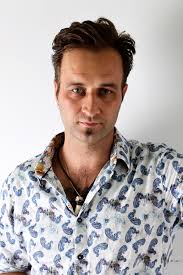
Michael Botur, born 1984 in Christchurch, New Zealand, is the author of five acclaimed short story collections, four novels, ‘page and pub poetry’ collection Loudmouth and the children’s book ‘My Animal Family.’ He has won awards for short fiction in the US, Australia and New Zealand. Botur has published journalism in most major newspapers and magazines in New Zealand and is concentrating on screenwriting in 2022.
He lives in Whangarei with his two kids, and the deal is this: Kids, you can stay up late and I’ll tell you some dark tales, though you may become unnerved. You have been warned.
Botur holds a Masters Degree in Creative Writing from AUT University and a Graduate Diploma in Journalism Studies from Massey University, as well as degrees in arts and literacy. Botur makes a living from communications, content and copywriting.
Botur has published creative writing in most NZ literary journals and has won various prizes for short stories and poems since beginning writing in 2005. He has been making money from creative writing since the age of 21 and in 2017/18 was included in collections put together by University of Otago (Manifesto 101) and University of Canterbury (Bonsai: Small Fictions).
Botur has published news articles in VICE World News, the Listener, New Zealand Herald, Herald on Sunday, Sunday Star-Times, The Spinoff, Noted, Mana and North & South. In 2017 Botur launched the only online ‘gallery’ for NZ short story writers, http://www.NZShortStories.com.
In 2021 Botur was the first Kiwi winner of the Australasian Horror Writers Association Short Story Award for ‘Test of Death.’
Why Ginger Nuts of Horror is the #1 Resource for Horror Fans

Reviews: With 17 years of reviewing horror, we offer an unparalleled perspective. Our reviews expertly guide you from mainstream bestsellers to under-the-radar indie gems, helping you find your perfect, terrifying read.
Exclusive Access to Horror Authors: Go behind the scenes with in-depth interviews that reveal the minds behind the madness. We connect you with both legendary and emerging horror authors, exploring their inspirations and creative processes.
Award-Nominated Authority & Community: Founded by Jim McLeod, Ginger Nuts of Horror has evolved from a passion project into an award-nominated, essential horror website. We are a global hub for readers who celebrate horror literature in all its forms, from classic ghost stories to the most cutting-edge dark fiction.
Experience the Difference of a Genre-Dedicated Team
What truly sets us apart is our dedicated team of reviewers. Their combined knowledge and authentic enthusiasm ensure that our coverage is both intelligent and infectious. We are committed to pushing the genre forward, consistently highlighting innovative and boundary-pushing work that defines the future of horror.
Ready to dive deeper?
For horror book reviews you can trust, a horror website that champions the genre, and a community that shares your passion, Ginger Nuts of Horror is your ultimate destination. Explore our vast archive today and discover why we’ve been the top choice for horror fans for over 17 years.