

Still Floating: 40 Years of Pennywise | Edited by Tom Deady | June 2026 |
Forty years ago, Stephen King published IT and handed horror fiction a villain it has never quite got rid of. Pennywise the Dancing Clown has since appeared in a 1990 ABC miniseries that drew 30 million viewers, two Andy Muschietti films that grossed over $1 billion at the global box office, and an HBO prequel series that debuted in October 2025. Now, Still Floating: 40 Years of Pennywise, edited by Bram Stoker Award-winner Tom Deady, brings thirty authors, artists, scholars, and publishers together to take stock of what King built and what four decades of Pennywise have meant for the horror genre.
Forty years on, Pennywise is still the clown horror can’t put down.
Thirty-nine years after a small-town Maine child murderer in greasepaint first dragged a paper boat into a storm drain, the question isn’t why Pennywise endures, but why he was ever supposed to stop.
Stephen King published IT on September 14, 1986. It was intimidating on a shelf but extraordinary in a reader’s hands, becoming the best-selling hardcover fiction title in the US that year. King conceived it as a “final exam on horror”, a single novel containing every monster that ever terrified a child. What emerged was Pennywise the Dancing Clown, a shape-shifting entity whose preferred form weaponised the figure meant to make children laugh.
IT won the British Fantasy Award in 1987. But awards don’t explain what the novel did to popular culture over four decades.
The 1990 ABC miniseries changed everything. Tim Curry’s Pennywise, lopsided grin, yellow eyes, barely-contained hunger, became a defining horror performance. The two-night broadcast drew nearly 30 million viewers, making it ABC’s biggest success of 1990. Television required nothing but a sofa, and Curry’s version became the Pennywise millions carry with them. He was never nominated for an Emmy, a sharp injustice in genre television history.
Andy Muschietti’s two-part film adaptation arrived in 2017 and 2019, dividing the story by age. Chapter One grossed over $704 million worldwide on a $35 million budget, breaking the R-rated horror record. Chapter Two added another $473 million. Together, the films crossed a billion dollars. Critical reception was mixed, the adult story lost coherence—but the films introduced Pennywise to another generation, many of whom then discovered the novel was stranger and richer than either adaptation conveyed.
In October 2025, Muschietti returned with IT: Welcome to Derry, an HBO prequel series. It drew 5.7 million US viewers in its first three days, ranking among HBO Max’s top three debuts, behind only House of the Dragon and The Last of Us. Four separate screen adaptations across 35 years. Pennywise has outlasted the cultural cycles meant to exhaust him.
IT’s reach extends beyond adaptations. The novel didn’t invent the evil clown, but fused the image to a specific dread so completely that almost everything that exists in its shadow. Netflix’s Stranger Things wore its IT influence openly. The Duffer Brothers confirmed their depiction of Bob Newby’s childhood clown terror was an intentional nod. Finn Wolfhard, who played Mike Wheeler in Stranger Things, went on to play Richie Tozier in Muschietti’s IT films. That’s not a coincidence; it’s lineage.
Coulrophobia, fear of clowns, intensified in mainstream discourse following Pennywise’s repeated pop culture moments. Whether IT identified a pre-existing anxiety or helped construct it points to the novel’s deeper project. Pennywise works because clowns are already strange: they disarm, invite trust, and perform joy for an audience that knows the performance is constructed. The monster behind the mask isn’t a twist. It’s a confirmation.
This is the moment into which Still Floating: 40 Years of Pennywise arrives. Edited by Tom Deady, whose debut novel, Haven, won the Bram Stoker Award, the book brings together thirty authors, artists, scholars, and publishers to examine IT in depth: from King’s four-year writing process through the current adaptations.
The collection includes exclusive interviews with Bev Vincent, the Stephen King scholar and contributing editor of Cemetery Dance magazine, author of The Road to the Dark Tower. It draws on Glenn Chadbourne, the Maine-based artist who has spent decades illustrating King’s limited editions, and Richard Chizmar, founder of Cemetery Dance Publications and King’s co-author on the Gwendy’s Button Box trilogy.
Also included are Jamie and Jennifer Tinker, who run the Stephen King Tour out of Bangor, taking roughly 4,000 visitors per year through the real locations behind fictional Derry. Their angle grounds the novel’s legacy in something most literary criticism skips: tens of thousands of people travel to stand outside a house and think about IT. That’s not fandom in the diminutive sense.
Contributing essayists include Bram Stoker Award winners Gwendolyn Kiste (The Rust Maidens, The Haunting of Velkwood), Christa Carmen (The Daughters of Block Island), and Mercedes M. Yardley. Their presence matters. This is not a nostalgia project from enthusiasts. It is a serious engagement with a major horror work, written by people who understand the genre from the inside.
Still Floating is the examination that the 40-year mark demands.
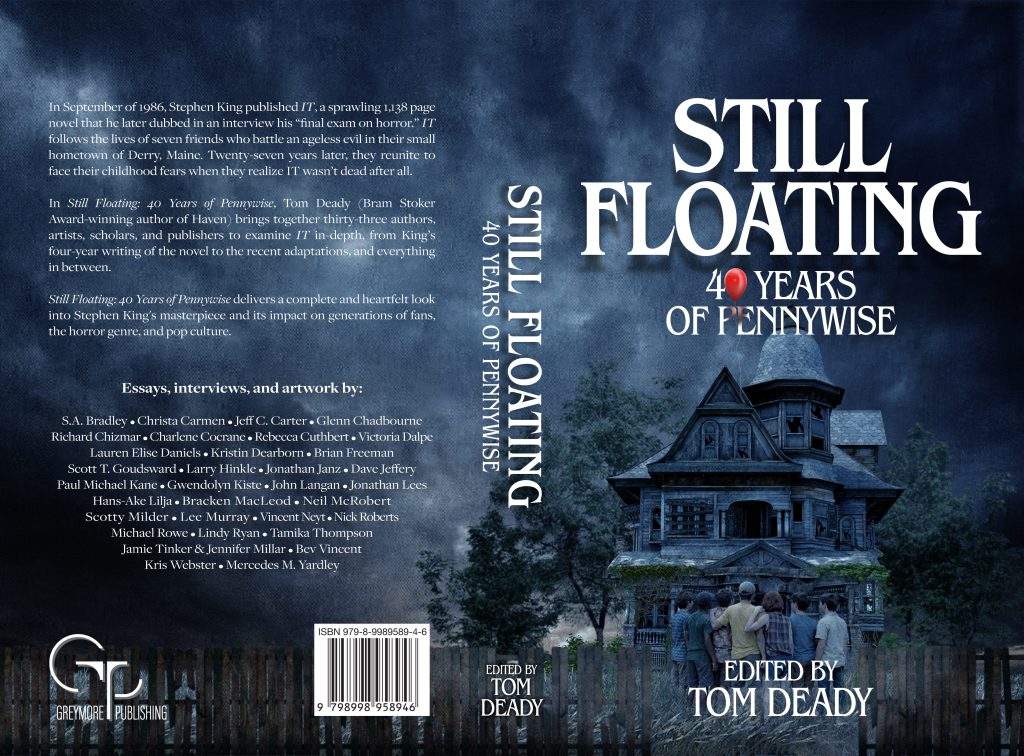
The special edition is a 6×9 hardcover with the stunning artwork by Francois Vaillancourt as a full wrap dust jacket. This edition also includes 13 original drawings by Glenn Chadbourne and will be signed by the editor. The first 200 people to order the hardcover will receive $10 off using the code FIRST200, bringing the cost down to just $25 plus shipping.
The Hardcovers will ship 15th of Sep 2026
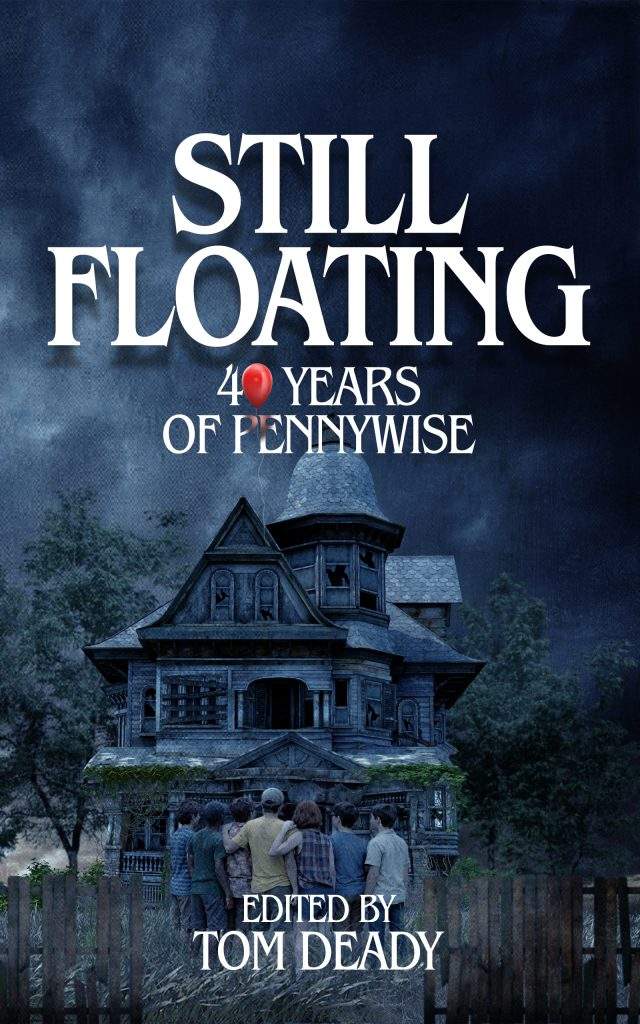
Still Floating: 40 Years of Pennywise edited by Tom Deady
In September of 1986, Stephen King published IT, a sprawling 1,138 page novel that he later dubbed his “final exam on horror.” IT follows the lives of seven friends who battle an ageless evil in their small hometown of Derry, Maine. Twenty-seven years later, they reunite to face their childhood fears when they realize IT wasn’t dead after all.
In 1990, an ABC miniseries starring Tim Curry as the novel’s iconic villain, Pennywise the Dancing Clown, put Pennywise and Derry on a trajectory to pop culture stardom. Decades later, the novel was adapted again, this time for the big screen by Andy Muschietti, in two full-length movies. Unlike the original miniseries and the novel itself, where the story is told in back-and-forth format between the childhood and adult characters, Muscietti’s adaptations tackled the story differently: Chapter One focused on the kids’ story and Chapter Two told the adults’ story. Despite the mixed reviews, the films brought a resurgence of new fans to the novel, and to the legend of Derry and Pennywise.
In 2025, Muschietti returned Pennywise to the small screen with his IT prequel, Welcome to Derry, once again introducing a new generation to the Dancing Clown.
Since the novel’s debut in 1986, countless books and movies have use the now-familiar trope of the “evil clown” as their central villain. In addition, the lore of Pennywise has been referenced in numerous productions, including the Netflix sensation, Stranger Things.
In Still Floating: 40 Years of Pennywise, Tom Deady (Bram Stoker Award-winning author of Haven) bring together thirty authors, artists, scholars, and publishers to examines IT in-depth, from King’s four-year writing of it to the recent adaptations, and everything in between.
The book includes exclusive interviews with Stephen King expert Bev Vincent, friend of King and artist for many of his limited edition novels, Glenn Chadbourne, long-time friend and co-author Richard Chizmar, and owners of The Stephen King Tour in Bangor, Maine, Jamie and Jennifer Tinker.
The book also includes essays from Bram Stoker Award winning authors Mercedes M. Yardley, Christa Carmen, Gwendolyn Kiste, and many more.
Still Floating: 40 Years of Pennywise delivers a complete and heartfelt look into Stephen King’s masterpiece and its impact on generations of fans, as well as the entire horror genre.
The special edition is a 6×9 hardcover with the stunning artwork by Francois Vaillancourt as a full wrap dust jacket. This edition also includes 13 original drawings by Glenn Chadbourne and will be signed by the editor. The first 200 people to order the hardcover will receive $10 off using the code FIRST200, bringing the cost down to just $25 plus shipping.
The Hardcovers will ship 15th of Sep 2026