


- Sara Hinkley on The Red Sacrament: Vampires Who Microwave Fish
- The Red Sacrament by Sara Hinkley: A Vampire Coven in 1869 Paris
The opulence is the trap, and the dread rises like water in a basement.
A theatre that opens only at midnight. Actors who never age. A black slip of paper that decides whether you live the night or feed it. Sara Hinkley’s The Red Sacrament is historical vampire horror set in 1869 Paris, and it is one of the most assured horror debuts I have read in a long while. This is gothic horror with a political pulse, a queer vampire novel that takes the Anne Rice tradition and drags it into the streets of the coming Paris Commune. I came for the fangs and stayed for the argument about who feeds on whom.
Slow horror at its most assured, where the opulence is the trap and the dread rises like water in a basement. Sara Hinkley welds decadent period writing to a genuinely angry argument about class and labour, and keeps both in balance for five hundred pages. A debut with the confidence of a fourth novel.
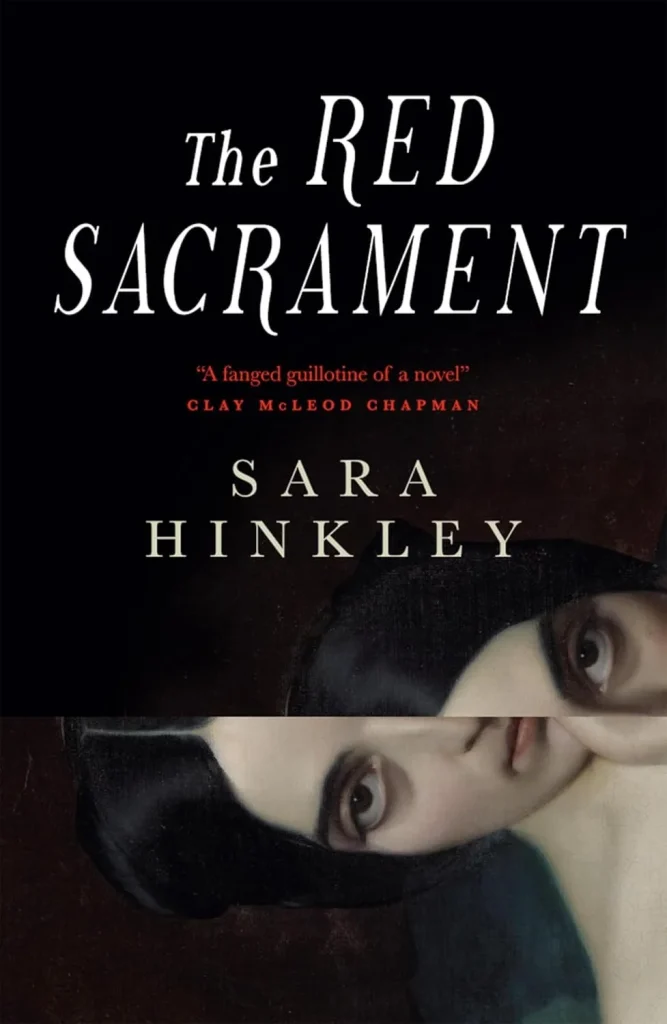
The Red Sacrament | Sara Hinkley | Titan Books |
Arnault counts the dead the way a good manager counts receipts. Just enough to keep the doors open. Never so many that the city notices. That single rule, the math of how many people a theatre full of vampires can quietly eat, is the engine of Sara Hinkley’s debut, and it is the thing that kept me turning pages well past the point where I should have put the book down and gone to sleep.
The Red Sacrament drops you into Paris in 1869. The Théâtre Saint-Siméon is the hot ticket in town. You get in only if someone hands you one of the rare black slips of paper, and the actors on stage are beautiful, ageless, and only ever seen at midnight. You can probably guess why.
Arnault runs the place. He directs the shows, balances the books, soothes the egos, and makes sure his immortal company kills with discipline. Then the door of his careful little world swings open twice. First comes Béatrice, a witch from a remote province, who forms a strange bond with him. Then come Victor de Rouvray and his sister Françoise, vampires from the New World who hunt without rules and without fear.
That is the setup. I won’t go past it. What I want to talk about is what the book does to you while it runs.
This is slow horror, and I mean that as the highest compliment I can pay it. Hinkley does not rush you toward a jump scare. She builds pressure instead. The dread here works like water rising in a basement. You don’t notice the danger at first because the surface is so lovely. Gas lamps. Velvet. Old sequins. Backstage gossip. Then you look down and the cold is already at your ankles, and when you are as short as me that’s very dangerous.
The opulence is the trap. Every glittering detail, every masquerade and midnight curtain call, is doing double duty as a warning. You feel safe in the theatre, the way the vampires feel safe, and that comfort is exactly what the book intends to take from you. Arnault gets premonitions of blood, death, and starvation. So do you. They sit in the back of your mind while the parties go on.
The pacing is patient and it is deliberate. Some readers will want the knife sooner. I didn’t. I wanted to live in this place for a while, and the longer I stayed, the more the threat sharpened. By the time the politics of the real world start bleeding into the playhouse, by the time France stumbles toward war and the streets begin to turn, the book has already taught you to be afraid of the quiet.
That is a hard trick to pull off. Hinkley pulls it off on her first try.
Hinkley writes sentences you want to read twice, but she never loses the thread of the scene to do it. The book is dense and it earns its density. There is a costume designer’s eye on every page, and it shows in how things are made, worn, and smell. You learn how a theatre actually runs, the sweeping and the bickering and the money, and that working texture is what makes the fantasy feel solid enough to stand on.
Her smartest structural choice is point of view. We stay close to Arnault. We track his every move, his every calculation, his slow slide from manager to something more exposed. Because he is centuries old, the book can stretch its gaze across history in a way a mortal narrator never could. Time moves through the city, and we get to watch it move. That long view is the whole reason vampires are worth writing about, and Hinkley knows it.
The dialogue has bite (sorry no pun intended) These are theatre people, immortal or not, and they talk like theatre people: sharp, funny, vain, wounded. The horrible ones are the most alive, which is usually the sign of a writer who actually loves her monsters. Hinkley clearly does.
The book wears its history like stage paint, thick and bright and meant to be seen from the cheap seats. Nothing about the period feels like homework. It feels lived in, smelled, handled.
Strip away the fangs, and The Red Sacrament is a book about work. About who gets used up and who does the using. Arnault is in management. He keeps the company safe, keeps it fed, keeps it together, and that role slowly corrupts him into a person who makes peace with feeding on others because the institution must survive. If you have ever worked somewhere that called itself a family right up until the moment it cut you loose, you will feel the cold logic of it in your gut.
That is the deep current here. The vampire as boss. The theatre as workplace. The pretty surface as the thing that hides the extraction underneath. It is a Marxist reading of the monster, and it is not subtle, but it is not preachy either. It lives in character and in plot, never in a lecture.
The history makes the metaphor land. Hinkley sets her story at the exact moment the Second Empire was about to collapse. The Franco-Prussian War broke out in 1870. The Siege of Paris followed that winter. Then came the Commune in the spring of 1871 and the brutal week that crushed it. This is real, and it is one of the most violent hinges in French history. Placing a coven of aristocratic predators in that city, right as the workers rise and the old order burns, is a choice with teeth. The vampires are the old world. The machine gun and the factory are coming for them whether they like it or not.
There is desire here too, and a lot of it. Arnault’s pull toward Victor is the warm heart inside the cold machine, and the queerness of that bond is treated as natural and central rather than decorative. The book is erotic and it is tender, even while it is cruel. Hinkley holds all of those at once and never drops any of them.
This is a first novel, so there is no back catalogue to measure it against. There is something better, in a way: a clear line from who Sara Hinkley is to what she made.
She works in film and television as a costume designer, with a background in theatre, dance, and opera. That is not trivia. It is the foundation of the book. The authority of the theatre scenes, the way clothes and bodies and rooms feel real, the easy fluency with how a production lives and breathes, all of it comes from a person who has spent her career in the wings. She wrote much of this during the production shutdowns of the pandemic, when an industry built on spectacle went dark, and you can feel that too. A glittering machine grinding to a halt, then tearing itself apart, is the literal shape of her plot.
This is historical vampire horror, and the obvious ancestor is Anne Rice. A vampire theatre troupe in Paris in roughly this era is Rice’s territory, and Hinkley knows it. The difference is that Rice passed quickly over the revolution and the playhouse, and Hinkley plants her whole novel there. She takes the part Rice left on the table and makes a feast of it. She also asks the harder political questions Rice tended to glide past. What does it mean for the immortal rich to feed on the city right as the city revolts? That question is the book’s spine.
What sets it apart is the welding of two things that rarely sit together this well: gorgeous, decadent period writing and a genuinely angry argument about class and labour. Plenty of books do one. Few do both without one drowning the other. Hinkley keeps them in balance for five hundred pages.
Beauty and politics, pleasure and rot, the monster as a mirror for the systems we live inside. The Red Sacrament is a strong early flare from that direction.
Arnault wanted only to keep the lights on and the company fed, and that is the most damning thing the book says about any of us. We will swallow almost anything to keep the show running.
The Red Sacrament by Sara Hinkley
A savage, hypnotic dive into the lives and deaths of a coven of vampires living in 19th Century Paris on the cusp of revolt and revolution, perfect for fans of Silvia Moreno-Garcia, Laura Purcell and Elizabeth Kostova
Paris, 1869. The Théâtre Saint-Siméon is the place to be, if you can get in. The black slips of paper that guarantee entry are rare and highly desired, and given only to certain persons. The actors on stage are magnetic and ageless, performing only at midnight and never seen during the day…
Arnault and his clan of vampires have survived for as long as they have by observing a rigid set of rules. At night, they perform on stage at the Théâtre Saint-Siméon, picking off just enough people in the audience to survive. But they understand the city, and how to live in it without being noticed.
Their peace is shattered first with a visit from Béatrice, a witch who forms a strange connection to Arnault; then with the arrival of Victor de Rouvray and his sister Françoise, vampires from a very different world. And, as Arnault grows closer and closer to the beautiful, enigmatic Victor, he risks becoming distracted from the constant bickering of his immortal friends, from the daily running of the theatre, and worse, from the premonitions of blood, death and starvation that he receives at night.
For a terrible change is on the horizon, revolt and revolution are brewing in the streets and soon, the city, and Arnault will never be the same again.