

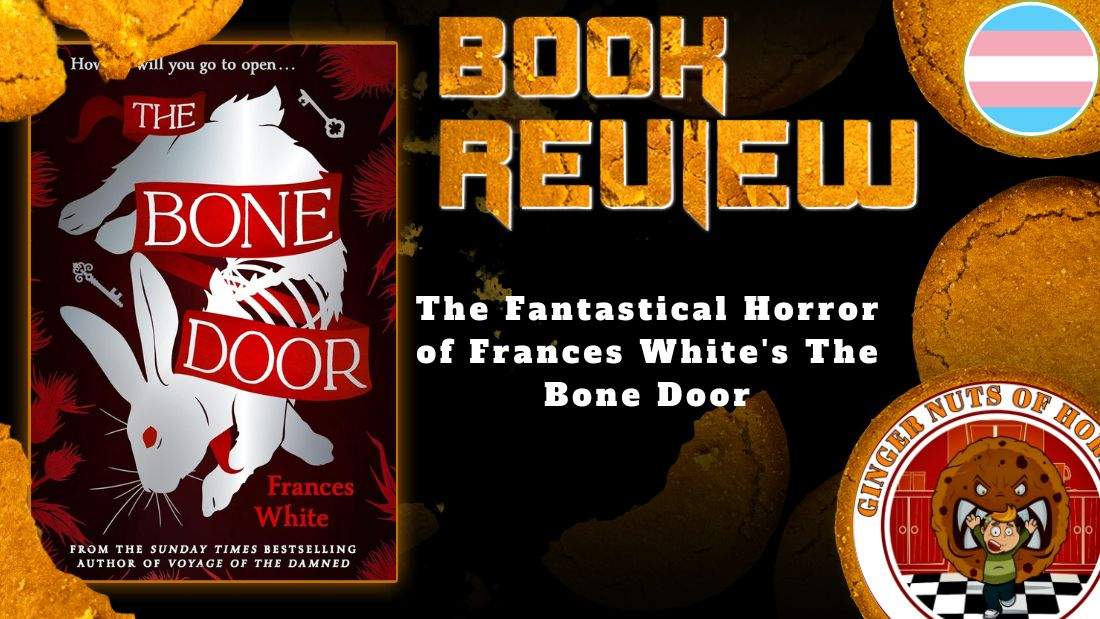
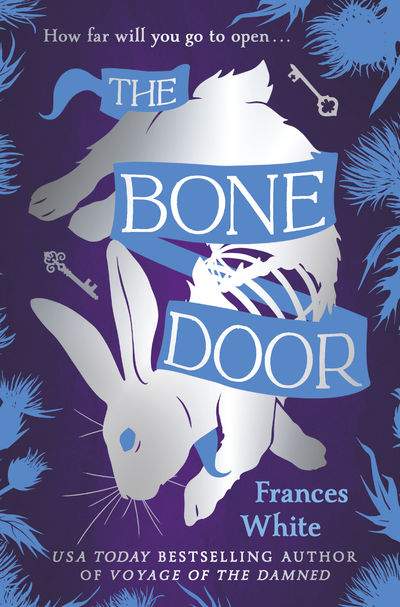
The Bone Door | Frances White | Hanover Square Press | 2026 |
Frances White’s The Bone Door is a trauma fantasy that refuses easy answers. Set within a memory labyrinth, this emotional horror follows Hop, an amnesiac protagonist pursued by forces he cannot understand. The novel transforms dark fantasy tropes into a devastating exploration of grief and healing. White doesn’t offer magical solutions. Instead, she asks how we live with wounds that never truly close. The Bone Door is haunting, compassionate, and essential reading for anyone who wants fantasy that hurts and heals in equal measure.
The Fantastical Horror of Frances White’s The Bone Door
Review by Abby Wolf
The Bone Door by Frances White (Voyage of the Damned) is a nightmare wrapped in the skin of a fantasy. On the surface, it presents us a quest through a labyrinth of locked doors and seemingly impossible challenges. Beneath that framework, however, lies something far more devastating. The Bone Door is a story about trauma, memories, grief, and the painful process of leaning how to live with wounds that simply will never truly heal.
From the very beginning of the novel, White creates an atmosphere of profound unease and mystery. Hop, our main character, awakens without memories, trapped within a labyrinth and pursued by forces he cannot understand. This premise immediately establishes a sense of vulnerability. Right alongside Hop, the reader is forced to navigate the world of The Bone Door without context, piecing together fragments of truth while never quite knowing which revelations are to be trusted. This uncertainty becomes one of the novel’s most notable features. The labyrinth is not merely a setting but an extension of the story’s emotionally heavy core. It is a place built from fears and buried truths.
The horror elements we find in The Bone Door is remarkably effective because it operates on multiple levels. The monstrous creatures and the relentless dangers lurk beyond every door. White populates the labyrinth with unsettling imagery and strange, disturbing encounters that create a constant feeling of dread. Yet the more powerful horror emerges from something far more human. It is the horror of memory and the horror of discovering parts of yourself you do not want to face. It is the horror of understanding that some wounds shape us so completely that escaping them is impossible.
These elements resonate so deeply because White grounds them in emotion. The world is fantastical, but the feelings it evokes are painfully real. As Hop and his companions move through increasingly dangerous situations, The Bone Door continually returns to questions about identity, loss, guilt, and healing. Every revelation carries emotional weight because it is tied to not only the plot, but to the characters’ understanding of themselves and one another.
The relationships at the heart of the story are what ultimately elevate The Bone Door beyond its compelling fantasy mystery and into something genuinely moving. White demonstrates a remarkable skill at recognizing that people respond differently to suffering. Some characters cling desperately to hope. Others bury themselves in anger and violence. There is no simplistic, one dimensional portrayal of healing. Instead, the novel acknowledges that trauma affects everyone differently and that recovery is not linear.
This emotional complexity gives our characters an authenticity that makes their struggles feel meaningful. Their bonds become sources of comfort and strength, but they are never presented as magical solutions. Friendship and love cannot erase pain, but they can make it bearable. Some of The Bone Door’s most affecting moments come not from grand revelations or dramatic confrontations, but from small acts of compassion between children trying to survive.
White also deserves praise for her willingness to embrace darkness without it consuming the story entirely. The Bone Door explores very difficult subjects and frequently ventures into painful territory, but it never feels utterly hopeless. Instead, it asks whether healing is possible after immense suffering and what it means to continue moving forward when the past cannot be changed. The answers it offers are not easy or fall into sentimentality, which makes them all the more powerful.
The pacing of The Bone Door reflects its balance between its mysteries and emotional journey. While unfolding the secrets of this labyrinth provide constant momentum, the narrative remains character-focused. The world building serves the story rather than overshadowing it. White gradually reveals the lore and mechanics of the labyrinth, allowing readers to experience the same sense of discovery as the characters. By the time the larger truths emerge, they feel earned rather than simply explained.
What impressed me most about The Bone Door is how it transforms its fantasy and horror elements into vehicles for its emotional storytelling. The monsters and the forgotten past matter because of what they represent. The labyrinth matters because it forces the characters to confront. Every locked door feels symbolic of a memory or fear, and a truth waiting to be reckoned with.
By the novel’s conclusion, the horror remains. There were moments I was genuinely left jaw dropped. But, this horror is accompanied by something equally powerful. Hope. Not a naive belief that suffering can be undone, but a quiet understanding that people can endure unimaginable pain and still find a reason to keep going. White has crafted an epic tale that is haunting and also compassionate. The Bone Door is a fantasy filled with monsters and mysteries, but achieves so much in its exploration of scars we bear and the courage required to face them.
Thank you so much to Frances for getting me a gorgeous finished copy from Hanover Square Press. The Bone Door is available now wherever you buy your books.
The Bone Door by Frances White
What lies beyond The Bone Door?
When Hop awakens in an ancient labyrinth, he has no memory of his life before, or how he got here.
He does not recognise the mysterious girl trapped with him.
And he certainly cannot identify the shadowy figure stalking him, whispering terrible things . . .
But there is one thing he is certain of.
He must escape.
The only way out of the labyrinth is through The Bone Door. But it lies behind a series of other locked doors hidden across an array of strange realms. To open the way, Hop must complete impossible tasks before his time runs out.
As Hop travels deeper, he discovers that he and his companions may be more connected to the place and its horrors than he could ever imagine.
Unless Hop is able to unravel the true mystery of the labyrinth, including his own role within it, the Bone Door and any hope of escape will be lost forever.

Abby Wolf is a journalist for The Fandomentals. She is also an avid reader, reviewer and fierce supporter of the horror community. She is also the author of the short story "The Inevitable", her first piece of fiction, which is included in the With Teeth werewolf anthology.
links: https://www.instagram.com/unstable.books?igsh=MXd2NmtwN2NuMGdoZA%3D%3D&utm_source=qr
https://substack.com/@unstablebooks
https://www.goodreads.com/user/show/171135280-unstable-books