- Fawn – The Devil Knows Her Name by C.N. Vair’s Debut Is Appalachian Feminist Horror at Its Sharpest
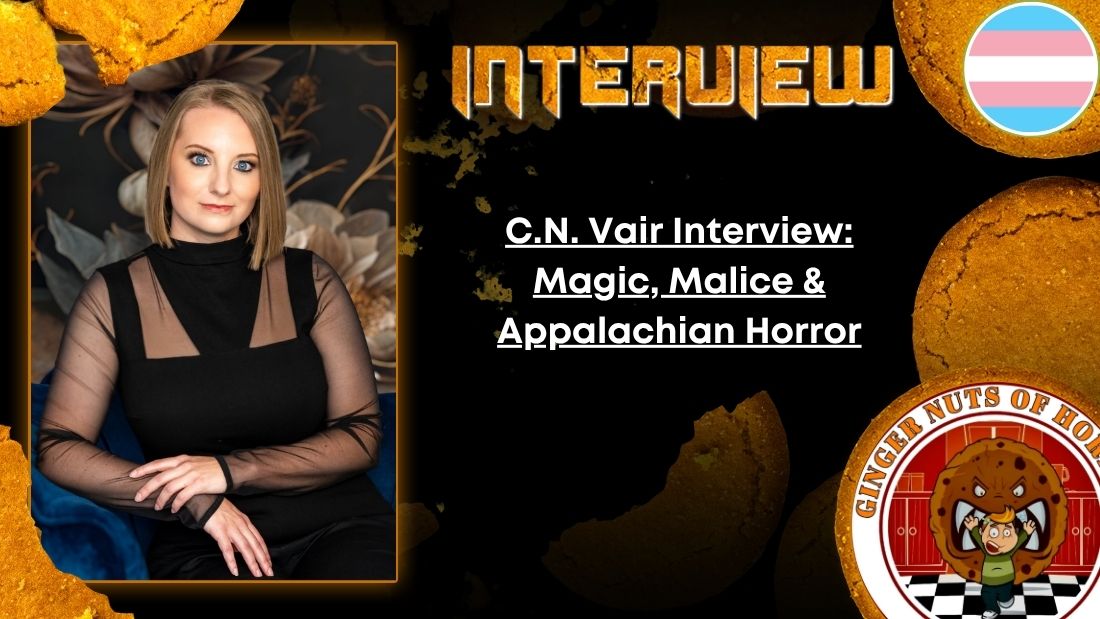
- C.N. Vair Interview: Magic, Malice & Appalachian Horror
For the proud, the disobedient, and the ones who survived.
C.N. Vair’s The Devil Knows Her Name announces itself with the authority of a writer who has spent years earning every sentence. The novel follows Tess Wynne, a woman who has been dangerous for a hundred years, and whose bargain with the devil becomes the engine for a story that refuses easy comforts.
There is no glamour here, no witchcraft that photographs well. Instead, Vair has written something rarer: a horror novel that argues magic costs everything, land remembers everything, and the women history tried to burn were never the ones who mattered. In this interview, Vair discusses Appalachian horror, the discipline of economical prose, and the novel’s commitment to reclaiming pride and anger for the disobedient. As I said in my review of Fawn, “This is a book that understands power is never free, and the women who survive are the ones who know what they’re willing to pay.”
C.N. Vair Interview: Magic, Malice, and the Cost of Power | Interview |
I wrote The Devil Knows Her Name for myself, and for anyone else who was called rebellious and proud and disobedient growing up, the ones for whom God was only ever a threat and the church a prison. I want them to come away from the book with their pride and their anger—maybe reclaimed after years of burying it, or maybe holding onto it with a fiercer, firmer grip—and the knowledge that these things are worth having.
C.N. Vair Interview: Magic, Malice & Appalachian Horror
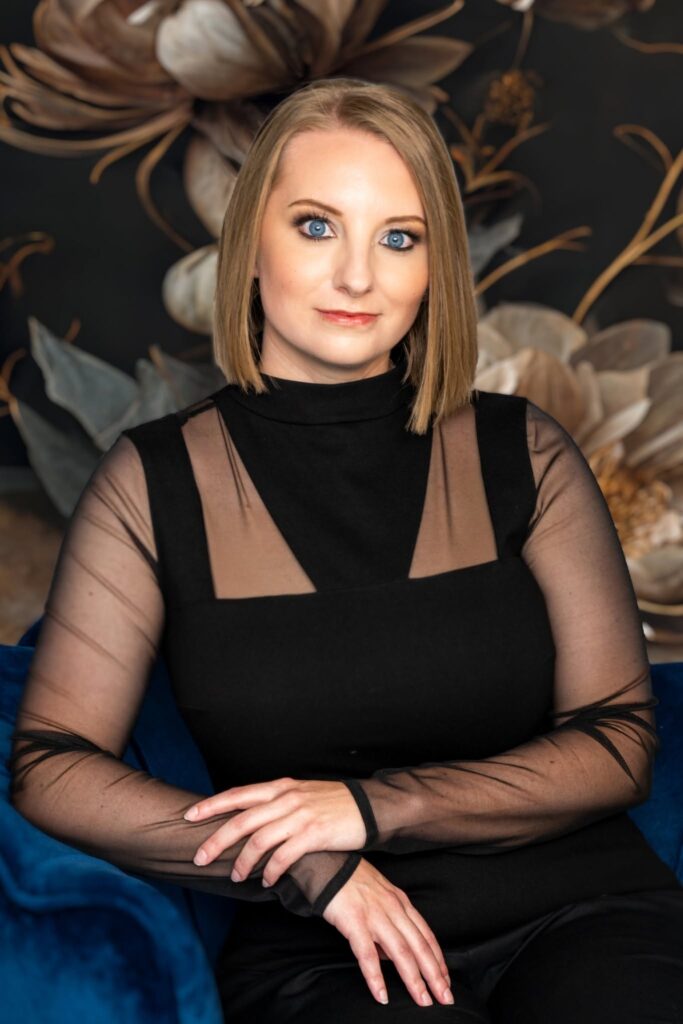
Tess Wynne has had a hundred years to become who she is, and you can feel every one of them in her voice. When you first heard her speaking in your head, did she arrive fully formed, or did it take time to find the register she narrates in — that particular mixture of wry authority and genuine uncertainty?
It took time to find everything in this book. I had no idea what I was looking at when I first started this — I had elements I wanted to explore, ideas I wanted to subvert, but I wasn’t committed to a particular version of the story or character. There were three or four false starts to this novel, and there were softer versions of Tess, and a version where she had a sister who was all sweetness while she was all smoke. Once the story came together, however, the final iteration of Tess arrived fully formed. I found her voice in the first page, and that page remains largely unchanged from the initial draft.
The bargain at the heart of the novel is fascinating precisely because the devil never lies and his terms are always, technically, fair. There’s something almost more disturbing about a supernatural threat that operates in complete good faith than one that deceives. Was that courteous, contractual menace always the version of the devil you intended, or did you try other versions before landing on this one?
There were certainly other versions of the devil, but he always operated in good faith. I’ve always had too much sympathy for him, and that showed in previous iterations — he was maybe a little too sweet, too pathetic. I was so focused on giving Tess her teeth that I rather defanged him, and it was important to me that he not be the definitive villain of the story. I think this final version strikes a happy balance and leaves some ambiguity for the reader in terms of how much of a role he really plays in the events of the story.
The observation you make early in the novel, that the women burned during the witch trials weren’t witches, they were healers and housewives and women who knew too much about the wrong things, lands with real force. It reframes every scene that follows. How central was that argument to the book’s original conception? Did the novel grow outward from that idea, or did it arrive later and clarify what you were already writing?
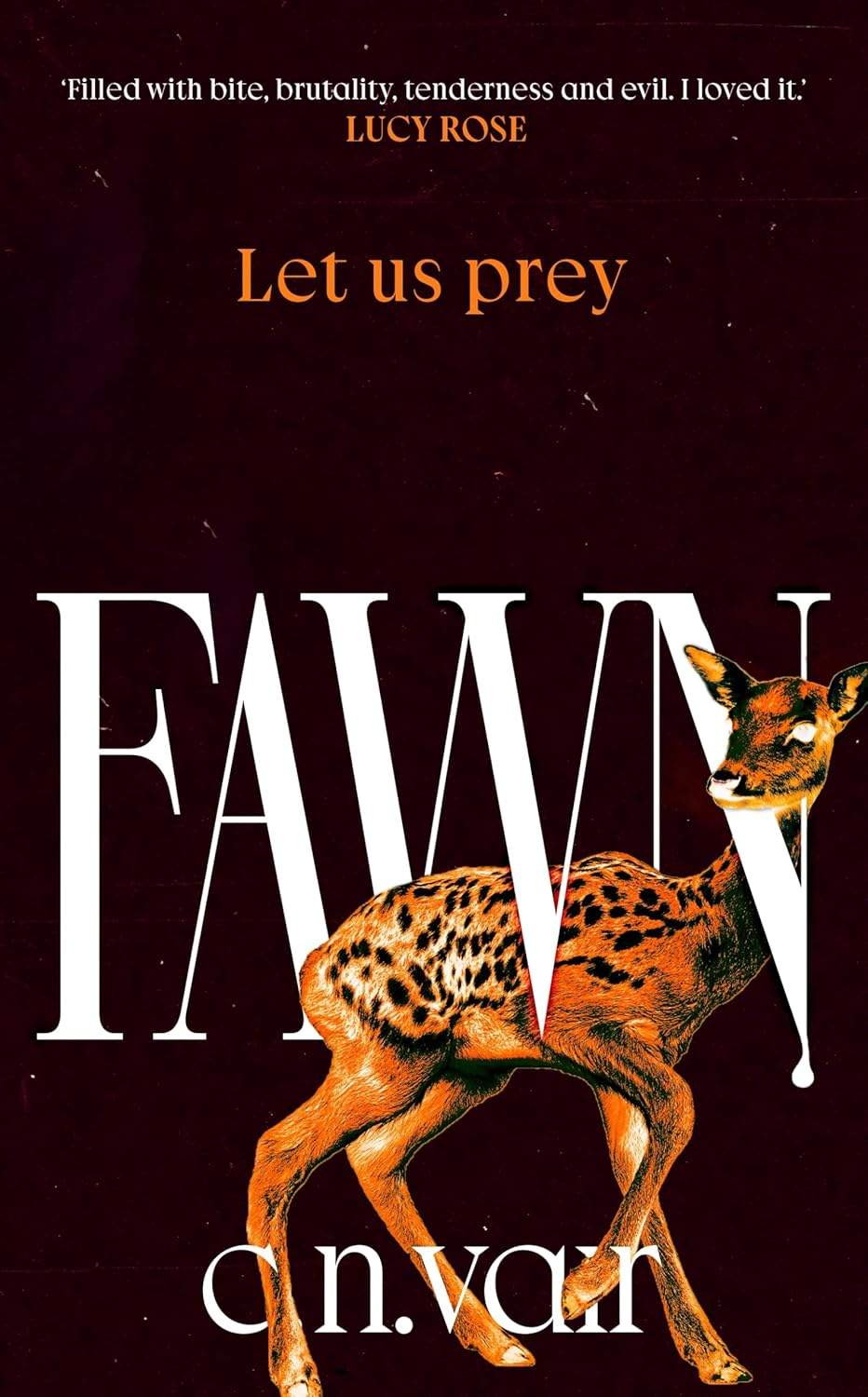
That idea has been with me since college — it’s one of those seeds you pick up in your formative years and suddenly find it blooming a decade later. I took an intimidating but richly rewarding class on medieval law and literature, and while we were studying the Eyrbyggja saga, I was struck by the power witches had within Norse culture and within the enduring legacy of the Vikings.
Contrary to the modern cultural reframe of witchcraft, the pagan witch’s power was in her ability to do harm; she had power because men were afraid of her. In modernity, what began as an earnest, worthy effort to set the record straight about the Salem witch trials feels like it’s morphed or been co-opted into a larger watering-down of the mythology of women’s influence.
If you read actual scholarship about the Salem Witch Trials, you know that men as well as women were accused of witchcraft, and the accused were not necessarily healers or midwives. However, that’s the romanticized version that’s made it’s way into the zeitgeist — the gentle woman with her basket full of herbs and a housecat at her heels, as if the powerlessness of the victims is something to aspire to. I wanted to reclaim some of that mythology.
The witchcraft in this book is notably unglamorous. It is physical, costly, embedded in soil and season and debt. There’s an implicit argument running through the novel about what magic actually is versus what a certain corner of social media has decided it looks like. How deliberately were you pushing back against the aestheticisation of witchcraft, the altar that photographs well, the ritual that makes good content? And did you worry at any point about how that argument would land with readers who identify with that tradition?
At a time when many readers conflate a character’s opinion or actions with the author’s beliefs, perhaps I should’ve been more worried about it. I, personally, have mixed feelings about Instagram witchcraft; on the one hand, it’s a beautiful aesthetic, in many ways its own art, and I understand the urge to share it, and I do think it allows people to brush up against practices or traditions that they might then be inspired to study in earnest.
On the other hand, I think the act of making something digestible or child-friendly or marketable by necessity dilutes it, robs it of its power, and that applies to witchcraft and drag and music and kink and a host of other things. That’s not a novel idea — we all grew up with fairytales, we know the price is a first-born child or a voice or a heart — but I understand the resistance to it, and I think it’s fine to not want to practice something difficult or ugly or dangerous. My question, in all things, is where the power lies.
The magic system in the novel is extraordinarily well thought through, and one of the things that struck me most is the way people and landscape become genuinely entwined in it, each feeding and drawing from the other’s power. Was that entanglement something you mapped out structurally before you wrote, or did it emerge organically as you understood Burrsville better?
This is the loveliest compliment in the form of a question ever, but I have to confess I didn’t map a damn thing. I’ve always been drawn to soft magic systems, and the function of Tess’s magic really emerged from the awareness that everything is connected, for better or worse. Issues of climate justice are thoroughly tangled with those of racial justice and economic justice, and animal welfare is tied to human welfare.
Often that interconnectedness is overwhelming; you can’t solve one problem without solving all the other problems at once, and I think the actual fantasy element of this is that Tess has the power to affect all of it, that she can hold this web in her hands and create change without waiting for buy-in from other people.
The fawn is one of the most quietly disturbing presences I’ve encountered in recent horror fiction, partly because you refuse to make it sympathetic in any conventional sense. It is wrong, and Tess knows it is wrong, and she keeps it anyway. What drew you to using a damaged wild animal as the novel’s central image of defiance? And what does the fawn mean to you personally, beyond what it means in the story?
I chose a fawn because the way people reduce animals often mirrors the way they reduce women. On the one hand, some people still don’t even think of animals as sentient beings, as capable of feeling pain or grief or joy, and on the other, we have the wannabe Disney princesses who think an animal will not or should not hurt them because they are just so special. Women are often treated either as villains or children, and I wanted both Tess and the fawn to confront those reductive stereotypes in their own ways.
Burrsville is drawn with a specificity that feels like genuine care rather than research. The community surveillance, the way the town watches, the social texture of a place that small and that old. How much of Appalachia’s particular history and culture did you work through before you felt you’d earned the right to set a novel there? And what does the region give you, as a horror writer, that another setting couldn’t?
The question of whether I earned the right is a bit tricky, because the answer depends on what you consider Appalachia. Burrsville is an amalgamation of towns I’ve known and lived in, all of which are physically within the Appalachian range and regional commission but are outside of the areas of West Virginia, Kentucky, and Tennessee most people think of when they’re talking about Appalachia.
I wrote a place I knew, a place I had smelled and touched and seen firsthand how it functioned, so I never questioned whether I had the right to set the story there. That deep knowledge was vital, because it allowed me to bring the place to life in a way that I don’t think I would’ve been able to if I relied on research.
The pastor arrives in the novel as a threat that is entirely legible in realistic terms before the supernatural closes in. Polite, articulate, institutional, his menace expressed in reasonable sentences with reasonable faces. It’s a very specific kind of horror, and a very contemporary one. How much were you drawing on observable, real-world behaviour when you built him? And how hard was it to keep him plausible rather than cartoonish?
I’ve known a few Zekes, and to keep him from being cartoonish, I had to sand off some of the real-world features. His preaching persona is probably recognizable to anyone who grew up in the church, but the everyday version Tess interacts with most is much less confrontational and aggressive than the real-world version(s).
The novel draws a very clear line between two visions of land: land as resource to be used and extracted from, and land as relationship, reciprocal and demanding and alive with memory. That argument feels urgent well beyond the boundaries of a horror novel. Do you think horror is currently one of the better genres for making ecological arguments? And if so, why do you think that is?
Although I would never want to draw hard lines about what genres can and can’t do, I would say horror is one of the best for making ecological arguments, and I think it’s because horror is interested in fear, loss, grief, and rage in and of themselves, not just as part of a journey to something more palatable. The scale of human destruction is such that it’s impossible to make an ecological argument without feeling these things deeply, so a genre that doesn’t just tolerate, but luxuriates in them feels like a natural fit.
Tess’s original trauma, the act of violence that drove her to bargain, is present throughout the novel in structural terms without ever being foregrounded. The whole book is built on its logic without dwelling in it. That’s a very particular and disciplined narrative choice. How did you find the right distance from that event? How do you write around something without writing away from it?
This is giving me more credit than I’m due, because it didn’t feel like a disciplined choice — it felt like the only right way to write it based on Tess’s perspective and pride. She cannot tolerate the idea of herself as a victim, therefore the girl who went into the pond must have been stupid and weak and deserving of her fate, and the woman who came out was stronger and wiser and understood the mechanics of power. She can neither dwell on this moment of failure nor surrender the moment she’s mythologized as her rebirth, so she has to hold it at arm’s length.
Your journalism background is visible in the discipline of the prose, the precision, the economy. Sentences that do their job and move on. But there’s also something in the pacing and the dread architecture that feels entirely unlike journalism. How conscious were you of managing those two instincts, the journalist’s instinct for economy and the horror writer’s instinct for accumulation and delay?
I don’t remember being conscious of either of these while writing The Devil Knows Her Name. Journalism gave me an appreciation for economical prose (and the opportunity to practice it), but I’ve been writing stories since I was eight years old, so my storytelling instinct was developing long before I wrote for a newspaper. I wish my process was more articulate and elegant, but a lot of times it feels like a game of Marco Polo with the book’s heart — I’m blindfolded and fumbling around, and every so often I get a ping that I’m headed in the right or wrong direction.
The Devil Knows Her Name is, formally, a debut novel, but it reads with the composure of
someone who has been working toward this book for a long time. Was there a version of this story that existed years before the published novel? And what changed between that earlier version and what readers will hold in their hands?
I fall completely in line with the average debut in that this “first” novel is actually the fifth or sixth book I set out to write, depending on how we’re measuring. The Devil Knows Her Name represents more than a decade of more or less concentrated effort to find a story that I wanted to write and the market wanted to publish, but in terms of this individual story, the timeline was fairly quick.
It took me about two years to write, which is longer than I normally take, but this isn’t a case where it was hanging around in a drawer for a long time, waiting for me to find the key to the story. That said, the version that went on submission was different; without giving away too much, I can say the third act was more of an emotional obstacle for Tess than anything, and demanded less sacrifice, and ended much darker for David and the rest of the town.
Horror as a genre is in a remarkable moment right now, producing work that is socially
engaged, emotionally grounded, and unwilling to trade depth for shock. Do you think about yourself as part of a movement, or does that framing feel too large and external when you are inside the actual work of writing?
I think it’s easier to think of myself as a product of a movement! I’ve always been fairly genre agnostic, both as a reader and writer; those five or six novels that came before all had dark themes in common, but they were quite different from each other and from this, and I never set out to be part of a movement. I think the fact that I was able to write my way into this genre speaks to how expansive and boundary-defying the work and the readership has become.
You have described your own interests as the magic and malice of the natural world, and the accuracy of that phrase for this novel is almost eerie. But there’s a tension in it too: magic and malice are not the same thing. The natural world in this novel is not evil, but it is not safe either. It has appetites and memory and demands. Is the natural world, for you, ultimately on Tess’s side? Or is it indifferent to her, and she has simply learned to work with that indifference better than anyone else in Burrsville?
Ah, this is an amazing question! For me, the natural world is ultimately indifferent to Tess, and that is important; animals and plants and ecosystems are worth saving even if they don’t love us, even if their behavior can look like malice to us, and I needed her to embody that.
I think a lot of people who call themselves animal lovers or nature lovers have a childlike view of the natural world; they value those spaces and species purely for how they make them feel, and they struggle to accept species-appropriate behavior that doesn’t fit within their fantasy. I wanted to do as much justice as I could to wildlife rehabilitation and preservation as I could, not just present a Disney-fied version.
I love raccoons; I’d love one as a pet, but I never knew that they wash their food. Was this something you knew about prior to writing Fawn?
I’ve gotten multiple questions about raccoons washing their food, and I genuinely thought it was common knowledge! So yes, I did know that beforehand, but I didn’t know why — apparently it’s for improved sensory input rather than cleanliness.
Is there a reason why the US and UK titles for the novel are different? I have to admit I got somewhat confused when I was approached by both your US and UK publishers.
Oh yes, I’ve had quite a few people thinking they’re two separate books, but The Devil Knows Her Name and Fawn are one and the same, just the US and UK titles, respectively. Although this is probably more common than people realize (certainly moreso than I was aware before I started looking for other examples), I think social media has made it more confusing than in the past when different markets were neatly contained.
My understanding is that the UK got feedback from their major retailers that The Devil Knows Her Name was evoking too much romance and not enough of the “weird girl” vibe they wanted, and it would sit better alongside its comps with a one- or two-word title. Thus, Fawn!
Why does Appalachia—a region defined culturally by its deep-rooted traditions of oral storytelling, religious fatalism, and historical isolation—lend itself so powerfully to both horror and fantasy, and how do its specific landscapes (from abandoned coal mines to “hollers” shrouded in mist) function not merely as backdrop but as active narrative forces that shape the psychological and supernatural elements of these genres? And what would be your top 3 Appalachian Horror Novels?
I think every place has its own flavors of magic and horror, and the power comes from how well the writer knows the place. Many of the novels I wrote prior to this were set in cities, both real and fictional, in various parts of the country; I am fascinated and awed by cities, by their complexity and the people who navigate that every day, but I do not know them. I don’t know their histories or their secrets or how they change through the seasons, and that knowledge is what allows a place to become a narrative force rather than a backdrop — for me, at least.
There are many writers who are able to accumulate that familiarity through ways other than firsthand experience, but when you’re doing that, the first person you have to convince is yourself, and I’ve never managed it. Three of my favorite horror novels that I think beautifully capture the full breadth of Appalachia are Summer Sons by Lee Mandelo, The Bog Wife by Kay Chronister, and another debut coming out in October this year, When The Night Comes Knocking by Katherine Daniel.
The novel ends where it needs to end, and I won’t say more than that. But Tess’s final act is both a conclusion and an opening, a closing of one bargain and, possibly, the beginning of another. How much of what comes next do you already know? And is there a next?
The quick and easy answer is no, this was always planned as a standalone and I have no urge to write a sequel. That said, I did always treat it as something of an origin story; I imagine that someone will find their way to Burrsville again and treat this strange town as a mystery to be solved, and find Tess at the heart of it, for better or worse.
Final question. You’ve written a novel in which a woman who should have been destroyed instead spent a century becoming dangerous. In which the witches the trials were supposed to have burned were, by implication, not the real ones. In which magic that costs nothing is worth nothing, and the land remembers everything done to it and on it. These are not comfortable arguments for people who prefer their women quiet and their history tidy. So I’ll ask you directly: who did you write this book for, and what do you want them to walk away carrying?
I wrote The Devil Knows Her Name for myself, and for anyone else who was called rebellious and proud and disobedient growing up, the ones for whom God was only ever a threat and the church a prison. I want them to come away from the book with their pride and their anger — maybe reclaimed after years of burying it, or maybe holding onto it with a fiercer, firmer grip — and the knowledge that these things are worth having.
Fawn – The Devil Knows Her Name by C.N. Vair
Published by 3 A.M. Books
Enter the sanctuary at your own risk. The primal and unsettling tale of just how far a woman must go to protect nature and its inhabitants, perfect for fans of Francine Toon and Andrew Michael Hurley.
🍎 ‘Unflinching… I loved it’ Lucy Rose, Sunday Times bestselling author of The Lamb
🦌 ‘Beware, this book is pretty but it has sharp teeth’ Rachel Harrison, New York Times bestselling author of Play Nice
🍁 ‘Do whatever you have to do to get your hands on this book’ Clay McLeod Chapman, author of Ghost Eaters
‘The devil came on the autumn equinox, as he always did.’
Tess Wynne keeps mostly to herself in the hills of Appalachia. Her wildlife sanctuary is a refuge for the wounded and unwanted – and the only home she has left. She has built it carefully, with old rituals and even older bargains with the ominous visitor that comes every year.
Then she finds a doe split open on the road.
Beside it is the fawn who survived. Red-mouthed. Full set of teeth. Hungry.
From the moment Tess brings it home, whispers gather in town. A new pastor starts asking questions. And inside Tess, something primal begins to wake: anger, appetite, the slow understanding that prey is only prey for so long.
Dark, tender and eerie, Fawn is a slow-burning folk horror of nature, ritual and feverish femininity – a story about what a woman must become to protect what is hers.
🦌Readers are feral for FAWN 🦌
🦌 ‘One of my top books of the year!’
🦌 ‘This book had me reacting OUT LOUD’
🦌 ‘Not one to be missed!!!’
🦌 ‘Gets under your skin without really trying’
🦌 ‘A feminist woodland horror-fest with so much bite’

Ginger Nuts of Horror: The Heart and Soul of Horror Reviews

Looking to get your horror book or film in front of the genre’s most dedicated audience? Ginger Nuts of Horror is one of Europe’s largest independent horror review websites, with over 30 contributors publishing horror book reviews and horror movie reviews almost every single day.
We offer far more than reviews. Authors, filmmakers and publishers can promote their work through in-depth horror book reviews, horror film reviews, comic and video game coverage, news features, and our popular author and director interviews like Five Minutes With. Our guest feature series, The Horror of My Life, Childhood Fears, The ? That Made Me and more, let creators tell their story while promoting their latest release.
Every feature is built to sell your work. We include backlinks to your website or Amazon author page, a full synopsis, and a universal purchasing link that sends readers straight to their local store. Add a large, engaged social following and an 18-year archive of trusted horror coverage, and you have a platform genuinely built to grow your readership.
Whether you’re an established author, an indie filmmaker, or a debut voice in indie horror, there’s a way for us to help you reach more fans. Explore our horror book reviews and horror movie reviews, then get your horror book or film featured today.

Jim "The Don" McLeod has been reading horror for over 35 years and reviewing it for more than 16. He's the editor of Ginger Nuts of Horror, Europe's largest independent horror review and culture site, and a British Fantasy Award nominee for his work in the genre. When he's not busy inflicting his opinions on the horror community, he can be found annoying his family or getting thoroughly outwitted by his two dogs, Casper and Molly.