A “Prey No More” Reading List for Folk Horror, Feral Women, and Witches with Teeth
The devil may have gone down to Georgia, but C.N. Vair knows he belongs in Appalachia. Her debut is folk horror with genuine ecological intelligence, a feminist argument sharp as new teeth, and a vision of witchcraft that is raw, costly, and nothing like what the internet sold you. The Devil Knows Her Name is assured, specific, and entirely its own.
A “Prey No More” Reading List for Folk Horror, Feral Women, and Witches with Teeth
The devil may have gone down to Georgia, but C.N. Vair knows he belongs in Appalachia. Her debut is folk horror with genuine ecological intelligence, a feminist argument sharp as new teeth, and a vision of witchcraft that is raw, costly, and nothing like what the internet sold you. The Devil Knows Her Name is assured, specific, and entirely its own.
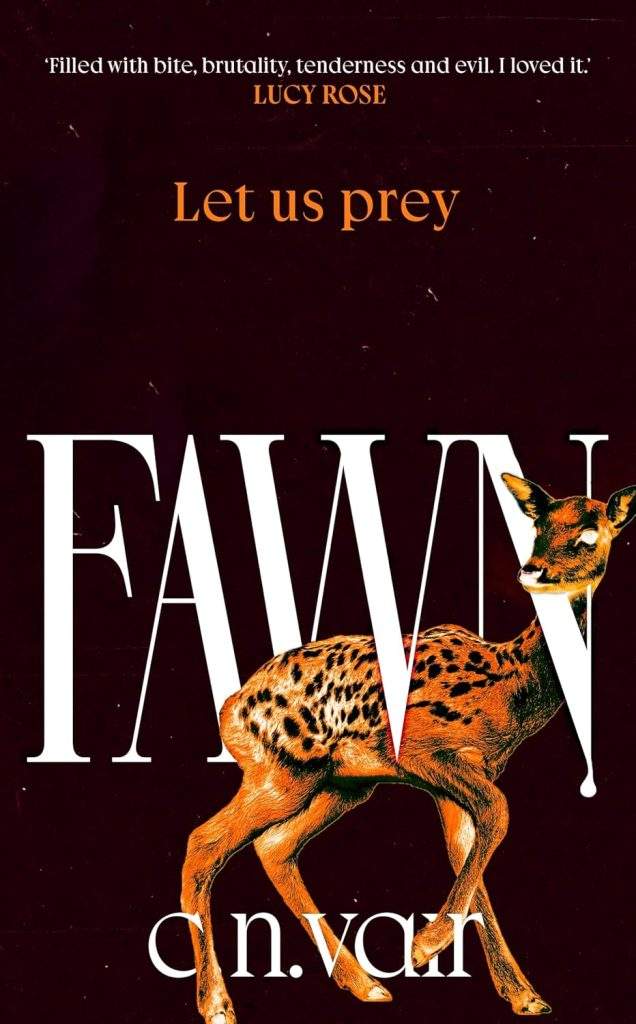
C.N. Vair’s debut Fawn (published as The Devil Knows Her Name in the US) has arrived in 2026 as one of the most distinctive Appalachian folk horror novels in years. Built around Tess Wynne, a centuries-old witch running a wildlife sanctuary in the isolated hills of Burrsville, it is a dark folktale of teeth, inheritance, and what happens when a woman stops being prey.
If that premise has already got under your skin, you are in the right place. We have put together ten books that share Fawn’s territory: feral women, powerful witches, folklore that bites back, and landscapes that always demand something in return.
Read our full review of Fawn here
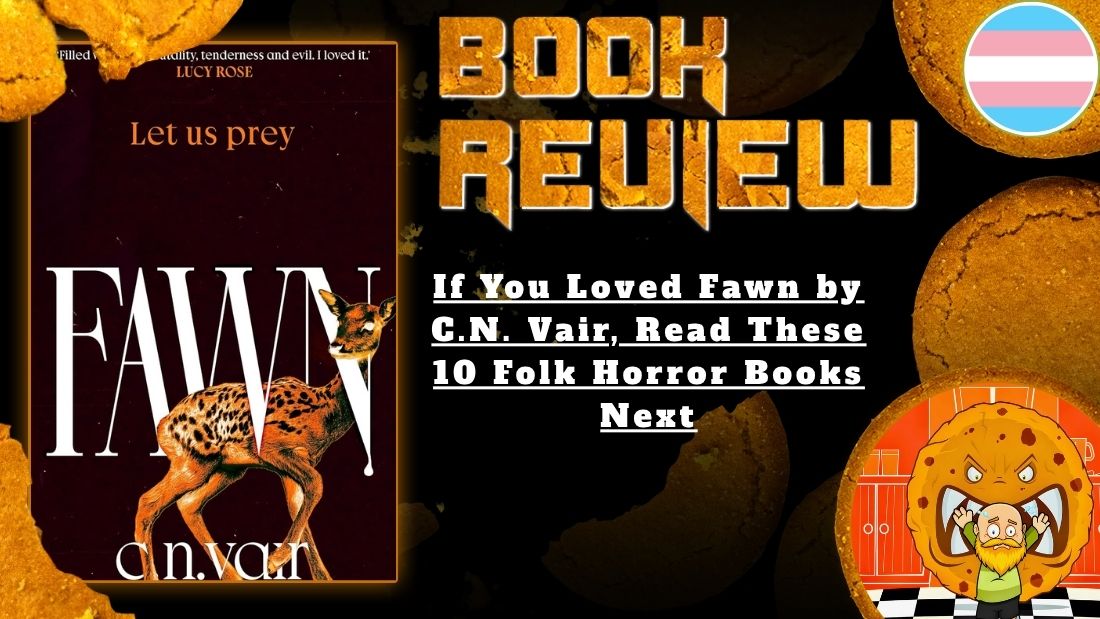
If You Loved Fawn by C.N. Vair, Read These 10 Folk Horror Books Next
1. Doe by Rebecca Barrow
Published: June 23, 2026 | Nancy Paulsen Books/Penguin Random House Sub-genre: YA Horror, Novel-in-Verse, Supernatural Horror (reviewed here)
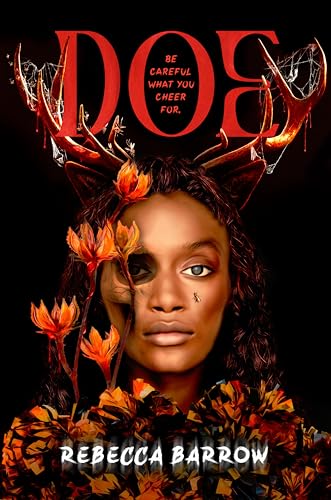
Maris Larsen is the captain of the West Eaton High cheer team, and being Coach’s favourite is the one bright spot in a life quietly collapsing: a depressed mother, an absent father, a relationship with her girlfriend that exists in name only.
When newcomer Genevieve Ray arrives and threatens to take everything Maris has, Maris starts having dreams about a monstrous ancient deer who calls itself Doe. The bargain is simple. Set Doe free, and Maris gets her position back. Of course, it is never simple.
Written in verse, Doe brings a punchy, fragmentary energy to its horror that is unusual and effective. The poetic structure creates rapid-fire emotional intensity; sentences land like bruises. Where Fawn grounds its animal horror in the slow burn of Appalachian folklore, Doe anchors its creature in the brutality of girlhood hierarchies, in the peculiar violence of being the girl who gets pushed down so another girl can rise.
Look closer and Barrow’s weather-controlling deer and Vair’s toothed fawn are the same animal wearing different masks, each one sliding a bargain across the table to a girl with nothing left to lose. Grief, found family, and the cost of ambition all run beneath the surface, and the ending is the kind that sits with you in the dark.
2. Weyward by Emilia Hart
Published: February 2023 | The Borough Press (UK) / St. Martin’s Press (US) Sub-genre: Folk Horror, Historical Horror, Feminist Witchcraft
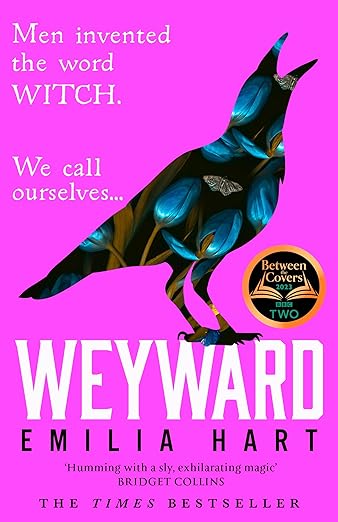
Three women, five centuries, one bloodline, one wild and ungovernable power rooted in the natural world. In 1619, Altha Weyward stands trial for witchcraft in Cumbria, accused of the gruesome death of a local farmer. In 1942, Violet rebels against everything her father wants her to be. In 2019, Kate flees an abusive partner to a crumbling cottage she barely knew she’d inherited, where the secrets of the Weyward women have been waiting in the walls.
Hart’s debut works the same seam as Fawn: the bond between women, land, and the slow accumulation of power that patriarchal systems try to stamp out and cannot. The magic here is not spectacular. It is ecological and inherited, running through women like a current, showing up in their kinship with insects, animals, and the turning of the seasons.
Altha’s 1619 chapters carry the most weight, drawn from Hart’s research into the Pendle witch trials, and they understand something essential: that accusing a woman of witchcraft has always been, at root, about punishing her for knowing too much and refusing to pretend otherwise.
Tess Wynne inherits a sanctuary and centuries of knowledge; the Weyward women pass their current down a bloodline. Both books treat that inheritance as the exact thing the world most wants to burn out of them. A Goodreads Choice Award winner for both Historical Fiction and Debut Novel in 2023, and a New York Times bestseller.
3. The Witch’s Heart by Genevieve Gornichec
Published: February 9, 2021 | Ace Sub-genre: Folk Horror, Norse Mythology, Feminist Dark Fantasy
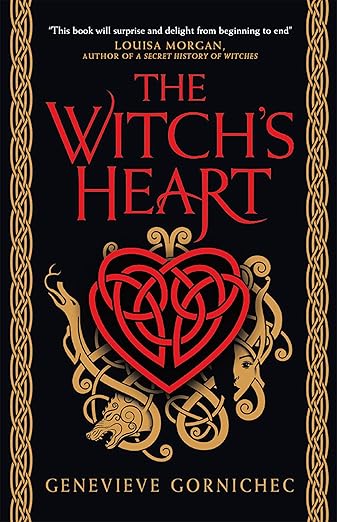
Angrboda’s story begins where most witches’ stories end: with a burning. Punished by Odin for refusing to share her prophetic powers with him, she is burned three times, her heart cut out, and left for dead. She survives, stripped of most of her power, and retreats to the farthest reaches of the forest. There she meets Loki, and from their union come three extraordinary children, each with a fate written into the bones of the world.
Gornichec’s debut does for Norse mythology what Madeline Miller did for Greek myth: it takes a woman at the margins of the old stories, the overlooked, the burned, the unnamed, and puts her at the centre of her own. Angrboda is one of the most compelling witch-protagonists in recent dark fantasy precisely because her power is inseparable from her suffering.
She is not powerful despite what has been done to her, but in part because of what she refused to surrender. Burned three times and still standing, she is Tess Wynne’s sister in spirit: a woman whose refusal to hand her power to a god, the way Tess refuses to hand hers to a town, is exactly what marks her as prey and exactly what stops her from staying one. Both books run on deep time, on a woman whose knowledge of the land and the future makes her a target, and on what she will sacrifice to protect her children. A national bestseller.
4. The Salt Grows Heavy by Cassandra Khaw
Published: May 2023 | Tor Nightfire Sub-genre: Folk Horror, Body Horror, Dark Fairy Tale
You may think you know how the fairy tale goes: a mermaid comes to shore and weds the prince. What the fables forget is that mermaids have teeth. By the time The Salt Grows Heavy begins, the mermaid’s daughters have already devoured the kingdom and burned it to ashes.
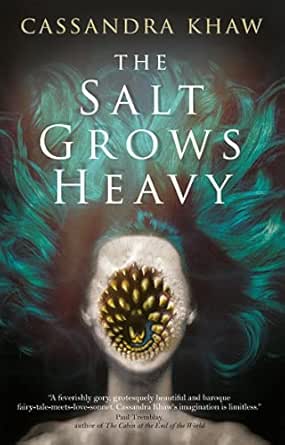
On the run, the mermaid, voiceless and feral, is joined by a plague doctor carrying their own darkness. Deep in a snow-crusted forest, they find a village of ageless children who thirst for blood, and the three saints who control them.
Khaw writes horror prose the way a jeweller sets shards of glass: every word deliberately chosen, the beauty and the brutality held in the same sentence without apology. The Salt Grows Heavy is what folk horror looks like when the monster at the centre is also the one seeking justice, a mermaid turned weapon by what was done to her, now aiming that capacity for destruction at something worth the effort.
Consider the mouths. Fawn opens with a rescued fawn that keeps all its teeth; Khaw opens with mermaids who have already used theirs. Where Fawn asks what a woman must become to keep what is hers, The Salt Grows Heavy asks what a woman becomes after everything has already been taken. A New York Times Best Horror Book of 2023, a Bram Stoker Award finalist, and a Shirley Jackson Award finalist.
5. A Forest, Darkly by A.G. Slatter
Published: February 10, 2026 | Titan Books Sub-genre: Folk Horror, Dark Fantasy, Feminist Witchcraft, Gothic Fairy Tale (reviewed here)
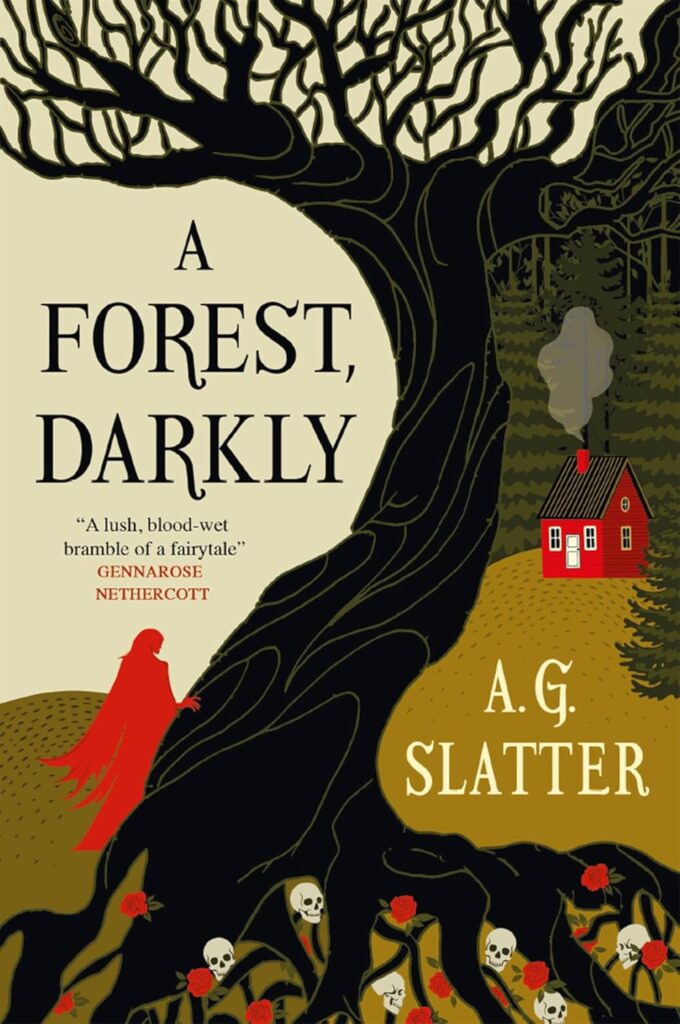
Mehrab is a witch whose life is meant to be winding down. She is menopausal, settled into the slow rhythms of a solitary forest cottage, her power folded into the daily work of mending bones and brewing remedies. Two arrivals crack that peace open. First Rhea, a young woman with untrained fire magic, turns up at her door fleeing the god-hounds who hunt everyone who practises the craft. Then children begin vanishing from the nearby village, sinister offerings start appearing on Mehrab’s doorstep, and something in the trees begins hunting the witch herself.
Slatter has a shelf of awards to her name, including a Shirley Jackson, a World Fantasy, and a British Fantasy Award, and this standalone slots into her Sourdough universe alongside All the Murmuring Bones and The Briar Book of the Dead. You do not need to have read a word of the others. What matters for this list is how cleanly it rhymes with Fawn. The forest is a character, not scenery, protecting Mehrab even as it tests her.
The found family is earned through shared fear and small domestic acts of care, never handed over by prophecy. And the power at the centre is seasoned, grumpy, and expensive, closer to Tess Wynne’s hard-won craft than to any glittering chosen-one gift. Where Tess dares the town of Burrsville to decide what she is, Mehrab holds a forest that shelters her while the village turns on her. Both books know a woman’s knowledge of the land is precisely what paints the target on her back. Menopause written as power rather than decline. That alone earns the slot.
6. The Year of the Witching by Alexis Henderson
Published: July 21, 2020 | Ace Sub-genre: Folk Horror, Dark Fantasy, Feminist Horror
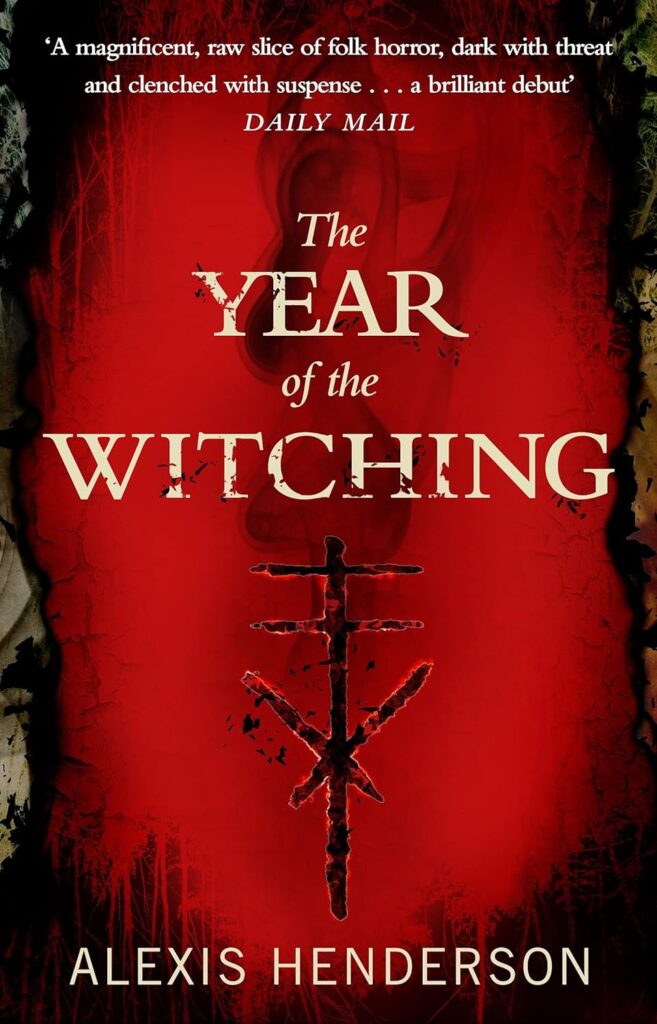
In the lands of Bethel, where the Prophet’s word is law and women’s lives are circumscribed by Holy Protocol, Immanuelle Moore is already an outcast. Her mother’s union with an outsider has made her existence a scandal. When a mishap leads her into the forbidden Darkwood, she finds her mother’s journal there, and begins to understand why a woman once turned to witches for help.
Henderson’s debut does something specific and effective: it takes the structural logic of oppressive religious societies and runs it through the filter of American folk horror, filling the Darkwood with genuine supernatural threat and the town of Bethel with the kind of everyday cruelties that frighten more than any creature. Immanuelle’s biracial identity puts her at the crossing point of every prejudice the settlement enforces, and Henderson is clear-eyed about what that costs.
The witches of the Darkwood are not safe either, which is the right call. Immanuelle’s Darkwood strikes the same deal the Appalachian hills strike with Tess Wynne in Fawn: the help is real, the power is real, but the terms are never yours to set. Power is never simply available to a woman who wants it. There is always a negotiation, and the land, or the darkness, or the devil gets the final word on the price. Goodreads Choice Award nominated for Best Debut Novel and Best Horror Novel 2020.
7. Home Sick by Rhiannon Grist
Published: Summer 2026 | Solaris Sub-genre: Psychological Folk Horror, Domestic Horror, Scottish Gothic (reviewed here)
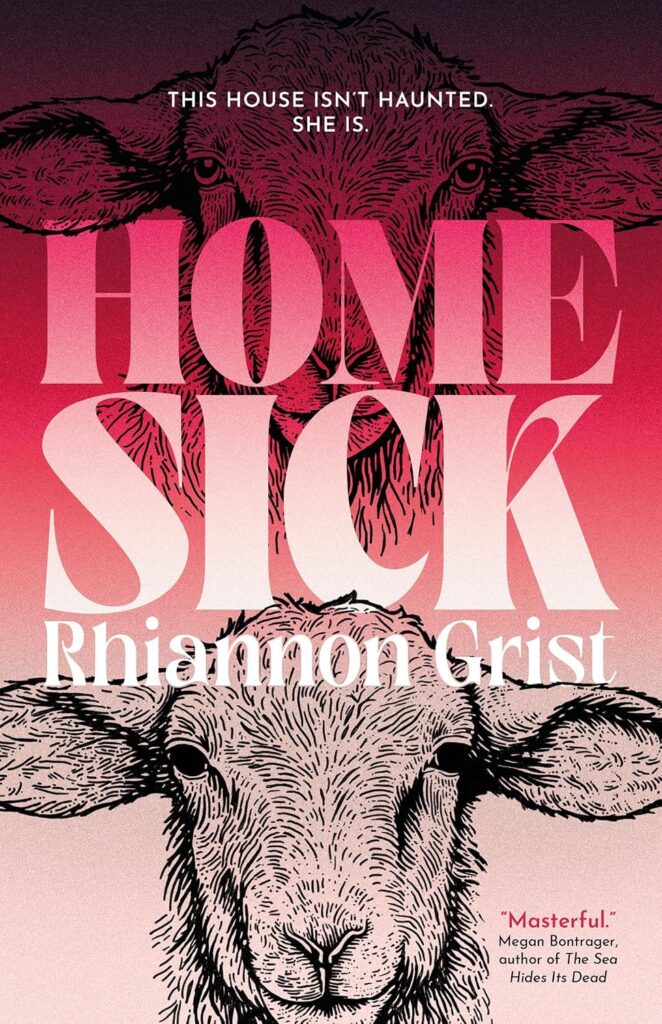
After a violent incident at work, Tamsin flees Edinburgh for a clean start in a remote cottage in the Scottish countryside. Somewhere new, she tells herself, she could make real friends, find work she loves, become a whole new person. The solitary cottage turns out to be a semi-detached, one thin wall between her and a total stranger whose smile never quite sits right. Then the disturbances start in her own home, the locals begin sharing odd stories about the house, and Tamsin’s paranoia climbs while the reader slowly stops trusting a single thing she reports.
Grist took Best Novella at the 2023 British Fantasy Awards for her Welsh folk horror The Queen of the High Fields, and her debut novel trades crypts and forests for thin walls, shared hallways, and the particular misery of being watched through glass you thought was private. This is folk horror relocated to the everyday, and it treats female rage as wreckage rather than as tidy empowerment.
The Fawn connection runs deeper than the shared rural dread. Like Tess Wynne in Burrsville, Tamsin is the incomer a small place decides to be wary of, and it is the landscape and the neighbours that apply the pressure until we see what she actually is. Both books circle one question. What does a watched, cornered woman turn into when the watching does not stop? Fawn answers it with Appalachian teeth. Home Sick answers it with a Scottish wall you can hear through. Read it before you so much as think about packing a box.
8. The Hunger by Alma Katsu
Published: March 6, 2018 | G.P. Putnam’s Sons Sub-genre: Historical Horror, Folk Horror,
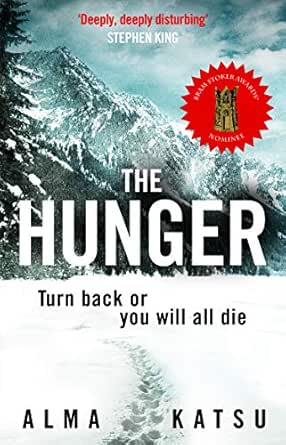
June 1846. George Donner leads a wagon train west. Then a boy disappears. Then children begin to vanish. Then the Sierra Nevada closes in, and the surviving members of the Donner Party begin to suspect that the threat they face reaches far beyond winter and starvation.
Katsu’s reimagining of the Donner Party injects a supernatural element into a story that was already horrific enough, and the result is a book where you can never be quite sure whether the evil comes from inside the wagon circle or outside it. Tamsen Donner, suspected of witchcraft by her fellow travellers, anchors the narrative as a woman whose intelligence and independence make her a target before the horror even arrives.
The landscape functions the way the Appalachian hills do in Fawn: not as backdrop but as participant. Something is out there in the mountains, and the land has its own appetite. And like Tess Wynne, Tamsen is marked as a witch long before anyone proves a thing, because a clever, self-possessed woman is threat enough all on her own. Bram Stoker Award nominated; Locus Award nominated.
9. Wilder Girls by Rory Power
Published: July 9, 2019 | Delacorte Press Sub-genre: YA Body Horror, Eco-Horror, Feminist Horror
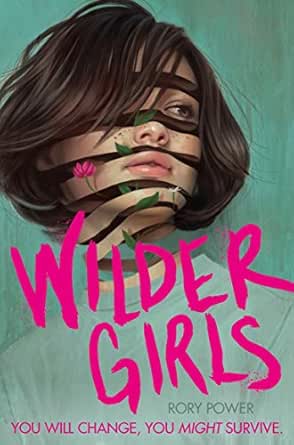
Eighteen months into a mysterious quarantine at the Raxter School for Girls, an island institution where something called the Tox has killed the adult teachers and transformed the surviving students’ bodies into strange, foreign things, Hetty will do whatever it takes to find her missing friend Byatt. Even if that means breaking quarantine and entering the woods where the Tox has made nature itself dangerous.
Rory Power’s debut is body horror at its most elegantly brutal: a second spine here, scaled skin there, hair that glows in the dark. The Tox is never fully explained, and that refusal is exactly the right choice. What Wilder Girls understands, and what it shares with Fawn, is that the most frightening monsters are the ones already rooted in systems, in institutions, in the bodies of women expected simply to endure.
Fawn puts the change in a woman’s mouth, full of teeth. Wilder Girls puts it in the whole body, and both books insist the transformation is the point rather than the tragedy. The bond between Hetty, Byatt, and Reese carries real emotional weight, and the eerie sealed-off island works as both prison and petri dish for everything the story wants to say about girlhood, survival, and the prices demanded of women who step outside the sanctioned limits. A New York Times bestseller, and a book that still stings.
10. Plain Bad Heroines by Emily M. Danforth
Published: October 20, 2020 | William Morrow Sub-genre: Gothic Horror, Sapphic Horror, Cursed Women
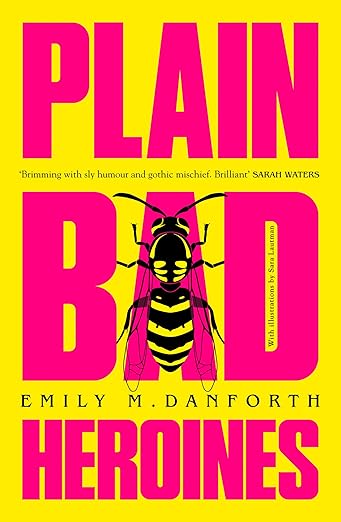
At the Brookhants School for Girls in 1902, two students, Flo and Clara, are found dead in the apple orchard with a copy of Mary MacLane’s scandalous memoir beside them, killed by a swarm of yellow jackets. Over a century later, the crumbling school is back in the news when writer Merritt Emmons publishes a book celebrating its queer feminist history. When a controversial film adaptation brings three modern heroines to Brookhants, past and present begin, grimly, to bleed together.
Plain Bad Heroines is the most architecturally ambitious book on this list: a story within a story within a story, complete with period-inspired illustrations, a witty omniscient narrator, and a curse that works as both supernatural threat and feminist argument. Danforth’s prose is sharp, funny, and thick with atmosphere, and her love for queer literary history gives the novel a richness that runs well past plot.
Like Fawn, it is fundamentally a book about what women will do to protect something they love, and what powerful institutions will do to destroy them for it. Swap the Appalachian hills for a cursed New England school and the argument holds exactly: love something fiercely enough, and the world decides you are the monster. It sprawls, gloriously. Give it a weekend.

Ginger Nuts of Horror: The Heart and Soul of Horror Reviews

Looking to get your horror book or film in front of the genre’s most dedicated audience? Ginger Nuts of Horror is one of Europe’s largest independent horror review websites, with over 30 contributors publishing horror book reviews and horror movie reviews almost every single day.
We offer far more than reviews. Authors, filmmakers and publishers can promote their work through in-depth horror book reviews, horror film reviews, comic and video game coverage, news features, and our popular author and director interviews like Five Minutes With. Our guest feature series, The Horror of My Life, Childhood Fears, The ? That Made Me and more, let creators tell their story while promoting their latest release.
Every feature is built to sell your work. We include backlinks to your website or Amazon author page, a full synopsis, and a universal purchasing link that sends readers straight to their local store. Add a large, engaged social following and an 18-year archive of trusted horror coverage, and you have a platform genuinely built to grow your readership.
Whether you’re an established author, an indie filmmaker, or a debut voice in indie horror, there’s a way for us to help you reach more fans. Explore our horror book reviews and horror movie reviews, then get your horror book or film featured today.