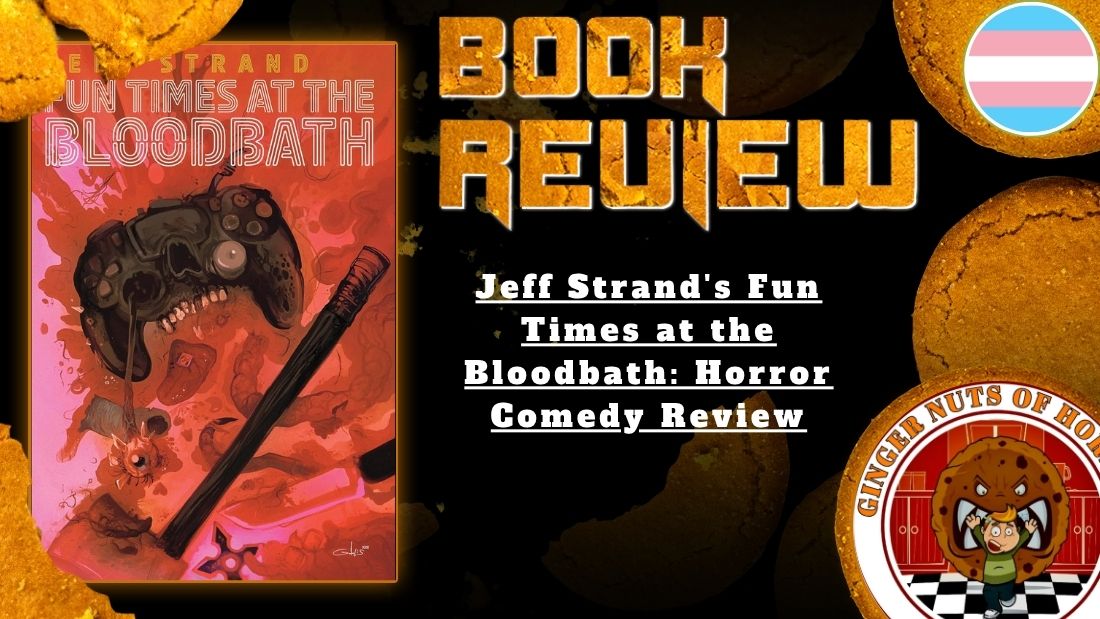
The most addictive game ever made, and the funniest horror novel about why you can’t put your phone down.
Jeff Strand hands you a video game so addictive that the players literally cannot stop, then asks you to watch a nation come apart one session at a time. Fun Times at the Bloodbath is horror comedy operating at full power, a video game horror story that folds extreme horror into the comic engine the Clown Prince of Horror has been refining for twenty-five years. It is also a clear-eyed piece of attention economy horror, a book about engineered wanting and the people who profit from it. From a Bram Stoker Award winning author, this is his sharpest, funniest, and most unsettling novel in years.
Jeff Strand treats a daft premise with total commitment, and the commitment is what gets under your skin. Reading it is like being tickled by someone who keeps getting closer to your throat. A horror comedy that turns the attention economy into a monster and makes every laugh cost you something.
Fun Times at the Bloodbath | Jeff Strand | Dead Sky Publishing | July 2026 |
Jeff Strand treats a daft premise with total commitment, and the commitment is what gets under your skin. Reading it is like being tickled by someone who keeps getting closer to your throat. A horror comedy that turns the attention economy into a monster and makes every laugh cost you something.
The pitch is almost polite. Only a lucky few get to playtest the most violent video game ever made, and all they have to do is keep playing. So they keep playing. That’s the whole trap, and Jeff Strand springs it on the very first page and never once lets you climb back out.
I went into this expecting the usual Strand contract, the one where he grins at you while something terrible happens to a nice person, and he honours that contract and then quietly rewrites it. The game in this book is not a metaphor you have to squint at. It sits there, glowing, asking for ten more minutes. Then ten more.
The players who get the early access find it so addictive they cannot stop, and I do mean cannot, in the literal way the marketing copy promises and the body count delivers. The United States loses its mind. The rest of the world is queued up next. And a woman named Margo, who has watched what the game does to the people she loves, decides the only sane move left is to walk into the company that built it and turn the thing off.
That setup could have been a single sick joke stretched too thin. It isn’t. What Strand does instead is treat a daft premise with total commitment, and the commitment is what makes it work on your nerves. Strand writes comedy and dread in the same sentence, and he refuses to tell you which one is supposed to win.
Most horror about addiction slows down to wallow. Strand speeds up. The chapters are short and they end on small detonations, little reveals that make you flick to the next one before your brain has signed off on the decision. By about a third of the way through I realised the form of the book had started to mimic the game inside it. One more chapter. One more.
And the dread builds in a way that earns the laughs rather than cancelling them. Strand has always understood that a joke and a scare run on the same engine, which is the gap between what you expect and what arrives. He keeps widening that gap. A scene will set up a punchline and pay off in blood. A scene will set up horror and pay off in something so absurd you snort, then feel slightly disgusted with yourself for snorting. Your nervous system does not get a stable footing anywhere in here, and that is clearly the point.
Strand’s prose is lean to the point of looking effortless. There is no fat on these sentences. He picks plain words and lets the situation supply the horror, so when an ugly image lands it lands clean, with nothing decorative softening the blow.
The dialogue is where the comedy mostly lives, and it is sharp. People in this book talk the way people actually talk when the world is ending, which is to say badly, defensively, with terrible timing and the occasional accidental grace. Strand lets characters be petty in the middle of horror. He lets them bicker about logistics while something with teeth is in the next room. That friction between the mundane and the monstrous is his signature move, and he plays it here with the ease of a man who has been doing it for twenty-five years.
Strand knows when to cut away, when a single precise word does more than a paragraph of gore. The book has plenty of red in it. It is also smarter about where it points the camera than its title would ever suggest.
Underneath the bloodbath, this is a book about the engineered nature of wanting. The game is not magic. It is design. Somebody sat in a room and built a thing calibrated to bypass the part of you that knows when to stop, and the horror of the novel is that this is not science fiction. It is a slightly exaggerated description of the attention economy you are living in right now.
The World Health Organization added gaming disorder to its International Classification of Diseases, the ICD-11, recognising compulsive play as a genuine condition. Real cases exist of people who have died after marathon gaming sessions, their bodies simply giving out while they kept going. Strand did not invent this anxiety. He took a real cultural nerve, the one we all feel when we look up and three hours have vanished into a screen, and he gave it fangs.
What I find quietly devastating is where he puts the blame. The players are not idiots. They are not weak. They are targets of something built by people who understood human reward circuitry better than the players understood themselves. The book asks who is monstrous, the addict or the engineer, and it does not let the engineer off the hook. In a year when every app on your phone is fighting for one more scroll, that question has a bite to it that goes well past the page.
There is also a thread here about love as the thing that finally interrupts the loop. Margo’s whole arc is about a bond strong enough to override the most addictive object ever made. The people who escape the game escape because of who is waiting for them on the outside. Strand has written a horror novel where connection is the only antidote, and he is too smart to make that sentimental. He makes you work for it.
The last two novels Strand published before this one show a writer stretching in opposite directions. Your Body Will Never Be Found sent a family into the rural Georgia woods and turned the dial all the way toward brutality, stripping out a lot of his trademark warmth to see what was left. Bloodsucker County gave us feral, rule-breaking vampires and a nineteen-year-old named Lance Black trying to survive a world where the monsters have already won, and it kept the wry humour humming under the carnage.
Fun Times at the Bloodbath feels like the synthesis of those two experiments. It has the unflinching nerve of the first and the comic engine of the second, fused into something that does not feel like a compromise between them. This is the writer who earned a Bram Stoker Award for the novella Twentieth Anniversary Screening and a couple of Splatterpunk Awards along the way.
The deadly-game bloodline runs back through Stephen King’s The Long Walk and The Running Man, where the contest itself is the monster, and the comic apocalypse of David Wong’s John Dies at the End is a clear cousin in tone.
What sets this one apart is the target. King’s games are imposed by a state. Strand’s game is chosen, eagerly, by people who think they want it, which makes it a far more uncomfortable mirror. Where Hendrix tends to anchor his media-horror in nostalgia, Strand aims at the live, ongoing, present-tense way we are all being farmed for our attention. That is where horror as a genre keeps heading, toward the dawning suspicion that the call is coming from inside the device, and this book is one of the sharpest, funniest dispatches from that frontier I have read in a while.
For all the carnage, this is a generous book, written by someone who clearly likes people even as he feeds them to the plot. You will laugh at the worst possible moments, and every laugh will cost you something. That, in the end, is the only fair price for a game this good.
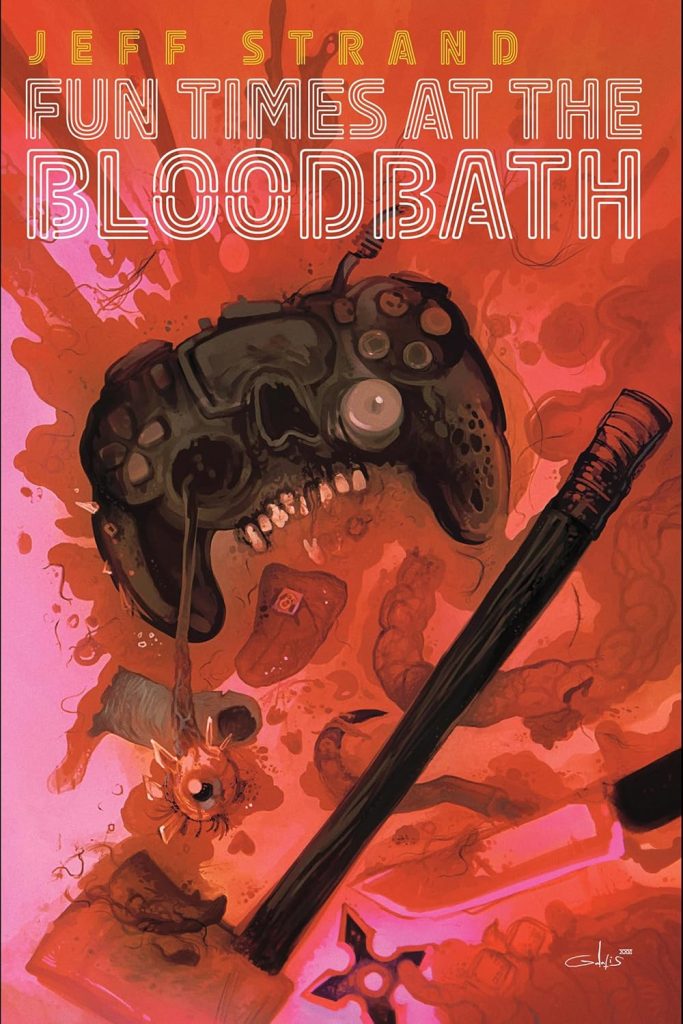
Fun Times at the Bloodbath by Jeff Strand
” No author working today comes close to Jeff Strand’ s perfect mixture of comedy and terror.” – Cemetery Dance
When Margot finds her younger brother dead in his apartment, the investigation shows no medical issues. He simply played a video game until he died of thirst, despite a refrigerator full of bottled water in the very next room. Only a lucky few get to playtest Fun Times at the Bloodbath, one of the most insanely violent video games ever made.
It’ s so addictive, they can’ t stop playing… literally. Not to go to work. Not to sleep. Not to eat or drink. Not even to take a bathroom break. If somebody tries to make them stop, they get murderously violent. And this is just the testing phase. Very soon, the game will be available nationwide…

Ginger Nuts of Horror: The Heart and Soul of Horror Reviews

Looking to get your horror book or film in front of the genre’s most dedicated audience? Ginger Nuts of Horror is one of Europe’s largest independent horror review websites, with over 30 contributors publishing horror book reviews and horror movie reviews almost every single day.
We offer far more than reviews. Authors, filmmakers and publishers can promote their work through in-depth horror book reviews, horror film reviews, comic and video game coverage, news features, and our popular author and director interviews like Five Minutes With. Our guest feature series, The Horror of My Life, Childhood Fears, The ? That Made Me and more, let creators tell their story while promoting their latest release.
Every feature is built to sell your work. We include backlinks to your website or Amazon author page, a full synopsis, and a universal purchasing link that sends readers straight to their local store. Add a large, engaged social following and an 18-year archive of trusted horror coverage, and you have a platform genuinely built to grow your readership.
Whether you’re an established author, an indie filmmaker, or a debut voice in indie horror, there’s a way for us to help you reach more fans. Explore our horror book reviews and horror movie reviews, then get your horror book or film featured today.