Guls, trauma, and the architecture of memory: Hache Pueyo redefines the monster within.
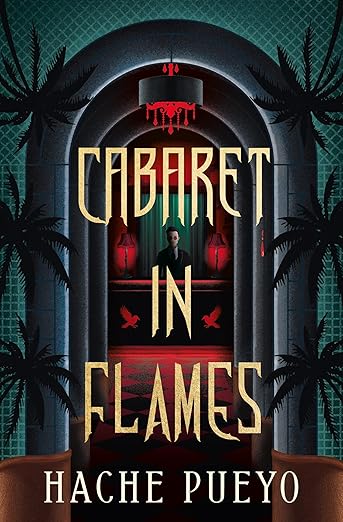
In her latest work, Argentine-Brazilian author Hache Pueyo continues to redefine the boundaries of speculative fiction monsters. In this exclusive interview, we delve into Cabaret in Flames, a novella where the vampiric Guls are not undead but a species biologically close to humans, creatures “so similar to us that you couldn’t tell us apart at first sight.” Pueyo discusses how this ambiguity fuels narrative tension, moving beyond the cliché that “humans are the real monsters” to explore a more nuanced victimhood.
We also explore her Shirley Jackson-nominated novella But Not Too Bold, a Bluebeard-inspired tale set in a Catalan Modernisme mansion, and discuss how her South American background informs the “ambivalence” of her horror. From the physical memory of tattoos and missing limbs to the therapeutic nature of writing fiction, Pueyo offers a masterclass in crafting fantasy that feels viscerally real.
In past interviews, you’ve clarified that the vampiric Guls in Cabaret in Flames are not undead but a species biologically close to humans. What inspired you to create monsters that are “so similar to us that you couldn’t tell us apart at first sight,” and how does this ambiguity fuel the story’s tension?
Stories that feature a duality between humans and monsters can easily go for the obvious conclusion (humans are good, monsters are evil) or the popular subversion (humans are the real monsters). Both can make for good books, but I was more interested in the idea that we have, here, a character who has been victimized by both, and I thought it would be more interesting if you couldn’t tell human and monster apart right away, and if the reasons for their violence could not be justified by fantasy alone.
The relationship between Ariadne, a quadruple amputee, and Quaint, a Gul, is central. You’ve mentioned their bond forms around a shared conflict with a third person. Can you discuss how their respective physicality and “otherness” shape this unique dynamic?
I had two main physical aspects to consider when writing them. The first is their biological difference: a human who was predated on by guls to the point of mutilation, and a creature who feeds on humans. The second is a similarity: both carry their memories in their bodies in a literal sense, one in her limbs, the other in tattoos that memorialize his human friends and lovers. Those were the two major physical issues they had to navigate, the rest came naturally.
The setting shifts from Ariadne’s apartment to the glamorous, dangerous Cabaré nightclub. How do these contrasting spaces reflect her internal journey and the dual nature of the Gul society?
Ariadne is a character who, after years of brutal experiences that left her disabled, lives a very cloistered life. She almost doesn’t leave her apartment, and while she allows her patients to come in for short periods of time, this sameness makes her feel safer. Going to Cabaré is a sacrifice for someone she loves—a retribution of sorts—and a way to impose her presence in the gul world.
The name Ariadne connects to Greek myth and the labyrinth. Is the “labyrinth” in your story her traumatic memories, the political conspiracy, the Cabaret itself, or all of the above?
Labyrinths are a very organic way to conceptualize traumatic memories. They are, by nature, intricate, hard to reach, and they can make you feel like you’re walking in perpetual circles until something changes, the way is clear. This, I think, is at the heart of the story, but it’s not like other interpretations are wrong—the club is also labyrinthine, as are the political webs happening off camera.
Your monsters—from the Guls to Anatema the spider-being in But Not Too Bold—often challenge traditional sympathies. What do you find most compelling about writing from the perspective of, or in close relation to, the “monster”?
The thing that fascinates me the most in those stories is the differences between humans and monsters. I don’t mean this in the abstract sense—we’re not talking here of monstrous behavior—but of an intrinsic trait, a grotesque appearance, an alien biology, an incomprehensible morality, a dangerous appetite.
When I write, I begin to wonder what can’t be changed (in both novellas, their eating habits can’t be changed, and their morality is a source of conflict and confusion between characters), what sort of coexistence can happen between both sides (the answer is quite a lot, since the monsters are sentient), what can be appealing or even erotic in this combination (for humanoids, like in Cabaret in Flames, it’s self-explanatory, but the stranger a monster is, the more you have to play with), and what story can you tell with it.
You’ve stated your fictional legends aren’t based on specific Brazilian myths but use magic realism to explore trauma. How does your South American background inform the sensibility of your horror and fantasy, even when not directly retelling myths?
Being South American is certainly an inescapable cultural baggage—it’s a region ripe with ambivalence, beautiful and violent, with a vibrant natural diversity and cultural output, and a history of intense oppression. It’s hard not to connect all of this to the horrific and the fantastical, to integrate those seemingly opposing elements as part of both fiction and life.
In But Not Too Bold, Anatema is inspired by Bluebeard and No Face from Spirited Away. How do you blend such diverse folkloric and pop culture inspirations to create something new?
It’s a very seamless process! Bluebeard is the most direct reference of But Not Too Bold, since even the title comes from a carved warning in the Mr. Fox variant of the fairy tale, but I didn’t want it to be a retelling, and I realized later that Anatema shared some traits with No Face, one of my favorite monsters was a child, so it wasn’t on purpose, just part of my internal references.
For But Not Too Bold, you’ve described a setting inspired by Catalan Modernisme architecture. How does embedding the story in such a specific, ornate visual style enhance its fairy-tale logic and gothic atmosphere?
Fairy tales operate under a different logic than other stories, they exist in different dimensions. To me, they always had more aesthetic appeal than internal coherence; they’re not character studies, political treaties or in-depth journeys. You can, of course, imagine a similar story as a novel, but there’s something that’s lost in the process, and I wanted to play with the idea of keeping this peculiraity, and it felt natural to incorporate many visual elements to enhance this sensation. Catalan Modernisme came in because I love it, and it’s such a hyperbolic, inventive and beautiful art movement; it felt like a good match.
A key theme in But Not Too Bold is the curation and locking away of memories. What intrigues you about memory as a physical, almost collectible, object in this story?
Memory attracts me. More often than not, I find different ways of conceptualizing it or using it as a structural part of the narrative, it becomes an object, it’s collected, it’s ingested, unlocked, erased, removed. I guess it can’t help it—it’s such an integral part of the human existence in every level. I couldn’t be answering this question if I didn’t remember how to speak, or which story we’re talking about.
Your bilingual collection A Study in Ugliness & Outras Histórias involves self-translation. How does moving between Portuguese and English change the story, and what have you learned about storytelling from being a translator of your own work?
In practice, the stories don’t change much, but it can be great fun to adapt language and the wording of certain things to achieve similar sensations in a translation. The way a character speaks, for example, might need to be adapted so the reader of another country can understand what kind of person they are, or how to add certain details that, outside of one’s culture, might not be absorbed at first, without adding a footnote or changing the paragraph drastically.
You’ve written that shifting to speculative fiction felt natural for its “sense of wonder”. How does that sense of wonder coexist with the often dark, traumatic, and brutal elements in your stories?
I don’t see a difference between the two things. In real life, we don’t get to choose genre or tone, we live in a sequence of mottled emotions, the same night can be joyful and horrific in a matter of minutes, dramatic losses coexist with the most boring every day functions, you can—and often do—fall in love, suffer, laugh, fail, hate, succeed, learn, forget, all in a short period of time. To me, the same applies to fiction: I don’t see the line between good, bad or neutral feelings or situations, or even between genres. They all coexist.
You once described a project as “a long therapy session” for dealing with personal and political landscapes. Is writing a way of processing for you, and how do you transform that raw material into compelling fantasy?
Oh, definitely. I think writing fiction can be an ideal tool for processing emotions, more than talking or recording memories, because to meet the plot for what it is—invented moments lived by invented people—you need to be able to play and engage with the fictional scenario, and that lowers your personal barriers. It’s not a matter of inserting yourself or recreating experiences, to me, but of channeling real emotions, real questions, real conflicts, and allowing yourself to be visceral in a way you wouldn’t be when you speak.
As an Argentine-Brazilian author, which South American speculative fiction writers or works do you find most exciting and deserving of wider translation today?
Luckily, many South American authors are already being translated, with more or less buzz, and I always recommend checking them out! There aren’t many Brazilians yet, but I’d love to see a translation of Nada Digo de Ti, Que em Ti Não Veja by Eliana Alves Cruz, which is a feat of historical fiction with magical elements set in Colonial Brazil, or the work of G.G. Diniz, who focuses more on hard SF with strong political themes.
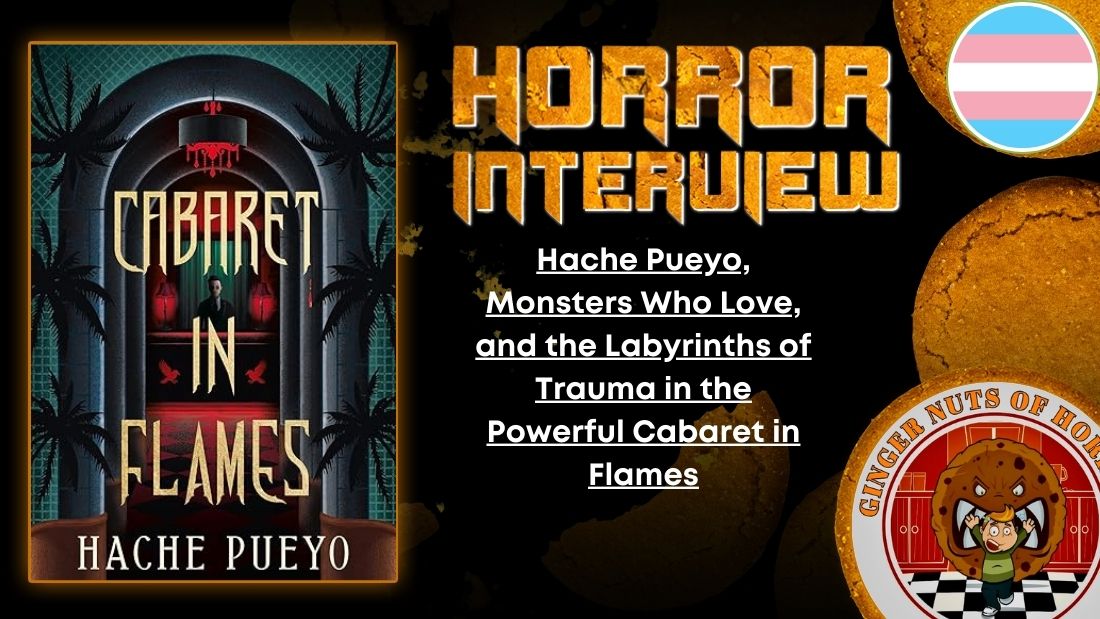
Cabaret in Flames by Hache Pueyo
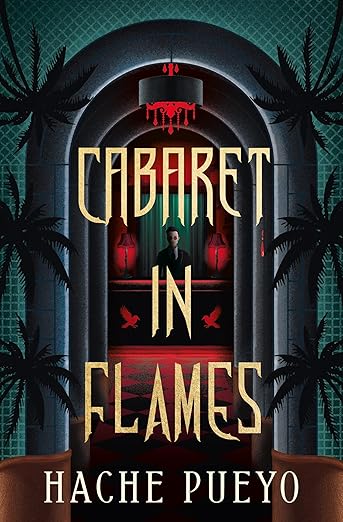
A riveting Latin American dark horror-fantasy about two survivors finding one another amidst monstrous creatures and a brutal political regime, perfect for fans of Silvia Moreno-Garcia and T. Kingfisher
Guls can be brutal. Few people know this better than Ariadne, who lost half her body to their appetites, but she finds their brutality a predictable constant amid the political chaos of Brazil. Now she treats them in the specialized clinic she inherited from Erik Yurkov—the mentor who rescued her from captivity as a child, trained her in medicine, built her prostheses, and then disappeared without a trace.
Ariadne’s routine is disturbed when a dapper gul covered in tattoos knocks on her door, introducing himself as Quaint and claiming to be Erik’s oldest friend. As unsettling as the presence of a healthy adult gul can be, there is something familiar—almost intimate—about him. Quaint suspects foul play in Erik’s disappearance, and his suspicion proves real when they discover Erik sought asylum at Cabaré, an infamous club in Rio de Janeiro frequented by the gul elite.
Together, Ariadne and Quaint will unravel the conspiracy behind their friend’s disappearance, navigate the labyrinthine world of Ariadne’s memories, and discover what Erik means to them—and what they are starting to mean to each other.
Essential Horror Interviews on Ginger Nuts of Horror
For true devotees of the dark and macabre, Ginger Nuts of Horror stands as a premier destination for exclusive horror author interviews and in-depth horror director interviews. Our curated conversations go beyond the surface, offering unparalleled access to the visionaries shaping modern horror.
Why Read Our Horror Creator Interviews?
1. Uncover Creative Processes & Inspirations
Step inside the creative minds behind your favorite nightmares. Our interviews dissect the inspiration behind iconic horror stories and films, exploring how masters of the genre conjure fear. Learn how horror authors develop chilling narratives and how horror directors translate terror to the screen.
2. Gain Unique Industry Insights & Career Advice
Navigate the horror industry with wisdom from those who’ve succeeded. Our conversations provide practical advice for aspiring horror writers and filmmakers, covering:
- Breaking into horror publishing or film
- Overcoming creative and professional hurdles
- Understanding evolving horror trends and audience expectations
3. Explore the Psychology & Culture of Fear
Delve deeper into what makes horror resonate. Our interviews examine the psychology of fear, how horror reflects societal anxieties, and the genre’s exploration of themes like morality, existential dread, and identity.
4. Connect with a Community of Horror Enthusiasts
Join a vibrant community. Each interview sparks discussion, allowing you to engage with fellow fans and sometimes the horror creators themselves through comments and social media.
Featured Insights from Horror’s Finest
Our archive includes conversations with legendary horror authors discussing craft, and visionary horror directors breaking down their filmmaking techniques. Find guidance, inspiration, and a deeper appreciation for the art of horror.
Ready to explore? Visit the Horror Interview Section on Ginger Nuts of Horror today. It’s your essential resource for connecting with the minds that define fear, perfect for fans, aspiring writers, and future horror directors alike.
Searching for the best horror author interviews or seeking wisdom from horror directors? You’ve found your source. Click here to start reading now.