The best apocalyptic fiction has never been about the end. It‘s about what happens on the other side, when the old rules are ash and you have to figure out who you are without them.
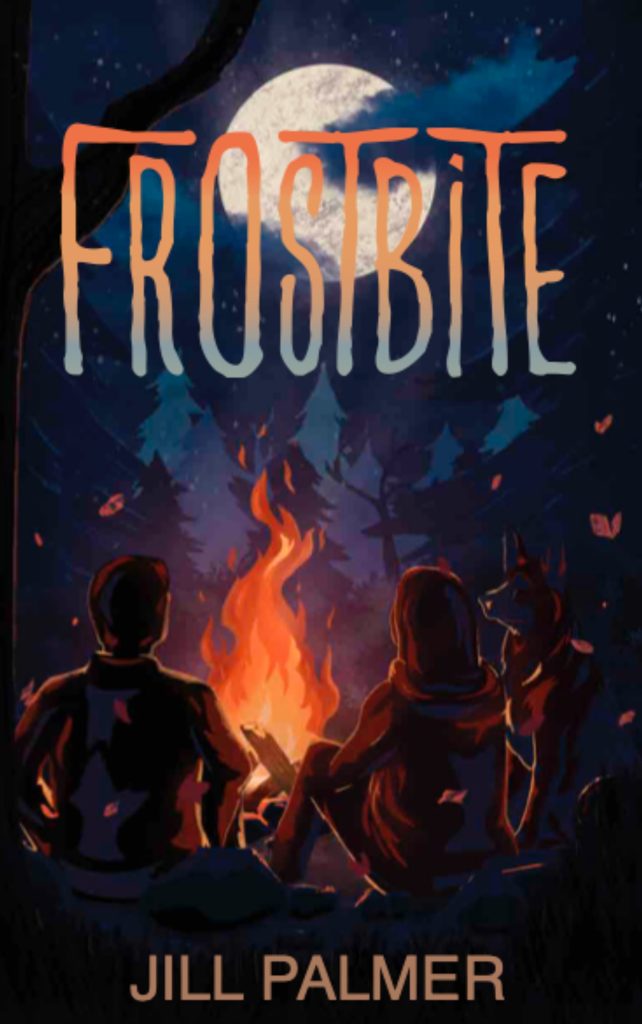
Jill Palmer’s debut novel Frostbite arrives in that difficult space. It‘s a YA horror story about a diabetic teenager named Winter, her fiercely loyal service dog Crowbar, and a strain of infected called gulpers who do not just bite. They swallow. Palmer gives them pharyngeal jaws and a paralytic venom that makes their prey watch themselves disappear. It’s inventive body horror, the kind that sticks under your skin. But the gulpers are not Palmer’s real subject. They‘re just the backdrop for something quieter and more painful: a girl who has spent her whole life learning that trusting people is a vulnerability she cannot afford.
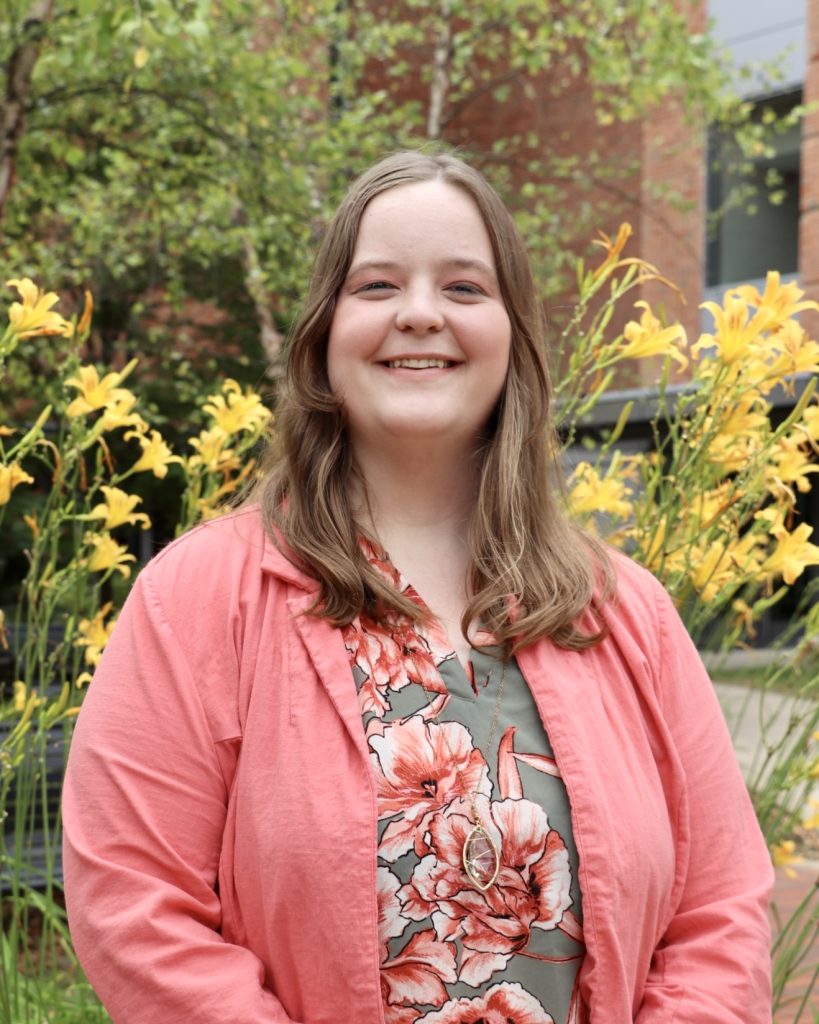
Palmer comes from northern Appalachia, a region that knows something about hard winters and the kind of isolation that shapes a person。 She received her bachelor’s degree in Professional Writing and Integrated Media Arts from Juniata College in 2019 and is pursuing an MFA at Southern New Hampshire University. By day she works as a Communications Coordinator for an insurance company. She writes feminist horror and dystopian fiction for young adults, and she has spoken about wanting to create the role models she needed as a little girl.
That impulse runs through Frostbite like a cold current. Winter is not a warrior princess. She is not a chosen one. She is a seventeen-year-old with Type 1 diabetes who has been told her whole life that the world does not bend for people like her。 When her emergency insulin stash is destroyed in the novel’s opening chaos, she doesn‘t have the luxury of abstract survival ethics. She has a biological clock. Palmer renders those moments with a clinical bluntness that makes the zombies feel almost secondary.
We spoke with Jill Palmer about chronic illness in horror, why Crowbar had to survive, and whether Winter would choose belonging or self-reliance if the book forced her to pick one right now.
Jill Palmer Interview: Frostbite and the Zombies We Inherit
Horror becomes a thousand times more interesting when creatives consider how disability can be an asset rather than a liability, or even just a morally neutral fact of life. I hope more horror writers remember that not every main character has to look the same. There is so much narrative potential in characters whose bodies don’t fit the genre’s usual expectations.
Winter’s dwindling supply creates relentless pressure throughout “Frostbite.” Did you always know the diabetes would function as a ticking clock, or did that emerge during writing? How did you balance medical accuracy with narrative tension?
I knew from the start that this was a story about disability, and I also knew that someone as prickly as Winter would need a truly compelling reason to leave her safe haven. The insulin crisis followed quite naturally after that. Before I even started drafting, I did extensive research to make sure I understood the subject matter, and my beta readers helped fill in the gaps where I fell short.
Winter’s German shepherd signals her blood sugar drops, fights gulpers, and provides her with only emotional warmth early on. Why a dog rather than a human companion? And how did you avoid the trap of making him either a superhero or a disposable tragedy?
From a purely logistical standpoint, a service dog was the most believable way I could think of to explain how a diabetic teenager could survive this long without access to a lot of medical technology. Diabetic alert dogs have even been shown to be faster and more accurate than electronic monitors, which made Crowbar a very practical choice as well.
Narratively, Crowbar gives Winter an outlet she wouldn’t otherwise allow herself. He acts as a sounding board, someone she can talk to without fear of judgment, and that external processing helps ease her early resistance to letting other people in.
Most importantly, Crowbar is treated as his own character, not just a companion. He has a clear goal (protect Winter) and every choice he makes is driven by that purpose. As an active participant in the story, he avoids the common pitfall of animal companions being reduced to set dressing.
Your creatures have pharyngeal jaws, paralytic venom, and a vulnerability to fire. They’re also cold-blooded, which changes their seasonal behaviour. Walk me through your creative process for building a zombie variant that feels fresh without abandoning the genre’s core appeal.
The gulpers’ origin comes from my fascination with snakes, specifically constrictors that crush and then swallow their prey whole. To me, the anticipation of knowing exactly what’s coming and being completely helpless to stop it is far worse than a zombie that would kill you quickly. Rooting the gulpers in naturalism also helped give them a stronger sense of believability, and an understanding that while terrifying, they are a beast like any other and can be beaten.
That’s the reaction many readers have to Winter’s diabetes.
Why do you think horror has historically avoided protagonists with chronic illness? Were there any books or films that paved the way for you?
For the same reason disabled people are excluded in real life: we’re seen as an inconvenience. We require breaks, accommodations, and more effort than some people are willing to give. Disability disrupts the power fantasy that drives much of survival fiction, so it’s easier to write us out altogether. That’s part of why it mattered to me to center Winter’s diabetes rather than work around it.
In terms of influence, Andrew Joseph White has been a huge inspiration for me, particularly in the way disability is inseparable from his characters’ identities and from the violence of the worlds they inhabit, shaping how they survive and how they fight back. It’s very similar to what I’ve tried to do with Winter. I hope I succeeded!
I also loved A Quiet Place, particularly in its use of a deaf character whose disability isn’t a liability, but an essential part of how the family survives. The film shows how much more interesting horror becomes when it adapts its rules around disabled characters instead of excluding them.
He’s the sun to Winter’s frost. He believes in community when she trusts no one. Was there ever a version of this story where Eliot was more cynical, or did you know from the start that he needed to be genuinely good?
Eliot was always meant to be genuinely good, but in earlier drafts I worried he was a little too good. I had to rough him up around the edges, and one of the ways I did that was by leaning into attachment styles. Winter retreats inward as a response to trauma; Eliot clings, almost obsessively, to the people he cares about. Early on, they misunderstand each other constantly because of these differences. Winter sees Eliot as a kind of flawless saint, while Eliot sees Winter as a wounded girl who needs saving. Neither of those perceptions is true, and part of their relationship is learning to see each other as whole, complicated people.
Winter and Eliot’s relationship develops slowly, messily, without grand declarations. The first kiss happens during a life-or-death moment, and it’s almost an afterthought. How did you avoid the YA trap of making romance the centre of the story?
I never set out to write a romance‑driven story so much as a apocalypse story where connection is one of the tools the characters use to survive. At the beginning of Frostbite, neither Eliot nor Winter are at a point where they can jump feet‑first into a relationship, and I deliberately avoid codifying exactly what they are to each other at the end of the book. Letting their bond develop slowly and imperfectly felt truer to both the characters and the stakes of the world.
She’s not a cartoon villain. She genuinely believes she’s saving children. She’s also a cult leader who weaponises gulpers. How did you humanise her without excusing her? And did writing her force you to confront anything about your own family relationships?
When writing villains, I think it’s important to remember that they see themselves as the hero of their own story. I spent a lot of time thinking about who Penelope is, how she understands her role as a mother, and how she might have become the person we meet in Frostbite. As a character, she represents severe emotional enmeshment and what happens when a parental figure fails to see their child as anything beyond an extension of themselves.
Frostbite isn’t about my own family relationships, but about parent-child dynamics more broadly. I’m especially drawn to stories where one half of that relationship is positioned as the hero and the other as the villain, like Zuko and Ozai in Avatar: the Last Airbender. I find it really heightens the emotional stakes and makes the conflict heartbreakingly personal.
Winter’s half-sister and fellow diabetic. She’s younger, brighter, and ultimately the one who kills Penelope. Why give that moment to Tulip rather than Winter? What does that choice say about agency and survival?
Winter has spent the last few years believing herself to be a monster. By the end of Frostbite, she is only just beginning to see herself as someone worthy of love and connection. For her to deal the final blow at that moment would have reinforced the very narrative she has been struggling to escape the entire book. Tulip, on the other hand, has survived by setting herself on fire to keep others warm. Granting her that final act of violence was just as important as sparing Winter from it. It allows Tulip, for the first time, to actively claim the terms of her own survival and choose to protect the people she loves.
The doves at Green Dreams are simultaneously victims and perpetrators. You don’t let them off the hook, but you also don’t condemn them entirely. How did you navigate that moral ambiguity?
As children, we’re taught to look for the nearest adult when we’re in trouble, and that’s exactly what the doves have done. I can’t fault them for that. Penelope is the true villain for violating their trust and using their vulnerability against them. But when Penelope dies, it’s the doves who will have to live with the choices they made. Their dynamic ties into one of Frostbite’s themes about family and adolescence: we don’t get to choose how we’re raised, but we do get to decide who we want to become when we grow up.
The frostbite virus kills everyone over twenty-five. That means every authority figure is gone. Every safety net. Every “someone else will handle it.” What does that setting allow you to say about adolescence, responsibility, and the failure of previous generations?
Without any real adults around, the kids in Frostbite are forced to step into adulthood long before they’re ready. They didn’t create this world, but now it’s theirs to deal with. It’s a commentary on how we all end up inheriting the mistakes of the generations before us, and how we’re still responsible for what we do in the aftermath.
Winter’s father is a doomsday prepper who stockpiled bullets but not insulin. That feels like a pointed critique. Are you pushing back against the romanticised “preparedness” movement? What does “Frostbite” say about what true survival actually requires?
I find myself exhausted by people who are constantly waiting for doomsday but doing very little to make life better for themselves or the people they love in the meantime. The end of the world is going to be very boring if no one even likes you! It feels like some people love to daydream about the flashy, exciting parts of the apocalypse, but not the reality of what could happen to disabled folks, women, and other vulnerable people in an apocalypse scenario. It’s good to be prepared for an emergency, but I worry about the people who spend so much time fixated on the end of the world that they forget to enjoy the life they have now.
Winter starts the book alone on a mountain. Eliot runs a collective. By the end, she’s reluctantly part of Bright Hope. Is the novel arguing that community is always better, or are there costs you wanted readers to acknowledge?
Winter’s emotional arc is about learning that protecting herself from pain also means shutting herself off from everything that makes life worth living. Letting someone in is terrifying, but it’s a vital part of her character arc, because it means she’s finally choosing hope over fear.
There’s a long, ugly tradition of using disability as a metaphor for evil or as a cheap source of tragedy. How did you avoid those pitfalls? What do you hope other horror writers learn from “Frostbite”?
As I said before, horror becomes a thousand times more interesting when creatives consider how disability can be an asset rather than a liability, or even just a morally neutral fact of life. I hope more horror writers remember that not every main character has to look the same. There is so much narrative potential in characters whose bodies don’t fit the genre’s usual expectations.
From Romero’s social commentary to “The Walking Dead’s” endless moral quandaries to the fast zombies of “28 Days Later.” Where does “Frostbite” fit in that lineage? What does your book add to the conversation that previous zombie stories missed?
Narratively, Frostbite sits somewhere between Station Eleven and Resident Evil. Like Station Eleven, it is invested in the enduring strength of human connection, and like Resident Evil, it leans into the resilience of spirit needed to survive the end of everything. What Frostbite adds to the zombie conversation is a shift in perspective. Instead of hardened adults, it follows kids and teens who inherit a fractured world they did not break and have to survive anyway.
How much medical consultation went into accurately portraying Type 1 diabetes? Did you work with sensitivity readers? What’s one thing you learned that didn’t make it into the book but still shaped Winter’s voice?
Apart from my own research, my good friend Kait, who is a type 1 diabetic, was an invaluable resource throughout the writing process. She read my entire first draft, gently correcting me when I got details wrong and offering thoughtful suggestions along the way. I truly couldn’t have done it without her.
One thing I learned that didn’t quite make it into the final draft was the sheer mental load that goes into managing diabetes on a daily basis, but it’s still present in how Winter navigates the world. That constant background calculation shapes how she thinks and how she assesses danger. Even when the book isn’t explicitly talking about chronic illness, that mindset is present in every choice she makes.
After the barn attack, Gulpers stop seeing Winter. She becomes undetectable, and her bite carries the virus. That’s a huge power shift late in the novel. When did you decide to introduce that element, and what does it represent thematically?
A common trope in feminist horror is that women become free by becoming monsters because it gives them the authority to step outside the roles society has imposed on them. I always knew I wanted there to be some sort of “she came back wrong” element to Winter after her time in the basement, and that allowed me to explore what it means for a girl who has always been overlooked to suddenly become something truly fearsome. How she chooses to understand and claim that power–if she chooses to at all–is a question she can continue to grapple with in the sequel.
The cult uses burn barrels to keep gulpers away, but the science is shaky. You have Tulip explicitly question whether it works. Why include a defensive measure that might be pure superstition? What does that say about the psychology of survival?
The burn barrels are an early indication that much of Penelope’s protection is smoke and mirrors. On a larger level, they also represent the illusion of control, like hiding under your blanket from monsters when you’re a kid. Whether or not the barrels work matters less than the fact that the doves believe they do, and that belief keeps them from wandering too far from Penelope’s circle of control.
“Frostbite.” On the surface, it refers to the virus that causes blackening of the extremities. But it also describes Winter’s emotional state, the cold setting, and the slow, creeping damage of isolation. How many titles did you cycle through before landing on this one?
For a long time, the book was titleless. I just thought of it as that weird zombie story I started working on in grad school. But Frostbite works on many different levels. It reflects both the gulpers as well as Winter herself, and the way she’s been pushed to the margins long before the outbreak. It also captures the body‑horror elements and the slow, creeping tension that shapes the book. And honestly, I’ve never been a fan of long, elaborate book titles. Frostbite is the perfect title for this story.
Winter doesn’t transform into a different person. She opens the door a crack. She lets people in. Was that always the plan, or did you consider a darker or more dramatic conclusion?
Yes, that was always the plan. I played around with a few different endings, but none of them felt honest to who Winter is. Allowing herself to be close to someone again, even just a little, says more about Winter’s growth than any big, cinematic twist would.
Do you see yourself returning to these characters? What questions are you most curious to explore in a potential sequel?
I do! Winter’s story may be complete for now, but the world around her isn’t. I’m especially interested in the other doves who didn’t return to Bright Hope. They’ve been out there surviving in their own ways, and there’s a lot of story potential in that. I’m also curious about what other factions might have formed while Winter was focused on her own corner of the world. She is, unfortunately, chronically disinterested in other peoples’ business. A sequel would be a chance to widen the lens a bit.
Crowbar survives. Thank you for that. Was there ever a draft where he didn’t? And what would you say to writers who think killing the dog is an easy way to generate emotional stakes?
No, Crowbar was always going to make it. His bond with Winter is one of the few uncomplicated sources of loyalty and warmth in her life, and taking that away would have felt cheap and, honestly, really predictable and boring. As for killing the dog to raise the stakes, I think it’s worth asking what the story actually gains. If the only way to make readers feel something is to harm the most defenseless character in the room, that usually means the emotional groundwork is already lacking. There are so many richer, more character‑driven ways to create tension. Winter doesn’t lose her dog, but she does lose pieces of her humanity, which is the far heavier loss.
Winter starts this book believing that survival means trusting no one, relying on no one, and carrying every weight alone. Her father taught her that. But over the course of the story, she keeps finding herself in situations where doing it alone means dying alone. She keeps needing help. She keeps getting it. And that terrifies her more than any gulper ever could.
So here’s my real question, Jill Palmer. If Winter had to choose, right now, between absolute self-reliance and belonging to a community that might fail her… which would she pick? And more importantly, what would that choice cost her?
Winter has been trained from childhood to believe that survival means trusting no one. It was her father’s literal last words to her, and she followed them loyally for years, even though it made her miserable. So when she starts to trust the people around her, it’s terrifying, because it forces her to confront the possibility that her father was wrong.
At the end of Frostbite, Winter actively chooses to stay in Bright Hope with Eliot and Tulip. Not because she has to, but because she finally understands what isolation has cost her. It’s a decision she must drag herself to kicking and screaming. She knows she’s risking her heart here. But she also knows how good it feels to belong somewhere, to have a real family again, and she’s not willing to lose that. The threat of being hurt will always be there, but she’s finally strong enough to face it.
Frostbite by Jill Palmer
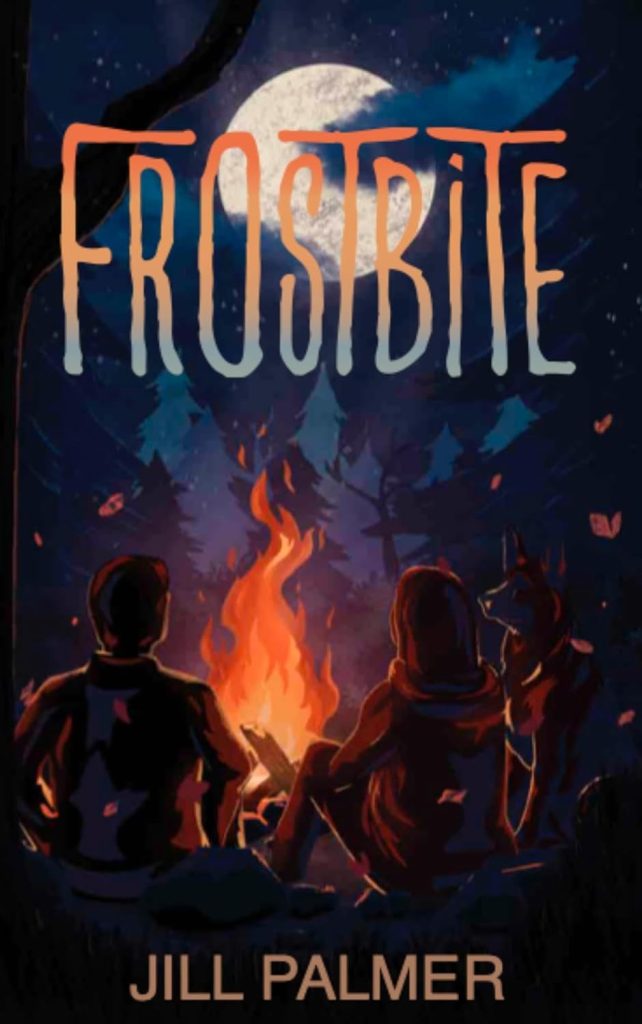
They’ll chase you. They’ll catch you. They’ll swallow you whole.
Even before the frostbite virus started turning people into mindless, flesh-eating monsters, 17-year-old Winter preferred being alone. Crowbar, her diabetic service dog, is the only one she trusts in a world that has never felt safe.
However, when her insulin supply is destroyed, Winter is forced to embark on a perilous road trip across Pennsylvania with Eliot, the idealistic leader of a nearby settlement. To survive, they must learn to trust one another, though Eliot is everything Winter isn’t: generous, kind, and convinced she’s worth saving.
As they battle hordes of undead, teenage cultists, and car trouble, a figure from Winter’s past resurfaces, threatening not just Eliot and Winter’s fragile bond, but also their lives.
At the end of the world, the worst monsters are those with human faces.
Jill Palmer
“Jill Palmer is a horror novelist from Pennsylvania. She received her bachelor’s degree in Professional Writing and Integrated Media Arts from Juniata College in December 2019, and her MFA in Creative Writing from SNHU in 2022. When she isn’t writing, she enjoys collecting small trinkets and getting lost in the woods.”