
This horror sequel fails at character, suspense, and basic storytelling. Read the full Influencers movie review.
What do you do when you have the chance to create a sequel to your success?
Let me tell you how we got here. This is the story of a sequel to a successful film, which I am writing as a sequel to one of my most successful essays.
I wish it was celebratory, but here we are.
There’s something about sequels. On the one hand they’re a challenge: you want to hit the same sweet spots you hit before but you don’t want to repeat yourself. Threading that needle can sometimes force inventive decisions. But on the other hand, what if you know your audience is just eager for more, and if you wanted to be a bit lazy – if you wanted to just rush through it and coast on goodwill – well, maybe you could afford to?
How do you make a sequel?
Last year I wrote an essay for this website called Are Influencers The New Horny Teens?, in which I looked at the little trend we have going on at the moment where influencers pop up in horror movies, smile into their phones, say something about their follower count, and get their heads chopped off. I say it myself but it’s a pretty good essay, and it’s one of my most popular.
[https://gnofhorror.com/are-influencers-the-new-horny-teens/]
This is a sort of sequel to that. But as with good sequels, you don’t have to check out the first to understand what’s going on in the second. I’ll begin with a recap.
I went through seven movies, only one of which was good. That one was Cam (2018), which I’d highly recommend. Where most influencer horror tends to present influencer women as temptresses of some sort, in Cam our heroine is a cam girl for an adult website, a job one of the scriptwriters has done in real life, and the story makes no bones about the fact that as a job, it has the potential to be both honest and creative work. Cam is great and I enjoyed it very much.
Here’s something that mattered about Cam: it knew what it was talking about. But the director, Daniel Goldhaber, does not seem to be a big social media user himself: he isn’t on Bluesky or TikTok and hasn’t posted on X for years. His biggest public presence on socials seems to be on Instagram, which looks like an account he barely uses that has more followers than you’d expect from his number of posts, presumably because those people think his films are cool.
The man is not an influencer.
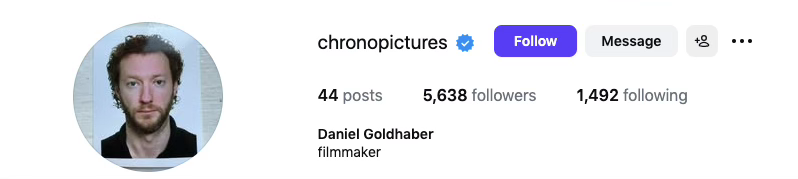
However, Goldhaber did have the sense to recognise that if he didn’t know much about that scene, he should listen to someone who did.
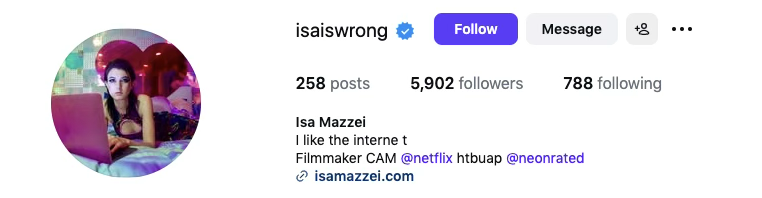
Goldhaber collaborated with two female scriptwriters, Isabelle Link-Levy and Isa Mazzei, the latter of whom was well placed to consult on what being a camgirl was actually like; she also wrote a memoir called Camgirl which I should probably check out because it’s very well-reviewed.
I won’t rehash the reasons I loved Cam, but what I will say is this: when directing a movie about a subject, it helps to know what you’re talking about – and if you don’t, you can ask someone else.
Which brings us to the works of Kurtis David Harder.
In 2022, director Kurtis David Harder released a movie with the somewhat on-the-nose name of Influencer.
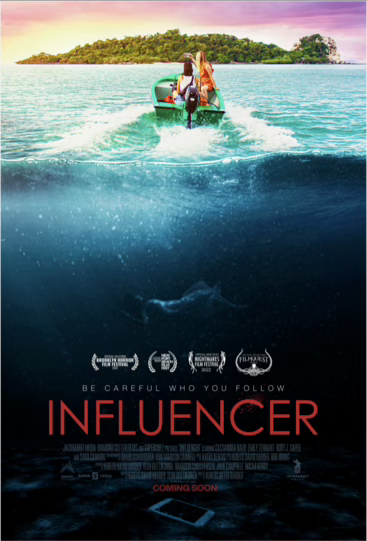
Influencer is not very good. It had some good ambitions, but it was plagued with all the typical hallmarks of a bad influencer horror:
- It focused around women as the source of all problems – women written and directed by men, in this case writer-director Kurtis David Harder and co-writer Tesh Guttikonda.
- It treated influencer work as merely batting your eyes into an iPhone; not even proper camera equipment, and certainly not requiring you to be witty, clever, informative or engaging in your presentation. Women just upload their home movies and somehow, because they’re pretty, get millions of followers and buckets of money.
- It gave you a lot of shots of lush locations and semi-clad ladies, and having let the viewer enjoy them, wagged its finger at influencers for peddling such tripe.
- It took absolutely for granted that the drive for attention rather than the need to earn a living was why people become influencers, and that this has a corrosive effect on the soul – the female soul in particular.
- It had neither knowledge of nor interest in what influencer work actually involves. It was about what people imagine influencers to be, not what influencers really do.
It is clear from the film there was no Isa Mazzei on this project.
Influencer was, like most influencer horror, not for people who wanted to understand what it’s like to be a human being who works as an influencer. It was for people who already had a preconception of what influencers are like and weren’t interested in having it challenged.
To give it credit, it was at least trying for a twisty plot.
To sum up:
Madison (Emily Tennant) is a travel-vlogging influencer who was talked into the gig a few years ago by her then-new boyfriend Ryan (Rory J Saper). Since then she’s made it big, it’s putting a strain on the relationship because Ryan is . . . well, he’s emotionally abusive in some scenes and a wronged guy in others, because these films do not write men consistently, but let’s just say that he’s not around as the movie begins.
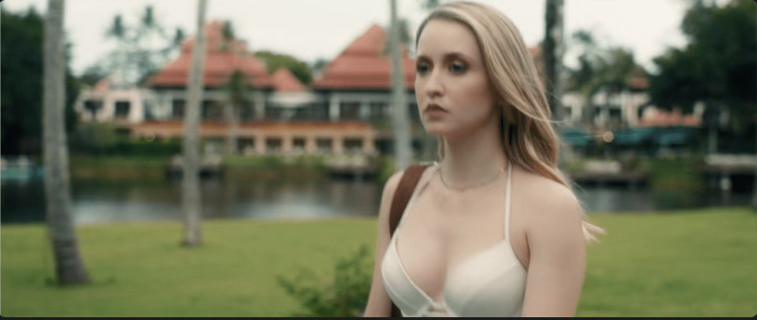
Madison abroad bumps into CW (Cassandra Naud), a friendly-seeming young woman who talks her into visiting a remote little island, then reveals she likes to maroon influencers there because she hates how shallow and self-obsessed they are. Leaving Madison for dead, CW nicks the boat, buggers off back to the mainland, and spends some time releasing videos in which she pretends to be Madison, using computer tech to paste Madison’s face over her own.
Shenanigans ensue that we needn’t get into here. CW tries to stalk another influencer; Ryan tries to track down what happened to Madison; the film tries to be The Talented Mr Ripley but isn’t.
Eventually CW goes back to the island, only to discover that Madison has managed to survive and keep herself alive with camping skills. Madison clubs CW with an oar, spits out the words ‘You bitch!’ with the editing giving a weight to the word that will come back to haunt us in Influencers, and heads home to civilisation on CW’s boat, presumably leaving CW for dead in her turn.
Now there’s a sequel
I was in two minds whether I should review it because I felt I’d seen enough influencer horror movies to get the point, and because of those I’d seen, Influencer was not among my favourites. Cam is brilliant, Mind Body Spirit was a decent small film only marred by an overworked ending, Deadstream had some genuinely good scares, but Influencer, while on the higher end in terms of polish, felt lacking in either real heart or real punch.
So I put it to poll, and you lot voted I should, and I thought there might be some things to say about a movie that tried to develop the idea from a previous iteration.
I went in prepared to like it. I promise I did. If it had been a nice surprise I would have been delighted.
But what I found was a movie that proved that if you don’t know or care what real influencers do, your influencer horror should probably be standalone. A shallow read can scrape by for a single film, but for two? No. It should have quit while it was ahead.
So I’m going to give you just one heads-up as we set in. I didn’t enjoy this movie, but because you guys wanted a review I did my best to make it a good one nevertheless. I’m paying myself for the effort by, occasionally, linking to my own works and suggesting you buy or subscribe to them. You should – for your sake because they’re good and people like them, and for my sake because writers live and die by sales. If you hate influencers for their ‘calls to action’, there we go.
But knowing what it takes to tell a story is the expertise I bring to this lark, so sometimes I’m going to refer to that when it becomes relevant, and when I do I’ll put in links. In exchange you get a ridiculously long essay as per majority request. Fair deal? Fair deal.
Now, I’ve read reviews that liked Influencers and talk about it like it’s a good film.
I’m going to talk a lot about why I don’t, but here are the main points to start with before we get into the weeds. There are two major things positive reviews seem to believe about this movie:
- It has a clever, twisty plot with an interesting villain.
- It’s got enjoyably lush locations.
How to say this?
Influencers is good at giving the impression of both. But if you look close – which for a beautiful, cleverly-plotted film you’d want to do, right? – then things dissipate.
If I had to sum it up, I’d say this:
The plot presents as clever, but takes the fastest and least ingenious path between every single point. If there’s a mystery, it’s solved by a few quick clicks on the Internet or an implausibly easy one-off conversation. If ‘How was that pulled off?’ would require some really clever plotting, on the other hand, it skips the answer altogether.
It is to a clever plot what a cheat sheet is to an essay.
I’ll talk a lot about where it goes wrong, but here’s the biggest likely reason why.
In a Reddit AMA, Harder said:
‘The first film was a long process . . . The script went through a ton of drafts . . . The second film came together very quickly. I wrote the first 30 pages of the France section in a couple days and sent it out to the cast and team, and I think we were full steam into preproduction six months later or so.’
I’m glad they had fun, but yes, this tracks. You can see the difference, and it’s not that Influencers feels more inspired than its predecessor: it feels less careful. The ‘ton of drafts’ on the first film made for a more dynamic and economical plot; I didn’t think the movie was very deep but it was narratively functional. Influencers, meanwhile, is exactly what you get when you rush to production: it wasn’t tightened up and it shows.
The locations, meanwhile, are indeed nice places, but they’re filmed flat with almost no good use of film language. Shots of them go on and on . . . and tell us nothing except, ‘We’re in a nice place. Yep, still here. Oh look, here’s the place again. And look again: we’re still in the place!’ I’ll give you some counter-examples of how that can be done better later on, but in Influencer, the locations are there, but the visual storytelling seldom rises above the level of basic information.
Yet these shots take up huge amounts of the run-time, leaving the story oddly bare-bones.
As to the villain . . . we’ll get to her. She’s certainly played by a talented actress. She’s just not developed beyond two dimensions.
All of this adds up to a film that creates an illusion.
It shows you the kind of film it wants you to think it is, and hopes that you’ll want to see a movie like that badly enough that you’ll convince yourself you’re seeing it in Influencers.
Reading positive reviews, it felt like reading people describing the film they wished it was and believed it might have been if it was just a tiny bit better – but I can’t agree. To be those things, it would have had to be remade from the ground up, probably with at least one script collaborator and a much better cinematographer.
Put it this way. The first Influencer, while I called it thinly characterised, hid its lack of substance well enough that I thought there might be more developed in Influencers. I was, at least, a little curious to see if was going to make something of its earlier underdeveloped potential.
Now I think the first film showed us all it had. If there’s a third movie, I won’t be watching even out of morbid curiosity, because I don’t have any left. I’ve lost interest.
Now, sometimes a bad horror sequel can leave your willingness to follow the franchise intact.
Not every Halloween or Nightmare on Elm Street movie was good, but people kept going. In my last essay here (https://gnofhorror.com/hellraiser-analysis-how-love-limit-experiences/) I talked about how we can’t stop making and watching Hellraiser stories even though most of them have been infamously terrible.
The thing about that kind of sequel, though, is that it needs to be one-and-done: the monster pops back up, potentially with an entirely different cast of victims, has a caper, and gets put back in the toybox at the end. It’s as self-contained as a playdate, and if it didn’t go well this time, you can come back next and hope for the best.
What can burn out a series, though, is an attempt to write character drama that fails, because that does give some suggestion what the future will hold. They’re planning to develop the character in an ongoing story, and this is what happens when they try.
It’s commoner outside of horror than within, so I was curious how they’d do it this time.
Is CW a character, or is she a movie monster?
CW’s personality is the centrepoint of the series. So what’s her deal?
CW, in Influencer, likes to lead influencer women onto this uninhabited island, abandon them to starve, and then take over their accounts, posting her own content with their faces pasted over hers.
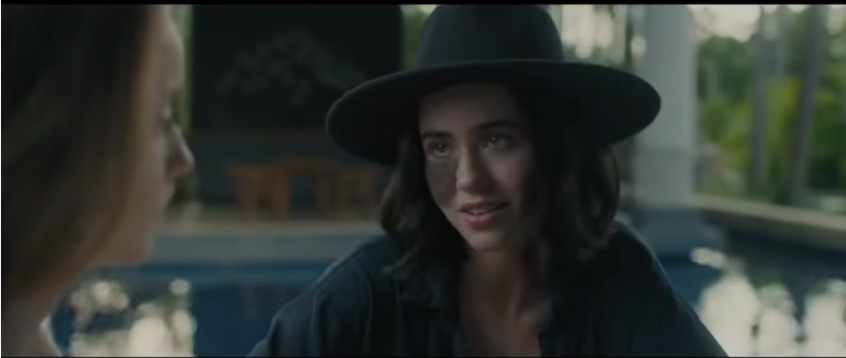
There are two ways you could go with this. Either she’s a character with a complex psychology and her motivations are comprehensible, or she’s an avatar of audience rage – or at least audience irritation – who punishes influencers for their sins against humility.
In the first movie, the indications were more towards the former. It wasn’t much examined, but hints were given that she had some kinds of insecurity and envy that she was acting out. To carry on, the next movie was either going to have to go deeper into those, or else turn aside and go for a more straightforward monster. Treading water was not an option.
Or it shouldn’t have been.
Does she work as a developed character?
Let me start by talking about her stealing, because that’s mostly what she does. Or at least, she does in the first film.
I keep saying people should try to know what they’re talking about, and one thing I know about is having my creative endeavours ripped off. No desert islands, nothing dramatic, just the usual kind of thing for someone living and working in a community where the rippers-off are part of the general background. Ask any writer, especially in the days of AI and pirate sites, and you’ll get the same story.
(And look, if you read one of my books on a pirate site, post me a good Amazon review and I’ll forgive you. We are all at the mercy of the algorithm. Or at least maroon me somewhere wet and windy; I hate the heat.)
But coming from that perspective, I have to start by saying this is quite a weird idea of how people use the Internet to steal shit.
People absolutely do steal, of course, but you have to ask, what profit does a thief make? It’s usually about getting free stuff, money or social capital, or else social capital that can be turned into money.
What does CW get out of this?
CW isn’t after their money, not primarily. It’s only vaguely mentioned in Influencers that she took over Claire’s bank account, and if CW’s good at that, frankly she could just defraud people the old-fashioned way without all the desert island antics. Identity theft is a well-established path of crime and people usually do it as simply as possible.
No: CW wants their lives.
If she just wanted to enjoy their luxury hotels and had to half-inch their channels to do it that would make sense, just about, but ‘free stuff’ is a fairly slight motivation for murder and the film keeps implying there’s more to it than that.
Ryan, the only significant male character of Influencer, accuses her of doing it because she wants people to ‘like’ her. And that is about as much explanation as we get.
There’s a hint CW may be self-conscious about her own face because she has a nevus, but let’s be real: Cassandra Naud is a smokeshow and the camera knows that very well (and it knows it even more in Influencers), so without any storytelling that’s not much of a reason.
Given storytelling about her looks or her life it might be, but as it is it only exists in the viewer’s personal headcanon, which wasn’t present on the screen when I watched it. Harder said in the Reddit AMA that they didn’t plan for CW to have any kind of atypical face, Naud was simply the best actress to audition, and the script doesn’t seem to have changed much once they cast her.
I’m all for casting the best person regardless of whether they look like your original conception or not, don’t get me wrong. That was a good call. I also like that the nevus isn’t made a big deal of, because it shouldn’t be; it would have been a wrong-headed and mean-spirited reason for CW to be a murderer. But it doesn’t help that that there isn’t a better reason in the movie.
We’re left with little except that CW might not like her own looks, but mostly she steals because she’s a bitch, and she both hates and envies influencers for reasons that also aren’t explored. It’s just sort of assumed we’ll understand because everyone in the audience feels a little bit the same, and I can’t say that I do.
The trouble is, this is not how people go about stealing other people’s content.
Here’s the rule of thumb:
- Artists care about the work. If they have to, they’ll give up the name.
- Fakers care about the name. If they have to, they’ll steal the work.
Tell an artist the only way to get their work out there is to use a stage or pen name, and they’ll consider it a fair deal. I’m not even going to count how many of my colleagues do it; it’s completely normal practice. If that’s what it takes, we do it without a murmur.
Fakers rip off work because the credit is all they’re looking for.
And it’s not about any new technology. Before AI people just did it with cut and paste. If you want an exhaustive demonstration and you haven’t seen the hbomberguy video ‘Plagiarism and You(Tube)’, you can find it here – https://www.youtube.com/watch?v=yDp3cB5fHXQ – but at the time I’m writing this it’s hit 40 million views, so I doubt it needs my recommendation. The point is, plagiarists are a type. They have a pattern.
Fakers steal the content and use their own name; CW’s stealing the name and using her own content.
Would that work if CW was an artist with content she wanted to get out to a pre-built audience? Sure. But her content is diegetically bland and generic, and she doesn’t especially seem to care about it, so that’s not what’s going on. She’s a faker; that’s the point.
Now, you could do something interesting with that if you were prepared to think about it closely and examine why someone was doing something that unusual. However, that would require thinking beyond stereotypes and following story logic through to conclusions, and Influencer doesn’t do that. Again, if you have a reason for why, it doesn’t get out of the realm of headcanon.
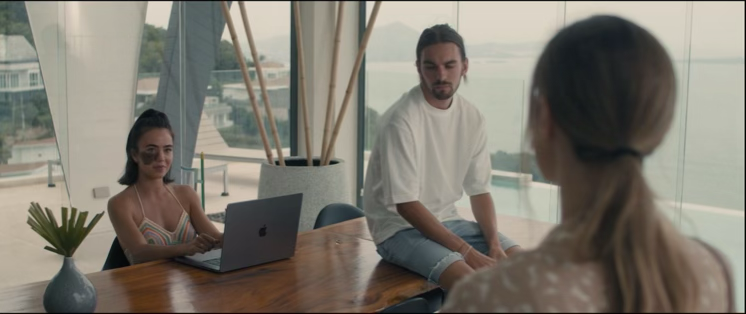
There’s the germ of an idea that might have led to a good story if properly developed, but that didn’t happen.
I’m going to be saying that about Influencers a lot.
And I’m going to start with pointing out that in the second movie – the point where CW’s psychology should be becoming more complex – the fact that she steals identities for emotional reasons is pretty much dropped.
She kills an influencer, sure, but she doesn’t covet her life; she just dislikes her. She hides things about herself, sure, but that’s because nobody runs around telling the world, ‘Hey, I committed a massive crime spree.’ The oddest and most interesting motivation CW had in the first movie was her desire to imitate influencers without showing herself – and in Influencers, her motivations are a lot more basic: her lies are for the simple reason that she doesn’t want to get caught.
She’s kind of forgotten the thing that made her a unique antagonist.
That’s not a good direction to go if she was going to be a psychological case study.
But on the other hand, CW doesn’t entirely work as a movie monster either.
Movie monsters are forces of nature, incarnations of some kind of rage or longing. There certainly is rage and longing bound up in how we feel about the impossible standards of the influencer life, but CW is kind of low-key for that. Her motives, such as we see them in the first film, seem to be more about vulnerabilities than furies.
A sequel could have pushed her in a more extreme direction. At points Influencers does, but to go proper monster it would have to do it consistently.
Unfortunately, though . . .
Okay, I think it’s definitely time to talk spoilers. Just bear in mind as we do that one of the sequel questions you have to ask when reviving a horror antagonist is: are they going to be a developed character, or are we going full monster?
So, as we go into the second movie, where does the plot have to begin?
CW was abandoned on an island; she must have got away somehow. Madison survived; what happened to her? That’s fine: there’s plenty of story you could get out of that if you were interested.
But this script is an underbaked cake: it aims to be a fun treat, and it sags.
Look, I normally try to find positive things to say because I love art and I love horror and I love most of you guys except the bastards who made me watch this movie, on whom I shall later exact revenge. I’m going to try to be fair, at least.
But this is a film that took me two days to grind through because it was boring as well as unpleasant, and if I hadn’t been honour-bound to write about it I would not have finished it. If you’re reading this, Kurtis David Harder, I suggest you stop reading now because you won’t like anything I have to say. All I’d say to you directly is that there are some potentially good ideas in this, but they need a better cinematographer, they need a stricter editor, and they desperately need a female co-writer.
There is so much wrong with this movie that I honestly struggle to know where to start. I think I’ll begin by doing what Harder didn’t, and think about the structure.
The trouble with the structure is that it tries to be clever – and like the clever kid in the back of the class, it’s good at distracting you from how little work it actually does.
Influencer, the first one, made an attempt at doing something interesting with the plot. ‘You believe,’ CW told Madison, ‘that you’re the centre of the universe, the star of the story. But no one is.’ Then it handed the story off from character to character, keeping us uncertain till the end about who the star actually was.
And while it didn’t write characters deep enough for that to have much meaning – it hardly matters who’s the star if they’re all paper cut-outs – that was at least an interesting idea, and it mostly told the story in a well-selected order.
I can only think of one real regret: it chose to hint that Madison had survival skills very late in the day by means of flashback, and hiding that in plain sight earlier in the film would have been more fun: between a revelation you feel you could have spotted but didn’t, and a revelation you couldn’t have spotted because there was nothing there to spot, the former is always more satisfying. But that’s a fairly minor criticism; on the whole, the story was told coherently even if it was rather thinly characterised.
Watching Influencers, I have to attribute the first film’s better qualities to Tesh Guttikonda, because the second film has only Harder credited on the script and it did not improve things.
Picture this.
Madison escaped the island, yes – but when the police investigated, CW was nowhere to be found! What were they to think? The island was full of bodies, and there was this one woman with a bizarre story to explain it all, and nobody could find any trace of this mystery girl she said was to blame. Madison is arrested and charged with the murders. She’s cleared, but the rumours hang around her.
People are suspicious. She has to stay offline for fear of harassment and threats. When she tries to defend herself in public, even former supporters don’t believe her. Her life is in shambles.
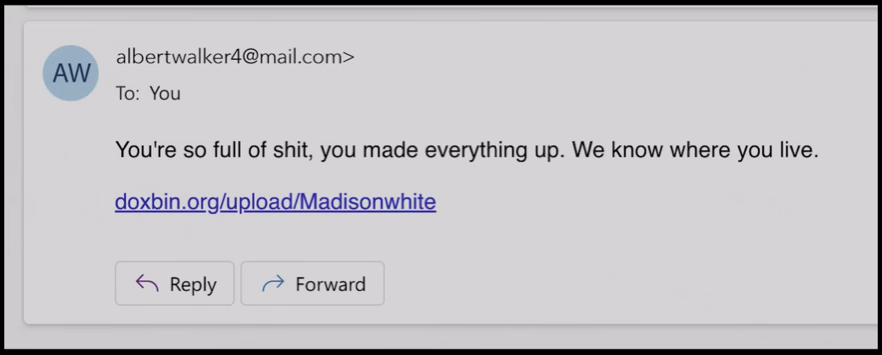
But then one day Madison sees something in the news. Over in the South of France (or Southern France, as they call it for some reason), a young female influencer by the name of Charlotte Smith has been found dead under mysterious circumstances.
There’s no explanation. Nobody knows how Charlotte came to fall from that ledge. But as Madison digs, she sees something. There, just very small in the background of one of Charlotte’s last videos, are two young women.
One of them, under her sunglasses, can only be CW.
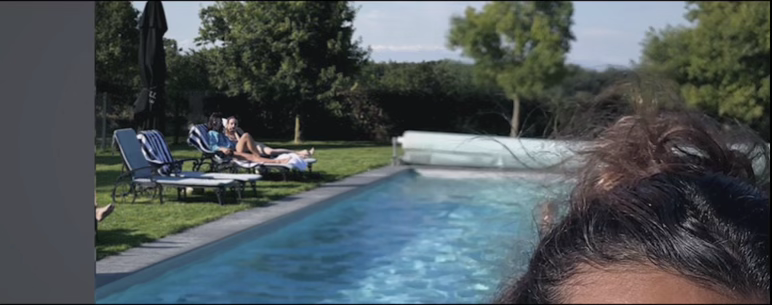
That’s a decent story, right? Puts you in the place you need to be, given where we left off: what will happen to Madison next? If CW survived, how did she escape and what’s she doing now? Can Madison find her and bring her to justice?
You could set it up in about ten minutes, but it’s perfectly sound plotting, yes?
Now picture that before you could get to any of this, the movie wasted thirty minutes of your finite, irreplaceable life pissing about.
I am serious.
That is not how the movie begins. It begins with thirty minutes of CW on holiday, getting the story pretty much nowhere. Things happen, sure, but in terms of what they change from where we left her at the end of the last film? This is the script clearing its throat.
Again, this is common enough in first drafts: you start with a certain degree of rehashing and re-locating yourself before you find your feet. But then you’re supposed to edit. This opening could have almost all ended up on the cutting room floor without us missing any of it.
It does tell us one thing: the film doesn’t intend to go full movie-monster with CW. It intends to go the character-development route.
It just doesn’t go very far with that at all.
We could begin with CW and still have a decent film.
But what do we actually learn in this half-hour character study? Let me give you a list:
- CW is kind of insecure and lies about who she is. Which we already knew.
- CW doesn’t like influencers. Which if we couldn’t already figure that out, we are too young for our mummies to let us watch this nasty movie.
- CW is gay, and trying to live a regular life with her new girlfriend.
Okay, the last of these is new information; the only new information we’ve got. So is it worth this much movie?
That CW’s gay might be useable. To Harder’s credit, it’s not pathologized – a low bar in this day and age, but he clears it, so fair dues. And CW’s preoccupation with influencers is all focused on pretty young women, who she stalks and then pretends to be, or at least she did in the last one.
If she’s one of those people who has trouble telling ‘I want to be with you’ from ‘I want to be you’, and who expresses this violently . . . well look, we still have The Talented Mr Ripley doing it better back in 1999, but you’re allowed to tell the same story more than once, and if it was done well now that would be fine.
It’s not done well.
CW’s girlfriend Diane (Lisa Delamar) has very little personality beyond ‘nice’, and ‘looks good in lingerie’ – and the latter of those, I assure you, is a quality shared by every single female character in this movie.
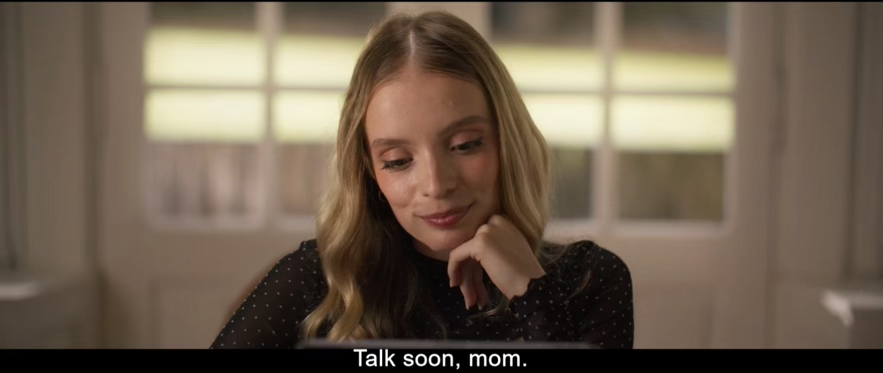
If this had been a ten-minute sequence, okay, fine. Good acting and visual storytelling can convey a lot of information very fast, and that would have been plenty of time for this amount of story.
If it was a sequence of any length setting up aspects of CW’s personality and life that were genuinely surprising and that would play into the later story with depth and twists, great.
If CW’s compulsion to imitate other women had played out with Diane in a thrilling way, excellent.
If Diane had stuck around after the opening and become a character who acted upon events in the plot herself, that could have been pretty cool. Delamar’s performance doesn’t give us all that much except that she’s adorably French as imagined by someone North American (Harder is Canadian), but maybe with better scenes she could done more.
But this is thirty minutes of two beautiful young women cavorting, and that is too bloody long for a sequence that tells us nothing except that CW has a tendency to kill beautiful young women, which we already know.
Because yes, after thirty minutes, CW kills Diane, not out of envy or anything psychologically murky, but for finding out her murderous secret, thus removing Diane’s potential to be an interesting source of plot and suspense. A character close to CW getting tantalisingly near to finding things out? That could have lasted throughout the movie. A character aware of at least some of CW’s sins but torn between her conscience and her love for her girlfriend? Interesting. A character with sins of her own? You could have gone somewhere with that if you liked.
A character killed by CW? Seen it.
We’re supposed to feel her death is tragic – but for that to land Diane would have had to have a personality. And she doesn’t very much: you can see why CW would miss her, you can see why CW wouldn’t tell her about the whole murder hobby, but what she is apart from a lovely girlfriend and normal person? Hard to say.
So after that whole half hour, Diane’s death affects the rest of the plot a lot less than you’d think it would, considering that it was a) A murder, and b) Built up to for that long. Madison will later look into it, but what does it tell her about CW that she didn’t already know? She knows CW is a murderer; CW tried to murder her!
Really Diane is reduced to a classic ‘dead wife’. It’s usually male characters who get them, but she’s just a dreamy face that smiles at the camera and makes the real character feel things. Functionally this whole half hour just ends up back where we started with CW, which is to say, sad, dangerous and single.
She was that at the end of the last movie. In terms of Madison’s reasons to hunt CW down, and CW’s reasons not to want to be hunted, we are still exactly where we were at the end of the first movie.
Then we get the credits. I am not kidding; this was a thirty-minute pre-credit sequence.
The first Influencer film pulled the same trick, of course: it started flashing up credits around the 26-minute mark, at the point when CW was about to steal the movie off Madison. But it worked a lot better then: CW grabbing the plot and running away with it was an actual surprise, and it was playing with the idea that you don’t know who the real protagonist is. Putting credits up at that point was a cheeky nod to the audience: Ah, you thought you knew what was up, but we’re only getting started.
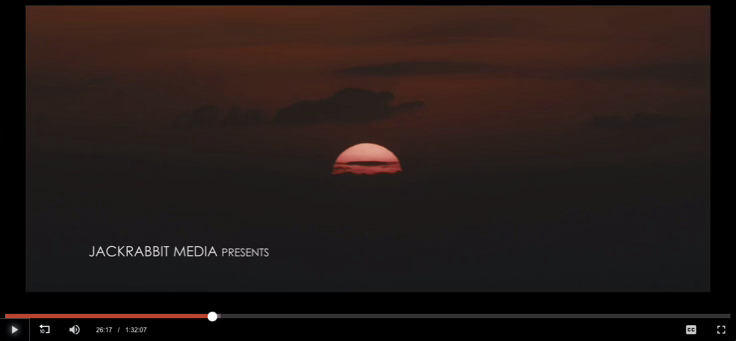
But you can only pull that rug once. Anyone watching the sequel is likely to be familiar with the first movie, not least because Shudder is the release platform for both and you can access the first just as easily as the second. Having more than one protagonist is no longer a twist; it’s an expectation. It would be more surprising if Madison wasn’t it in it.
So it’s not really a clever trick. It’s just finding out that yes, we have been sitting around for a slack half-hour before starting the real story. I felt less like I’d got a cheeky wink and more like I’d been flipped off.
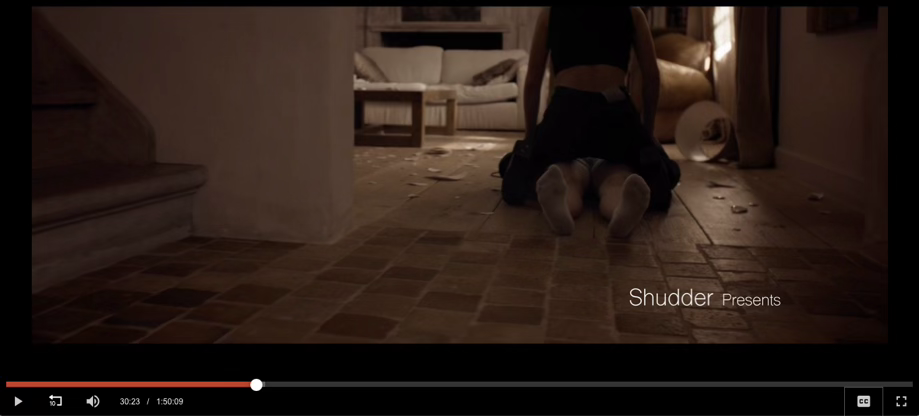
Keeping the feeling of twistiness going from one story to another is actually very difficult: once the audience is primed to expect twists, the crafty little bastards are harder to fool. But you can’t just replicate the outer form of a twist – or not if you’re aiming for any deeper pleasure than brand recognition, which if you don’t like brand-obsessed influencers you surely should be.
But hang on. Did you think that pre-credit half-hour is how the film actually begins?
Psych! It’s not!
We just wasted even more of your time!
Before we get to Madison starting the plot proper, we have to sit through CW dillying about in the South of France, yes.
But before we get to CW dillying about in the South of France, we have to watch a new character doing some stuff with no dialogue to explain what’s going on.
Before you say it: yes, in a different film this could have been some clever narrative Russian-dolling.
If you’re trying to get ahead of an audience expecting a fake-out pre-credit sequence because of how the last movie went, adding one and then adding another would be a way to add surprise.
But this was not that. I was surprised, but only in the sense that it felt like watching a mistake.
The reasons have to do with storytelling.
Partly it’s that, with the exception of the short flash-forward with the suicidal stranger, events here actually are happening more or less in chronological order. They aren’t overlaying each other cleverly: Madison isn’t doing stuff that turns out to be awesome explanations for things we saw happen to CW in the first half hour, and CW does nothing that turns into an awesome surprise for Madison. It really is just the case that Madison seems to be biding her time until CW’s initial story is finished, and CW’s story doesn’t get us anywhere that Madison couldn’t have arrived in the first minute.
This isn’t non-sequential storytelling. If you tried to arrange the scene in perfect chronological sequence, you wouldn’t change the order much. All you’d see is how much of CW’s story is time-filling.
End result: it doesn’t feel so much like plots within plots as it does like the same plot repeatedly failing to start. We might as well have watched them both in alternating scenes like a conventional thriller; heck, that might have forced the script to think about where it couldn’t afford to waste time, and added some suspense to each girl’s story as you wonder who’s going to catch up to who first. There are reasons thrillers are usually told chronologically, and one of them is that it makes it harder for the story to spin its wheels. Some narrative devices are conventional for a reason, and the reason is they work.
(Fun fact: in the earliest draft of my book coming out next year, I tell the story from the viewpoint of two equal protagonists. I originally wrote them separately, at least up till a certain point in the plot where they were going to have to meet soon. Then, realising this structure was draining tension from the story, I went back and put them into alternating chapters.
Fun discovery as a result: interlacing the deuteragonists’ separate stories forced me to keep a sharp eye on what happened when, and made me keep asking myself how to keep things relevant thematically if not always narratively. You don’t have to do it that way in the final draft – but even if you end up telling it non-sequentially, a solid story can hold up if it you watch its events in chronological order. A lot of fan edits have a lot of fun doing just that with their favourite movies, and if the movies are good, they still work. Influencers wouldn’t.)
I’ll fill you in on the rest of the story later – people stalk each other then fight each other, that’s about the size of it, and there are no twists as surprising as anything in Influencer – but first, let’s talk about the set-up. We’ll give it three categories: mystery, suspense, and visuals.
Let’s start with mystery.
This is how Influencers actually starts. This is what we see when we hit ‘play’.
A woman we don’t know is being driven through a lush Southeast Asian landscape. The music tells this is a dangerous emergency. The cinematography tells us that we are in a place and the place has trees and fields and stuff.
There are directors and cinematographers who can frame a scene to give you a sense of danger, and they weren’t working on Influencers. If you turned off the music you’d have no idea what you were supposed to feel.

Anyway, the woman (Ariana is her name, we’ll learn later, played by Veronica Long) is in a state. Her phone keeps pinging. We don’t see why. She throws it down, grabs a knife, and slashes her throat.
Her phone rings, and she crawls towards it – and at this moment, just under two minutes in, I started to notice what would quickly become a theme in this movie. Harder likes filming bare skin, and makes sure we get plenty of it, even when the woman is crawling around dying.
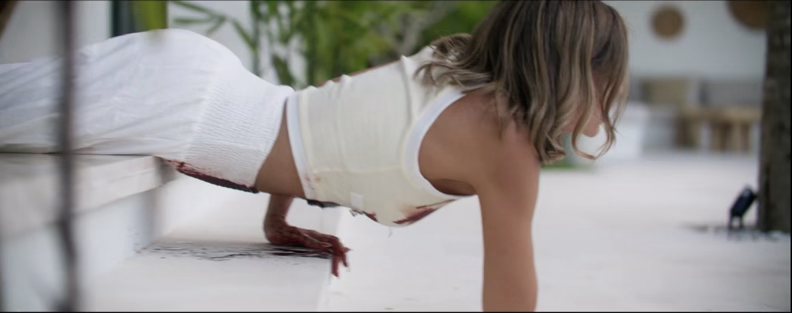
Anyway, the phone rings, and she collapses before she can get to it, leaving the name ‘Catherine Weaver’ sitting unanswered on screen.
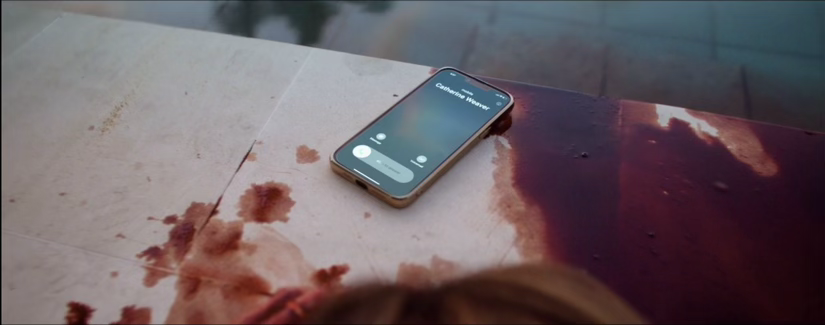
So look, clearly the point of the scene, apart from watching a woman crawl around panting, is to tell us that somebody called Catherine Weaver is relevant in a story of death-by-cancellation.
It’s supposed to be a mystery – but it doesn’t engage properly.
For starters it’s just not as legible as it should be. I actually missed that this was CW until several scenes later: we hear a couple of people address her as Catherine, but it’s either muffled by the soundtrack or pronounced like a French name when there’s her French girlfriend in the room, and since no one addresses the French girlfriend as ‘Diane’ until nearly seven minutes in, I thought ‘Catherine’ was her name. Maybe if the name flashed up on the phone was Xenia Quincy and our villain’s name was XQ that’d be easy to spot, but ‘Catherine’ and ‘Weaver’ are such common names it’s practically a Jane Doe. My name is Katharine W, for goodness sake.
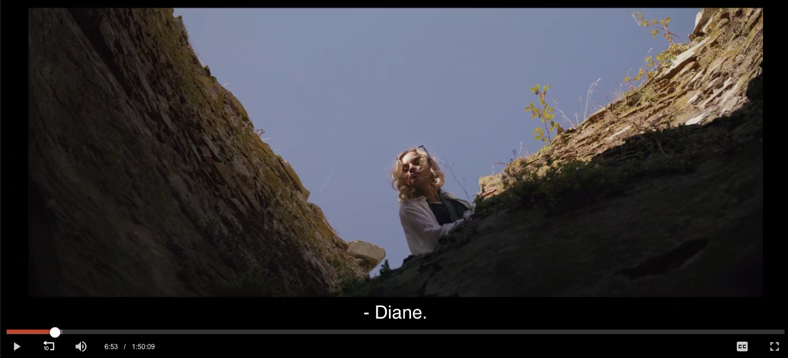
Call me an idiot if you like, but it’s clumsy handling, and a popcorn movie like this needs to be idiot-proof. There’s a difference between ‘mysterious’ and ‘confusing’.
But even if you instantly guess that Catherine Weaver is CW, or quickly put it together as she enters the film, what does that add to the mystery?
Are we left to wonder what’s going on with CW? No. We move to her story immediately afterwards, which wanders along at a pace I can only describe as ‘leisurely’. There is nothing to suggest her connection to this death is anything we need to think about urgently.
As to the mystery of why CW would be involved in it – well, it’s CW, and the woman looked like an influencer. We hardly need three guesses to get the basics.
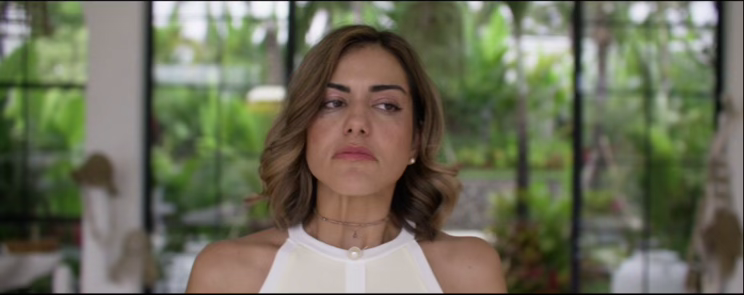
There’s a mystery, technically – but it’s one we can guess all the important answers to already. That’s not especially engaging.
Now let’s talk suspense.
We start with someone we don’t know and, in a sequel where we’re already invested in other characters, are not going to lock onto as an assumed protagonist. It’s a fair guess she’s just a disposable character there to establish that the stakes are serious. (She’s a bit more than that, but it takes a very long time to find that out – so long that by the time we do, all the drama from the opening has faded.)
More than that, we’re shown no information as to whether she’s a good or a bad person – so whether she’s suffering justly or unjustly is left unanswered. Should we care, or should we cheer? There’s no way to tell.
The only possible answer we might have is that she’s fashionably dressed and cares about what happens on her phone, and these movies do have an unpleasant tendency to assume any phone-using fashionable woman is a bad person . . . but if that’s meant to be a clue, then all that means is that she had it coming and her story arrives pre-resolved. And even this is a stretch; by the standards of normal human beings, we just aren’t given anything to feel anything about.
Which means we’re not on the edge of our seats to see her avenged, or alternatively to see her killer rewarded.
I think it was trying to be mysterious, but it didn’t pull that off. We end up with the worst of both worlds: a situation obvious enough that we can take a good guess who’s responsible, but obscure enough we don’t know if we should be shouting ‘Yes!’ or ‘Nooo!’ at the screen.
I have to tell you, guys, it doesn’t feel good to say that the best word for this on-screen suicide is ‘forgettable.’
Finally, let’s talk visuals.
Because this is crucial. The pacing of Influencers is all off – and a lot of this is down to the fact that it’s absolutely crammed with shots of scenic places that, in terms of visual storytelling, grind the film to a dead halt. The camera may move about, but we aren’t really getting anywhere.
Thrillers depend on maintaining a mood, and the key element of that mood is tension. We need to anticipate – and that means that a really good thriller fills the screen with visual hints that there’s trouble a-brewing even in moments where it seems like you should feel safe.
The cinematography in Influencers, however, is flat. It makes very little use of blocking, angles, lighting, background or any other film language.
If you have time, take a spin through all the shots capped in this essay. A few of them have to involve a bit of an angle, but only when there’s a need to show a place or scene that literally can’t be fitted in otherwise. Mostly it just plonks the camera directly in front of whatever place the story is happening, sets the main point up in the middle, and calls action.
The end result is that you might feel something about a shot – but only because you associate it with something you already have feelings about.
Take this shot, in which CW is cycling through the old French town. What does it tell you?
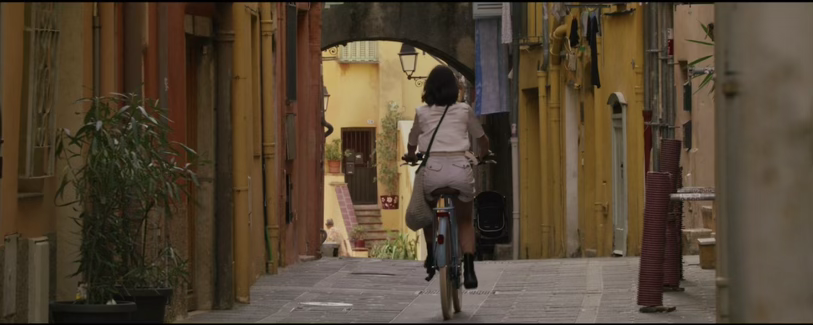
My husband and I both examined it in isolation, and we came away with completely opposite feelings. I thought it looked cosy, safe, untouched. We live in London and a lot of our city was bombed to rubble in the Blitz; this, to me, spoke of a place that had escaped the destruction and the subsequent scramble to repair. It looked relaxing.
My husband, on the other hand, found it enclosing and claustrophobic. This, he said, was mostly because it reminded him of shots from Jean de Florette and Manon des Sources (1986), two movies also set in the South of France that are technically dramas but a great deal more horrifying than anything that happens in Influencers. They’re all about how a small community can close ranks against those it perceives as foreigners, even to the point of letting them die.
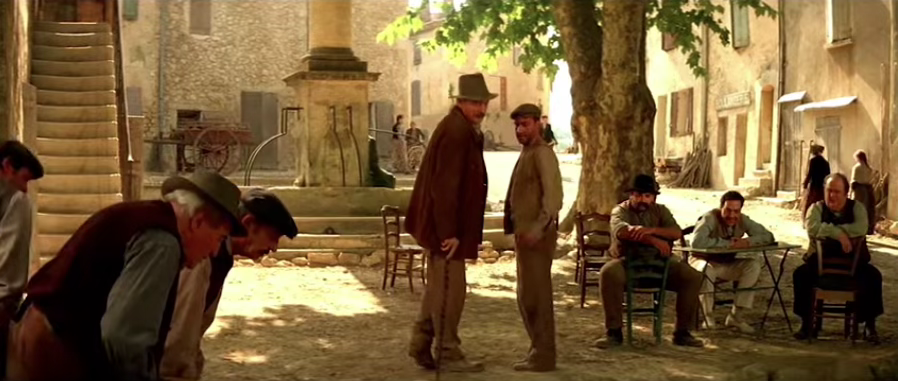
But it only reminded him of Jean de Florette because it was set in the same geographic region. That was it.
All the Influencers shot told us was, ‘We are somewhere in the Midi.’ It just showed you what was literally there.
But look at that shot from Jean de Florette. The two men in the middle are an uncle and nephew, Cesar (Yves Montand) and Ugolin (Daniel Auteil). They are conspiring to starve out Jean (Gerard Depardieu), an idealistic newcomer from the big city who inherited a plot of land with a hidden spring they want to water their own crops.
Jean isn’t actually an outsider; he’s ‘de Florette’, the son of Florette, a woman born and raised here – but Cesar and Ugolin are the only ones who know that. And they make a cold, deliberate choice. They block the spring – and they don’t tell anyone in the village that Jean’s a local boy come back to his roots.
If he fails, they can buy his land cheap, especially as they’ve pretended to befriend him. Having to leave would break Jean’s heart and ruin him financially, but they don’t care about that; he’s not family. And he might very well fail: his farming knowledge is all theoretical, and while he doesn’t complain about it, he also has kyphosis. You hear the word ‘bossu’ (hunchbacked) a lot, and nobody expects such a man to be able to tough out the brutal physical labour ahead of him.
But if it got out that he’s Florette’s boy, Jean’s neighbours might welcome him home and tell him about the spring that could make his crops blossom, because he’s got a really clever idea for his land and he works like a ploughhorse, and all he needs is water. Jean’s conversation is book-learned but his devotion to the land, his commitment to farming and his care for family and community are every bit as deep as theirs.
As a foreigner he’s scorned; as Florette’s Jean, he’d be popular. As a foreigner he’s seen as starry-eyed; as Florette’s Jean, they’d understand he’s big-hearted. As a foreigner his innovations are dismissed as idiocy; as Florette’s Jean, they could be the community’s future.
So Cesar and Ugolin are hiding the knowledge of the spring from Jean, and hiding the knowledge of Jean’s connection to the place from everyone else. It’s the tale of a community cankered with secrets.
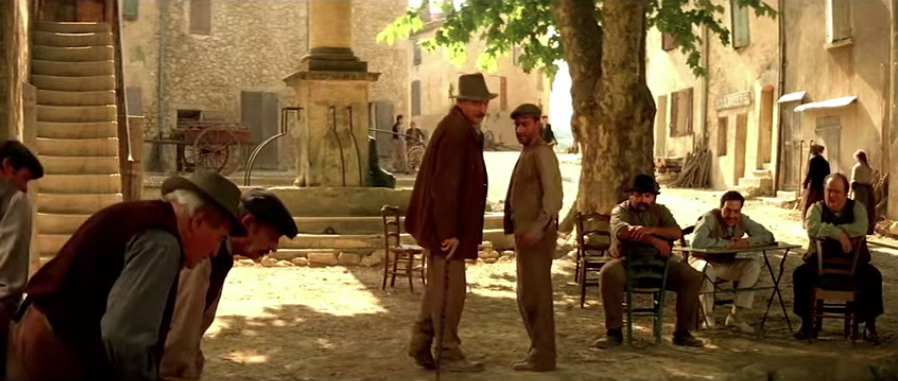
Look at the framing. Prominent in the background is a fountain, reminding us that in this place even more than most, water is life.
Look how Cesar and Ugolin turn towards each other: their bond of kinship is instinctive, defensive and exclusive.
Look how their neighbours sit around them. No one is facing them: Cesar and Ugolin aren’t much liked, but at the same time nobody is challenging them because they’re central figures in the community, tolerated as a fact of life where Jean, the much nicer outsider, gets no help.
Look how the golden sun should illuminate the place, but its beauty touches none of the men in it. This community withholds kindness and help; it withholds information and truth. Where there could be warmth and light, people choose to stay in the dark.
Influencers, meanwhile, just tells you where CW is currently staying.
Or consider the opening scene I called bland before:

I thought it looked like a generic holiday snap. My husband thought it looked like we were expecting military helicopters to zoom in from above any minute, as in so many Vietnam War movies, and you know, if I showed you that image and said they were about to, would you be sure I was lying?

I would be lying, of course, but what does the actual shot from Influencers tell us? Basically nothing except that we are looking from above at a country somewhere in Southeast Asia. That’s it.
Influencers’ visuals only ever tell us what we are literally looking at. We are in a place and there are these things in it. That’s all.
The places tend to be impressive. However, most of the actual action happens in phone conversations and Internet searches, which I’ll get into later. Madison being threatened online in a way that never turns into a suspenseful real-life scene isn’t a one-off; it’s the way it’s consistently going to go.
The end result is that the time we spend looking at these places – and there is so much time spent looking at them – is narratively empty. It doesn’t much impact the story where we are, and the visuals don’t use the places to work on our feelings.
Looking at the shots, the strongest emotion they tended to provoke in me was a wistful frustration at the thought I could be watching The Talented Mr Ripley instead, because the film is clearly deeply influenced by Minghella’s masterpiece without taking any of the right lessons from it. The Talented Mr Ripley doesn’t work because it’s set in luxurious places; it works because of what it does with them.
Let’s compare.
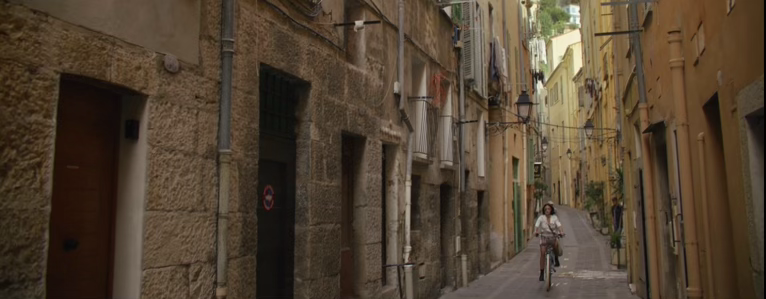
What does the shot of Catherine tell us? She’s on a bike in the Midi, make of that what you will.
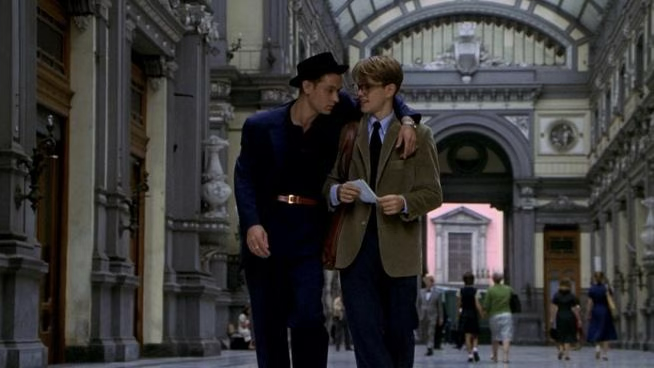
But look at how much Mingella does in a single shot.
Tom, a working-class gay kid pretending to be rich and hiding his sexuality, has fallen under the spell of spoiled scion Dickie, a charming waster who picks people up, plays with them for a while and then loses interest. Look how much we can see of the story in how it’s set up.
Look at the sharp contrast between the violently pink background and the entrapping grey, as if Tom’s closeted inner life is peeping through for a moment.
Look how ordinary people mill around in the background, a moment of private feeling having to happen in public, seen and unseen, hiding in plain sight. Clashes are happening unspoken, and crimes might happen without any interested witnesses.
Look at the contrast between how the two men stand. Dickie’s pose is a casual loll: his arm around Tom’s shoulder is superficially friendly, but his body is angled away and his hips tilt in the opposite direction. This hug, for Dickie, isn’t about intimacy so much as it’s about dominance, claiming ownership of his new pet. Dickie’s navy clothes stand out boldly against the background, drinking in all the light and forming a dark centrepoint, while his belt buckle gleams as if a brighter sun shines on him than anyone else. Everything about him draws the eye and asserts his presence, proclaiming his independence, his entitlement, his freedom from care.
Now look at Tom. He’s poised very carefully, his stance proper in the way less privileged people have to be. His hands are carefully controlled and held tense: Dickie can touch him freely, but Tom is hyper-alert to where Dickie’s boundaries might be. Yet his body turns towards Dickie just a yearning fraction, as if trying to feel embraced rather than led. His jacket looks too hot for a climate as obviously sunlit at that flash of pink tells us, yet its colour almost literally fades into the background. He’s both misplaced and invisible, everything he doesn’t want to be.
Tom’s whole physical presence tells us how much he wants to be accepted. And Dickie’s tells us that any promise of belonging will be broken.
This is storytelling. With care and interest, a single image can do so much.
I didn’t even particularly select those shots from either The Talented Mr Ripley or Jean de Florette. They aren’t unusually dense examples; they were just easy-to-find images that showed the kind of architecture I thought Influencers was mirroring. But the more you look at these pictures, the more you see.
I can’t see anything when I gaze at shots from Influencers that I didn’t see in the first glance. All I see is where the characters literally are and what they’re literally doing.
Which means that any time spent on non-critical scenes is time without story.
If we’re just seeing people be in places, that’s all we’re getting. It’s all establishing shots, establishing the same thing over and over. A single two-second shot could tell us as much as Influencers tells us over minute after minute.
And this means that in all the supposed background and character stuff with CW at the beginning, we’re actually losing momentum every moment we should be picking it up.
We all know Hitchcock’s bomb-under-the table analogy; I quote it incessantly: if you show an audience some people at a table chatting about baseball and then a bomb explodes, they’re mostly bored, but if you show a bomb under the table first then the same scene becomes unbearably tense.
I think this is what Influencers is going for. But there’s a couple of problems:
First, the bomb was already established in the first movie. CW is the bomb. We know she’s coming back at some point, and spending half an hour of watching her do this and that without surprising us is not establishing suspense. Five minutes of baseball then a bomb is boring, but so is half an hour of staring at the bomb with no baseball.
Second: the bomb is suspenseful because you know where it is relative to the baseball fans. It’s under the table; they’re at the table. When it goes off, they will be killed.
A stranger dying for reasons vaguely imputed to CW does not have that line of connection. Nor does Diane’s death; it could have, but it isn’t made relevant enough to the rest of the story to be anything other than padding, another reason for Madison to know CW’s a murderer, which she knows already.
Nor does Madison serve as a bomb for CW, because she doesn’t enter the movie until CW’s half-hour opening is complete; if their scenes had been alternated that might have worked, but that’s not what we got.
If you’re going for a thriller, the lines of suspense need to be clear and crisp.
You can’t afford to leave information vague. You can keep information concealed, of course, but you do need a vivid picture of the problem created by not knowing what’s going on: missing information has to be present in its absence, so to speak, rather than just not there.
Let’s compare a famous thriller that keeps you well on the back foot: David Lynch’s 1986 classic Blue Velvet. We begin in an apparently idyllic American small town; it has a seedy underbelly in which a crazed criminal has kidnapped a woman’s family so he can blackmail her into submitting to his sexual assaults.
We don’t know this at the start. But the information is parcelled out steadily – and from the outset, the through-line is clear. Our hero Jeffrey (Kyle McLachlan) finds a severed human ear in a back-lot field; when he brings it to the police, the chief cop’s daughter lets it slip that this is somehow related to a local nightclub singer. Jeffrey investigates from there.
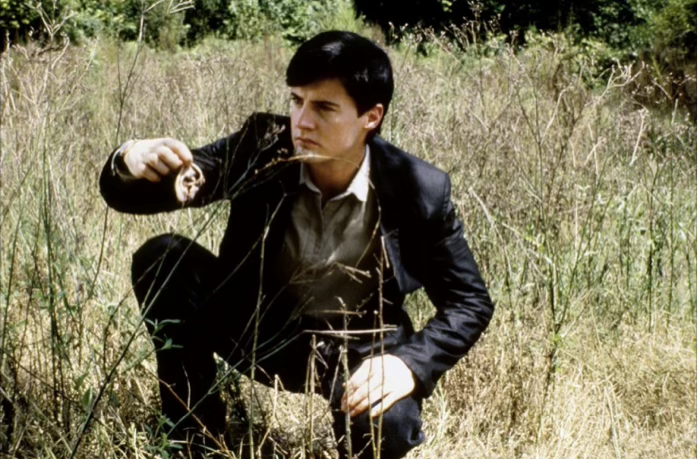
We don’t know from the outset that it involves Frank Booth (Dennis Hopper), one of the great maniacs of cinema history, but it’s clear right away that there is something dreadful going on, that it involves grotesque violence, and that it can’t be the act of a controlled and calculating perpetrator because such a person wouldn’t just toss an incriminating body part into a field. By the time we meet Frank we are horrified, we are shocked – but we are not surprised. We were expecting a cruel, unhinged man. He’s worse than we pictured, but he’s not different.
That ear is suspense as present absence. How did it get there? We don’t know. Is it something we can shrug off? Absolutely not. The idea that something so dark underlies a town so light is unbearable: without an explanation, how can Jeffrey go back to any kind of normal life? It’s already telling a story, and that story matters.
Influencers tells everything in the wrong order. I get it, it’s trying to keep things interesting by using an unconventional structure to leave mysteries hanging.
But its shot composition is so devoid of tension, its pace is so leisurely and its editing is so undisciplined that mysteries don’t hang like the sword of Damocles; they hang like neglected laundry.
I can’t help feeling that at least one redraft showing the events in full chronological order – ie forcing effect to follow cause consistently and immediately and zeroing in on exactly where everybody is exactly when – would have forced the plot to tighten up to something stronger, even if the events had then been re-ordered again afterwards. There is, somewhere in the muddle, the materials of an adequate story.
Once we get to the third act we meet our final player: Jacob (Jonathan Whitesell). We will talk later about his character writing – oh boy will we – but for now let’s just say that he’s a wannabe manosphere influencer who crosses paths with first Madison and then CW, and becomes the central point around which the third act revolves.
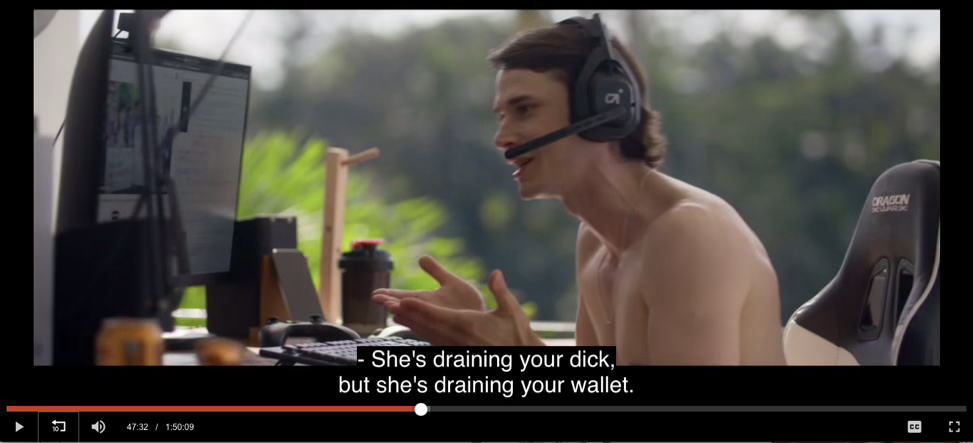
This is too important for a character who just bounced in unannounced. Sometimes it’s clever to disrupt audience expectations of how a story will be structured – but you have to have a more solid grasp of the basics than Harder does.
Harder mentions Tarantino as an influence in a lot of interviews, including the Reddit AMA I linked above, but when Tarantino jumped around in Pulp Fiction each section was a well-structured short that could stand alone.
These characters’ stories, however, interact with each other and build up to a climax where they’re all in the same place, and that’s a traditional, conventional story. The reason they happen one at a time on screen is that they diegetically happen at different times in the story: Madison really is doing very little about CW while CW fools around in the Midi, and Jacob really is doing nothing about either Madison or CW until the moment we see him.
It’s the same problem we had when Madison entered the movie after half an hour of waiting around while CW did this and that. A well-fleshed character feels like they’re probably doing things even when you can’t see them. With these characters, it feels like when you can’t see them they’re just sitting on their hands waiting for their cue.
When events are being shown pretty much in their actual sequence, that’s not non-sequential storytelling.
It’s just a lack of foreshadowing, crossing the line from ‘delightfully unexpected’ to ‘genuinely random.’
If Jacob were going to be this important, at least his manosphere world should have been more prominent at the outset even if he himself wasn’t – which would have been perfectly possible with Madison being harassed, it’s a natural association. Those guys harass women for sport. But no; Jacob arrives out of nowhere even when a former connection with Madison would make perfect sense.
Like I say, I’m happy with non-sequential storytelling if it improves the film, but this is a pretty basic story and Jacob’s arrival feels like a skid, not a leap.
I’m going to say some things about this movie’s attitude to women later, but please note as Exhibit A that it expects us to treat a sexist man as a main character the instant he wanders into a sequel film that’s spent nearly an hour entirely on female characters we already know from the first one. (Plus one extra woman who got fridged.) And not he’s not the main antagonist either. It expects us to view him as flawed but sympathetic tritagonist.
I’ll recap what we’ve seen so far, in the order the film presents it.
First: we see an unknown woman slit her own throat for unknown reasons.
Second: we see CW spend half an hour with her girlfriend Diane before killing her for finding out her secret.
Third: we see Madison suffering the blame for CW’s crimes, and doing detective work to try and track CW down.
Enter Jacob. He’s dating the not-yet-dead unknown woman.
Jacob, for all his late arrival, had the potential to be a plot catalyst.
Consider these pieces on the board:
- Madison, bearing the blame for CW’s crimes and seeking justice. A threat to CW; threatened by the Internet.
- CW, escaped from justice and trying to live her life away from Madison. Brilliant with computers – we saw her fake images last movie, and in this movie after she’s killed Diane she creates an LLM version of Diane to be a kind of robo-girlfriend. Threatened by Madison; capable of weaponizing the Internet.
- Jacob. A guy chasing clout on the Internet, who has zero problem encouraging hatred of women. Perhaps harassment of women. Perhaps doxing and stalking of women. The sky’s the limit with an MRA, or perhaps, since we’re talking about how low you can go, the centre of the earth.
Introduce them in a sensible order, and you’ve got Madison the pursuer, CW the fugitive with powerful potential to counter-attack, and Jacob the wild card. There’s a movie in that, right?
Introducing a new point of conflict is the usual way of establishing a sequel. If you’re going the slasher route you keep the monster and introduce a new set of victims; if you’re going the drama route, you keep the protagonists and bounce them off a new problem. No fiction without friction, as an old writing teacher of mine used to say, so you pick what would cause most friction with the characters you’re re-using and go from there.
Influencers gave itself a complicated problem, because CW falls halfway between monster and character: there are hints at nuance like she’s a character but they remain absent like she’s a monster. What does have to be imported from one film to another is probably best understood as a character dynamic: CW and Madison are locked in agon, and the novelty is going to come from introducing new allies to one side or another – or, as an interesting third option, a potential new ally who might swing the battle either way depending on which side they join.
Influencers sort of fakes having made that movie with Jacob. CW and Madison both try to deploy him and the three of them are all in the same place fighting by the end. But how do they get there?
Madison meets Jacob first. How would you expect her to interact with him?
If you said anything sensible, you’re wrong.
Madison was arrested for murder and half the world still thinks she did it. The Internet being what it is, she is in warranted fear for her life.
In response she’s not simply logged off; she’s living as if the Internet didn’t exist.
I don’t just mean that she’s no longer an influencer. I mean that everything about her visually has returned to the 90s – a kind of cinematic chastity in the kids-these-days grumbling against influencers these movies have. She’s forsaken her harlot costumes and changed to a low-femme plaid shirt, and donned Converse All-Star high tops, about as 90s a shoe as you can get. She eats in mall food courts, goodness me; do those even exist any more?
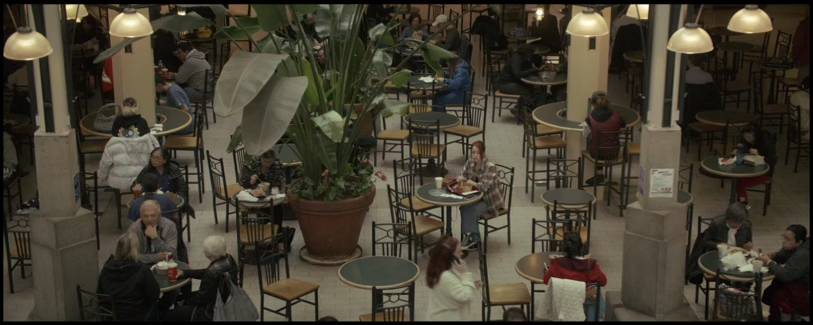
Madison isn’t living with any kind of caution. She’s living as if the Internet didn’t happen, which means she’s purged herself of its sins.
Which apparently matters more than acting like a rational person the Internet has decided to threaten.
So what does she do when she bumps into Jacob, a total stranger determinedly chatting her up at a club because his bro dared him to? She immediately tells him (and apparently only him) that she’s looking for CW. She shows him a photograph and gives him the whole story.
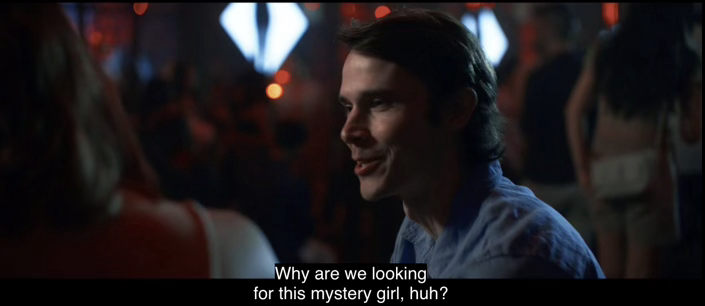
Madison confides everything to the douchebag who just sat down and hit on her after she asked him not to.
‘If I do run into this mystery girl,’ he asks, ‘how will I let you know?’
And she gives him her phone number.
I don’t know if this is how it works in some guys’ heads, but if anyone tries to tell me this film is a clever thriller, I’m going to make them rewatch this moment until they take it back.
This isn’t just poor character writing. The real problem is that it’s a narrative shortcut.
The script needed to get Jacob into the story somehow, and exactly how to do that was apparently something it didn’t feel like wasting more than a short scene on. Foreshadowing? Building up a relationship? Contriving ways for him to find things out? Telling a real story about it? Too much effort.
And it wouldn’t have taken very much effort to think of a better connection between them: he’s an online hatemonger and Madison’s life is plagued by online hate. Maybe he’s the leader of a mob against her and she thinks that if she can get to know him in person where he’s less of a keyboard warrior, he might call off his dogs. Maybe he’s a big enough conspiracy theorist that he actually believes in CW because an invisible woman is a better vessel for his paranoid fantasies, and Madison figures that even if he’s wrong about what CW’s like he might be right about where she is.
Maybe his fans are all into creepshotting women and Madison thinks she might recruit them into scouting places CW might turn up. Maybe he’s better with computers than her – few if any MRAs aren’t also geeks – and she wants him to turn the skills he’s been using to harass her into a means of tracking CW’s online footprint.
Those are all just off the top of my head, but you see what I mean? Madison could have any number of reasons why this guy in particular is someone she’d give her phone number and tell her story.
All of them would have required Jacob to be a character acting under his own steam, and it’s an important aspect of the plot that actually he’s only hating on women for money because a woman is telling him to – believe me, we’ll discuss that later – but it would all have added meat to the bones.
But in defiance of any kind of plausibility, Madison just tells him for no particular reason because it gets the plot from here to there as fast as possible.
How about CW? How does she get involved with Jacob?
Again, it’s cursory. He approaches her, starts filming her on his phone without permission, and asks, ‘You’re not a murderer, are you?’, telling her there’s a girl looking for her.
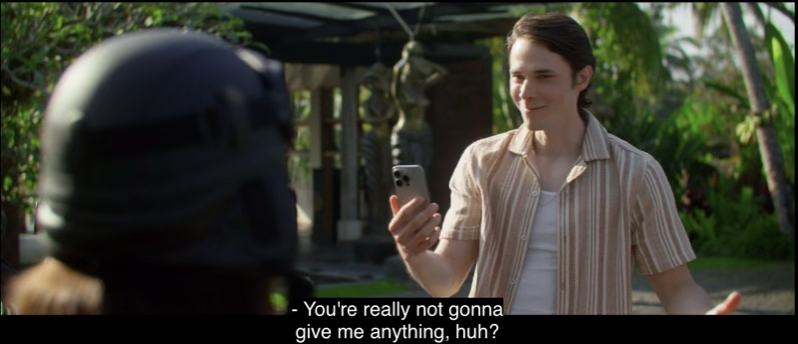
Then she tracks him down using her Mad Computer Skillz, gets in touch, spins him a story about how Madison is stalking her, and it goes from there.
I can buy Jacob being stupid more easily than I can buy it from Madison, but essentially it’s the same thing: a single meeting, following which both parties decide that now they know each other and the plot can proceed without having to spend any more time building up the kind of relationship in which they might actually establish such lines of communication.
From here, Jacob is a major character for the rest of the plot. That’s how little time was spent working him into it.
I think now is a good moment to point out that this film is an hour and fifty minutes long.
And yet it’s thinly plotted.
In the opening half hour with CW and Diane, we see CW murder an influencer. This is more or less the same thing we saw happen in the pre-credit sequence of the first movie, but Influencer managed to get us from ‘CW meets Madison’ to ‘CW maroons Madison’ in twenty minutes, during which a lot of the screen time was spent keeping Madison’s relationship with Ryan in the foreground. Greater editing economy led to much denser storytelling.
If Influencers had been edited as tightly as the first Influencer, the pre-credit sequence would have been a third of its length, if that, and much better for it.
The same applies to the Madison detective sequence. What’s established there and how?
Despite the film’s dislike of the Internet, most of the real story happens online. Madison goes on a podcast to defend herself and is told nobody trusts her; we’ve already seen computer screens full of comments saying the same thing. Madison travels to France so we can see shots of her sitting in cafes and standing under Metro signs, but all the information she finds that leads her to CW is actually found online. We could have had five minutes of her on Google and we’d get to the same place.
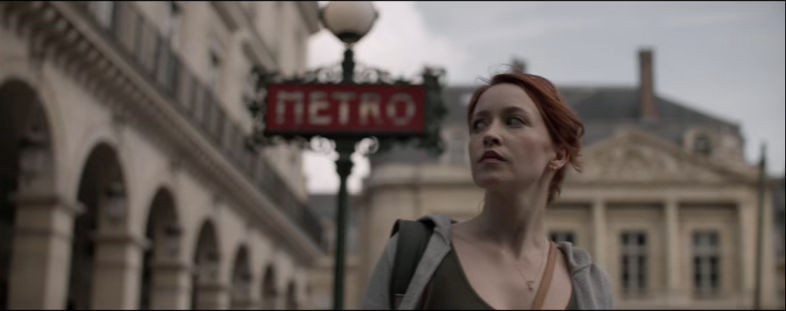
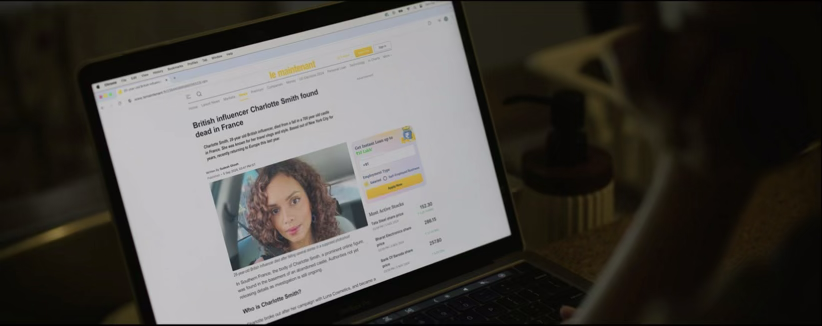
And the thing is, this is convenient storytelling. You can just look stuff up and there’s the information; you don’t have to contrive much to get the character to the facts.
It bypasses obstacles rather than writing its way through them.
For example: Madison visits the hotel she suspects CW stayed at and tries to wheedle some information out of the concierge. Naturally enough, he declines to give out information about guests. A narrative challenge to figure a clever way past, right?
Now, in your traditional thriller this would be the point where Madison sneaks into the staff quarters or uses her wiles on the gardener or does some other dramatic feat that would involve her either talking to people or going outside and touching grass. You know, the stuff we should all be doing instead of scrolling Instagram.
She doesn’t. She goes back online and figures out it was CW by clicking through people’s Instagram profiles.
Is it how we’d probably do it in real life? Yes. Because we’re not horror movie protagonists and that would be the quick and easy way that didn’t require us to have any skills or courage to write home about.
Is it cinematic? No. If it’s not worth writing home about it’s not worth making a movie about.
But was it a quick solution that allowed more time to film flat shots of lush locations? Yes. And that took precedence. So despite Madison’s visit to France, she solves the mystery in a way she could have done without leaving her American bedroom.
This keeps happening. The plot takes shortcuts to its important revelations: a single question gets you to the answer, and huge amounts of padding surround these moments of actual story.
It’s a long film, yet the moments of storytelling tend to take the fastest routes possible to the information.
So what does it spend all this extra time on?
Two things.
Number one: unimaginatively-framed holiday-style shots of the kind that travel vloggers get killed in these movies for chasing.
Number two: babes in bikinis.
Also in lingerie.
A lot of both, and I mean a lot.
I feel like I should provide you with a hundred examples just to show you how relentless it is, but honestly I’m depressed enough and we haven’t even started talking properly about how this movie treats women.
I’ll just say . . .
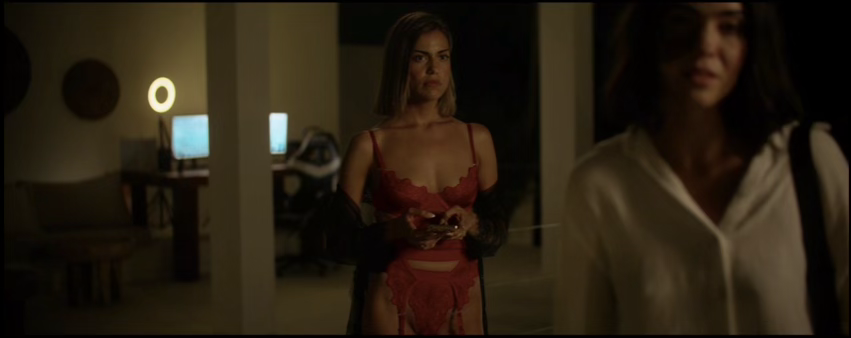
. . . that after a certain point . . .
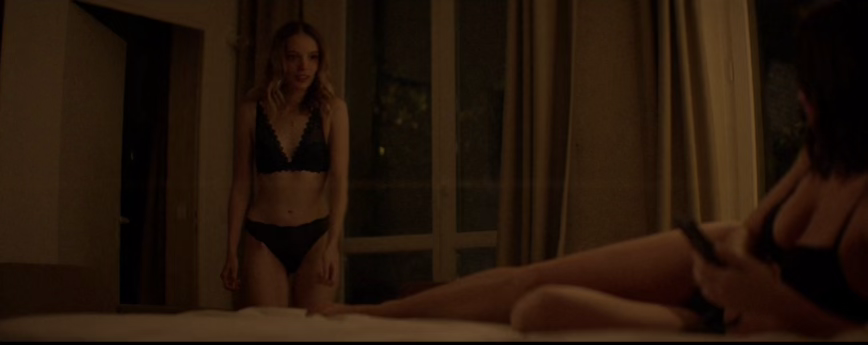
. . . it got so relentless . . .
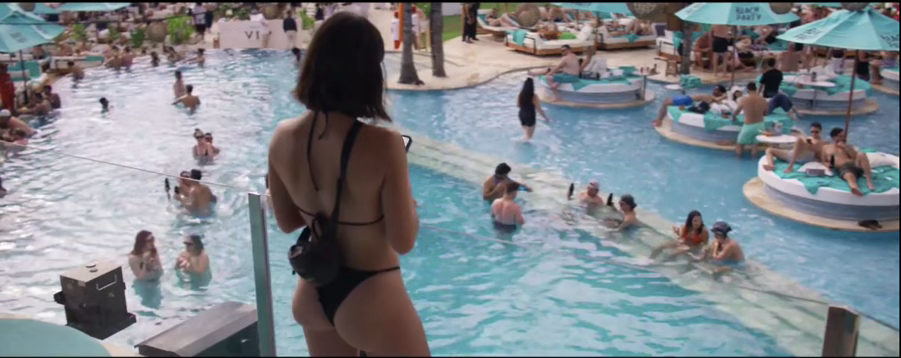
. . . that my husband, who was watching too, turned to me and said:
‘I am a straight guy. I like looking at naked ladies. They look lovely. And at this point even I am going, “Eh, could we not?!”’
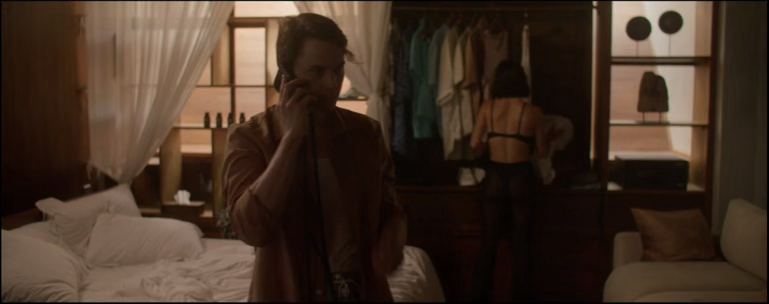
Look, I’m not against people who like to look at women in the bare. I married one. But in these Internet days where naked women are not difficult to find, can we please agree that it’s not an efficient use of run-time in an over-long, under-plotted horror movie that’s trying to be clever?
Our old friend disavowal
In the previous influencer-horror essay I talked about disavowal, defined by YouTuber Natalie Wynn/Contrapoints as:
The process of constructing fantasy situations where your desires are gratified without having to assert or even having to acknowledge the desire.
[Source: https://www.youtube.com/watch?v=bqloPw5wp48&t=3656s]
Seeing naked ladies in horror movies while pretending it’s for some reason other than the obvious is an old tradition.
But when I say ‘old’, I actually mean old-fashioned. If we’re talking about a slasher in the 70s whose intended audience was boys in their teens and early twenties, this was an audience that had to get its erotica through print media, and an embarrassing experience with a newsagent stood between them and that Playboy. While as a straight woman I find it distracting, I can see the marketing sense of slipping some titty shots into the film by way of extra incentive.
But we do not live in that era now. If men want to see naked women, the search bar is right there.
So what’s up?
Well, there’s actually a genre Influencers is playing into. It’s just that it is, ironically, an influencer genre rather than a cinematic one.
Don’t tell my mum I know this, but there’s a genre on YouTube that’s so popular that when I started typing the words into the search bar, it filled them in for me automatically – and I’ve never searched for them before now. The algorithm just knew what I was talking about.
The words were ‘underwear try on haul.’
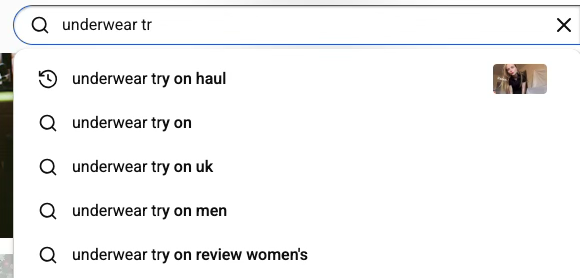
It’s a simple enough: a pretty girl ‘tries on’ underwear she’s bought. Ostensibly she’s reviewing it, but we all know who’s watching and why.

[Caption] We know because they tell us. This was one of the top comments on the first video I clicked.
Honestly it’s quite sweet. It’s as vanilla as erotica gets; the girl’s job is to be endearing and personable as well as looking nice in the undies, the comments seemed pretty friendly, and as long as everybody’s there of their own free will it’s harmless fun for the consumers and hopefully a nice little earner for the young woman.
But you’ll notice she gives a reason other than the real one: ostensibly she’s doing product reviews. Of course this is partly about dodging the algorithm – if you called it ‘Sexy girl in scanties for the discerning masturbator’ it would get flagged – but it’s also part of the vibe. Our haul girl is cute and friendly; you feel like you’re just hanging out.
There’s also a category of ‘off-grid’ ladies in the buff. The thumbnail makes sure to show a pretty woman in minimal dress, enjoying a gorgeous outdoor location. The actual video may not have her show you anything, or if it does it’ll be carefully spaced to encourage you to watch the whole thing so that the algorithm clocks maximum engagement, but either way, ‘semi-clad lady in a pretty place’ is another genre, and it serves the same purpose.
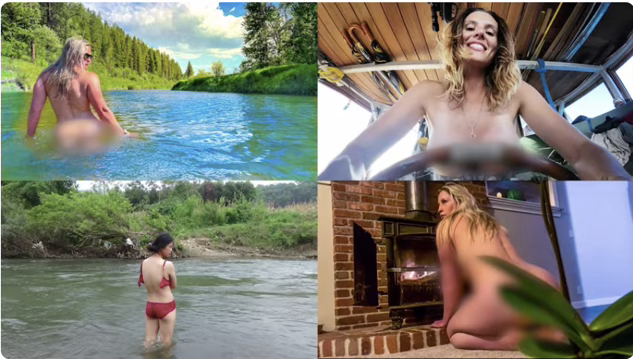
And again, assuming the woman is there of her own free will and hasn’t been coerced – not a guarantee, the Internet being what it is – then that’s fine. A pretty landscape and a pretty body: two tastes that taste great together.
And have a little sprinkle of disavowal mixed in for flavour. It is, at least, a less blunt vibe than straight-up no-denial porn. Even if it’s just ‘I bought a new bra!’ or ‘Camping time for this outdoor lass!’, some people prefer a little story with their skin.
I’m sorry, Influencers fans, but when I watch this movie, that’s what I see.
I see shot after shot after shot after shot of women in bikinis and underwear, in scenes carefully located in places where you can just about pretend it just about makes sense because of the tropical climates and swimming pools galore – and I see the camera linger on these for moment after moment after boring moment, all the while pretending it’s giving you a twisty plot that it didn’t actually leave enough space to dig into.
The writing scamps from one place to another as fast as possible. It’s got important landscapes and bottoms to look at.
And when it’s also up on its high horse about how shallow influencer videos are, that really takes the biscuit.
I’d mind this less if it didn’t also have such a problem with women.
Look, I don’t know what’s in Harder’s heart. I have no idea how he behaves in his personal and professional life. I’d like to hope he treats his female colleagues, friends and relations with nothing but respect, and maybe he does. But as a death-of-the-author work of art, this film has a real issue with women.
Again, if gazing at women in bikinis is your idea of a good evening, have at it, my friend. If there were female-gaze movies equally devoted to handsome men in their undies I’m sure I’d enjoy watching them; these shots only bore me because naked women aren’t my thing. Some movies are innocently horny and I’m happy if they spark joy.
But I can’t sit easy with a movie that does this while also being so passionate about the word ‘bitch’.
Remember how at the end of the first movie, Madison beans CW and then stands over her and cries, ‘You bitch!’, and the editing gives the line the framing and timing you’d give to a really, really good quip or a thematic capstone?
Yeah. The word comes up a lot in Influencers.
I wanted to like this movie, I really did. Sometimes it takes artists a while to hit their stride, and while Influencer wasn’t good, it did obviously admire good films like The Talented Mr Ripley and Psycho, so there was always hope that it might have upped its game for the second outing.
The initial set-up wasn’t great; the images weren’t excitingly framed and the suspense was muddled. But my heart really sank four minutes in, where CW has a brief, flirty, teasing conversation with Diane and Diane ends by saying, affectionately:
‘You bitch!’
I had the horrible feeling I was looking at a new series in which this line was going to be the adorable recurring motif that gets said every episode.
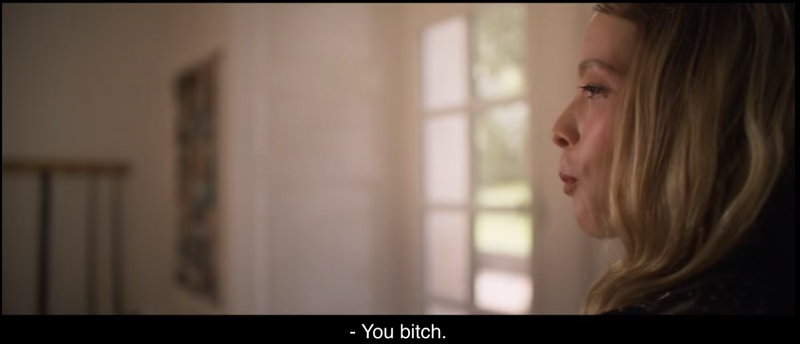
And the word keeps coming back – especially as the film moves towards its end. CW calls Madison ‘You murdering bitch’ in the climax. Jacob’s best friend describes CW as ‘a black-haired bitch in a bikini.’ The pace picks up, like hearing the fetishised word being repeated faster and faster in a masturbation fantasy.
The film really likes this word.
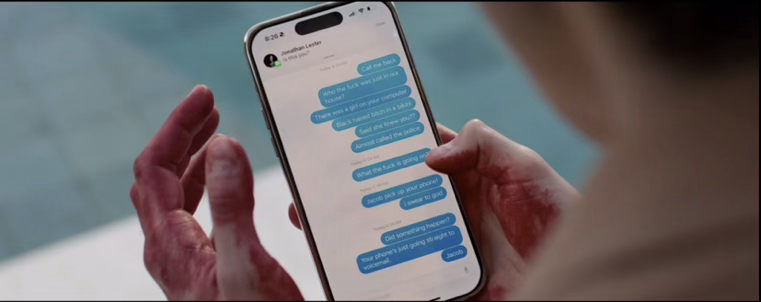
And that’s not all it likes. I’ll go more into this later, but MRA Jacob’s girlfriend Ariana – you know, the suicidal one – is presented as entirely unsympathetic. In real life MRAs and alt-right guys are notorious for abusing their female partners, but here she’s definitely wearing the trousers. (Figuratively. Literally she’s wearing practically nothing.)
And there comes a point where the movie is nastily close to applauding revenge porn.
Jacob’s male bff, who dislikes Ariana, witnesses a sex tape leaked by CW in which Ariana is fucking another man while Jacob watches. You’d think a good friend would decide, ‘Whoa, not my business,’ and put it away, but no: bro goes straight to verbally abusing Ariana, and we’re supposed to see this as sympathetic.
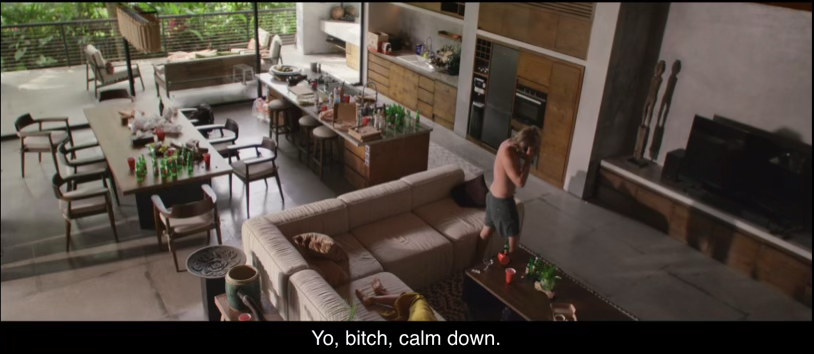
Jacob was clearly a consenting participant in a kink scene rather than a betrayed partner, but bro’s reaction is framed as an understandable decision after being ‘sick of [Ariana’s] bullshit.’
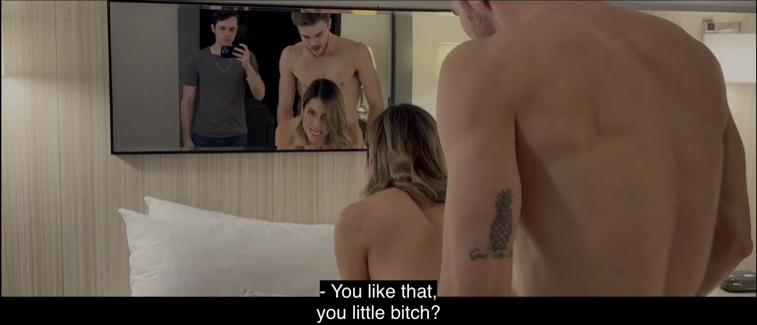
So the sex tape is leaked, and of course Ariana gets cancelled to death. Literally; it turns out this is why she slits her own throat in the opening scene of the movie.
Jacob is distraught over this; heaven forbid a professional misogynist ever might seem anything other than totally innocent in the case of a woman slut-shamed to suicide. He didn’t mean it when he hated on women, you see. It was really all her fault, pushing him to get more engagement, the bitch.
And the thing is, Ariana has been set up to be so dislikeable that this leaked video of a private moment is framed less like a disgusting violation and more like a natural come-uppance. Play bitch games, win bitch prizes, you know?
Calling a woman a bitch? Inevitable. Leaking private sex tapes? Unsurprising.
Blaming a man for anything? Impossible.
It’s always women’s fault.
So let’s talk about this film’s politics.
Once again, I don’t know Kurtis David Harder. He may or may not hold the politics I’m about to describe. It’s possible he doesn’t, and just failed to make his actual position clear in the film.
That can happen; I always enjoyed the way in Gerald’s Game, Stephen King – a happily married man who writes with great respect for his wife – careened into the gloriously extreme conclusion that, ‘The only reason a man sticks a ring on your finger is because the law no longer allows him to put one through your nose.’ I have to doubt that King really thinks that; it was just the thematically pleasing conclusion for the story he was telling, so he went with it.
I can’t know the intentions at play here. All I can say is that the narrative choices drive towards inevitable thematic conclusions.
And those conclusions are not good for women.
How does prejudice work in fiction?
It’s very seldom a deliberate intention. People keep calling this column feminist, and I don’t especially set out to be. Give me a movie like Skinamarink [https://gnofhorror.com/whats-on-shudder-skinamarink/] where gender isn’t an issue and that aspect of my worldview won’t show up. I just think of men and women as equal, so when a film shows something unequally I treat it like a failure of storytelling. I’m not trying to make a political point either.
But I can tell you how it works as a writer. For instance: I have a new novel coming out early next year, and the word ‘feminist’ is featuring prominently in how the publisher is talking about it to the trade press. It’s a selling point – and it’s not one that I put in deliberately, any more than I intended SFX to call In The Heart of Hidden Things ‘a beautiful examination of masculinity’ when I wrote a story with a male lead. I’m just writing people as I see them, and people as I see them tend to have feelings about their social roles and personal identities. It comes out in the writing; there’s no way round it.
(And because I don’t judge people who have to use the Internet to promote their work, I’m not apologising for this aside: does that sound interesting? There will be more announcements in due course and you can sign up to my newly-minted newsletter here: https://kitwhitfieldsnewsletter.eo.page/4bx27. I will put in things like writing advice and interesting facts found during research, and I will leave out stressful things like politics.)
If a character is a woman accused of witchcraft (that’s my next book), or a man trying to fulfil traditionally masculine responsibilities (that’s the previous one), you could say I’m analysing gender. But really I’m just trying to tell a story. That involves who the characters are and how they feel about it.
So when I wrote any given scene, did I ask myself, ‘Is this feminist?’ No. I didn’t need to. I asked myself, ‘Is this plausible?’
But what I think is plausible is influenced by how much I respect women and men. I don’t have to intend a deliberate statement; I just have to write what feels reasonably likely.
And in that way, you can take the measure of what I consider reasonable.
This is the territory we’re in with this movie.
It’s not that it’s decided to be unfair to women. I doubt Harder himself wants to be.
It’s just that whenever a woman is in the wrong it’s because she’s being a bitch, and whenever a man is in the wrong it’s because a woman drove him to it.
And I don’t think it recognises this as a pattern, because if it did it would have shaken things up just for the sake of variety.
So yeah, I don’t think it has conscious politics. I think it’s sexist as all get-out, but I don’t think it’s trying to say anything. It just thinks it’s being reasonable, and it’s not.
What about its politics beyond gender?
I think it thinks it’s being topical, but instinctively avoids taking open stands on any issue. You can only deduce its positions, such as they are, by looking at how it plays the story out.
What do I mean by this?
Well, for instance: why does CW hate influencers so much? It’s never really explored.
The script frames it as envy, and possibly angry attraction. But as much as we ever hear her say about it herself is this: ‘I just think girls like that are single-handedly ruining the next generation of women.’
That’s a political statement. Just one that doesn’t get unpacked. Is it correct? We don’t see the ‘next generation of women’ at all, so there’s no evidence either way. It’s never gone into.
But did you notice the ‘single-handedly’? CW doesn’t blame men at all.
CW gestures at politics, but no more than gesture. It’s a line you could point to if you wanted to say the film was being modern and relevant, but it doesn’t go anywhere, except to the place we always return to: that one way or another, violence is always instigated by women.
So let’s address the elephant in the room and talk about Jacob being an MRA – but also kind of a sweetie.
CW makes another gesture to politics by saying he’s a ‘cancer’ who ‘poisoned the world’, but she’s stabbing him and boasting about how many lies she’s going to tell about his death at the time, so we can hardly call it a validated thesis statement.
Is he? Real MRAs are certainly a noxious influence, but this is a movie, and we react to what we see on screen.
What we see is mostly Jacob desperately trying to please his implacably demanding girlfriend, who’s pushing him to be more controversial and hateful so that he can succeed and make them more money.
We’ve seen very little of Jacob’s MRA career, and what we have seen is drawn very mild. What we’ve seen him do is mostly: try to please Ariana, indulge a stigmatised kink in private, politely decline CW’s attempt to seduce him on the grounds that he wants to be faithful, and sleep on the sofa so she can have his bed when she begs him for a ‘safe’ place to sleep. In his actual gender relationships, he’s practically a gentleman.
This weakens the story. I talked earlier about how Jacob’s relationships with both Madison and CW are just introduced by fiat, despite there being no real reason why Madison in particular would ever want to talk to him. If he’d been a more active person there could have been better ways those plot-crucial connections were built up – but those would require Jacob to show real initiative. He never really does. He spends the movie pretty much doing what women tell him.
It’s possible it was aiming for satire, but if it was, it missed.
This isn’t Dave Bautista’s bombastic MRA streamer Duke Cody in Glass Onion getting continually bawled out by his much-smarter mom; it isn’t comedic. We’re not supposed to laugh at Jacob when his girlfriend is mean to him, we’re supposed to feel a bit sorry for him.
It isn’t on-point like in Glass Onion either: to suggest, as Glass Onion does, that a professional MRA is reality an immature nerd acting big is . . . well, reality will provide you examples. But of all the real people that might bully an MRA, a female intimate partner is at the bottom of the list.
So in terms of character, Jacob is presented as vulnerable, insecure, desperate for approval. You know, relatable.
Let’s keep that in mind as we talk about the kind of politics he professes.
What kind of MRA is he supposed to be?
I’m not very deep down any manosphere rabbit holes, but I decline to go any deeper than I already have, for two reasons:
- I’ve suffered enough, and
- I don’t think Harder delved very deep either.
So my examples may be a few years out of date – the manosphere eats its young at a pretty rapid pace – but I’m going to make them do and still give you a more accurate picture than this movie.
Jacob is not a specific type of MRA, but neither is he a successful amalgam. Apart from hating women those guys have some serious disagreements, and Jacob’s character doesn’t resolve any of them.
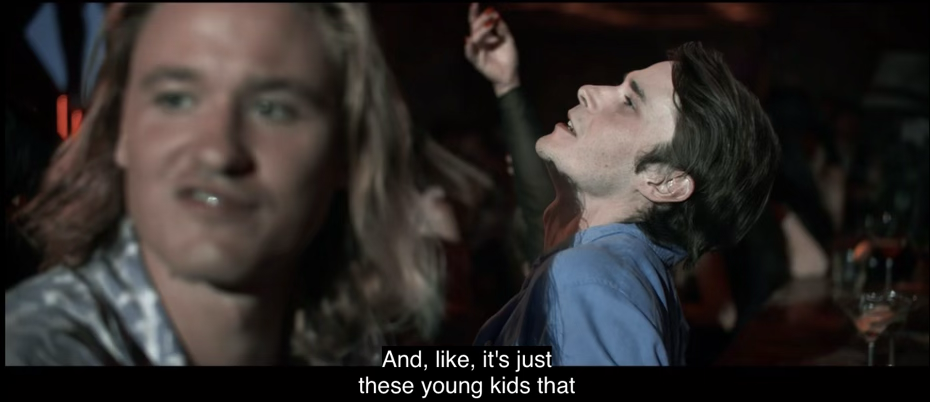
He’s a debate-me motormouth like Ben Shapiro, but not a cultural conservative; women are the only things he debates about. He complains that women only want your money like an incel, but he’s sexually active and a confident flirt. He pushes the mansion-and-bikini-babes image and talks grindset like Andrew Tate, but he’s not an abusive pimp – on the contrary, his girlfriend bosses him around. (Think Claire in Superhost as per my last influencer horror review, only with more kink. It’s a type in these movies.)
So what’s he supposed to be? Visually I think he’s closest to the Tate type – the luxury lifestyle, plus the fact that his face is a lot less high-testosterone-Chad than you’d expect such a man to be. That doesn’t quite work, though, because he’s too sweet-looking. Whitesell was previously cast in The Chilling Adventures of Sabrina specifically because he was handsome in an ‘elfish’ way*, while Andrew Tate is just an ugly man.
*https://deadline.com/2019/12/chilling-adventures-of-sabrina-adds-three-to-cast-for-season-3-of-netflix-series-1202813365/
And since Jacob only focuses on women and romantic relationships, I don’t think he reads as a political pundit either; all his talk is personal.
If he’s anything, I think he’s closest to an incel. What he preaches about women is the incel fear: that they only care about themselves and will never truly love you.
In particular he has that cuckoldry fetish that incels talk about a lot – but again, the movie just can’t handle it with any kind of skill because it regards it with no curiosity.
If you live a good and reasonable life you may not know this, but MRAs and incels are notorious for calling non-hateful men ‘cucks’.
‘Cuck’, in this context, isn’t just short for ‘cuckold’, as in ‘your girl will cheat on you for being a wimp’. It specifically refers to the cuckolding fetish, in which a guy into humiliation gets off on seeing his partner ‘cheat’ on him with other men. The message is, if you don’t hate and despise women, you must enjoy how much they hate and despise you.
Now, the amused question has been asked many times: how is it they’re so aware such porn exists? Before they started going on about it, it wasn’t exactly a mainstream taste. Most people hadn’t heard of it at all.
There’s a probably-apocryphal* story about how Samuel Johnson, having compiled his authoritative dictionary, was complimented on not having included any swear words by an unnamed figure, almost always identified as a woman. (It’s always a woman, isn’t it?) Supposedly Johnson responded: ‘I find, however, that you have been looking for them.’
*https://quoteinvestigator.com/2013/09/22/improper-search/
That’s the point often made about calling someone a ‘cuck’: if it’s that much on your mind, it says less about your target than it does about your browser history.
So giving Jacob an actual cuck fetish is, as with quite a few things that happen in Influencers, sailing close to an interesting idea before losing sight of it.
You could use it to mock him – but to do that you’d have to make him deserving of mockery. But he isn’t, or not all that much. Mostly he seems a pretty mild guy: he says stuff online to generate controversy because his girlfriend tells him to, and his best friend tells him, ‘You know you don’t believe half the shit you’re saying,’ and he doesn’t really stand up to his friend either. (The same friend who verbally abuses Ariana. I don’t think we’re supposed to judge him; I think we’re supposed to see him as trying to protect Jacob.)
Meanwhile the stuff Jacob says online is extremely milquetoast by MRA standards: ‘Women do not care about the effort you put in . . . Do not let a woman dictate the relationship,’ is about the sum total. And he’s getting zero actual traction with his nonsense: every man we see talking to him on-stream is disagreeing with him.
Perhaps, to take the charitable view, the film is trying to make sure it doesn’t endorse what he says and put sensible counter-arguments right out there for any young man who might be persuaded. If so then that’s an honourable intention – but if you’re going to show an MRA, you need to show an MRA. Otherwise you play down what a real threat they are, which does less to refute them than to exonerate them.
We aren’t seeing a believable MRA. We see a guy arguing with the Internet and losing.
That’s not an influencer. That’s a lolcow.
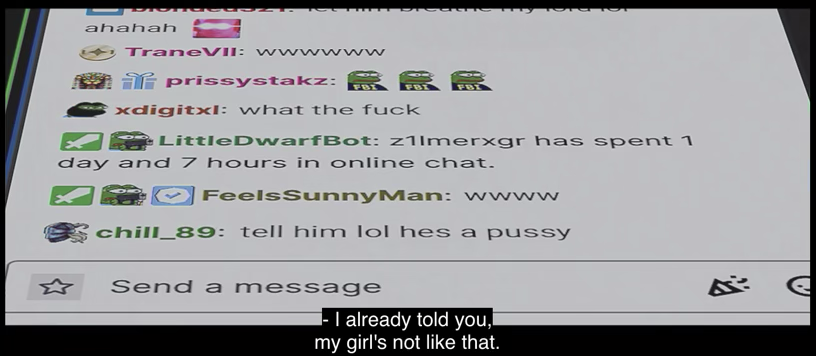
It’s also a tragically incorrect view of how the manosphere works. This is a place whose fandom murders people; here’s an account of civil massacres if you want to depress yourself: https://www.mccaininstitute.org/wp-content/uploads/2021/10/incel-and-misogynist-violent-extremism-read-ahead-materials-august-2.pdf. It’s not people like CW going on killing sprees in the real world; it’s these guys.
That, in this movie, would be unthinkable to say. Men must always be at least a little sympathetic. Even wannabe stochastic terrorists.
What we’re up against here is the Influencer fundamental assumption: bitches be crazy, but the worst depths a man can sink to is being weak.
Which, as political statements go, is practically Victorian.
Ryan in the first movie alternated between emotional abuse, heroism, and occasional violence, and in the scenes where he was a heroic investigator we were expected to just go with it. Madison’s success breaks him down for reasons that aren’t blamed on him, and then CW defeats him. At no point is he held accountable for his own actions in any way that sticks.
Jacob, meanwhile, is diegetically positioned as a man who encourages men to abuse women, jockeying for position in a movement notorious for inspiring civil massacres – and it’s all the fault of the woman making him do it.
So in this context, whatever the intentions, the way his cuck fetish is presented onscreen has not been careful to distance itself from the incel position.
From a normal point of view, if what gets you off is seeing your girl with another man, then my dude, have at it. They’re all consenting adults in this movie – and in fact it would make perfect sense for someone like Jacob to be devoted to a girl who was willing to do it even if his friends didn’t like her, because that would be a dream he probably didn’t expect to come true.
In Influencers, though, she’s just bossy and domineering, and when she calls him ‘pathetic’ in the middle of a scene it’s not very different from how she talks to him outside the bedroom. So the view this movie has of cuck fetish is, unfortunately, that it is exactly what it looks like. I’m not sure it understands what roleplay is.
Ariana cucks Jacob, not for realistic reasons – ie for mutual fun or to give him a sexual treat – but because she’s a castrating woman in the real world.
It is in agreement with the incels.
I have to say, that makes its tendency to solve all its plot problems online and have going outside prove consistently unwise feel a little sticky. You need to be careful handling these things, because this is what happens when you aren’t.
Meanwhile, how are our temptresses doing?
Jacob is the only male influencer we see, and he has no influence. He’s just doing it because a bossy bitch made him, and no other men are convinced.
We do run into another female influencer, though; she’s in the pre-credits sequence with CW before Madison enters the film. Her name is Charlotte. She rocks up; she annoys CW; CW pushes her off a tower; she dies. This is the murder Madison investigates, but frankly we did not need to spend half an hour on it, and I think we only did because it allowed a lot of shots of the South of France and hot lesbians getting their kit off.
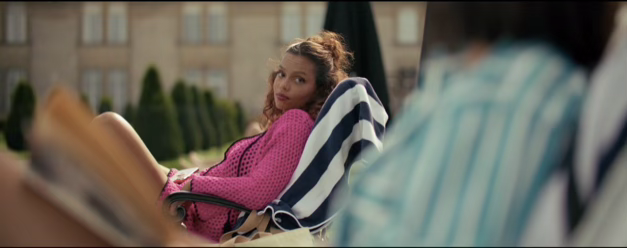
However, what’s this Charlotte influencer like? Has this movie learned anything since the last one?
Of course not.
Charlotte (Georgina Campbell) is English, because of course she is; the series hasn’t forgotten its habit from the previous movie of using ‘English’ as a shorthand for ‘irritating’. We first see her when she takes the best room previously booked for CW and Diane’s romantic getaway. She’s patronising, shallow, vain, inane . . . you get the picture, you’ve seen it before.
But here’s the thing that really stands out: she’s a lousy influencer.
And the film has no idea.
Nobody follows an influencer they don’t find enjoyable company. Pretty girls on the Internet are ten a penny. Travel vloggers can’t just go to nice places; that’s what brochures and promotional websites are for. You have to be charismatic, amusing, perceptive, fun to listen to.
Influencers are entertainers, which means they have to be entertaining.
Charlotte just isn’t. She isn’t good at anything.
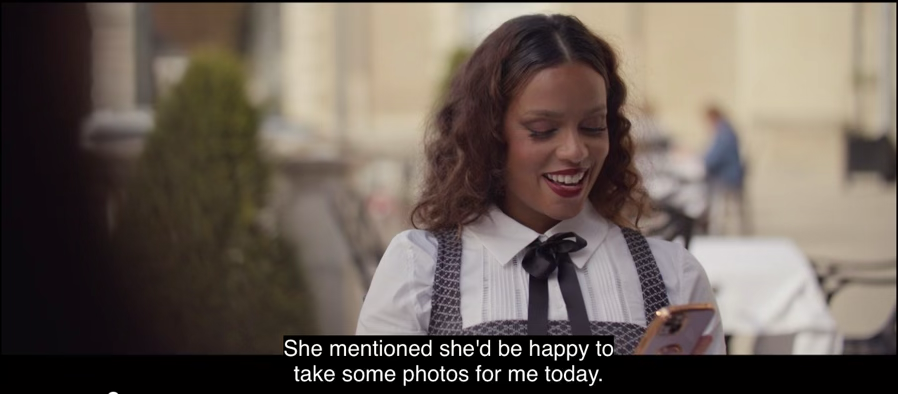
She doesn’t have any kind of system set up for her filming; when she meets CW and Diane at the hotel she asks Diane to be her photographer. How does a professional influencer not either have her own camera operator or know how to do it herself?
We see clips of her videos, and they’re just . . . nothing. No jokes, no perceptive observations, no fun facts about the place, no patter, no real content. Here’s how she talks:
Hey guys, I’m at Chateau Saint Laurent. It is absolutely gorgeous here. I’m having a beautiful pool day. You guys all have to come.
And her filming is as boring as her talking, the kind of shots anybody would take if they weren’t putting much effort in. This is just rubbish.
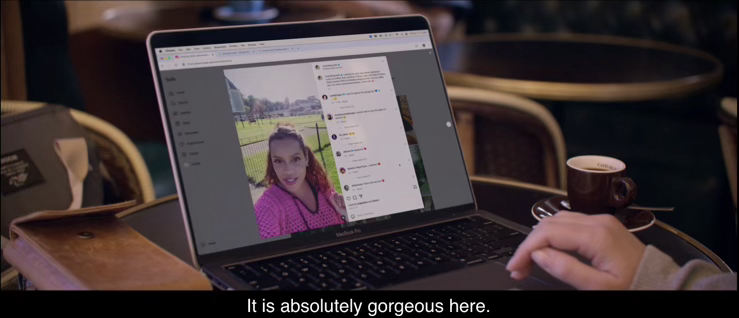
If you thought this was what influencer videos were, yeah, you might well think they were overrated, although making movies about killing them still seems like an overreaction. But here’s the real kicker:
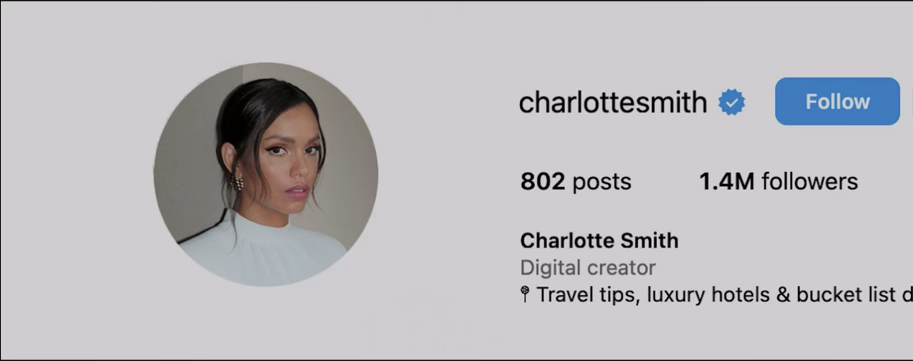
802 posts and 1.4m followers? Bullshit. Artistic license is one thing, but these numbers are so ridiculous that if you’ve ever used Instagram at all the nonsense leaps off the screen and splashes blood all over your brand-name make-up. That is at-a-glance wrong.
For a movie or TV star, or somebody who got famous in some other medium? Maybe. Cassandra Naud, Emily Tennant and Georgina Campbell (who plays Charlotte) each have followers in the very-respectable tens of thousands, and they’re actual movie stars.
Charlotte getting 1.4 million on 802 posts? In an industry where you have to post all the time to stay visible? If she’s doing this professionally, she’ll be posting 1-3 times a day, so let’s be reasonable and say maybe twice daily: that’s about a year’s worth. Maybe if she did something incredibly brilliant that went viral, but this pablum? Come off it.
So why is she an influencer? Well, she’s pretty. That’s about all we’ve got. Which is exactly all we had in the last film too.
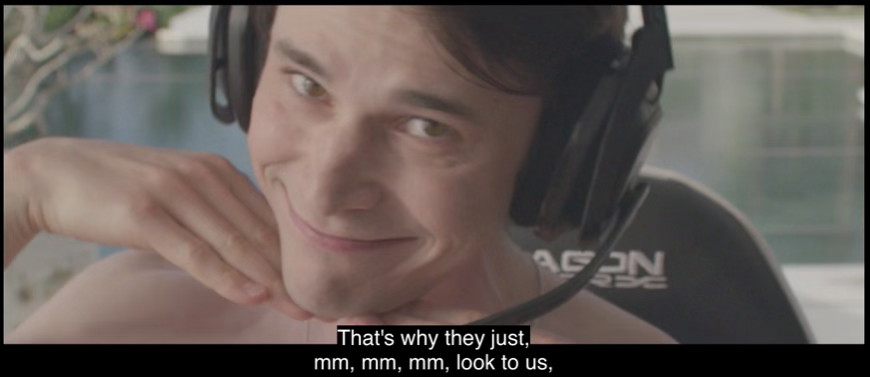
So here’s the thing: when it comes to sex the film is in agreement with incels, and when it comes to influencers it’s in agreement with CW. Influencers are vapid and don’t have anything to say, and it’s irritating when they’re on screen.
But shallow irritation is all it’s got.
When CW is the voice of the film’s hostility, and CW herself isn’t cleverly done, it’s not a clever film.
And you know what’s particularly not clever? Influencers never explains how she escaped the island.
I’m serious.
The one really difficult feat she pulled off: a vanishing act from a remote desert island. The one problem that needed a 100% analog solution. How did she do it?
We never find out. At one point Diane asks:
Diane: How’d you get off it?
CW: That’s what you’re attaching to?
Diane nods.
CW: I’ve done a lot of things I’m not exactly proud of.
. . . And that’s it, folks. By implication, if you insist any further on getting an answer, you’re missing the point of the story.
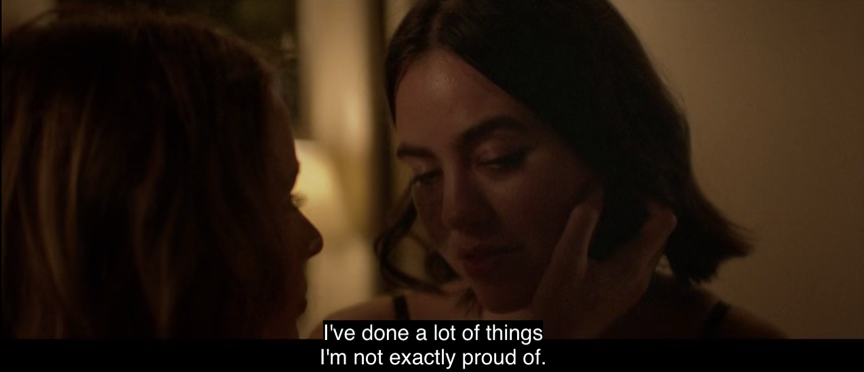
I’m sorry, I do insist. What shameful act did CW commit to get off an unoccupied island in the middle of nowhere with no boat to help her? Did she blackmail the sea? Did she craft a weapon from flotsam and commit armed hijack against a passing breeze? Did she temp as a pirate? Did she blow a giant turtle?
Or would she have had to do something that couldn’t be depicted by a single conversation and a quick click around the Internet, and that felt like too much trouble to write?
The movie keeps gesturing at the possibility of a deeper story that it never takes the trouble to tell. Are there darker secrets in CW’s past? Maybe! At one point it’s mentioned that she’s estranged from her family. Is that relevant? Possibly! Will we hear more about it? Maybe wait for a sequel, which I am not going to do!
It’s all so lazy. Which is astonishingly hypocritical, given how mad it is at influencers over their supposed easy money.
There’s a certain type of film that works by making it easy to imagine a slightly better story than the one you saw.
Influencers continually feels like a film you could fix by writing fan fiction in your head.
Jacob is an MRA; maybe he’s bad enough to justify CW going after him and forgetting about the rest of the story. Or maybe not and they’re unfair to him. Who knows? Make it up yourself!
Are influencers bad for the next generation? Who knows, we never see the next generation in this movie. Keep whatever preconceptions you brought in!
CW might have complicated reasons for what she does, based on her sexuality and her relationship with her family and maybe even a mysterious past. Go ahead and imagine it!
Is cuck fetish the secret love of wannabe alphas or just women being bitches? You decide!
Is cancelling somebody to death over leaked sex tapes acceptable? Who cares!
How weird is it that CW creates a computerised version of the lover she murdered? (Which she does.) Very! Are we going to explore the psychological ramifications of that? Nope, but you go ahead!
The LLM Diane is the biggest waste.
So: CW has killed Diane. She programmed an LLM to say things Diane might say if Diane were still alive and unquestioningly supportive. She also programs a computer to read these things out in a mechanical approximation of Diane’s voice.
It’s eerie and sad. There’s even a story about objectification there if you could be bothered to think about it. CW for sure seems like the sort of person who projects her fantasies onto other people.
But here’s how it’s done. We see it weave in and out of the story at points, but the moment when it gets full weight is one of the film’s better shots, a point where a flat, centred image is appropriate. CW sits alone in the dark, marooned at a grand, luxurious desk, listening over and over to Diane’s synthetic voice repeat, at the press of a button, ‘I love you.’
And that’s all it needed. Just this moment of CW sitting alone making a fake voice lie to her was a moment of genuine sadness. We already had seen half an hour of this relationship before the credits, and that was more than enough to ground it.
But instead this moment is preceded by – I timed it – five and a half minutes of flashback to the same relationship, showing us nothing we hadn’t seen before, so we could have more shots of scenic locations and moments like this:
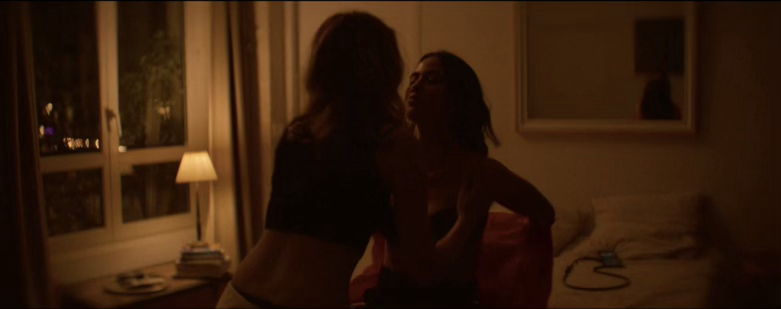
All this five minutes did was demonstrate that we didn’t need the half hour at the beginning; it conveyed the relationship just as thoroughly. Or if we did need the half hour, we didn’t need this and we could have just had that sad moment in the dark.
The pity of it is that Cassandra Naud is a good actress. There are moments where she expresses not just movie-monster madness, but neediness, incredulity and studied charm, all in the same few seconds. Give her a Tom Ripley script and maybe she could have pulled off a Tom Ripley performance. Maybe this’ll be a springboard to other roles for her; that’d be nice.
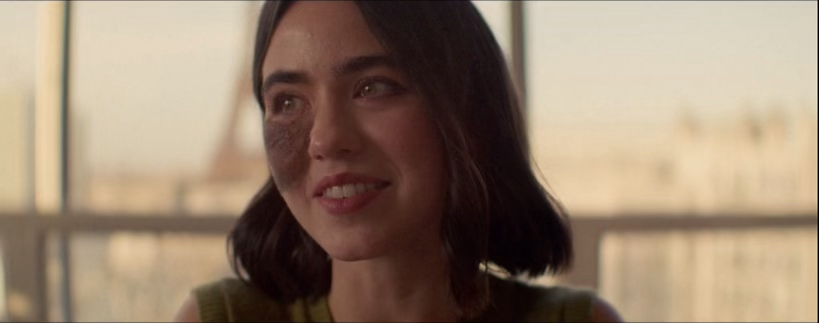
But there’s not much any actor can do in this film, because it refuses to take a position.
A Forbes interviewer asked Harder the obvious question, and here’s what happened:
[Interviewer]: What do you hope these films say about where we are as a society today?
Harder: I don’t necessarily have any answers. For me, it’s about asking questions about where we’re going.
And that about sums it up. Harder is confident enough to think he can ask us these questions, but he doesn’t have any answers.
Even to extremely basic questions like ‘Is revenge porn bad?’
By the end it collapses into what I think it thinks is camp, but isn’t. It’s just female mudwrestling, only with blood.
Do you remember the old 80s soap opera Dynasty? One of the things it’s fondly recalled for now is its ‘catfights’; glamorous actresses in expensive couture would get into ridiculous scratch-and-slap matches with each other; it was funny and silly and high camp.
Influencers ends with Madison and CW fighting it out by a luxury swimming pool in very similar style, and then CW attacking everybody else who turns up, but it simply hasn’t maintained the exaggerated tone to make it anything other than a throwing-up of the hands: we’re all out of ideas, let’s watch hot bitches wrestle each other.
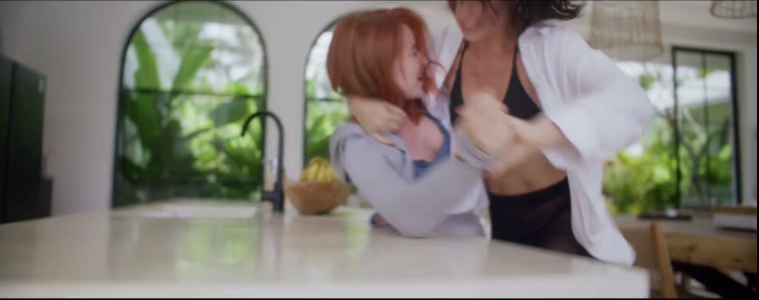
It was supposed to be funny. But there’s only so much wasted screen time and seeing women blamed for everything I can get through before my sense of humour wears out.
Then there’s a final moment, which I think was aiming to be satirical, but it just didn’t land because I don’t think this movie understands Internet culture. CW’s rampage was accidentally livestreamed on Jacob’s channel, and his viewers are mostly posting comments to CW like ‘Step on me Mommy’ and talking about how hot she is.
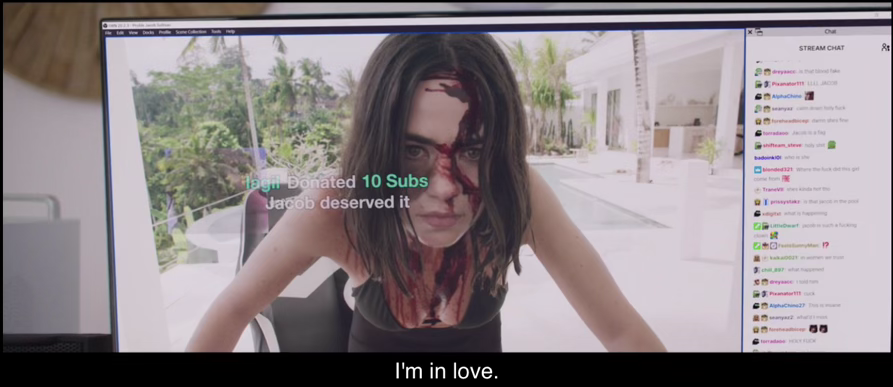
Another moment that needed a better movie.
Now again, in another film this might have worked. It is indeed likely that if something like that were livestreamed, most people would be joking about it – not because most people are horny little murder-hounds but because most people would assume it was a bit and play along. Cam actually begins with its heroine doing something quite similar on-stream, and she is indeed pranking the audience, who are tickled pink by the joke.
Would a few people applaud genuine murder? Sure. Spree killers like Elliot Rodger do have fans. Would MRA fans applaud a woman for killing a man? Almost certainly not. But would there be exceptions? Who would fall where, and how would someone like CW respond to finally getting the attention she’s so ambivalent about?
But you see, these are questions I’m asking. It wasn’t difficult. Films are supposed to answer them.
Instead, the moment gets abandoned like it visited a desert island. More characters turn up from nowhere and the movie ends with CW running after them, honestly looking more like a video game character you steer around shooting people with purely mechanical glee.

Over and over, moments hint at a story they never bother to tell.
Look, as a writer of sequel fiction, let me talk to you about writing sequels. Here are the things you have to think about:
First question: how much are your characters going to change? Do they exist in a Simpsons situation where everyone remains exactly the same age for however many decades it lasts, or do you agree that time has passed and they should develop? If so, how?
Let’s give Influencers credit for Madison on that one: she is plausibly impacted by the events of the last film. But CW? She’s kept fundamentally unknowable, a handful of hints that there might be more to her that you’ll have to watch the next film and the next and the next to find out more about, so that question remains hard to answer.
A character whose motivations are a little mysterious works for one film. If you make a second film about her without making some decisions, she doesn’t become more mysterious. She becomes less interesting, because it looks like the reason her true nature is kept obscure is that the scriptwriter simply hasn’t thought up answers to your questions.
Second question: how are you going to reckon with the past? If you’re writing a sequel rather than a prequel things will have to move forward, but you may also need to do a bit of what I call backstitching: you go back further into the past to establish groundwork for new things to happen in the future.
Breaking Bad had a very good example of that: in an early season Walter gives Jesse money to buy an RV to use as a mobile meth lab; Jesse returns with an RV. Later, to generate more plot, a backstitch is added: Jesse actually blew the money, and then had to steal the RV so Walter wouldn’t find out, and consequences ensue. It was a solid way to get more story. Or heck, the most famous good movie sequel ever is probably The Godfather II, and half of that is all about the youth of Vito Corleone.
You can backstitch pretty hard. I wrote a book called In The Heart of Hidden Things which involved a family of ironworkers specialising in anti-fey talismans; it featured a grandfather, father and son as a three-generation team, and revolved around the question of whether the son could be trusted with the responsibility.
When it came to writing the sequel, All The Hollow Of The Sky, it seemed to me it would feel a bit flat if I didn’t deepen and complicate the characters with traits you didn’t get to see in the first one. So part of the story involved going into the grandfather’s past, and what happens when a long-removed secret comes back to haunt him and his descendants.
It was a simple question: in the first book he’s old, but he must have been young once, so what was he like then? From what the reviews said, a lot of people liked the second even more than the first, and they tended to say you could either read them as a pair or let the second stand alone. It’s a way to do it, is what I’m saying.
This is not compulsory. What is compulsory is that each piece has to feel self-contained – which doesn’t always play strongly when you’re coasting off entirely familiar materials. A first story has to do all its own set-up; that makes its pay-off rewarding. A sequel arrives with its characters and setting already in place; it’s convenient, but it means that the audience doesn’t get the full satisfaction of the pay-off unless you also build in some set-up of its own. You don’t have to do it by backstitching, but you have to do something to make people feel like they’re getting a story that can stand on its own legs.
What do we get in Influencers? There’s an attempt with CW: we see that she has personal aspirations as well as criminal ones. But what does this tell us? From what we’re seen, honestly it looks like she wants to be living an Instagrammable life while hating Instagram, and you could do something with that if you were self-aware about it, but I’m not sure the film actually notices just how ’grammable her pretty French life with her pretty French girl really is. A lot could have been explored there, but it wasn’t.
Meanwhile there are hints at other things: she’s estranged from her family, she did something shameful to get off the island. But they’re not used as new set-up to earn new pay-offs in this film. They’re just left there as hooks for a future sequel . . . which, based on Influencers, makes me uninterested in seeing any future sequel, because if this film didn’t pay off I don’t trust a third one to pay off either.
You have to trail quality as well as questions, and Influencers actively refuses: it waves possible interesting developments around like cat toys and then whisks them instantly out of sight, and the end result is that the film we’re actually looking at does not have interesting developments.
Third question: are you hoping to continue the series? And if so, how open do you leave things for a third story?
Again, it’s a delicate balance. I’d love to write a third book in my series but I need more sales (so guys, if you enjoy the free content you’re getting from me here, there’s a way to say thank you and the ebooks are a good price right now: tinyurl.com/nvvetupj). But you have to write with both possibilities in mind: if you’d like to have a third installment then you can’t end it with, ‘And then everybody was eaten by tigers,’ but you should write on the assumption that this might be the last story you tell about these people and you’d better give it a satisfying ending.
Influencers goes very bold on this: at the end everyone is still very much alive and mid-rampage.
You know, I’m actually going to give that a bit of credit – but with a certain genre reservation.
It might seem like it was leaving things too open for a sequel rather than having a satisfying ending, but how was that cleaver chase supposed to end? It’s an end in itself.
Because when a character is a constant fixture rather than a changing arc, ending mid-moment with them doing what they always do is a perfectly reasonable choice. In 1992 they made a Tom and Jerry movie in which the cat and mouse temporarily set aside their differences, solve a shared problem and then go back to their regular chases at the end of the story. It’s definitely an option.
However, if that’s the way you go, it does feel like an admission that you were always writing a Tom-and-Jerry character. Or rather, a movie monster: we don’t expect Michael Myers to do more than pop up again at the last minute, and it seems we’re being told not to expect much more from CW either.
Except in all the moments when we were.
If your antagonist finishes the movie running around waving a cleaver, it strains against the moments of pathos where it feels like she might develop into a character with subtlety, nuance, a real psyche.
CW sitting in the dark listening to a chatbot girlfriend say ‘I love you’? That’s a kind of character writing. CW going berserk like a video game protagonist? That’s a kind of character writing.
But they aren’t pulling in the same direction. There’s a little of column A and a little of column B, and the figures don’t quite add up.
There’s a bad tendency in horror movies at the moment: declining to have an opinion.
I’d recommend the essay ‘Horror That Fears Politics’ by YouTuber Acolytes of Horror (https://www.youtube.com/watch?v=dYe3FRfKOM4), but the short version is that a lot of recent horror films pose opposite political sides as equally bad without ever investigating what would happen if their political goals were achieved; the problem is the fact that they’re arguing, not what they’re arguing over.
Influencers doesn’t exactly do that, but I’d call it adjacent. With character and with politics, it just doesn’t know which side of the room to sit – but it doesn’t find a good place in the middle either.
It’s not so much that it blames anyone for taking a position in this new technological landscape we all inhabit. It’s that it dislikes people for participating in it at all – far more than for anything they actually do during that participation.
To participate at all is to join the argument. And to join the argument voluntarily is wrong.
How do we know Diane was an angel? She used a vintage, non-digital camera.
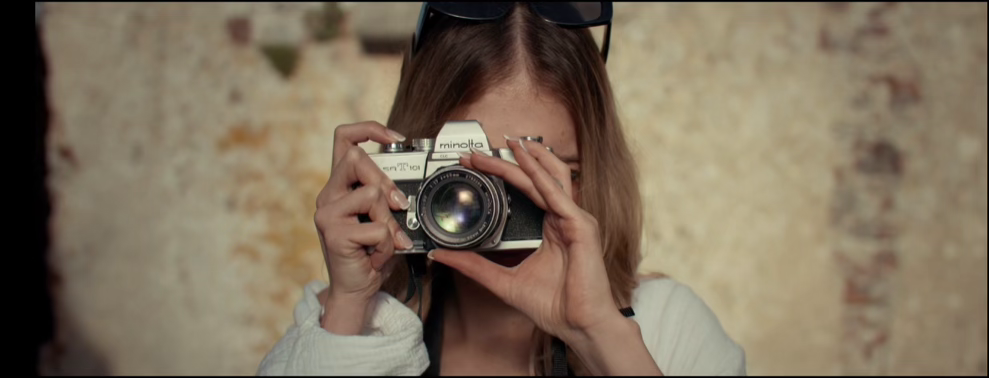
How do we know Madison’s a hero now? She wears 90s fashions and eats in the kind of malls that no longer exist.
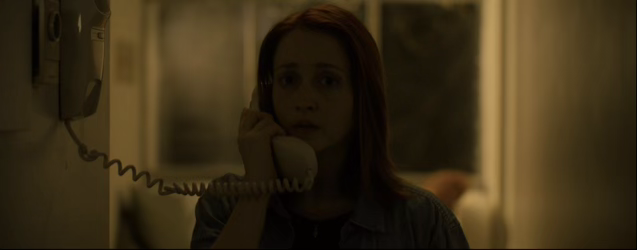
How did we know CW was trying to live a virtuous life before she got sucked back into murdering influencers? She did things like reading print books.
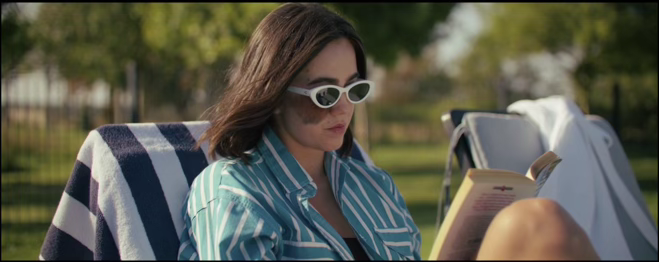
For all their supposed cutting-edge questions, the Influencer series wants you to get off its lawn. It’s deeply nostalgic for a pre-Internet era. It’s just also reluctant to give up the plot conveniences of having characters find things out on the Internet.
But to do anything you find meaningful on the Internet is to be tainted – so deeply that it doesn’t feel the need to write real characters to explain why. It’s not MRAs that ‘poison the world’; it’s caring about anything digital at all.
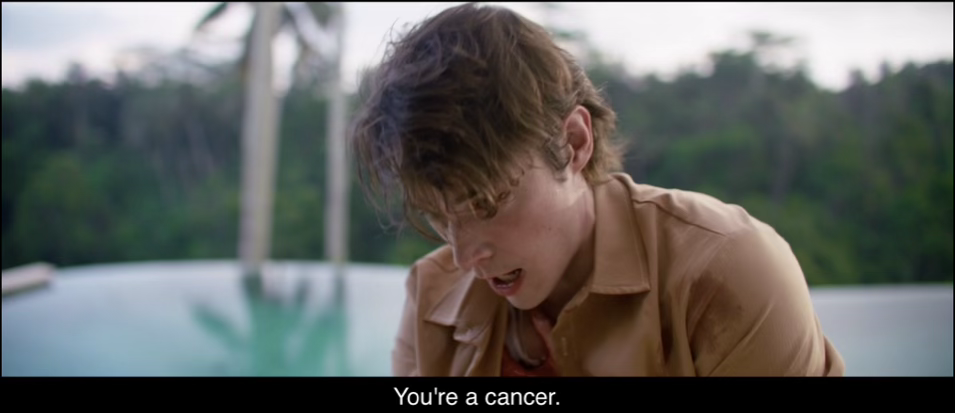
Beyond that, the film refuses to take a position. Which means it’s left with nothing but choices.
And its most consistent choice is to put a woman in a bikini and call her a bitch.
Which is where I’m starting to wind down.
I don’t enjoy disliking a film. It sucks that this film was bad, and this time I don’t even have a better same-genre movie to compare it to because Cam remains the only good influencer horror I’ve seen and I’ve already talked about it.
All I could do was put in some shots from movies with better visual storytelling and encourage you to go watch them. Jean de Florette is a masterpiece, and incidentally has a superb sequel, Manon des Sources, which plays out the vengeance Jean’s daughter wreaks against the village. The Talented Mr Ripley is another masterpiece, much imitated (I couldn’t be bothered to finish Saltburn, come at me) and never matched.
If you want a genuinely funny movie with a clever story that takes well-aimed shots at both male and female influencers, watch Glass Onion. It’s much more craftily plotted and much funnier, and it also hits harder – interestingly, by choosing to keep influencers down to the level of sub-plots. Which for these characters serves them right.
One way to slight influencers, if that’s your goal, is by denying them the obsession you imagine they crave. They’re not ‘single-handedly’ doing anything. By presenting them as merely one aspect of a whole exploitative system that also takes in tech bros, fake-liberal politicians, the aspiring alt-right, marketers and captive science, Glass Onion ends up with more ammunition against the vices of the influencer industry without having to over-emphasise them. It doesn’t treat ‘vapid influencers are annoying’ as a substantial enough statement to support a whole movie, never mind two, and hence ends up saying a lot more in a few sharp jabs than the entire Influencer series.
Or if you just want a trashy thriller with babes in bikinis and twisty skulduggery that doesn’t soil its hands with the Internet, I recommend the 1998 sex-and-violence romp Wild Things, which also has sunlit locations and ruthless bitches, but also has a ton of plot and a sense of humour and offers a genuinely good time.
Somewhere in Influencers were a few good ideas that could have been turned into an interesting story with more redrafting and less gender favouritism. I would have had to walk back my opinion on the first film, but I would have been happy to do it if this film had turned out to be unexpectedly clever, funny, thrilling or even touching.
This was just a bad experience, and I don’t recommend it.
When asking for a vote on whether I should review Influencers, Jim rightly pointed out that changing careful analysis into a ‘cynical, predictable riff’ is a fall-off in quality.
I feel that way very strongly. I do feel cynical about Influencers now I’ve seen it, but that’s not a gleeful opportunity. It’s disappointing. Just being a smartypants about how something sucks is its own kind of laziness, and I mind laziness more than I mind films being not very good.
If Influencers had tried its best and failed, this would be a very different essay. I was hoping to find things to say about how it’s unusual to have a female movie-monster like CW in a world of Freddy Kruegers and Jigsaws and Art the Clowns, and what it says that she has to look like Cassandra Naud; or about whether Cassandra Naud could be on her way to creating the concept of an inverse scream queen, and whether that might point some interesting directions for horror. I wouldn’t have done the reader vote if I hadn’t been willing to check out the film, and I thought that might make a theme.
I just couldn’t find anything like that to talk about. I came in with questions, and the movie didn’t answer them. In a film so one-note, there was nothing to play off. CW is a black-haired bitch in a bikini. That’s about it.
I know it can be entertaining to read someone ripping a bad work up one side and down the other. But a lot of the time it can feel cheap, and in the end a waste of effort unless there’s something good you’re defending by way of pointing out why it matters something else is bad. That’s why I usually try to point to better works when I’m being critical: I love this stuff, and if something fails at it, I’d like to look up instead of down and celebrate what can happen when you succeed.
And goodness knows I’m not perfect either, and I’d hate to have a hater just go to town on my fiction. Generally I try to retain at least a little collegial spirit, even if I think somebody didn’t do a great job.
What’s the point of getting mad at a film?
This was an essay that forced me to think about that question. I had a sequel to write to an essay, and I was hoping for interesting things to say, but I just got frustrated. So in the end that’s what I’m left with: what can you get out of that feeling that’s meaningful? What kinds of anger at a film are worth more than petty irritation?
People will have their own answers, but I settled on two main reasons.
One is if I think a film is hateful. And if Influencers doesn’t quite rise to that level, it excuses the hateful and blames the hated an awful lot more than I’d like.
The other is if I feel like a film – any work of art – doesn’t respect the art form it’s claiming membership among. That just gets my goat. Art matters, and if it can be handled boisterously, raucously, even violently, it should not be handled without a due understanding of its weight.
This is why I didn’t feel too bad slagging off The Human Centipede: I felt like Tom Six hadn’t honoured the pact between horror artists and horror fans that states any exposure will be consensual. The film felt like a justification for the pitch, and the pitch felt like a trick against the general public, slipping unwanted concepts into the minds of people who hadn’t agreed to play the game. That doesn’t respect why we go to horror: the safe exploration of dangerous thoughts that when done well can burn so very bright in the darkness.
And while I felt that the first Influencer movie was respectful of the form, just not a brilliant example of it, I didn’t get that feeling from Influencers. I don’t think it set out to disrespect the film form, let’s not exaggerate, and I don’t think we’re anywhere near Tom Six territory – but I do think it didn’t show enough respect for what it was doing. It kept taking the easy route through the plot and not troubling to edit or revise, and it never asked itself whether it was living up to the standards it professed.
In the end, I don’t see enough respect for any creative endeavour in making a film so preoccupied about a certain type of creative person without caring to learn who they are or what they do. Even if you hate someone, hate them advisedly and you can attack them all the harder.
If all you can see in a new form of media is an unfit rival, fine, but then you challenge them better by doing what they can’t – and storytelling over a long runtime is one of the biggest things film can do that an Instagram short can’t. If you don’t see the opportunity in that and take it seriously, I struggle to take the film seriously as a film.
It’s so tempting to be glib when a movie gets up your nose, and it’s tempting to say Influencers didn’t contain more than an Instagram reel’s worth of thought – but that wouldn’t be fair. It doesn’t take full advantage of filmic run-time and that’s a big failing, but it does do more than you could fit into thirty seconds and I’m not going to pretend it doesn’t.
But that justice I just made myself apply there is the kind of justice I don’t think Influencers itself ever tried to apply to its own subject.
This is what editing is for. I felt the impulse to make the wisecrack, then I stopped, asked myself if I was being perceptive or just mean, decided it was more the latter than the former, and reeled it in. I blasted through the first draft of this review in a day, and then, because fastest isn’t always best, I stopped and redrafted the way you should. One of the rules was, ‘Don’t leave in unfair remarks just because you think they sound clever.’ I’ve cut a lot of smart-alec comments from the earlier drafts of this essay on that principle.
I don’t think the Influencer series stops and does that.
And look, if you’re not interested in why people are influencers? Fine. Lots of people aren’t.
But Harder keeps making movies about them nonetheless. Remember how one of the movies I talked about in the first influencer horror review was Superhost? I only noticed while writing this that Harder was a producer for that too.
The guy seems to be a rising voice in how horror fans view influencers. And I don’t think he’s the person to teach us.
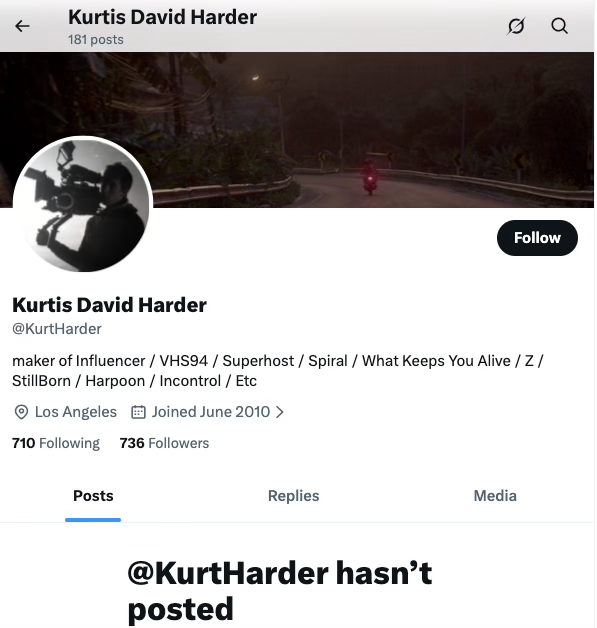
Influencers is a film that attacks strawmen for sins it wallows in. But its deepest sin is incuriosity.
It bored me to watch, and it angered me to watch as a woman. But when I look at its plot, at what it decided to spend its minutes on and what it decided wasn’t worth its time . . . it just makes me sad. It’s no fun to sit in front of a film that talks without listening.
So there we are. I reviewed the second movie in the series. If they make a third one I will not review it for less than a thousand quid, so crowdfund if you dare.
I need a cheat day. Next review might not even be of a Shudder movie at all. I’ve earned a treat, and by golly I’m taking it.