

Most of us figure a horror author, especially a creature feature guy, spends his time pondering fangs and shadows. Then you meet Mark Berton. His mind works differently. It ping-pongs between rabies vector species and military experimentation protocols before it even glances at the monster in the woods.
I just finished his novel, Aroughcoune. It crawls under your skin. But talking to Berton, you realize the true horror isn’t just the beast. It’s the bulletproof science he builds it on, the plausibility he layers like sediment. He was a journalist, you know. A reporter. It shows. He approaches terror like an investigation, asking the wrong questions until they become right.
He’s out there in Western Pennsylvania, a member of his local astronomy club, dabbling in astrophotography between fatherhood and keeping the dog from a shoe buffet. This background matters. It gives him a specific lens. His horror isn’t just about what goes bump; it’s about the emotional palette of a King Crimson album, the silent mentorship of Clive Barker’s Books of Blood, the quiet dread in a predominantly white small-town street viewed through a Black character’s eyes. He takes the familiar, warps it. Makes it drip.
The book’s central puzzle, he says, wasn’t the monster’s origin. It was logistics. How do stranded, unprepared suburban kids fight back with what’s left in a wrecked car and a ranger shack? That question, that constraint, is where his story thrives. He paints his characters into corners only he can break them free from, weeks of mental puzzle-solving for a single, believable escape. That’s his fuel. Not just the story, but the problem.
So how does this all translate from thought experiment to finished novel? I asked him just that. Our conversation veers from the gatekeeping of traditional publishing to the surprising demographics of his readers, from the influence of prog-rock giants King Crimson to the silent mentorship of Clive Barker. We get into the weeds of crafting dread from historical prejudice and the physicality of pain. Below, Mark Berton discusses the scientific horror of Aroughcoune, the joy of narrative puzzles, and why the familiar can be the most terrifying place of all.
Scientific Horror, Character Truths: Inside Mark Berton’s Aroughcoune

Let’s start at the very beginning. For our readers, please introduce yourself. Beyond the author bio, tell us a little about who you are when you’re not writing, what you love doing, what fascinates you, and what fuels your creativity.
Hello, World. My name is Mark Berton and I’m a former journalist, communications director and magazine editor, not all at once. I designed my career to stay in those lanes until COVID hit and I made an extremely spontaneous decision to take a position with the United States Postal Service in my hometown. That move not only afforded me better pay, but also time to write things that I wanted to write instead of soulless ad copy and articles on topics that I had no interest in.
When I’m not writing, I’m just trying to be a good father and husband and making sure the dog doesn’t eat all of our shoes. I’ve harbored a lifelong love of science and am a member of our local astronomy club, where I dabble in astrophotography. I also dabble in normal photography, music and generally anything that stimulates me mentally. I guess this journey of life that we’re all on is what fuels my creativity, and midway through this journey, I think I’ve absorbed enough from this world and am ready to start introducing my interpretations of it in my work.
In the early stages of a new project, what tends to come to you first: a compelling character voice, a central thematic question, or a vivid image/scenario? How does that initial spark then guide you in building the rest of the story?
None of the above. My projects seem to start out with juxtapositions of completely irrelevant things. Aroughcoune started out as a creature feature in the woods, but I had to back into all the science and fill the empty spaces with plausibility. What creatures would be suitable for military experimentation? Ok. Now which of those would be rabies vector species? Ok. Which urban legends lend themselves to that result and can they be manipulated? So, my work becomes the byproduct of these though experiments that I play with myself.
Every book has its own unique set of problems to solve. What was the most difficult ‘puzzle’ you had to crack while writing this book? Was it a plot hole, a character’s motivation, the structure, or something else entirely?
Again, it was the science. Finding plausible ways for characters to fight this creature with the most modest of supplies at hand. They’re in the woods. But they’re not outdoorsy people. They’re suburban kids on a weekend camping trip. If things go south – rain, getting a hankering for some chicken wings or pizza, they’re going to bail and go home. So what can they do with what’s left of their car and what could be found in a ranger shack that could help them really survive this onslaught from the aroughcoune?
The journey from a finished manuscript to a book in a reader’s hands can be a surprising one. What was the most significant way your book evolved during the editing and publishing process, something you didn’t anticipate when you typed ‘The End’?
I didn’t anticipate the sheer amount of gatekeeping in the publishing world and wrote a prelude to help get it over the finish line with agents and publishers. I am a very character-driven and ambient writer, so my tendency is to let the story breathe, grow organically and thrive. That’s extremely hard to do when agent queries only want the first five pages or first 10,000 words. So the prelude brings some of that foreboding and dread forward.
Fortunately, I was able to get it in front of Roswell Publishing, who specializes in weird fiction, and they absolutely loved it. Not only that, while they are a small, independent publisher, they are absolutely enormous when it comes to supporting their authors and keeping morale high. I was blessed to have found them.
Once a book is published, it no longer entirely belongs to the author; it belongs to the readers and their interpretations. Has a reader’s reaction or analysis ever revealed something about your own work that surprised you?
It’s interesting to see people pick their favorite characters and what they take away from the book. A lot of people pick up on the science, which is really cool. A lot of people recognize the local landmarks and towns. I think the thing that surprises me most is who is buying it, and what that says about who the reading demographic is. When I’m at events, I let people read the back cover synopsis. I know this book is a weird concept, so I read their faces as they’re reading it.
Without conducting a formal survey, I would say that it’s 4 to 1 females vs. males buying Aroughcoune. So that was interesting. I have no idea why. But it’s interesting to see women taking risks on the unfamiliar and reviewing it positively.
Writing is a demanding, often solitary pursuit. Beyond the apparent goal of ‘telling a story,’ what is the specific, personal fuel that keeps you going through the difficult stretches? Is it the joy of discovery, the need to understand something yourself, the connection with a future reader, or something else?
I view my writing as puzzles that only I can solve. I love painting my characters into corners and then figuring out how to break them free again. Sometimes, this slows down the project for weeks while I turn the puzzle around in my head again and again. But, in the end, I think it makes the work bulletproof and ratchets up the believability.
We often hear about authors being influenced by other books. What are some non-literary influences on your work, such as a specific piece of music, a historical event, a scientific theory, or even a landscape, that have profoundly shaped your storytelling?
Hands down, King Crimson. Not the technical proficiency, but the actual size of emotional palette that they have. They can take you through a musical Hieronymus Bosch tour of hell and then follow it up with something so delicate and orchestral. Those are the moods I try to capture. That, and the fact that every album of theirs practically has a completely different line-up of musicians, so each one has its own unique flavor. That’s something that I’m striving for with my writing as well – to have a base familiarity that readers will inherently grasp when they pick up something of mine.
They’ll know that Aroughcoune comes from the same world as Ghostmother, which is the sequel I’m currently writing. But Ghostmother is a totally different story. The characters, while familiar are evolved. And I’m stretching my wings a little bit more to really get into those gutters of the genre for something that’s a little more paranormal and graphic.
Is there an author, living or dead, whom you consider a ‘silent mentor’? Not necessarily someone you try to imitate, but whose approach to the craft made you feel permission to write in your own way?
Clive Barker. I had been a huge Stephen King fan in my pre-teen years, but when I got my hands on a copy of the Books of Blood, I was an instant devotee.
Who was the first person to see your early drafts, and why did you trust them with your unpolished work? What is the most valuable piece of feedback they gave you?
My wife. She’s a reader and she’s totally out of the genre, so having her feedback is literally the closest “person off the street” opinion you could have. There are some other friends who I gave sneak peeks to as well, all of them well-read. I wanted to gauge originality and authenticity from them.
Horror is often most potent when it’s internal. Beyond external monsters, how do you explore the slow unravelling of a character’s sanity or the horror of their own mind?
I think people are the most frightened when they encounter the unfamiliar. So, taking the familiar and warping it, mirroring it, creating some Dali-esque, dripping facade of it, is truly the most potent way to invoke fear, in my opinion.
Setting in horror is often described as a character in its own right. How do you approach transforming a location, whether a house, a town, or a landscape, into a source of active dread?
You walk a mile in someone else’s shoes. There’s a town in Aroughcoune that is to this day, predominantly white, smalltown America. I have an African-American character grow up there and drew upon what my grandfather told me about the region back in the 1930’s when there was active KKK presence across the state. I drew upon what my Black friends and colleagues have told me about their life experiences over the years and hope that I can create an authentic or at least relatable experience about how some of those little white houses contain some of the darkest, detestable hatred. That’s how you take the familiar and infuse it with dread.
Writing a terrifying buildup is one skill; delivering a satisfying payoff is another. How do you decide when to finally show the monster or reveal the source of the horror?
When it’s time. I don’t plan out my writing to that degree. I write what I can in the moment and, when it’s time, I’ll pounce.
The horror genre is rich with established tropes and archetypes. How do you engage with these familiar elements, the haunted house, the ancient curse, the final girl, in a way that feels fresh and surprising? Do you consciously seek to subvert a trope, or do you focus on executing it with such depth and authenticity that it becomes new again?
Honestly, I think science is key. We’re living in a world that is changing so quickly that the only touchstone we have to reality is science itself. And I believe we’re seeing a resurgence in that in the genre. It doesn’t have to be as on the nose as del Toro’s Frankenstein, but it’s there in movies like Martyrs or Irreversible. These movies give you a lot to think about and digest when you finish them and I hope I’m doing my part in my small literary corner of the world.
How do you approach writing scenes of intense terror or violence to make them feel physically impactful without tipping into gratuitousness?
You copy masters like Argento who realized that you could take pain that’s common to everyone – a toothache, a hangnail, etc. – and magnify it in absurd ways so that the audience feels that pain with the character on the screen. I tend to be relentless with my characters, so if they’re in pain, I’m going to jostle them on a gurney or have them navigate around car seats to get into the back of a two-door sedan. Those little challenges of the engineered world we live in are familiar to us all, so let’s add a broken leg into the mix and see what comes out.
Do you have a favourite line or passage from your work, and would you like to share it with us?
“It was warm, humid and bright – a typical Pennsylvania summer. And it was fast becoming one of those magical weekends that makes teenage years epochs of time that old men smile about when nothing else matters anymore”
What is the specific, core truth you are trying to expose or explore through your horror?
That it can be fun. This is a plastic, malleable genre that we love where you can have something like Martyrs and Dead Snow be equally as valid.
You have precisely two minutes in a crowded bookstore to hook a reader who is sceptical of the entire horror genre. They look at your book’s cover and ask, ‘Convince me. Why should I read this? I don’t even like being scared.’
Aroughcoune isn’t about being scared. It’s about human nature, dynamic characters and what happens when science goes wrong. It’s a conspiracy book, a cryptid book and an episode of MacGyver all in one. Above all, it’s about growing up and becoming who you were meant to be.
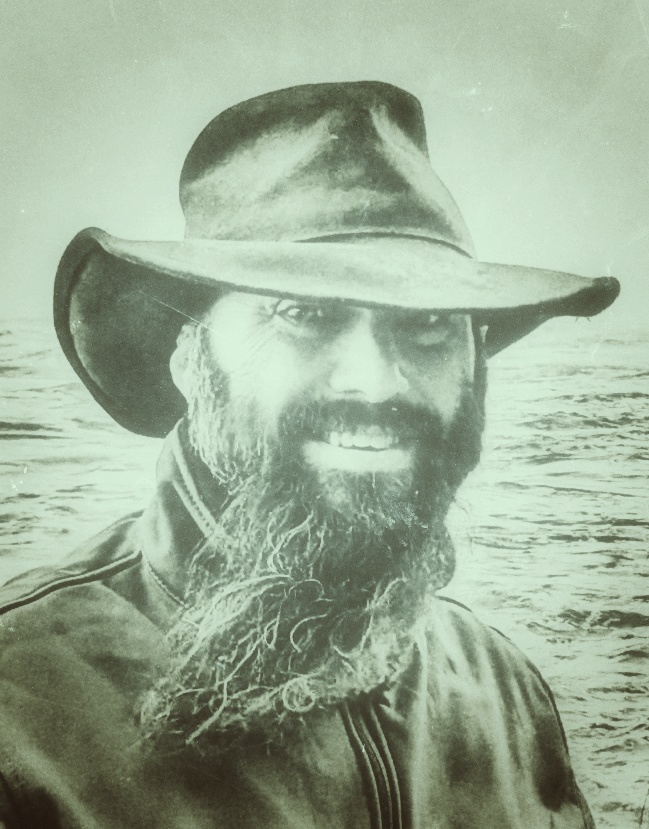
Mark Berton
Bio:
Mark Berton, author of “Aroughcoune,” “Dixmont State Hospital” and “Moon Township”, has been writing his entire life. A former general assignment reporter for a local Pittsburgh daily newspaper, a former magazine editor, and a proud father, Berton earned two Society of Professional Journalists Spotlight awards for his news writing. He lives in Western Pennsylvania with his wife and daughter.
Book: https://amzn.to/4hM72UW
www.markberton.com
https://www.facebook.com/markbertonauthor
Instagram/Threads: @frogelixir
BlueSky: @markberton.com
Roswell Publishing: http://www.roswellpublishing.co.uk/
Aroughcoune by Mark Berton
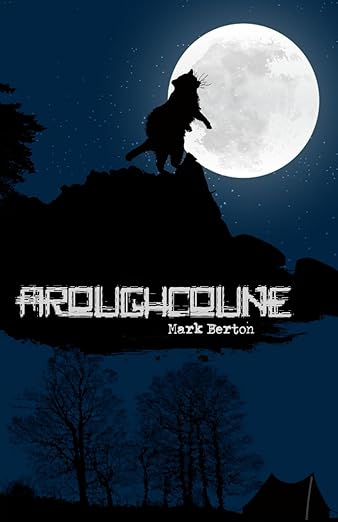
Zin and Bill just want to enjoy a summer weekend camping and getting away from it all when their plans are thrust into a bizarre kill-or-be-killed nightmare pitting them against the aroughcoune. A mysterious Game Warden, Doug Slotter, tracked the aroughcoune from his home in Griswold, Connecticut, to Algonquin State Park in Western Pennsylvania, and becomes the teens’ unreliable introduction to the chaos. Created in a secret government lab on Plum Island, the aroughcoune is a genetically-modified killing machine – a diabolical experiment gone awry.
Fortunately, they find Algonquin’s Game Warden Monique McKesson, a confident and steadfast woman of color who helps shepherd the boys through their weekend of peril. Along for the ride is Mingan Jones, a Native American herbalist who lives in the park thanks to a grandfather clause recognizing his family’s pre-existing claim on the land. His unique background brings Native American folklore into the fold to help the band of unlikely heroes take on a danger much bigger than themselves.
“Aroughcoune” brings all of their destinies together in a quirky, horrific maelstrom of confusion and danger as they discover the classified origins of the monster that has torn their weekend asunder. Working as a team, they discover inner strengths they never knew they had, the mysterious government agents tracking the creature, and whether or not the aroughcoune is alone.
Essential Horror Author & Director Interviews on Ginger Nuts of Horror
For true devotees of the dark and macabre, Ginger Nuts of Horror stands as a premier destination for exclusive horror author interviews and in-depth horror director interviews. Our curated conversations go beyond the surface, offering unparalleled access to the visionaries shaping modern horror.
Why Read Our Horror Creator Interviews?
1. Uncover Creative Processes & Inspirations
Step inside the creative minds behind your favorite nightmares. Our interviews dissect the inspiration behind iconic horror stories and films, exploring how masters of the genre conjure fear. Learn how horror authors develop chilling narratives and how horror directors translate terror to the screen.
2. Gain Unique Industry Insights & Career Advice
Navigate the horror industry with wisdom from those who’ve succeeded. Our conversations provide practical advice for aspiring horror writers and filmmakers, covering:
- Breaking into horror publishing or film
- Overcoming creative and professional hurdles
- Understanding evolving horror trends and audience expectations
3. Explore the Psychology & Culture of Fear
Delve deeper into what makes horror resonate. Our interviews examine the psychology of fear, how horror reflects societal anxieties, and the genre’s exploration of themes like morality, existential dread, and identity.
4. Connect with a Community of Horror Enthusiasts
Join a vibrant community. Each interview sparks discussion, allowing you to engage with fellow fans and sometimes the horror creators themselves through comments and social media.
Featured Insights from Horror’s Finest
Our archive includes conversations with legendary horror authors discussing craft, and visionary horror directors breaking down their filmmaking techniques. Find guidance, inspiration, and a deeper appreciation for the art of horror.
Ready to explore? Visit the Horror Interview Section on Ginger Nuts of Horror today. It’s your essential resource for connecting with the minds that define fear, perfect for fans, aspiring writers, and future horror directors alike.
Searching for the best horror author interviews or seeking wisdom from horror directors? You’ve found your source. Click here to start reading now.