
Horror’s calmest face just closed his eyes for good. Farewell, Sam Neill.
Sam Neill never played monsters. He played men who had made peace with something terrible, and let you work out the rest yourself. That takes nerve, and it takes a strange kind of tenderness. Both are gone now, and horror is quieter for it. Think of him in In the Mouth of Madness or Event Horizon or Possession — never the thing in the dark, always the man watching it arrive, calm in a way that frightened you more than any scream could. That was his gift to the genre: he made damnation look like a decision, and he never once asked you to look away.
Sam Neill has died aged 78, and while the world remembers Dr Alan Grant, horror fans have a different Sam Neill to mourn. Across four decades he quietly built one of the genre’s finest bodies of work. It runs from his very first lead role in Omen III, through Andrzej Żuławski’s Possession, to two lasting cult classics: John Carpenter’s In the Mouth of Madness and Paul W.S. Anderson’s Event Horizon. He specialised in a rare kind of terror, calm and reasonable and all the worse for it. This is our farewell to one of horror’s most underrated leading men.
Sam Neill: The Quiet Master of Horror We Never Quite Gave His Due (1947–2026)
Feature / Obituary | Ginger Nuts of Horror |

Sam Neill scratched a rough cross into his own forehead in In the Mouth of Madness and made it look like the calmest choice a man could make. That was his trick. Almost nobody else in horror could do it. He would sit dead centre of total, cosmic, unfixable madness and play it like a bloke halfway through a crossword. The screaming happened around him. He was the still point. And the stillness was the scary part.
Neill died on Monday, 13 July 2026, in Sydney. He was 78. His family shared the news on his Instagram. They called it sudden and unexpected, and said he stayed cancer free right to the end. That last part stings. Only in April he told Australia’s 7News that a fresh scan showed no cancer in his body at all. It came after CAR T-cell therapy, and after almost five years of living with a rare blood cancer. He sounded thrilled. He talked about doing another film. Then this.
Most tributes today will lead with the dinosaurs, and fair enough. Dr Alan Grant in Jurassic Park put Neill in front of every child on the planet in 1993. That same year he played the settler Alisdair Stewart in Jane Campion’s The Piano. Two roles, one year, at opposite ends of the scale. That was Neill all over. But I run a horror site. So I want to talk about the other Sam Neill. The one who spent forty years building one of the strangest and best horror CVs any leading man ever put together. He never got the fame of a Bruce Campbell or a Robert Englund. He earned it twice over.
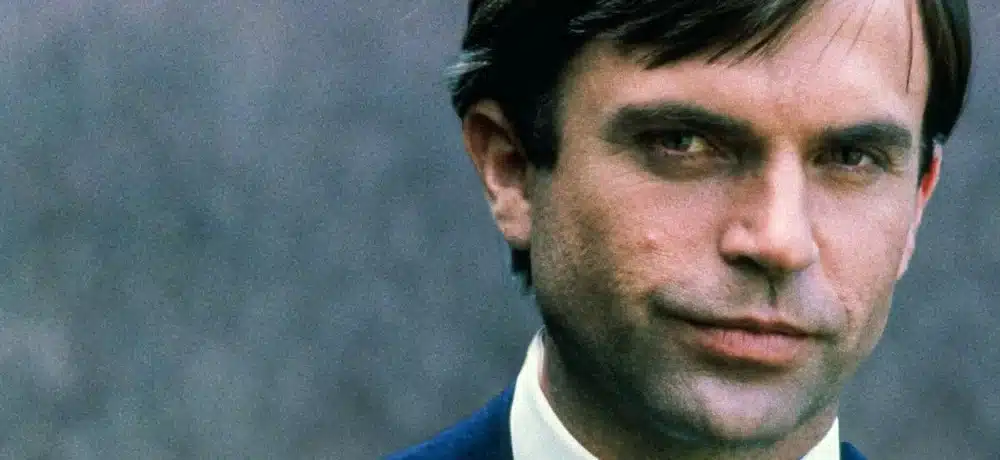
Here is a fact that still throws people. Neill’s first lead role in a feature film was a horror film. In 1981 he played the grown Damien Thorn in Omen III: The Final Conflict. That is the son of the devil, all grown up and working as a diplomat, trying to stop the second coming so his own reign can carry on. It is not the best film in the trilogy. But Neill is superb in it. He is all soft menace and clenched charm. He plays evil as a man who truly thinks he is the reasonable one in the room. You can draw a straight line from that role to nearly everything scary he did later.
Then, that same year, he made Possession.
Andrzej Żuławski’s Possession is one of the most upsetting films ever shot. I mean that as the highest praise. Neill plays Mark, a spy back in a cold, split Berlin. His marriage to Anna, played by Isabelle Adjani, is falling apart. Soon it stops being a metaphor and turns into something monstrous. There are tentacles. There are doubles.
There is a subway breakdown from Adjani that people still study frame by frame. And at the centre of all that noise sits Neill, playing a man losing his calm one layer at a time. He goes from stiff to violent to broken. He makes every step feel horribly logical. He shot Omen III and Possession back to back, this early in his career. That tells you exactly the sort of actor he meant to be.
Neill takes a man drowning in grief and lets the ship pour itself into the hole that grief left behind. He tells the crew that where they are going, they will not need eyes to see. He says it softly, almost kindly, and that is far worse than any snarl. He built a truly upsetting villain out of sorrow. Not many actors could.
Neill first worked with John Carpenter on the comedy Memoirs of an Invisible Man in 1992. Carpenter clearly saw what he had. A couple of years later he gave Neill the lead in what I think is the best thing either man made in the back half of his career.
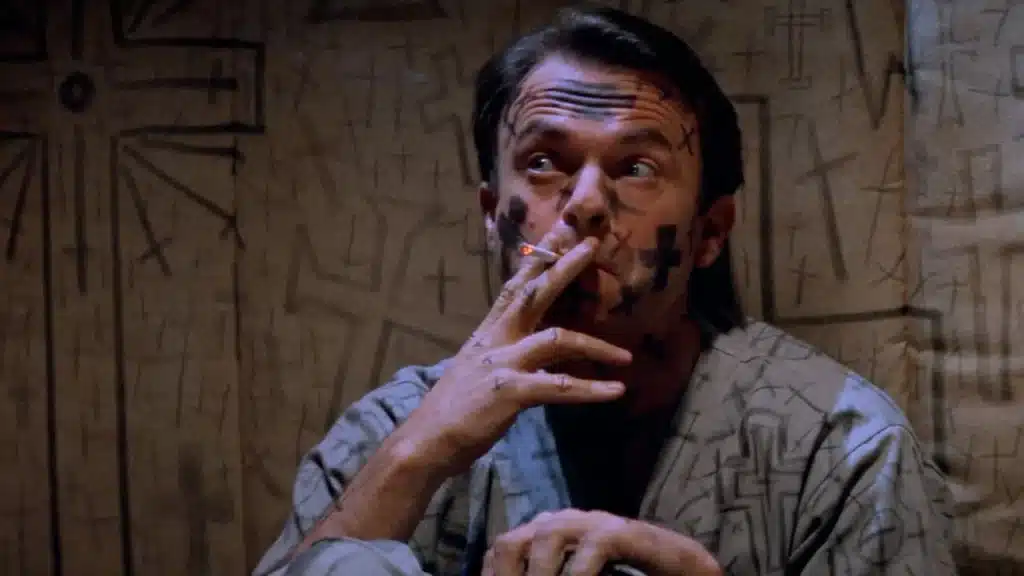
In the Mouth of Madness was shot in 1994 and came out in early 1995. It closes Carpenter’s loose Apocalypse Trilogy, after The Thing and Prince of Darkness. Neill plays John Trent, a smug freelance insurance investigator. He is hired to track down a vanished horror writer called Sutter Cane. Cane’s books are driving readers mad and rewriting reality as they go. Trent trusts nothing and believes in less.
That makes him the perfect thing for the film to break. Watching his certainty crack is the whole engine of the picture. And that last scene, Trent alone in a wrecked cinema, laughing and laughing at his own story on the screen, is one of the purest images of cosmic horror the genre owns. He does it almost all with his face. It is a stunning piece of acting, hiding inside a film too many people still have not seen.
Two years later came the one the internet will not shut up about, and rightly so. Event Horizon was directed by Paul W.S. Anderson in 1997. A rescue crew goes to recover a starship that vanished seven years earlier. Now it has come back from beyond Neptune, and it has changed. Neill plays Dr William Weir, the man who designed the ship’s new drive. Slowly we learn he is also its most willing convert. The film flopped on release and got a kicking. Then something odd happened. Over the next decades, it became a cult favourite, a byword for a haunted house in space. The great lost gore reel turned into horror legend all on its own.
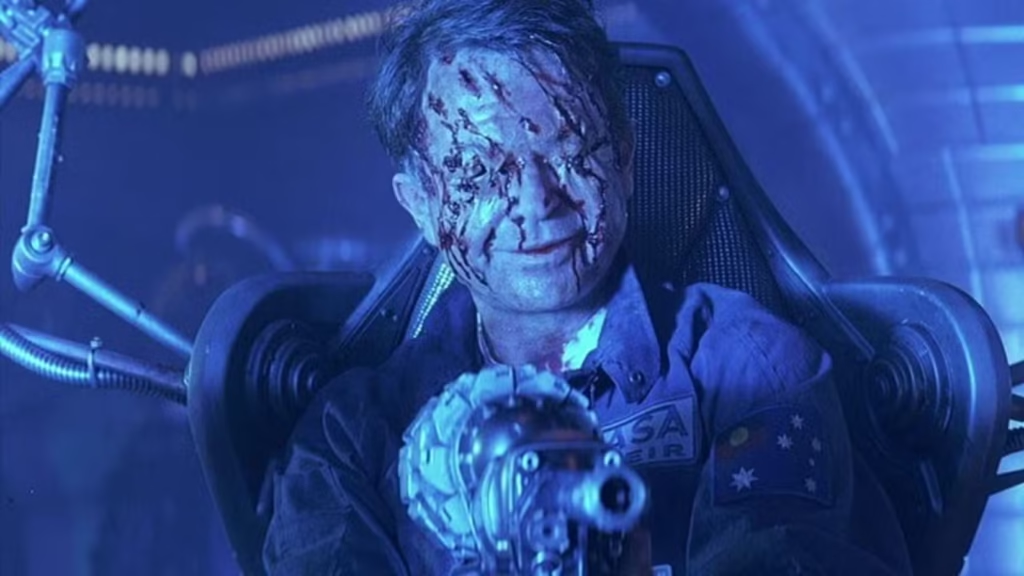
Weir is why it lasts. Neill takes a man drowning in grief and lets the ship pour itself into the hole that grief left behind. He tells the crew that where they are going, they will not need eyes to see. He says it softly, almost kindly, and that is far worse than any snarl. He built a truly upsetting villain out of sorrow. Not many actors could.
That same year, on the smaller screen, he played Snow White’s grieving father to Sigourney Weaver’s Evil Queen in Snow White: A Tale of Terror. It is a Grimm retelling that leans all the way into the fairy tale’s original nastiness. It is an underseen gem, and Neill anchors it well.
He never fully left. Back in 1989 he gave us Dead Calm, a lean and nasty thriller on a yacht that curdles into something close to horror. In 2009 he showed up in the Spierig brothers’ Daybreakers as Charles Bromley, a vampire tycoon farming the last humans for blood. He plays corporate evil with the same easy calm he brought to Damien Thorn nearly thirty years before. In 2015 he teamed up with his Peaky Blinders co-star Adrien Brody for the ghost story Backtrack. He drifted in and out of the genre for four decades. He never once phoned it in.
One thing ties it all together. Restraint. Set Neill next to the more showy horror greats and the gap is clear. He rarely raised his voice. He almost never chewed the scenery. He found the horror in a calm face and a level tone. By refusing to flag the terror, he made it worse. That takes a rare kind of nerve.
Off screen he was the opposite of every unsettling thing he played. That was part of the joke, and he clearly loved it. He was born Nigel John Dermot Neill in Omagh in 1947. He moved to New Zealand as a boy. He swapped Nigel for Sam at twelve, because there were too many Nigels about. He failed a year of law and fell into acting almost by accident. He broke through in Sleeping Dogs in 1977, the first New Zealand film in years to reach American screens. He was very nearly James Bond, losing out to Timothy Dalton. He was knighted for his services to film.
Later in life he won everyone over all over again as a farmer and winemaker. He ran his Two Paddocks vineyard in Central Otago. He posted daily from the farm, where the animals carried the names of his famous mates. He wrote a warm, funny memoir, Did I Ever Tell You This?, during his cancer treatment. He said the writing itself helped keep him going. He met a brutal illness with grace and humour. He went public to help others, and pushed for wider access to the therapy that gave him back his last good stretch of health.
Horror asks its actors to stare into the worst of it and stay steady. Sam Neill did that on screen for forty years. It turns out he did it in life too, right to the end.
He gave the genre some of its finest, quietest terror, and he did it while being one of the kindest men in the business. That is a rarer double act than any monster he ever played. Raise a glass of the good pinot tonight, and put In the Mouth of Madness on. He would approve of both.
Ginger Nuts of Horror: The Heart and Soul of Horror Reviews
Looking to get your horror book or film in front of the genre’s most dedicated audience? Ginger Nuts of Horror is one of Europe’s largest independent horror review websites, with over 30 contributors publishing horror book reviews and horror movie reviews almost every single day.
We offer far more than reviews. Authors, filmmakers and publishers can promote their work through in-depth horror book reviews, horror film reviews, comic and video game coverage, news features, and our popular author and director interviews like Five Minutes With. Our guest feature series, The Horror of My Life, Childhood Fears, The ? That Made Me and more, let creators tell their story while promoting their latest release.
Every feature is built to sell your work. We include backlinks to your website or Amazon author page, a full synopsis, and a universal purchasing link that sends readers straight to their local store. Add a large, engaged social following and an 18-year archive of trusted horror coverage, and you have a platform genuinely built to grow your readership.
Whether you’re an established author, an indie filmmaker, or a debut voice in indie horror, there’s a way for us to help you reach more fans. Explore our horror book reviews and horror movie reviews, then get your horror book or film featured today.
Jim "The Don" McLeod has been reading horror for over 35 years and reviewing it for more than 16. He's the editor of Ginger Nuts of Horror, Europe's largest independent horror review and culture site, and a British Fantasy Award nominee for his work in the genre. When he's not busy inflicting his opinions on the horror community, he can be found annoying his family or getting thoroughly outwitted by his two dogs, Casper and Molly.


