Banfitch’s Torch Is Still Useless; (He Should Get a Sponsorship With O-Light), and That Is the Whole Point
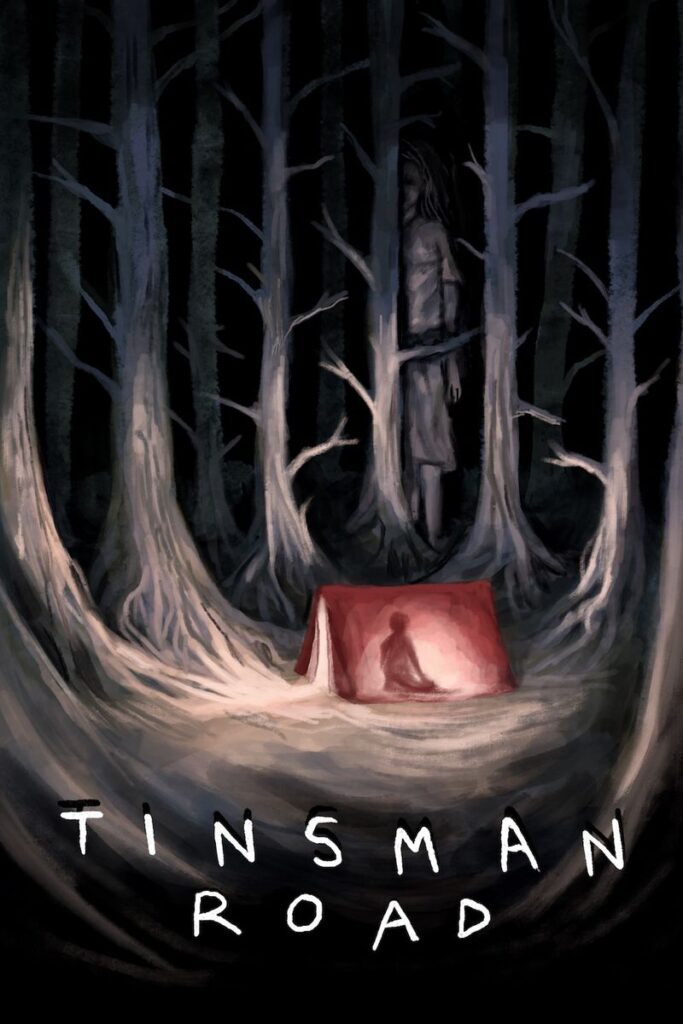
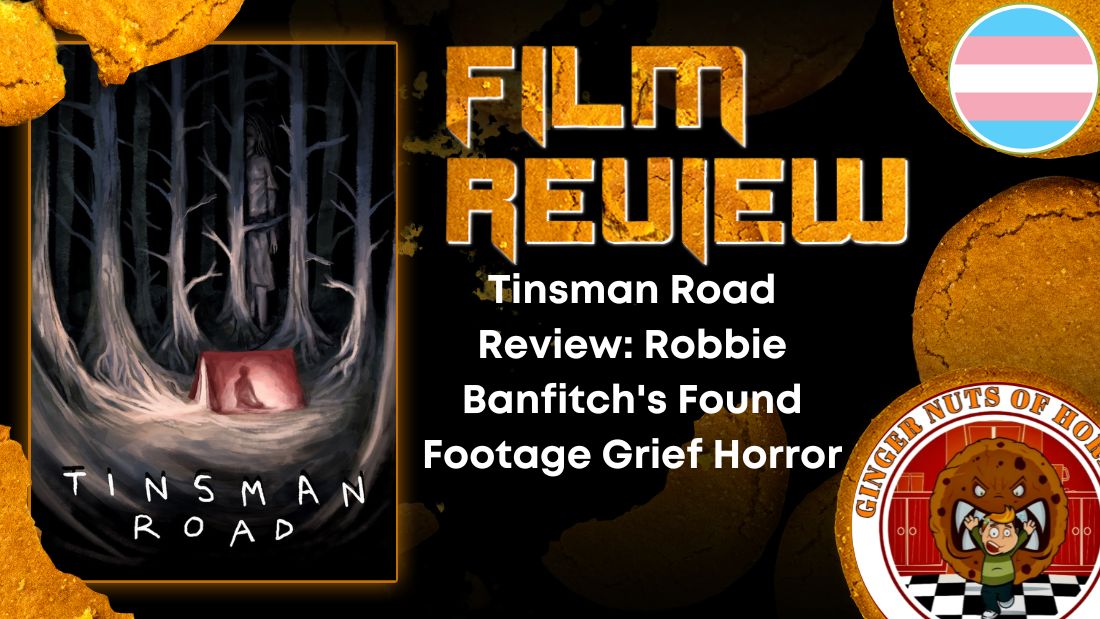
Robbie Banfitch made his name with The Outwaters, a found footage horror that battered its audience senseless. Tinsman Road does the opposite, and it may be the better film for it. Shot entirely on MiniDV in the New Jersey backwoods, it follows Robbie Lyle as he returns home to his mother Leslie, played by Banfitch’s real mother Leslie Ann Banfitch, three years into the disappearance of his sister Noelle.
What follows is a grief horror with genuine patience, a score written by the missing sister’s own actor, and a sound design that turns cheap equipment into dread. Our full Tinsman Road review.
Banfitch trades cosmic terror for something far harder to shake. A grief story shot on tape, where a camcorder’s own limitations become the scariest thing in the woods, and where the missing sister composed the score herself. Sincere, patient and quietly devastating.
Tinsman Road | Robbie Banfitch | Blue Finch Films | 3 August 2026 (UK digital) | 119 minutes | Certificate TBC |
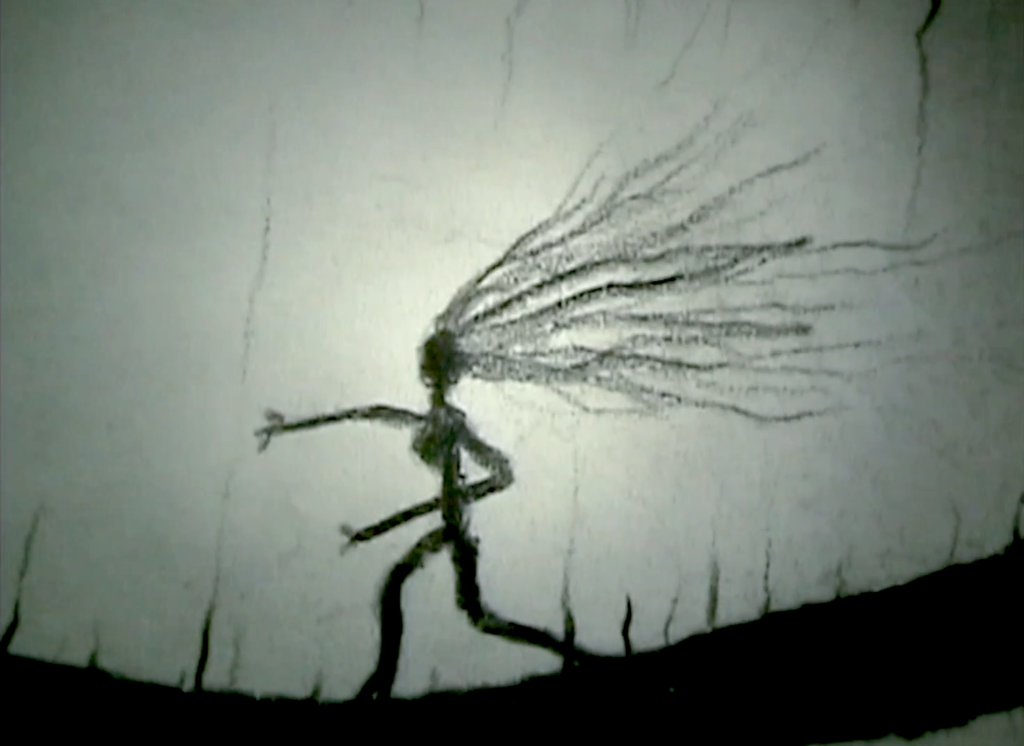
He has brought the terrible torch again. Same weak cone of light, same shaky wrist, same refusal to point the thing anywhere that would actually help. In The Outwaters that torch was a weapon losing a fight. In Tinsman Road it is a man looking for his sister in the dark, and knowing fine well he will not find her. Same tool. Utterly different film.
Robbie Banfitch has made the sad one. That is the short version. The long version takes 119 minutes, sits in a house in the New Jersey backwoods, and hurts a great deal more than his debut ever did.
Banfitch plays Robbie Lyle, an aspiring filmmaker who comes home to his mother Leslie, played by Leslie Ann Banfitch, the director’s own mother. Noelle is gone. She has been gone long enough that the house has arranged itself around the absence. Leslie talks about angels. She reads the flickering lights. She is not mad, and the film never once treats her as mad.
The whole thing runs on MiniDV, 4:3, tape hiss and all. No phones. No laptops. No search history to scroll. That choice does something cleverer than nostalgia, and I want to be blunt about it, because I think it is the film’s real defining point. On tape, a person can still just vanish. There is no cloud backup of a life, no last seen at 11:04, no digital residue to sift. Banfitch has not chosen an old format for the look of it. He has chosen a world in which the search is genuinely possible, and genuinely hopeless, because nothing was recording except the boy with the camcorder.
The pacing will annoy some people. Fine. Long stretches happen where nothing arrives. Robbie goes through his sister’s room. He talks to neighbours. He drinks. He and his mother fight, and the fights are the most frightening material in the picture, which is not a sentence I expected to write about a ghost film. There is a particular horror in overhearing a family come apart, and Banfitch knows it, and he lets those scenes run past the point of comfort.
Then night falls, and the film tightens. Day loosens it again. That cycle repeats until you stop trusting the mornings.
Banfitch shot it, cut it, wrote it, produced it with Beau J. Genot, and handled the sound. He is credited for the special effects too. One person doing all that usually shows, and not kindly. Here it reads as coherence. The camera behaves like a hand attached to a nervous system rather than a rig attached to a plan, and because the same person made every other decision, nothing fights it.
The audio is where I kept flinching. Everyone will tell you the sound design is good, and it is, but I would put it differently. A camcorder’s onboard microphone is a bad witness. It grabs the fridge and misses the voice. It flattens distance so you cannot tell whether a noise came from the treeline or the hallway. Banfitch builds on that failure rather than correcting it. You spend a lot of this film doing forensic work on a sound that the equipment was never good enough to capture properly, and that gap, between what the tape got and what was actually there, is the scariest space in the whole thing.
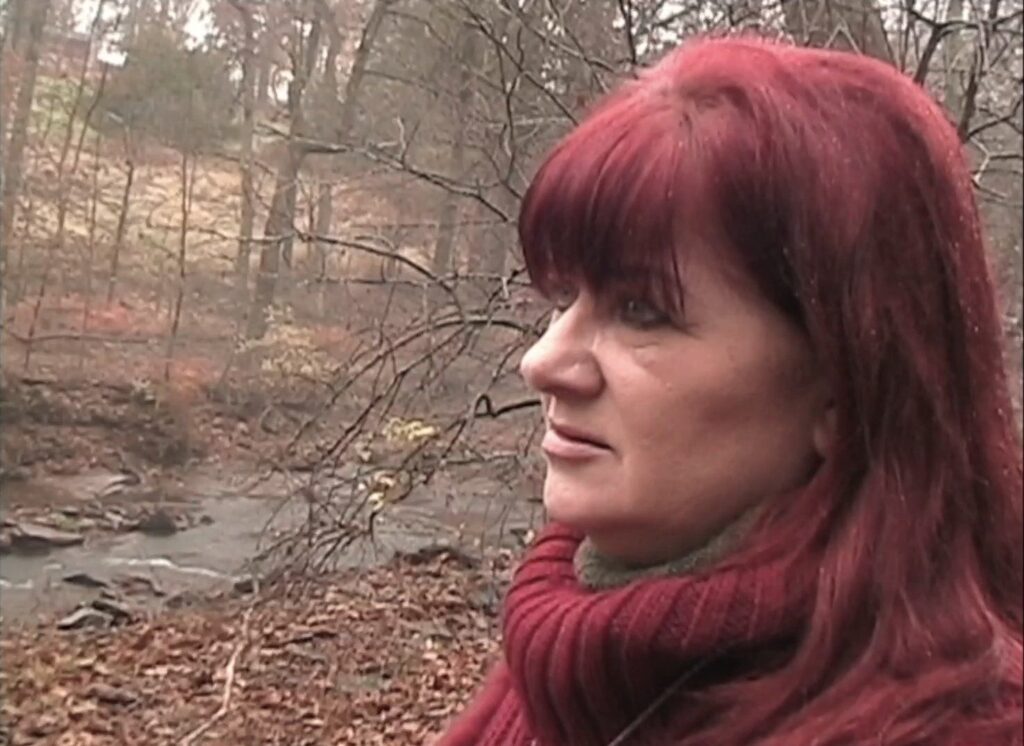
Leslie Ann Banfitch is the reason the film lands. She is not doing an actorly grief. She is doing the version where a person keeps talking because stopping would be worse. Watch how she handles hope. She offers it like a woman who knows it is not evidence and needs it anyway.
Every clue Robbie turns up in her belongings arrives with the voice of the person who is not there, because she made it. That is not a gimmick buried in the credits. It restructures the film. The soundtrack is a form of testimony from the one character who cannot testify, and I have not been able to shake it since.
This is a film about what belief does for people who have run out of other options.
Leslie’s faith gets treated seriously. Not endorsed, not mocked, just taken as a working system that a person uses to stay upright. Angels, signs, the sense that the dead stay near and stay kind. Set against that, the film keeps suggesting something in the woods that is not kind at all. Both propositions cannot be true in the same universe, and the picture refuses to arbitrate. That refusal is where its power sits.
Underneath, there is a class story that nobody seems to want to discuss. This is a family with a decaying house, a missing daughter, a police response that has clearly gone cold, and no resources to force anyone’s attention. Robbie’s camera is the only investigative instrument available to them. When the institutions stop returning your calls, you film it yourself and hope the footage means something later.
Grief in this film behaves like tape. Every time you play the memory back to check it, you lose a little of the fidelity, and eventually you are watching a copy of a copy and calling it your sister.
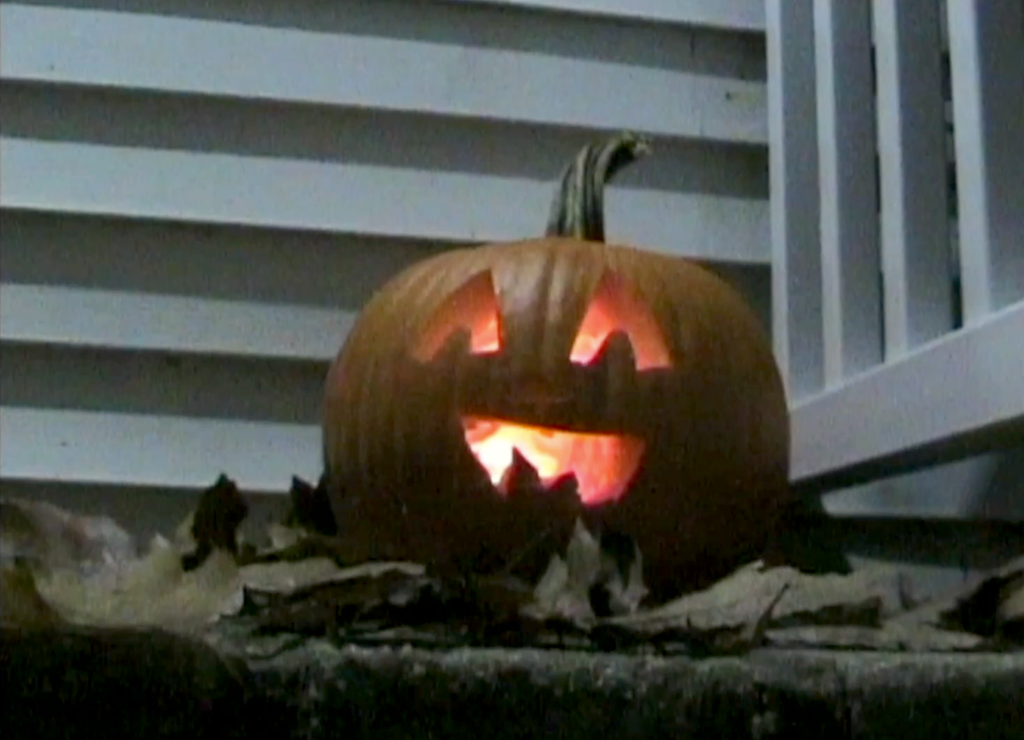
Banfitch made White Light in 2007, then The Outwaters in 2022, financed for around fifteen thousand dollars while he was working full time at Greenpeace. The Outwaters was a divisive object, and I mean that as a compliment. It went cosmic, it went red and black, and it battered the viewer for its final stretch.
Tinsman Road moves in exactly the opposite direction. Inward, downward, domestic. The scale shrinks to one house, one wood, one family. What survives from the debut is the interest in what a cheap camera cannot see, and the willingness to hold a shot until the audience starts filling the frame with their own worst guesses.
Casting his actual mother is the other continuity. Doing it on material this raw gives the film a layer that no amount of budget buys. You are watching a man point a camera at his mother and ask her to grieve a child.
Found footage keeps getting written off and keeps refusing to die, largely because it is the only mode where the format itself carries the argument. Tinsman Road premiered at Unnamed Footage Festival, which tells you the tradition it comes out of, and then travelled through Calgary Underground and Brooklyn Horror before Blue Finch Films picked it up for the UK.
The obvious comparisons are the ones every other write-up reaches for, so I will offer two nobody has. The first is Spoorloos, George Sluizer’s 1988 film, which understood that a disappearance is not a mystery to be solved but a wound that stays open while the person left behind keeps poking it. The second is Ratcatcher. Lynne Ramsay’s film has no ghosts in it at all, and yet the texture is the same: a house that has stopped functioning, water and woodland at the edge of the frame, a young person carrying something the adults cannot help with. Banfitch is closer to that lineage than to any of the studio hauntings his film will be shelved beside.
Where this pushes the sub-genre is in its patience with sincerity. There is no irony in it. No wink. No character explaining the rules. For a mode that has spent a decade being clever about itself, a film willing to be this plainly sad is close to radical.
Four stars, and the missing one is only for the middle stretch, where the naturalism occasionally slackens into genuine drift. Some of you will call that stretch the best part. You may well be right.
The tape ends. The woods do not. Somewhere in that gap is a family still listening for a sound their equipment was never going to catch.
Ginger Nuts of Horror: The Heart and Soul of Horror Reviews

Every feature is built to sell your work. We include backlinks to your website or Amazon author page, a full synopsis, and a universal purchasing link that sends readers straight to their local store. Add a large, engaged social following and an 18-year archive of trusted horror coverage, and you have a platform genuinely built to grow your readership.
Whether you’re an established author, an indie filmmaker, or a debut voice in indie horror, there’s a way for us to help you reach more fans. Explore our horror book reviews and horror movie reviews, then get your horror book or film featured today.


Jim "The Don" McLeod has been reading horror for over 35 years and reviewing it for more than 16. He's the editor of Ginger Nuts of Horror, Europe's largest independent horror review and culture site, and a British Fantasy Award nominee for his work in the genre. When he's not busy inflicting his opinions on the horror community, he can be found annoying his family or getting thoroughly outwitted by his two dogs, Casper and Molly.