
The vampire novel reconceived as Indigenous revenge story, historical autopsy, and unanswered prayer
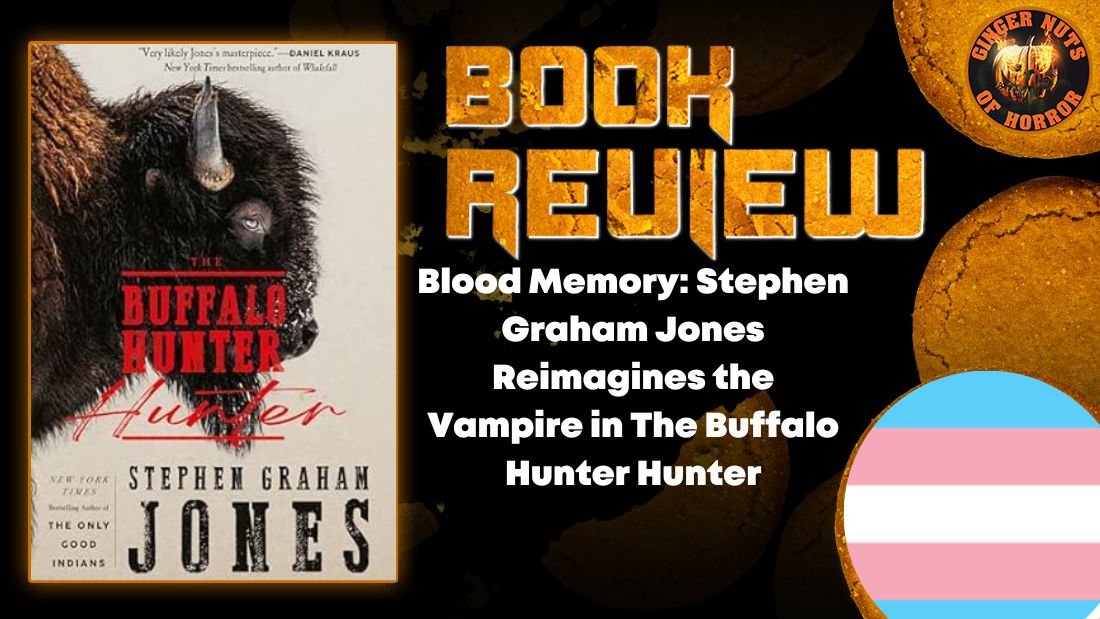
Blood Memory: Stephen Graham Jones Reimagines the Vampire in The Buffalo Hunter Hunter
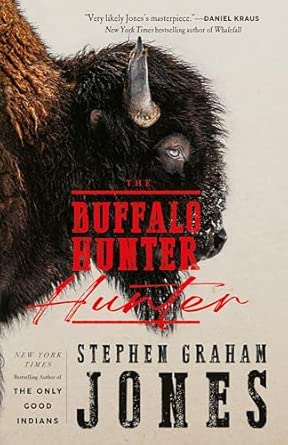
Stephen Graham Jones has written something of a miracle with The Buffalo Hunter Hunter, a historical horror novel that reimagines the vampire myth through the lens of Blackfeet experience and the very real trauma of the Marias Massacre. This is not your typical vampire story. It moves through time like a blade through flesh, cutting deep into America’s origin stories while never losing sight of the people, human and otherwise, caught in the machinery of Manifest Destiny. The result is a dense, challenging, and ultimately unforgettable book that sits somewhere between confession and curse.
The setup sounds like the kind of thing a writer does when they’re showing off. In 2012, a professor named Etsy gets word that a diary has been found inside the wall of a Montana church. Written in 1912 by her great-great-great-grandfather Arthur Beaucarne, a Lutheran pastor. Inside that diary, the transcribed confessions of a Blackfeet man named Good Stab, who started showing up in Arthur’s church every Sunday, sitting in the back pew, wearing dark glasses and a black robe, waiting to tell his story.
And inside Good Stab’s story? Another story. The one about how he became what he is.
A story within a story within a story. Russian dolls made of flesh and teeth.
Most writers couldn’t pull this off without the whole thing collapsing under its own architectural weight. Jones doesn’t just pull it off. He makes it feel inevitable, like the only way this particular story could ever be told. Because some things require distance. Some truths need to be filtered through multiple sets of eyes before you can bear to look directly at them.
Good Stab’s confession, when it comes, is this: he was bitten in 1833 by something he calls the Cat Man. A creature in a cage. Something the white men dragged west with them, maybe not understanding what they had, maybe understanding exactly what they had and not caring. The bite changed him. Made him into a four-legged with a man’s memories, as punishment. Made him into the Indian who can’t die. The worst dream America ever had.
Jones’s prose here works like a trap door. You’re standing on solid ground one minute, here’s a pastor in his study, here’s a strange man asking for confession, and the next minute the floor drops and you’re falling through decades, through massacre sites and buffalo jumps and the burned remains of places that used to mean home.
Reading this book is like watching someone construct a piece of furniture from the inside out. You see all the joinery. You see where the wood was cut and how it fits together. And somehow that doesn’t break the spell. It deepens it. Jones leaves the structural work visible because he wants you to understand how the thing was built. Wants you to appreciate the craftsmanship even as the story pulls you under.
The vampire lore here deserves special attention. Jones has said in interviews that he wanted to interrogate every vampire convention, burn off the fat that’s accreted over centuries of storytelling . No floating across rooms like Superman. No easy transformations. Instead, a kind of infection. A biology. A set of rules that feel earned, that make brutal sense in the context of starvation and survival on the plains. Good Stab doesn’t gain superpowers. He gains an appetite. An endless, unkillable hunger that he directs at the people who killed his world.
There’s a scene where he drains a buffalo hunter and you realize—the book has made you realize—that this isn’t just revenge. It’s ecology. The hunter becomes what he hunted. The eater becomes the eaten. The circle closes and keeps closing.
The historical grounding gives the horror its teeth. The Marias Massacre of 1870, where the U.S. Army killed over two hundred Blackfeet, mostly women, children, and elders camped peacefully along the river . A real event. A wound that never healed. Jones weaves it through the narrative like a dark thread, pulling it tight whenever the story threatens to become mere monster tale. Good Stab’s rampage isn’t random. It’s response. It’s the only language left to him when every other form of address has failed.
Why? he asks the pastor. That single question hangs over everything. Why did they kill us? Why did they keep killing us? Why did they kill the buffalo, the blackhorns, the source of life itself? Arthur the pastor has no answer. Neither does the book. But the asking matters. The asking is the point.
The frame narrative with Etsy in 2012 initially feels like the weakest link. She’s a junior professor chasing tenure, hoping this discovered diary will make her career. Standard academic-gothic setup. But Jones gradually reveals that she’s not just a delivery mechanism. She carries her own weight. Her own grief. Her own connection to the story that unfolds through her ancestor’s words. By the end, you understand why Jones insisted in his acknowledgments that she wasn’t just a story-deliverer, she was the story .
The language shifts between narrators in subtle ways. Arthur’s prose has that period feel, slightly formal, slightly fussy, the way a man of God in 1912 might write. Good Stab’s voice is different. More direct. More grounded in the physical world, in the names of things, in the specific vocabulary of Pikuni life. Jones has said he gave each narrator different grammatical rules to follow—Arthur gets the long dashes and coordinating conjunctions, Good Stab gets none of that, just the plain bones of speech . It works. You never confuse who’s speaking, even when the nested narratives stack three deep.
The book asks things of you. Demands things. There are Pikuni words that don’t get immediate translation. References to historical events that assume some prior knowledge. Readers who want everything handed to them might struggle.
But the ones who let it work on them? The ones who sat with the difficulty, who looked up the Marias Massacre, who learned the difference between Pikuni and Napikwan, who let the language wash over them until it started to make a kind of sense? Those readers came out changed. Came out talking about masterpieces.
There’s a moment late in the book where Good Stab describes watching the last buffalo disappear. Not the last one, not literally, but the last one that mattered. The last one that meant something. He says the silence after was worse than any sound he’d ever heard. And you realise, the book makes you realise, that this is the real horror. Not the fangs. Not the blood. The silence. The absence. The world that used to be full and is now empty.
That’s what the vampire carries. That absence. That hunger for what’s gone.
Jones has been building toward The Buffalo Hunter Hunter for his whole career. The Only Good Indians dealt with guilt and retribution across generations. My Heart Is a Chainsaw slashed through slasher conventions with Indigenous cunning. But this feels different. Bigger. More like a summation.
After I finished The Buffalo Hunter Hunter I sat with the book in my lap for twenty minutes. Then got up and made a pot of coffee and started reading about the bison. About the 30 million that became fewer than a thousand. About the bones piled like snowdrifts on the plains. About the people who starved because the herds didn’t come anymore.
Three days after finishing The Buffalo Hunter Hunter, I was still picking buffalo tallow from between my teeth.
The Buffalo Hunter Hunter by Stephen Graham Jones
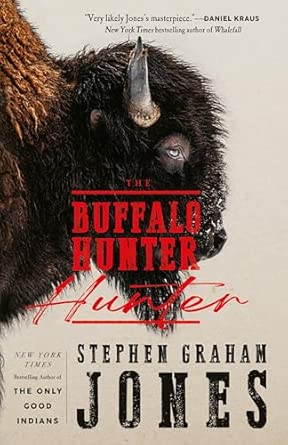
A chilling historical horror set in the American west in 1912 following a Lutheran priest who transcribes the life of a vampire who haunts the fields of the Blackfeet reservation looking for justice. Perfect for fans of Bury Our Bones in the Midnight Soil by V. E. Schwab and Interview With The Vampire by Anne Rice.
Etsy Beaucarne is an academic who needs to get published. So when a journal written in 1912 by Arthur Beaucarne, a Lutheran pastor and her grandfather, is discovered within a wall during renovations, she sees her chance. She can uncover the lost secrets of her family, and get tenure.
As she researches, she comes to learn of her grandfather, and a Blackfeet called Good Stab, who came to Arthur to share the story of his extraordinary life. The journals detail a slow massacre, a chain of events charting the history of Montana state as it formed. A cycle of violence that leads all the way back to 217 Blackfeet murdered in the snow.
A blood-soaked and unflinching saga of the violence of colonial America, a revenge story like no other, and the chilling reinvention of vampire lore from the master of horror.
Horror Book Reviews: Ginger Nuts of Horror, Your Premier Horror Website for 17 Years
For every horror enthusiast searching for authoritative horror book reviews and a definitive horror website, your journey ends at Ginger Nuts of Horror. As a trusted pillar of the dark fiction community, we have spent over 17 years building a reputation for the most passionate, insightful, and credible coverage in the genre.
Our dedicated team of reviewers lives and breathes horror. Our collective expertise, forged over nearly two decades, ensures every review is a deep, critical analysis. We don’t just summarise plots; we dissect the terror, explore the thematic depths, and connect you with the very emotional core that makes horror books so compelling.
Why Ginger Nuts of Horror is the #1 Resource for Horror Fans
Unmatched Depth & Legacy in Horror Book
Reviews: With 17 years of reviewing horror, we offer an unparalleled perspective. Our reviews expertly guide you from mainstream bestsellers to under-the-radar indie gems, helping you find your perfect, terrifying read.
Exclusive Access to Horror Authors: Go behind the scenes with in-depth interviews that reveal the minds behind the madness. We connect you with both legendary and emerging horror authors, exploring their inspirations and creative processes.
Award-Nominated Authority & Community: Founded by Jim McLeod, Ginger Nuts of Horror has evolved from a passion project into an award-nominated, essential horror website. We are a global hub for readers who celebrate horror literature in all its forms, from classic ghost stories to the most cutting-edge dark fiction.
Experience the Difference of a Genre-Dedicated Team
What truly sets us apart is our dedicated team of reviewers. Their combined knowledge and authentic enthusiasm ensure that our coverage is both intelligent and infectious. We are committed to pushing the genre forward, consistently highlighting innovative and boundary-pushing work that defines the future of horror.
Ready to dive deeper?
For horror book reviews you can trust, a horror website that champions the genre, and a community that shares your passion, Ginger Nuts of Horror is your ultimate destination. Explore our vast archive today and discover why we’ve been the top choice for horror fans for over 17 years.