The locked room thriller where fairy tales bleed and libraries keep secrets.
Are you searching for a locked-room thriller that actually scares you? Modern mystery books often focus heavily on the puzzle and forget the dread. Ande Pliego changes the formula completely with her latest release. This dark library mystery blends Gothic horror with classic whodunnit elements. A group of strangers gets trapped inside a famous New York archive, and a killer starts hunting them down. Our review breaks down why this claustrophobic survival story is the ultimate read for thriller fans. If you love creepy architecture and unreliable narrators, this book needs to be on your library card!
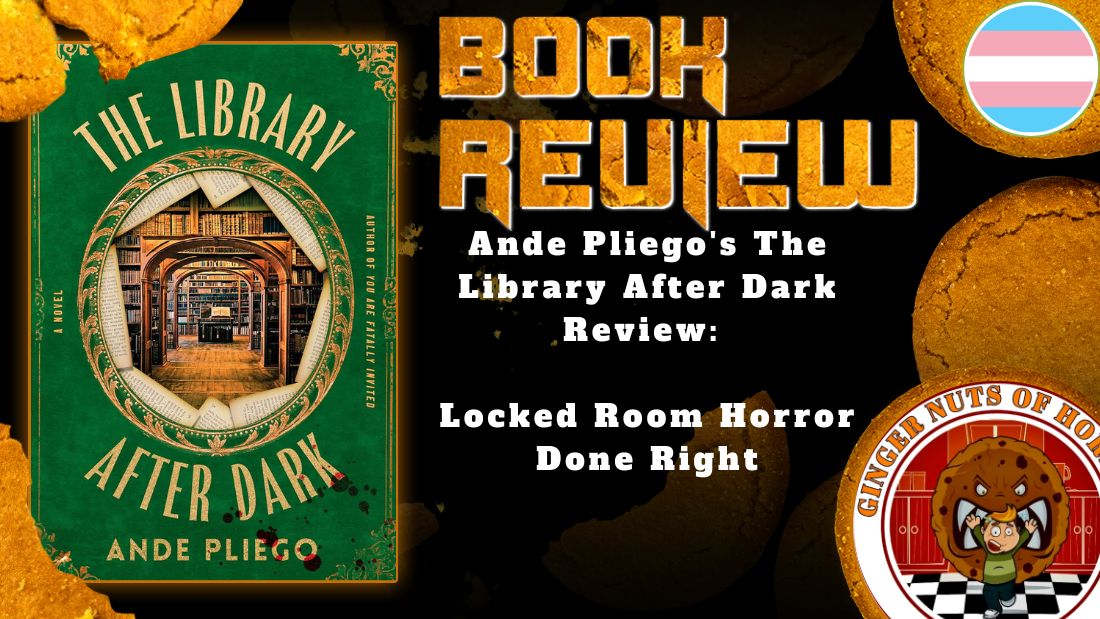
Ande Pliego’s The Library After Dark Review: Locked Room Horror Done Right
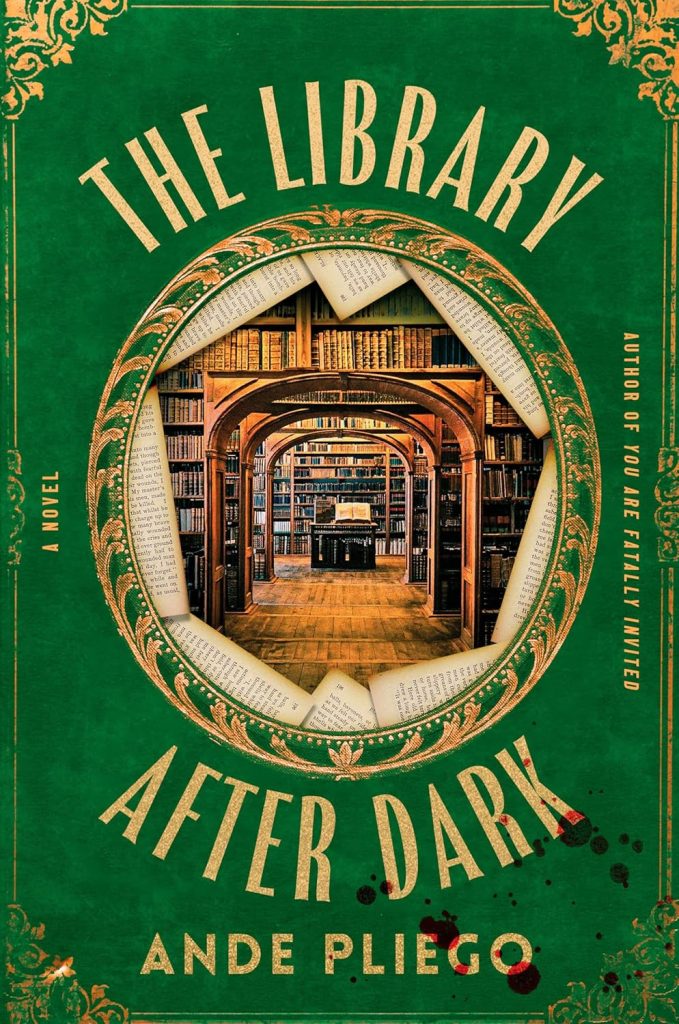
There’s a specific flavour of fear that only comes from places meant to hold knowledge. Libraries, archives, the back room of a bookstore after closing. The assumption that books are inert, that their danger is metaphorical, that the worst thing between these walls is a papercut or a late fee. Ande Pliego knows better. She understands that a room full of stories is also a room full of traps.
This is not a ghost story, though the Daedalus Library has rumours of hauntings thick as dust motes. It is not a slasher, though a body count accumulates before the final page. What Pliego has built instead is something rarer: a locked-room thriller that uses horror to cut along the fault lines where childhood fear meets adult consequence.
The prose moves at a clip that would be cruel if it weren’t so damn efficient. Pliego does not linger on description for atmosphere’s sake. Every architectural detail of the Daedalus, from its poisonous book collection in the “poisoned room” to its hidden passageways, serves both the plot and the dread. You turn pages not because you’re being chased but because you suspect something is keeping pace just behind your shoulder.
Short sentences land like footsteps. Longer ones curl around you, and just when you think you’re safe, Pliego cuts the thread with a single hard word or an image that shouldn’t fit but does.
The dread architecture here is cumulative. Pliego feeds you information in fragments, each new detail a brick in a wall you didn’t realise was being built around you. By the time the first body drops, you’re already trapped. You just didn’t know it yet.
Ande Pliego builds a locked room out of childhood fears, fairy-tale shadows, and the toxic residue of preserved secrets. The Daedalus Library will hold you hostage. The prose moves like a faulty elevator. You will not escape unchanged. This is how you face the thing that terrified you first.
Pliego writes multiple points of view, a choice that could splinter the tension, but instead weaves it tighter. Each trapped tour member gets interiority, and each perspective adds a new angle to the same claustrophobic space. The famous author sees the library as a set piece. The journalist catalogues the exits and motives. The professor reads the architecture like a text. And Aria, our protagonist, sees every hallway and corridor as a potential witness to something she’d rather forget.
What distinguishes Pliego’s POV work is how she calibrates reliability. None of these people are lying exactly, but none of them know the full story either. The reader accumulates more information than any single character, which creates a delicious, terrible irony. You watch them make decisions based on partial truths while you hold the missing pieces in your hand.
The fairy-tale interludes deserve special attention. Pliego intersperses chapters from a fictional 18th-century manuscript called The Dark Hearth Tales, and these passages are not decorative. They function as a second narrative engine, one running beneath the main plot like groundwater. A girl trapped in a tower. A bargain with a thing in the woods. A key that opens nothing until it opens everything. The horror in these stories echoes forward into the present-day action, and the modern murder mystery starts to feel less like an isolated incident and more like the latest verse of a very old song.
Dialogue moves at the speed of suspicion. People say things they don’t mean, mean things they don’t say, and occasionally tell the truth in ways that sound like threats. Pliego has a talent for the line that seems like a throwaway on first reading and lands like a trapdoor on the second. You will flip back. You will mutter. You will respect the craft.
Beneath the locked-room mechanics and the fairy-tale window dressing, The Library After Dark is a book about fear. Not the abstract kind. The specific, muscle-memory fear that lives in places you visited as a child. Pliego has stated that this novel asks how we face the moments that reduce us to our most terrified, childlike selves, and the question is not rhetorical.
Aria Stokes carries a secret about her previous visit to the Daedalus Library. That secret involves a body she left behind. The book refuses to let that fact sit as mere backstory. Instead, Pliego forces Aria to walk through the physical space where her trauma occurred, room by room, and the library itself begins to function as a kind of externalised memory palace. Every corridor leads somewhere she doesn’t want to go. Every locked door might open onto the past rather than an exit.
This connects to something real about how fear works. We think of it as an emotion that happens to us. Pliego suggests, more accurately, that fear is architecture. It has shape and weight and location. You can’t talk yourself out of being afraid of a specific room if you’ve already been afraid in that room. The walls remember. So do you.
The book also engages with the preservation of dangerous knowledge. The Daedalus houses books dyed with Paris Green, a pigment so toxic that handling them requires precautions. It holds manuscripts that have driven people to obsession. Pliego uses these historical details not as set dressing but as thematic anchors. What do we lose when we lock dangerous stories away? What do we lose when we let them out? The fairy-tale interludes keep returning to this question, and the answer is never clean.
There’s a psychological resonance here that feels particularly current. We live in an era of trigger warnings and content notes, of debates about who should read what and under what conditions. Pliego doesn’t mock that impulse. But she does complicate it. The characters in this book all came to the library carrying something they wanted to keep hidden, and the library’s darkness does not respect their boundaries. It finds the hidden things and pulls them into the light. That process is brutal. It is also, the book suggests, the only way out.
Pliego’s debut, You Are Fatally Invited, announced a writer who loved the locked-room form and understood its mechanics. That novel took place on a private Maine island where thriller writers attended a deadly retreat. It was clever, meta-textual, and structurally ambitious. But it also showed a writer still finding her feet inside the adult thriller space after years of YA fantasy.
The Library After Dark is what happens when that writer stops finding her feet and starts running. The sophomore effort here does not merely equal the debut. It surpasses it in atmosphere, in thematic coherence, and in the integration of its secondary narratives.
The recurring themes across Pliego’s work are coming into focus now. She likes closed circles. She likes morally complex women with histories they’d rather not examine. She likes dark humour that doesn’t undercut the stakes. And she likes the weird space where fairy tales and grown-up fears overlap. In You Are Fatally Invited, that fairy-tale element surfaced mostly as reference and homage. Here, it is structural. The Dark Hearth Tales interludes are not winks at the reader. They are the book’s shadow self, and the main narrative cannot be understood without them.
What has evolved most clearly is Pliego’s confidence with pacing. Her debut sometimes took its time establishing the ensemble before tightening the screws. This novel locks the doors on page something like forty and never lets up. Every chapter ends on a note that makes the next chapter feel urgent. The flashbacks to Aria’s past do not slow momentum; they accelerate it by revealing exactly why she cannot afford to be trapped in this particular building.
Where does this book sit in the horror landscape? Not in the extreme wing, and not in the quiet literary corner either. Pliego occupies the fertile ground where thriller pacing meets gothic atmosphere, and where the supernatural is treated with the same seriousness as the psychological. The library might be haunted. It might not be. The book refuses to settle the question, and that refusal is the point.
What sets The Library After Dark apart is its willingness to let the fairy tales function as actual plot infrastructure. In most thrillers, intertextual material is flavour. Here, the Dark Hearth Tales chapters contain foreshadowing, thematic keys, and at least one clue that recontextualises everything you thought you knew. Pliego is not decorating her novel with fairy tales. She is building her novel out of them.
We are, collectively, a little claustrophobic. A little suspicious of the people around us. A little aware that the institutions we trusted might have hidden rooms. The Library After Dark taps into that mood without exploiting it. It offers fear as something to be examined, not just felt.
The Library After Dark by Ande Pliego
Publisher : Bantam
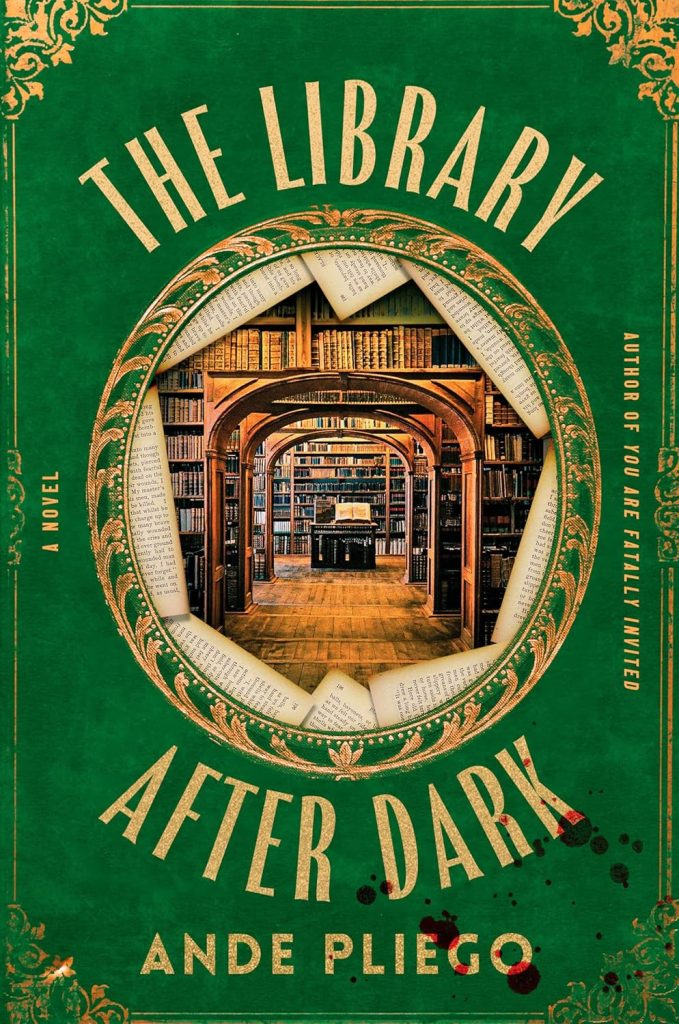
Discover this brand new, puzzle-box murder mystery that’s guaranteed to keep you hooked until the very last page… perfect for fans of Sarah Pearse and Eight Detectives.
‘Irresistible – bright, sharp and rife with danger.’ A.J. FINN
‘Devilishly clever and gripping right until the end.’ IAN MOORE
In the centre of New York stands the city’s most notorious library.
It has a history of mysterious disappearances and freak accidents. But tonight, it opens its doors to welcome a group of strangers for an exclusive after-hours tour.
The famous author. The journalist. The professor. The bookseller. The architect.
They are here to see a legendary book – one of the most valuable in the world. But each visitor also has other, more sinister reasons for being in the library after dark.
As the tour takes them deeper into the building, one of the guests meets a gruesome, inexplicable end – and the others realise they are living on borrowed time.
The search for the murderer forces them to confront awful truths about themselves and decide which secrets are worth dying – or killing – to keep.
Readers can’t put down The Library After Dark:
‘A spine-chilling thriller.’ – Kirkus
‘Atmospheric, chilling and brilliantly clever.‘ -Sian Gilbert, author of She Started It
‘Stephen King meets Agatha Christie in this brilliant thriller – a triumph. Do not miss this.’ – Hank Phillippi Ryan, bestselling author of All This Could Be Yours
‘‘Richly imagined and wonderfully atmospheric… a fast-paced, locked room thriller.’ – Mary Watson, Sunday Times Bestselling author of The Cleaner
‘The Library After Dark is Agatha Christie by way of the Brothers Grimm’ – Kelsey Cox, bestselling author of Party of Liars
‘I devoured it in one breathless, brilliant sitting‘ – Ryan Pote, author of Blood and Treasure
‘Smart, edgy, and utterly unique, The Library After Dark will beckon you in… but it might never let you out’ – Tara Goedjen, author of Please Enjoy Your Stay
‘A chilling and highly addictive locked-room thriller. Get ready for a ride!’ – Darby Kane, international best-selling author of Pretty Little Wife