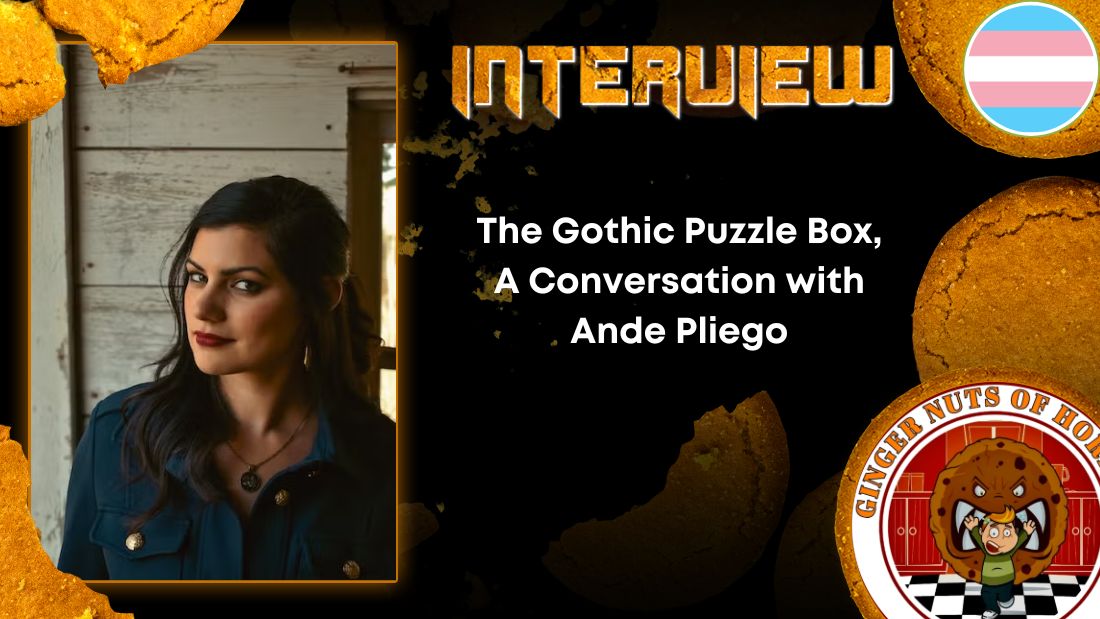
A locked door in a novel is an invitation. It promises a mechanism, a set of rules, a truth waiting behind the key. Ande Pliego writes novels for readers who trust that promise. Her debut, You Are Fatally Invited, weaponised the locked-room thriller, turning genre expectations inside out with a satirical gleam that never undermined the mounting tension. Now, with The Library After Dark, she returns to the puzzle-box murder mystery form but abandons satire for something darker, stranger, and more earnestly Gothic. In this Ande Pliego interview, she unpacks the four-year journey that reshaped the book into a meditation on fear and self-forgiveness.
The setting is the Daedalus Library, a bibliophile’s haunted house with a history of disappearances. A cast of archetypes—author, journalist, professor, bookseller, architect, gathers for an after-dark tour of a rare, possibly cursed book. Early readers call it “Agatha Christie by way of the Brothers Grimm,” capturing the collision of elegant puzzle and primal fear.
The premise suggests Christie by candlelight, but the textured psychological horror and dark fairytale menace pull the novel toward something more subversive. Genre-blending is Pliego’s natural mode; she hydroplanes across mystery, horror, and dark fantasy with a restlessness that feels less like indecision and more like conviction. In this conversation, she details that tonal shift, the Emily Dickinson poem that inspired the library-as-mind-palace, and how each corridor mirrors Aria’s buried self.
Aria enters the library believing she deserves its worst. That guilt-driven starting point signals a thematic weight rare in thriller fiction. Pliego describes the book as a maze where the past haunts every corridor, each room a mirror of Aria’s childhood whimsy, maturing fears, and buried secrets, until the underground vault becomes ground zero for the self. She built the structure around the myth of Theseus and the Minotaur, casting Aria as someone who believes she is the monster to be hunted. That inversion—a protagonist who sees herself as villain, gives the narrative its peculiar charge.
What emerges in the interview is a writer who thinks in structural metaphors, constructing labyrinths her characters must walk. She explains why she cut an elaborate alternate timeline whispered through journal entries, choosing instead to let dark fairytale fragments mislead and reveal.
She unpacks her deliberate rejection of unlikeable characters, writing people readers might root for in a genre that often equates suffering with moral vacancy. And with a candour unusual in promotional interviews, she traces the novel’s pulse of hope back to her own experience of domestic abuse, channelling survival not as confession but as a transmission of courage for readers lost in their own dark halls, a lantern swung in the dark.
The conversation that follows does what the best author interviews do: it sharpens your appetite for the book while revealing the fierce empathy behind its construction. This is not a writer handing out pat answers. This is a writer who believes fiction can be a door out of the labyrinth, and she is holding it open.
But foremost in my mind as I write is empathy. I want to write clashing characters so deeply, that readers can understand both sides. That’s reality, and what I’m most fascinated by in humanity. I think we could all use a little more empathy, and learn to slip inside each other’s shoes.
Ande Pliego: Building The Library After Dark as a Haunted Mind Palace

Ande Pliego’s debut, You Are Fatally Invited, was a meta-textual triumph, a locked-room mystery that weaponised the very tropes of the thriller genre it inhabited. Now, with The Library After Dark, she returns with something that feels both like a natural evolution and a deliberate descent into darker, stranger territory. Early readers are calling it “Agatha Christie by way of the Brothers Grimm” and “a bibliophile’s haunted house.” Ande, welcome to the show.
A huge thank-you for having me on, and for the kind introduction; I’ve been busting with excitement to talk about The Library After Dark for going on three years now, so this is a very special treat.
Your debut, You Are Fatally Invited, was in many ways a satirical, almost playful deconstruction of the thriller genre, a “villain-era” book you’ve said was born from frustration with the publishing industry’s gatekeeping.
With The Library After Dark, the tone from the blurbs feels more Gothic, more atmospheric, and leans into the genuinely sinister. The tagline “Stephen King meets Agatha Christie” suggests a shift from satire to a more earnest, primal kind of fear. Was this a conscious evolution of your authorial voice, or did the story itself demand a more sombre, fairy-tale darkness that the satirical framework of your debut couldn’t contain?
When I first started playing with the idea of a book set in a library, I knew the dark academic vibe would play heavily into the setting and plot, but I did initially wrestle with trying to keep the satire element from the first book. Thankfully, my brilliant UK editor encouraged me to throw off the shackles and let the story become what it needed to be. From there, the darker tone really spread its wings, but it wasn’t until Draft Four that I realized how much the story was based around true-blue fear. Which is only apt, for a potentially haunted library housing a potentially cursed rare book. Who knew.
(Not I, clearly.)
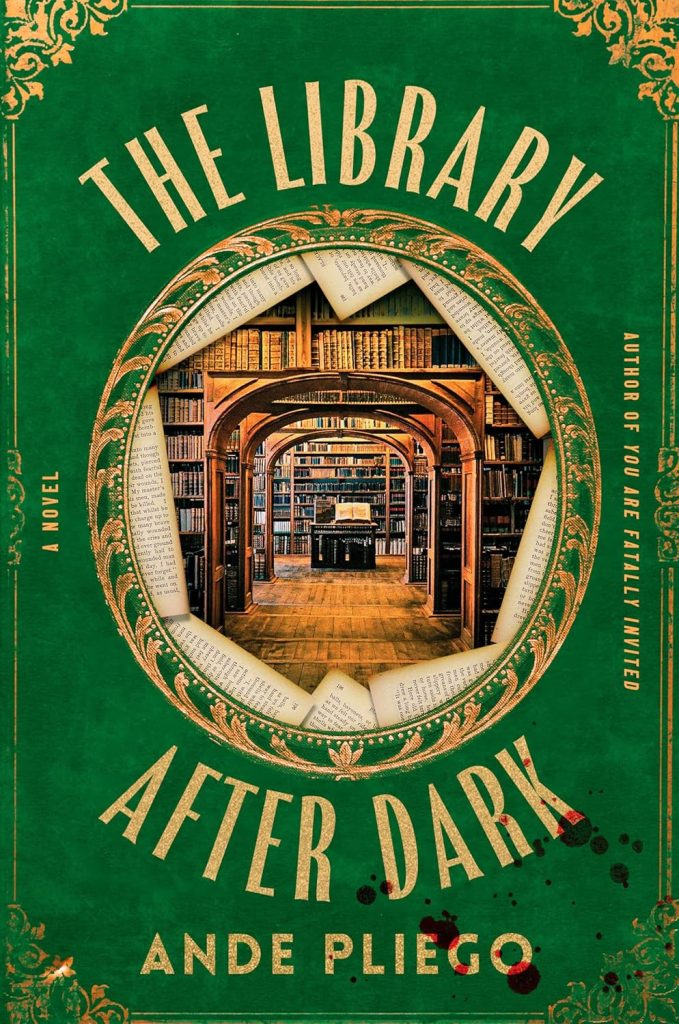
You’ve mentioned your process often begins with a theme or question you’re working through personally. For that book, it was the messy, consuming nature of “Want.” What was the central, personal question or emotional knot you were untangling while writing The Library After Dark? And how does that interior conflict manifest in the library itself, a building described as having a “history of mysterious disappearances and freak accidents”?
Ah—this book went through so many complete rewrites, and each incarnation wrestled with a different element. All those shades are still in there, but around Draft Four when I had my epiphany that the book was about fear, I also realized it took magnifying glass to the layers of self: the way we deceive ourselves, the misconceptions we absorb from others, and finally, self-forgiveness. In a way, it’s a maze we get lost in, isn’t it?
And I really wanted the Daedalus Library to reflect how the past can haunt us—a haunted mind palace for Aria, of sorts. Initially, I’d had as an epigraph for the book the beautiful poem by Emily Dickinson called “One Need Not Be A House—To Be Haunted”; it’s a striking description of how our own minds can be more haunted than any house. That sentiment served as a guiding light for how the library—and all the secrets it holds—became a manifestation of Aria’s inner conflict.
One of the most compelling details is that the cast is comprised of archetypes: The famous author, the journalist, the professor, the bookseller, the architect. This feels like a deliberate, almost mythic distillation of character types, a step away from the more psychologically distinct thriller authors in your debut.
In Fatally Invited, you used character archetypes (the horror writer, the thriller writer) to satirise genre conventions. Here, you seem to be using them to build a kind of modern fairy tale. How did your approach to crafting character archetypes evolve between the two books, moving from satirical tools to symbolic ones?
I’m so glad someone caught this! Whereas the characters in Fatally definitely spawned out of tongue-in-cheek satire, I put so much thought into the symbolism behind the after-dark tour members, figuring out how each one might connect to The Dark Hearth Tales, the mysterious rare book this tour has come to see.
So much of the plot is comprised of these characters debating over this cursed book, and when I was refining the characters, I looked at two things in particular: their greatest fear, and what they believed about The Dark Hearth Tales—whether they thought it was a legendary piece of history, a cursed abomination, a worthless forgery, etcetera. The whimsical middle-grade author served as the devout acolyte; the professor, the source of historical knowledge behind it; the nurse, the skeptic; and so on. Little do the characters know, they each hold a piece of the answer.
You’ve spoken about your love for “stories with teeth” and that you find catharsis in writing about dark struggles. The Library After Darkseems to position its characters less as agents of their own revenge and more as prey within a system, the library itself, that has a history of swallowing people. Is this a shift from a narrative of empowered darkness to one of inescapable darkness? And if so, what prompted that thematic pivot?
The agency here was definitely meant to be a contrast to Fatally. In my first book, our main character Mila is having the time of her life orchestrating a wonderland week of sweet revenge. In Library, the last place on the planet Aria would like to be is inside the Daedalus Library, and she’s willing to do nearly anything to try and escape it.
Even with the wider cast, Fatally relied on each character having done ‘something’ to our main villain—so carrying some sort of responsibility—but with Library, I wanted to explore what it would be like to follow a group of people who didn’t deserve to be there (for the most part). Unlikable characters are a big trope in the thriller/horror genres, but I really wanted to write about (mostly) good people, some of whom have made mistakes, who then have to fight for their survival.
A through-line in your work is the idea of finding hope in the dark. The praise for The Library After Dark emphasises the atmosphere, the “gruesome” ends, and the “creepy happenings.” In a story where the setting itself, a notorious library with a dark past, seems to be a central antagonist, where does the hope reside? Is it in the act of investigation itself, in the characters’ pursuit of truth, or somewhere more subversive within the narrative?
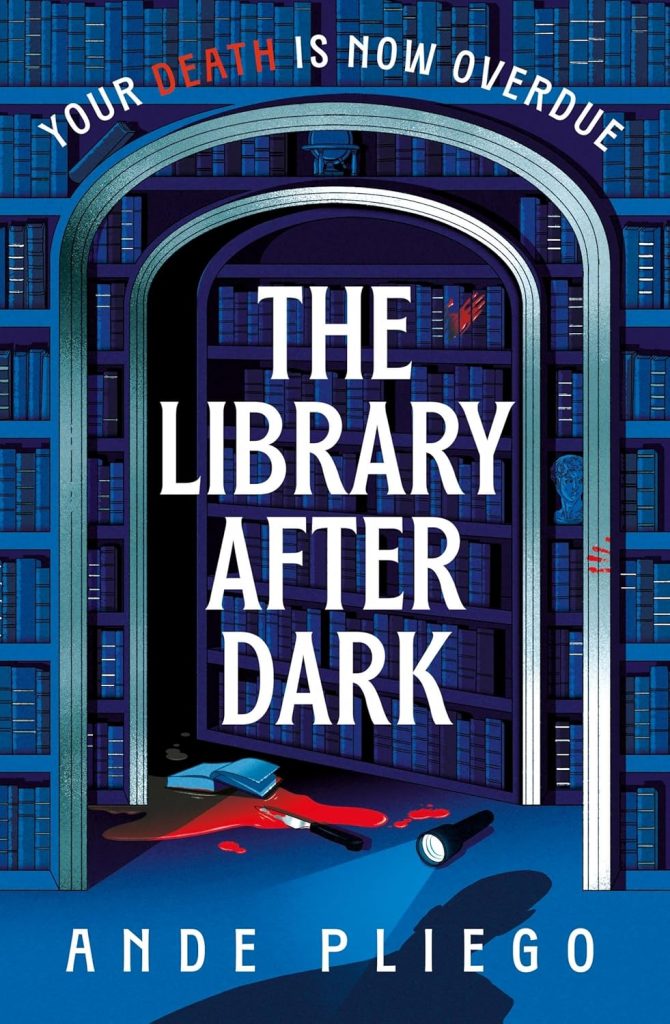
I’m a firm believer that hope burns the brightest against the unforgiving dark. I think quite a lot of us blame ourselves for things out of our control, which is very much the case with Aria. She enters the library thinking she deserves exactly what it might do to her, and it’s only through being forced back into her own memories that she realizes her own agency, and forgives herself for things she did out of survival. So in a way, the story’s about facing your fears, self-acceptance, and essentially finding your way back to yourself. I think that’s a big part of hope: being able to stop running from the past, and finally look toward the future instead.
While writing the book, in my own personal life I was learning to accept some difficult events. But more importantly, I was struggling to have grace with myself for past decisions. It’s easy to fixate on our actions and how we would do things differently, but I’ve come to believe that often, we’re doing the best we can with the information we have. And that’s okay. Life is messy, and not every decision is black and white.
You Are Fatally Invited weaponised genre tropes, the locked room, the isolated island, the killer among us. For The Library After Dark, which trope from the Gothic or locked-room mystery genre did you deliberately weaponise to subvert reader expectations? And how does it function differently from the tropes you played with in your debut?
One of my favorite tropes in Gothic literature is something I’ve seen called Frame Narratives—using journal entries, letters, or some other media to shed light on a story element we don’t get to see directly on the page. I absolutely love playing with meta-text like this, and figuring out how to use it to deceive the reader while also laying the charges for an explosive finale. In early drafts of Library, I actually had an entire alternate timeline/POV told through journal entries that are later revealed to be lies—I’m intensely proud of how I crafted it, even though it didn’t make it into the final incarnation.
One of the hardest things about writing is getting to the point when you have to cut ‘good’ things away so the ‘best’ things can breathe, and that was one of them. However, I ended up using the fairytale short stories in a similar way—to both lead and mislead the reader.
Alternatively, in Fatally, I had meta-text snippets from the anonymous author’s book on writing fear; these served not to mislead the reader as much as to give us insight into our villain’s mind, since that’s those pages are the only place he is being completely honest.
Many writers working in the thriller space feel a pressure to adhere to certain conventions. What is one convention of the modern thriller or Gothic novel that you actively sought to dismantle or complicate in this new book? What about it did you find limiting or tiring?
Oh, man—quite a few, but chiefly with this book I tried to steer clear of the ‘unlikeable characters’ convention that’s quite popular in mysteries and thrillers right now. I actually really enjoy reading it; I don’t believe characters need to be likable, and it’s fascinating to see how skilled authors can make difficult characters so relatable. But when I realized that I’d be asking my readers to follow me through some pretty dark halls in the library, I opted to write characters whose courage, humility, or kindness could make them easy to root for.
I’ve found that the heavier or more niche the subject matter (or genre), the more you’re asking of the majority of readers. Pair that with unlikable characters who readers may or may not be invested in, and there’s a good chance a lot of they’ll be see-sawing about whether to keep reading. It’s my hope that having characters to connect with and care for will tip readers over into a race to the end.
The marketing copy positions The Library After Dark squarely as a “puzzle-box murder mystery.” But with its Gothic atmosphere, fairy-tale menace, and a library described as a “bibliophile’s haunted house,” it seems to be trafficking in horror and dark fantasy as much as pure crime. If the book is being marketed as a Mystery/Thriller, which genre do you secretly believe it truly belongs to, and why?
Ha! This touches on a hallmark of my stories: genre-blending. I must hydroplane across as many genres as I can in every book. For Library, psychological horror always seemed right to me with the story’s emphasis on the characters’ mental states and the question of supernatural influence. Of late I’ve been drawn to the film term ‘art horror’, which seems like a good fit for pretty much all my adult novel ideas—I love that it focuses more on the artistic and intellectual elements, such as heavy atmosphere and psychological exploration, and less on gratuitous gore and jump-scares.
Large on my mind, though, was trying to write a thriller that would appeal to readers of dark fantasy—my people!—and I’ve even heard some early readers observe the smatterings of dark romance, which I’m very pleased about.
In Fatally Invited, you relished the complexity of weaving multiple POVs and meta-narratives. How does the puzzle in The Library After Dark differ in its construction? Is it a puzzle of physical space(the architecture of the library) versus the puzzle of character relationships and fictional texts that you explored in your debut?
Both books started with a similar ‘puzzle’ framework: one main point of view, and a cast of others that trickle in slowly, and switch off as the more of them… well, perish. It’s a delightful little structure that allows me to keep the entire plot grounded in one timeline, but has the benefit of concealing the characters’ secrets until I want to start stressing readers out (in a happy way). Similarly, both have meta-texts: Fatally has excerpts from the authors’ novels, while Library is peppered with dark fairytales that have more meaning than first meets the eye.
Where the stories differ is that in Library, the setting is just as much a character with secrets and even agendas as our tour group attendees.
The library in your novel is described as “notorious” with a history of disappearances. It functions as more than just a setting; it’s a character with a memory and a will. In what ways does the architecture of the library, its corridors, hidden rooms, and the legendary book at its heart, function as a “shadow” to the main thematic argument of the novel? How do its physical spaces reflect the psychological or moral labyrinths your characters navigate?
Each room of the library is a mirror of Aria’s history; in essence, we’re walking a timeline of her life, and secrets. We see the rose-colored whimsy of her childhood in the Children’s section, followed by her maturing growth and darkening memories from the Natural History and Classical Literature sections. Eventually, we reach the horrors contained in the Fairytales and Folklore section—emphasis on the ones not being meant for children—and finally, in the underground vaults at the heart of the library, we reach ground zero for Aria.
On an even deeper level, I based this framework around the Greek myth of Theseus traveling the labyrinth to confront the Minotaur—only in Aria’s mind (at the beginning, anyway), she believes she’s the Minotaur, waiting to be hunted.
For those of you going “wait, what,” welcome to the fun way my brain works! It’s busy up here.
Your work often navigates the tension between didacticism (offering a clear takeaway) and ambiguity (leaving questions unresolved). The Library After Dark deals with themes of secrets, truth, and justice. How did you navigate the line between delivering a satisfying, morally coherent resolution and allowing for the unsettling ambiguity that the Gothic tradition demands? Was there a point where you had to choose one over the other?
My goal with each of my books is not so much as to preach a message as it is to raise a question and provoke a discussion. If readers are falling all over the map about characters’ decisions—and specifically, the end of their character arcs—then I’ve done my job. That said, I’ve thus far sought to write satisfying, open-ended endings… with some secrets and ambiguity. Can’t have everything tied up too nicely, now.
I actually had one extra chapter at the end of Library that, in my head at least, still happens—a ‘one year later’ moment, where we get to see where Aria, Jasper, and the Daedalus ends up. I love that ending, but it definitely falls in the shades of unsettling gray. Choosing to leave it out was less about the chapter itself, however, and more about the mechanics of how I wanted readers to feel when they close the book: satisfyingly shocked, hopeful, and emboldened. I think the current ending does just that (as best as I could make it, anyway).
Readers are going to come away from this book with interpretations. Where do you suspect a reader might most commonly misinterpret the novel’s philosophical core? And perhaps more interestingly, why might that misinterpretation be a valid, even interesting, reading in its own right?
“Murder is good” would be an unfortunate misinterpretation! But like I said, I’m less interested in my characters’ actions on the surface, and more about how they reached those conclusions. This book takes a look at how people wrestle with the worst thing they’ve ever done: some convince themselves they’re a hero, while for others, the guilt hounds their steps into the grave. The philosophical core examines whether we can ever be forgiven for the worst thing we’ve done, but alternatively, how the worst thing we might’ve done might not be as black-and-white as we originally think.
But foremost in my mind as I write is empathy. I want to write clashing characters so deeply, that readers can understand both sides. That’s reality, and what I’m most fascinated by in humanity. I think we could all use a little more empathy, and learn to slip inside each other’s shoes.
The novel is titled The Library After Dark. The “after dark” element immediately suggests transgression, hidden knowledge, and things that should not be seen. If you were to extend this metaphor, what is the one question about the novel, its creation, its themes, its secret heart, that you feel can only be asked or answered “after dark,” in the space of this podcast conversation, away from the well-lit expectations of a traditional interview?
Well played. I wrestled with this question, and am deciding to answer perhaps too honestly about something that trickles through the cracks in the story: a slight pulse about abuse and domestic violence.
As I was crafting each character, I made sure to know what they thought of The Dark Hearth Tales, and what specific short story would stick with them. One of these characters was deeply affected by the short story “The Wood-Carved Rabbit,” arguably the darkest tale in the anthology. Reading this tale gave words to feelings this character didn’t understand: what it was like being trapped in an abusive relationship. And in some ways, seeing it on the page helped her realize she needed out. Just as writing it did for me.
There’s more to that character’s storyline—and a fair amount that didn’t make it into the final novel—but the concept of transmitting hope through story encapsulates so much of Library. That’s both what it was like for me writing it, and what I hope it will be for those reading it. One of the main reasons I write is to be so honest that others struggling, lost, drowning in the dark feel seen. I never want to be so secretive, embarrassed, or ashamed about the dark things I’ve walked through that I miss a chance to give someone courage, like so many others have given me.
The Library After Dark is an homage to how sometimes it’s through the pages of a book that we first recognize ourselves. Books help us realize we are not alone, and that there is hope and help out there. And what is that, if not magic?
Thank you for having me on, and I hope that amid the labyrinth of thrills and dark whimsy, you find pieces of yourself within The Library After Dark.
(But not literally, of course.)
The Library After Dark by Ande Pliego
Publisher : Bantam
Discover this brand new, puzzle-box murder mystery that’s guaranteed to keep you hooked until the very last page… perfect for fans of Sarah Pearse and Eight Detectives.
‘Irresistible – bright, sharp and rife with danger.’ A.J. FINN
‘Devilishly clever and gripping right until the end.’ IAN MOORE
In the centre of New York stands the city’s most notorious library.
It has a history of mysterious disappearances and freak accidents. But tonight, it opens its doors to welcome a group of strangers for an exclusive after-hours tour.
The famous author. The journalist. The professor. The bookseller. The architect.
They are here to see a legendary book – one of the most valuable in the world. But each visitor also has other, more sinister reasons for being in the library after dark.
As the tour takes them deeper into the building, one of the guests meets a gruesome, inexplicable end – and the others realise they are living on borrowed time.
The search for the murderer forces them to confront awful truths about themselves and decide which secrets are worth dying – or killing – to keep.
Readers can’t put down The Library After Dark:
What sets The Library After Dark apart is its willingness to let the fairy tales function as actual plot infrastructure. In most thrillers, intertextual material is flavour. Here, the Dark Hearth Tales chapters contain foreshadowing, thematic keys, and at least one clue that recontextualises everything you thought you knew. Pliego is not decorating her novel with fairy tales. She is building her novel out of them. Ginger Nuts of Horror
‘A spine-chilling thriller.’ – Kirkus
‘Atmospheric, chilling and brilliantly clever.‘ -Sian Gilbert, author of She Started It
‘Stephen King meets Agatha Christie in this brilliant thriller – a triumph. Do not miss this.’ – Hank Phillippi Ryan, bestselling author of All This Could Be Yours
‘‘Richly imagined and wonderfully atmospheric… a fast-paced, locked room thriller.’ – Mary Watson, Sunday Times Bestselling author of The Cleaner