Something Sour in the Sweet Shop: Horror’s Long Affair With Candy
Horror is meant to live in the dark. Cellars, woods, hospital corridors at four in the morning, that sort of thing. So it is a bit odd, when you stop and think about it, how often the genre packs up and moves into a sweet shop instead. Bright colours, sugar dust, pastel wrapping, and somewhere just behind all of it something that very much wants to eat you.
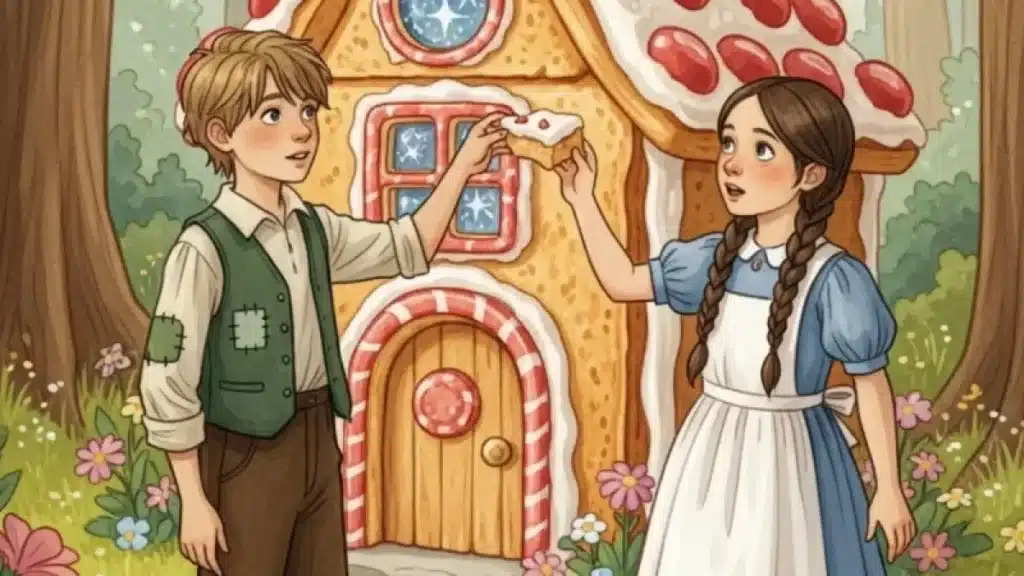
It is one of the oldest tricks the genre has, and it still works. Hansel and Gretel is basically a food-baiting story with a body count, and it has been retold so many times that we have all sort of stopped noticing how grim the setup actually is. Two starving children find a house made of gingerbread in the middle of nowhere. Nobody built that house to live in. It was built as a lure, the way you would bait a trap for something small, and the woman inside is running a very patient operation. Strip the fairytale varnish off it and you have a story about a predator who understands appetite.
Why sugar makes such good menace
The reason candy horror lands so hard is that sweets are one of the last things most of us associate with being safe. Sweets are what you got when you were poorly. Sweets are the reward at the end of the dentist trip, the pick and mix bag on the way into the pictures, the tin that came out at Christmas and was mostly the ones nobody wanted by Boxing Day. Horror loves nothing more than taking something warm and childhood-adjacent and putting a hook in it, and confectionery is honestly one of the softest targets going.
There is also a colour thing happening, and it is way more deliberate than people give it credit for. Horror mostly works in muddy greens, hospital beige, rust and shadow. Candy is the exact opposite of that palette. Hot pink, acid yellow, that unnatural blue that does not exist anywhere in nature. When a director drops those colours into a horror frame, your eye gets confused before your brain does. You are looking at something cheerful and being asked to feel dread at the same time, and that mismatch is deeply unsettling in a way a dark corridor simply is not any more, because we have all seen ten thousand dark corridors.
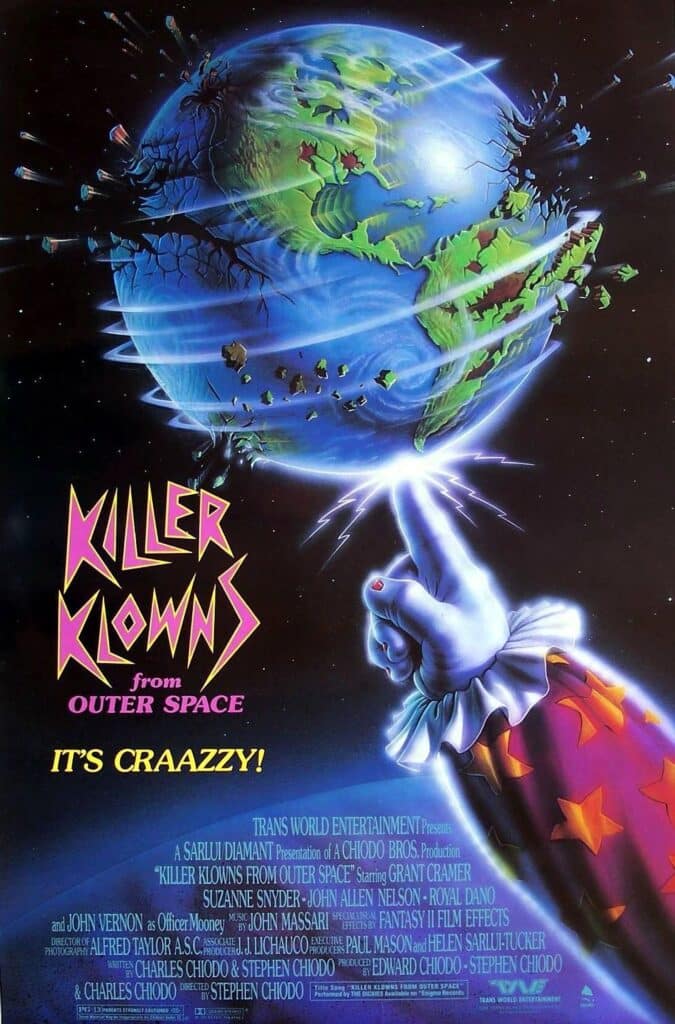
Killer Klowns from Outer Space understood this better than films with twenty times the budget. Cotton candy cocoons. Popcorn that hatches. A whole invasion built out of fairground snacks. It is silly, absolutely, but the silliness is the delivery system, and there is a reason people are still talking about it decades later. Willy Wonka is the other obvious one, and I say this as somebody who is not really joking, the boat tunnel sequence is a genuine horror set piece that happens to be sitting inside a children’s film. Chickens getting beheaded, a face melting past the camera, and a grown man shouting at a group of terrified kids on a boat they cannot get off. Half the horror writers I know point at that scene when you ask them what broke them first.
The Halloween panic that never actually happened
You cannot talk about candy and dread without landing on the poisoned sweets legend, which is possibly the most successful piece of folk horror of the last century, mostly because millions of people still believe it is true. Razor blades in apples. Needles in the fun size bars. Some stranger on the estate handing out something laced.
The thing is, it basically never happened. Researchers have gone back through decades of reported cases and found the overwhelming majority were hoaxes, often invented by the kids themselves, and the small handful of genuine tragedies involved family members rather than a mystery neighbour. History.com has a good breakdown of how the panic took hold, tracing a lot of it back to a newspaper letter in 1970 that was purely hypothetical and then escaped into the wild.
Which is really interesting to me, because it means an entire generation of parents were running on a horror plot rather than a fact. The legend spread because it was a good story, not because it was a real risk, and that is exactly how horror works. Candyman knew this. So did Trick r Treat, which is practically a feature length essay about what happens when people stop respecting the rules of the night. Sam turns up with a lollipop and a burlap sack, and the sweets in that film are never really sweets, they are terms and conditions.
Where the sugar aesthetic ended up
Films were never going to be the end of it. Once a visual language gets established, it leaks into everything else, and the candy palette has spread across games, animation, music videos and, weirdly enough, gambling. Anyone who has scrolled a casino lobby in the last few years will have noticed that the sweet shop theme is absolutely everywhere. Gumdrops, lollipops, jelly beans, big grinning wrapper symbols, the lot.
Some of that is straightforward psychology, the same bright colour trick the horror directors were using, just pointed at the opposite emotional target. And some of it is pure nostalgia farming, which brings me to a small oddity worth mentioning. There is a slot called Candyland Casino that people keep searching for by that name expecting to find a whole casino brand, when it is really just a single game. It is a 1×2 Gaming video slot, five reels, three rows, nine fixed pay lines, sat over at Vegas Mobile Casino, with an RTP of 96.00% and a bonus round called the Haribonus, which is a name I refuse to believe made it through a meeting untouched. There are free spins off a purple sweet scatter, up to 25 of them in one trigger, and a wild candy symbol that holds the potential to build combinations worth up to 210x the stake.
What strikes me about it, from a purely aesthetic point of view, is how closely the visual grammar matches the horror version of the same idea. The oversized sweets. The thick outlines. The slightly too-saturated background. Change the soundtrack from cheerful plinking to low strings and you would have something that could sit inside a Sam scene without anybody blinking. The sweet shop is a very thin set, is the point I am making. It flips really easily.
The bit where genre sites keep the lights on
Slight sidestep, but it is relevant to anyone who runs one of these places. Independent horror publishing survives on some fairly unglamorous plumbing. Ad networks, affiliate links, the odd sponsored feature, a Patreon if you are lucky and your readers are generous.
The regulated corners of that world run on purpose built tracking rather than a spreadsheet and hope. In gambling specifically it tends to be igaming affiliate software doing the work in the background, handling click tracking, attribution when somebody signs up three days later on a completely different device, multi currency commission rules and a stack of compliance checks around responsible play. Platforms like MAP by Mediacle sit in the middle of that arrangement, connecting publishers to operators so that nobody has to chase a payment by email. It is deeply boring machinery, and it is a big part of the reason a lot of niche sites are still publishing at all.
Every legitimate UK-facing operator also has to hold a licence from the UK Gambling Commission, which sets the rules on fairness, age verification and player protection. Vegas Mobile Casino runs inside that framework, with deposit limits, time-outs and self exclusion tools sat in the account settings. Worth knowing if you are curious enough to go and look at the sweet shop reels for yourself.
The trap is always food shaped
Here is what I keep coming back to. The gingerbread house works because it offers exactly what the person standing in front of it wants most. That is the whole mechanism, and it definitely has not changed in a few hundred years. The trap is always shaped like the thing you are hungry for.
Horror figured this out early and never really let go of it. A dark cellar frightens you for about ten seconds. A bowl of sweets left out on a windowsill in an empty house will sit in your head for the rest of the night, because some part of you already knows that somebody put it there on purpose.
Eat before you go trick or treating, is what I am saying. Hunger is how they get you.
18+. Please gamble responsibly. BeGambleAware.org.
Ginger Nuts of Horror: The Heart and Soul of Horror Reviews
Every feature is built to sell your work. We include backlinks to your website or Amazon author page, a full synopsis, and a universal purchasing link that sends readers straight to their local store. Add a large, engaged social following and an 18-year archive of trusted horror coverage, and you have a platform genuinely built to grow your readership.
Whether you’re an established author, an indie filmmaker, or a debut voice in indie horror, there’s a way for us to help you reach more fans. Explore our horror book reviews and horror movie reviews, then get your horror book or film featured today.