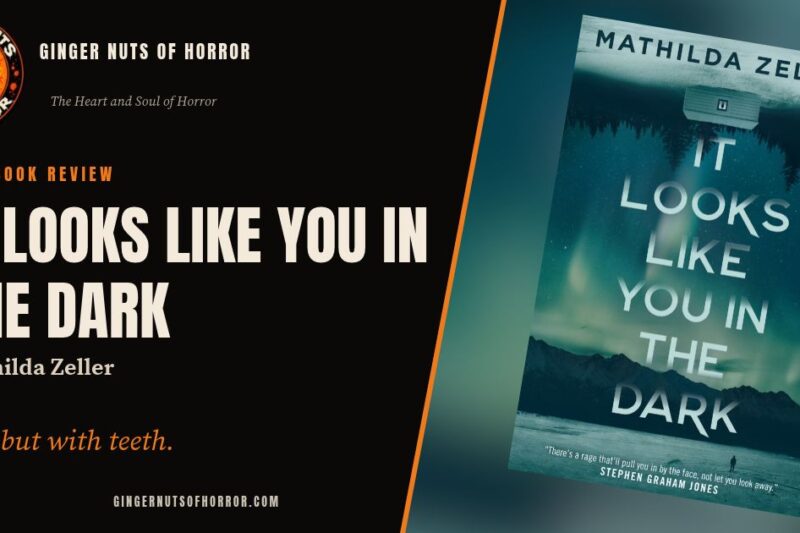
Mathilda Zeller expands her Never Whistle at Night story into a five-star Indigenous horror novel about the kushtuka, a creature that wears the faces of the people you love. Set in an Inupiat village as a mine moves in and the winter dark closes, this is Alaskan folk horror with real anger in its bones.
Folk Horror
Cthulhu Cymraeg: The Night Country by Mark Howard Jones Review: Lovecraft, Welsh Style
Ben Unsworth reviews Cthulhu Cymraeg: The Night Country, the Welsh Lovecraftian anthology edited by Mark Howard Jones for Macabre Ink. Its seven long stories trade tentacles for mood, with Arthur Machen’s land as the backdrop for some fine Lovecraftian fiction. John Llewellyn Probert and George supply the two tales he expects to see in his year’s best.
Hollow Folk by Andrew K. Clark Review: Love and Terror in a Frozen Hotel
Hollow Folk, the new novel from the author of the Dark Things duology, stops the clocks at an Appalachian mountain resort and leaves three co-workers trapped with the hotel’s century-old secrets. Damascus Mincemeyer finds a haunted hotel novel that pairs a charming horror romance with Clark’s most chilling scares yet, and gives it four out of five. Fans of Where Dark Things Grow and Quill & Crow Publishing House will want to check in.
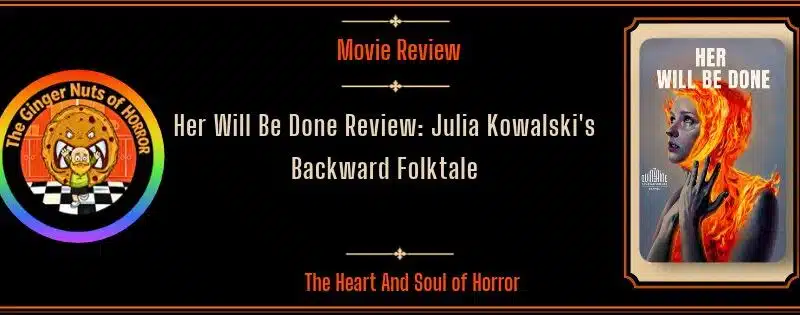
Her Will Be Done Review: Julia Kowalski’s Backward Folktale
Julia Kowalski’s Her Will Be Done is a French folk horror film about Naw, a young woman on her Polish migrant family’s farm who fears she carries her mother’s curse. Hope Madden finds a mystery held together by Maria Wróbel’s wordless performance, with Roxane Mesquida as the neighbour whose return turns everything into a backward fairy tale.
The Crone in Horror: Witches, Folklore and Keith Rosson’s Crone
The crone has been part of horror since long before cinema existed, from Baba Yaga’s hut on chicken legs to the witch under the oven in Hansel and Gretel. This feature traces her through the European witch trials, hagsploitation cinema and films like Relic and She Will, and lands on Keith Rosson’s new novel Crone.
Paul Finch’s In the Forest of the Night: A Black Shuck Shadows Review
Paul Finch’s In the Forest of the Night gathers four older stories and one new one for Black Shuck Shadows. It moves from folk horror in the Highlands to hard hitting action in its final tale. This is proof that Finch’s horror writing deserves as much credit as his crime fiction.
The Woods by Jessica Hamilton: folk horror makes menopause the monster, mostly on its own terms
Jessica Hamilton’s folk horror debut sends a grieving mother into a haunted wood that offers her family a second life, at a price only she has to pay. A true crime podcast framing device and a bold menopause-as-horror metaphor make this one of the more inventive femgore entries this year, even when it over-explains its own best idea.
The Memory Tree by Heather Davey, Review: Roots, Rituals and Rural Dread
Heather Davey’s The Memory Tree binds two timelines to one ancient yew in a Dorset village where memory refuses to stay buried. A strong Gothic folk horror built on grief, ritual and creeping unease, even if the final reveal is less sure than the long build.
You See It Too by AJ Malachite: A Queer Gamebook Horror Where No One Walks Out Whole
A.J. Malachite’s debut You See It Too turns the choose-your-own-adventure format into a body-horror trap, sending three queer students into a bayou preserve after a will-o’-the-wisp that turns out to have larvae. It is folk horror, eco-horror and Southern Gothic at once, with old money farming the swamp for generations. Four stars for a gamebook that refuses to let you save everyone.
Crone by Keith Rosson: Folk Horror Noir That Bites Back
In Crone, Keith Rosson binds a Pacific Northwest crime noir to a folk horror ghost story, following a grieving ex-detective through a corrupt town toward a witch who has been keeping his missing daughter for thirteen years. It is body-horror addiction, biker-gang rot, and generational violence, held together by prose of frightening control