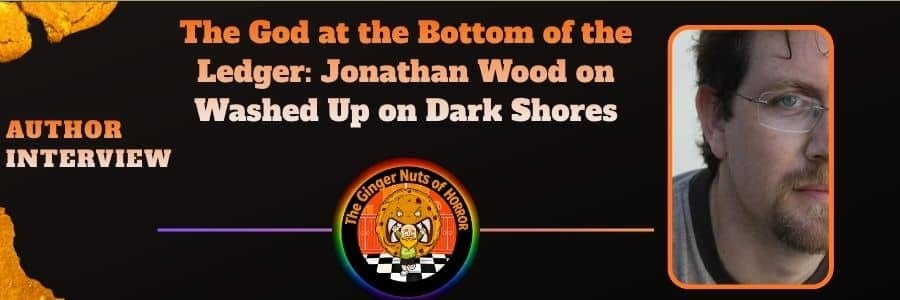
- The God at the Bottom of the Ledger: Jonathan Wood on Washed Up on Dark Shores
- Washed Up on Dark Shores by Jonathan Wood: Greed Given a Body
“Wood has spent a career writing about the powerful hoarding what everyone else needs, but this book makes the money itself the monster.”
The God at the Bottom of the Ledger | Interview | Ginger Nuts of Horror
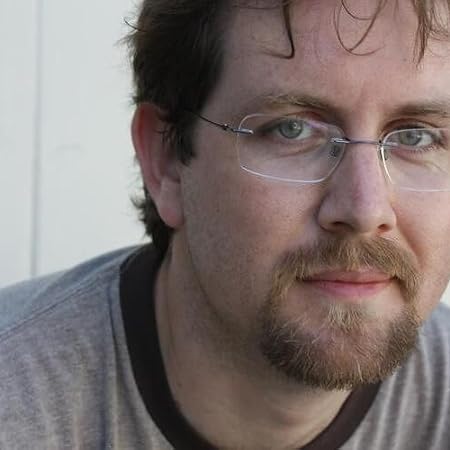
Oscar Phillips built his house to sit ten square feet bigger than the one on Pennsylvania Avenue, faced it in black marble, and set the price of everything inside it in crushed flowers. Jonathan Wood’s Washed Up on Dark Shores does the thing he has circled for over a decade: turning the machinery of enormous wealth into a working cosmic horror, with Mammon as the god at the bottom of the ledger.
Wood arrived in 2011 as the man who asked what Kurt Russell would do when the tentacled Progeny came for Oxford. Since then he has robbed dragons of their gold as Jon Hollins and torn down the Iron City as J.P. Oakes, and every time the real subject has been the same: who hoards, and who pays for it. This book drops a corporate fixer called Danny Spencer into a party he is not allowed to leave, then starts quietly taking the guests apart.
It reads as his darkest turn yet, and the funniest lines are still his own. I sat down with Wood to talk about wealth as horror, the pleasures of breaking your own sentences, and why hope matters even when it is absurd.
The horror of our own frailty and triviality is always underlying things in weird fiction. It is a subgenre built upon the insignificance of mankind in an uncaring universe. The offer of dissolution in the book is the seduction of just giving up. Of not struggling anymore. Of not hoping anymore. Hope, even when it is unreasonable, is critical to keeping that spark of rebellion alive in people’s souls.
The God at the Bottom of the Ledger: Jonathan Wood on Washed Up on Dark Shores
You have spent a career writing about the powerful hoarding what everyone else needs, but Washed Up on Dark Shores makes the money itself the monster. Oscar Phillips tells Danny that exclusivity, not pharmaceuticals, is what OmniPharm actually sells, and by the end the book has a proper name for the thing he is really worshipping. What was the seed that made you want to write extreme wealth not as a backdrop for horror but as its literal source?
Early on in my writing career, I read somewhere that a hero is defined by self-sacrifice, and, looking back, I think I’ve basically been worrying away at that idea for close to twenty years. Even in my original Hero books, which are perhaps not my most thematically strong, I was noodling around with how much of one’s self it is reasonable to sacrifice for the communal good.
Because on the one hand, total self-sacrifice is pretty bad for the individual, but on the other, pure self-interest is just as bad for the community. And yet we live in a moment when a small handful of people seem to be grabbing more and more of the pie and leaving fewer and fewer crumbs for everyone else. America just got its first trillionaire, but at the same we have people who cannot afford the medicines they desperately need. In other words: I think extreme wealth and greed are already sources of horror in the world. I just emphasized that a little bit here.
The prose moves in clipped present-participle fragments from the opening line. “Danny arriving. Danny announced by the crunch of gravel beneath the Uber’s tyres.” It is an insistent, strange rhythm, closer to a shooting script than a novel in places. What made you commit to that register, and what does breaking the sentences down that far let you do to a reader that ordinary syntax will not?
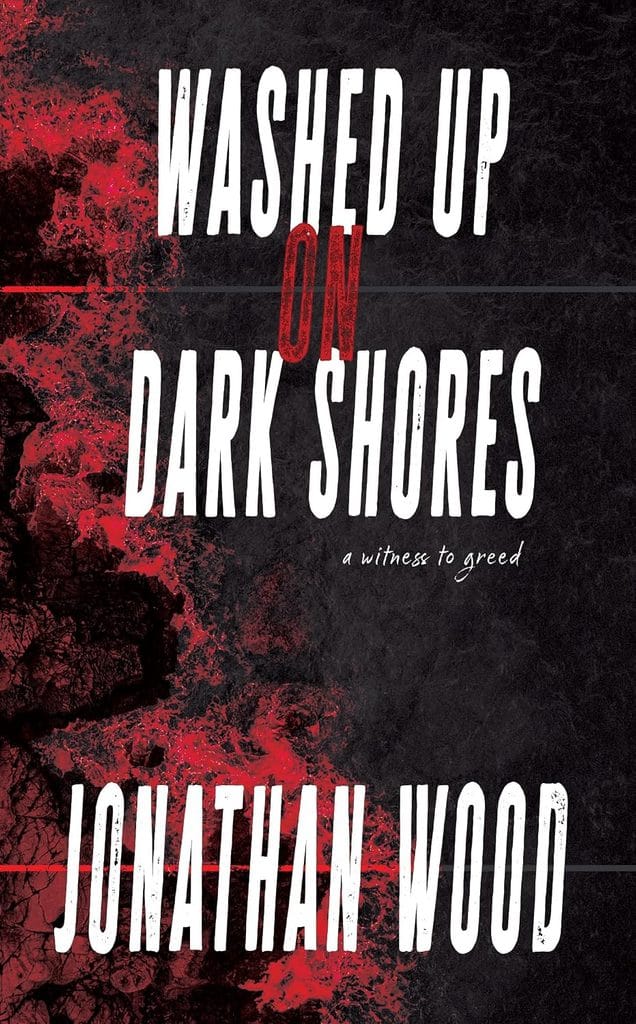
When I first started writing Washed Up, I was also helping out a friend with a comic book he was writing, and I became interested in the parallels between a comic book panel—this idea of an image as a moment of frozen time—and a sentence. I was curious if I could make each sentence work as if it was a comic book panel.
I am a huge nerd when it comes to formal experimentation with prose, although novels can rarely support that sort of thing over time. In fact, Washed Up was a full novel in its original iteration, and it really didn’t support that sort of experimentation. When I pared it down to a novella, I was able to pull the style more to the forefront without the story collapsing under its own hubris.
In terms of what it does for the reader, I think (hope?) it adds a sense of immediacy and urgency to the prose. As a writer, you’re always fighting to keep the focus on the action, and to keep the reader turning the pages, especially when there are so many distractions in the world. My hope is that the staccato, “this is happening now, now, now” rhythm holds people’s attention in this suspended breathless moment. And if it’s a little strange… well that doesn’t hurt with some of the other imagery in the book.
You hand us people in their own titled sections, Danny, Irina, Marta, and then in at least one case you take that person away from us for good. There is a particular cruelty in letting a reader settle into someone’s head and then closing it. How do you decide who the reader is allowed to keep?
I don’t know if it was precisely a decision, or just where this story seemed to inevitably lead. Which I realize is very hand-wavey, author-bullshit sort of answer, and I apologize for that, but as I planned the story out, it just seemed to come with its own set of stakes.
And I don’t necessarily think death is the worst outcome for any of the characters in this story. Or, to attempt to put it another way, without spoiling anything: each character in the story represents their own angle on the negotiation between personal interest and interest in others, and for some of them that angle leads to an inevitable place. Hopefully readers forgive me. This is horror after all.
The scene breaks are marked with a small circled dot, the old alchemical sign for both gold and the sun. In a book about money as a devouring force, that is either a lovely accident or a very deliberate joke buried in the furniture. Which is it, and how much of the book’s symbolism did you want a reader to catch consciously, versus feel without ever quite noticing?
This is actually the genius of my publisher, Mark Teppo, who is very into that sort of symbolism, which makes me sure that is a very deliberate joke. However, I literally just learned of it from this question. Although I am now delighted.
In more general terms, I find symbolism to be such a tricky tool. It’s very easy to go overboard, and to become didactic and boring. However, when I’m constructing a scene, I do want all the elements to be building upon the overall tone and theme of a novel. In general, I try to not approach it too consciously. As long as I know my themes, I can let the symbolism seep into the work as I craft the scenes. That seems to be working so far…
Polly is the strangest thing in the house, and you code her not as a gargoyle but as a naked, childlike girl pressing gladioli on the guests. Generosity, she says. Her father immediately reframes that as an expensive form of manipulation. Putting your central uncanny presence in the shape of sweetness and a gift, rather than a threat, is a real decision. What were you after by making the horror something that is being offered to you?
In terms of Polly specifically, she, for me at least, is one of the more tragic figures in the book because she’s never had the chance to answer that question for herself. She’s been systematically abused and turned into a tool for someone else to tempt and manipulate others. The book at least meets her at a moment when she’s starting to question that, so hopefully there is some satisfaction in her self-empowerment, even if people may not like what she does with her newfound free will.
The Black House is built specifically to be ten square feet larger than the White House, a middle finger, as Danny reads it, to the whole idea of government of the people, by the people, for the people. You are an Englishman who has spent years in New York, and this is a book with its horror aimed very precisely at American money and American power. What does the outsider’s angle give you on that subject that an American writer might not reach for?
OK, I’m going to attempt to answer this without getting myself into too much trouble. But on one level I will say I’m not THAT much of an outsider. Because, in a lot of ways I don’t think America is that different from the UK. At least, it’s not as different as the UK likes to pretend it is. And with the increase in globalization, and with everyone watching the same TV shows… the western monoculture has increased its span. So, I think/hope that a lot of what the book is talking about is applicable beyond the US.
That said, I do think living in two countries has given me a glimpse of some of the underlying myths of both countries. The US is a country somewhat founded on the myth of the “rugged individual.” There’s this underlying idea of the man alone facing off with the dusty western frontier.
And I think that’s led to an underlying individualism in America that is both a huge strength and a huge weakness. It motivates people to do tremendous things to improve their lives. But sometimes those gains can come at a larger societal cost. So, I do think the algebra of the equation, “what will I sacrifice to get what I want?” changes a little from one side of the Atlantic to the other.
(This is not to say that the UK doesn’t have its own issues based on its own myths, but you didn’t ask me about that, and I’m not convinced I want to offend EVERYONE reading this just yet).
Trace a line through your work and the same engine keeps turning over. The Dragon Lords books have humans crushed under the taxes of gold-hoarding dragons. City of Iron and Dust has goblins grinding the fae down into the Iron City. Now there is OmniPharm and its god. The costumes change, the arrangement does not. When did you realise that this, the hoarders and the people who pay, was the thing you were always going to keep writing?
Well, I’ve always been very interested in power differentials. I feel, growing up in the UK, we’re constantly hyperaware of social class. Meanwhile, in America, the exact same class divisions exist but people are much more hesitant to call them out. In fact they tend to gloss over them when they can. So, I think I tend to pick at that idea a lot. I’ve also always liked a good rebellion story—the little man (or woman) rising up against oppression.
I couldn’t tell you exactly why. But if you look around for historical or even contemporary stories about the little people rising up against the powerful, well, there’s almost always a massive financial component to that tale. Money is almost always power. And so those sorts of stories almost always become stories of people on either side of an economic divide. What I’ve then tried to do is to try and bring a smidge of humanity and understanding to people on both sides of the divide.
City of Iron and Dust, under the J.P. Oakes name, ran a whole ensemble through a single convulsive night and let a cosmic climax rise up out of a street-level crime story, and you were willing to drop and kill viewpoint characters as you went. Washed Up on Dark Shores feels like it took lessons from that book. What did writing the Iron City teach you that you carried straight into this one?
I think it taught me to focus on the characters. If you set up the right framework around them—especially in terms of the forces at play in their world—and then angle everyone so that their desires intersect or overlap or contradict, then you can just follow them where their stories lead, then everything else will come with you. Themes and symbolism and everything else will emerge, and can be refined in the editing process as long as you have that core of characters who are relatable, and who have goals you and the readers can invest in.
You have published comic Lovecraft under your own name, comic fantasy heists as Jon Hollins, and dark noir fantasy as J.P. Oakes. This book, your bleakest and most stripped-down, arrives under Jonathan Wood again, on a small independent press that says openly it prefers the psychological and strange to the blood-drenched. What made this the one that had to come home under your own name?
OK, how long do you have? The short version: the decision to change names has never originated with me. I very much understand why my publishers have wanted to try a new name and the economic reasons behind those decisions. When a bookseller will only order as many books as the previous amount you sold, it gets increasingly hard to escape a downward spiral of sales.
Having a new name is a proven way to help authors escape that trap. But on the flip side, it dismisses a writer’s ability to build an audience over time. You’re constantly starting over, trying to build an audience from scratch. I’ve honestly wanted to publish under my own name for a very long time. I’m just lucky to have found a publisher who is willing to trust readers to follow me regardless of the genre scenery I’ve put up around the story.
Horror is having a long argument with money at the moment. The rich as predators, the dinner party as slaughterhouse, wealth as the thing that quietly eats you. You have gone a step further and given money a congregation and a deity. Where do you think this strain of the genre is heading, and what can a story about money-as-god do that a straightforward ghost story cannot?
I think looking at the increasing wealth disparity and rising cost-of-living in the world and finding horror in the culture of excess that exists alongside it is a pretty natural reaction. In fact, I think it behooves horror to be having that conversation right now. It’s one I think we should all be having. Of course, horror is always going to take that conversation a little too far. But for me, that’s a lot of the fun of the genre—the Grand Guignol excess of it all.
The thing is, as the disparity between have and have-not gets wider and wider and the current moment gets weirder and weirder, then to achieve the sort of excess that horror readers’ delight in, the format of horror has to get weirder too. I think that’s a lot of what pushed me away from a traditional sort of ghost story. Something as familiar as a ghost story wouldn’t have felt sufficient to express how odd our current reality actually is. And so, I wonder (and maybe even hope) that we’ll at least get to see some astoundingly odd horror come out of this moment we’re in.
Your roots are in the Cthulhu mythos. You were writing the Progeny and turning up in The Book of Cthulhu 2 long before this. Setting your own work aside entirely, what is a horror novel or story by someone else that genuinely got under your skin and stayed there, and what was it doing that you have never quite shaken off?
I absolutely love the work Mike Mignola, John Arcudi, and Scott Allie did with BPRD. It’s such a great piece of long-form storytelling. From the unsettling nihilism of the “Plague of Frogs” arc all the way through the full commitment to breaking their own world in irrevocable ways in “Hell on Earth,” it’s a tour-de-force. Plus, it knows that it’s the moments of joy and camaraderie that happen while everything is falling apart around you that make life worthwhile. So, it isn’t afraid to lean into moments of levity and even silliness in between moments of profoundly uncomfortable strangeness.
Danny keeps cracking jokes while reality comes apart around him. Cornered in the dark by a chanting trio, he tells them to piss off and let him freak out in peace. Keeping a comic voice alive inside real dread is a tightrope, because a laugh in the wrong place kills the fear stone dead. How do you calibrate the comedy against the horror at sentence level, so that one sharpens the other instead of defusing it?
Something I learned early on was that contrast can really help a novel. If everything is one tone, then after a while that can just reset what feels like normal to you. What begins as unrelentingly bleak or as uproariously hilarious can tend towards blah if there’s no interruption. Little moments of relief and humor can give you highlights that help the horror still feel horrific even deep into the story. And also, this is a novella about how absurd the moment we’re in is, and so having a little absurdity felt appropriate.
As to getting the balance right? A LOT of editing is the answer. Just reading, and re-reading, and ruthlessly cutting. There were a lot of worse jokes in the earlier drafts which were left in the dirt of the cutting room floor.
Years ago, talking about the Dragon Lords, you said character dynamics are what keep a book generating material no matter what you throw at them. Here you do something close to the reverse, killing off the very people whose dynamics you might otherwise have leaned on. What did denying yourself those recurring engines force you to learn about holding a book together?
I actually find it rather liberating. With the Dragon Lords and the Hero books, I had to realistically find new reasons for the same group of people to keep having adventures together, and I had to maintain tension even when there were some clearly established promises to the reader (largely surrounding the continued survival of the core group of characters) that I just couldn’t break.
I think Dragon Lords actually came quite close to breaking some those promises, especially in book three, because I really let the characters grow and change over time and drift away from who they were in book one. That didn’t work for every reader. But with something like Washed Up, there’s none of that. I can just follow things to their logical conclusion no matter how extreme that is. I can break things that cannot be fixed.
And hopefully that lack of a safety net beneath the characters, and the gathering momentum of their increasingly precipitous plunges into the horror of everything that lies beneath the Black House helps hold events together. The flip side of all that, though, is that this is a small, self-contained story for a reason. You can’t maintain that sort of intensity indefinitely.
Polly’s mercy, when it comes, is a whisper. You do not have to be afraid anymore. For all the money and the cruelty in the book, it keeps offering dissolution as something close to kindness, a release rather than a punishment. Underneath the horror of wealth, is the thing that actually tempts or unnerves you the idea that oblivion might be a relief?
I think the horror of our own fraility and triviality is always underlying things in weird fiction. It’s a subgenre built upon the insignificance of mankind in an uncaring universe. And I don’t think any of us want to look back on our lives and think they were meaningless. Or maybe that’s just me, and it’s part of why I feel compelled to keep throwing stories into the world… Anyway, I think the offer of dissolution in the book is the seduction of just giving up.
Of not struggling anymore. Of not hoping anymore. And I think hope, even when its unreasonable—even when it’s absurd—is critical to keeping that spark of rebellion alive in people’s souls. That’s what stops us from settling. Oblivion is the ultimate form of settling. We’ve got to keep believing things can be better, and fight for them to be better.
Under three names, the shape of your books keeps changing: comic Lovecraft, a fantasy heist, a noir fairy tale, now this. Yet one thread links all of them. The powerful hoard, the powerless pay, and something vast and indifferent presides over the arrangement. Do you think horror can do anything about that beyond naming it out loud, or is the genre’s real honesty precisely that it offers no rescue?
I wouldn’t frame naming the horror as a small thing. I think what horror can do better than any other genre is pull into the light those things that we are uncomfortable or afraid of discussing. Whether that’s personal fears around death, deformity, or irrelevance, or larger societal woes like wealth disparity, or the cost of war, it’s a chance to face those negative topics head on. Horror may not solve anything directly, but it’s an opportunity to say “this is the thing that’s wrong,” and that’s the first essential step in figuring out a solution.
Washed Up on Dark Shores by Jonathan Wood
Look here. Three fools come for a reckoning.
DANNY staggering through life, wounded in a way that everyone can plainly see. Danny crawling through filth to bear witness to even filthier things. Danny trying to feel something. Danny being offered a choice he knows he’s going to screw up.
IRINA involiate. Irina sealed off from the world since she was seven. Irina wanting to burn it all down since she was nine. Now, she has her chance, but at what price?
MARTA fighting. First for duty. Then for cash. Now, because it is the only way she can keep the past at bay. Marta trying to outrun the screams in her head.
Watch now, as these three come to the house built by greed. The house where they will get everything they ever wanted, and discover why no one should ever be granted that wish.
Welcome to the BLACK HOUSE.
Welcome to hell on earth.
— PRAISE —
“What if Bright Lights, Big City-era Jay McInerney wrote an Ira Levin occult thriller? You’d have this True Long Island story!”
—Nick Mamatas, author of I Am Providence and The Second Shooter
“Unrelenting and filled with relatable characters, Washed up on Dark Shores is a deep dive into commercialism and corporate greed with a heavy dose of cosmic horror. Wood’s prose is addictive from the first sentence to the last. Make time to read when you pick it up, because you won’t want to put it down until you turn the last page.”
—T. Frohock, author of the Los Nefilim series.
“Jonathan Wood’s prose accelerates at the speed of a locomotive and you’re tied to the tracks up ahead with only a dull knife, a broken flashlight and a prayer as your hope to escape.”
—Elad Haber, author of The World Outside
“I felt like I’d lost a fight after reading, with all the gut punches.”
—Sarah R. New, author of Hypochondria
“Washed Up On Dark Shores is an intoxicating collision of corporate thriller, cosmic nightmare, and bitter truth; a furious howl into a ravenous and bottomless abyss.”
—Dale Lucas, author of First Watch
Ginger Nuts of Horror: The Heart and Soul of Horror Reviews
Every feature is built to sell your work. We include backlinks to your website or Amazon author page, a full synopsis, and a universal purchasing link that sends readers straight to their local store. Add a large, engaged social following and an 18-year archive of trusted horror coverage, and you have a platform genuinely built to grow your readership.
Whether you’re an established author, an indie filmmaker, or a debut voice in indie horror, there’s a way for us to help you reach more fans. Explore our horror book reviews and horror movie reviews, then get your horror book or film featured today.

Jim "The Don" McLeod has been reading horror for over 35 years and reviewing it for more than 16. He's the editor of Ginger Nuts of Horror, Europe's largest independent horror review and culture site, and a British Fantasy Award nominee for his work in the genre. When he's not busy inflicting his opinions on the horror community, he can be found annoying his family or getting thoroughly outwitted by his two dogs, Casper and Molly.